
Rare Gemstones for Collectors: The 2026 Connoisseur’s Guide to Scarcity and Value
Jun 4th 2026
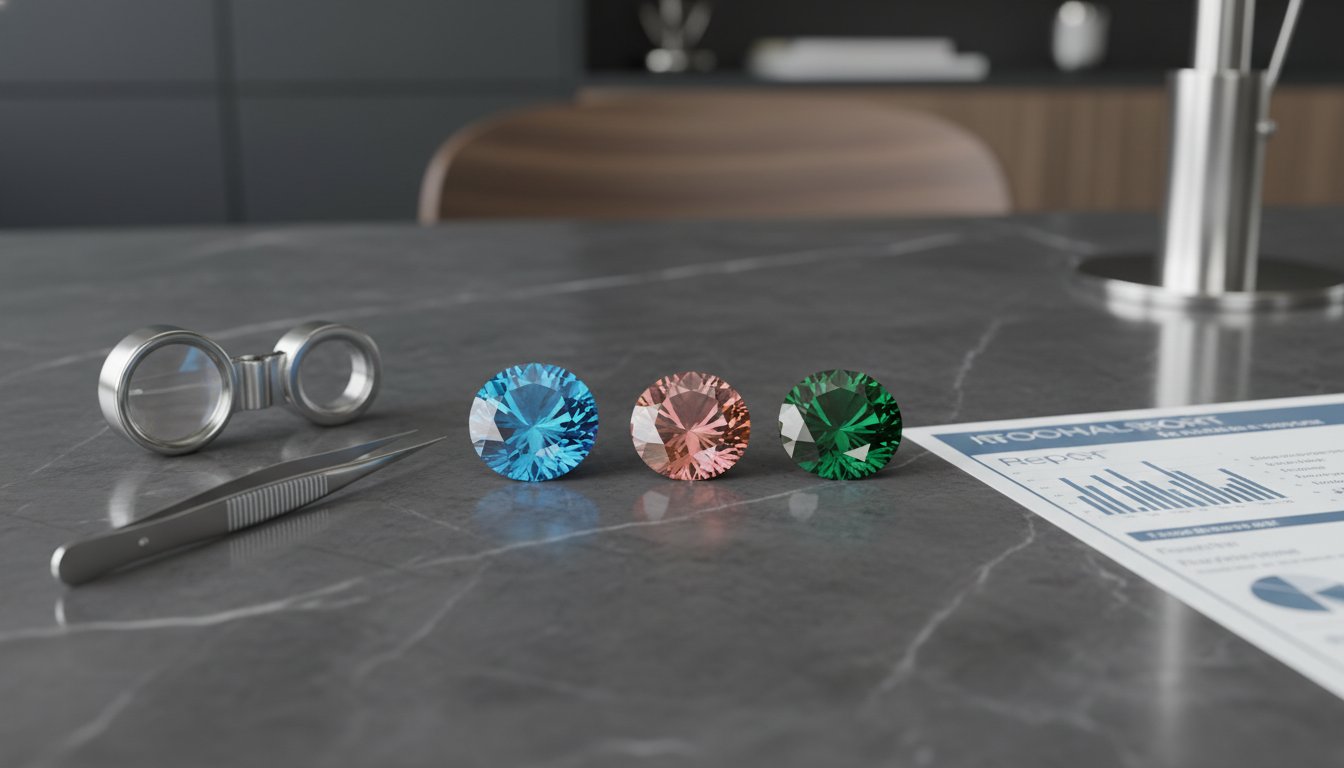
Did you know that for every 10,000 diamonds pulled from the earth, miners find only a single Paraiba tourmaline? While the mass market remains fixated on traditional stones, the true elite are turning their attention toward rare gemstones for collectors that offer genuine geological scarcity. You've likely felt the frustration of seeing "investment grade" labels on stones that are heavily treated or lack the prestigious origin they claim. It's an opaque market where the difference between a Mozambique ruby and a Burmese specimen can mean a massive disparity in long-term value.
We understand that building a legacy collection requires more than just an eye for beauty; it demands rigorous technical validation and radical transparency. You deserve to know exactly what you're buying, from the chemical purity of an unheated sapphire to the specific provenance verified by the 2026 GIA reporting standards. This guide will help you master the art of high-end acquisition by revealing the intersection of geological rarity and market demand. You'll gain a clear framework for evaluating quality and a curated list of specific gemstone types to focus on, ensuring you can acquire your next piece with the security of an informed insider.
Key Takeaways
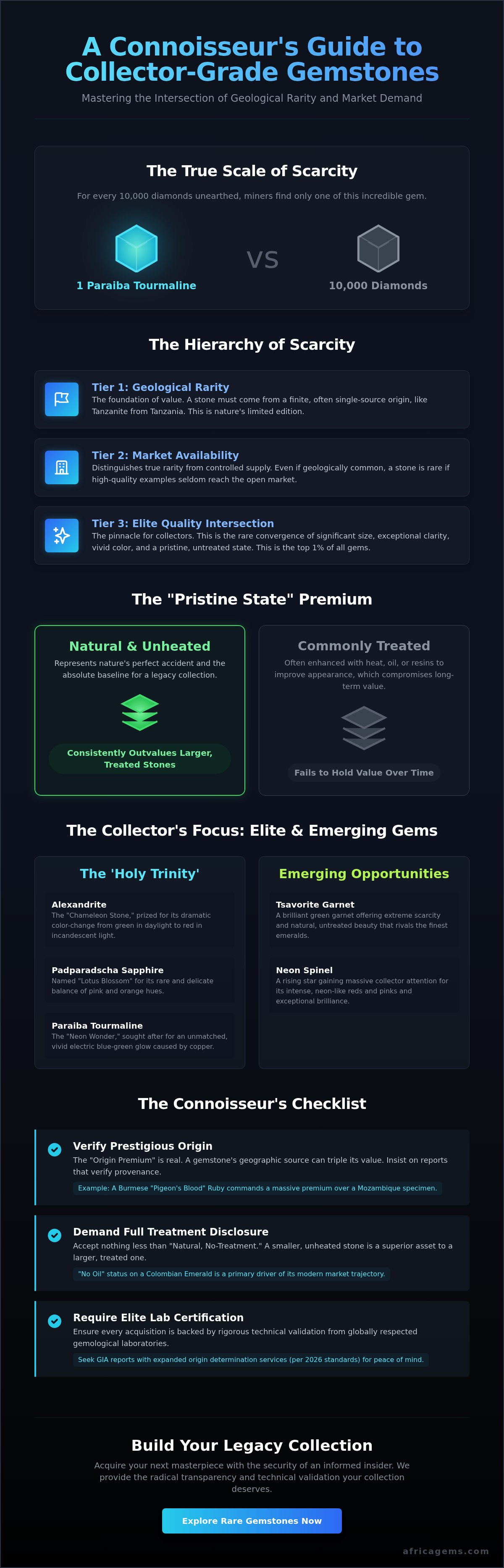
- Learn to evaluate potential acquisitions through the "Hierarchy of Scarcity," distinguishing between simple geological rarity and the rare intersection of size, clarity, and color.
- Understand the technical benchmarks for the "Holy Trinity" including the specific color-change percentages and hue balances that dictate market premiums for Alexandrite and Padparadscha.
- Discover emerging opportunities in rare gemstones for collectors, such as Tsavorite Garnet and neon Spinel, which offer extreme scarcity and untreated natural beauty.
- Master the "Origin Premium" by learning why certain geographic sources can triple a stone's value and how to verify these claims through elite gemological laboratory reports.
- Gain peace of mind in your investment by applying a checklist for full disclosure, ensuring every stone in your legacy collection is ethically sourced and accurately graded.
Defining Rarity: What Makes a Gemstone Collector-Grade in 2026?
True rarity in the world of rare gemstones for collectors isn't a static label; it is a dynamic intersection of chemistry, physics, and market psychology. To understand what makes a gemstone truly exceptional, you must look past the species name. In 2026, the market has moved beyond the simple "precious" versus "semi-precious" divide. Collectors now prioritize the specific combination of size, saturation, and crystal clarity. A three-carat spinel with exceptional "life" and brilliance often commands more attention than a larger, sleepy-looking ruby. This shift highlights the importance of crystal habit, where the internal structure of the gem allows it to return light with a vigor that can't be replicated by lab treatments.
The 2026 connoisseur operates within a "Hierarchy of Scarcity." This framework distinguishes between stones that are hard to find in nature, stones that are hard to find in the market, and stones that are hard to find in a specific quality. You might find plenty of commercial-grade emeralds, but finding one that hasn't been "over-treated" with oils or resins is a different challenge entirely. As the US remains dependent on imports for more than 99% of its colored gemstones, the ability to identify these nuances is what separates a casual buyer from a true insider. We believe that transparency regarding these factors is the only way to build a collection with lasting value.
To better understand this concept, watch this helpful video:
Geological Scarcity vs. Commercial Availability
Geological scarcity refers to stones with a finite, single-source origin. Tanzanite is the classic example; it's found in only one small area of Tanzania. This is fundamentally different from diamonds, which have a controlled supply chain despite being relatively common in the earth's crust. In the collector's world, "rare" in a mall jewelry store often means "common" in a professional vault. For a stone to be considered "Investment Grade," it must sit in the top 1% of its species for all 4Cs while possessing a documented, prestigious origin. This level of quality is what we focus on when sourcing precious gemstones for our clients.
The "Pristine State" Premium
In 2026, "Natural, No-Treatment" has become the absolute baseline for high-end collecting. A smaller, unheated sapphire will consistently outvalue a larger, heat-treated specimen because the former represents nature’s perfect accident. This premium is especially visible in the emerald market. The "No Oil" status on a Colombian emerald is no longer just a bonus; it is a primary driver of its 2026 market trajectory. As the GIA implements its expanded 2026 reporting services for origin determination, the demand for these pristine, untreated stones continues to climb. Collectors are no longer willing to accept the "over-treated" stones that look good but fail to hold their value over time.
The 'Holy Trinity' of Rare Gemstones: Alexandrite, Padparadscha, and Paraiba
In the inner circles of the gem world, three specific species stand as the ultimate "Holy Trinity" for those seeking rare gemstones for collectors. These stones represent geological anomalies where rare chemical elements met perfect cooling conditions to create something impossible to replicate. While diamonds rely on massive marketing budgets, these gems rely on pure, unadulterated scarcity. Each of these specimens represents a "miracle of nature" that occurs far less frequently than the traditional precious stones found in high-street jewelry stores. You can read more about their historical significance in our Rare Gemstones: A Connoisseur’s Guide.
Alexandrite: The Master of Color Change
Alexandrite is a variety of chrysoberyl that owes its "emerald by day, ruby by night" personality to the presence of chromium trace elements within its crystal lattice. The rarity of this stone isn't just in its existence, but in the quality of its shift. When you evaluate a specimen, the most critical metric is the "percentage of change." A stone that shifts 50% is considered collectible, but an 80% to 100% shift is museum-grade. You should look for a crisp transition from a cool forest green in daylight to a warm raspberry red under incandescent light. The finest specimens avoid any muddy brown or grey overtones, maintaining a vivid saturation in both light sources. It's this technical perfection that makes a fine alexandrite the cornerstone of any serious portfolio.
The Padparadscha Standard
The Padparadscha is the most coveted variety of loose sapphires, named after the Sinhalese word for "lotus blossom." This gem requires a delicate, ethereal balance of pink and orange hues. If the stone leans too heavily toward orange, it's a sunset sapphire; if it's too pink, it's simply a pink sapphire. The true Padparadscha exists in that narrow, poetic middle ground. Because of its value, the market is often flooded with "lattice-diffusion" treatments that use chemicals to force color into the stone. To protect your investment, a reputable Lab Certification is non-negotiable. This document ensures the color is 100% natural and has not been artificially enhanced by unstable methods.
Paraiba tourmaline completes this trinity with its "electric" neon glow, a phenomenon caused by copper and manganese. While Mozambique has produced beautiful specimens, the original Brazilian mines remain the benchmark for saturation. In 2026, the price gap between Brazilian and African origin remains significant, often reaching a five-to-one ratio for stones of similar size. This is due to the intense "Windex blue" or "neon turquoise" hues that are unique to the Paraiba region. If you are ready to witness these geological miracles for yourself, we invite you to explore our current vault of rare specimens to find a piece that speaks to your legacy.
Emerging Scarcity: The New Frontiers for Gemstone Collectors
Beyond the "Holy Trinity," the 2026 market is seeing a surge in "under-the-radar" species that offer superior optical properties without human intervention. These rare gemstones for collectors are gaining traction because they satisfy the growing demand for natural perfection and chemical purity. If you're looking to diversify beyond the traditional big three, the following species represent the most promising frontiers for both aesthetic pleasure and long-term scarcity value.
Tsavorite: The Pure Green Alternative
Tsavorite garnet is a geological marvel. It's approximately 200 times rarer than emerald, yet it remains one of the few gemstones that is almost never treated. Unlike the emerald, which frequently requires oils or resins to mask internal fissures, tsavorite comes out of the earth with its clarity and "green fire" intact. Its refractive index is significantly higher than that of an emerald, meaning it handles light with much greater efficiency. When you compare the brilliance of a fine tsavorite to the classic stones in our Emerald Gemstone Guide, you'll notice a level of sparkle that emeralds simply can't achieve. This combination of natural purity and high performance makes it a primary target for the ethical collector.
Spinel: The Connoisseur’s Secret
For centuries, spinel was known as the "Great Imposter." It famously sat in royal crowns mistaken for ruby. Today, it's celebrated for its own unique merits. Spinel is singly refractive, a property it shares with diamonds and garnets. This means light enters and exits the stone in a single beam, creating a cleaner visual experience for the eye compared to the double refraction of a ruby or sapphire. The 2026 collector community is particularly focused on "Mahenge" spinels from Tanzania and "Jedi" spinels from Burma. These varieties possess a neon-like saturation that seems to glow even in low light. Their rise in value is a testament to the market's shift toward stones that offer high-impact color without heat treatment.
If you seek the ultimate in dispersion, the demantoid garnet is unrivaled. It possesses more fire than a diamond, splitting light into a rainbow of colors. The most prized specimens originate from Russia's Ural Mountains and are characterized by "horsetail" inclusions. While inclusions usually detract from a stone's value, these delicate chrysotile fibers are a mark of prestige. They prove the stone's Russian origin and are highly sought after by connoisseurs. In a market that often fears internal flaws, the demantoid stands as a unique exception where nature's fingerprint actually increases rarity. For those who value heritage and optical brilliance, these emerging gems offer a sophisticated path for building a truly distinctive collection.
The Connoisseur’s Checklist: Origin, Treatment, and Lab Certification
In 2026, the paperwork accompanying a gem is as vital as the stone itself. For the elite buyer, a rare gemstone is not just a mineral; it is a documented asset. This documentation serves as a safeguard against the over-treated stones that often saturate the lower tiers of the market. When evaluating rare gemstones for collectors, you must navigate three critical pillars: geographic origin, treatment status, and the prestige of the issuing laboratory. These factors determine whether a stone is a mere ornament or a true legacy piece.
The "Origin Premium" remains a powerful force in market valuation. A Loose Burma Ruby can command three times the price of a Thai ruby of identical size and clarity. This isn't mere sentiment. Burmese stones often possess a unique fluorescence caused by low iron content, allowing them to glow with a "pigeon blood" intensity even in low light. This geological miracle is what creates the massive value gap between origins.
Why Origin Matters (and When It Doesn’t)
Historical prestige centers on legendary locations like Kashmir for sapphires, Burma for rubies, and Colombia for emeralds. These origins are synonymous with the highest possible quality benchmarks. However, a stone’s individual beauty should occasionally override its geographic pedigree. If a Mozambique ruby displays superior brilliance and clarity over a sleepy Burmese specimen, the discerning collector chooses the better crystal. Pedigree adds significant value, but it cannot compensate for poor optical performance.
The Hierarchy of Gemological Labs
Not all certificates carry equal weight in the professional world. The 2026 market recognizes a clear hierarchy of laboratories that provide the necessary technical validation for rare gemstones for collectors. A top-tier lab report is the title deed of a rare gemstone. These institutions use microscopic inclusion analysis to provide "No Heat" and "No Oil" verification. By examining rutile needles and fluid inclusions, they prove a stone is 100% natural.
- GIA (Gemological Institute of America): The global standard for grading and origin determination.
- AGL (American Gemological Laboratories): Highly respected for their detailed colored stone grading.
- SSEF and Gubelin: The Swiss titans, often preferred for the most expensive "Holy Trinity" stones.
At AfricaGems, we mandate a policy of radical transparency. Every stone in our inventory comes with full disclosure regarding its history and any enhancements. We don't just sell gems; we provide the security and expert mentorship required to build a collection of integrity. If you're ready to acquire a piece with ironclad provenance, view our collection of certified rare gemstones to begin your next chapter in connoisseurship.
Building Your Legacy: Strategic Gemstone Acquisition with AfricaGems
Acquiring rare gemstones for collectors is a pursuit that blends scientific precision with a deep appreciation for natural history. It's not just about the transaction; it's about the partnership between the connoisseur and the dealer. Marc Sarosi has spent over four decades, since 1984, refining a philosophy centered on sourcing the "unfindable." He understands that a true collector-grade stone must possess more than just a name. It requires a specific "life" and brilliance that only comes from nature's most perfect accidents. This Expert Enthusiast approach ensures that every stone in your vault is a masterpiece of geological scarcity.
Ethical Sourcing as a Value Driver
In the 2026 market, social responsibility has become a primary pillar of gemstone value. Collectors increasingly demand transparency regarding the journey from mine to vault. We believe that a stone's beauty is diminished if its origin is murky. AfricaGems’ commitment to ethically sourced materials and transparent supply chains isn't just about compliance; it's about protecting the long-term desirability of your collection. When a gemstone is documented as conflict-free and responsibly mined, it carries a prestige that "mystery" stones can't match. This ethical integrity serves as a foundation for a legacy collection that you can be proud to pass down.
The Personal Consultation Advantage
The most exceptional specimens often bypass the public market entirely. By engaging in a personal consultation, you gain access to Marc Sarosi’s global network for specific, off-market requests. This bespoke service allows you to hunt for that elusive Padparadscha or a specific color-change Alexandrite with a mentor by your side. You won't face high-pressure tactics here. Instead, we offer a methodical, educational pace that builds your confidence through information density. Every purchase over $100 includes a Certificate of Authenticity, and our 30-day inspection policy for domestic US orders ensures you're never rushed into a decision. It's the security of a premier dealer with the personal touch of a private consultant.
Once you've secured your rare find, you might consider moving from a loose stone to a finished heirloom. Our custom jewelry design services allow you to create a setting that respects the stone's unique dimensions and optical requirements. Whether you're a seasoned pro or just starting, the right guidance makes all the difference. We invite you to browse the Collector’s Vault at AfricaGems today to begin your journey into the world of high-end gem collecting.
Securing Your Future in Fine Gems
AfricaGems has served as a knowledgeable mentor to the buyer since 1984. With over 40 years of industry expertise and a strict full disclosure policy on all gemstone treatments, we stand by the integrity of every specimen we offer. As a proud member of the American Gem Trade Association (AGTA), we're committed to the highest standards of professional conduct. Your journey into the world of high-value materials is a pursuit of beauty that lasts for generations. We invite you to Explore the Exclusive Collection of Rare Gemstones at AfricaGems and find the next cornerstone for your personal legacy. The world of rare materials is waiting for you to make your mark.
Frequently Asked Questions
What is the rarest gemstone in the world for collectors?
While minerals like Painite and Musgravite are technically the rarest species, Red Beryl and exceptional Alexandrite are the rarest tradeable rare gemstones for collectors. Red Beryl is found primarily in the Wah Wah Mountains of Utah, making its occurrence significantly scarcer than traditional diamonds. Collectors value these specimens because their geological formation requires extremely specific conditions that aren't found elsewhere on Earth.
Are rare gemstones a good investment in 2026?
Rare gemstones serve as a tangible asset and a hedge against market volatility, provided they meet strict quality benchmarks. In 2026, the demand for unheated, natural specimens continues to outpace the diminishing supply from historic mines. You should focus on stones with prestigious origins and "no treatment" status to ensure your collection maintains its value and desirability over the long term.
Why are unheated sapphires more expensive than heated ones?
Unheated sapphires are more expensive because they represent a tiny fraction of the world's sapphire supply. Most stones undergo heat treatment to artificially improve their color and clarity, but an unheated stone achieves its beauty naturally. Finding a specimen with high saturation and clarity without human intervention is a rare event. This natural perfection is what drives the significant price premium for untreated stones.
How can I verify if a gemstone is ethically sourced?
You can verify ethical sourcing by examining a dealer's professional affiliations and their commitment to transparent supply chains. Look for members of the American Gem Trade Association (AGTA) who provide full disclosure on every stone. Reputable dealers will share information about the mine of origin and their sourcing practices. This level of accountability ensures that your collection is built on principles of social responsibility.
What is the difference between a precious and semi-precious rare gem?
The distinction between "precious" and "semi-precious" is an outdated commercial classification that doesn't accurately reflect rarity or market value. Traditionally, only diamonds, rubies, sapphires, and emeralds were labeled precious. However, many stones once called semi-precious, such as Paraiba tourmaline, are now much rarer and more valuable. Collectors should focus on geological scarcity and optical quality rather than these arbitrary historical labels.
Which lab report is the most trusted for rare gemstones?
The Gemological Institute of America (GIA) remains the most trusted name for origin determination and treatment identification in the global market. For the most elite rare gemstones for collectors, reports from American Gemological Laboratories (AGL) or Swiss labs like SSEF are also highly regarded. These organizations use rigorous scientific testing to provide a "title deed" for your gemstone, ensuring its authenticity and investment grade.
Can I buy rare gemstones online safely?
You can buy safely online by choosing a dealer who provides a Certificate of Authenticity and a robust inspection period. A 30-day return policy is essential for high-value transactions, as it allows you to evaluate the stone’s "life" and brilliance in different lighting. Always check for a long-standing industry reputation and a commitment to radical transparency regarding any gemstone enhancements or treatments.
What is the "Padparadscha" color standard?
The Padparadscha color standard requires a specific, ethereal blend of pink and orange, resembling the hue of a lotus blossom. Neither the pink nor the orange component should be dominant; they must exist in a delicate, balanced harmony. This precise color requirement is exceptionally rare in nature. Lab reports will only grant this prestigious name to sapphires that fall within this very narrow saturation and tone range.

Article by
Marc Sarosi
Professional gemstone dealer for more than 40 years. Started off mining Aquamarine in Zambia, Africa and travelled throughout the continent in search of fine gems. Trusted authority on fine gemstones and have donated a fine collection of more than 27 extraordinary gemstones to the Smithsonian Institute Gem Hall for generations to see.