
Mozambique Ruby Value: The Connoisseur’s Guide to 2026 Pricing and Quality
Aug 10th 2026
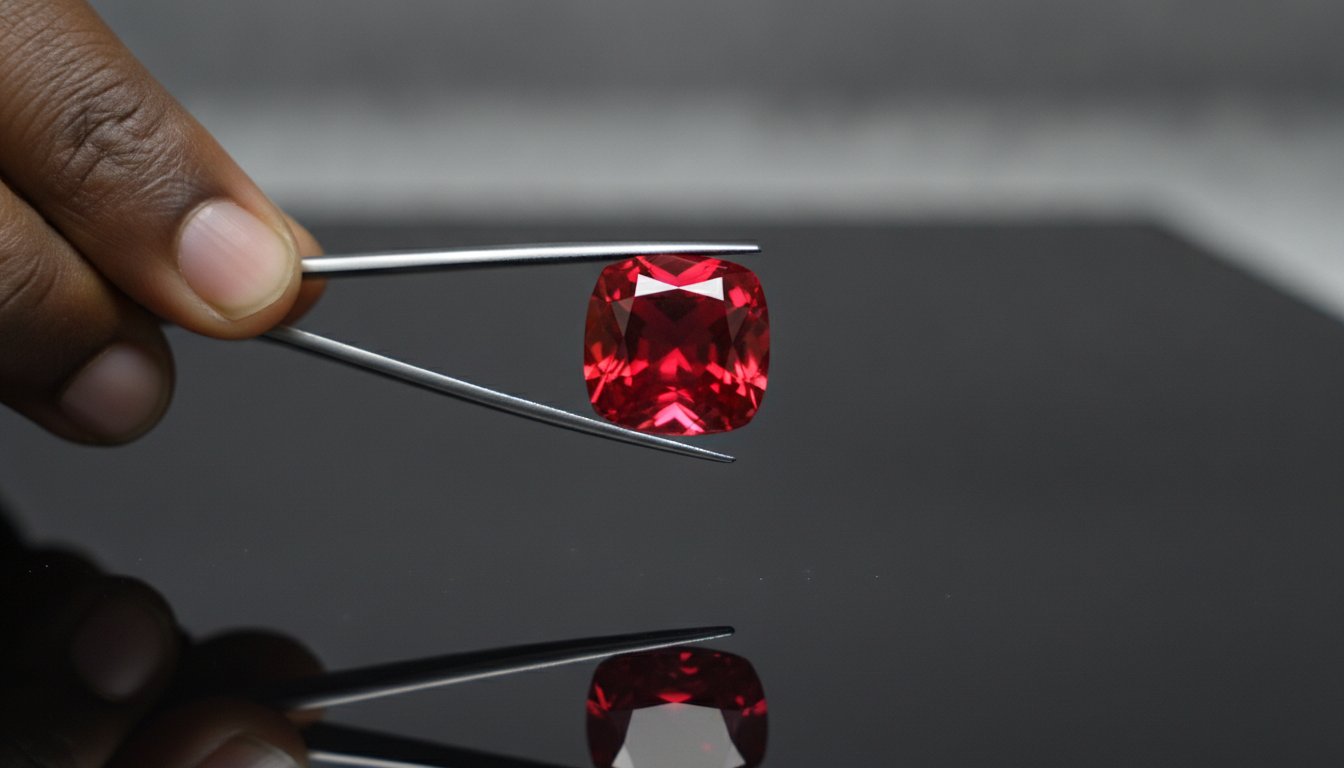
While the legendary Burma ruby once stood alone at the peak of the gemstone world, 2026 has officially crowned the Mozambique ruby as the primary gold standard for clarity-driven investment. You've likely felt the frustration of decoding "Pigeon Blood" certificates that don't match a stone's visual reality or feared the financial risks of undisclosed heat treatments. It's a common struggle for collectors who want to bridge the gap between aesthetic beauty and long-term security. Understanding the nuances of mozambique ruby value is no longer just for lab technicians; it's essential for any serious enthusiast looking to acquire a legacy-grade asset.
This guide provides the professional framework you need to evaluate these gems with total confidence. You'll learn how to identify high-quality fluorescence and master the pricing tiers that distinguish investment-grade stones from commercial stock. We will examine the impact of Mozambique's June 2026 mining laws on global supply, analyze why unheated rubies now command premiums of up to 300 percent, and compare the value proposition against Burmese origins. By the end of this article, you'll have a reliable system for selecting unheated versus heated stones while ensuring your collection reflects the highest standards of integrity and brilliance.
Key Takeaways
- Understand how the Montepuez discovery transformed Mozambique into the premier global source for "Pigeon Blood" rubies.
- Learn the "Iron Content" secret that dictates how these stones interact with light and how to identify the most valuable color saturations.
- Discover the 2026 market benchmarks for mozambique ruby value, including why unheated stones command a 150-300% premium.
- Identify the "sweet spot" for gemstone investment by analyzing the exponential rarity of 3-carat and 5-carat specimens.
- Master the framework for securing your investment through radical transparency and top-tier independent laboratory certification.
The Rise of Mozambique Rubies: A Modern Value Revolution
The discovery of the Montepuez deposit in 2009 wasn't just a new find; it was a seismic shift that redefined the global gemstone hierarchy. For decades, the industry looked almost exclusively to Myanmar for top-tier specimens. However, the emergence of Mozambique as a powerhouse shifted that traditional balance. This wasn't merely a volume play. These stones introduced a level of clarity and transparency that challenged the established norms of the trade. Today, the mozambique ruby value is anchored in three primary pillars:
- Geological Purity: A unique chemical composition that allows for vivid saturation without excessive darkness.
- Market Maturity: A shift from "alternative" status to a primary investment asset.
- Ethical Traceability: Modern mining practices that satisfy the requirements of the 2026 collector.
Mozambique has become the world's primary source for the coveted "Pigeon Blood" red. Unlike stones from other regions that often require heavy treatment to reach this saturation, Mozambique specimens often possess a natural, vivid glow. Their Ruby gemstone properties include a lower iron content than Thai rubies but enough to provide a deep, lush red that avoids the overly pinkish look of some Vietnamese stones. This balance has propelled Mozambique from a secondary alternative to the 2026 gold standard for connoisseurs.
The Montepuez Factor: Consistent Quality
Large-scale, ethical mining operations at Montepuez have brought a level of stability previously unseen in the ruby market. Unlike the fragmented, often opaque supply chains of the past, these operations prioritize traceability; this directly bolsters the mozambique ruby value by providing buyers with confidence in the stone's origin. Mozambique rubies typically offer superior clarity compared to Burmese stones, which are often sleepy or included. The Montepuez ruby stands as the industry benchmark for modern red gems, offering a crystalline transparency that allows light to dance through the facet patterns with minimal interference.
Investment Outlook for 2026
As we move through 2026, collector demand for African origins is reaching an all-time high. Major auction houses now feature Mozambique rubies as headline lots, with a 55-carat specimen holding the record for any colored gemstone sold at auction. The strategic advantage of acquiring these stones now lies in the tightening supply. Mozambique's June 2026 mining laws, which require state equity and local processing, are expected to limit the export of raw material. This regulatory shift, combined with a projected production target of over 4 million carats, suggests that high-quality, unheated stones will become increasingly scarce. Smart investors are securing loose Mozambique rubies now to capitalize on this maturing market before the window of current pricing closes.
Decoding Value: The Four Pillars of Mozambique Ruby Quality
While the standard 4Cs provide a foundation, the specific chemistry of East African deposits creates a unique value profile that requires a specialized eye. Mozambique rubies are celebrated for their vivid red hues, often accompanied by a subtle purplish undertone that adds depth to the stone. Understanding the interplay of iron and chromium is the first step in accurately assessing mozambique ruby value. This chemical signature doesn't just dictate the color; it determines how the gem behaves under different lighting conditions, from the harsh sun of high noon to the warm glow of an evening gala.
The Science of Red: Iron vs. Fluorescence
The primary distinction between Mozambique rubies and those from traditional Himalayan sources lies in their iron content. Iron acts as a 'quencher' for fluorescence in these gems, absorbing UV energy that would otherwise produce a visible neon glow. While Burmese stones are famous for low iron and high fluorescence, Mozambique specimens strike a different balance. This iron content prevents the gem from appearing "pinkish" or "washed out" in strong daylight, ensuring the red remains lush and saturated.
To evaluate a stone's internal fire, perform a UV light test in a darkened environment. A top-tier Mozambique ruby will still exhibit a distinct crimson luminescence, even if it's less intense than its Burmese counterparts. This sophisticated light performance was a key factor in the record-breaking Mozambique ruby sale at Sotheby's, which confirmed that iron-rich gems can achieve the highest levels of market desirability.
Clarity Standards for the Connoisseur
The transparency of African rubies is often their greatest competitive advantage. Unlike the "sleepy" or heavily included material common in other regions, Mozambique gems frequently reach "eye-clean" standards. For the serious collector, this crystalline purity is the engine of brilliance. It allows light to travel deep into the pavilion and return to the eye with minimal interference. When examining these stones, you'll typically encounter three types of inclusions:
- Rutile Needles: Fine, silk-like threads that can sometimes create a soft sheen.
- Crystalline Grains: Small, well-defined mineral deposits trapped during the gem's formation.
- Fingerprints: Delicate patterns caused by liquid-filled tubes that resemble human skin ridges.
Because eye-clean specimens are more readily available from this region, the market expectations for mozambique ruby value are significantly higher regarding clarity. If you're looking for a stone that offers this level of crystalline life, you can explore our current inventory of loose Mozambique rubies to find a specimen that meets these rigorous standards. A stone with high transparency isn't just more beautiful; it's a more secure asset in the 2026 market.
Mozambique vs. Burmese Rubies: Analyzing the Price Gap
For over a century, the Mogok Valley in Myanmar held an undisputed monopoly on the world's finest rubies. This historical prestige created a significant price gap that persists today; however, the market is witnessing a fundamental correction. While a Burmese ruby typically costs three to five times more than a visually comparable Mozambique specimen, the modern connoisseur is increasingly prioritizing visual quality over geological provenance. This shift is narrowing the premium once reserved solely for Burma; collectors now realize that the mozambique ruby value lies in its superior transparency and accessible pricing. This correction is driven by the realization that geological rarity in Mozambique is now meeting the rigorous standards of the world's most elite jewelry houses.
The 'Pigeon Blood' Debate
The term 'Pigeon Blood' was once a geographical descriptor for the finest Burmese material. Today, major laboratories like GIA, GRS, and SSEF use it as a color grade based on objective visual criteria. Can a Mozambique ruby truly earn this title? The answer is a definitive yes. Because Mozambique stones often possess a crystalline clarity that surpasses Burmese material, they frequently achieve this elite grading. These reports provide the technical validation required for high-value transactions, removing the uncertainty that once clouded non-Burmese origins. The psychological value of the 'Burma' name remains high, but when you place an unheated Mozambique stone next to a sleepy Burmese one, the visual reality often favors Africa. Collectors are moving past the 'Burma Bias' to focus on the stone's life and brilliance.
Practical Price Comparisons
To understand the current mozambique ruby value, consider a 2-carat unheated specimen. In the 2026 market, this stone offers a strategic entry point for serious collectors who want significant size and exceptional transparency. For the same investment required for a 1-carat Burmese stone, a buyer can often secure a much larger, eye-clean Mozambique ruby of equivalent color. A 2-carat Mozambique ruby provides a presence on the hand that simply cannot be matched by a similarly priced Burmese stone, which would likely be under a carat or heavily included. This allows for a more impressive piece of jewelry or a more substantial loose asset. For those who want to understand the extreme scarcity of the rival origin, you can read our connoisseur’s guide to Burmese rubies. Ultimately, Mozambique wins on the balance of size and clarity, making it the practical choice for those who value performance over pedigree.
Market Realities: 2026 Price Per Carat and Investment Potential
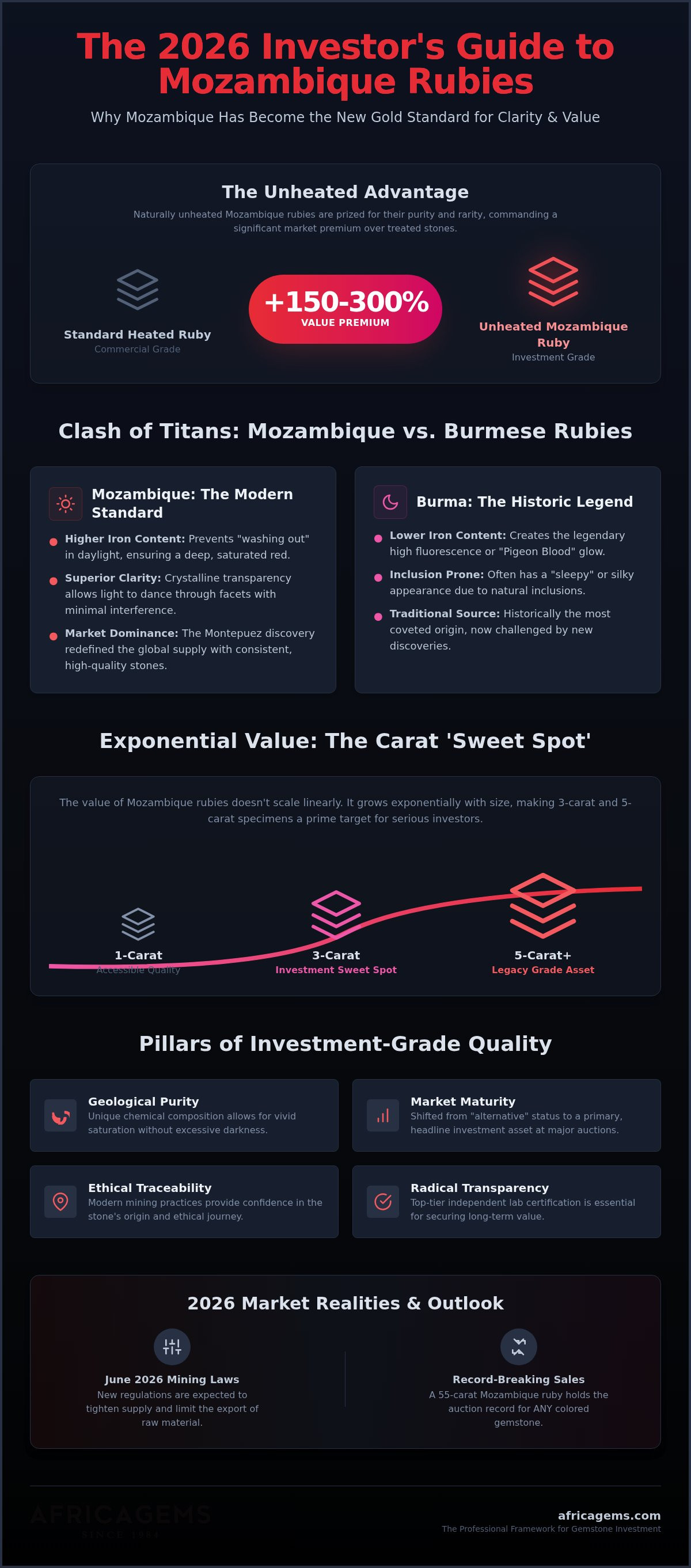
The pricing trajectory for these gems follows an exponential curve driven by geological scarcity. While a 1-carat stone remains an accessible entry point, the jump to a 3-carat or 5-carat specimen triggers a massive rise in cost. This is because large, crystalline rough is exceptionally rare in the Montepuez deposits. Over the last decade, the mozambique ruby value has appreciated steadily as collectors shifted their focus from depleted Burmese mines to the superior clarity of East African material. In 2026, this trend is accelerating due to new mining laws enacted in June that require state equity and restrict the export of unprocessed minerals. These regulatory shifts are tightening the global supply of top-tier material.
Investment grade stones are defined by their lack of thermal enhancement. In the current 2026 market, unheated fine quality rubies command a premium of 150% to 300% over their heated counterparts. A heated stone of fine quality typically ranges from $1,500 to $8,000 per carat, whereas an unheated stone of the same grade can reach between $4,000 and $20,000 per carat. For the serious collector, the "sweet spot" often lies in the 2 to 3-carat range, where the stone is large enough to be considered a significant asset without reaching the astronomical prices of museum-grade specimens.
Price Tiers for Mozambique Rubies
Understanding where a stone sits in the market hierarchy is essential for a secure purchase. We categorize these gems into three distinct tiers based on their rarity and visual performance:
- Fine Jewelry Grade: Usually heated stones with good color and slight inclusions, typically priced under $8,000 per carat.
- Investment Grade: Unheated stones with "Pigeon Blood" certification and high transparency, often exceeding $15,000 per carat.
- Museum Grade: Rare unheated specimens over 5 carats. These are generational assets that rarely appear outside of elite auctions.
The Impact of Treatments on Value
Heat treatment is the industry standard and is widely accepted for its ability to permanently improve color and clarity. However, the mozambique ruby value plummets if the stone has undergone low-integrity treatments like flux-filling or lead-glass filling. These processes use foreign materials to hide cracks, compromising the stone's durability and long-term worth. We strictly avoid these "composite" stones because they lack the geological integrity our clients expect. Transparency regarding enhancements is non-negotiable for a professional transaction. You can learn more about why we reject these methods in our guide to non-genuine and treated gemstones. If you are ready to acquire a stone with verified integrity, you can browse our curated selection of loose Mozambique rubies today.
Securing Your Investment: The AfricaGems Advantage
Buying a rare gemstone is ultimately an act of trust. To protect the mozambique ruby value of your acquisition, you must look beyond the surface brilliance to the documentation that supports it. We believe that radical transparency is the only acceptable standard for high-value transactions. This is why we insist on independent certification from the world's most respected laboratories, including the GIA, AGL, and GRS. These reports provide the technical validation for origin and treatment status that ensures your investment remains secure for generations.
Marc Sarosi has spent over four decades refining his eye for excellence. Since 1984, he's acted as a knowledgeable mentor to collectors, personally vetting every specimen that enters our vault. This Expert Enthusiast approach means we look for more than just a "clean" certificate; we seek stones with a specific visual life. Only the top 1 percent of the material we examine meets our uncompromising standards for color saturation and crystalline transparency. By prioritizing the mozambique ruby value through rigorous selection, we ensure that every stone we offer is a true masterpiece of nature.
Vetting for Quality and Ethics
Ethical sourcing isn't just a buzzword for us; it's a pillar of our business model. We maintain trusted supply chains with reputable mines to ensure that every gem is sourced responsibly. This commitment to integrity adds a layer of intrinsic value that isn't always visible on a lab report. When you buy from a legacy dealer, you're benefiting from a personal guarantee of quality and a commitment to full disclosure. We don't hide behind jargon. Instead, we provide the steady, educational pace that builds your confidence as a buyer.
Next Steps for the Collector
Choosing a loose stone is the first step in creating a truly personal masterpiece. By selecting your gem before it's set, you can inspect the pavilion and girdle for any hidden inclusions that a mounting might obscure. Once you've found the perfect specimen, you can work with us to bring your vision to life. You're invited to browse our current inventory of loose Mozambique rubies to find a stone that resonates with your personal style. For those seeking a unique setting, Marc Sarosi offers bespoke custom jewelry design services to ensure your investment is showcased with the elegance it deserves. Our promise is simple: secure, expert-backed gemstone investing with a personal touch.
The Future of Your Gemstone Legacy
Choosing a ruby in 2026 requires a balance of technical knowledge and aesthetic appreciation. You've seen how the Montepuez deposits have redefined the market, offering a crystalline clarity that often surpasses traditional sources. With new mining regulations tightening global supply, the window to secure high-quality material is narrowing. Understanding mozambique ruby value isn't just about carats; it's about the integrity of the stone's origin and the absence of thermal enhancement. A well-chosen unheated ruby is more than a beautiful gem. It's a natural asset with geological scarcity that cannot be replicated. For those who value rubies for their historical association with passion and attraction, you can also discover Love Spells to explore specialized services designed to help you achieve your romantic goals.
At AfricaGems, we simplify this journey through radical transparency. Every stone is ethically sourced and expertly vetted by Marc Sarosi, who has been a trusted leader in the industry since 1984. We provide full disclosure on all gemstone treatments so you can buy with absolute security. Whether you're a seasoned collector or a first-time buyer, you deserve a gem that matches your standards of excellence. Explore the Finest Loose Mozambique Rubies at AfricaGems today and begin your custom design journey with confidence. Your perfect red gem is waiting to be discovered.
Frequently Asked Questions
Is a Mozambique ruby a good investment for 2026?
Mozambique rubies are a compelling choice for 2026 as collectors seek assets with genuine geological scarcity. As the lab-grown diamond market commoditizes, natural colored gemstones are strengthening. These rubies offer a blend of high clarity and vivid color that is increasingly rare. With production targets increasing by only 3 percent this year, securing high-quality specimens now is a strategic move for any serious investment portfolio.
What is the current price per carat for a high-quality Mozambique ruby?
Current market benchmarks for fine-quality heated stones range from $1,500 to $8,000 per carat. If you are seeking unheated specimens, prices rise significantly to between $4,000 and $20,000 per carat. A stone with a "Pigeon Blood" certificate can command a 40 percent premium over standard red gems. These figures reflect the 2026 demand for stones that possess both visual brilliance and lab-verified natural status.
Are Mozambique rubies more valuable than Burmese rubies?
Burmese rubies remain more expensive due to their historical prestige and extreme scarcity. A visually comparable Mozambique stone typically costs 40 to 70 percent less than one from Myanmar. This price gap means the mozambique ruby value is often superior for those prioritizing size and clarity. You can acquire a larger, cleaner African ruby for the same investment required for a smaller, included Burmese specimen.
Can Mozambique rubies be 'Pigeon Blood' red?
Yes, Mozambique rubies frequently achieve the "Pigeon Blood" classification from top-tier laboratories. This grade requires a vivid, pure red with a subtle blue undertone and strong fluorescence. Because these gems often have higher transparency than Himalayan stones, they showcase this elite color with exceptional brilliance. This clarity allows the "Pigeon Blood" hue to appear more vibrant and lively under various lighting conditions.
Should I buy a heated or unheated Mozambique ruby?
Choosing between heated and unheated stones depends on your goals. Unheated rubies are the gold standard for investment because they represent less than 1 percent of all rubies found. They command a 150 to 300 percent premium due to this rarity. If your primary goal is beautiful jewelry for daily wear, a heated stone offers a similar visual impact at a more accessible price point without compromising durability.
What is the best certification for a Mozambique ruby?
The most respected certifications for these gemstones come from the GIA, AGL, or GRS. These laboratories are the global authorities on origin determination and treatment disclosure. A report from one of these institutions is essential for protecting your mozambique ruby value. It provides the technical validation required for insurance and future resale, ensuring that your stone's quality is recognized by professionals worldwide.
How can I tell if a Mozambique ruby is ethically sourced?
Ethical sourcing is verified through transparent supply chains and reputable dealers. The Montepuez deposit is known for large-scale, regulated mining operations that offer better traceability than traditional artisanal mines. When purchasing, ask for full disclosure regarding the stone's journey from mine to market. Reputable dealers provide this information as a standard part of the transaction, ensuring your gem supports responsible industry practices.
Do Mozambique rubies have many inclusions?
Mozambique rubies are prized for being significantly cleaner than rubies from other historical sources. While all natural rubies have some inclusions, these African gems frequently reach "eye-clean" standards. You'll typically find fine rutile needles or small crystals, but these are often microscopic. This high level of transparency is a key reason they have become the modern benchmark for fine jewelry and investment-grade red gemstones.

Article by
Marc Sarosi
Professional gemstone dealer for more than 40 years. Started off mining Aquamarine in Zambia, Africa and travelled throughout the continent in search of fine gems. Trusted authority on fine gemstones and have donated a fine collection of more than 27 extraordinary gemstones to the Smithsonian Institute Gem Hall for generations to see.