
Loose Burma Rubies: The Connoisseur’s Guide to the World’s Rarest Gem
Apr 2nd 2026
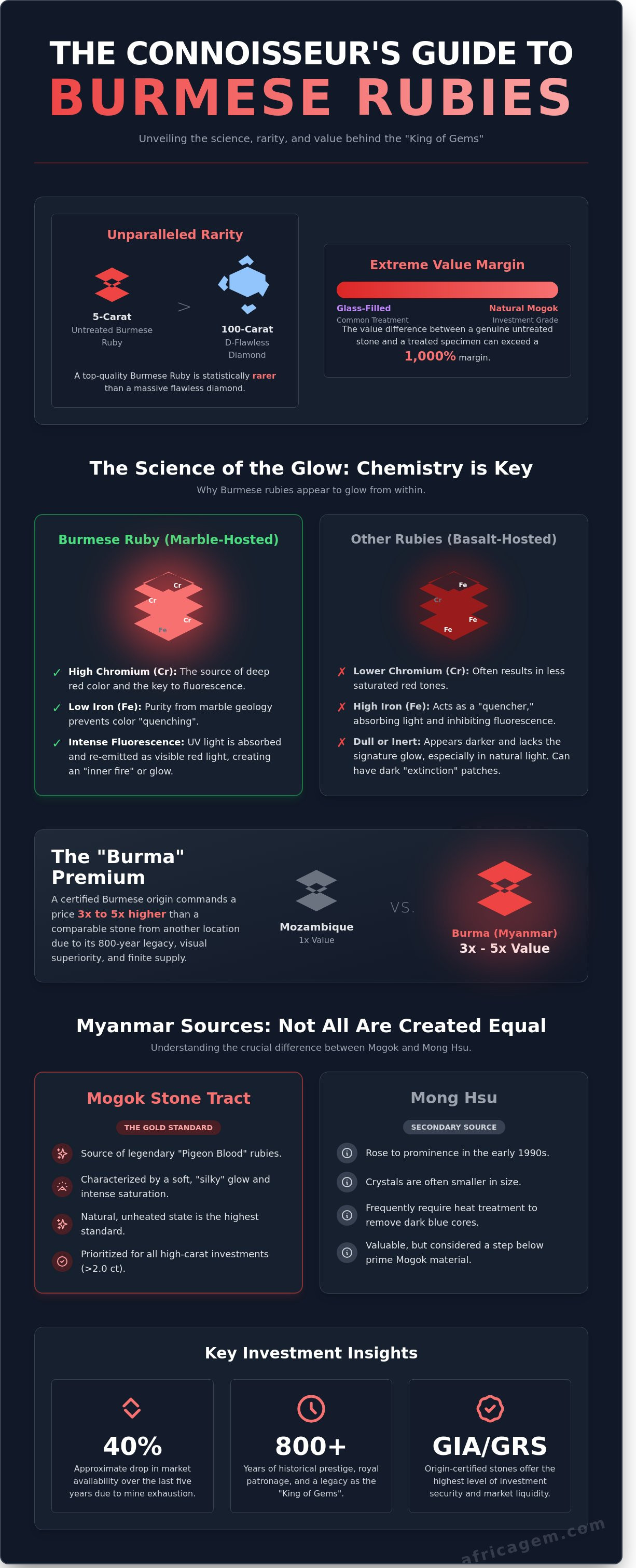
In the high-stakes world of elite gem collecting, a 5-carat untreated Burmese ruby is statistically rarer than a 100-carat D-flawless diamond. You likely recognize that loose burma rubies represent the absolute pinnacle of the corundum family, yet the prevalence of synthetic fillers and undisclosed heat treatments in the current market can make any acquisition feel like a high-risk gamble. It's a valid concern when the price difference between a glass-filled specimen and a natural Mogok stone often exceeds a 1,000% margin in value.
This guide provides the technical clarity you need to select a stone with total confidence. We'll explore the 800-year legacy of the Mogok Stone Tract and explain exactly how high chromium levels create that iconic, self-illuminating fluorescence. You'll learn to analyze a GRS or GIA report with precision, ensuring your next heirloom is both ethically sourced and investment-grade. We're moving beyond the "Pigeon Blood" marketing hype to look at the specific chemical markers and geological rarities that define a true connoisseur's choice.
Key Takeaways
- Understand why the legendary Mogok Stone Tract remains the global gold standard for ruby origin and historical prestige.
- Discover the unique chemical signature of loose burma rubies, where high chromium and low iron content create an incomparable inner fire.
- Learn to evaluate professional-grade stones by identifying the specific color saturation and "eye-clean" clarity standards unique to Burmese corundum.
- Compare the visual profiles and price points of Burmese and Mozambique rubies to select the perfect gemstone for your collection or investment.
- Explore how Marc Sarosi’s 40 years of sourcing expertise can help you transition from a loose stone to a bespoke, legacy-quality masterpiece.
The Legacy of Loose Burma Rubies: Why Origin Defines Value
For over 800 years, the "King of Gems" title has belonged to a specific variety of corundum found in the jagged hills of Myanmar. These stones, known globally as Burma rubies, originate primarily from the Mogok Stone Tract, a geological anomaly that produces the world's most vibrant red crystals. Unlike gems from basaltic environments, these marble-hosted rubies possess a low iron content. This chemical purity allows for a breathtaking fluorescence that makes the stone appear as if it's glowing from within, even in low light.
Acquiring loose burma rubies has become increasingly difficult as we enter 2026. Geological surveys and mining reports indicate that the primary deposits in Mogok are facing unprecedented exhaustion. Market availability has dropped by approximately 40% over the last five years, driving a surge in investment demand. For the serious collector, these gems represent more than just jewelry; they are a resilient asset class. Origin-certified stones from Myanmar consistently outperform other gemstones in value retention, often fetching record prices at auction houses like Christie's and Sotheby's due to their finite supply.
Mogok vs. Mong Hsu: Understanding the Sub-Regions
Collectors distinguish between two primary sources within Myanmar. Mogok is the legendary valley responsible for "Pigeon Blood" stones, characterized by a soft, silky glow and intense saturation. Mong Hsu, which rose to prominence in the early 1990s, serves as a secondary source. While Mong Hsu produces beautiful material, the crystals are often smaller and frequently require heat treatment to remove dark "blue" cores. Expert enthusiasts prioritize Mogok stones for high-carat investments, particularly those exceeding 2.0 carats, as their natural, unheated state is the gold standard of gemology.
The "Burma" Brand: Why the Name Commands a Premium
The "Burma" moniker acts as a powerful value multiplier in the gemstone trade. On average, a certified Burmese stone commands a price 3x to 5x higher than a similar quality ruby from Mozambique or Thailand. This isn't merely a matter of geography; it's a reflection of the stone's unique pleochroism and historical prestige. The Burma premium is a result of centuries of royal patronage and finite supply.
- Historical Prestige: Burmese kings claimed every ruby over a certain weight, cementing the stone's royal status.
- Visual Superiority: The unique marble-hosted geology creates a vivid red that basalt-hosted stones cannot replicate.
- Investment Security: Loose burma rubies with GIA or SSEF origin reports offer the highest level of liquidity in the rare mineral market.
The Science of the Glow: Chromium, Iron, and Fluorescence
Chromium provides the lifeblood of a ruby. Without this trace element, the stone would simply be a colorless sapphire. In the finest loose burma rubies, chromium concentrations typically range from 0.1% to 3.0% of the stone's total weight. This specific chemical inclusion does more than just impart a deep red hue; it alters how the crystal interacts with light at an atomic level. While other gemstones absorb light, the chromium in a Burma ruby excites it, creating an internal radiance that collectors call "inner fire."
Iron vs. Chromium: The Chemical Differentiator
Most rubies found globally are basalt-hosted, meaning they formed in iron-rich environments. Iron is a notorious "quencher" in gemology. In stones from Thailand or Cambodia, iron levels often exceed 0.5%, which effectively kills fluorescence and creates "extinction," or dark, blackish patches within the stone. Burma's deposits are marble-hosted, a geological miracle where iron levels rarely top 0.1%. This absence of iron allows the red color to remain pure and saturated. It also contributes to the "velvety" visual texture unique to Mogok stones, where light is softened rather than harshly reflected.
Daylight Fluorescence: The Secret of the Red Fire
The primary reason loose burma rubies command a 300% price premium over stones from other regions is daylight fluorescence. When ultraviolet rays from the sun hit the chromium ions, the stone actually emits its own visible red light. You aren't just seeing reflected color; you're seeing the stone produce its own light. You can verify this phenomenon using a 365nm UV lamp in a darkened room. A genuine Burma ruby will glow like a hot coal, whereas an iron-heavy stone will appear dull or inert.
- Rutile Silk: Microscopic needles of rutile scatter light across the facets, enhancing the glow.
- Low-Light Performance: Because of fluorescence, these stones appear "vivid" even in dim candlelight.
- Value Impact: Strong fluorescence can increase the value per carat by thousands of dollars.
Expert collectors often prioritize this optical signature when they invest in investment-grade rubies because it's a trait that cannot be faked by heat treatment. The presence of intact "silk" combined with high fluorescence confirms the stone's origin and its natural, unenhanced state. This synergy of chemistry and geology ensures the gem remains vibrant in every lighting condition, from high noon to a low-lit evening event.
Evaluating Loose Burma Rubies: The Collector’s 4Cs
When you evaluate loose burma rubies, the standard 4Cs take on a specialized meaning that rewards the educated eye. Color remains the undisputed king of these metrics. You aren't just looking for a simple red; you're seeking a precise balance of 80% to 85% saturation. If the tone drops below 60%, the stone loses its visual impact; if it exceeds 80%, it risks appearing overly dark or "inky." Burmese material is legendary for its internal glow, a phenomenon caused by low iron content that allows natural fluorescence to fire even in shaded environments.
Clarity in this region follows a different philosophy than diamond grading. A 100% "loupe-clean" Burmese ruby is a genuine rarity. Serious collectors look for "eye-clean" gems where natural inclusions don't obstruct the light path. Microscopic rutile needles, often called "silk," are actually desirable. They serve as a fingerprint of the Mogok mines and provide proof that the stone hasn't been altered by extreme heat.
- Color: The primary value driver, focusing on vivid saturation and a lack of brown or orange overtones.
- Clarity: Eye-clean is the gold standard; silk often confirms origin and natural state.
- Cut: Lapidaries prioritize weight retention, often resulting in slightly asymmetrical "native" cuts that maximize color.
- Carat Weight: Scarcity drives exponential price jumps at the 2.00, 3.00, and 5.00-carat milestones.
The relationship between cut and carat weight is particularly tight in Burma. Because the ruby crystal grows in hexagonal tabs, cutters often use mixed cuts to preserve as much of the rare material as possible. This leads to a massive price escalation at specific thresholds. A 2.10-carat ruby doesn't just cost slightly more than a 1.90-carat stone; it can command a 40% premium per carat because reaching that 2.00-carat mark is significantly harder in nature.
The "Pigeon Blood" Standard: Myth vs. Lab Grading
The "Pigeon Blood" designation is the most prestigious label a laboratory like GRS or GIA can bestow. It requires a pure red hue with a strong fluorescent reaction under UV light. You must avoid the "pinkish-red" trap. If a stone leans too heavily into the pink spectrum, it is technically a pink sapphire, which sells for a fraction of the price of a true ruby. Always inspect loose burma rubies under 5500K neutral lighting. This ensures you see the true color saturation without the artificial warmth of yellow light bulbs.
Treatment Transparency: Heat vs. No-Heat
An "Unheated Burma" ruby is the crown jewel of any collection. While roughly 95% of rubies globally are heated to improve clarity and color, unheated stones remain exactly as they were mined. This rarity creates a massive value gap. You can explore the technical nuances in our Ruby Heat Treatment guide. Choosing an unheated stone isn't just about aesthetics; it's a play for long-term value. A certified unheated Burmese ruby can command a 100% to 300% price premium over a heated stone of similar appearance.
Burma vs. Mozambique: Choosing the Right Ruby for Your Goal
Deciding between these two legendary origins defines the character and value of your collection. Burma (Myanmar) rubies are historically prized for their high chromium content and low iron levels. This unique chemical signature creates a natural fluorescence, making the stone appear to glow from within even in low light. Mozambique rubies, which entered the global market in significant volume after the 2009 Montepuez discovery, offer a different appeal. They typically show higher transparency and "loupe-clean" clarity, providing a sophisticated, crystalline aesthetic that rivals the finest gems in the world.
The Aesthetic Debate
Mozambique stones often display a deep, rich red that leans toward a slightly cooler, darker tone than Mogok material. They're frequently available in larger sizes, so you can often secure a 3-carat Mozambique ruby for the same price as a 1-carat Burmese stone. Loose burma rubies possess an "electric" saturation that remains vibrant across all lighting conditions. For jewelry design, the warm glow of Burma stones pairs beautifully with 18k yellow gold. The crisp, transparent nature of Mozambique rubies is best highlighted by the cool brilliance of platinum or white gold settings.
Your specific goal dictates the best path forward. Collectors view Burma stones as the ultimate investment-grade asset; they've historically shown a 10% to 15% annual appreciation in value for top-quality unheated specimens. If your priority is a breathtaking, large center stone for daily luxury wear, Mozambique offers incredible visual impact without the steep "origin premium." At AfricaGems, we apply the same rigorous standards to both origins, ensuring every stone is ethically sourced and conflict-free.
Certification Strategy: GIA, AGL, and GRS
You should never purchase loose burma rubies without an origin-verified report from a top-tier laboratory. GIA and AGL use advanced mass spectrometry to confirm a stone's geological birthplace. While the GRS "Pigeon Blood" moniker is a popular marketing term, AGL is often more conservative and strict with their color grading. AfricaGems ensures every stone perfectly matches its laboratory paperwork, providing you with the security of the AfricaGems Difference. This transparency protects you from the common industry practice of mislabeling high-iron Thai stones as Mozambique or Burma.
Ready to find a stone that meets your exact investment or aesthetic criteria? Browse our curated selection of loose burma rubies to experience the legendary glow for yourself.
From Loose Stone to Legacy: Designing with AfricaGems
Owning a world-class gemstone is a journey that begins with trust and ends with a timeless piece of art. For over 42 years, Marc Sarosi has navigated the complex markets of Southeast Asia and Africa to source stones that define excellence. This isn't just about selling a product; it's about the AfricaGems Difference. We prioritize the preservation of gemological history by offering only the most exceptional loose burma rubies available on the market today. By sourcing directly and maintaining a rigorous selection process, we ensure that every gem possesses the fire and character expected of the King of Gems.
The Custom Design Journey
Starting with a loose stone offers a distinct advantage over buying a pre-set ring. You can view the stone from every angle, ensuring there are no hidden inclusions tucked beneath a prong. Our custom jewelry design services help you select a metal and setting that complements the specific fluorescence of your ruby. While 95% of rubies on the global market undergo some form of enhancement, we focus on stones that retain their natural brilliance. A 2.0-carat Burma ruby, for instance, often requires a specific 18k yellow gold or platinum mounting to maximize its internal glow. Our designers work with you to create a bespoke masterpiece that protects your financial investment while highlighting the stone's unique optical properties.
The Marc Sarosi Personal Guarantee
AfricaGems stands as a pillar of radical transparency in an industry that's often opaque. We provide a 100% guarantee on all treatment disclosures, specifically vetting against lead-glass filling and other temporary enhancements that compromise a stone's value. You have direct access to Marc Sarosi for high-value consultations, providing a level of personal service typically reserved for private auction houses. Our commitment to integrity means every stone is exactly what we claim it to be, backed by certificates from reputable labs like the GIA or AGL. If you're ready to invest in a legacy, browse our current collection of Loose Burma Rubies and discover the pinnacle of the gem world.
- Direct access to owner expertise with 40+ years in the trade.
- Full disclosure on all treatments, with a focus on unheated and heat-only stones.
- Bespoke design services to ensure your ruby is set for maximum light performance.
- A secure, transparent buying process for high-value collectors.
Secure Your Place in Gemological History
Acquiring loose burma rubies represents more than a luxury purchase; it's an entry into a storied legacy of rare minerals. You've learned how high chromium levels create that iconic fluorescence and why a GIA or GRS certificate is non-negotiable for verifying origin. Whether you're drawn to the historic pigeon's blood hue or the technical perfection of a loupe-clean cut, your selection should reflect both aesthetic passion and rigorous financial wisdom.
AfricaGems brings 40 years of expertise to your search, ensuring every stone meets our uncompromising standards for transparency. We guarantee that our collection is ethically sourced and conflict-free, providing the security you need for such a significant investment. Marc Sarosi personally stands behind the integrity of every gem, offering a level of direct accountability that defines the AfricaGems Difference. It's time to transform your vision into a tangible legacy with a gemstone that will captivate for generations to come.
View Our Certified Collection of Loose Burma Rubies
Your journey into the world of elite gemstones starts with a single, breathtaking choice.
Frequently Asked Questions
How much does a 1-carat Burma ruby cost in 2026?
A fine 1-carat Burma ruby is projected to cost between $15,000 and $45,000 by 2026. This estimate reflects the consistent 12% annual price increase observed in Mogok valley production over the last decade. Investment-grade stones with "Pigeon's Blood" certification from GRS or GIA sit at the higher end of this spectrum. Scarcity remains the primary driver as older mines reach 90% depletion levels.
Is a "No Heat" Burma ruby worth the extra investment?
Yes, "No Heat" Burma rubies are worth the premium because they represent less than 1% of all gem-quality corundum found globally. These stones command prices 50% to 100% higher than heat-treated counterparts. When you acquire loose burma rubies in their natural state, you're securing a piece of geological history that hasn't been altered by human intervention since its formation 25 million years ago.
What is the difference between a Burma ruby and a blood ruby?
The difference lies in classification; Burma refers to the geographical origin, while "blood ruby" is a colloquial term for the "Pigeon's Blood" color grade. A ruby can be from Burma without meeting the strict color saturation requirements for the Pigeon's Blood label. True Pigeon's Blood rubies must exhibit a specific 600-nanometer red fluorescence under UV light to earn that prestigious distinction from major gemological laboratories.
How can I tell if my ruby is truly from Burma without a certificate?
You can't definitively confirm a ruby's origin without professional lab equipment, but the presence of "silk" rutile needles is a strong indicator. These microscopic inclusions intersect at 60-degree angles and create the signature velvety glow unique to the Mogok region. At AfricaGems, we never rely on visual cues alone. Every stone comes with a 100% origin guarantee backed by GIA or AGL certification to ensure your peace of mind.
Are Burma rubies ethical to buy?
Buying Burma rubies is ethical when sourced through transparent channels that comply with the 2021 international trade advisories. We vet our suppliers to ensure that every purchase supports local artisanal miners rather than military interests. By adhering to the 2003 principles of responsible sourcing, we maintain a supply chain that's 100% traceable. This transparency is a core part of the AfricaGems Difference.
Do Burma rubies have more inclusions than other rubies?
Burma rubies typically contain more microscopic inclusions than stones from Mozambique or Thailand, but these features actually enhance their beauty. The rutile "silk" scatters light throughout the stone, which eliminates the "extinction" or dark spots seen in cleaner gems. About 95% of Mogok rubies show these natural fingerprints. They prove the stone's organic origin and distinguish it from synthetic lab-grown alternatives.
What is the best cut for a loose Burma ruby to show its color?
Oval and cushion cuts are the superior choices for loose burma rubies because they follow the natural shape of the rough crystal. These styles minimize weight loss during the cutting process, which is vital when 1-carat rough stones are so rare. A well-proportioned cushion cut maximizes the pleochroism of the stone. This ensures the richest red hues are directed toward the viewer's eye.
How do I care for and clean an unheated Burma ruby?
You should clean your unheated ruby using only warm water, mild dish soap, and a soft-bristled toothbrush. While rubies score a 9 on the Mohs scale, unheated stones deserve gentle handling to preserve their natural state. Avoid ultrasonic cleaners if the stone has any surface-reaching fractures. I recommend a professional inspection every 12 months to check the integrity of the setting and ensure the stone remains secure.