
Loose Colombian Emeralds: The Collector’s Guide to Quality, Origin, and Investment
Sep 7th 2026
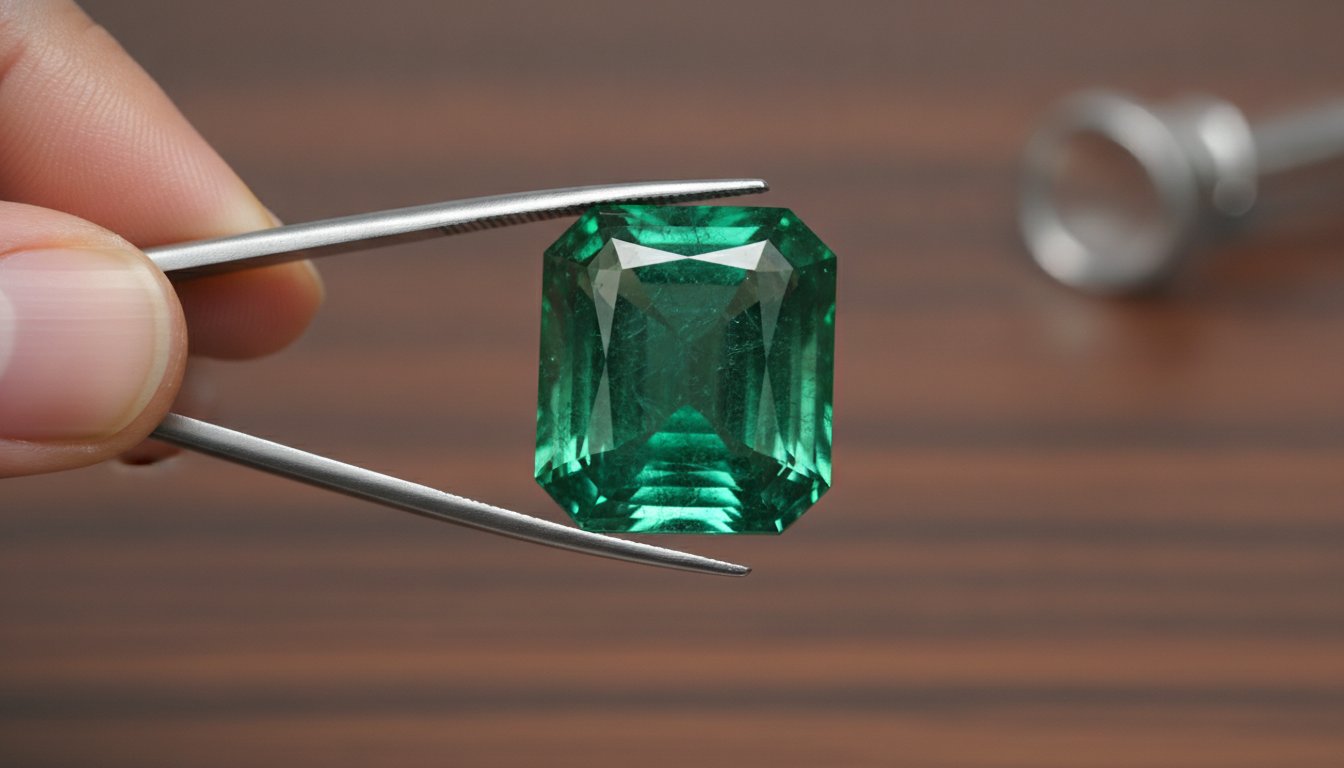
A top-tier specimen of loose colombian emeralds with "No Oil" certification is currently commanding premiums up to four times higher than stones with minor treatments, marking it as a premier asset in the 2026 luxury market. You've likely felt the magnetic pull of that legendary "Muzo Green" hue, yet the fear of purchasing a lab-created stone or a heavily treated specimen often stands in the way of a confident acquisition. It's understandable to feel anxious about ethical sourcing or the complex terminology used by dealers in South America. You deserve a transparent path to owning a masterpiece that holds its value over generations.
This guide will help you master the nuances of these exceptional gemstones so you can secure a high-investment stone with total clarity. We'll demystify the impact of Colombia's latest mining decrees on global supply and explain why specific origin benchmarks like Muzo and Chivor dictate such drastic price variations. By the end of this article, you'll have the technical expertise to evaluate certifications and the creative inspiration to transform a loose center stone into a breathtaking piece of custom jewelry. Let's explore the world's finest green gemstones through the lens of radical transparency and decades of expert connoisseurship.
Key Takeaways
- Grasp the historical "Old Mine" legacy to understand why Colombian stones remain the most coveted variety of beryl on the market.
- Compare the distinct visual profiles of Muzo, Chivor, and Coscuez to find the specific hue and transparency that speaks to your collection.
- Identify the difference between acceptable cedar oil treatments and risky resins when evaluating loose colombian emeralds for long-term value.
- Interpret the "jardin" within a stone as a signature of nature rather than a flaw, ensuring you select a certified natural gem.
- Learn how to use professional grading criteria to choose a center stone perfectly suited for a high-end custom jewelry project.
The Prestige of Colombian Origin: Why These Emeralds Command a Premium
The allure of loose colombian emeralds isn't merely a matter of modern marketing; it's a consequence of unique chemistry. Scientifically, these stones are a variety of the mineral beryl, but their soul comes from the trace elements of chromium and vanadium. While emeralds from other parts of the world often rely on vanadium alone, the high chromium content in Colombian material produces a vibrant green that seems to pulse with life. This chemical signature is tied to the "Old Mine" legacy, a term used by connoisseurs to describe stones of exceptional quality that mirror the legendary output of 16th-century Spanish colonial mines. History dictates today's market value because these historic sources set a standard for color that remains the global benchmark.
A defining characteristic of these gems is the "glow" factor, which is a direct result of the iron-poor soil in the Andes. In most emerald deposits, iron is present and acts as a "quencher," absorbing light and killing the stone's natural fluorescence. Colombian specimens lack this iron interference. This allows light to dance through the crystal lattice, creating a stone that looks vivid even in low-light environments. Muzo Green serves as the industry benchmark for this phenomenon, representing a specific point of high saturation and a warm, slightly yellowish-green hue that avoids the darkness found in lesser stones.
Colombian vs. Zambian Emeralds: A Value Comparison
When you compare loose colombian emeralds to their Zambian counterparts, the visual differences are striking. Zambian stones typically exhibit a cooler, bluish-green profile due to higher iron content. They also tend to be "cleaner" to the naked eye. In contrast, Colombian stones are famous for their "jardin," or internal gardens. These complex inclusions are proof of natural origin and are widely embraced by collectors as a sign of authenticity. From an investment perspective, Colombian stones consistently demonstrate superior market liquidity. They remain the primary choice for high-end auction houses and serious collectors, often holding their value more reliably in the secondary market than stones from newer, high-volume deposits.
The Geology of Rarity
The rarity of these stones is rooted in a geological miracle. Unlike most gemstones that form in igneous or metamorphic rock, Colombian emeralds are found in sedimentary black shale. Millions of years ago, intense tectonic activity in the Andes forced hydrothermal fluids through these sedimentary layers, picking up the perfect cocktail of minerals to grow crystals. You can learn more about the specific Colombian emerald mining regions where these conditions occurred. This unique hydrothermal process created the world's most vivid green crystals, making them the ultimate centerpiece for a legacy collection. If you are looking to start your own journey, you can explore our collection of precious gemstones to see the difference that origin makes.
Muzo, Chivor, and Coscuez: Understanding Colombian Mining Regions
While the country of origin provides the prestige, the specific mining district determines the soul of loose colombian emeralds. Each region in the Boyacá and Cundinamarca departments offers a unique geological signature. These differences manifest in the stone's "face-up" color, which is the overall appearance of the gem when viewed from the top. Collectors often develop a preference for the velvet depths of a Muzo stone or the piercing transparency of a Chivor gem. Understanding these nuances is essential for anyone investing in Colombian emeralds, as the market assigns different premiums based on these regional traits.
The Legend of the Muzo Mine
Muzo is arguably the most famous gemstone mine in history. Since the Spanish Conquest, it has been the primary source of stones that define the "Muzo Green" benchmark. This term describes a deep, warm green with a characteristic velvet-like appearance. This "velvet" isn't a surface texture but a result of microscopic inclusions that soften the light as it passes through the crystal. It's important to realize that "Muzo Green" has evolved into a trade term used to describe color quality, even if the stone originated in a nearby district. However, a classic Muzo-sourced gem will typically show a high saturation that avoids the "black-out" effect seen in lesser stones. If you're looking for a stone with historical pedigree, you can browse our curated selection of precious gemstones to find a specimen that captures this legendary glow.
Chivor: The Blue-Green Alternative
Chivor emeralds offer a distinct visual alternative to the warmth of Muzo. These stones are known for a bluish-green tint and exceptional transparency. This combination creates what many dealers call an "electric" look. Because Chivor emeralds often have fewer internal inclusions, they frequently exhibit higher brilliance and light return. This makes them a favorite for jewelry settings where the play of light is the primary focus. For a deeper dive into how these stones compare to other varieties, see our Emerald Gemstone: The Connoisseur’s Guide to the King of Green Gems.
Coscuez: The Source of Brilliance
Coscuez is the powerhouse of Colombian production, often yielding stones with a slightly yellowish-green hue. While Muzo is prized for depth and Chivor for clarity, Coscuez gems are celebrated for their high brilliance. The crystals from this region tend to be quite bright, making them stand out in professional showcases. When you evaluate loose colombian emeralds, consider how the yellowish undertones of a Coscuez stone might complement yellow gold settings, whereas the bluish-green of a Chivor stone might pop against platinum or white gold.
The Transparency Gap: Navigating Emerald Treatments and Oiling
Nearly 99% of all emeralds in the market undergo some form of clarity enhancement. This isn't a sign of a "fake" stone; it's a practical necessity due to the "jardin" (internal gardens) inherent to the gem's formation. When buying loose colombian emeralds, you'll find that natural cedar oil is the gold standard for treatment. It's a reversible process that fills surface-reaching fissures to improve transparency without altering the stone's chemical structure. In contrast, artificial resins and polymers can be highly problematic. These synthetic fillers often degrade over time, turning cloudy or yellow, and can significantly diminish the stone's long-term resale value. At AfricaGems, we operate with a policy of radical transparency. Founded by Marc Sarosi in 1984, our business is built on the principle of full disclosure, ensuring you know exactly what level of enhancement is present in every gem.
Understanding Lab Reports (GIA, GRS, and Gubelin)
Expert collectors look specifically at the "Comments" section of reports from top-tier labs like GIA or GRS. These institutions categorize oiling into four levels: Insignificant, Minor, Moderate, and Significant. The difference is vital for your investment. For example, a stone with "Minor" oiling can command a price 20% to 50% higher than an identical specimen with "Moderate" oiling. However, the true "Holy Grail" is the unenhanced, "No Oil" Colombian emerald. In the 2026 market, these certified natural stones are commanding premiums 2 to 4 times higher than treated gems, representing the pinnacle of scarcity and value trajectory.
Durability and Care for Oiled Emeralds
Owning a high-value gemstone requires specific maintenance habits to preserve its luster. You should never use ultrasonic or steam cleaners on your emerald. The high-frequency vibrations and heat can literally pull the oil out of the fissures, leaving the stone looking dry and brittle. Instead, clean your loose colombian emeralds with a soft brush and lukewarm, soapy water. Proper care ensures the stone remains a viable candidate for a high-end setting or a legacy collection. To see how we prioritize the integrity of every stone we sell, you can learn more about our ethical sourcing and gemstone integrity. This commitment to disclosure is what separates a mere transaction from a lifelong investment.
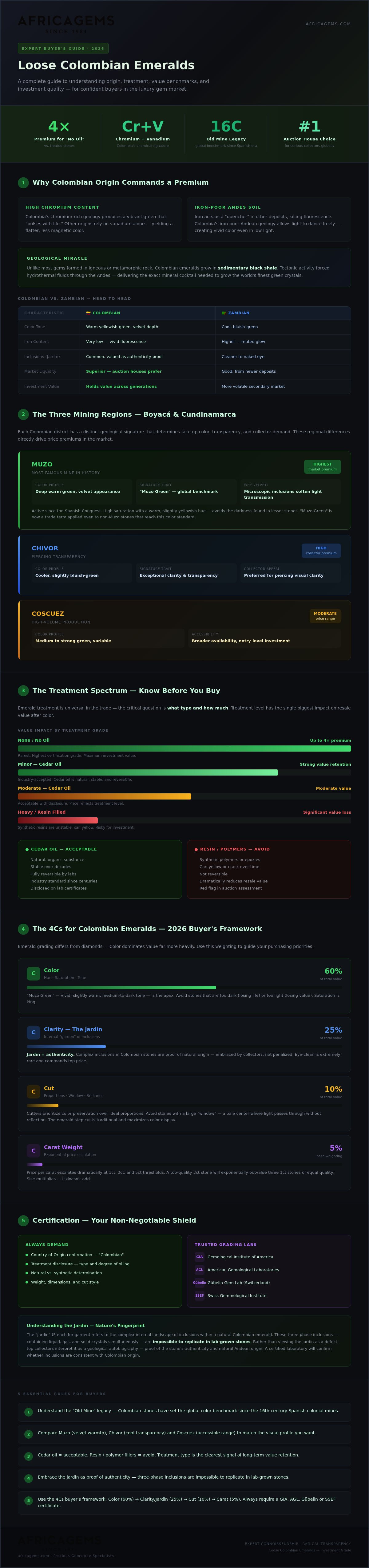
The 4Cs of Colombian Emeralds: A Buyer’s Framework for 2026
While the diamond industry prioritizes brilliance, the world of loose colombian emeralds is governed by a hierarchy where color is the undisputed king. The traditional 4Cs (Color, Clarity, Cut, and Carat Weight) still apply, but they require a specialized interpretation for this variety of beryl. For a serious collector, understanding how these factors interact is the difference between a commercial-grade stone and a legacy investment. As you evaluate potential acquisitions, remember that the most valuable stones are those that balance high saturation with a transparency that allows the gem to "glow" from within.
Carat weight plays a massive role in scarcity. For high-quality Colombian material, the price per carat doesn't just increase; it leaps. This is particularly evident once a gem crosses the 3-carat threshold. Large, clean crystals are geological rarities that represent a tiny fraction of total mine production. When combined with a "No Oil" certification, stones of this size become elite assets with a distinct value trajectory in the global market.
Evaluating Emerald Color in Different Lighting
Color is composed of three elements: hue, tone, and saturation. The ideal Colombian hue is a pure, vivid green or a slightly bluish-green. Tone refers to how light or dark the stone is, while saturation measures the intensity of the color. You must evaluate these gems in varied lighting environments. A stone may look magnificent under professional gallery lights but appear "black" or oversaturated in low-light conditions. If a gem loses its green identity and looks like dark ink in a dim room, it's likely too dark to be considered top-tier. Connoisseurs seek "eye-clean" stones where the inclusions don't distract from the color, as "loupe-clean" specimens are virtually non-existent in nature.
The Importance of Proportions in an Emerald Cut
The "Emerald Cut" was specifically developed to accommodate the crystal structure of beryl and protect it from mechanical stress. However, the quality of the cut determines how light interacts with the stone's internal "jardin." You should look for two specific flaws: windowing and extinction.
- Windowing: This occurs when the stone is cut too shallow, creating a "see-through" area in the center where light leaks out rather than reflecting back to your eye.
- Extinction: This happens when facets are angled such that they create dark, lifeless spots in the gem.
Sourcing Your Centerpiece: Why Buy Loose Colombian Emeralds from AfricaGems?
Selecting a high-value gemstone is a decision rooted in trust and legacy. Since 1984, AfricaGems has been guided by the expertise of Marc Sarosi, providing a bridge between the remote mines of the Andes and the world's most discerning collectors. Our curated selection focuses on natural stones that meet strict ethical sourcing standards, ensuring that your investment supports responsible industry practices. By choosing loose colombian emeralds, you're not just buying a gem; you're securing a piece of history that has been vetted through four decades of professional connoisseurship.
There's a significant advantage to purchasing a stone before it's placed in a setting. A loose gem allows you to inspect every facet and inclusion under 10x magnification without metal prongs or bezels hiding potential flaws. You can verify the "jardin" and treatment levels with absolute certainty. This transparency is the cornerstone of a secure transaction, allowing you to appreciate the stone's raw, natural beauty before it becomes part of a larger narrative.
The Custom Jewelry Design Process
The journey from a loose stone to a wearable masterpiece is a collaborative experience. Our custom design services utilize advanced CAD renderings to bring your specific vision to life, allowing you to see exactly how your emerald will sit in its final home. Choosing the right metal is a critical part of this process. While 18K yellow gold is a traditional favorite that enhances the warm, lush tones of Colombian green, platinum offers a sophisticated, cool contrast that highlights the stone's "electric" transparency. You can start your custom jewelry journey here by exploring our range of professional mountings.
The AfricaGems Guarantee
We understand that high-value online transactions require an uncompromising commitment to security. Every stone in our vault is backed by reputable third-party certifications and a robust protection policy. AfricaGems provides a 100% refund policy on all loose gemstones to ensure total buyer confidence in every transaction. To further safeguard your investment, we provide secure, fully insured global shipping, ensuring that your loose colombian emeralds arrive in pristine condition. This methodical approach to logistics and customer care is why we remain the premier choice for serious gemstone enthusiasts worldwide.
Securing Your Legacy in Green
Owning a piece of history begins with selecting the right loose colombian emeralds for your collection. You've learned that the 'Muzo Green' benchmark and the 'No Oil' certification are the twin pillars of a high-value investment. By understanding the geological nuances of the Andes and the critical impact of treatment levels, you're no longer just a buyer; you're an informed connoisseur. Inspecting a gem in its loose state ensures that every facet meets your standards before it's set into a custom masterpiece.
AfricaGems remains committed to your security through radical transparency. Every stone in our vault has been expertly curated by Marc Sarosi since 1984, ensuring that ethical sourcing and full disclosure are never compromised. Whether you're seeking a centerpiece for a custom anniversary pendant or an asset-grade gem for your portfolio, we provide the technical validation and insured worldwide shipping you require. Take the next step in your journey with a partner who values integrity as much as beauty. Browse Our Exclusive Collection of Loose Colombian Emeralds and discover a stone that will define your legacy for generations to come. The world's finest green gemstones are waiting for your discerning eye.
Frequently Asked Questions
Are Colombian emeralds better than Zambian emeralds?
Colombian stones are generally considered the premier choice for collectors due to their unique chromium-based color and historical prestige. While Zambian stones often appear cooler with bluish undertones, the Colombian variety offers a warm, vivid green that seems to glow from within. This "glow" is a result of low iron content, a geological rarity. Consequently, Colombian stones consistently command higher premiums and offer better market liquidity than those from other global deposits.
What does 'Minor Oil' mean on an emerald certificate?
A 'Minor Oil' notation on a laboratory certificate indicates that the stone has undergone a low level of clarity enhancement. Because nearly all emeralds have surface-reaching fissures, the industry uses natural cedar oil to improve transparency. This level of treatment is highly desirable because it means the stone's natural beauty requires very little intervention. It represents a significantly higher value and better investment trajectory than stones graded with moderate or significant oiling levels.
How can I tell if a loose Colombian emerald is real or synthetic?
Distinguishing between natural and synthetic stones requires expert analysis and specialized equipment. Natural loose colombian emeralds typically feature a "jardin," a complex network of internal inclusions that prove their organic origin. Synthetic stones, often created via hydrothermal processes, may look suspiciously clean or display specific growth patterns. To protect your investment, you should only purchase stones accompanied by a reputable third-party certification from a lab like GIA, GRS, or Gubelin.
Why are Colombian emeralds so expensive compared to other green gems?
The high cost of these gems is a factor of extreme scarcity and unique chemical composition. Unlike other green stones like peridot or tsavorite garnet, Colombian emeralds get their color from chromium and vanadium without the presence of iron. This creates a superior fluorescence that is impossible to replicate in other minerals. When you combine this visual superiority with the high risks of mining in the Andes, the resulting market prices reflect true rarity.
Is it safe to buy a loose emerald online without seeing it in person?
Buying loose colombian emeralds online is safe provided you work with a dealer who offers radical transparency. AfricaGems has been a trusted source since 1984, providing the detailed technical data and high-resolution visuals necessary for an informed decision. Look for sellers who offer full disclosure on treatments and a 100% money-back guarantee. This approach allows you to review laboratory reports and compare stones from the comfort of your home with total security.
What is the best cut for a Colombian emerald?
The classic emerald cut remains the premier choice for this gemstone. This rectangular step-cut was specifically engineered to reduce mechanical stress on the crystal while maximizing the display of its lush green hue. The large, open table of an emerald cut provides an unobstructed view of the stone's internal jardin and depth of color. While ovals and cushions are available, the traditional emerald cut best preserves the stone's structural integrity and value.
Do Colombian emeralds make good engagement ring stones?
They make exquisite engagement ring stones for those who appreciate unique, natural beauty. While emeralds are durable, they're more brittle than diamonds due to their internal inclusions. We recommend choosing a protective setting, such as a bezel or a halo, to safeguard the stone's edges. When paired with our custom jewelry design services, a loose emerald can be transformed into a secure, heirloom-quality ring that stands out for its sophisticated elegance.
What is 'Muzo Green' and why is it significant?
Muzo Green is the definitive trade term for the most desirable color saturation in the emerald market. Originating from the legendary Muzo mine, this hue is characterized by a deep, warm green that avoids any dark "black-out" areas. It's significant because it represents the pinnacle of quality that collectors and auction houses pursue. Stones that meet this benchmark are considered the gold standard for investment, consistently outperforming commercial-grade gems in value appreciation.

Article by
Marc Sarosi
Professional gemstone dealer for more than 40 years. Started off mining Aquamarine in Zambia, Africa and travelled throughout the continent in search of fine gems. Trusted authority on fine gemstones and have donated a fine collection of more than 27 extraordinary gemstones to the Smithsonian Institute Gem Hall for generations to see.