
Heirloom Quality Gemstone Characteristics: A Connoisseur’s Guide for 2026
Jun 2nd 2026
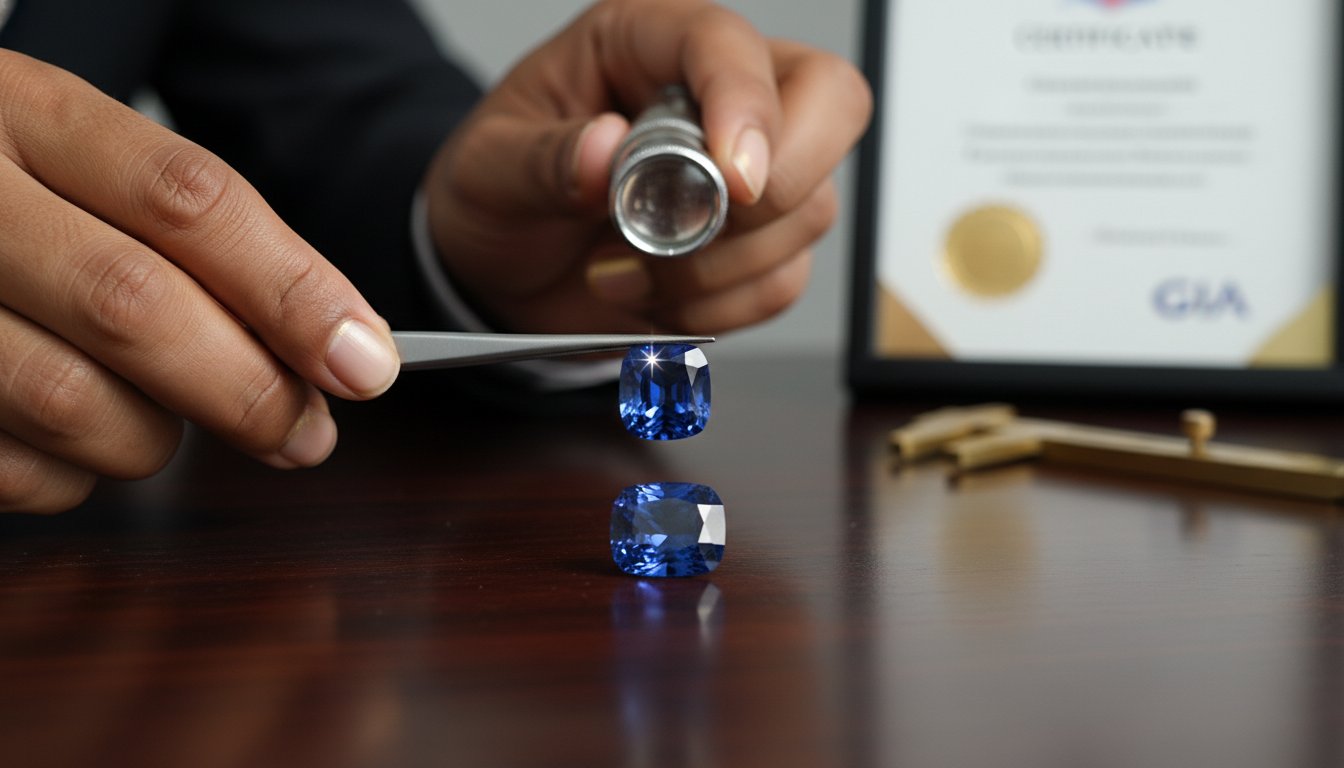
In a 2026 market where provenance is now formally recognized as the "Fifth C," simply choosing a beautiful stone is no longer enough to guarantee a lasting legacy. You might find yourself questioning why two similar gems carry vastly different price tags or worrying if a hidden treatment will compromise a stone's future worth. Understanding the specific heirloom quality gemstone characteristics is the only way to move from a casual buyer to an informed connoisseur. It's about more than just a visual spark; it's about the geological rarity and structural integrity that allow a gem to retain its value across generations.
We understand that the fear of overpaying for a low-rarity stone or feeling lost in technical jargon can make high-end acquisitions feel risky. You deserve the confidence that comes with expert knowledge. This guide will help you discover the rigorous gemological standards that distinguish a mere piece of jewelry from a true investment-grade heirloom. We will provide a definitive checklist of traits to look for in loose sapphires or rare Colombian emeralds, explaining how the GIA's 2026 report expansions and current FTC disclosure mandates impact your collection. You'll gain the clarity needed to identify superior color and the security of knowing exactly what makes a gemstone a permanent asset.
Key Takeaways
- Distinguish between sentimental value and true investment-grade assets by mastering the three pillars of rarity, durability, and transparency.
- Learn how to identify "vivid" and "intense" color profiles and why a gemstone's internal "water" is as critical to its legacy as its hue.
- Understand why unheated, earth-mined stones command a premium and how common treatments affect heirloom quality gemstone characteristics.
- Use the Mohs scale to determine which gems possess the structural toughness to survive daily wear for centuries rather than just decades.
- Gain the confidence to curate your collection with 100% disclosure standards and ethically sourced rarities that protect your financial and emotional investment.
Defining Heirloom Quality: Beyond Sentimental Value
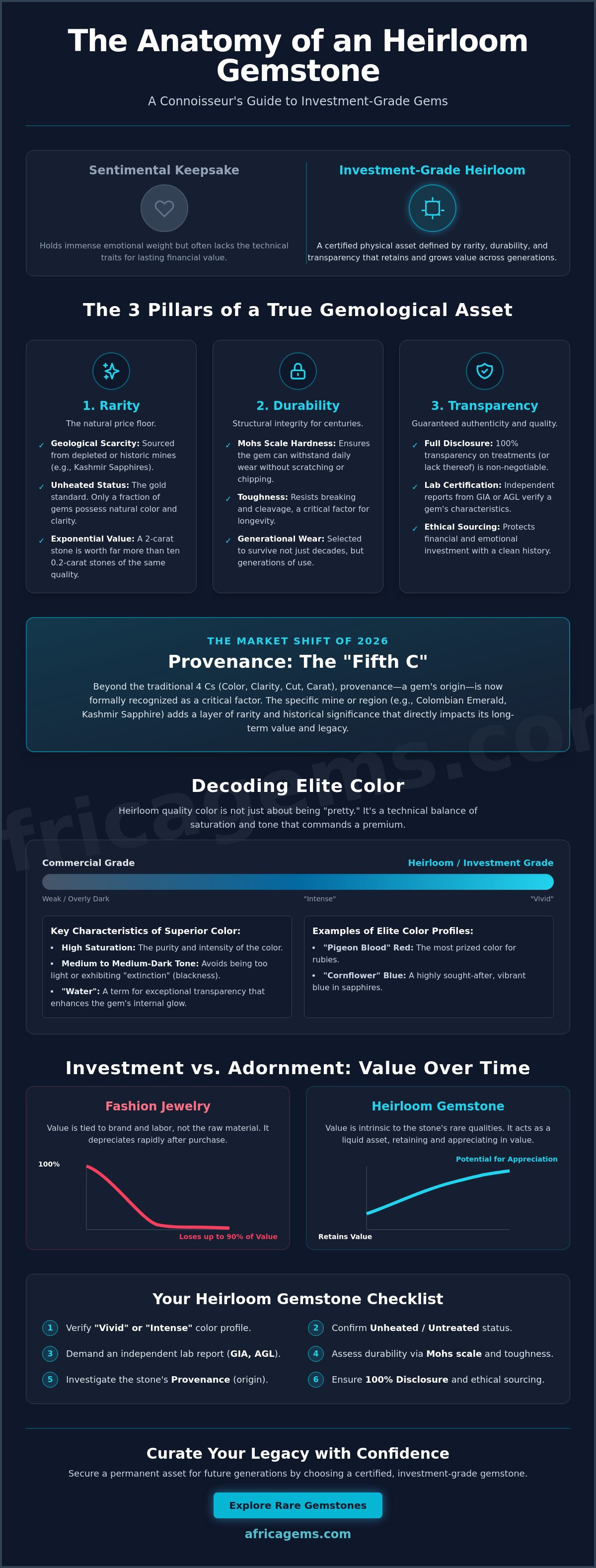
Most families possess jewelry passed down through generations, but there's a profound difference between a sentimental keepsake and a gemological asset. While a simple gold band might hold immense emotional weight, it often lacks the technical heirloom quality gemstone characteristics required to be considered a true investment. A legacy gem is defined by three non-negotiable pillars: rarity, durability, and transparency. These factors ensure that the stone remains as physically stunning and financially significant in a century as it's today.
Commercial-grade stones often flood the mass market, relying on superficial beauty rather than geological integrity. These gems frequently fail to maintain value because they're common, heavily treated, or structurally fragile. To establish true heirloom status, serious collectors rely on independent lab certification from institutions like the GIA or AGL. Understanding Gemstone characteristics and classification is the first step in ensuring your purchase isn't just a fleeting fashion choice but a permanent store of wealth.
To better understand how experts evaluate these physical traits, watch this helpful demonstration:
The Intersection of Scarcity and Value
Geological rarity acts as a natural price floor. When a mine becomes depleted, such as the legendary sapphire deposits in Kashmir or specific historic veins of Loose Colombian Emeralds, the value of existing stones from those origins tends to rise. Unheated status is a primary marker of this scarcity. Only a tiny fraction of mined gems possesses the natural color and clarity to bypass heat treatment, making them the gold standard for collectors seeking heirloom quality gemstone characteristics. Heirloom quality is a combination of natural origin and exceptional physical properties.
Investment vs. Adornment
The Gemological Pillars: Color, Clarity, and the 'Fifth C'
Identifying specific heirloom quality gemstone characteristics requires a shift in perspective from mere aesthetics to rigorous technical metrics. While most buyers focus on whether a stone is "pretty," a connoisseur evaluates the precise balance of saturation, tone, and transparency. In the elite market, we move beyond simple descriptors like "bright" to seek "vivid" and "intense" color profiles. These classifications represent the pinnacle of light absorption and reflection, ensuring the gem maintains its presence even in challenging lighting environments.
The "Fifth C," rarity, is perhaps the most critical factor for long-term value retention. Unlike mass-market goods, the value of investment-grade gems scales exponentially with size. A single 2ct sapphire commands a price significantly higher than the combined cost of ten 0.2ct stones of identical quality. This non-linear value growth is driven by the extreme geological scarcity of large, high-clarity crystals. When you select a significant center stone, you're securing a physical asset that becomes increasingly difficult to source as global deposits diminish.
The Nuances of Elite Color
In the 2026 market, the industry has refined its standards for "Pigeon Blood" red and "Cornflower" blue. These aren't just poetic terms; they describe a specific range of high saturation and medium-dark tone that avoids the "extinction" or blackness common in lower-quality materials. Connoisseurs also look for pleochroism, the ability of a stone to display different colors from different angles. This optical depth creates a living character within the gem. For those seeking the benchmark of blue hues, our blue sapphires collector's guide provides a detailed breakdown of origin-specific color expectations.
Clarity and Internal Character
While "eye-clean" is the minimum standard for an heirloom, clarity is about more than the absence of flaws. It's about the "water" or crystal transparency of the stone. A "dead" stone may be inclusion-free but look cloudy due to poor crystal structure. Conversely, certain inclusions like the microscopic "silk" found in loose Mozambique rubies can actually enhance value by proving natural origin and softening light to create a glowing effect. This internal character must be protected by superior gemstone durability, ensuring the stone's structural integrity remains intact for centuries. Precision cutting is the final touch, maximizing light return to ensure the stone's fire is never compromised by poor proportions.
If you're ready to begin your collection with a stone that meets these uncompromising standards, consider exploring our curated selection of loose blue sapphires to find a specimen that defines true legacy quality.
The Transparency Factor: How Treatments Impact Legacy
In the high-stakes world of elite gems, the word "natural" is often used as a shield by commercial retailers to obscure a stone's true history. While a gem may have been mined from the earth, its journey through a laboratory can fundamentally strip away its investment potential. True heirloom quality gemstone characteristics are defined by a lack of invasive enhancements. When a stone requires artificial intervention to achieve its beauty, it loses the geological rarity that drives long-term value appreciation. For the serious collector, transparency isn't just a preference; it's a financial necessity.
Treatments range from the standard to the destructive. Heat treatment is widely accepted in the commercial trade to improve color and clarity, yet it remains a compromise for an heirloom. More aggressive methods, such as lead-glass filling or beryllium diffusion, actually introduce foreign substances or chemically alter the stone's lattice. These treatments are often non-permanent and can cause the gem to deteriorate over time, making them entirely unsuitable for a multi-generational legacy. An heirloom's value is directly tied to the 'permanence' of its color and its untouched state.
Why 'Natural' Isn't Enough
The price disparity between a treated stone and an unheated specimen is staggering. In many cases, an unheated stone can be worth 2x to 5x more than its heated counterpart of similar appearance. This premium exists because unheated gems are true freaks of nature. They emerged from the earth with perfect color, requiring nothing more than a master's cut to reveal their fire. This is especially true for the world's most coveted origins. If you're considering a centerpiece for your collection, our loose Burma rubies guide illustrates why unheated, "pigeon blood" stones represent the absolute pinnacle of rarity.
Decoding Lab Reports
Identifying these enhancements requires more than a jeweler's loupe. It demands a rigorous review of independent lab reports from the GIA or AGL. When examining a certificate, the "Evidence of Treatment" section is the most important field. For loose Colombian emeralds, for example, you must look for "Insignificant Oil" or "No Oil" comments. While most emeralds are oiled to fill surface-reaching fissures, those with insignificant oiling are the only ones that meet heirloom-worthy grades. At AfricaGems, we believe in radical transparency. Every stone we offer comes with a commitment to 100% disclosure, ensuring you're never caught in the "treatment trap" that devalues so many commercial acquisitions.
Structural Integrity: Selecting Stones Built for Generations
A gemstone's beauty is irrelevant if it cannot survive the physical demands of time. When evaluating heirloom quality gemstone characteristics, a connoisseur must look beyond the surface to understand the difference between hardness and toughness. Hardness, measured by the Mohs scale, refers to a stone's resistance to scratching. Toughness, however, is the stone's ability to resist chipping, cracking, or breaking under impact. While a diamond is the hardest natural substance, it possesses perfect cleavage, meaning a sharp blow at the right angle can cause it to shatter. In contrast, jadeite has lower hardness but exceptional toughness due to its interlocking grain structure, allowing it to survive falls that would destroy other gems.
For a piece intended for daily wear, such as an engagement or signature ring, the Mohs scale 7.0 threshold is a critical benchmark. Household dust often contains microscopic particles of quartz, which sits at a 7.0 on the scale. Any gem softer than this will gradually accumulate tiny scratches, losing its luster over decades of wear. Heirloom stones must also be evaluated for internal stress and cleavage planes. Stones like topaz or spodumene have "perfect" cleavage, making them prone to splitting if struck. Identifying these structural risks early ensures that your investment doesn't become a fragile liability.
The Durability Ranking
Corundum, the family encompassing both loose blue sapphires and rubies, remains the ultimate heirloom choice. With a Mohs hardness of 9 and no cleavage planes, these stones are nearly indestructible under normal conditions. Emeralds, while legendary for their color, present a different challenge. They're naturally more brittle and often contain "gardens" of inclusions that can compromise their strength. For this reason, they require protective settings like bezels or V-prongs to shield their vulnerable corners. You can explore the complexities of these stones in our emerald gemstone pillar.
Identifying Structural Flaws
Surface-reaching inclusions are a primary deal-breaker for heirloom quality. These internal fractures act as entry points for oils, chemicals, or physical pressure, potentially causing the stone to fail during setting or after years of wear. A master cutter will also prioritize "girdle thickness." The girdle is the stone's widest point and acts as its bumper. A girdle that's too thin, known as a "knife-edge," is highly susceptible to chipping when held by metal prongs. We recommend selecting stones with a "thin to slightly thick" girdle to ensure maximum protection without adding unnecessary weight.
Protect your investment by choosing a stone that combines geological rarity with physical resilience. Explore our collection of loose blue sapphires to find a specimen that meets the highest standards of structural integrity.
Curating Your Legacy with AfricaGems
Building a collection that transcends time requires more than just a budget; it requires a partnership with an expert who respects the geological integrity of every specimen. At AfricaGems, we apply the rigorous heirloom quality gemstone characteristics discussed throughout this guide to every stone in our vault. Founded by Marc Sarosi, a 40 year veteran of the industry, our business is built on a foundation of radical transparency. We don't just sell gems; we mentor collectors in identifying the rare 1% of stones that truly deserve the title of an heirloom.
Starting your journey with a loose stone is the only way to ensure absolute certainty. When a gem is already set in jewelry, the mounting can hide critical flaws, "windowing," or evidence of treatment. By selecting from our inventory of Loose Blue Sapphires or rare Loose Colombian Emeralds, you see the material in its purest form. This approach allows for a level of technical validation that pre-set commercial jewelry simply cannot offer. Once the perfect stone is secured, our Custom Jewelry Design Services can transform that raw asset into a bespoke masterpiece designed to protect the stone's edges and brilliance for centuries.
The Expert Enthusiast Approach
We vet our inventory with an uncompromising eye, focusing on ethically sourced rarities that meet the highest standards of saturation and structural toughness. Our commitment to 100% disclosure means you'll never face the "treatment trap" common in the mass market. Every acquisition is backed by a personal guarantee from Marc Sarosi, providing the security essential for high value online transactions. For those new to this level of collecting, our buy gemstones online guide offers a roadmap for secure, ethical investing in the digital age.
Your Journey to an Heirloom
Consulting with our team is a methodical process designed to build your confidence. We move logically from visual appreciation to technical validation, ensuring every stone matches your specific legacy goals. Whether you're seeking a vivid loose Mozambique ruby or a rare loose alexandrite, we provide the documentation and expertise needed to verify its future value. Your collection is your story. Let us help you write it with stones that possess the heirloom quality gemstone characteristics required to shine for generations. Explore our collection of investment-grade Loose Blue Sapphires today and take the first step in securing your gemological legacy.
Securing Your Gemological Legacy
Acquiring a stone that transcends generations requires a shift from emotional impulse to technical precision. You now understand that true value lies in the intersection of geological rarity, structural toughness, and absolute transparency regarding treatments. By prioritizing unheated specimens and stones with superior "water" and brilliance, you ensure your collection remains a liquid asset for the future. Master the technical metrics of heirloom quality gemstone characteristics to protect your investment from the pitfalls of the commercial mass market.
AfricaGems serves as your dedicated mentor in this pursuit. With more than 40 years of industry experience and a policy of full disclosure on all gemstone treatments, we provide the security that sophisticated collectors expect. Every acquisition is supported by founder Marc Sarosi's personal guarantee; this ensures that your digital purchase feels like a private consultation. Shop our curated collection of Heirloom Quality Loose Gemstones and start building a legacy that will endure for centuries. Your search for the perfect specimen is a journey toward excellence, and we are honored to guide you.
Frequently Asked Questions
What is the difference between 'fine jewelry' and 'heirloom quality'?
Fine jewelry is a broad category for any piece made from precious metals and natural gemstones, but heirloom quality refers to the elite tier of stones that possess investment-grade characteristics. While commercial fine jewelry often features treated stones with common origins, an heirloom piece focuses on geological scarcity and structural permanence. It's the difference between a beautiful accessory and a generational asset that retains its financial significance.
Are unheated gemstones always better for an heirloom?
Unheated gemstones are almost always superior for a legacy collection because their beauty is entirely natural and rare. Only a tiny fraction of mined gems possesses the color and clarity to bypass heat treatment, making them significantly harder to find than their heated counterparts. This rarity acts as a price floor, ensuring the stone remains a coveted asset in the global collector market across generations.
Which gemstone is the most durable for a ring meant to be passed down?
Corundum, the family of sapphires and rubies, is the most durable choice for an heirloom ring intended for daily wear. With a Mohs hardness of 9 and no cleavage planes, these stones resist scratching and chipping better than almost any other colored gem. While diamonds are harder, they can shatter upon impact, making high-quality sapphires a more resilient option for centuries of use and wear.
Does the origin (provenance) of a gemstone affect its heirloom status?
Provenance is a fundamental component of heirloom quality gemstone characteristics and directly impacts a stone's desirability and future value. In the 2026 market, collectors place a heavy premium on documented origins like Colombia for emeralds or Mozambique for rubies. Depleted mines and limited supply from historic regions ensure that a stone with a verified, prestigious origin will likely appreciate more than a stone of unknown provenance.
How do I know if a gemstone will appreciate in value over time?
Appreciation is tied to the intersection of high demand and diminishing geological supply. You should focus on gems that are "eye-clean," unheated, and possess vivid saturation. Larger stones, particularly those over two carats, tend to appreciate more rapidly due to their exponential rarity. Always prioritize stones with full disclosure and independent certification to ensure the asset's integrity remains unquestioned by future collectors or auction houses.
Can lab-created gemstones be considered heirloom quality?
Lab-created gemstones can serve as sentimental heirlooms, but they don't possess the investment-grade heirloom quality gemstone characteristics of natural stones. Their value is tied to manufacturing costs rather than geological scarcity. Because labs can produce an infinite supply, these stones don't appreciate in value like rare, earth-mined gems. They are beautiful for adornment but aren't considered generational assets in the professional collector market.
What laboratory certifications should I look for in an heirloom gem?
You should prioritize reports from the Gemological Institute of America (GIA) or the American Gemological Laboratories (AGL). These institutions are the industry benchmarks for origin determination and treatment disclosure. A reliable report must clearly state the stone's natural origin and specify the degree of any enhancements. Without these independent third-party validations, a gemstone cannot be securely traded or valued as a true investment-grade asset.
How much should I expect to pay for an heirloom-grade 1-carat sapphire in 2026?
Pricing for a 1-carat heirloom sapphire varies significantly based on its specific color saturation, origin, and unheated status. The 2026 market continues to see higher premiums for stones from prestigious locations and those with "vivid" or "royal blue" color profiles. Rather than looking for a fixed price, you should evaluate the stone's individual merits and certification. Consulting with an expert dealer is the best way to determine current market values for specific rarities.

Article by
Marc Sarosi
Professional gemstone dealer for more than 40 years. Started off mining Aquamarine in Zambia, Africa and travelled throughout the continent in search of fine gems. Trusted authority on fine gemstones and have donated a fine collection of more than 27 extraordinary gemstones to the Smithsonian Institute Gem Hall for generations to see.