
Designing a Custom Pendant for a Loose Stone: The Connoisseur’s Guide
Jun 17th 2026
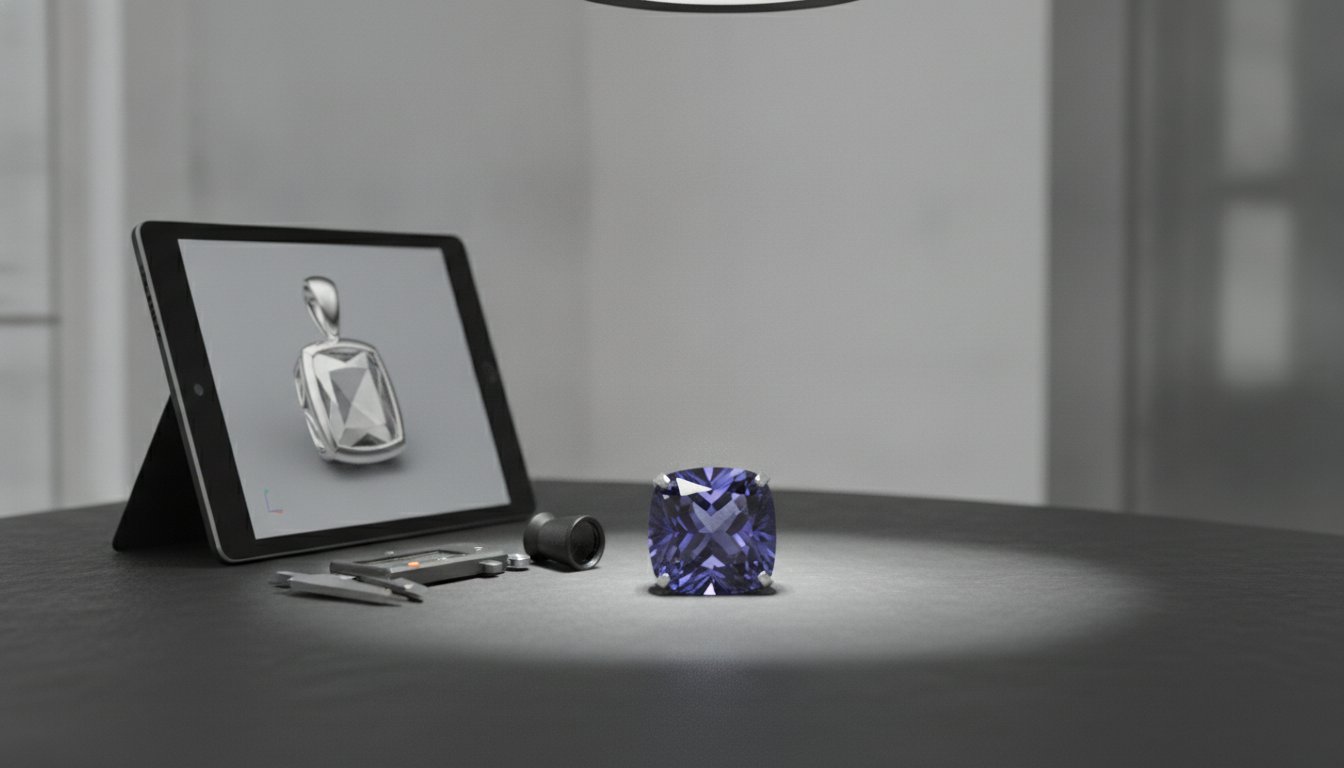
A loose gemstone is a silent masterpiece, but without the right architecture, it remains a vulnerable fragment of history rather than a wearable legacy. You've likely spent time admiring the fire of a Mozambique ruby or the velvety depth of a blue sapphire, yet the transition to a finished piece often feels daunting. It's natural to worry about technical jargon or the fear that a subpar mounting might lead to the loss of a prized asset. Designing a custom pendant for a loose stone is a precise engineering feat that must balance artistic expression with the physical protection of the gemstone’s integrity.
We recognize that your collection represents more than just market value; it's a narrative of rarity and personal taste. This guide transforms that uncertainty into professional confidence by offering expert validation for your design choices. You'll learn which metals amplify the specific brilliance of stones like tanzanite or tsavorite garnet and how to choose secure settings that guarantee longevity. We're offering a transparent roadmap to move from a loose stone to a finished, heirloom-quality pendant. Our goal is to make you an informed insider, ensuring your bespoke creation is both a secure investment and a sophisticated work of art.
Key Takeaways
- Learn how to evaluate a gemstone’s physical properties, such as cleavage and toughness, to ensure your mounting provides lifelong security for rare materials like emeralds or tanzanite.
- Discover the step-by-step professional process for designing a custom pendant for a loose stone, utilizing 3D CAD renderings to visualize your vision before any metal is cast.
- Balance brilliance and protection by choosing between traditional prong settings for maximum light entry or modern bezel settings for ultimate gemstone safety.
- Understand why transitioning from a collector to a creator offers superior creative control and value compared to purchasing mass-produced jewelry.
- Ensure your bespoke masterpiece meets the highest standards of integrity by pairing expert craftsmanship with ethically sourced components and transparent professional guidance.
The Art of Designing a Custom Pendant for a Loose Stone
Designing a custom pendant for a loose stone is a sophisticated synergy between a geological marvel and a tailored architectural frame. It's the moment where a collector evolves into a creator, moving beyond the constraints of mass-market jewelry to build a legacy piece. This process isn't just about aesthetics; it's a technical collaboration where the Expert Enthusiast works to ensure the mounting protects the stone's physical integrity while amplifying its natural fire. By taking this bespoke path, you're ensuring that the final product is as unique as the mineral it houses.
To better understand the creative journey from concept to reality, watch this helpful video:
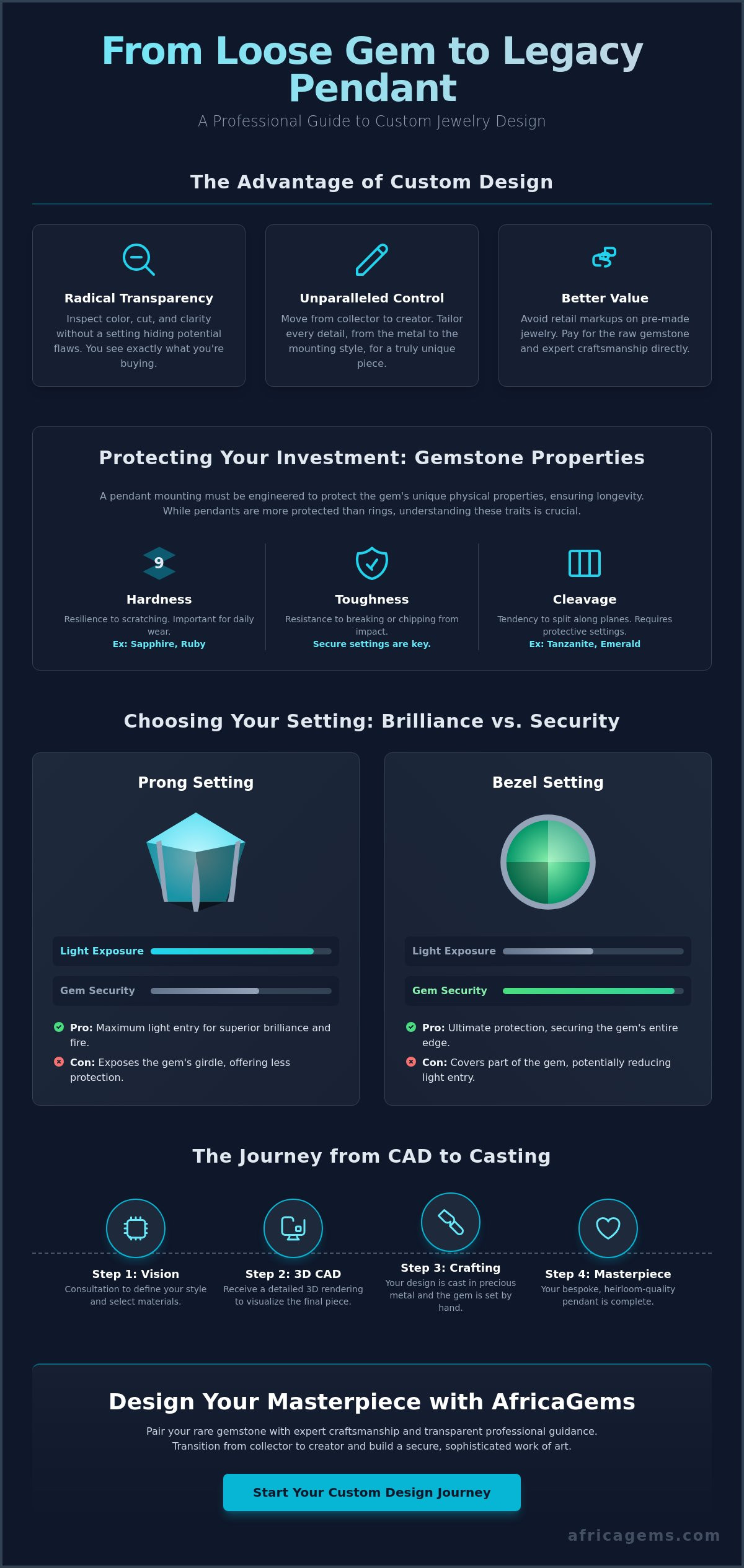
Transitioning from purchasing pre-set jewelry to commissioning a custom design offers unparalleled creative control. You're no longer settling for a setting that almost fits or a metal that mostly complements the gem's hue. Instead, you're engineering a home for your investment that accounts for every facet and inclusion, ensuring the stone is the undisputed protagonist of the piece. When you begin designing a custom pendant for a loose stone, the first step is selecting a style that mirrors your personal aesthetic while providing the necessary structural support.
Why Start with a Loose Gemstone?
Starting with a loose gem provides radical transparency. You can inspect the stone's color, cut, and clarity without a setting hiding potential flaws or altering the light return. This approach allows you to secure high-quality loose blue sapphires or rare Colombian emeralds directly from specialized dealers, often at a better value than retail finished goods. By choosing the stone first, you avoid the retail markup associated with pre-made inventory. You're paying for the raw material and the craftsmanship of the design, rather than the overhead of a showroom's static stock. It's a methodical way to build a high-value collection while maintaining absolute standards for ethical sourcing.
Pendant Styles: From Minimalist Solitaires to Ornate Halos
The style you choose should be a direct response to the stone's personality. This is where you master the art of securely setting gemstones to balance visual impact with structural safety. Common styles include:
- Classic Solitaires: These designs use minimal metal to let the stone's inherent brilliance take center stage. They're ideal for high-clarity specimens where the cut is the primary focus.
- Halo Designs: Surround your center stone with a perimeter of smaller diamonds or gems. This amplifies the visual footprint and adds a layer of protection to the center stone's girdle.
- Three-Stone or Cluster Pendants: These allow you to tell a color story. You might pair a vibrant sapphire with flanking diamonds or contrasting garnets to create a more complex narrative.
Technical Considerations: Matching Gemstone Properties to Mounting Styles
Designing a custom pendant for a loose stone is a technical discipline that blends mineralogy with structural engineering. While rings endure the constant friction and impact of daily tasks, pendants rest in a more protected environment on the chest. This unique placement lets you showcase "softer" stones that might be too delicate for a ring. However, you still need to account for the physical realities of the material to ensure your investment remains secure for generations.
Hardness isn't the only factor in longevity. You must also consider gemstone durability and physical properties such as cleavage and toughness. Cleavage refers to the tendency of a crystal to split along specific planes of weakness. A stone like tanzanite has "perfect" cleavage in one direction; this means a poorly placed blow during the setting process could cause a clean break. A master jeweler understands these risks and designs the mounting to shield these vulnerable zones while maintaining a refined aesthetic.
Light performance is another technical hurdle. The depth of the mounting dictates how light interacts with the stone's facets. If a basket is too shallow, it can cause "windowing," where light passes straight through the gem instead of reflecting brilliance back to your eye. Balance is equally critical. A pendant must be weighted so it sits flat against the skin. If it's top-heavy, it'll constantly flip and hide the stone's beauty. A well-designed piece ensures the center of gravity keeps the gem facing forward.
Best Stones for Custom Pendants
High-durability stones like blue sapphires and rubies are the gold standard for heirloom pieces because they resist scratching. When designing with emerald gemstones, you must account for their natural inclusions, which make them sensitive to high pressure. Rare treasures like tanzanite or alexandrite thrive in pendants where they're safe from the accidental knocks common to hand jewelry.
Shape and Cut Optimization
When you're designing a custom pendant for a loose stone, shape optimization is just as vital as stone choice. Pear and marquise cuts require specialized "V-prongs" to protect their vulnerable points from chipping. Round and oval stones offer the most classic symmetry for vertical orientation, maximizing light return. For emerald cuts, we recommend open-back settings. These highlight the "hall of mirrors" effect of the step cuts by allowing light to enter from multiple angles.
If you're ready to explore these technical nuances with a professional, you can browse our selection of loose gemstones to find your perfect centerpiece.
Prongs vs. Bezels: Choosing the Right Security for Your Gem
Once you've analyzed the technical vulnerabilities of your gem, the next step in designing a custom pendant for a loose stone is selecting the architecture that will house it. This choice is a delicate balance between optical performance and physical safety. While prongs offer a classic, airy look that invites light from all angles, bezels provide a robust, modern shield that protects the stone's girdle from the hazards of daily wear. Your decision should be guided by how the stone interacts with light and the level of protection its specific mineral structure requires.
When to Choose a Prong Setting
Prong settings are the industry standard for high-refractive index stones like sapphires or alexandrite. By lifting the stone and using minimal metal, prongs allow light to enter through the pavilion and reflect back through the table, maximizing brilliance. For stones under one carat, a four-prong setting offers a clean, square silhouette. However, for larger centerpieces, a six-prong configuration is often the superior choice. This provides redundant security; if one prong is damaged, the others maintain enough grip to prevent the stone from falling out. You should periodically inspect these settings for "snagging" on delicate fabrics, which is a telltale sign that a prong has lifted or thinned over time.
The Protective Power of the Bezel
If your lifestyle is active or your stone is prone to chipping, the bezel is an uncompromising solution. This setting uses a continuous rim of metal to encase the entire perimeter of the gem. It's the preferred choice for semi-precious gemstones like tanzanite or opal, which lack the extreme hardness of the corundum family. Beyond security, bezels offer a "visual illusion" by making the stone appear larger than its actual carat weight, as the metal rim extends the visible diameter of the piece. This sleek, snag-free design is perfect for those who want a modern aesthetic that won't interfere with clothing.
When designing a custom pendant for a loose stone, you must also decide between a semi-mount and a fully bespoke mounting. Semi-mounts are pre-fabricated settings designed for "calibrated" sizes, such as a standard 8x6mm oval. They are efficient and cost-effective for stones that fit standard dimensions. However, if you possess a uniquely cut or non-standard gem, a bespoke mounting is essential. These are engineered from scratch to ensure the metal perfectly contours to the stone's specific dimensions. This eliminates the risk of movement or rattling within the setting, providing a level of security that pre-made options simply cannot match.
The Professional Custom Design Process: From CAD to Casting
Designing a custom pendant for a loose stone is a transition from abstract imagination to tangible permanence. Unlike hobbyist projects that rely on generic pliers or adhesives, professional-grade jewelry is a rigorous engineering discipline. The process begins with a meticulous consultation where we analyze your stone’s unique dimensions and your aesthetic goals. This ensures the final piece isn't just beautiful but structurally sound enough to protect your investment for a lifetime. We bridge the gap between the raw beauty of the mineral and the refined elegance of the finished masterpiece.
Visualizing with 3D Models (CAD)
The use of Computer-Aided Design (CAD) has revolutionized the way we approach bespoke jewelry. This technology allows you to see a high-resolution, 3D rendering of your pendant before any metal is cast. It's during this stage that we calibrate the exact proportions of the bail, which is the loop the chain passes through. A bail that's too small can cause the pendant to sit awkwardly, while one that's too large can diminish the stone’s visual impact. We also verify that the mounting depth perfectly accommodates the stone’s pavilion. This precision prevents the culet, the bottom point of the gem, from touching the wearer’s skin or being exposed to impact.
Selecting Your Metal: Color and Composition
The choice of metal is both a stylistic and a functional decision. Different alloys interact with gemstone colors in distinct ways. For instance, 18k yellow gold is an exceptional choice for warming up the tones of yellow sapphires or enhancing the rich verdancy of emeralds. Conversely, white gold and platinum provide a crisp, neutral backdrop that amplifies the cool brilliance of blue sapphires or alexandrite. Platinum is particularly prized for its density and "memory," meaning it holds prongs in place with exceptional tenacity. Rose gold has seen a resurgence for those seeking a vintage aesthetic, as its copper content beautifully complements pink sapphires and morganite.
Once the design is finalized and the metal is cast, the piece moves to the setting stage. Hand-setting by a master goldsmith is a non-negotiable requirement for high-value gems. Unlike machine-set commercial jewelry, a master setter feels the tension of the metal, ensuring the stone is secure without applying the kind of excessive pressure that can fracture an emerald or tanzanite. The process concludes with a rigorous quality assurance check. We perform final polishing and a "rattle test" to confirm the stone is perfectly seated. If you're ready to transform your collection into wearable art, you can explore our Custom Jewelry Design Services to begin your consultation.
Designing Your Masterpiece with AfricaGems
Entrusting your vision to a jeweler is a decision rooted in confidence and verified expertise. At AfricaGems, we uphold the Marc Sarosi Standard, a legacy of uncompromising quality that began in 1984. Our approach to designing a custom pendant for a loose stone is built on decades of professional connoisseurship, ensuring that every technical detail, from prong tension to metal purity, meets the highest industry benchmarks. We don't just assemble jewelry; we curate a legacy for collectors who demand the same integrity in their mountings as they do in their rare gemstones.
Radical transparency is the pillar of our communication. In an industry where enhancements are often obscured, we provide full disclosure regarding product treatments and origins for every item in our collection. This commitment to integrity extends to our ethical sourcing practices. We ensure that every component of your custom pendant, from the primary gem to the smallest accent diamond, is responsibly obtained. This focus on social responsibility mirrors the 2026 consumer demand for sustainable luxury, positioning us as a knowledgeable mentor in your design journey.
Our Bespoke Design Services
The journey begins with our expansive inventory of precious gemstones. Whether you've selected a vivid Mozambique ruby or a rare padparadscha sapphire, our design team collaborates with you to translate that raw beauty into a unique heirloom. We've managed thousands of custom transformations, moving from initial concept to a finished piece that carries a 4.8-star satisfaction rating from over 2,400 reviews. Our process is steady and educational, building your confidence through technical validation and personal accountability from the first sketch to the final polish.
Start Your Journey Today
If you're seeking inspiration, browse our curated gallery of gemstone pendants to see how different mounting styles interact with various mineral species. When you're ready to proceed, contact us for a personal consultation to discuss your custom vision. We provide the security of a comprehensive guarantee on every bespoke piece, ensuring your satisfaction is as enduring as the materials we use. Commission your custom pendant design with AfricaGems today and transform your loose stone into a masterpiece of refined elegance.
Craft Your Bespoke Legacy
Designing a custom pendant for a loose stone is the definitive way to transform a raw geological wonder into a sophisticated work of art. You've explored the technical nuances of mineral durability and the engineering precision required to balance light performance with physical security. By moving beyond mass-market limitations, you gain the creative control necessary to build a piece that is truly unique. Professional CAD design and master hand-setting ensure that your vision is realized with absolute structural integrity.
AfricaGems has been a trusted leader in the gemstone industry since 1984, offering an expertly curated selection of loose stones with radical transparency. We provide full disclosure on all gemstone treatments, ensuring you remain a fully informed insider throughout the design process. Every custom commission benefits from the personal oversight of our founder, Marc Sarosi, maintaining our uncompromising standards for craftsmanship and ethical sourcing. It's time to elevate your collection from a vault to a wearable masterpiece.
Start Your Custom Pendant Design with AfricaGems and experience the reassurance of a methodical, educational process backed by a professional guarantee. Your journey toward a secure, heirloom-quality pendant begins with a single consultation. We look forward to helping you create a piece that will be cherished for generations.
Frequently Asked Questions
Can any loose stone be set into a pendant?
Virtually any loose stone can be mounted into a pendant, provided it possesses the basic structural integrity to survive the setting process. Pendants offer a safer environment than rings, allowing you to wear softer gems like opals or tanzanite with less risk of impact. Our design team evaluates each stone's cleavage and hardness to determine the most appropriate mounting style for its specific physical properties.
What is the most secure setting for a valuable gemstone pendant?
The bezel setting is the most secure option for protecting a valuable gemstone. By encasing the entire perimeter of the stone in a continuous rim of metal, the bezel shields the girdle from impacts and prevents chipping. While prongs are popular for maximizing light entry, the bezel offers an uncompromising physical barrier against loss, making it ideal for those with active lifestyles.
How much does it cost to have a custom pendant designed for my stone?
The cost of designing a custom pendant for a loose stone is determined by several variables, including the metal's weight and the intricacy of the CAD modeling. Bespoke engineering requires specialized labor from master setters who handle high-value materials with extreme care. Because every project is unique, we provide individual quotes that reflect the specific technical challenges and material costs associated with your chosen design.
Should I choose gold or platinum for my custom pendant mounting?
Platinum is the superior choice for maximum security because its density and durability hold prongs more firmly over time. It's a naturally white metal that won't require replating, making it ideal for cool-toned gems. However, 18k gold is an excellent alternative for those seeking specific color harmonies, such as warming up a yellow sapphire or enhancing the rich verdancy of a Colombian emerald.
Can I provide my own loose stone for an AfricaGems custom design?
We specialize in creating bespoke mountings for gemstones selected from our own ethically sourced inventory. This ensures we have full documentation of the stone’s history and physical condition before the design process begins. While we occasionally review outside stones for custom commissions, we prefer working with our own collection to guarantee the radical transparency and quality standards that define the AfricaGems experience.
How long does the professional custom pendant design process take?
A professional custom project typically spans several weeks from the initial consultation to the final quality check. This timeline accounts for the precision required in CAD rendering, client approval, metal casting, and the meticulous hand-setting of the gemstone. We prioritize technical validation and security over speed to ensure every piece meets our rigorous heirloom-quality standards and provides a lifetime of wear.
What is a 'bail' and why does it matter for my pendant's design?
The bail is the metal component that connects the pendant to the chain. It's a critical design element that affects how the piece balances against the skin and moves when worn. A well-designed bail ensures the pendant hangs straight and doesn't flip, while its size must be carefully calibrated to accommodate the thickness and style of your intended chain for a seamless aesthetic.
Is it safe to send my loose gemstone through the mail for setting?
Shipping valuable gemstones is safe when using professional couriers and fully insured transit methods. We use specialized logistics partners who provide end-to-end tracking and high-value insurance coverage for every shipment. This methodical approach ensures your materials are protected from the moment they leave your hands until they arrive at our secure design studio, providing the security essential for high-value transactions.