
Chatham Ruby vs. Natural: Are They Really Identical?
Jul 10th 2026
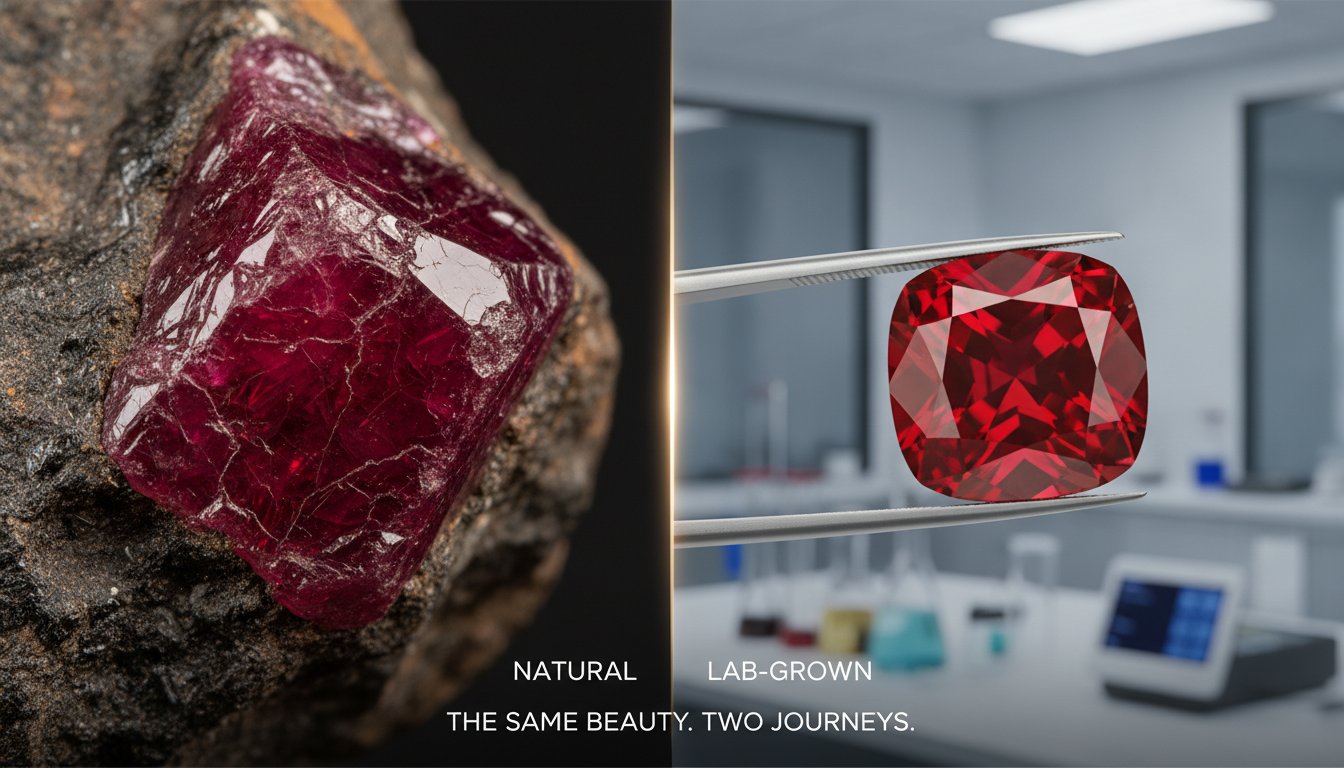
What if the most vibrant, "pigeon blood" ruby you've ever seen wasn't pulled from a remote mine, but grown in a controlled environment that perfectly mimics the Earth's crust? You've likely felt the hesitation that comes with the term "lab-created," fearing a stone that looks more like costume glass than a regal heirloom. It's an understandable concern for any serious collector; however, gemological science confirms that a chatham ruby is nearly identical to a natural ruby in every measurable way. These aren't mere imitations. They are authentic corundum, possessing the same fiery red hue and crystalline structure that has captivated humanity for centuries.
By understanding the scientific and chemical reasons behind their growth, you can shop with the confidence of an informed insider. We'll show you why Chatham rubies are considered authentic gems and how they compare to the world's finest mined stones. This guide breaks down the price-to-quality ratio and verifies the physical hardness required for daily wear. You'll gain a clear view of how technological advancements are shaping the 2026 market, allowing you to secure a masterpiece that aligns with both your aesthetic standards and your commitment to transparent sourcing.
Key Takeaways
- Understand why a chatham ruby is nearly identical to a natural ruby by exploring the shared chemical DNA and Aluminum Oxide structure that defines authentic corundum.
- Discover the patient artistry of the flux growth method, a sophisticated process that allows crystals to form naturally over several months for unparalleled clarity.
- Learn how to identify the legendary "Pigeon Blood" hue and why lab-grown stones offer a rare, eye-clean alternative to heavily included mined gems.
- Explore the market dynamics between lab-grown perfection and mined rarity to make an informed decision on value, durability, and long-term wear.
- Gain professional insights into bespoke design, including the specific metal pairings and gemstone cuts that best showcase the fiery brilliance of a Chatham ruby.
The Science of Identity: Why a Chatham Ruby is Nearly Identical to a Natural Ruby
In the world of high-end gemology, the word 'synthetic' often suffers from a branding problem. To a scientist, it simply means a material that's man-made but possesses the exact same lattice structure and composition as its earth-mined counterpart. It isn't a fake or a cheap imitation like glass. When we say a chatham ruby is nearly identical to a natural ruby, we're describing a laboratory environment that replicates the high-pressure, high-heat conditions of the earth's mantle to create genuine corundum. This process ensures that every stone possesses the same internal fire and structural integrity as a gem pulled from the mountains of Burma or Mozambique.
To better understand this concept, watch this helpful video:
The distinction between a 'simulant' stone, like cubic zirconia, and a Chatham ruby is found in the atomic architecture. While a stimulant only mimics the appearance of a ruby, a Chatham stone is chemically, physically, and optically indistinguishable from a mined specimen. Both stones share a specific gravity of approximately 4.00 and a refractive index ranging from 1.762 to 1.770. This technical precision is a result of advanced synthetic ruby production methods that have been refined since Carroll Chatham’s first successful harvest in 1958. This level of consistency provides a sense of security for collectors who demand both beauty and technical excellence.
The Chemical Blueprint of Red Corundum
At the core of every ruby is the chemical formula Aluminum Oxide (Al2O3). In its pure form, corundum is colorless; however, the presence of Chromium as a trace element provides that signature red glow. Because Chatham rubies use the same elemental ingredients as nature, they respond to light and heat exactly as a mined stone would. A Chatham ruby is a flux-grown corundum with a specific Mohs hardness of 9, making it the second hardest gemstone used in jewelry. This hardness ensures your gem remains scratch-free and brilliant through decades of daily wear.
Optical Performance: Brilliance and Fire
One of the most striking aspects of these stones is their pleochroism, the ability to show different colors when viewed from different angles. Just like a fine Mozambique ruby, a Chatham stone displays a purplish-red to orangey-red shift. Because these stones are grown over many months, they lack the heavy 'extinction' or dark patches found in lower-grade natural stones. Visually and structurally, a chatham ruby is nearly identical to a natural ruby, offering a stone with more 'life' and fewer distractions. You can explore more about these distinctions in our collection of lab-created gemstones.
The Flux Growth Method: Mimicking Nature’s High-Pressure Laboratory
Creating a gemstone that rivals the earth's finest work isn't a race. While the jewelry market is often flooded with inexpensive "synthetic" stones, there's a profound technical difference between a generic lab stone and a Chatham creation. The secret lies in the flux growth process, a method that prioritizes geological accuracy over mass production. By recreating the exact environment found deep within the earth, Chatham allows crystals to form over the course of an entire year. This patient approach is the primary reason a chatham ruby is nearly identical to a natural ruby, as it permits the stone to develop the complex internal characteristics that define a true gem.
Flux vs. Flame Fusion: Why Method Matters
Most commercial lab-grown rubies are produced using the "Flame Fusion" or Verneuil method. This technique is fast, often taking only a few hours to create a crystal, but the results often look glassy or "too perfect" to the trained eye. Flame fusion stones frequently display curved growth lines, a dead giveaway of their rapid, artificial origin. In contrast, the flux method used by Chatham involves dissolving the raw materials in a molten metallic solvent called a flux. Because this process is so slow, the resulting crystals develop angular growth patterns and "fingerprint" inclusions that are remarkably similar to those found in Mozambique or Burmese rubies. This depth and character are what separate a high-end heirloom from a simple fashion accessory.
The flux method requires a significant investment of both energy and patience. The crystals are left to grow for up to twelve months inside a platinum-lined crucible, where they form around a high-quality seed crystal. This seed acts as a biological blueprint, guiding the new Aluminum Oxide layers into a perfect hexagonal lattice. When the process is finished, the stones possess the same veils and wisps that gemologists look for in the world's most expensive mined gems.
The Role of the Gemologist in Lab Growth
Maintaining a stable environment for a full year is an immense technical challenge. Expert gemologists must meticulously control the temperature and pressure within the crucible to ensure the stone achieves the coveted "Pigeon Blood" red. If the temperature fluctuates even slightly, the chromium might not distribute evenly, leading to color zoning or poor clarity. This level of oversight ensures that every stone meets a rigorous standard of excellence. It's a blend of science and connoisseurship that honors the tradition of fine jewelry while embracing modern innovation. If you're looking for a stone that offers this level of technical perfection, you can explore our curated selection of non-genuine and lab-created gems to find the perfect centerpiece for your next design.
By mimicking the slow, steady hand of nature, Chatham produces rubies that don't just look the part but are structurally the same as their mined counterparts. It’s this commitment to the long-term growth cycle that ensures a chatham ruby is nearly identical to a natural ruby, providing a level of authenticity that flame-fusion stones simply can't match.
Visual Comparison: 'Pigeon’s Blood' Red and Gem-Quality Clarity
The visual allure of a ruby is defined by its personality under light. While we've established the chemical foundation, the true test for any collector is how the stone performs on the hand. When placed side-by-side with a top-tier Burmese specimen, it's clear that a chatham ruby is nearly identical to a natural ruby in its optical response. This is particularly evident in the way both stones handle ultraviolet light. Because Chatham rubies share the high chromium content of the finest natural stones, they exhibit a powerful red fluorescence. This "inner glow" is a hallmark of quality that distinguishes authentic corundum from lifeless glass imitations.
Defining the 'Pigeon Blood' Hue
In the history of gemology, "Pigeon Blood" represents the pinnacle of ruby color. It describes a vibrant, high-saturation red with a subtle blue undertone that prevents the stone from appearing too orange or "bricky." In nature, finding this perfect balance is an exceedingly rare event, often confined to the legendary mines of Mogok. You can explore the nuances of this origin in our guide on Loose Burma Rubies. Chatham has mastered the art of consistent saturation, ensuring that every stone possesses that regal, deep red that collectors once spent lifetimes searching for in the wild. Unlike many Mozambique rubies that can appear darker due to higher iron content, Chatham stones maintain their vivid "open" color even in low-light environments.
Clarity and Inclusions: The Gemologist’s Map
Nature is rarely tidy. Most mined rubies are "heavily included," featuring silk, crystals, or fractures that can dull the stone's brilliance. A truly eye-clean natural ruby is a five-figure luxury that few will ever own. Chatham changes this dynamic by offering "Eye Clean" clarity as a standard. This doesn't mean the stones are devoid of character; rather, their inclusions are refined. Under a 10x loupe, a trained eye can find subtle flux veils, which are the birthmarks of their year-long growth process. These microscopic "wisps" are the proof of authenticity, confirming that the chatham ruby is nearly identical to a natural ruby in its crystalline development while remaining visually superior to the average mined stone.
The difference is also visible in the precision of the cut. Because natural ruby rough is incredibly expensive, cutters often use "weight-saving" techniques, resulting in stones that are lumpy or have poor proportions to preserve carat weight. With Chatham, the focus shifts entirely to beauty. These stones are cut to ideal proportions, maximizing light return and fire. This ensures that the "Pigeon Blood" red isn't just present, but actively dancing across the facets of the gem. Whether you're viewing the stone in daylight or under the warm glow of a dinner party, the visual performance remains uncompromisingly elegant.

Market Reality: Natural Rarity vs. Lab-Grown Perfection
The decision between a mined gem and a lab-grown masterpiece often comes down to the balance of rarity and budget. A fine 2-carat Mozambique ruby is a significant acquisition, often priced at levels that reflect its geological scarcity. In contrast, a Chatham ruby of the same size and quality allows you to achieve that "Pigeon Blood" aesthetic for a fraction of the financial commitment. This price-to-quality ratio is why many modern collectors are turning toward lab-grown options for high-impact jewelry that doesn't require a legacy-sized investment. You get the look of a five-figure stone without the prohibitive cost of a rare natural resource.
Durability is another pillar of this choice. Because a chatham ruby is nearly identical to a natural ruby, it possesses the same structural resilience. With a hardness of 9 on the Mohs scale, these stones are exceptionally resistant to scratching and chipping. This makes them an ideal candidate for engagement rings or pieces intended for daily wear, where the stone must withstand the rigors of a busy life without losing its luster. You're buying a stone that's built to last for generations, not a fragile simulant that will dull over time.
Choosing Based on Your Goal: Investment vs. Beauty
If your goal is to build a portfolio of finite assets, a natural, unheated ruby remains the gold standard. These stones hold value based on their extreme rarity and the fact that nature will never produce another one exactly like it. However, if your priority is pure visual fire and uncompromising clarity, Chatham is the superior choice for your wardrobe. It allows you to wear a stone that would otherwise be locked in a museum vault. You can compare these options by browsing our full inventory of precious gemstones to see which path aligns with your personal vision.
The Ethics of the Modern Gem Trade
At AfricaGems, we believe that luxury should never come at the cost of integrity. Marc Sarosi’s commitment to ethical sourcing ensures that every stone we offer meets a high standard of social responsibility. Chatham rubies provide a conflict-free alternative with a significantly reduced carbon footprint compared to traditional industrial mining operations. This transparency allows the conscious consumer to enjoy the regal beauty of a ruby with complete peace of mind. By choosing a lab-grown stone, you're supporting a more sustainable future for the jewelry industry while securing a gem of peerless quality.
Ready to find your perfect center stone? Browse our collection of Chatham created rubies and discover the brilliance of lab-grown perfection.
Selecting Your Stone: How to Integrate Chatham Rubies into Bespoke Jewelry
Once you've decided to embrace the technical perfection of a lab-grown stone, the focus shifts to the artistry of the final piece. Because a chatham ruby is nearly identical to a natural ruby, it deserves a setting that honors its structural integrity and crystalline beauty. Selecting the right shape is the first step in this journey. While round cuts offer classic brilliance, oval and cushion cuts are often preferred for rubies. A cushion cut, with its soft corners and deep facets, is particularly effective at highlighting the rich, "open" red color achieved through the flux growth process, ensuring the stone never looks dark or "extinguished" in low light.
The choice of metal acts as the frame for your gemstone's fire. 18k yellow gold is a traditional favorite, as the warm tones of the metal harmonize with the ruby's primary red hue. If you are considering repurposing your existing jewelry to fund a new gold setting, you can discover Gold Buyers Sydney CBD to help unlock the value in your current collection. For those who prefer a high-contrast, modern aesthetic, platinum or white gold provides a cool backdrop that allows the "Pigeon Blood" saturation to stand alone without any color interference. This pairing is especially striking when the stone's natural fluorescence is activated by daylight, creating a vivid glow against the white metal.
Designing with Red: Metal and Setting Choices
The way you secure your stone significantly impacts its light performance. Prong settings are the gold standard for rubies because they allow maximum light to enter from the sides, which is crucial for triggering that signature red fluorescence we explored in previous sections. If you're seeking a more protected, contemporary look, a bezel setting offers a sleek profile that guards the stone's edges. Beyond engagement rings, rubies remain the quintessential choice for 40th-anniversary gifts, representing four decades of passion and resilience. You can browse our collection of gemstone rings to see how these different settings and metals interact with the stone's vibrant personality.
The AfricaGems Personal Guarantee
At AfricaGems, we don't just sell stones; we provide a personal consultation rooted in Marc Sarosi’s "Expert Enthusiast" philosophy. Every Chatham ruby is hand-selected to ensure it meets our rigorous standards for color saturation and clarity. We believe in radical transparency, which is why we offer a 30-day inspection period. This allows you to view the stone in your own environment and confirm that your chatham ruby is nearly identical to a natural ruby before committing to a final setting. AfricaGems provides a full warranty and authenticity certificate with every Chatham ruby. This documentation serves as your guarantee of the stone's origin and technical specifications, ensuring your heirloom is backed by the integrity of a premier dealer. Our custom jewelry design services are available to help you transform your loose stone into a finished masterpiece that reflects your unique legacy.
Securing Your Future Heirloom
Marc Sarosi brings over 40 years of gemstone expertise to every selection, ensuring your gem meets the highest standards of the trade. Every purchase is backed by a full 30-day money-back guarantee and includes an authentic Chatham lifetime warranty for long-term security. It's time to experience the fiery red glow of a masterfully grown corundum for yourself, knowing you've made an informed and sophisticated investment.
Shop the AfricaGems collection of loose Chatham Rubies and find the vibrant centerpiece your bespoke jewelry deserves.
Frequently Asked Questions
Is a Chatham ruby a 'real' ruby?
Yes, a Chatham ruby is a genuine lab-grown gemstone that is chemically, physically, and optically identical to a mined ruby. It consists of the same Aluminum Oxide structure and Chromium trace elements found in stones pulled from the earth. Because a chatham ruby is nearly identical to a natural ruby, it is classified as authentic corundum rather than a simulant like glass or cubic zirconia.
Can a jeweler tell the difference between a Chatham ruby and a natural ruby?
A trained gemologist can distinguish between the two using professional magnification. While the chemical composition is the same, the internal "birthmarks" differ. Natural rubies typically contain "silk" or mineral crystals, while Chatham rubies feature subtle flux-grown veils. These microscopic markers are the only way to verify whether a stone was formed in a laboratory or the earth's crust.
Do Chatham rubies fade or change color over time?
No, the color of a Chatham ruby is permanent and stable. The vibrant red hue is built into the crystalline lattice of the stone and will not fade when exposed to sunlight, heat, or chemicals. Just like a natural ruby, these gems are designed to maintain their fiery brilliance for generations without any degradation in saturation or clarity.
How does the price of a Chatham ruby compare to a natural Mozambique ruby?
A Chatham ruby is available at a fraction of the cost of a natural Mozambique ruby of similar size and quality. While a fine 2-carat mined ruby commands a high premium due to its geological rarity, a lab-grown stone allows you to secure a "Pigeon Blood" gem with exceptional clarity for a much more accessible investment. This allows for larger, more impressive center stones within a standard budget.
Are Chatham rubies hard enough for an engagement ring?
Yes, Chatham rubies possess a Mohs hardness of 9, making them one of the hardest substances on Earth. They are second only to diamonds in terms of scratch resistance and durability. This structural integrity ensures they can withstand the rigors of daily wear in an engagement ring without dulling or chipping over time.
What is 'flux-grown' and why is it better than other lab-grown rubies?
Flux growth is a slow, sophisticated process that takes up to a year to produce a single crystal. Most inexpensive lab rubies are made via "flame fusion," which is fast but results in a glassy, artificial appearance. The flux method ensures a chatham ruby is nearly identical to a natural ruby by allowing the crystal to grow naturally, resulting in superior depth and fire.
Does a Chatham ruby come with a certificate of authenticity?
Every Chatham ruby purchased from AfricaGems comes with an official Chatham lifetime warranty and authenticity card. This documentation serves as a formal guarantee of the stone's origin and technical specifications. It ensures that your gem is a genuine Chatham product and is protected by the manufacturer's long-term commitment to quality and integrity.
Why should I buy a Chatham ruby from AfricaGems instead of a big-box retailer?
AfricaGems offers a level of professional connoisseurship that big-box retailers simply cannot provide. Marc Sarosi uses over 40 years of gemstone expertise to hand-select every stone for its specific brilliance and color saturation. We prioritize radical transparency, providing a 30-day money-back guarantee and a personal consultation approach that ensures you receive a high-value stone backed by decades of industry leadership.

Article by
Marc Sarosi
Professional gemstone dealer for more than 40 years. Started off mining Aquamarine in Zambia, Africa and travelled throughout the continent in search of fine gems. Trusted authority on fine gemstones and have donated a fine collection of more than 27 extraordinary gemstones to the Smithsonian Institute Gem Hall for generations to see.