
Why Chatham Lab-Grown Emeralds Are the Industry Standard
Jul 13th 2026
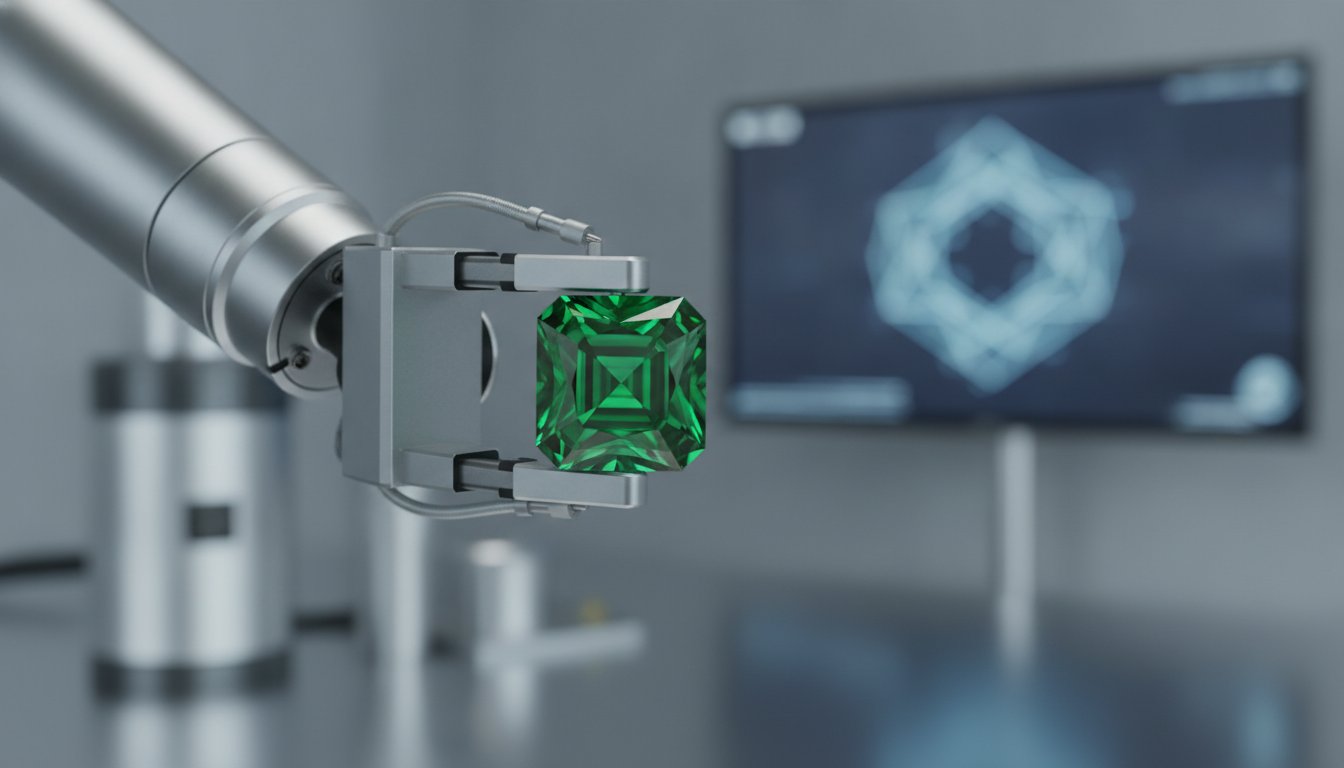
Would you still call a gemstone "natural" if it grew from a high-quality Colombian seed in a laboratory instead of deep underground? Many collectors find themselves caught between the prestige of mined stones and the fear of accidentally buying a low-quality plastic imitation. It's an understandable concern, but it's also why emerald gems made by chatham are the most important and popular man made emerald gems available today. These stones don't just mimic the look of emeralds. They replicate the geological flux environment of the earth to create a gem with identical chemical DNA and superior physical resilience.
You deserve a jewel that offers the lush, vivid green you love without the fragile inclusions or ethical uncertainty often associated with traditional mining. We'll show you why Chatham lab-created stones are the gold standard for clarity, making them a sophisticated choice for daily wear in custom jewelry. This guide explores the technical mastery behind the brand and explains how these gems align with the latest 2026 global transparency regulations. At AfricaGems, we believe in providing the technical proof and personal guarantees you need to feel like an informed insider in the world of rare materials.
Key Takeaways
- Understand how the year-long flux growth process creates a crystal lattice that's chemically identical to mined emeralds rather than a mere glass simulant.
- Learn why emerald gems made by chatham are the most important and popular man made emerald gems, offering a prestigious history of technical mastery and resilience.
- Discover how to evaluate "AAA" quality and precision faceting to ensure your lab-grown emerald possesses the vivid color and brilliance required for a fine investment.
- Gain confidence in your purchase by understanding the latest 2026 global labeling regulations that ensure radical transparency for every laboratory-grown stone.
- Explore how AfricaGems’ expert curation and Marc Sarosi's personal guarantee provide the security and insider knowledge of a premier gemstone dealer.
Understanding the Prestige of Man-Made Emerald Gems
The term "man-made" often triggers a defensive reaction among traditional collectors, yet it's vital to distinguish between a cheap simulant and a true laboratory-grown gemstone. A simulant, such as green glass or cubic zirconia, merely mimics the color of a precious stone. In contrast, a Chatham emerald is a real emerald. It possesses the exact chemical, physical, and optical properties of stones pulled from the earth. Because of this uncompromising quality, emerald gems made by chatham are the most important and popular man made emerald gems for those seeking the prestige of a fine jewel without the compromises of a simulant. You can learn more about these distinctions in our guide to non-genuine gemstones.
Growing these crystals is a feat of high-stakes chemistry. While rubies and sapphires were successfully synthesized in the late 19th century, emeralds remained elusive for decades. Their complex beryllium and aluminum silicate structure requires extreme patience to replicate. The process demands a controlled environment that mimics the intense heat and pressure of the earth's crust over a period of many months. This technical difficulty is exactly what makes a successful lab-grown emerald so impressive to a connoisseur.
To better understand the legacy and craftsmanship behind these stones, watch this helpful video:
The Scarcity and Fragility of Natural Emeralds
Natural emeralds are famous for their "Jardin," a French term for the "garden" of inclusions found within nearly every stone. While these internal features prove a stone's natural origin, they also create significant structural vulnerabilities. A natural emerald with high clarity is an extreme rarity. Investment-grade specimens can command prices exceeding $100,000 per carat, placing them out of reach for most collectors. Most commercial-grade natural stones are heavily oiled to hide surface-reaching cracks, which makes them risky for daily wear. Lab-grown alternatives provide the durability and clarity needed for a lifetime of use in high-end jewelry.
Why Chatham is the Gold Standard for Lab-Grown Emeralds
The legacy of these stones began with the visionary work of Carroll Chatham, who achieved his first successful emerald growth in 1938. Unlike generic, mass-produced stones from overseas that often use faster, less stable methods, Chatham utilizes a proprietary flux growth process. This method takes up to a year to produce a single crystal. The result is a lattice structure that is far more stable than cheaper alternatives. In the professional jewelry trade, the Chatham name carries a prestige factor that generic gems cannot match. As we move through 2026, the shift toward ethical and sustainable luxury has only solidified why emerald gems made by chatham are the most important and popular man made emerald gems for the modern, informed buyer.
The Flux Growth Legacy: Why Chatham Emeralds are Gemologically Unique
The technical superiority of a Chatham emerald lies in its chemical identity. These stones are not mere glass or plastic imitations; they are beryl crystals with the exact formula Be3Al2(SiO3)6. This composition matches mined emeralds atom for atom. While many manufacturers prioritize speed to increase profit margins, Chatham focuses on the long-term integrity of the crystal lattice. This commitment to quality is why emerald gems made by chatham are the most important and popular man made emerald gems for serious collectors who demand durability alongside beauty. The process is a masterclass in patience, requiring a controlled environment that remains stable for up to a full year.
The flux-growth process is what sets these stones apart from the rest of the industry. By dissolving the necessary minerals in a molten solvent, or flux, the crystals are allowed to grow slowly and naturally. This slow pace minimizes internal stress. It creates a stone that is far more stable than those produced through rapid, high-pressure methods. If you're ready to see this brilliance for yourself, you can explore our curated selection of loose lab-grown gemstones and find the perfect center stone for your next piece.
Flux Growth vs. Hydrothermal: The Battle for Quality
The jewelry market is flooded with hydrothermal emeralds, which are grown quickly in water-based solutions under intense pressure. While hydrothermal stones are cheaper to produce, they often exhibit "chevron" growth patterns that look distinctly artificial under a jeweler's loupe. Flux-grown stones, however, display wispy, veil-like inclusions. These features closely resemble the natural "jardin" of mined stones but without the structural weaknesses that often plague natural emeralds. For a connoisseur, the optical properties of a flux-grown stone are far more desirable. They offer a depth and "glow" that faster methods simply cannot replicate. This is a primary reason why emerald gems made by chatham are the most important and popular man made emerald gems in the professional trade.
The Science of Color: Achieving the Perfect Green
Achieving the iconic emerald green is a delicate balancing act of trace elements. Chatham uses precise amounts of chromium and vanadium to saturate the crystal as it grows. In a mine, the presence of these elements is a matter of geological luck, leading to "hit or miss" color saturation. In the laboratory, the consistency is absolute. Chatham is famous for producing "vivid green" hues that rival the finest stones from the Muzo mines of Colombia. This reliability ensures that every stone possesses the rich, velvety green that has made emeralds a symbol of luxury for centuries.
Chatham Emeralds vs. Natural Stones: A Comparative Analysis
When you place a Chatham emerald alongside a mined specimen, the visual parity is nearly absolute. This technical excellence is a primary reason why emerald gems made by chatham are the most important and popular man made emerald gems for collectors who demand perfection. Both stones possess a hardness of 7.5 to 8 on the Mohs scale, with matching refractive indices and specific gravity. According to the leading gemological authority, these stones are true beryl crystals, sharing the same chemical DNA as their mined counterparts. At AfricaGems, we highlight these matching specifications to empower you as an informed buyer.
The value proposition is undeniably compelling. You can often secure a stone with 10 times the visual clarity of a commercial mined emerald for roughly one-tenth of the price. Beyond the financial savings, the ethical footprint of a lab-grown stone is significantly smaller. There's also a level of security that natural stones simply don't offer. Chatham provides a lifetime warranty against chipping or breaking under normal wear. This guarantee is impossible for natural stone dealers to match because mined emeralds are inherently more prone to structural failure.
The Durability Factor for Engagement Rings
Natural emeralds are famous for their "jardin," but those internal inclusions often reach the surface as tiny fissures. These cracks make natural stones brittle and risky for daily wear in high-stress settings like engagement rings. In contrast, the flux-growth process results in a crystal lattice that is remarkably stable. Because they lack the structural vulnerabilities of mined stones, Chatham emeralds are far more resilient for a lifetime of daily adornment. For a broader look at gemstone education and market trends, we invite you to explore the articles on our blog.
Investment Value vs. Adornment Value
We believe in radical transparency regarding your purchase. Natural gems of exceptional quality hold value as financial assets due to their scarcity. Lab-grown gems, however, provide their value through superior adornment and a lower "cost per wear." They allow you to wear a world-class, vivid green jewel every day without the anxiety of damaging a five-figure investment. This combination of beauty and practical durability explains why emerald gems made by chatham are the most important and popular man made emerald gems for modern buyers who prioritize ethics and luxury.

Buying Guide: Selecting High-Quality Chatham Lab-Created Emeralds
Selecting a gemstone is a nuanced process that requires both an eye for beauty and a grasp of technical specifications. When you review a lab-grown gemstone report, your focus should be on "AAA" quality. This designation signifies the pinnacle of color saturation and clarity within the laboratory's output. Because emerald gems made by chatham are the most important and popular man made emerald gems, the standards for these stones are exceptionally high. You should look for a vivid, velvety green that remains consistent across the entire stone without zones of lighter or darker color.
The cut of the stone is perhaps the most influential factor in its final appearance. In mined stones, cutters often prioritize weight retention over brilliance. With lab-grown crystals, we have the luxury of prioritizing precision faceting. Whether you choose the classic hall-of-mirrors effect of an emerald cut, the brilliance of a round, or the elegant taper of a pear shape, the symmetry must be perfect. Precision cutting ensures that light enters and exits the stone in a way that maximizes its internal "fire." For those looking to pair these centers with side stones, we recommend using high-quality diamonds or lab-grown diamonds to maintain a consistent level of brilliance across the piece.
Identifying the Fingerprints of Growth
It's a common misconception that lab-grown gems should be completely flawless. In reality, a stone with zero internal characteristics often looks "dead" or artificial, much like a piece of green glass. Chatham gems possess microscopic flux inclusions that act as the fingerprints of their year-long growth cycle. These veils and wisps are a sign of authenticity. They prove the stone was grown in a slow, geological-style environment. These internal characteristics are exactly why emerald gems made by chatham are the most important and popular man made emerald gems for those who want a stone with a soul rather than a sterile imitation.
Choosing the Right Setting at AfricaGems
The metal you choose for your setting can dramatically alter the perception of the emerald's color. We traditionally recommend 18k yellow gold, as its warm tones perfectly complement the lush green of the beryl. Platinum or white gold offers a more modern, crisp contrast that highlights the stone's coolness. For a truly personal consultation, you can explore our custom jewelry mountings to find a setting that reflects your unique style. If you're new to the digital marketplace, our expert blog provides essential security tips for buying luxury items online. Ready to find your perfect stone? Browse our extensive collection of loose Chatham emeralds today.
Securing Your Investment with AfricaGems' Expert Curation
Purchasing a high-value gemstone requires more than technical data; it requires a partnership with a dealer who treats your investment with the same reverence you do. At AfricaGems, we don't just facilitate a transaction. Marc Sarosi personally hand-selects the finest rough from the Chatham laboratory, ensuring that every crystal possesses the depth of color and structural integrity our clients expect. This level of curation is why emerald gems made by chatham are the most important and popular man made emerald gems in the current market. Our commitment to radical transparency is codified in our "Full Disclosure" policy. We provide exhaustive details on every stone, ensuring you understand exactly what you're buying without any hidden treatments or enhancements.
Every purchase you make is backed by the security of a 30-day money-back guarantee. We understand that high-value online transactions require trust, which is why we utilize rigorous, insured shipping protocols to ensure your gem arrives safely. Our goal is to make you feel like an informed insider, moving from the education phase to the pride of ownership with absolute confidence. We've been bridging the gap between natural gemstone expertise and high-tech lab alternatives since 1984, providing a legacy of service that matches the quality of the stones we sell.
Why a Trusted Dealer Matters for Lab Gems
A common pitfall for many collectors is the prevalence of "Chatham-style" or "Chatham-type" stones found on discount platforms. These are often inferior simulants or low-quality hydrothermal gems that lack the flux-grown prestige of a genuine Chatham. AfricaGems acts as your safeguard against these imitations. We provide only authentic, certified stones. If you have questions about a specific cut or saturation level, our expert gemologist consultation is available to guide your decision-making process.
Final Steps: Creating Your Custom Heirloom
Turning a loose stone into a wearable legacy is the ultimate goal for many of our clients. You can begin by exploring our precious gemstones collection to find a center stone that speaks to your aesthetic. Once you've selected your emerald, our custom jewelry design services can help you pair it with a setting that ensures its security and brilliance for generations. This process ensures that emerald gems made by chatham are the most important and popular man made emerald gems for modern families looking to create secondary heirlooms or travel jewelry. We invite you to browse our inventory and experience the refined elegance of a perfectly grown emerald.
Elevate Your Collection with Uncompromising Quality
Choosing a gemstone is a decision that balances aesthetic desire with technical validation. By selecting a flux-grown crystal, you aren't just buying a stone; you're investing in a legacy of scientific mastery that replicates the earth's own process. It's clear why emerald gems made by chatham are the most important and popular man made emerald gems for the modern collector. They offer the vibrant, vivid green of the finest Colombian mines but with a structural integrity that handles the rigors of daily life with ease. Just as digital innovation helps individuals manage essential tasks—for example, one can learn more about Pagos Energía EMSA to see how utility services in Colombia are modernized—lab-grown gems represent a similar evolution in how we access high-quality resources.
At AfricaGems, we've maintained an A+ Better Business Bureau rating since 1984 by prioritizing radical transparency and personal curation. Every Chatham stone is backed by a lifetime warranty against chipping or breaking, providing a level of security that natural stones simply can't match. We invite you to Browse Our Exclusive Collection of Loose Chatham Emeralds and enjoy free shipping on your high-value order. Your journey toward owning a perfect, ethical heirloom begins with a single, informed choice.
Frequently Asked Questions
Are Chatham emeralds considered real emeralds?
Yes, Chatham emeralds are real emeralds because they possess the exact chemical, physical, and optical properties of mined stones. Unlike simulants like glass or cubic zirconia, these gems are beryl crystals with the formula Be3Al2(SiO3)6. This technical identity is why emerald gems made by chatham are the most important and popular man made emerald gems for discerning collectors who prioritize authenticity.
Why are Chatham emeralds more expensive than other lab-grown emeralds?
The higher cost reflects the proprietary flux-growth process, which takes up to a full year to produce a single crystal. Most other lab gems use the faster hydrothermal method, which can take just weeks. The slow flux method results in a more stable crystal lattice and a "glow" that cheaper alternatives can't replicate. This investment in time ensures a superior gemstone that holds its beauty for generations.
Do Chatham emeralds have inclusions like natural emeralds?
Yes, Chatham emeralds feature microscopic "fingerprints" of their growth known as flux inclusions. These wispy, veil-like features are essential for distinguishing a high-quality lab gem from a sterile simulant. They provide the stone with a soul and character that mimics the natural "jardin" of mined stones without creating the structural vulnerabilities often found in gems pulled from the earth.
Can a jeweler tell the difference between a Chatham emerald and a natural one?
An experienced jeweler or gemologist can distinguish between them under magnification. While the chemical DNA is identical, the specific types of inclusions differ. Natural stones often contain three-phase inclusions or specific mineral crystals like calcite. In contrast, Chatham gems contain characteristic flux veils. This transparency is a pillar of the industry, and we believe in full disclosure for every transaction.
How do I care for my Chatham lab-created emerald jewelry?
You should care for your jewelry by using warm, soapy water and a soft brush. While Chatham gems are structurally sounder than natural stones, you should still avoid harsh chemicals or ultrasonic cleaners. Their hardness of 7.5 to 8 on the Mohs scale makes them durable for regular use, but they still deserve the respect and careful handling of a high-value precious material.
Does Chatham offer a warranty on their lab-grown emeralds?
Yes, every Chatham gem comes with a lifetime warranty that covers chipping or breaking under normal wear. This is a significant advantage over natural stones, where a single accidental knock can cause a surface-reaching fissure to split the gem. This guarantee provides a layer of security that is essential for high-value online transactions and long-term peace of mind.
Is a Chatham emerald suitable for an engagement ring?
Absolutely, they are an ideal choice for engagement rings. Because they lack the brittle, surface-reaching cracks found in natural emeralds, they are much more resilient for daily wear. This durability, combined with their vivid color, is a key reason why emerald gems made by chatham are the most important and popular man made emerald gems for modern couples who want a stunning, ethical heirloom.
What is the difference between a Chatham emerald and a green sapphire?
The difference lies in their mineral species and chemical composition. An emerald is a variety of beryl, while a green sapphire is a variety of corundum. While both are beautiful, emeralds offer a unique, velvety green hue that sapphires cannot match. Emeralds also have different refractive indices and a slightly lower hardness (7.5-8) compared to the sapphire's hardness of 9.

Article by
Marc Sarosi
Professional gemstone dealer for more than 40 years. Started off mining Aquamarine in Zambia, Africa and travelled throughout the continent in search of fine gems. Trusted authority on fine gemstones and have donated a fine collection of more than 27 extraordinary gemstones to the Smithsonian Institute Gem Hall for generations to see.