

What is Ethical Gemstone Sourcing? A Connoisseur’s Guide to Integrity
May 29th 2026

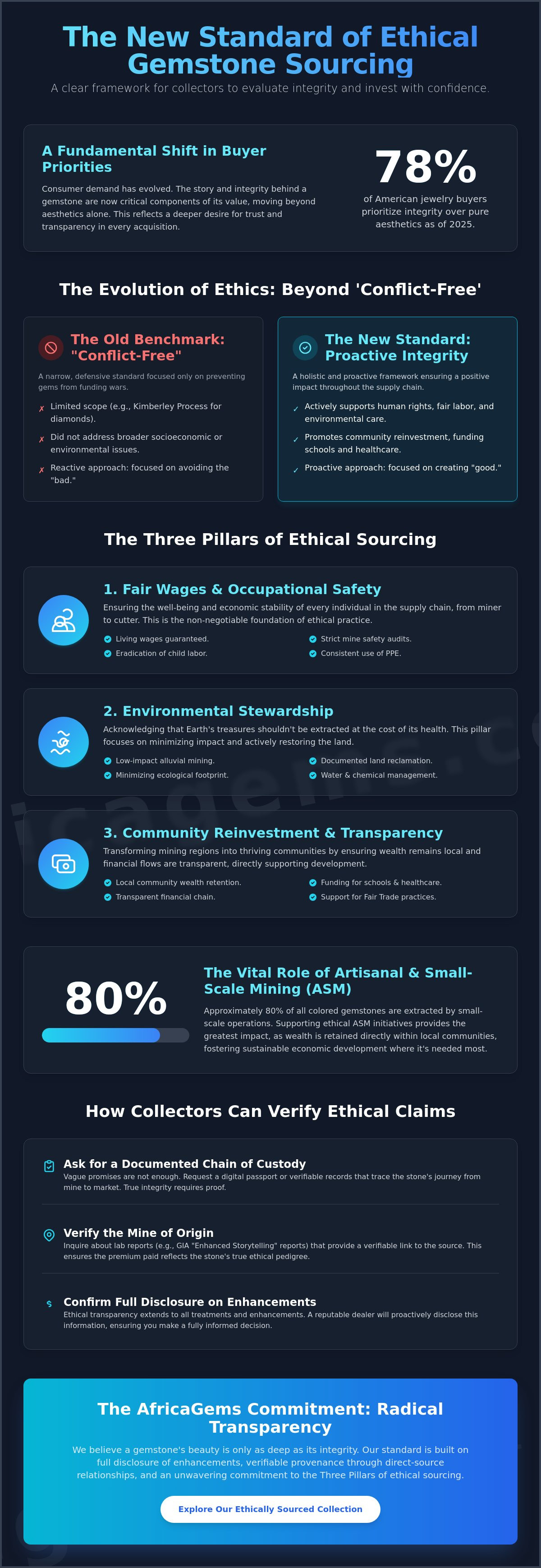
As of 2025, 78% of American jewelry buyers prioritize integrity over aesthetics alone. This shift reflects a profound change in how we value rare materials, moving beyond mere visual appeal to the story behind the stone. If you've struggled with vague marketing terms like "sustainable" or felt a lack of trust in online descriptions, your caution is justified. Defining what is ethical gemstone sourcing is no longer just a moral choice; it's a vital part of protecting the long-term value of your collection. Whether you're seeking loose Colombian emeralds or vibrant sapphires, the origin matters.
Key Takeaways
- Define what is ethical gemstone sourcing as a proactive, documented commitment to human rights, fair labor, and financial transparency throughout the supply chain.
- Identify the three essential pillars of responsibility that ensure your acquisition supports environmental land reclamation and the well-being of mining communities.
- Learn the specific questions to ask a dealer to verify provenance and navigate the complexities of the gray market with absolute confidence.
- Understand the direct correlation between ethical integrity and the long-term investment value of rare materials like loose blue sapphires or Colombian emeralds.
- Explore the AfricaGems Standard for radical transparency, prioritizing full disclosure on gemstone enhancements and source-direct relationships.
Defining Ethical Gemstone Sourcing in 2026
In the high-value jewelry market, the definition of excellence has evolved. It's no longer just about the cut, color, or clarity of loose Mozambique rubies or rare sapphires. To truly understand what is ethical gemstone sourcing, one must look beyond marketing jargon. In 2026, it represents a documented chain of custody where human rights are upheld, the environment is protected, and financial flows are transparent. This shift toward radical transparency ensures that every participant in the supply chain, from the miner to the master cutter, is treated with dignity. Verbal promises are no longer sufficient in a market that prizes objective truth. Integrity now requires a digital passport for every stone, providing the security a serious collector needs to make an informed investment.
Beyond the 'Conflict-Free' Label
The term "conflict-free" once served as the industry benchmark, but it's now seen as a narrow, defensive posture. While the Kimberley Process aimed to stop "blood diamonds," it did little to address the broader socioeconomic issues in the gemstone industry. Modern ethical frameworks are proactive. They move from simply avoiding stones that fund war to actively selecting gems that fund schools, healthcare, and land reclamation. This evolution reflects a desire to support "good" mining rather than just avoiding the "bad." It's a commitment to social development goals that transform mining regions into thriving communities.
The Role of Artisanal and Small-Scale Mining (ASM)
A significant part of this evolution involves Artisanal and Small-Scale Mining (ASM). Since approximately 80% of colored gemstones are extracted by small-scale operations, these miners are the lifeblood of the trade. Supporting ASM initiatives often yields a greater ethical impact than industrial mining because the wealth stays within the local community. When you acquire loose tanzanite gemstones or garnets sourced through fair trade practices, you're directly participating in the economic development of regions across Africa and Asia. It's about ensuring the natural beauty of the stone is matched by the integrity of its journey.
In 2026, the industry has reached a tipping point where data is the new currency of trust. The GIA's "Enhanced Storytelling" reports, which now cover a wider range of stones including loose opal gemstones and spinel, provide a verifiable link to the mine of origin. This level of disclosure protects the buyer from undisclosed treatments and ensures that the premium paid for a stone actually reflects its rarity and ethical pedigree. For the connoisseur, this transparency is the ultimate guarantee of value.
The Three Pillars of Social and Environmental Responsibility
True integrity in the gemstone trade rests upon three foundational pillars that transform a simple transaction into a force for global good. When asking what is ethical gemstone sourcing, one must look for a synergy between human rights, environmental care, and community reinvestment. These aren't isolated goals; they are interconnected standards that ensure the loose alexandrite gemstones or rare garnets you admire were brought to light without exploitation. By adhering to these principles, the industry aligns with the United Nations Sustainable Development Goals, fostering a resilient ecosystem where every participant thrives.
Fair Wages and Occupational Safety
Human rights represent the first and most critical pillar. This involves strictly enforced fair labor standards across the entire supply chain. It's not just about meeting local minimums; it's about ensuring a living wage that allows mining families to achieve true economic stability. Occupational safety is equally paramount. Rigorous mine safety audits and the consistent use of Personal Protective Equipment (PPE) protect the physical well-being of the artisans. Eradicating child labor is achieved not through simple bans, but by providing educational support and creating financial security for the adults in these communities, ensuring children remain in classrooms rather than mines.
Minimizing the Ecological Footprint
The second pillar focuses on environmental stewardship, acknowledging that the earth's treasures shouldn't be extracted at the cost of its health. Collectors increasingly favor low-impact alluvial mining, where gems are gathered from riverbeds with minimal surface disruption, over destructive open-pit methods. Water management is a key component here, ensuring that gemstone extraction doesn't contaminate local supplies with silt or harmful chemicals. Environmental remediation is the restoration of mining sites to their natural state. This practice ensures that once the gems are removed, the land remains viable and vibrant for future generations.
The final pillar is community development. This ensures that the wealth generated by rare materials stays where it's found, reinvesting profits into local infrastructure like clinics and schools. This holistic approach ensures that the pursuit of beauty also supports the pursuit of human dignity. If you're ready to see how these standards translate into breathtaking quality, you might explore our selection of loose tsavorite garnets, which are sourced with this exact commitment to excellence. These three pillars work together to create a sustainable gemstone ecosystem that protects both the collector's investment and the miner's future.
The Traceability Challenge: From Mine to Market
Tracking a stone from its raw, crystalline state to a polished masterpiece is the defining challenge of the modern gem trade. A robust 'Chain of Custody' ensures that every hand that touches a gemstone is documented, leaving no room for the ambiguity of the gray market. In these unregulated spaces, stones from various sources are often aggregated, causing their specific origins to be lost forever. Understanding what is ethical gemstone sourcing requires recognizing that once provenance is obscured, the ability to guarantee human rights and environmental standards vanishes. To combat this, the industry in 2026 has embraced blockchain technology and digital passports, creating immutable records that follow a stone across borders.
The complexity of these supply chains is significant. As noted in the GIA’s analysis of The Color of Responsibility, the path from mine to market involves numerous stakeholders, each presenting a potential risk to transparency. A reputable dealer serves as the most critical link in this chain. By vetting every supplier and maintaining direct relationships with mining cooperatives, an expert dealer eliminates exploitative middlemen who thrive on opacity. This direct oversight is the only way to ensure that the rigorous standards of integrity are met at every stage.
The Journey of a Loose Sapphire
Consider the journey of a blue sapphire from a traditional pit in Sri Lanka. In an ethical framework, the stone's journey begins with a licensed miner and moves to a registered local broker before reaching a master cutter. Each transition is logged. This methodical approach ensures that the value created by the stone's natural beauty isn't marred by unethical labor practices. When the stone finally reaches a collector, its documentation serves as a testament to its clean history, providing a level of security that "blind" purchases simply can't offer.
Why Provenance Matters for Value
Documented origin is no longer just a "feel-good" metric; it's a financial imperative. Verified provenance now commands a 15-20% value premium for rare gemstones, as collectors increasingly view transparency as a marker of quality. This 'Transparency Premium' reflects a market where buyers are willing to pay more for the certainty of an ethical story. Investing in stones with clear chains of custody also acts as a hedge against future regulatory changes. As governments tighten import surcharges and reporting requirements, stones with a verifiable history will remain the most liquid and desirable assets in any serious collection.
How Collectors Can Verify Ethical Claims
Verification is the bridge between a simple purchase and a legacy investment. While understanding what is ethical gemstone sourcing provides the necessary framework, applying that knowledge requires a discerning eye. You shouldn't settle for vague marketing promises. Instead, demand concrete documentation that outlines the stone's journey from the rough state. A dealer's ability to provide provenance, the chronological record of ownership, is the hallmark of a secure transaction. Look for active memberships in prestigious organizations like the American Gem Trade Association (AGTA) or the Responsible Jewellery Council (RJC). As of early 2026, the RJC has moved to even more rigorous audit standards, ensuring that members are held accountable to the highest human rights and environmental benchmarks across the globe.
Red Flags to Avoid When Buying Online
The digital marketplace is frequently clouded by "greenwashing," making it vital to identify common red flags. Be wary of descriptions that use broad, undefined terms like "eco-friendly" or "ethically sourced" without providing supporting data or specific mine locations. If a dealer cannot name the specific region or cooperative of origin, the stone’s ethical status is likely unverified. Price is another significant indicator of integrity. If you encounter loose Paraiba tourmalines or unheated rubies at prices significantly below market averages, it's a warning sign. These "deals" often hide a history of exploitative labor or environmental neglect. Ethical sourcing involves real-world costs, and a price that's too good to be true usually is.
The Importance of Full Disclosure
Radical transparency extends beyond labor to the physical integrity of the stone itself. An ethical dealer provides full disclosure on all gemstone treatments and enhancements, such as heat, oiling, or beryllium diffusion. This honesty builds the "Expert Enthusiast" relationship, where you're treated as an informed insider rather than just a customer. Independent lab reports from institutions like the GIA are indispensable here, especially with their 2026 "Enhanced Storytelling" reports that add a 15-20% value premium to stones with verified provenance. These reports validate the stone's natural state and protect you from undisclosed fillers that compromise long-term value. By insisting on these standards, you ensure your collection is built on a foundation of truth. If you're ready to acquire a stone with a fully documented history, explore our collection of loose alexandrite gemstones, each vetted for both beauty and integrity.
The AfricaGems Commitment: Radical Transparency
Since 1984, Marc Sarosi has built AfricaGems on a singular premise: beauty without conscience is hollow. While many in the industry are only now defining what is ethical gemstone sourcing in response to consumer demand, we've spent over four decades refining the "AfricaGems Standard." This proprietary protocol involves a rigorous evaluation of every master cutter and supplier in our network. We don't just sell stones; we curate a collection based on a legacy of trust. To provide collectors with diverse options, we balance our inventory of natural gems with Chatham Lab Created Gemstones, ensuring that every client can find a piece that aligns with their personal values and aesthetic desires.
Decades of Expertise in Ethical Sourcing
Our relationships with artisanal miners aren't transactional; they're generational. These deep-rooted connections allow us to bypass the opaque layers of the traditional supply chain, ensuring that every stone is hand-selected for both its fire and its provenance. When you're buying gemstones online, you aren't just purchasing a mineral. You're investing in the expertise and accountability of the dealer. Marc Sarosi’s personal guarantee serves as the ultimate seal of integrity, transforming a digital transaction into a personal consultation with a mentor who understands the nuances of the global market. This level of direct oversight is rare in a market often dominated by anonymous wholesalers.
Your Investment, Our Integrity
The correlation between ethics and asset value is undeniable. A stone with a clouded history is a liability; a stone with radical transparency is a legacy. We protect your collection by vetting every single item for ethical compliance and full disclosure of enhancements. Looking ahead, our commitment to the industry remains steadfast as we move toward a 100% traceable inventory by 2030. This path ensures that your acquisitions, from loose imperial topaz to rare tourmalines, remain liquid and highly desirable in an increasingly regulated market. We invite you to explore our collection of ethically sourced loose sapphires and experience the security of a purchase backed by forty years of uncompromising standards. Your collection deserves nothing less than total transparency.
Building Your Legacy with Integrity
The journey to understanding what is ethical gemstone sourcing reveals that true value is found at the intersection of rarity and responsibility. You've seen how the three pillars of social and environmental stewardship protect both the land and the artisans who bring these treasures to light. By prioritizing documented traceability and rigorous verification, you ensure that your collection is an asset of both financial and moral significance. In a market where transparency now commands a premium, your discernment is your greatest protection.
Since 1984, AfricaGems has stood as a guardian of these standards. Every stone in our vault is directly sourced by Marc Sarosi, ensuring that beauty is always matched by a clean history. We provide full treatment disclosure on every stone, reflecting our commitment to radical honesty. It's time to elevate your collection with pieces that tell a story of integrity. Discover our collection of ethically sourced, natural gemstones and begin building a legacy you can wear with absolute pride. Your pursuit of the world's most beautiful materials is a powerful way to support a more transparent and equitable industry.
Frequently Asked Questions
What is the difference between ethical and sustainable gemstones?
Ethical sourcing prioritizes human rights and fair labor, while sustainable gemstones focus on long-term environmental health and resource management. In 2026, the two terms often overlap, but ethical standards specifically address the dignity of the workforce and safe conditions. Sustainability ensures that mining practices don't deplete local ecosystems or contaminate water supplies. For a collector, understanding what is ethical gemstone sourcing requires looking at both social impact and ecological preservation.
Are lab-grown gemstones more ethical than natural ones?
Lab-grown stones aren't inherently more ethical; they simply offer a different impact profile. While they avoid the environmental footprint of traditional mining, they don't provide the vital economic support that artisanal mining offers to rural communities. AfricaGems offers Chatham Lab Created Gemstones for those prioritizing a conflict-free origin, but natural stones remain essential for supporting local livelihoods in gemstone-rich regions through fair trade practices.
How can I tell if a sapphire was ethically mined?
Verifying a sapphire's ethical origin requires a combination of independent lab reports and dealer transparency. Look for a GIA "Enhanced Storytelling" report, which provides a verified country of origin for loose blue sapphires. You should also ask your dealer for specific details about the mine or the cooperative that extracted the material. Direct sourcing by the dealer is the most reliable way to ensure no exploitative middlemen were involved in the chain.
Does 'conflict-free' mean the same thing for emeralds as it does for diamonds?
The "conflict-free" label for emeralds is not governed by the Kimberley Process, as that international treaty applies exclusively to diamonds. For loose Colombian emeralds, ethical standards are upheld through local government regulations and voluntary industry codes like those from the RJC. Collectors must look for dealers who go beyond the diamond-centric definition of conflict-free to address fair labor and environmental remediation in emerald-producing regions.
What organizations certify ethical gemstone sourcing?
Several organizations lead the way in setting integrity standards, most notably the Responsible Jewellery Council (RJC) and the American Gem Trade Association (AGTA). The RJC provides a Code of Practices that covers human rights and environmental stewardship across the supply chain. Additionally, the GIA’s expanded provenance services offer a scientific bridge to ethical claims by verifying the geographic source of the material, which is a key component of what is ethical gemstone sourcing.
Why are ethically sourced gemstones often more expensive?
Higher prices for ethically sourced stones reflect the real-world costs of fair labor and environmental protection. These gems include the expense of living wages for miners, rigorous safety audits, and the restoration of mining sites to their natural state. While a bargain stone may hide a history of exploitation, an ethical stone carries a value premium that protects your investment. This ensures the long-term health of the industry and the communities involved.
Can a gemstone be ethical if it has been heat-treated?
Heat treatment is an ethical practice as long as the dealer provides full disclosure of the enhancement. Many loose pink sapphires and rubies are heated to improve color and clarity, which is a standard industry practice. The ethical concern arises only when treatments are hidden from the buyer. Transparency regarding any enhancements is a pillar of integrity, allowing the collector to understand the stone's true nature and long-term value.
How does ethical sourcing benefit the local mining communities?
Ethical sourcing transforms mining from an extractive process into a catalyst for community development. It ensures that profits are reinvested into local infrastructure such as schools, healthcare clinics, and clean water systems. By choosing loose tanzanite gemstones or garnets from ethical sources, you're directly supporting the economic stability of artisanal miners. This creates a sustainable cycle where the natural beauty of the land provides a lasting legacy for its people.

Article by
Marc Sarosi
Professional gemstone dealer for more than 40 years. Started off mining Aquamarine in Zambia, Africa and travelled throughout the continent in search of fine gems. Trusted authority on fine gemstones and have donated a fine collection of more than 27 extraordinary gemstones to the Smithsonian Institute Gem Hall for generations to see.