
Untreated Sapphire vs Treated: The Connoisseur’s Guide to Rarity and Value
May 8th 2026
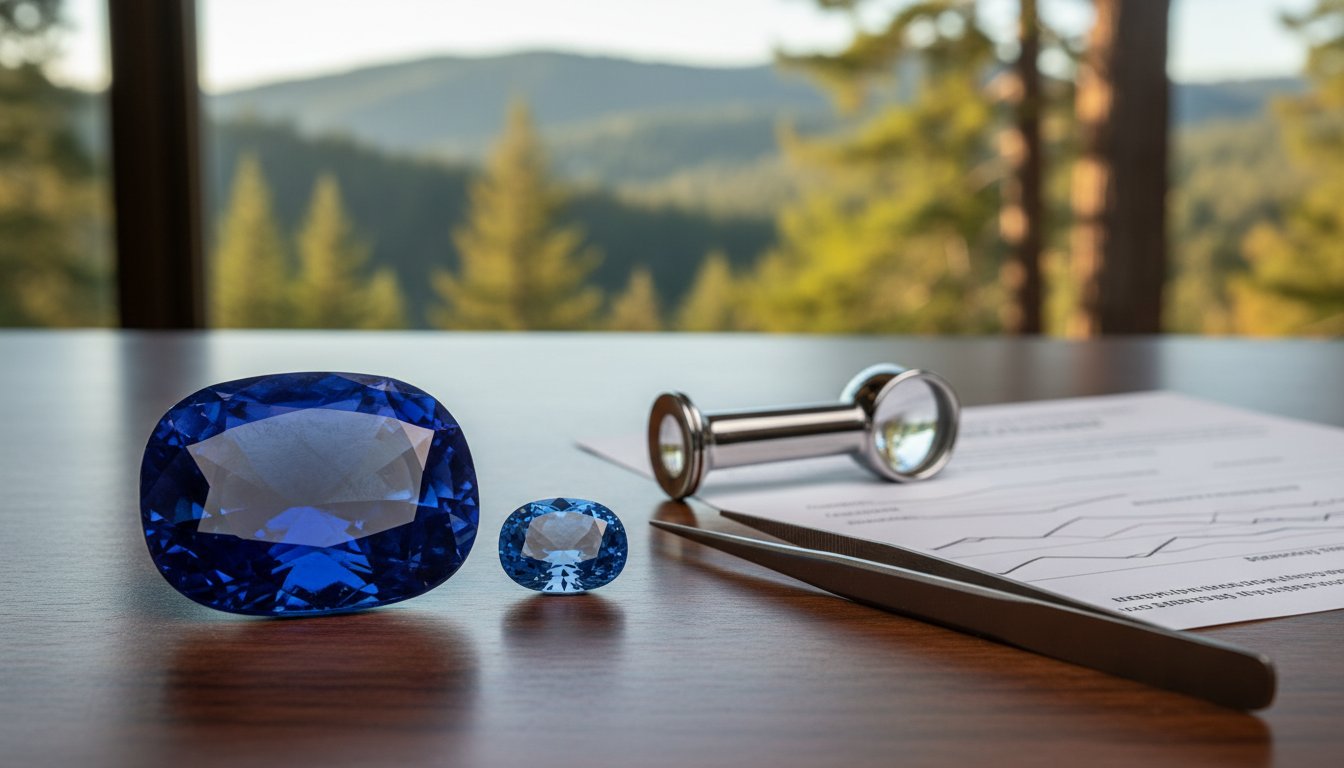
Did you know that as of early 2026, unheated blue sapphires have demonstrated a consistent 16% annual growth in value, actually outperforming white diamonds? You likely recognize that a fine sapphire is a pinnacle of any collection, yet the nuances of untreated sapphire vs treated stones often create a cloud of uncertainty for even the most dedicated connoisseurs. It's natural to feel concerned about paying a premium for a stone that might not hold its long-term rarity or carries undisclosed enhancements.
We're here to transform that confusion into the confidence of a true insider. You'll learn exactly why the Regent Kashmir sapphire commanded a record $271,515 per carat at auction in May 2025 and how to leverage the new GIA reporting standards implemented in January 2026. This guide provides a definitive framework for evaluating treatment types, understanding the gold standard of AGL laboratory reports, and choosing a stone that represents both a geological miracle and a secure, high-value investment.
Key Takeaways
- Distinguish between a geological miracle and standard industry enhancements by defining the technical line between unheated rough and thermal modification.
- Master the investment framework of untreated sapphire vs treated stones to understand why unheated specimens command a 50% to 300% price premium.
- Learn to decode prestigious lab reports from GIA, AGL, and Gubelin to ensure your gemstone’s certificate accurately reflects its true rarity and origin.
- Discover why unheated sapphires offer superior market liquidity and remain the preferred choice for serious collectors and high-value portfolios.
- Gain peace of mind through a commitment to radical transparency, ensuring every acquisition is ethically sourced and accompanied by full disclosure.
Untreated vs. Treated Sapphires: Defining the Connoisseur’s Choice
When you hold a sapphire, you're touching a piece of Earth's history that spans millions of years. But the journey from the mine to your jewelry box often involves a critical fork in the road: the choice between untreated sapphire vs treated stones. Understanding this distinction is the first step toward becoming an informed insider. An untreated, or unheated, sapphire is a stone that has been simply cut and polished from the rough, retaining the exact color and clarity it possessed when it was unearthed. In contrast, a treated stone has undergone various Sapphire Treatments, most commonly thermal enhancement, to improve its visual appeal.
To better understand the dramatic impact these differences have on value and rarity, watch this helpful video:
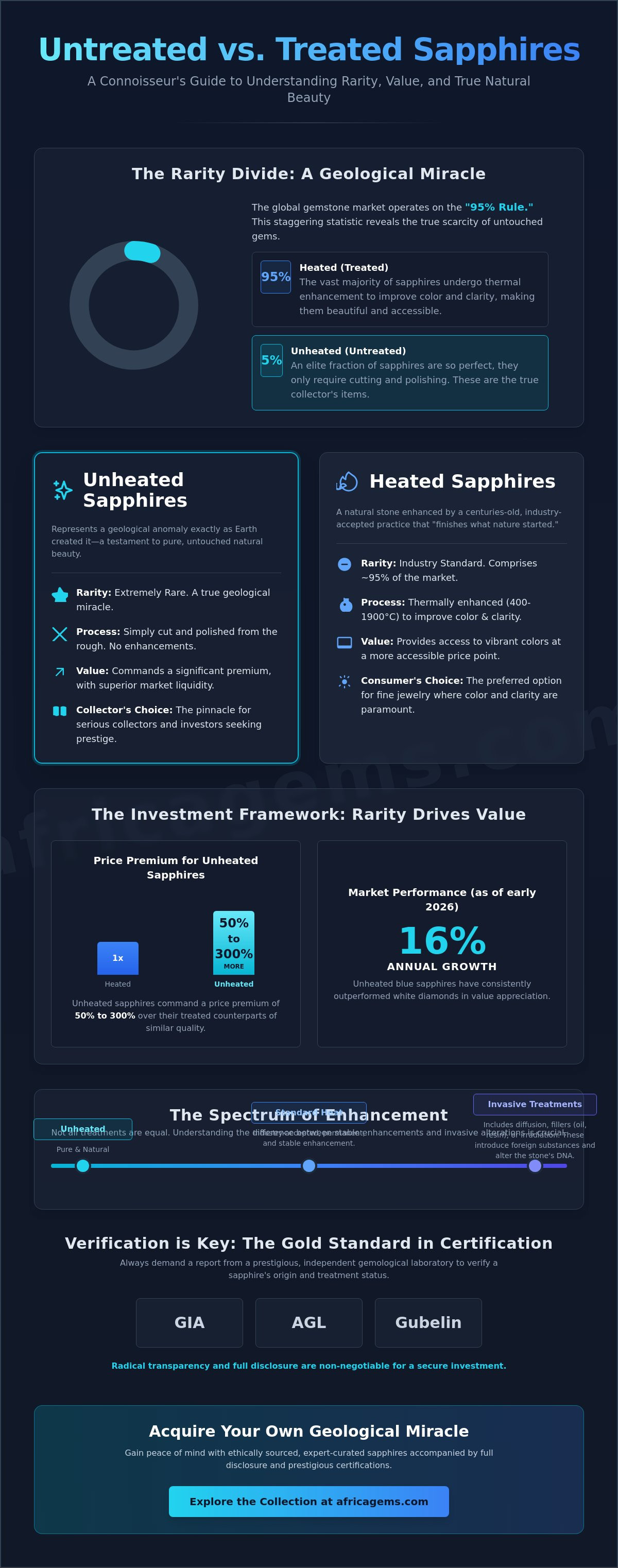
Nature is rarely perfect, which gives rise to the "95% Rule." In the global gemstone market, approximately 95% of all sapphires have been heated to reach the saturation and clarity levels consumers expect. This statistic highlights the extreme rarity of the remaining 5%. Finding a stone with breathtaking natural color is a hunt for a needle in a haystack. This scarcity is why the AfricaGems Difference is centered on radical transparency. We prioritize full disclosure, ensuring you know exactly what has happened to a stone before it reaches your hand. Marc Sarosi’s personal guarantee acts as a pillar of security, transforming a digital transaction into a personal consultation based on integrity.
What Does 'Natural' Really Mean?
There's a persistent misconception that "treated" means "fake." It's vital to remember that both heated and unheated stones are natural minerals formed in the Earth, unlike lab-grown or synthetic alternatives. However, "natural" doesn't mean "untouched." While a heated stone is still a natural sapphire, it isn't "completely untreated." We help you distinguish between these terms so you don't pay "natural-unheated" prices for a stone that has been thermally enhanced. Understanding this nuance protects your investment and ensures your collection holds its intended value.
The Emotional Appeal of the Untouched Gem
There is a profound, refined elegance in owning a stone exactly as the Earth created it. For the serious collector, an unheated gem represents more than just beauty; it represents prestige and a connection to a world before human intervention. An unheated sapphire is a breathtaking geological anomaly that requires no human intervention to reveal its brilliance. This raw, exquisite nature is why stones from depleted mines, like those in Kashmir or Burma, continue to shatter auction records. When you choose an untreated stone, you aren't just buying a gem; you're acquiring a rare miracle of nature.
The Science of Enhancement: Standard Heat vs. Invasive Treatments
Understanding the technical divide between untreated sapphire vs treated specimens requires a look into the crucible of the laboratory. Heat treatment isn't a modern shortcut; it's a centuries-old practice that attempts to finish what the Earth started. By subjecting stones to temperatures ranging from 400 to 1900 degrees Celsius, gemologists can dissolve rutile needles, often called "silk." This process dramatically increases transparency and intensifies the saturation of the stone, turning a cloudy rough into a vibrant jewel.
Because these gemstone treatments are stable and permanent, they are widely accepted in the trade. However, there's a massive difference between traditional heat and invasive chemical alterations. You should know that while heat mimics natural volcanic processes, other treatments introduce foreign substances that forever change the stone's DNA.
Standard Heat: The Industry-Accepted Enhancement
Standard heat is essentially a controlled volcanic event. It doesn't add foreign chemicals to the crystal structure. For blue sapphires, this often results in a more uniform, vivid hue that appeals to the broader market. While these stones are beautiful and durable, they lack the extreme scarcity of unheated gems. The American Gem Trade Association (AGTA) requires clear disclosure of these processes, a standard we've upheld since our founding. If you're looking for a stunning centerpiece, you might browse our collection of rare gemstones to find a stone that fits your specific needs.
Invasive Enhancements: What to Avoid
While traditional heat is a standard enhancement, other methods are far more controversial and can strip a stone of its investment value.
- Lattice Diffusion: This involves adding elements like Beryllium during the heating process. It forces color into the surface of the stone, creating a "rind" of vibrant hue that doesn't penetrate the core.
- Lead Glass Filling: This technique uses high-lead-content glass to fill surface-reaching fractures. It's a "non-starter" for any serious collector because it significantly compromises the stone's integrity and durability.
- Dyeing: Some low-quality stones are dyed to mimic top-tier colors. These are often unstable and can fade or leak over time.
These invasive methods are why high-quality stones must be accompanied by a reputable lab report. A stone that has been glass-filled or diffusion-treated will never hold the same market position as a natural, unheated specimen. When evaluating the rarity of a potential purchase, always look for the specific language regarding chemical additives. This transparency is the only way to navigate the untreated sapphire vs treated market with complete confidence.
Rarity, Value, and Price: The Investment Framework
The financial divide in the sapphire market is stark. When you compare an untreated sapphire vs treated stone of similar visual quality, the price gap isn't just a minor markup; it's a reflection of geological scarcity. Unheated specimens typically command a premium ranging from 50% to 300%. This multiplier isn't arbitrary. It's driven by a global market where demand for "pure" stones far outstrips the dwindling supply from legendary mines. As of early 2026, unheated blue sapphires have shown a consistent 16% annual growth in value, proving they're a robust alternative to traditional assets.
Market liquidity also favors the unheated stone. If you ever decide to divest from your collection, an unheated sapphire with a reputable certificate is significantly easier to move. Collectors and auction houses prioritize these gems because their value is intrinsic, not manufactured. In May 2025, the Regent Kashmir sapphire set a record at $271,515 per carat, a price point that heated stones simply cannot reach regardless of their visual perfection. This highlights the importance of understanding Sapphire quality and value before making a high-stakes acquisition.
The premium is most aggressive when discussing top-tier color grades. A "Royal Blue" or "Cornflower Blue" sapphire that achieved its hue naturally is a rare prize. While heat can push a mediocre stone into these color categories, it can't replicate the prestige of a natural saturation that has remained untouched for millennia. For the savvy investor, navigating the untreated sapphire vs treated landscape means recognizing that you're paying for rarity as much as you're paying for beauty.
Why Unheated is an Asset Class
The historical price trends for unheated loose blue sapphires reflect a tightening market. With high-grade rough from Sri Lanka and Madagascar becoming increasingly difficult to source, the "investment-grade" label is reserved for the few. While heat provides beauty, only lack of treatment provides 'investment-grade' scarcity. This finite nature ensures that top-tier colors retain their value even during market fluctuations, as collectors always seek the "top 1%" of available gems.
Aesthetic Comparison: Can You See the Difference?
The debate between heated and unheated isn't just about the checkbook; it's about character. Many connoisseurs actually prefer the "silk" found in unheated stones. These tiny rutile inclusions create a soft, velvety glow that heat treatment often destroys. While a heated stone might offer "loupe-clean" clarity and vivid saturation, it often loses the unique pleochroism and personality of the original crystal. Whether you're looking at a stone from Burma, Ceylon, or Montana, the origin interacts deeply with the treatment status to define the stone's soul.
Verification and Certification: Deciphering the Lab Report
A gemstone's beauty is immediate, but its value is verified by science. In the complex landscape of untreated sapphire vs treated stones, a lab report isn't just a piece of paper; it's a passport that confirms a gem's identity and history. You shouldn't consider a high-value sapphire acquisition without a report from a top-tier laboratory. These institutions act as the ultimate arbiters of truth, protecting you from paying unheated prices for stones that have undergone thermal enhancement.
The most critical phrase to look for on a report is "No indications of heating." This simple statement is the primary driver of a stone's investment-grade status. Conversely, a report noting "Indication of thermal enhancement" tells you the stone has been heated. While these stones are still natural, they don't possess the extreme rarity of their unheated counterparts. For those seeking the highest level of security, we invite you to view our certified sapphire collection to see these standards in practice.
Top-Tier Labs for Sapphire Grading
The Gemological Institute of America (GIA) remains the gold standard for North American buyers, especially with their redesigned report format launched in January 2026. For high-end "Royal Blue" or "Pigeon Blood" designations, many collectors look to the GemResearch Swisslab (GRS) or the Gubelin Gem Lab. These institutions provide a detailed "plot" of the stone, showing its internal characteristics. Matching this plot to the physical gem under a loupe ensures the report belongs to the specific stone you're holding. This technical validation is what transforms a digital storefront into a personal consultation.
Reading Between the Lines
Reports often include comments about "residues." In a ruby heat treatment or sapphire report, you might see terms like "Minor" or "Moderate" residues. These refer to flux remnants left behind during the heating process. While "Insignificant residues" are common in heated stones, anything labeled "Moderate" or "Significant" can impact the stone's durability and value. Avoid reports from unknown labs or those with vague wording. The AfricaGems Guarantee serves as our personal sign-off, backing up these lab findings with Marc Sarosi’s decades of expertise. This commitment to disclosure ensures you're never left guessing about the integrity of your purchase.
The AfricaGems Difference: Ethical Sourcing and Expert Curation
Choosing between an untreated sapphire vs treated gem is a significant decision that requires more than just technical data; it requires a partner you can trust. At AfricaGems, we operate on a principle of radical transparency. Marc Sarosi’s personal signature on every transaction isn't merely a formality. It’s a guarantee of integrity. We believe that a high-value purchase should feel like a personal consultation, not a digital transaction. This is why we provide full disclosure on every enhancement, ensuring you're never left in the dark about a stone’s history.
Our commitment to ethics is absolute. We vet our suppliers with a focus on conflict-free and ethically sourced materials. This ensures that the natural beauty of your sapphire isn't clouded by a questionable origin. Beyond ethics, our curation process is legendary among collectors. We reject 90% of the stones we inspect. A sapphire might have a clean report, but if it lacks "life" or "brilliance," it won't make it into our inventory. We look for stones that possess that rare, breathtaking sparkle that defines a true legacy piece. Whether you're selecting a stone for a collection or using our custom design services to create a bespoke ring, you're investing in a gem that has survived an uncompromising vetting process.
Expert Curation for the Modern Collector
We specialize in gems with exceptional character, such as our loose burma rubies and investment-grade sapphires. To bridge the gap between a screen and your hand, we provide high-definition videos and 360-degree views of every stone. You can see the pleochroism and the play of light as if you were holding the gem in your own palm. If you need deeper insight, you have direct access to Marc Sarosi’s 40 plus years of expertise. We don't just sell stones; we mentor collectors through the intricate world of rare minerals.
Next Steps: Starting Your Sapphire Journey
Your path to a secure investment starts with clear information. Our website allows you to filter our inventory specifically by treatment status, making the comparison of an untreated sapphire vs treated specimen effortless. Once you find a stone that resonates with you, you can proceed with total security. We offer a 30-day return policy for all loose stones, giving you the time to inspect the gem in person or consult with your own jeweler. If you're ready to find a stone that balances rarity and exquisite beauty, explore our curated collection of Loose Blue Sapphires today.
Secure Your Legacy with a Rare Miracle
You now possess the definitive framework to distinguish between standard industry enhancements and the geological miracles that define the top tier of the market. Understanding the untreated sapphire vs treated divide is your greatest asset in building a collection that holds both beauty and significant financial weight. Remember that unheated specimens represent less than 5% of the world's sapphire supply. This scarcity, combined with a 16% annual growth in value reported in early 2026, positions these gems as an elite alternative to traditional investments.
At AfricaGems, we combine 40 plus years of expert curation with a commitment to radical transparency. Every stone in our vault is accompanied by a full lab certification from GIA or GRS, ensuring your security. We invite you to Browse Our Certified Collection of Unheated Blue Sapphires today. With our 30-day money-back guarantee, you can inspect your chosen gem in person and feel the weight of its history yourself. Your journey toward owning a piece of the Earth's rarest treasures is a rewarding path, and we're honored to act as your knowledgeable mentors along the way.
Frequently Asked Questions
Is a heated sapphire considered a 'natural' gemstone?
Yes, a heated sapphire is classified as a natural gemstone because it formed within the Earth's crust over millions of years. Unlike lab-grown or synthetic alternatives, these stones are genuine minerals. The heating process simply accelerates what nature often does with geothermal heat. However, it's important to distinguish between "natural" and "completely untreated" when you're evaluating a stone's rarity and long-term investment potential.
Do unheated sapphires look better than heated ones?
Visual beauty is subjective, though unheated stones often possess a soft, velvety glow due to intact rutile silk. This internal "character" creates a unique light dispersion that heat treatment typically removes. While heated stones frequently display more vivid saturation and loupe-clean clarity, many connoisseurs prefer the pleochroism and natural personality found in unheated specimens. The choice often comes down to a preference for "perfect" color versus natural "soul."
How can I tell if a sapphire has been heat treated without a lab report?
You cannot reliably determine a stone's treatment status without professional gemological equipment and specialized training. Even seasoned dealers use high-powered microscopy to look for "halo" inclusions or melted crystals, which are tell-tale signs of heat. Because the price difference in the untreated sapphire vs treated market is so vast, relying on the naked eye is a high-risk strategy that we never recommend for serious collectors.
Does heat treatment affect the durability or hardness of a sapphire?
No, standard heat treatment is a permanent and stable process that doesn't compromise the stone's 9 on the Mohs scale. The crystalline structure remains just as durable for daily wear in engagement rings or bracelets. However, invasive treatments like lead-glass filling or lattice diffusion significantly weaken the stone, making it prone to damage from household chemicals or ultrasonic cleaners. Always ensure your report confirms the treatment type is stable.
Why are unheated sapphires so much more expensive than heated ones?
The premium is driven entirely by extreme geological scarcity. While the majority of rough material requires thermal enhancement to reach marketable color, only a tiny fraction of stones emerge from the earth with breathtaking natural saturation. This rarity makes them a finite asset class. Collectors pay for the "miracle" of a stone that reached perfection without human intervention, ensuring it remains an elite, high-demand item.
What is the most invasive sapphire treatment I should avoid?
You should strictly avoid lead-glass filling and Beryllium diffusion. Glass filling involves injecting high-lead-content glass into fractures, which can shatter or discolor if exposed to heat during jewelry repair. Beryllium diffusion uses chemicals to artificially change the color of the stone's surface rind. These treatments are "non-starters" for serious investors because they strip the gemstone of its intrinsic value and durability, making them difficult to resell.
Are Montana sapphires usually heated or unheated?
Approximately 90% of Montana sapphires from the Yogo Gulch and Rock Creek deposits undergo heat treatment. Montana rough is often characterized by a "steely" or "silky" appearance that clears beautifully under controlled temperatures. While unheated Montana stones exist, they are exceptionally rare and typically smaller in size than their heated counterparts. This makes a certified, unheated Montana sapphire a particularly prized find for collectors of American gemstones.
Will a heated sapphire lose its color over time?
No, the color change achieved through standard heat treatment is permanent and won't fade, even with exposure to sunlight or heat. This stability is why the industry accepts heat as a standard enhancement. In the untreated sapphire vs treated debate, both options offer lifelong color durability, provided you avoid unstable treatments like dyeing or surface coatings which can wear off or leak over time.