
Untreated Gemstone Value Guide: Rarity, Premiums, and Investment Outlook for 2026
Apr 22nd 2026
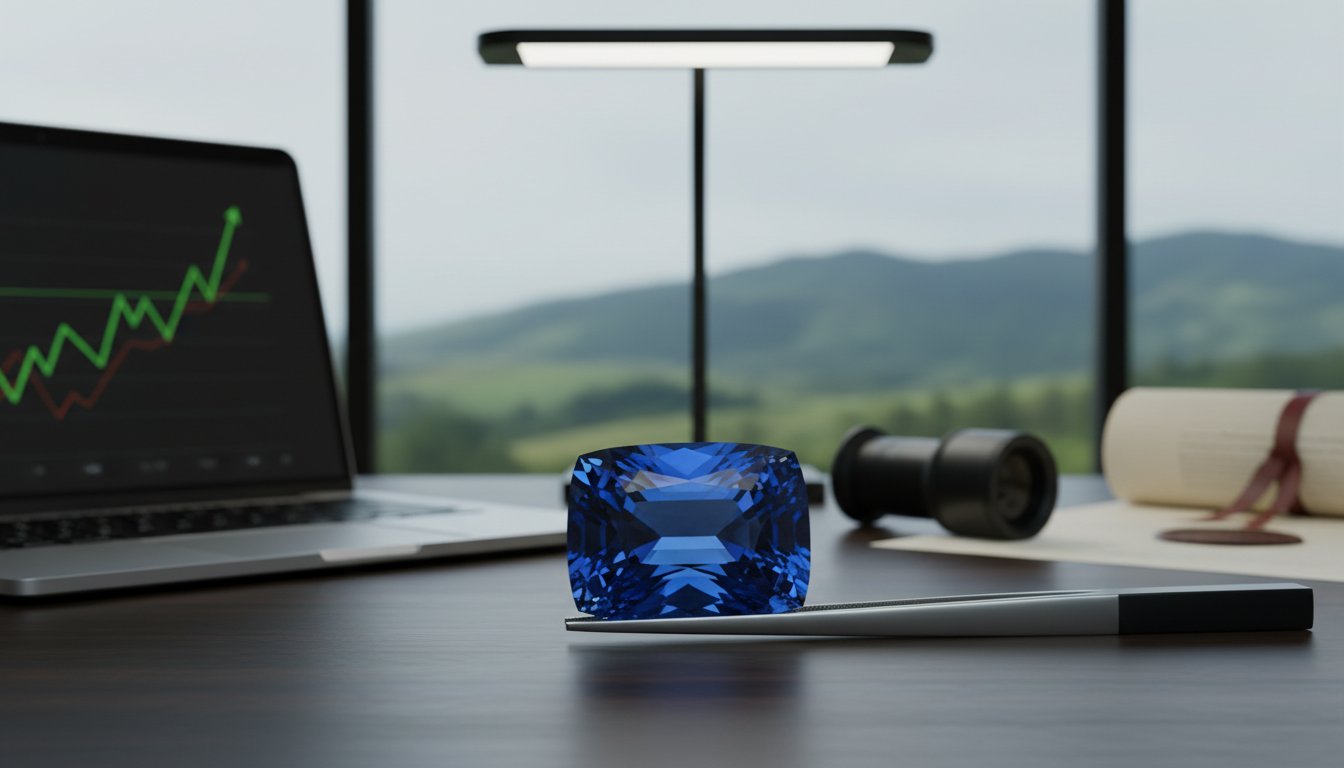
In the current sapphire market, less than 1% of all stones recovered qualify as completely untreated, yet these rare specimens consistently command prices 200% to 500% higher than their heat-treated counterparts at major auction houses. You likely recognize that natural beauty is paramount; however, the gnawing fear of overpaying for a treated stone disguised as a collector's piece is a reality every serious buyer faces. Conflicting lab reports and a lack of transparent historical data often make high-value acquisitions feel like a gamble rather than a strategic investment. It's a challenge that requires both a keen eye and a disciplined approach to gemological data.
This untreated gemstone value guide provides the clarity you need to master the complex world of unheated pricing and explains why these pristine minerals command exponential premiums as we approach the 2026 market. You'll gain a clear framework for calculating the "untreated premium" across different species while learning to identify investment-grade stones with confidence. We'll examine the specific growth potential of Padparadscha sapphires and Colombian emeralds, ensuring you have the expert insight required to build a legacy collection based on radical transparency and the AfricaGems standard of integrity.
Key Takeaways
- Understand the critical distinction between "natural" and "untreated" stones to ensure you are investing in true geological rarity rather than common industry standards.
- Learn how to calculate the exponential price premiums of unheated specimens using our untreated gemstone value guide to maximize your 2026 investment potential.
- Discover why "Royal Blue" sapphires and Burma rubies continue to command record-breaking prices as global supply for these unheated treasures becomes increasingly scarce.
- Master the art of reading lab reports from the "Big Three" to verify "No Indications of Heating" and secure your collection with ironclad provenance.
- Gain the confidence of a seasoned collector by leveraging AfricaGems’ legacy of radical transparency and expert sourcing of the world’s purest minerals.
Defining Untreated Gemstones: Why Natural Status Is Only the Beginning
Understanding the distinction between a natural stone and an untreated one is the first step for any serious collector. While "natural" confirms the gem was mined from the earth rather than grown in a lab, it doesn't guarantee the stone hasn't been modified. An untreated gemstone is a specimen that has undergone no enhancement beyond cutting and polishing. These "Earth-perfected" treasures represent a tiny fraction of global production, standing in stark contrast to the vast majority of "Human-perfected" gems that rely on gemstone treatments like high-temperature heating, fracture-filling, or irradiation to achieve market-ready color and clarity.
To better understand how these factors influence the market and your potential acquisitions, watch this essential guide:
The 95% Rule: Understanding Market Dominance
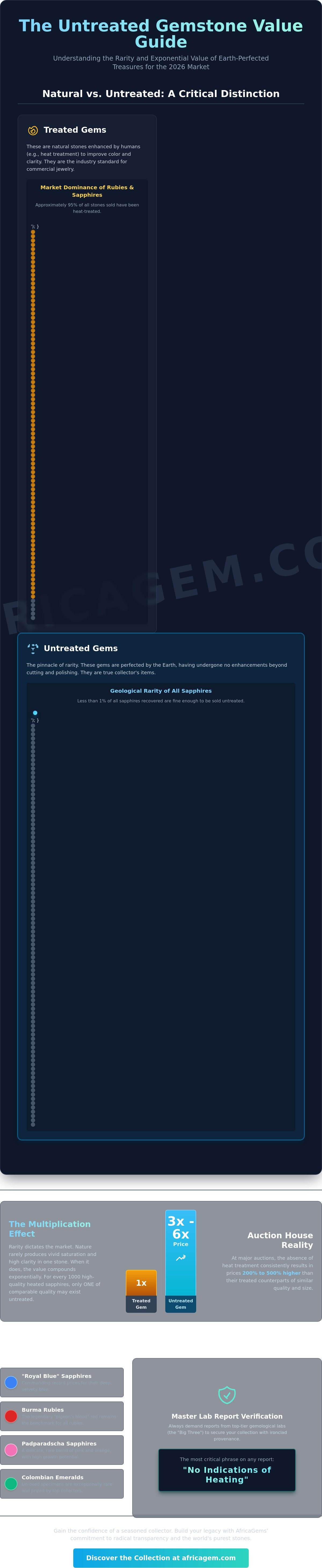
Current industry data suggests that approximately 95% of all rubies and sapphires sold globally have undergone heat treatment. This practice isn't inherently deceptive, but it's a necessary response to the fact that most rough material is too cloudy or pale for fine jewelry. By 2026, the gemstone trade has moved toward radical transparency; failure to disclose a treatment is now considered a major ethical breach. While treatments like heat are stable, others can compromise a stone's integrity. For instance, fracture-filling with lead glass creates a fragile structure that can't withstand standard jewelry repairs or acidic cleaning solutions. This untreated gemstone value guide prioritizes stones that maintain their beauty through their own chemical composition rather than laboratory interventions.
The Aesthetic vs. Asset Debate
Choosing between a treated and an untreated stone often depends on your specific goals. A heated sapphire offers a vibrant, loupe-clean appearance at a more accessible price point, which makes it a practical choice for daily wear in an engagement ring. However, seasoned collectors often look past minor internal inclusions in favor of "pure" specimens. There's a profound psychological allure in owning a gem exactly as nature created it over millions of years. These stones aren't just exquisite accessories; they're finite geological records. When you're using an untreated gemstone value guide to build a portfolio, you're looking for that rare intersection of "unheated" status and breathtaking visual appeal. This combination is what drives the significant premiums seen at major auction houses like Sotheby's and Christie's, where the absence of heat can double or triple a stone's per-carat price.
The Untreated Premium: Calculating the Price Gap in 2026
Pricing untreated stones involves a Multiplication Effect rather than a standard linear markup. Nature rarely produces vivid saturation and high clarity without thermal intervention. When a stone possesses both natural color and clarity, the value compounds exponentially. This untreated gemstone value guide highlights how rarity dictates the market as we move into 2026. According to USGS Gemstone Data, the physical scarcity of these minerals remains the primary driver of their long-term economic worth.
The price gap is most evident when analyzing market data for 5-carat blue sapphires. A heated specimen might be breathtaking, but its unheated counterpart often commands a 150% to 300% premium. This isn't arbitrary. For every 1000 heated sapphires, only one of comparable quality exists untreated. This extreme scarcity creates a price floor that treated stones simply cannot reach, making unheated specimens the preferred choice for serious portfolios.
Quantifying the Premium by Species
In the sapphire market, unheated status can easily double or triple the price per carat, especially for stones originating from Kashmir or Ceylon. Rubies face an even steeper curve. An unheated Burma ruby is the pinnacle of rarity, often fetching premiums of 400% over heat-treated stones of similar color. Emeralds operate on a different scale of transparency. The market distinguishes strictly between "Insignificant" and "Minor" oiling. Moving from a minor oiling grade to an insignificant or "no oil" status can increase the value by 50% to 100%, as collectors prioritize the raw integrity of the crystal.
Size and Clarity: The Value Accelerators
The Rarity Curve explains why a 1-carat untreated stone is a beautiful gem, but a 10-carat untreated stone is a historic auction piece. As the carat weight increases, the probability of finding a stone that escaped geological pressure without significant inclusions drops to near zero. While a heated stone can be "cleaned up" in a furnace, an untreated stone must be born perfect. Collectors often accept minor, silk-like inclusions in unheated stones as proof of origin. However, if a stone reaches the "eye-clean" or loupe-clean threshold while remaining untreated, the value accelerates beyond standard market charts. You can explore these rare specimens in our loose gemstone inventory to see how clarity and treatment status influence real-world pricing.
Transparency is the cornerstone of the AfricaGems Difference. We believe that every collector deserves full disclosure, as the difference between a heated and unheated stone isn't just a matter of beauty; it's a matter of heritage and lasting value. By 2026, the gap between treated and untreated gems will likely widen further as known deposits are depleted, leaving only the finest natural specimens to lead the market.
Species-Specific Value Guides: Where to Find the Most Growth
Identifying the right species is the first step in using an untreated gemstone value guide effectively. While all natural stones hold merit, certain varieties command exponential premiums due to geological rarity and historical prestige. Blue Sapphires remain the market anchor, with the "Royal Blue" designation from Gübelin or SSEF labs acting as a 30% value multiplier over standard cornflower shades. This deep, vivid saturation is the hallmark of a legacy asset.
The market for Loose Burma Rubies has reached a critical bottleneck. Political instability and depleted mines in Mogok mean that any unheated specimen over two carats is now a museum-grade rarity. This scarcity has pushed savvy collectors toward secondary markets where untreated Spinel and Tsavorite Garnet are seeing record growth. Because Tsavorite is almost never treated, its value is tied directly to its size and the "neon" quality of its chromium-driven green. Origin remains the ultimate multiplier; a stone from Kashmir, Mogok, or Muzo carries a pedigree that transcends the physical beauty of the mineral itself.
The Sapphire Spectrum: Beyond Blue
Untreated Padparadscha sapphires represent the rarest of the rare, defined by a delicate marriage of pink and orange. They're the only sapphire variety where the color name is as important as the lack of heat. Yellow and pink sapphires offer excellent entry points for new collectors, but the untreated premium is only worth the cost if the stone possesses exceptional clarity and no evidence of beryllium diffusion. Recently, "Parti" sapphires have emerged as a favorite. These bi-color stones show distinct color zoning, often shifting from teal to yellow, and their 15% year-over-year increase in demand reflects a shift toward unique, individualistic gems.
The Emerald Exception: Clarity Enhancement Levels
Emeralds are unique because "untreated" usually means "no oil." A "No Oil" Emerald Gemstone can fetch 200% more than a stone with minor cedar oil. Collectors prioritize cedar oil over resin because it's a natural, reversible substance that doesn't compromise the stone's integrity. When you're evaluating these, origin plays a massive role. Colombian stones from the Muzo mine still command the highest prices, but Zambian emeralds with high transparency and a slightly bluish-green hue are narrowing the price gap as the 2026 market approaches. Always insist on a lab report that specifies the level of clarity enhancement to ensure your untreated gemstone value guide projections stay accurate.
- Kashmir Sapphire: The pinnacle of velvety blue, now almost exclusively found at auction.
- Mogok Ruby: Known for "pigeon's blood" red and strong fluorescence.
- Muzo Emerald: The gold standard for warm, lush green with minimal inclusions.
Verification and Due Diligence: Protecting Your Investment
Purchasing an unheated stone without a verified pedigree is a gamble that serious collectors don't take. This untreated gemstone value guide emphasizes that the laboratory report is as vital as the crystal itself. In the high-stakes world of investment-grade gems, three institutions set the global standard: the Gemological Institute of America (GIA), the Gübelin Gem Lab, and the Swiss Gemmological Institute (SSEF). These labs use advanced spectroscopy and chemical analysis to detect the faintest traces of thermal enhancement that the human eye cannot see.
When you review a report, focus your attention on the "Comments" or "Observations" section. You are looking for the specific phrase "No indications of heating." If the report mentions "Indications of heating" or "H(a)" or "H(b)" codes, the stone has been treated. A 2023 market analysis confirmed that a "No Heat" Burmese Ruby can command a price premium of 100% to 300% over a heated stone of the same visual quality. If the price seems too good to be true, it usually is. True rarities don't sell at a discount.
Laboratory Hierarchies
While GIA is the gold standard for North American commerce, SSEF and Gübelin are the preferred authorities for high-value Rubies and Sapphires in the global auction market. These Swiss labs possess extensive databases of historical samples that make their origin opinions highly respected. A comprehensive report for a high-carat stone can cost between $150 and $2,000. This cost is a necessary part of the final sale price. Be wary of "Lab Shopping," where a dealer sends a stone to multiple minor labs until one produces a "No Heat" result. Stick to the Big Three to ensure your investment maintains its liquidity.
In-Person Inspection Techniques
You can perform basic due diligence with a 10x loupe. Look for "silk," which are fine, needle-like rutile inclusions. In unheated stones, these needles appear sharp, long, and intact. If the stone was heated to high temperatures, these needles often look "melted," broken, or resemble tiny rows of dots. You should also look for "fingerprint" inclusions. In an untreated stone, these fluid-filled tubes are crisp and unruptured. While these techniques are helpful, they're never a substitute for a professional report. Always buy from dealers who offer a personal guarantee and full disclosure of all known treatments.
Discover the security of fully documented rarities by browsing our selection of certified untreated gemstones today.
The AfricaGems Difference: Sourcing the World’s Purest Stones
Marc Sarosi established AfricaGems over 40 years ago with a single mission: to provide collectors with a level of transparency that was previously non-existent in the trade. This untreated gemstone value guide reflects our deep-seated belief that every buyer deserves the full story behind their stone. We don't just sell gems; we provide a gateway to the world's most Rare Gemstones, backed by ironclad provenance and Marc’s personal guarantee. Our direct-from-mine relationships allow us to intercept high-quality rough before it's subjected to common industry enhancements. This ensures our inventory remains a sanctuary for those seeking stones in their purest, most natural state.
We've built our reputation on radical transparency. While many dealers might gloss over "minor" enhancements, AfricaGems provides full disclosure on every facet of a stone’s history. Our sourcing process involves:
- Direct negotiation with artisanal miners in key regions like Sri Lanka, Tanzania, and Madagascar.
- Rigorous internal vetting followed by third-party certification from respected labs like GIA or AGTA.
- A refusal to stock stones with undisclosed or unstable treatments.
Ethical Sourcing and Provenance
Untreated stones are often the clearest indicators of fair-trade mining practices. Because these gems don't require industrial-scale laboratory processing, they're frequently sourced from small-scale artisanal miners who prioritize quality over mass-market volume. We document the journey of every stone from the mine to your collection, ensuring our gems are 100% conflict-free. This sustainable approach protects the local environments and supports the communities that unearth these treasures. When you choose an unheated sapphire or an untreated spinel, you're supporting a shorter, cleaner supply chain that values the earth's natural output.
Custom Design for Your Rare Find
Your investment is fully protected by our 30-day money-back guarantee, providing the security you need when acquiring high-value assets. It's our way of ensuring you feel like a confident insider in the world of rare minerals. Explore our current inventory of certified untreated gemstones today to find a stone that matches your standards for purity and brilliance.
Securing Your Legacy in the 2026 Gemstone Market
The trajectory for 2026 indicates that the market's appetite for earth-mined purity is only intensifying. This untreated gemstone value guide underscores that unheated specimens often command premiums exceeding 50 percent over their heat-treated counterparts due to their extreme geological rarity. Navigating these complexities requires a partner who prioritizes radical transparency and technical validation. AfricaGems has served as a cornerstone of the industry since 1984, bringing over 40 years of gemological expertise to every transaction. We eliminate the guesswork by providing full disclosure and premier certifications from prestigious institutions like GIA, SSEF, or Gubelin. You're not just purchasing a stone; you're securing a piece of natural history that's been vetted by the best in the field. Our 30-day no-questions-asked return policy ensures your peace of mind matches the brilliance of your new acquisition. It's time to elevate your collection with stones that represent the pinnacle of natural beauty and investment potential.
Just as the highest standards of purity define a legacy gemstone collection, the same philosophy applies to optimizing personal health; those who value uncompromised quality can discover XSV and their focus on 100% pure performance supplements as we look toward 2026.
Browse the World’s Finest Collection of Certified Untreated Gemstones at AfricaGems
Frequently Asked Questions
Is an untreated gemstone always more valuable than a treated one?
No, an untreated stone isn't automatically more expensive than a treated counterpart. While rarity favors the natural specimen, quality factors like color saturation and clarity still dictate the final price. For example, a dull, included 3-carat unheated sapphire might retail for $800 per carat, whereas a vivid "Royal Blue" heated sapphire of the same size can command $6,000 per carat. Rarity only translates to value when the stone also possesses breathtaking beauty.
How can I tell if a sapphire has been heat treated without a lab report?
You can't definitively confirm treatment status without advanced gemological equipment. Professional dealers use 40x magnification to look for "rutile silk" inclusions. In unheated stones, these needles are long and intact. If the stone reached 1,200 degrees Celsius during heating, those needles melt into tiny discoids or droplets. Because these signs are microscopic, you should never purchase a high-value stone without a report from a reputable lab like GIA or AGTA.
Why does origin matter so much for the value of untreated rubies and emeralds?
Origin acts as a pedigree that signals specific geological conditions and historical prestige. According to the 2023 Knight Frank Luxury Investment Index, a ruby from Burma often carries a 300% premium over a similar stone from Mozambique. For emeralds, the Muzo and Chivor mines in Colombia are the gold standard. These locations produced the world's most iconic gems for centuries; this creates a legacy that collectors are willing to pay a premium to own.
What is the most stable untreated gemstone for an investment portfolio?
Unheated blue sapphire is widely considered the most stable and liquid asset for collectors today. This untreated gemstone value guide notes that high-quality sapphires have maintained a 12% annual price growth since 2019. Their Mohs hardness of 9 makes them incredibly durable for long-term storage. Unlike trendy stones that fluctuate with fashion cycles, the demand for natural, "no-heat" blue corundum remains constant among global auction houses and private connoisseurs.
Do untreated gemstones require special care or cleaning compared to treated ones?
Untreated gemstones are actually more resilient to standard cleaning than many treated stones. A natural, untreated ruby won't react poorly to the chemicals in a jewelry cleaner or the vibrations of an ultrasonic machine. In contrast, emeralds treated with cedar oil or rubies filled with lead-glass can be ruined by heat or mild acids. While you should always be gentle with fine jewelry, the lack of artificial fillers makes untreated stones more chemically stable for daily wear.
How much has the value of unheated blue sapphires increased in the last 10 years?
The market for unheated blue sapphires has seen a price increase of approximately 150% between 2014 and 2024. Data from major auction houses shows that stones over 5 carats have experienced the steepest climb due to the exhaustion of traditional mines in Kashmir and Sri Lanka. A stone that sold for $10,000 in 2014 often fetches $25,000 or more in today's market. This steady appreciation reflects a growing global appetite for completely natural assets.
Is "Low Heat" or "Beryllium Diffusion" considered untreated?
No, neither of these processes results in an untreated stone. Low heat is a permanent enhancement used to improve clarity, while Beryllium Diffusion involves adding external elements at high temperatures to change the stone's color. Under FTC guidelines, these must be disclosed at the point of sale. At AfricaGems, we maintain a policy of radical transparency. We categorize any stone that has touched a furnace as treated, ensuring you know exactly what you're buying.
Can a lab report ever be wrong about a gemstone’s treatment status?
Errors are extremely rare among top-tier laboratories, but they can happen in borderline cases. A 2022 industry audit found that "low heat" signatures are sometimes so subtle that two different labs might issue conflicting reports. This is why the AfricaGems Difference involves using multiple certifications for stones valued over $20,000. Relying on a single, minor lab is risky; always look for names like GIA, Gübelin, or SSEF to guarantee the integrity of your investment.