
Unheated Sapphire for Sale: The Connoisseur’s Guide to Rarity and Value
May 21st 2026
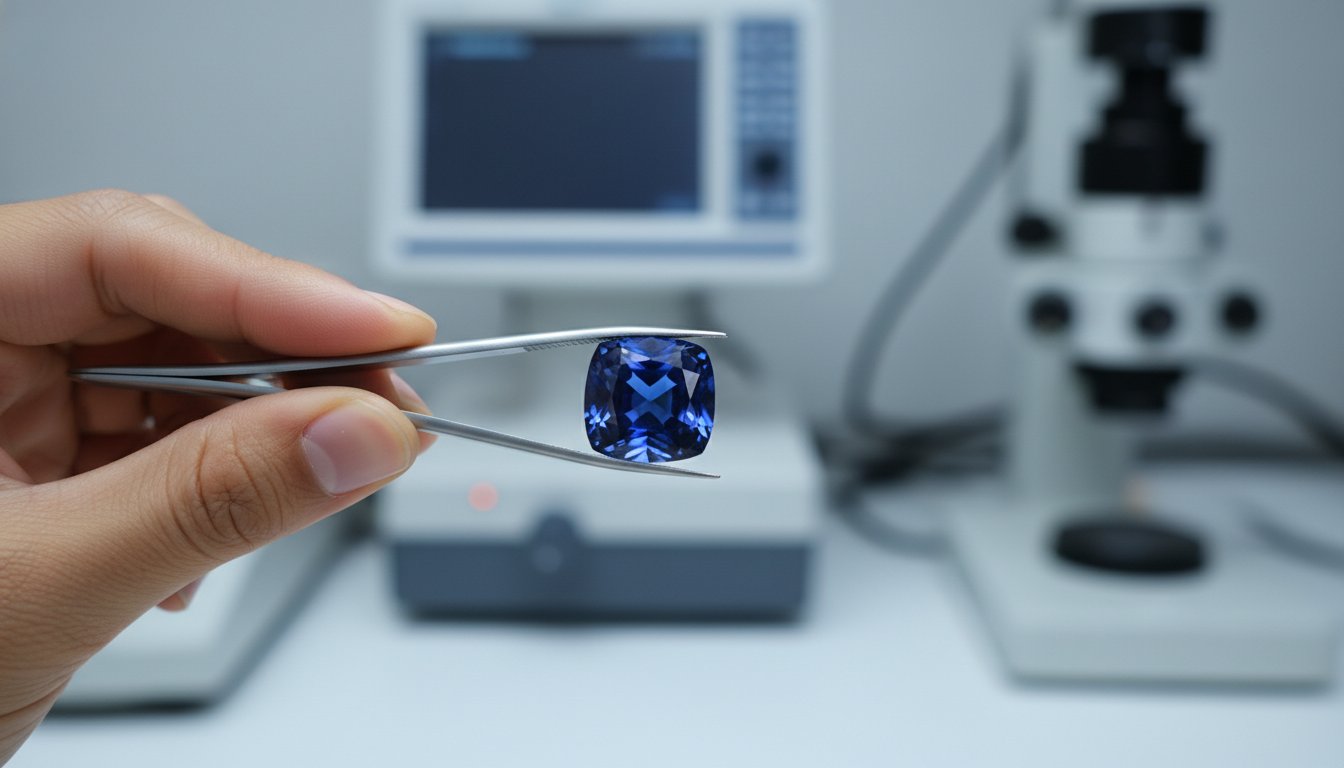
Did you know that over 90% of the blue sapphires available on the market in 2025 were subjected to heat treatment? When you begin your search for an unheated sapphire for sale, you aren't just looking for a piece of jewelry; you're hunting for a geological miracle that represents the top 1% of all gemstones. These rare treasures achieved their vivid hues through millions of years of natural pressure rather than human intervention. It's natural to feel concerned about overpaying for a treated stone or feeling lost in the complex terminology of lab reports.
We understand that as a collector, you demand radical transparency and verifiable proof of a stone's history. You deserve to own a gem that holds its integrity and its value over time. This guide will show you how to evaluate rarity and investment potential in a market where high-quality, untreated stones have seen a consistent 16% annual price increase according to CEYLONS Munich research. We'll walk through the updated 2026 GIA grading standards and the critical role of origin, ensuring you have the knowledge to select a 100% natural masterpiece with absolute confidence.
Key Takeaways
- Identify the geological characteristics that place unheated stones in the top 1% of gemstones, ensuring your collection consists of entirely natural masterpieces.
- Navigate the market for an unheated sapphire for sale with confidence by learning to spot the specific internal markers, like intact rutile silk, that prove a stone’s untreated status.
- Evaluate how global origins from Ceylon to Madagascar dictate value and aesthetic profile, helping you choose a gem that aligns with your personal taste and investment goals.
- Secure your investment by understanding which top-tier lab reports are mandatory for verifying the rarity and non-treatment of high-value loose sapphires.
- Discover the benefits of transparent sourcing and expert hand-selection to ensure your gemstones are ethically obtained and of the highest connoisseur quality.
What is an Unheated Sapphire and Why Does It Command a Premium?
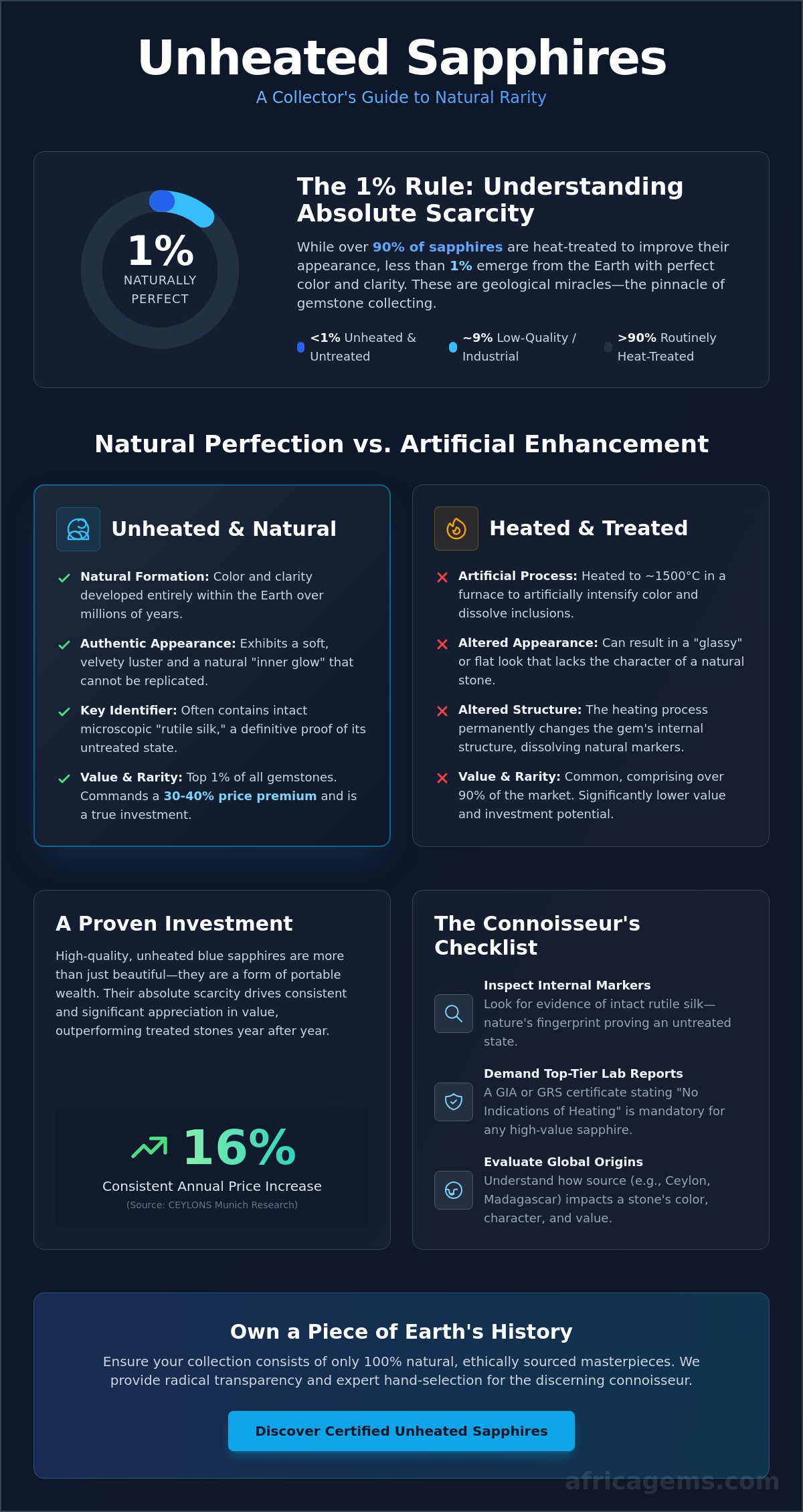
An unheated sapphire is a gemstone that reached its final, breathtaking color and clarity entirely within the Earth's crust, millions of years ago. While most stones require human intervention to reach a marketable appearance, these rare specimens emerged from the ground already perfect. Finding a high-quality unheated sapphire for sale is a pursuit of the extraordinary; it is estimated that less than 1% of all gem-quality sapphires possess this natural integrity. Collectors often refer to these stones as geological miracles because they represent a specific alignment of chemical purity and thermal history that rarely occurs in nature.
The distinction between a treated stone and one that is entirely natural is profound. Most sapphires on the market undergo Heat Treatment vs. Natural Perfection to dissolve inclusions and intensify hues. However, the true connoisseur seeks the untouched. Data from CEYLONS Munich indicates that high-quality, unheated blue sapphires have shown a consistent annual price increase of approximately 16%, significantly outperforming their heated counterparts. This makes them more than just a purchase; they are a form of portable wealth that retains its value due to absolute scarcity.
To better understand the visual and technical differences between these categories, watch this detailed comparison:
The 1% Rule: Understanding Scarcity
Sapphires typically form in metamorphic or volcanic environments where temperature and pressure fluctuate wildly. For a stone to achieve vivid saturation and high clarity without secondary heating, the conditions must be precise to a degree that defies logic. Finding a stone that maintains a deep, velvety blue or a vibrant yellow without the 1500°C blast of a furnace is the ultimate win for any collector. For those seeking the highest tier of gemstone acquisition, an unheated sapphire is the only choice for a pure investment.
Unheated vs. Untreated: Is There a Difference?
While these terms are often used interchangeably, untreated is a broader classification. It confirms the stone has not been subjected to heat, irradiation, or lattice diffusion. At AfricaGems, we maintain a standard of radical transparency, ensuring every unheated sapphire for sale is 100% free of any enhancement. The presence of a No Heat certificate from a reputable laboratory like the GIA or GRS is the industry's gold standard. This documentation serves as your guarantee that the stone's beauty is entirely the work of nature, untouched by human chemistry.
Heat Treatment vs. Natural Perfection: The Science of Color
Understanding why an unheated sapphire for sale carries such a significant premium requires a journey into its microscopic structure. When a sapphire is subjected to heat treatment, often reaching temperatures near 1500°C, the stone undergoes a permanent physical transformation. This process is designed to dissolve minute inclusions, particularly rutile needles, which can cloud the stone's clarity. By forcing these elements back into the crystal lattice, the treatment artificially intensifies the blue saturation. While the result is visually striking, it fundamentally alters the gem's natural DNA. The difference is undeniable.
At AfricaGems, we believe that nature's original intent is irreplaceable. Heat-treated stones frequently take on a glassy or flat appearance that lacks the complex character of an untreated specimen. In contrast, unheated stones often exhibit a soft, velvety texture or an inner glow that seems to radiate from within the crystal. This is why a certified unheated stone commands a 30-40% premium over a comparable heated one, as noted by CEYLONS Munich. If you are looking to build a legacy collection, you might start by exploring our curated selection of loose blue sapphires that have never been touched by fire.
The Rutile Silk Factor
Rutile silk consists of fine, needle-like inclusions of titanium dioxide. For a gemologist, these delicate structures are the primary indicator of a no-heat status. When silk remains intact, it scatters light in a way that produces the legendary Cornflower or Royal Blue glow. Heating causes these needles to break down into tiny droplets or disappear entirely, stripping the stone of its unique optical personality. The presence of intact silk isn't a flaw; it is a badge of authenticity that proves the stone reached its final state without human interference.
Common Treatments to Avoid
Beyond standard heating, the industry has seen the rise of more aggressive enhancements like beryllium diffusion and lead-glass filling. These are significant red flags for any serious buyer. Beryllium diffusion forces chemicals deep into the stone to change its color, while lead-glass filling hides cracks and fractures with synthetic material. Both practices destroy the gemstone's intrinsic value and investment potential. We filter out 99% of available stones to ensure every unheated sapphire for sale in our collection meets these uncompromising standards, maintaining the radical transparency that defines our brand.
Global Origins: How Source Impacts Unheated Sapphire Prices
The geographic origin of a gemstone is often the final arbiter of its market value. When you evaluate an unheated sapphire for sale, you'll find that stones from historic mines in Burma or Kashmir command a staggering premium. For instance, as of May 2026, an unheated Royal Blue sapphire from Burma can fetch between $8,000 and $12,000 per carat for a single-carat stone. These gems are prized for their deep, velvety royal tones that hold their color even in low light. This "origin premium" isn't just about a name; it's about the specific geological conditions that produced the world's most coveted hues without human intervention.
While Burma represents the pinnacle of deep color, other regions offer different aesthetic profiles that are equally rare in their unheated state. The market for fine, untreated sapphires above five carats has recently seen a 12% price increase, largely driven by collectors seeking specific provenance. Whether it's the "steely" blue of a Montana stone or the "electric" saturation of a Madagascar gem, the source tells a story of rarity that defines the stone's legacy.
The Prestige of Ceylon Sapphires
Sri Lanka, historically known as Ceylon, remains the premier source for unheated stones that exhibit exceptional natural clarity. The legendary "Cornflower" blue is the benchmark here. It's a soft, medium-vivid blue that avoids the overly dark appearance of lesser gems. Because Ceylon material often forms with fewer inclusions, it frequently bypasses the need for heat treatment to look spectacular. To explore the deep geological history and quality standards of these island treasures, consult our Blue Sapphires Pillar guide. You'll find that 1-carat unheated Ceylon Royal Blue stones typically range from $4,675 to $8,000 per carat, offering a sophisticated balance of value and prestige.
Modern Rarity: Madagascar and Montana
The Ilakaka rush of the late 1990s transformed the global market by introducing Madagascar as a powerhouse for unheated gems. These stones are often indistinguishable from high-end Ceylon material, providing an "electric" neon blue that is highly sought after by modern designers. Contrast this with the rising popularity of American-mined "Rock Creek" sapphires from Montana. While Madagascar stones lean toward vivid saturation, Montana sapphires are celebrated for their unique teal, bi-color, and metallic blue variations. These domestic treasures are increasingly trending for engagement rings because they offer a distinct, non-traditional color palette that remains 100% natural and ethically sourced.
The Connoisseur’s Buying Checklist: 5 Steps to Verify Quality
Finding an unheated sapphire for sale requires more than just an eye for color; it demands a systematic approach to technical verification. While the visual allure is immediate, the true value lies in the microscopic details that confirm nature's handiwork. A serious collector knows that every inclusion tells a story, and every certificate acts as a legal deed of authenticity. To secure a stone that will hold its value, you must look past the surface and examine the evidence of its 100% natural origin.
Start by insisting on top-tier lab reports. For any high-value unheated stone, a report from the GIA, GRS, or Lotus is non-negotiable. These institutions have the advanced spectroscopy required to detect even the most sophisticated heat treatments. When evaluating an unheated sapphire for sale, the paperwork is just as vital as the gem itself.
Reading a Gemological Report
Look specifically for the "No indications of heating" comment on the report. Since the GIA launched new grading standards on January 1, 2026, these reports have become even more rigorous in their origin and treatment analysis. An origin opinion on a report can add a 20-30% premium to the price, as it provides the provenance that collectors crave. For more on navigating these high-value transactions safely, read our guide on How to Buy Gemstones Online.
Use a 10x loupe to inspect the stone's internal world. As we discussed earlier, intact rutile needles are the smoking gun of a no-heat sapphire. If you see melted droplets or re-crystallized spots, the stone has likely been enhanced by human hands. These markers are the difference between a standard gem and a geological miracle.
The "Loupe Clean" Myth
Be wary of a sapphire that appears 100% clean under high magnification. Such stones are often lab-grown or represent a level of purity that is statistically impossible for most natural gems. Natural unheated sapphires typically contain "fingerprint" inclusions or liquid veils that prove they are Earth-mined. Your goal is "eye-clean" beauty combined with "collector-grade" internal markers that verify its natural history.
Look for color zoning. Natural sapphires often grow in layers, resulting in slight unevenness in color distribution. This is a positive indicator of natural origin and is often sought after by enthusiasts. You should also evaluate the cut proportions. Unheated stones are often cut "deep" to preserve as much of the rare, natural carat weight as possible, which is a hallmark of expert lapidary work.
Finally, trust the dealer. A 30-year legacy like Marc Sarosi’s at AfricaGems provides a level of security that a simple transaction cannot. We prioritize radical transparency and ethical sourcing, ensuring that your investment is protected by decades of industry expertise. If you're ready to invest in a verified treasure, browse our unheated sapphire for sale collection today.
Why Buy Unheated Sapphires from AfricaGems?
Choosing the right unheated sapphire for sale is a decision that balances emotional resonance with financial pragmatism. At AfricaGems, we recognize that you aren't just purchasing a gemstone; you're acquiring a finite piece of Earth's history. This is why every high-value stone in our inventory undergoes a rigorous personal hand-selection process by our founder, Marc Sarosi. By applying decades of expertise and a connoisseur's eye, we ensure that each gem possesses the rare combination of natural saturation and crystalline clarity that defines the top 1% of nature's output.
Our commitment to your security extends beyond the visual. We maintain a policy of radical transparency, providing 100% full disclosure on all gemstone treatments. In an industry where enhancements are often obscured, our integrity acts as your safeguard. We believe that a secure transaction is built on information density, which is why we provide the technical validation you need to feel like an informed insider before you ever commit to a purchase.
A Legacy of Transparency
AfricaGems pioneered the online gemstone retail space in 1984, long before digital storefronts became the industry standard. This longevity is rooted in a fundamental respect for the natural beauty of untreated materials and the clients who collect them. To help you understand where these treasures fit within the broader market of scarcity, you can explore our Rare Gemstones Pillar. We also offer a methodical return policy because we understand that a stone of this magnitude must be experienced in person to be truly appreciated. You have the opportunity to examine the "glow" and "silk" we've discussed in your own environment, ensuring the gem meets your uncompromising standards.
Bespoke Design Services
While many collectors enjoy owning loose unheated sapphires as portable wealth, others seek to transform these natural wonders into bespoke heirlooms. Our Custom Jewelry Design Services allow you to pair your unheated sapphire for sale with recycled gold and conflict-free diamonds. There is a distinct advantage to purchasing your center stone first; it ensures that the design is built around the unique dimensions and personality of a high-quality gem, rather than forcing a rare stone into a mass-produced setting. Whether you are seeking a classic ring or a modern pendant, we provide the expert mentorship required to create a legacy piece.
Ready to find your natural masterpiece? Browse our exclusive collection of Unheated Sapphires for Sale and discover the security of buying from a premier dealer with a global reach.
Secure Your Geological Masterpiece
Acquiring an untreated gemstone is more than a purchase; it's a commitment to preserving nature's raw perfection. You've learned that these stones represent a vanishingly small fraction of the market, where intact rutile silk and specific global origins like Ceylon and Burma define true rarity. By insisting on rigorous certification and expert guidance, you protect your investment against the common pitfalls of the treated gem trade. These gems remain stable assets of portable wealth that possess a character no laboratory can replicate.
Since 1984, AfricaGems has specialized in these geological miracles, offering a premier GIA and GRS certified inventory. Every stone comes with the personal guarantee of Marc Sarosi, ensuring you receive the radical transparency your collection deserves. Finding the right unheated sapphire for sale is a journey toward owning a treasure that will endure for generations. Take the next step in your connoisseur journey and Explore Our Hand-Selected Unheated Sapphires for Sale today. Your perfect natural treasure is waiting to be discovered.
Frequently Asked Questions
Are unheated sapphires better than heated ones?
Unheated sapphires are objectively superior in terms of rarity and long term investment potential. While heat treatment is a standard industry practice to improve aesthetics, it permanently alters the stone's physical structure. An untreated gem represents nature's original intent and remains in its as mined state. For a collector, the value lies in the fact that the stone's beauty was achieved through millions of years of geological pressure rather than a laboratory furnace.
How can I tell if a sapphire is unheated without a lab report?
It is impossible to verify a stone's treatment status with absolute certainty without professional gemological equipment. However, inspecting a stone with a 10x loupe can reveal clues like intact rutile silk or fingerprint inclusions that haven't been melted. If you see broken or re-crystallized needles, the stone has likely been heated. Because modern treatments are increasingly sophisticated, you should never purchase an unheated sapphire for sale without a certificate from a major lab.
Do unheated sapphires hold their value better?
Unheated sapphires have historically shown much stronger price resilience and appreciation than heated stones. Because they are finite resources that cannot be manufactured through treatment, their scarcity acts as a price floor. As demand for natural, ethically sourced materials grows, the gap between heated and unheated prices continues to widen. This makes them a preferred choice for those seeking portable wealth that maintains its purchasing power over decades.
Why are unheated sapphires so much more expensive?
The premium for unheated stones is driven entirely by extreme scarcity. Less than 1% of the world's gem quality sapphires possess the combination of color and clarity required to remain marketable without heat. When you find an unheated sapphire for sale, you're competing for a tiny fraction of global production. This limited supply, coupled with a growing preference among high end collectors for pure nature, creates a significant market premium.
What is the most desirable color for an unheated sapphire?
Royal Blue and Cornflower Blue remain the most coveted hues for unheated blue sapphires. Royal Blue offers a deep, vivid saturation that feels regal and authoritative, while Cornflower Blue provides a soft, velvety glow. Outside of blue, the Padparadscha sapphire is the most prized fancy color. This rare pinkish orange gem is exceptionally difficult to find in an unheated state, often commanding prices that rival the finest blue specimens.
Can unheated sapphires have inclusions?
Yes, and inclusions are often welcomed by connoisseurs as a badge of authenticity. While a stone should be eye clean for maximum beauty, microscopic inclusions like rutile silk or liquid veils prove the gem is natural and untreated. A 100% flawless sapphire under high magnification is actually a red flag; it often indicates a lab grown origin. The goal is to find a stone where natural inclusions don't detract from its brilliance.
Which lab is best for certifying an unheated sapphire?
The GIA (Gemological Institute of America) is the global standard for grading and treatment identification. For high value colored stones, reports from GRS (Gemresearch Swisslab) or Lotus Gemology are also highly respected by international auction houses. These labs use advanced spectroscopy to confirm the absence of heat. At AfricaGems, we prioritize these top tier reports to ensure that every client has absolute confidence in the integrity of their purchase.
Is a Montana sapphire always unheated?
No, Montana sapphires are not always unheated. While the Rock Creek and Yogo Gulch regions produce many beautiful untreated stones, a significant portion of Montana material undergoes heat treatment to improve its clarity and saturation. Many Montana gems have a naturally steely or greyish undertone that heat can clarify. Always verify the treatment status on a lab report, as unheated Montana sapphires carry a higher premium due to their domestic rarity.