
Top Alexandrite Mining Locations: Where to Find Quality
Jun 23rd 2026
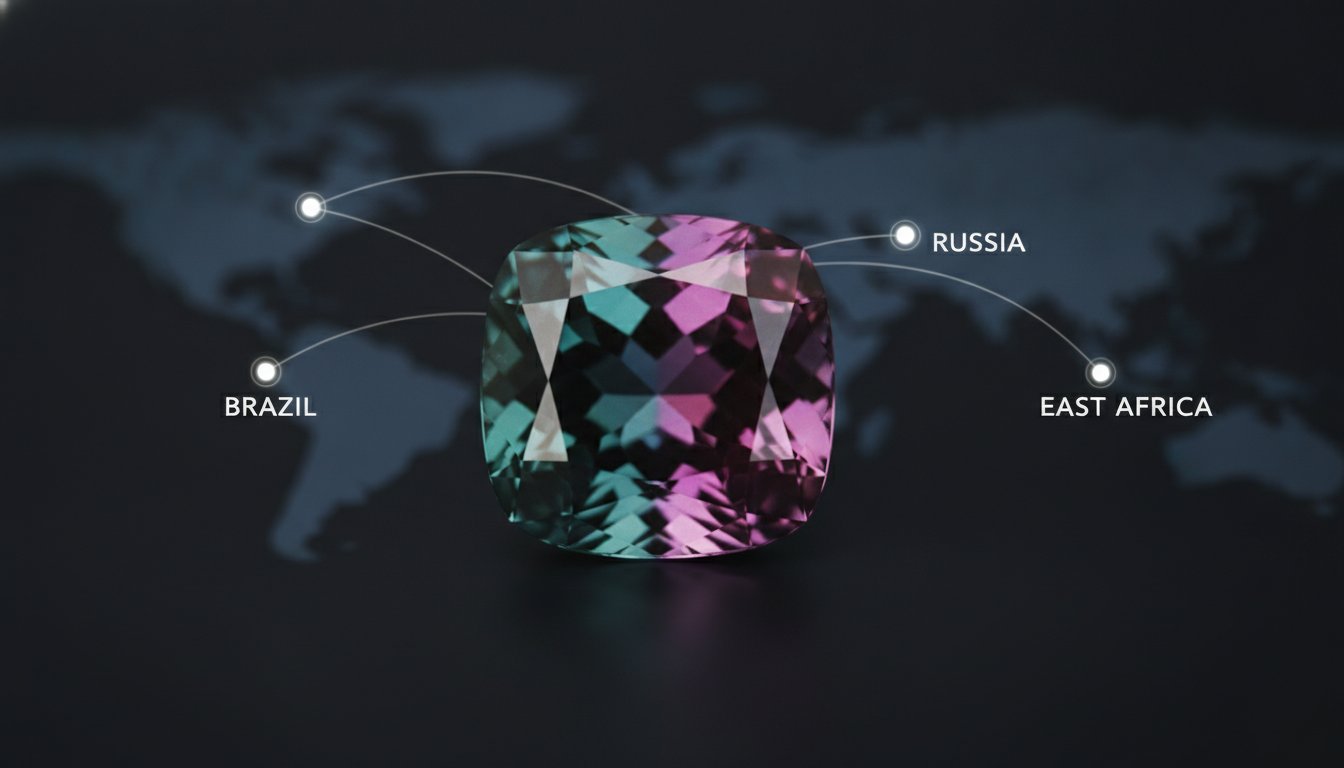
Less than 0.01% of all gemstones pulled from the earth in 2025 were alexandrite, making this "emerald by day, ruby by night" treasure rarer than almost any other material on the market. For a serious collector, the search for a perfect specimen often starts with a single, pressing question: where are the best quality alexandrite gemstones currently mined? You likely already know that a stone's origin dictates more than just its story; it serves as a primary driver of its market value and visual personality.
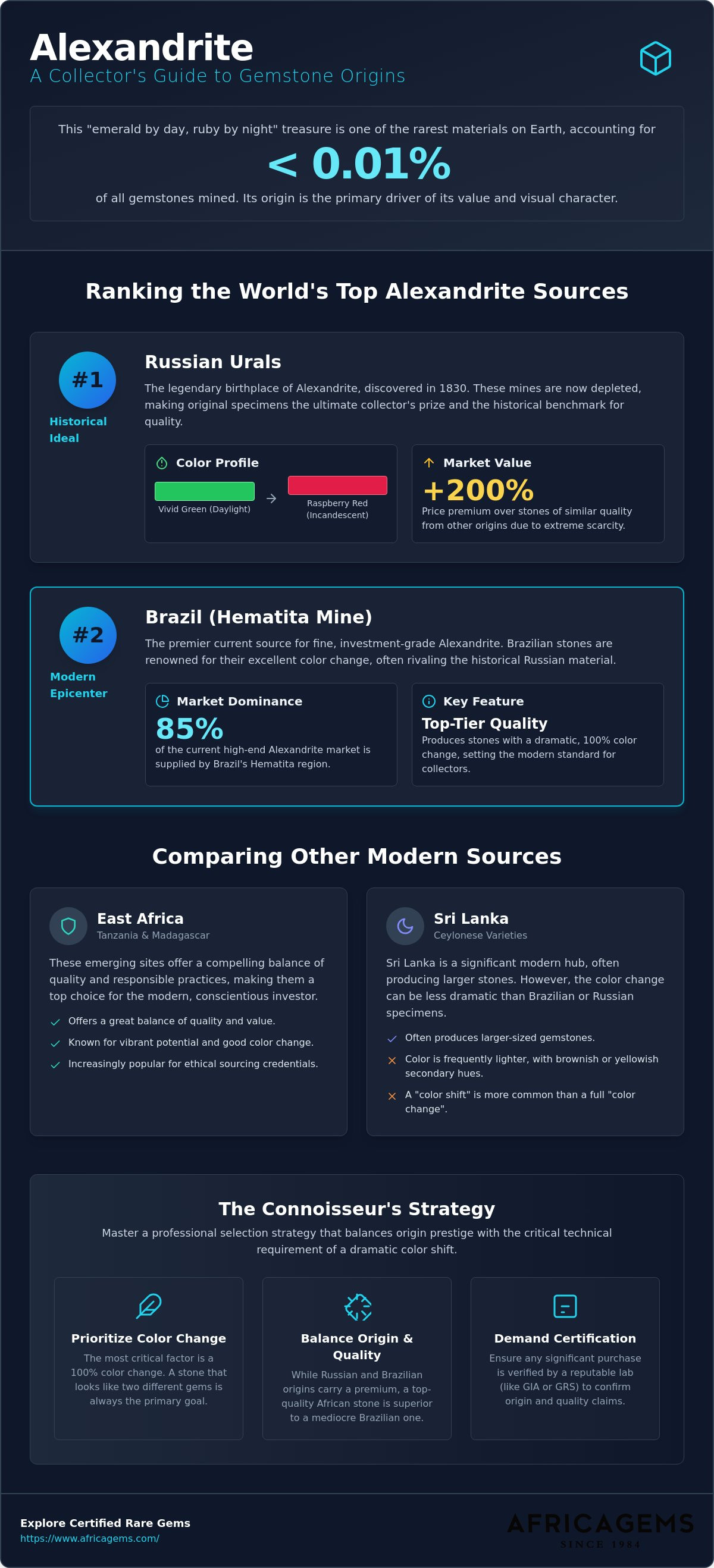
We understand the hesitation that comes with investing in such a rare asset, especially when the lines between natural rarities and synthetic imitations feel increasingly blurred. This guide provides a clear, authoritative ranking of the world's top mining locations to help you secure a stone with a 100% color change. We'll explore why Russian stones still command a 200% price premium despite depleted mines, how Brazil's Hematita region currently maintains 85% of the high-end market, and which emerging sites in Tanzania and Madagascar offer the best balance of quality and ethical sourcing for 2026.
Key Takeaways
- Learn how the specific geological cocktail of trace elements at each site creates the distinct personality and value of a stone.
- Identify exactly where are the best quality alexandrite gemstones currently mined and why Brazil’s Hematita mine has become the modern epicenter for collectors.
- Understand the historical prestige of the Ural Mountains and why these depleted mines still set the global benchmark for investment-grade specimens.
- Compare the vibrant potential of East African finds against the larger, often lighter Ceylonese varieties from Sri Lanka.
- Master a professional selection strategy that balances origin prestige with the critical technical requirement of a dramatic color shift.
The Role of Origin in Determining Alexandrite Value and Rarity
Alexandrite isn't just a gemstone; it's a geological miracle. As the chromium-bearing color-change variety of the Chrysoberyl mineral species, it requires a rare collision of elements that shouldn't naturally coexist. While chrysoberyl is relatively common, the presence of chromium transforms it into a light-sensitive masterpiece. For collectors asking where are the best quality alexandrite gemstones currently mined?, the answer begins with the understanding that "origin" is a shorthand for a specific chemical signature. Each mine offers a unique "cocktail" of trace elements that influences how the stone reacts to photons.
The industry benchmark remains the "Emerald by day, Ruby by night" phenomenon. This refers to a stone that appears a vivid, cool green under sunlight and shifts to a warm, raspberry red under incandescent light. However, the geological conditions of a specific mine dictate the intensity of this pleochroism. Some locations produce stones with brownish or yellowish secondary hues, while others yield the pure, saturated tones that define investment-grade material. This makes the mine of origin the most critical factor in predicting a stone's visual performance.
To see the pinnacle of this rarity in motion, watch this incredible specimen:
The Chromium Connection: Why Some Mines Produce Better Color Change
The magic of the color change happens in the 580nm absorption band of the visible spectrum. When chromium atoms replace aluminum in the crystal lattice, they create a narrow transmission window for green and red light. If the chromium concentration is too low, you get a weak "color shift" rather than a distinct "color change." A true, 100% color change is the gold standard, where the stone looks like two entirely different gems depending on the light source. Chromium acts as the chemical DNA that encodes an alexandrite’s origin and ultimate visual performance.
The "Origin Premium" in the 2026 Gemstone Market
In the high-end market, provenance is a primary pillar of value. A stone verified by a GIA or GRS lab as being of Russian or Brazilian origin can command a significant premium over stones from less prestigious locales. This "origin premium" reflects both historical scarcity and the consistent quality associated with certain mines. For those building a portfolio, looking at certified rare gems is the only way to ensure the origin matches the asking price. Understanding where are the best quality alexandrite gemstones currently mined? allows investors to anticipate which stones will hold their value at auction or resale.
The Russian Urals: Why the Original Source Remains the Historical Ideal
The Russian Urals aren't just a mining site; they're the birthplace of a legend. Discovered in 1830 on the day Tsar Alexander II came of age, these stones became the ultimate symbol of imperial prestige. While modern collectors often ask where are the best quality alexandrite gemstones currently mined?, the reality is that Russia defines the standard that every other mine attempts to match. The classic "personality" of a Ural specimen involves a vivid grass green that transitions into an intense, saturated raspberry red. This color profile is so distinct that it remains the aesthetic target for every modern mining operation in Brazil or East Africa.
This historical source is now largely a ghost. The original mines are essentially exhausted, and new Russian material is almost never found on the primary market. This extreme scarcity creates a massive price premium that can reach 200% over stones of similar size from other origins. According to the Gemological Institute of America, the Russian source remains the historical benchmark for the species, even as newer deposits have emerged globally. Collectors must be wary of "new" Russian material offered today, as it often lacks the rigorous documentation required to prove its provenance.
The "Emerald by Day, Ruby by Night" Benchmark
The specific hues found in the Urals are what made this gem famous. Russian stones exhibit a pure blue-green to red-purple shift. This contrasts sharply with the brownish-reds or yellowish-greens often found in lesser origins. The geological age of the Ural mountains played a significant role here. These stones formed under intense pressure and heat over hundreds of millions of years, leading to exceptional crystal clarity and a more refined distribution of chromium. This ancient environment allowed the chromium to integrate perfectly into the crystal lattice, resulting in the most efficient light absorption possible.
Evaluating the Antique and Secondary Market
Since new Russian material is virtually non-existent, the secondary market is the only place to find these treasures. Even when investigating where are the best quality alexandrite gemstones currently mined? in modern locations, the Russian standard remains the yardstick for value. Verifying provenance in estate pieces is difficult, so you must rely on reputable lab reports that specify origin. We prioritize radical transparency when evaluating these rare finds, ensuring that every stone's history is fully disclosed. If you're looking for an investment-grade piece, always look for unheated, natural status. This ensures the stone's value remains tied to its natural beauty rather than artificial enhancements.
For a closer look at how these standards apply to high-value collections, you can browse our curated selection of authenticated precious gemstones.
Brazil’s Hematita Mine: The Premier Current Source for Fine Alexandrite
If you're asking where are the best quality alexandrite gemstones currently mined? for the modern connoisseur, the focus shifts from the mountains of Russia to the rich soil of Minas Gerais, Brazil. The Hematita mine, discovered in the late 1980s, remains the most significant modern source for investment-grade material. While many historic deposits have faded, Brazil continues to define the 21st-century standard for brilliance and saturation. Brazilian specimens are renowned for their staggering color change, frequently reaching the coveted 90% to 100% threshold that collectors demand.
The visual personality of a Brazilian stone is distinct. In daylight, these gems typically exhibit a sophisticated bluish-green hue, a slight departure from the classic grass green of the Urals. This cool tone often possesses a "neon" quality that seems to glow from within. Beyond color, Brazil's geological environment has produced stones with remarkable clarity. While African deposits often struggle with "silk" and internal inclusions, Hematita stones are frequently eye-clean. This allows light to dance through the crystal lattice without interruption, maximizing the stone's natural fire.
Why Brazilian Alexandrite is the Smart Collector’s Choice
For those looking to balance prestige with tangible value, Brazil offers a compelling price-to-quality ratio. While a Russian stone carries a heavy historical premium, a top-tier Brazilian specimen provides nearly identical visual performance at a more accessible investment point. Brazil is also the primary source for larger carat weights. Finding a natural, high-quality alexandrite over 1.00 carat is exceptionally difficult, yet the Hematita deposit has a proven track record of producing these rare, larger crystals. These stones aren't just for collectors' vaults; they're wearable masterpieces with the durability to last for generations. If you plan to transport such valuable items securely, you might explore 21" Classic Carry-On options that utilize aerospace-grade aluminum to protect your most precious investments during travel.
Evaluating the "Hematita Signature"
The hallmark of a true Hematita stone is its incandescent shift. Under warm lighting, the bluish-green daylight color transforms into a rich, purplish-red. This specific shift is so consistent that experts often refer to it as the "Hematita signature." The pegmatite-rich geological environment of Minas Gerais ensures these stones are as durable as they are beautiful, making them ideal for high-end jewelry. You can explore the AfricaGems inventory to see firsthand how these Brazilian treasures represent the pinnacle of modern gemstone acquisition. Choosing a stone from this region ensures you're securing a piece of the 85% of high-end material that currently defines the global market.
East Africa vs. Sri Lanka: Comparing Modern Mining Hubs
While Russia and Brazil represent the historic and modern peaks of the market, the search for where are the best quality alexandrite gemstones currently mined? often leads to the vast alluvial deposits of the Indian Ocean region. Tanzania, Madagascar, and Sri Lanka serve as the primary engines of the modern trade. These locations offer a fascinating trade-off between massive crystal presence and the intense, teal-driven color performance that modern collectors crave.
The Giants of Sri Lanka: Size Over Saturation
Sri Lanka produces the largest alexandrite crystals in the world. It isn't uncommon to find eye-clean stones exceeding five carats here. These gems are ideal for collectors who prioritize impressive dimensions and a lower price per carat. Because the chromium levels are typically lower, many of these stones exhibit a color shift rather than a complete color change. If you want a significant center stone with a historic pedigree, Sri Lanka is your primary destination.
East African Gems: The Emerging Investment Opportunity
Tanzania and Madagascar represent an exciting frontier for the modern investor. The best Tanzanian stones deliver a sharp, decisive shift that can challenge the visual dominance of Brazilian material. Beyond technical specs, the ethical dimension of East African mining is a cornerstone of our sourcing philosophy. We support transparent, small-scale operations that ensure these rare materials benefit their local communities. To stay informed on the latest discoveries in these regions, you can follow our updates on the AfricaGems blog.
If you're ready to secure a stone with a verified origin and exceptional light performance, explore our curated selection of authenticated precious gemstones.
The Connoisseur’s Strategy: Choosing the Right Origin for Your Investment
Selecting the perfect alexandrite requires a balance of historical appreciation and technical scrutiny. When deciding where are the best quality alexandrite gemstones currently mined? for your specific collection, you must weigh historical prestige against modern visual performance. Russia remains the pinnacle of prestige, though its gems are now almost exclusively found in the estate market. Brazil’s Hematita mine stands as the undisputed champion of quality for 2026, commanding 85% of the high-end market with its neon daylight tones. Meanwhile, East Africa has emerged as the premier source for value, offering stones with sharp color shifts that often rival their more expensive counterparts.
It's easy to get caught up in the "Origin" label, but a savvy collector knows that origin should never override beauty. A natural stone from Tanzania with a vivid 100% color change is a far better investment than a washed-out, brownish specimen from a prestigious Russian mine. The stone’s performance under different light sources is its true resume. For any high-value acquisition, an independent laboratory report from a recognized authority like the GIA or AGL isn't just a recommendation; it’s a necessity. These documents provide the security and transparency required for a confident transaction in a market where synthetic stones are frequently mislabeled.
The 3-Point Checklist for Every Alexandrite Purchase
- Verify the percentage of color change: Aim for a stone that exhibits at least an 80% shift. The most valuable specimens show a total transformation with no "bleeding" of the daylight color into the incandescent hue.
- Test under specific Kelvin temperatures: A professional evaluation requires viewing the stone under 5500K (standard daylight) and 2700K (warm incandescent) light. This reveals the true "personality" of the chromium content.
- Demand origin verification: Ensure your lab certificate explicitly states the geographic origin. This documentation is the primary protector of your stone’s future resale value and auction potential.
Why AfricaGems is the Trusted Source for Rare Alexandrite
Building a legacy collection requires a mentor you can trust. Marc Sarosi has spent over 40 years in the gemstone trade, cultivating a reputation for uncompromising standards and deep industry knowledge. We operate on a policy of radical transparency, providing full disclosure on the natural status and any potential enhancements of every gem we offer. Our commitment to ethical sourcing ensures that your investment supports sustainable practices in regions like East Africa and Brazil. We invite you to explore our full collection of ethically sourced, high-quality specimens to find a stone that meets the rigorous standards of a true connoisseur. Whether you seek the prestige of a legacy origin or the vibrant beauty of a modern find, we provide the security and expertise to guide your selection.
Securing Your Legacy with Rare Alexandrite
Securing a masterpiece in the world of rare materials requires a sophisticated blend of technical data and historical context. You now understand that while the Ural Mountains set the imperial standard, Brazil's Hematita mine represents the modern pinnacle for collectors seeking a neon daylight glow and a 100% color shift. Determining where are the best quality alexandrite gemstones currently mined? involves looking beyond the label to the actual chromium-driven performance of the stone. Whether you prioritize the sheer size of a Sri Lankan specimen or the teal-green intensity of East African finds, the integrity of the crystal remains paramount.
At AfricaGems, we believe in radical transparency. With over 40 years of gemstone expertise, we provide full disclosure on all gemstone treatments and prioritize ethically sourced natural gemstones. This commitment ensures that your acquisition is as responsible as it is beautiful. Don't settle for uncertainty when building your portfolio; rely on a mentor who values the stone's story as much as its technical specs. We invite you to View Our Expert-Curated Collection of Loose Alexandrite Gemstones and experience the personalized consultation that has defined our brand for decades. Your journey into the heart of the earth's rarest treasures begins today.
Frequently Asked Questions
Where is the best quality alexandrite found today?
The Hematita mine in Minas Gerais, Brazil, is the premier source for top-tier, 100% color-change specimens for those asking where are the best quality alexandrite gemstones currently mined? today. While the Russian Urals remain the historical benchmark, Brazilian stones offer the most consistent high-performance color shifts available on the modern market. These gems are prized for their vibrant bluish-green daylight color and intense purplish-red incandescent shift.
Is Russian alexandrite still being mined?
Mining in the Ural Mountains is extremely limited in 2026, with almost no new material entering the primary market. The original deposits are largely exhausted, so nearly all authentic Russian alexandrite you'll encounter is sourced from antique jewelry or private estates. Collectors should exercise caution and demand rigorous documentation when a stone is presented as "new" Russian production, as such finds are incredibly rare.
How can I tell the difference between Brazilian and Sri Lankan alexandrite?
Brazilian stones typically exhibit a sharper, more dramatic color change and a bluish-green daylight hue compared to Sri Lankan varieties. Sri Lankan alexandrite is famous for producing significantly larger crystals, but these often feature a yellowish-green daylight color and a less intense color shift. If you prioritize a decisive "emerald to ruby" transformation over sheer carat weight, Brazil is the superior choice over the larger Ceylonese stones.
Does the origin of an alexandrite affect its price?
Geographic origin significantly impacts the final market value of a natural stone. Russian specimens carry the highest prestige premium because of their historical rarity, followed closely by high-quality stones from the Hematita deposit in Brazil. While African and Sri Lankan stones are generally more accessible, their value can skyrocket if they display an exceptional color change that rivals the more prestigious origins discussed in this guide.
Which lab is best for certifying alexandrite origin?
The Gemological Institute of America (GIA) and American Gemological Laboratories (AGL) are the most respected institutions for providing origin reports. These labs use advanced chemical analysis to identify the unique trace element "fingerprint" of the mine. Obtaining a report from one of these institutions is essential for protecting your investment and ensuring the radical transparency required for high-value gemstone transactions.
What is the most important factor when buying alexandrite?
The strength and quality of the color change is the most critical factor when selecting a stone. While origin affects prestige, a stone that shifts from a distinct green to a vivid red is always more valuable than a stone with a "muddy" or brownish shift. You shouldn't let a prestigious origin report override the actual visual beauty and technical performance of the crystal itself when making an investment.

Article by
Marc Sarosi
Professional gemstone dealer for more than 40 years. Started off mining Aquamarine in Zambia, Africa and travelled throughout the continent in search of fine gems. Trusted authority on fine gemstones and have donated a fine collection of more than 27 extraordinary gemstones to the Smithsonian Institute Gem Hall for generations to see.