
The Star Sapphire Phenomenon: A Connoisseur’s Guide to Asterism in 2026
Jul 15th 2026
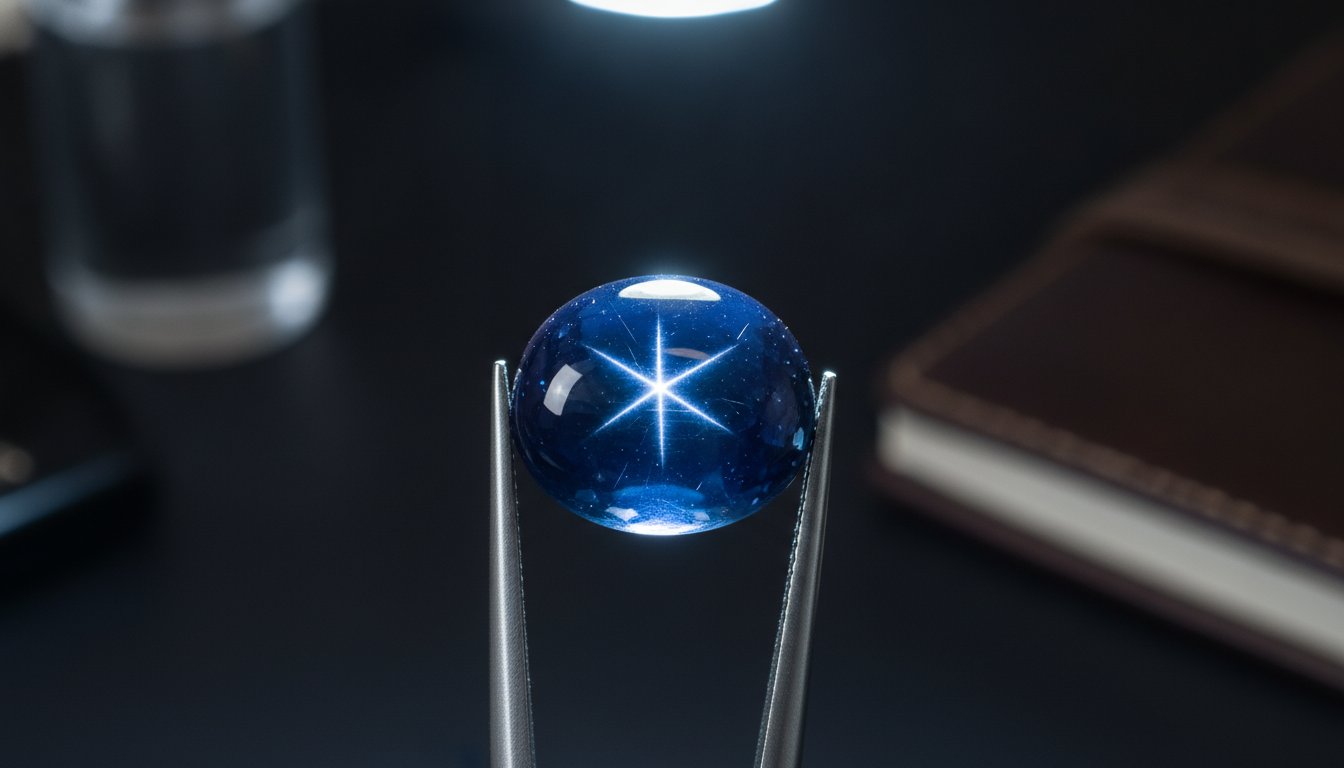
Did you know that nearly 80% of star sapphires in commercial circulation today are either lab-grown or chemically diffused? For the serious collector, this reality creates a challenging environment where the fear of purchasing an overpriced, treated specimen often outweighs the excitement of the hunt. You deserve to feel like an informed insider, secure in the knowledge that your gemstone is a legitimate geological miracle rather than a synthetic imitation.
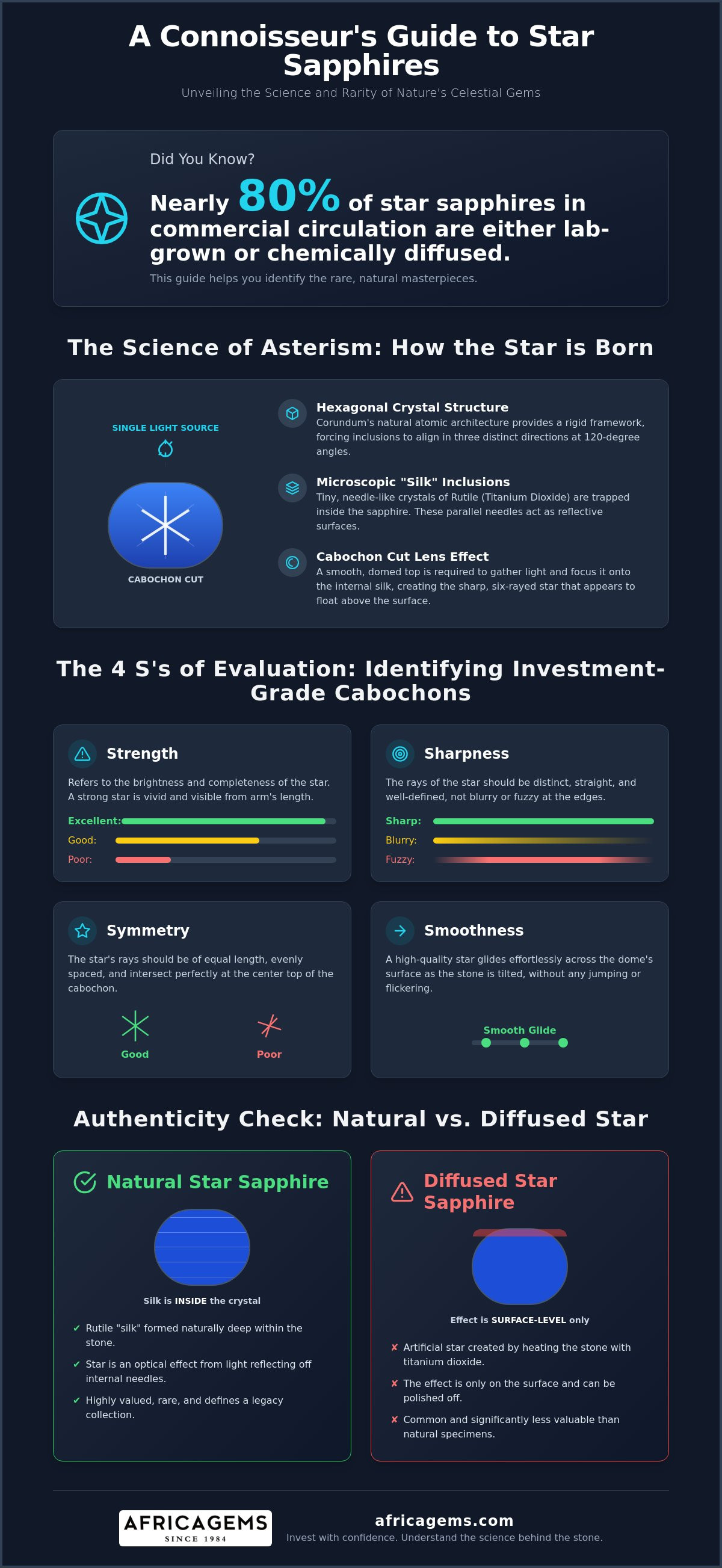
In this connoisseur’s guide, you'll discover the hidden science and rare mineralogy behind the star sapphire phenomenon. We'll move beyond simple visual appreciation to master the "4 S's" of star quality: Strength, Sharpness, Symmetry, and Smoothness. By understanding the physics of how microscopic rutile silk interacts with light, you'll gain the technical expertise to distinguish natural masterpieces from common treatments. This journey provides the clarity needed to judge cabochon values and the confidence to invest in rare, unheated specimens that define a true legacy collection.
Key Takeaways
- Master the physics of the star sapphire phenomenon by learning how light reflects off microscopic rutile needles to create celestial asterism.
- Learn to apply the 4 S's of evaluation, Strength, Sharpness, Symmetry, and Smoothness, to identify investment-grade cabochons.
- Gain the technical skill to distinguish natural silk inclusions from artificial surface diffusion treatments used to mimic high-quality stars.
- Explore how the Mohs 9 durability of corundum makes these phenomenal stones the ideal centerpieces for bespoke, daily-wear jewelry designs.
- Understand the importance of full disclosure and ethical sourcing when selecting unheated, natural specimens for a secure and valuable collection.
Defining Asterism: The Science of the Star Sapphire Phenomenon
The star sapphire phenomenon is one of nature's most sophisticated optical illusions. It occurs through a star-like phenomenon known as asterism, where light reflects off microscopic, parallel inclusions buried deep within the gem's crystal lattice. These inclusions, affectionately termed "silk" by gemologists, are actually needle-like crystals of rutile, or titanium dioxide. When these needles align perfectly with the hexagonal growth of the sapphire, they create the foundation for a six-rayed star that seems to hover just above the stone's surface.
To unlock this optical magic, the stone must be cut "en cabochon." Unlike faceted precious gemstones that rely on flat planes to refract light, a star sapphire requires a smooth, domed top to act as a lens. This dome gathers light and reflects it off the internal silk, concentrating the rays into the sharp lines we admire. If the stone were faceted, the light would scatter through the facets, and the delicate star would vanish into a cloud of internal inclusions.
To better understand this concept, watch this helpful video:
The Floating Light: Why the Star Moves
One of the most captivating aspects of a high-quality star is its mobility. The star isn't a static pattern fixed onto the gemstone's surface; it's a reflection of your light source. This creates a parallax effect where the rays appear to dance and glide across the dome as you move the stone. To see the star sapphire phenomenon at its peak, you need a single, strong point-source of light, such as direct sunlight or a focused LED spotlight. Multiple light sources will create multiple, overlapping stars, which often confuses the eye and softens the sharpness of the rays.
Asteria vs. Faceted Corundum
While faceted sapphires are prized for their transparency and internal fire, asteria, or star stones, prioritize optical symmetry and body color. Choosing a star sapphire involves a different set of trade-offs. You're often trading the crystal-clear transparency of a faceted gem for the "milky" silk necessary to produce a star. However, the most coveted specimens for serious collectors occupy a rare middle ground: translucency. These stones allow light to pass through the body while still maintaining enough silk to produce a sharp, vibrant star. It's a mineralogical "perfect storm" that is significantly rarer than a standard faceted sapphire.
The Mineralogical 'Perfect Storm': How Rutile and Hematite Create the Star
The star sapphire phenomenon is more than a simple inclusion; it's a structural masterpiece of nature. Sapphire, or corundum (Al2O3), provides the rigid hexagonal framework necessary for this celestial display. Within this lattice, three distinct directions of growth allow for the precise alignment of needle-like inclusions. When light hits these needles, it reflects in three directions, creating the iconic six rays that intersect at 120-degree angles. This intersection is not accidental; it's a direct reflection of the sapphire's internal atomic architecture.
The type of "silk" present determines the visual character of the stone. Most blue, pink, or purple stars rely on white rutile silk, composed of titanium dioxide. These fine needles create a soft, ethereal glow. In contrast, black star sapphires, frequently sourced from Thailand, often contain dark hematite silk. These dark iron-oxide needles not only produce the star but significantly darken the stone's body color, creating a dramatic, high-contrast backdrop for the floating light. Understanding these mineralogical differences is essential for any collector looking to appreciate the full spectrum of the star sapphire phenomenon.
The Geometry of Silk: A Three-Fold Symmetry
Sapphire's hexagonal crystal system is the architect of asterism. During the stone's formation, trace elements like titanium or iron are forced out of the corundum structure as it cools. This process, known as exsolution, causes these elements to crystallize into microscopic needles that align with the host gem's crystal axes. The orientation of the cabochon's base must be perfectly perpendicular to the c-axis to center the star. If the lapidary misses this orientation by even a few degrees, the star will appear lopsided or "run" off the side of the stone.
6-Ray vs. 12-Ray Stars: A Rarity Comparison
While the six-ray star is the standard, 12-ray stars represent a mineralogical anomaly. This occurs when two different sets of rutile and hematite inclusions coexist within the same crystal lattice. One set of needles aligns with the sapphire’s prism faces, while the second set aligns with its second-order prism faces. This creates two overlapping stars with different colors, typically a white star and a golden star, resulting in a spectacular 12-ray effect. These specimens are significantly rarer and often command a collector's premium because they require the presence of both titanium and iron in exactly the right concentrations. You can find exceptional examples of these natural wonders in our curated selection of loose star sapphires, where each stone is vetted for its unique mineralogical signature.
Evaluating Star Quality: The 4Cs of Phenomenal Stones
Evaluating the star sapphire phenomenon requires more than a casual glance. It demands the disciplined eye of a professional who understands that beauty in these stones is a delicate balance of competing factors. While the traditional 4Cs apply, phenomenal stones require a specialized framework. A masterpiece isn't just about the presence of a star. It's about how that star interacts with the stone's body and the light source.
Sharpness serves as the primary indicator of quality. The rays should be distinct and straight, extending fully from the apex of the cabochon down to its base. If the rays are fuzzy or appear broken, the stone loses the crisp, celestial look that collectors crave. Centering is equally vital. The hub or intersection of the rays must be perfectly positioned at the top of the dome. A lopsided star suggests a poorly oriented cut, which significantly diminishes the stone's market value.
The 'Legs' of the Star: Symmetry and Extent
A high-quality star displays six perfectly straight legs that are equidistantly spaced exactly 60 degrees apart. Any deviation makes the star look distorted. When you rotate the stone, these rays should move fluidly across the surface without disappearing. Be wary of ghost rays. These are faint lines that only appear at specific, awkward angles and indicate uneven silk distribution. A premier specimen will show a strong, unwavering star even under moderate lighting, proving the density and quality of the internal rutile needles.
Body Color vs. Star Contrast
The ultimate challenge in the star sapphire phenomenon is finding a stone with both a vivid body color and a sharp star. There's a natural trade-off here. Dense silk creates a brighter, sharper star, but it often makes the stone appear sleepy or opaque. This can wash out the rich cornflower blues or deep pinks. The most valuable specimens are those that maintain translucency. They allow light to pass through the stone while still providing enough silk for a silvery-white star to pop against a vibrant background. AfricaGems loose star sapphires are curated specifically to meet this demanding balance. We ensure the body color isn't sacrificed for the sake of the phenomenon. This rare harmony between mineral density and color saturation distinguishes an investment-grade gemstone from a commercial-grade cabochon.
Natural vs. Synthetic: Navigating Treatments and Authenticity
The most persistent anxiety for any collector exploring the star sapphire phenomenon is the question of authenticity. In a market where a significant portion of stones are lab-grown or treated, distinguishing between a geological miracle and a chemical byproduct is essential for protecting your investment. Many lower-end specimens found in commercial jewelry are "Surface Diffusion" stones. These are natural sapphires, often colorless or muddy, that have been baked with titanium at extreme temperatures to create an artificial layer of silk on the surface. While they look impressive at first glance, the star is only skin-deep and will vanish if the stone is ever repolished or scratched.
Flame-fusion synthetics, including the historic "Lindy Stars" that populated the mid-century market, represent another tier of imitation. These gems are chemically identical to sapphire but are grown in a lab environment. They're often characterized by a "painted on" appearance where the star seems to sit on top of the stone rather than emanating from within its depths. To protect our clients from these pitfalls, Marc Sarosi maintains a strict policy of radical transparency. Every high-value specimen in our inventory is backed by GIA or AGL certifications, ensuring your purchase is grounded in verified mineralogy and ethical sourcing.
Identifying the 'Too Perfect' Star
Nature is rarely perfectly symmetrical. When you examine a natural stone, you'll often see slight irregularities or "kinks" in the rays. These aren't flaws; they're proof of the organic growth of rutile needles within the crystal lattice. Synthetic stars, by contrast, are often distractingly perfect. They look like they were drawn with a fine-tip pen. You can perform a simple "flashlight test" to check this. In a natural stone, the star moves fluidly as you tilt the light, but the reflection of the bulb on the polished surface stays separate from the star's hub. In many synthetics, the star and the bulb reflection appear glued together, moving as a single unit.
The Rarity of Unheated Star Sapphires
The vast majority of modern sapphires undergo high-heat treatment to intensify their color. However, this process creates a paradox for the star sapphire phenomenon. The heat required to turn a pale stone blue is often high enough to dissolve the delicate rutile silk back into the crystal, destroying the star entirely. This makes an unheated star sapphire with both vivid color and a sharp star a true rarity. Collectors view these as the "holy grail" of asterism because they represent nature's beauty preserved without human intervention. You can explore our deep-dive into these complex processes on the AfricaGems blog to learn how we vet every specimen for integrity. If you're ready to add a piece of celestial history to your collection, browse our verified selection of loose star sapphires today.
Collecting and Designing with Star Sapphires: The AfricaGems Approach
Owning a piece of the star sapphire phenomenon is more than just a financial investment; it's an acquisition of a natural conversation piece that bridges the gap between mineralogy and art. For those who appreciate the craftsmanship behind such wearable art, Abby Collections Ltd provides a curated range of handcrafted jewellery that celebrates natural beauty. These gems are uniquely suited for those who appreciate a stone that interacts with its environment. Because sapphires possess a hardness of 9 on the Mohs scale, they are exceptionally durable. This makes them ideal candidates for daily-wear rings, including engagement rings that require a lifetime of resilience. While the classic cornflower blue remains a perennial favorite, the world of asteria offers a rich palette. You might consider the fiery depth of a star ruby or the sunny, cheerful glow of a yellow star sapphire to distinguish your collection.
We advocate for a "Loose Stone First" philosophy. By securing your gem at AfricaGems before committing to a setting, you ensure the stone's quality is the primary focus. This approach allows you to inspect the star's sharpness and centering without the distractions or hidden flaws that pre-set mountings can sometimes mask. Once you've selected your perfect specimen, the creative journey of designing a custom setting begins.
Bespoke Settings for Cabochon Gems
Designing for a cabochon requires a different mindset than designing for a faceted stone. Bezel settings are often the preferred choice for star sapphires. By encircling the stone in metal, you provide a protective barrier for the edges of the cabochon, which is particularly useful for active wearers. Additionally, we often recommend "open-back" settings. These allow light to enter the stone from beneath, often enhancing the vibrance of the body color and giving the star more depth. We invite you to explore AfricaGems custom jewelry services to collaborate with our master jewelers on a mounting that honors your stone's unique geometry.
Care and Maintenance of Asteria
Maintaining the luster of your star sapphire is straightforward but requires specific precautions. You should avoid ultrasonic or steam cleaners. These machines can be problematic for star stones that may have surface-reaching inclusions or "silk" patterns that react poorly to intense vibrations. Instead, use a soft brush with gentle soap and warm water to maintain the polish of the cabochon dome. It's reassuring to know that the star sapphire phenomenon is an internal, permanent feature. As long as the stone isn't subjected to aggressive re-polishing that alters the dome's height, that celestial star will continue to dance for generations.
Securing Your Legacy in Celestial Gemstones
The star sapphire phenomenon represents a rare intersection of mineralogical precision and optical brilliance. By mastering the distinction between natural silk and synthetic treatments, you've moved beyond the casual observer into the circle of informed connoisseurs. You now understand that the true value of a star stone lies in the delicate harmony of its vibrant body color and the crisp sharpness of its rays. These stones aren't just jewelry; they're geological miracles that capture the dance of light within a crystal lattice.
Since 1984, Marc Sarosi has personally vetted every specimen at AfricaGems to ensure it meets these uncompromising standards. We specialize in natural, ethically sourced gemstones, providing the security of full disclosure on all treatments. Whether you're seeking a rare unheated specimen or a unique centerpiece for a custom design, your collection deserves the integrity of a professional guarantee. Explore our curated collection of Rare Natural Star Sapphires at AfricaGems and discover a stone that will captivate for generations.
Frequently Asked Questions
What is the difference between a star sapphire and a regular sapphire?
The primary difference lies in the presence of "silk," which are microscopic needles of rutile or hematite. While regular sapphires are prized for their transparency, a star sapphire is valued for these internal inclusions that create a celestial pattern. This optical effect is known as asterism, a trait that would be considered a flaw in a traditional faceted stone but is the defining feature of this variety.
Are star sapphires more expensive than faceted sapphires?
Generally, high-quality faceted sapphires are more expensive per carat because they require extreme clarity. However, the market for the star sapphire phenomenon is specialized. A top-tier, unheated blue star sapphire with a sharp, centered star can command a significant premium over commercial faceted stones. Rarity and the quality of the star are the ultimate price drivers for serious collectors and investors.
Can you see the star in a star sapphire all the time?
No, the star is only visible under a single, strong point-source of light, such as direct sunlight or a focused LED spotlight. In diffused lighting or under multiple fluorescent tubes, the rays will look blurry or may not appear at all. This happens because the phenomenon relies on light reflecting off parallel needles at specific angles to converge into a single, sharp hub at the dome's apex.
How can I tell if my star sapphire is natural or synthetic?
Natural star sapphires typically exhibit slight irregularities in their rays and contain internal growth lines or mineral inclusions. Synthetic stones often have a "painted on" appearance where the star looks too perfect and sits right on the surface. You can use a flashlight to see if the star moves fluidly across the stone; if it feels static or looks artificial, it's likely a lab-grown or diffusion-treated specimen.
What color of star sapphire is the most valuable?
Deep, vivid blue is the most sought-after and valuable color for the star sapphire phenomenon. While other colors like pink, purple, and yellow exist, a "cornflower" or "royal" blue provides the highest contrast for a silvery-white star to pop. It's also important to note that star rubies, which are red corundum with asterism, are among the rarest and most expensive phenomenal gems in the world.
Do star sapphires need special care compared to other gems?
Yes, you should avoid using ultrasonic or steam cleaners for these stones. While sapphire has a hardness of 9, the dense silk inclusions can sometimes reach the surface or create internal tension that makes them sensitive to high-frequency vibrations. The safest way to maintain the polish of your cabochon is with a soft toothbrush, mild dish soap, and warm water to remove oils and dust.
Why are most star sapphires cut as cabochons instead of faceted?
Cabochon cuts are essential because the smooth, domed top acts as a magnifying lens for the internal inclusions. This specific geometry is what allows the light to reflect off the internal silk and converge into distinct rays. If you were to facet a star sapphire, the flat planes would scatter the light in different directions, effectively killing the star and leaving you with a cloudy, poorly performing stone.
What is a 12-ray star sapphire and is it real?
A 12-ray star is a genuine and rare mineralogical occurrence that results from two different types of inclusions coexisting. It happens when rutile and hematite needles intersect at different angles within the same crystal, creating two overlapping six-rayed stars. These are most commonly found in black or dark blue sapphires and are highly prized by connoisseurs for their complexity and extreme rarity in nature.

Article by
Marc Sarosi
Professional gemstone dealer for more than 40 years. Started off mining Aquamarine in Zambia, Africa and travelled throughout the continent in search of fine gems. Trusted authority on fine gemstones and have donated a fine collection of more than 27 extraordinary gemstones to the Smithsonian Institute Gem Hall for generations to see.