
The Real Cost to Set a Loose Gemstone in a Ring: A 2026 Expert Guide
Jun 10th 2026
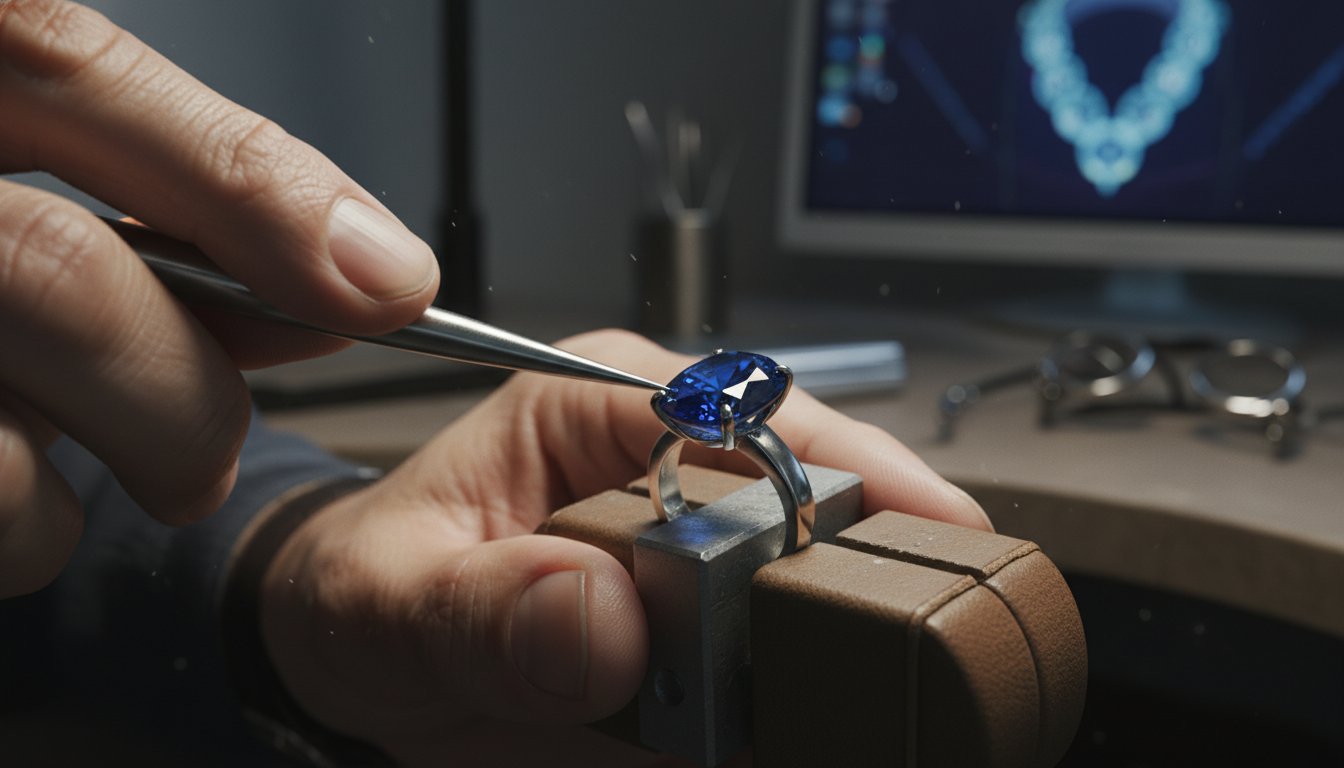
What if the most dangerous moment for your rare sapphire isn't the mining or the shipping, but the final thirty minutes it spends on a jeweler's bench? Most collectors feel a justified surge of anxiety when handing over a prized investment for mounting. You want a secure, elegant finish, but you're likely worried about hidden labor markups or the risk of a professional fracturing a delicate stone during the setting process. Understanding the total cost to set a loose gemstone in a ring requires looking beyond a simple flat fee to the variables of metal choice and setting complexity.
With gold prices hovering around $4,330 per ounce in mid-2026, the margin for error in custom jewelry has narrowed. This guide pulls back the curtain on how master jewelers calculate these fees and how you can protect your investment while maximizing the aesthetic impact of your custom piece. We'll explore the critical differences between semi-mounts and bespoke builds, the specific risks associated with different gem species, and a clear roadmap for the design process.
Key Takeaways
- Understand that the total cost to set a loose gemstone in a ring is a meticulous calculation of metal market rates, artisan labor, and design complexity.
- Identify how the physical properties of specific stones like emeralds and tanzanites necessitate specialized setting techniques to ensure the stone's security.
- Evaluate the financial and aesthetic trade-offs between utilizing a pre-crafted semi-mount and commissioning a fully bespoke design.
- Learn how current 2026 spot prices for platinum and 18k gold serve as the foundational baseline for your custom mounting investment.
- Discover the specific steps of a professional design consultation that prioritizes the structural integrity and natural brilliance of your unique loose gemstone.
Understanding the Investment: Why Set a Loose Gemstone?
Choosing a loose stone represents the first step toward a truly personalized masterpiece. It's an approach that favors transparency over convenience. When you evaluate a gem before it's mounted, you're seeing its true character without the strategic placement of prongs that might hide inclusions or structural vulnerabilities. This transparency is the core reason many collectors prioritize finding the perfect stone first, even as they calculate the total cost to set a loose gemstone in a ring.
The final price you pay isn't a random figure. It's a precise sum of three distinct elements: the physical mounting, the skilled labor of the setter, and the operational overhead of a professional studio. In 2026, market trends have shifted heavily toward these bespoke arrangements. Mass-produced jewelry often lacks the structural integrity required for high-value stones, leading serious buyers to seek out custom seats that are literally carved to fit the unique geometry of their gem.
To see the technical precision required during this phase, watch this demonstration of professional craftsmanship:
There's a profound emotional weight in participating in the design of a legacy piece. You aren't just buying a product; you're curating a story. By selecting the stone and the setting separately, you ensure that the final ring is a perfect reflection of your aesthetic standards and ethical values. This process transforms a transaction into a personal consultation, where your vision dictates the final form of the jewelry.
Quality Control and Transparency
Viewing a stone "naked" allows for a rigorous inspection that pre-set jewelry simply cannot offer. A pre-set diamond or sapphire might look flawless to the untrained eye, but a master jeweler knows that prongs can be used to mask chips or feathers near the girdle. At AfricaGems, our commitment to full disclosure means we provide all technical data upfront. This allows your setter to create a seat that matches the stone's exact dimensions, ensuring a secure fit that prevents the stone from rattling or loosening over time.
Value Preservation in Custom Work
A professional setting does more than just hold a stone; it protects its long-term investment value. Commercial settings are often cast in bulk, resulting in thinner prongs and less durable seats. In contrast, connoisseur-level craftsmanship utilizes advanced gemstone setting techniques to ensure the metal provides maximum protection without overshadowing the gem's brilliance. When you browse our precious gemstones, you're looking at materials that deserve this level of dedicated protection. Investing in a high-quality custom setting is the only way to guarantee that your stone remains safe for generations. The cost to set a loose gemstone in a ring is a small price to pay for the peace of mind that comes with expert security.
The Three Pillars of Setting Costs: Metal, Labor, and Design
Calculating the total cost to set a loose gemstone in a ring involves more than a simple service fee. It's a tripartite equation consisting of the physical mounting, the technical labor, and the specific design complexity. In the current 2026 market, these costs are highly sensitive to precious metal fluctuations and the rising demand for specialized artisan skills. When you bring your own stone to a jeweler, you're essentially commissioning a structural engineering project for a miniature piece of art.
A significant factor often overlooked by collectors is the "outside stone" premium. Jewelers typically charge a higher labor rate when they didn't source the gemstone themselves. This isn't a penalty; it's a risk management fee. When a jeweler sets a stone they sold you, the profit margin on the gem helps cover the insurance and liability of the setting process. If they're working with your provided stone, they must account for the high stakes of handling a rare material without that initial buffer. If you already have your centerpiece, exploring a curated selection of professional mountings is the next logical step to visualize the final assembly.
Accent stones also play a critical role in the final invoice. While setting a primary center stone might start near $49, adding pavé or side stones increases the labor exponentially. In 2026, the standard labor cost for setting small side diamonds or colored gems is approximately $15 per stone. For a complex halo design with thirty small stones, these individual fees can quickly surpass the cost of the center setting itself.
Precious Metal Selection and Weight
As of June 2026, the spot price of gold has reached approximately $4,330 per troy ounce. This makes the weight of your mounting a primary cost driver. 14k gold currently trades at about $83.70 per gram, making it a robust yet more accessible choice compared to 18k. While platinum is priced lower per ounce at $1,795, it remains a premium labor choice. Platinum's high melting point and extreme density require specialized tools and more time on the bench, often resulting in higher labor invoices despite the lower metal spot price. Choosing the Right Jewelry Settings requires balancing these metal properties with the specific hardness of your gemstone.
Labor and Expertise Fees
Technical Variables: How Gemstone Type and Shape Influence Price
While metal markets establish the foundation of your investment, the stone's physical identity dictates the complexity of the artisan labor. A jeweler doesn't treat every gem with the same mechanical approach. A diamond is structurally forgiving; a rare emerald is a high-stakes engineering puzzle. The cost to set a loose gemstone in a ring scales with the inherent risk the jeweler assumes when the tools meet the material.
Larger carat weights naturally command higher fees. This isn't just about the time spent carving a larger seat; it's about liability. If a professional handles a five-carat investment-grade gem, the insurance and security protocols required are far more intensive than those for a half-carat accent stone. Master setters factor this replacement risk into their labor rates to ensure they can provide the level of care a high-value stone demands.
Your choice of setting style also moves the needle. A classic prong setting is relatively straightforward and cost-effective, allowing for maximum light entry. In contrast, a bezel setting, where metal is hammered entirely around the stone's perimeter, requires significantly more bench time. This method offers superior protection for softer gems but demands a level of precision that drives up the final invoice due to the meticulous metalwork involved.
Hardness vs. Toughness: A Jeweler's Risk
Setting a Loose Blue Sapphire is a vastly different experience than mounting a Colombian emerald. Sapphires are incredibly tough and resist the pressure of being pushed into a setting. Emeralds, however, often contain internal inclusions that make them prone to fracturing under tension. Most reputable jewelers will require a setting risk waiver for fragile species. Some may even refuse to set stones like Opals or Sphenes due to their extreme sensitivity to heat and pressure, as the risk of damage during the process is exceptionally high.
Fancy Shapes and Custom Seats
Points and corners are the primary enemies of a safe setting. Fancy cuts like Marquise, Pear, or Princess shapes have vulnerable tips that can chip if the prong isn't seated perfectly. A jeweler must often custom-carve the seat to accommodate the unique belly or depth of a fancy cut. If your stone isn't a standard calibrated size, you won't be able to use a pre-made mounting. This shift to a custom-fit seat ensures the stone won't rattle, but it adds a layer of technical labor to the total cost to set a loose gemstone in a ring.

Choosing Your Path: Semi-Mounts vs. Fully Bespoke Custom Design
Once you've secured a world-class stone, the architectural decision of how to house it becomes your primary focus. This choice represents a significant fork in the road for your budget and timeline. The total cost to set a loose gemstone in a ring is largely dictated by whether you opt for the efficiency of a semi-mount or the uncompromising precision of a fully bespoke design. Each path offers distinct advantages, depending on whether you value immediate gratification or a one-of-a-kind legacy piece.
Time is often a deciding factor. A professional jeweler can typically set a stone into a semi-mount within two business days, provided the stone fits the existing seat. In contrast, a fully bespoke journey is a methodical process that often spans six weeks or more. This duration accounts for the collaborative design phases, technical renderings, and the physical casting of a unique mounting that has never existed before. If you're ready to explore these structural options, you can browse our professional ring mountings to see which styles resonate with your vision.
The Semi-Mount Solution
Semi-mounts are the sophisticated middle ground of the jewelry world. These are pre-crafted settings, finished in every detail except for the center stone. By selecting a mounting designed for "standard" calibrated sizes, such as 6x4mm or 7x5mm, you significantly reduce the labor component of your invoice. You bypass the expensive stages of CAD drafting and wax carving. However, a semi-mount may be insufficient for high-value collector gems with unusual depths or asymmetrical outlines. In those cases, forcing a stone into a pre-made seat can compromise both the security of the gem and the aesthetic balance of the ring.
The Bespoke Journey
Bespoke design is the only choice for those handling rare gemstones with non-standard dimensions. This process begins with a design fee that covers the creation of 3D renderings and wax models. While this increases the upfront cost to set a loose gemstone in a ring, the results are unparalleled. A custom build allows the setter to optimize the metalwork to highlight the specific color and fire of your gem. For instance, a bespoke setting can be engineered to allow maximum light into a deep-toned sapphire or to provide extra protection for a fragile emerald's corners. It's a tailored approach that treats the mounting as a frame specifically engineered for a single, unique masterpiece.
Modification costs are another variable to consider. Sometimes, an existing mounting is almost perfect but requires a slight adjustment to the prongs or the seat to accommodate your stone. These modifications are billed as additional labor hours and require a steady hand to ensure the structural integrity of the original casting isn't compromised. Whether you choose the speed of a semi-mount or the artistry of bespoke, the goal remains the same: a secure, beautiful home for your investment.
Bringing Your Vision to Life: The AfricaGems Custom Design Process
Marc Sarosi approaches every project with the dual perspective of a seasoned gemologist and a master jeweler. This philosophy ensures that the structural engineering of your ring never compromises the natural beauty or safety of the stone. The total cost to set a loose gemstone in a ring is an investment in this meticulous three-step evolution, where technical data meets artistic vision. We don't just provide a service; we offer a personal consultation that treats your gem as the unique specimen it is.
The journey begins with a comprehensive stone consultation. During this phase, we evaluate your gem's specific properties, identifying any internal features or cleavage planes that might affect its stability during the setting process. This isn't a cursory glance. It's a technical audit of the material's physical limits. We analyze the crown height, girdle thickness, and pavilion depth to determine the exact requirements for a secure seat.
Next, we move into the digital studio for Design and CAD. We create high-resolution 3D renderings that allow you to visualize the perfect home for your stone before we melt a single grain of gold. This phase is critical for transparency, as it allows you to approve every prong placement and band detail. Finally, our artisans move to the bench for Casting and Finishing. We cast the metal, hand-set the stones, and apply a final polish that meets our uncompromising standards. This stage is where the theoretical cost to set a loose gemstone in a ring transforms into a tangible, high-security masterpiece.
The Personal Touch of an Expert Enthusiast
Leveraging decades of experience, we prioritize stone safety above all else. Our team understands the nuances of rare materials, ensuring that every mounting is ethically sourced and every hour of labor is transparently accounted for. This commitment to connoisseurship defines our Custom Jewelry Design Services. We don't just build rings; we create secure legacies for the world's most beautiful materials. You're not just a client; you're a partner in the preservation of a natural wonder.
Next Steps for Your Loose Gemstone
Preparing your stone for its final setting requires careful planning. If you're shipping a high-value gem, use a secure, insured carrier and double-box the parcel to prevent movement. Before any work begins, ask your jeweler about their specific experience with your gem species. A master should be able to explain exactly how they will protect your stone's girdle and points. Use this final checklist to ensure a seamless transition:
- Secure a professional appraisal for insurance purposes before shipping.
- Verify the jeweler's liability policy for customer-provided stones.
- Confirm the specific metal alloy and weight of the mounting.
- Review the final CAD rendering for both aesthetic and structural approval.
Participating in this process ensures that your gemstone isn't just set; it's celebrated. By following this roadmap, you ensure that the final piece reflects the true value of the materials and the sophistication of your personal style.
Secure Your Investment with Expert Craftsmanship
Creating a custom ring is a journey that moves from the raw beauty of a loose stone to the refined elegance of a finished masterpiece. We have explored how precious metal volatility and the technical fragility of specific species define the cost to set a loose gemstone in a ring. You now understand that a secure mounting isn't just a purchase; it's a critical balance of structural engineering and artistic vision. Whether you choose a streamlined semi-mount or a fully bespoke creation, the priority remains the long-term integrity of your investment.
At AfricaGems, we bring over 40 years of gemstone expertise to every jeweler's bench. We are recognized specialists in high-risk colored gemstone setting, ensuring that even the most delicate emeralds or tanzanites are handled with absolute precision. Every project comes with a personal guarantee from our founder, Marc Sarosi, providing the security you need for your most valued treasures. Start your custom ring journey with AfricaGems' expert design services today and transform your vision into a wearable legacy. Your gemstone has waited millions of years to be seen; it's time to give it the home it deserves.
Frequently Asked Questions
Can I bring my own loose gemstone to any jeweler to have it set?
You can bring your own stone to many jewelers, but it's not a universal service. Some luxury retailers refuse outside stones to avoid liability for materials they didn't source. Independent custom designers are usually more accommodating, though they'll likely ask you to sign a damage waiver. This ensures both parties understand the inherent risks involved in mounting rare materials like alexandrite or star sapphires.
How much does a jeweler typically charge for the labor of setting a stone?
Labor fees are determined by the technical difficulty of the mounting style and the stone's value. A master setter calculates their rate based on the time required to carve a precise seat and the insurance risk of handling the gem. While a simple four-prong setting is the most affordable labor tier, complex bezel or tension settings require significantly more bench time and specialized equipment.
Is it cheaper to buy a loose stone and have it set or buy a pre-set ring?
Buying a loose stone often yields a higher-quality result for your budget, even if the total cost to set a loose gemstone in a ring includes custom labor. Pre-set rings are frequently designed to hide inclusions or poor cutting with strategic prong placement. When you buy a loose sapphire or ruby, you see exactly what you're paying for before the metal obscures the stone's true character.
What happens if a jeweler breaks my gemstone while setting it?
If a stone fractures during setting, the responsibility typically falls on the stone owner unless the jeweler was overtly negligent. This standard industry practice exists because natural gemstones, particularly emeralds, can have internal stress points invisible to the naked eye. Reputable shops will discuss these risks during your initial consultation. It's the primary reason many collectors choose specialists with decades of experience in high-risk setting.
How long does it take to have a loose gemstone set in a ring?
The timeline for setting varies from a few days to several weeks. If you've selected a pre-made semi-mount, a skilled setter can often complete the work in under a week. However, a fully bespoke project involving CAD renderings and custom casting usually takes six weeks or more. This methodical pace ensures every detail, from the metal's weight to the prong's tension, is executed to a connoisseur's standard.
Why do some jewelers charge a 'setting fee' for outside stones?
Jewelers charge a specific fee for outside stones to manage the liability of handling an investment-grade material. When a jeweler sells you the stone, the profit margin helps cover their insurance and operational costs. For an outside stone, this fee ensures the studio can afford the high-security protocols and master-level labor required to mount your gem safely without the financial buffer of a stone sale.
Does the shape of the gemstone change the cost of the setting?
Gemstone shape is a primary driver of labor complexity. Round stones are the most straightforward to set, but fancy cuts like Marquise or Pear shapes require custom-carved seats to protect their vulnerable tips. The cost to set a loose gemstone in a ring increases when the setter must manually adjust the mounting to accommodate asymmetrical proportions or unique pavilion depths that standard settings can't handle.
Should I insure my loose gemstone before having it set?
You should always insure your loose gemstone before it enters a jewelry studio. Most professional jewelers carry insurance for their inventory, but this often provides limited coverage for items they don't own. A private jewelry policy or a specialized rider ensures you're protected for the full replacement value if an accident occurs during the mounting process or while the stone is in transit.

Article by
Marc Sarosi
Professional gemstone dealer for more than 40 years. Started off mining Aquamarine in Zambia, Africa and travelled throughout the continent in search of fine gems. Trusted authority on fine gemstones and have donated a fine collection of more than 27 extraordinary gemstones to the Smithsonian Institute Gem Hall for generations to see.