
The Investment Potential of Colombian Emeralds: A 2026 Collector’s Guide
Aug 17th 2026
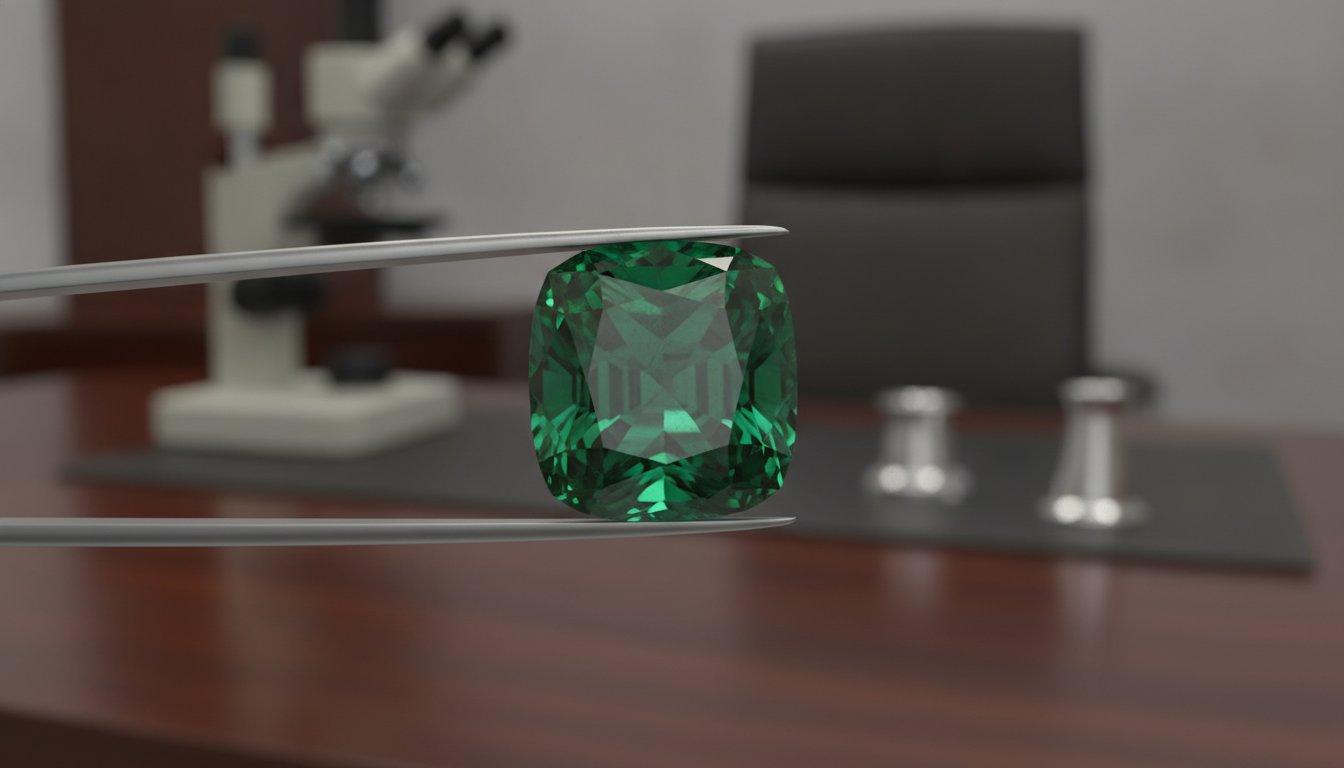
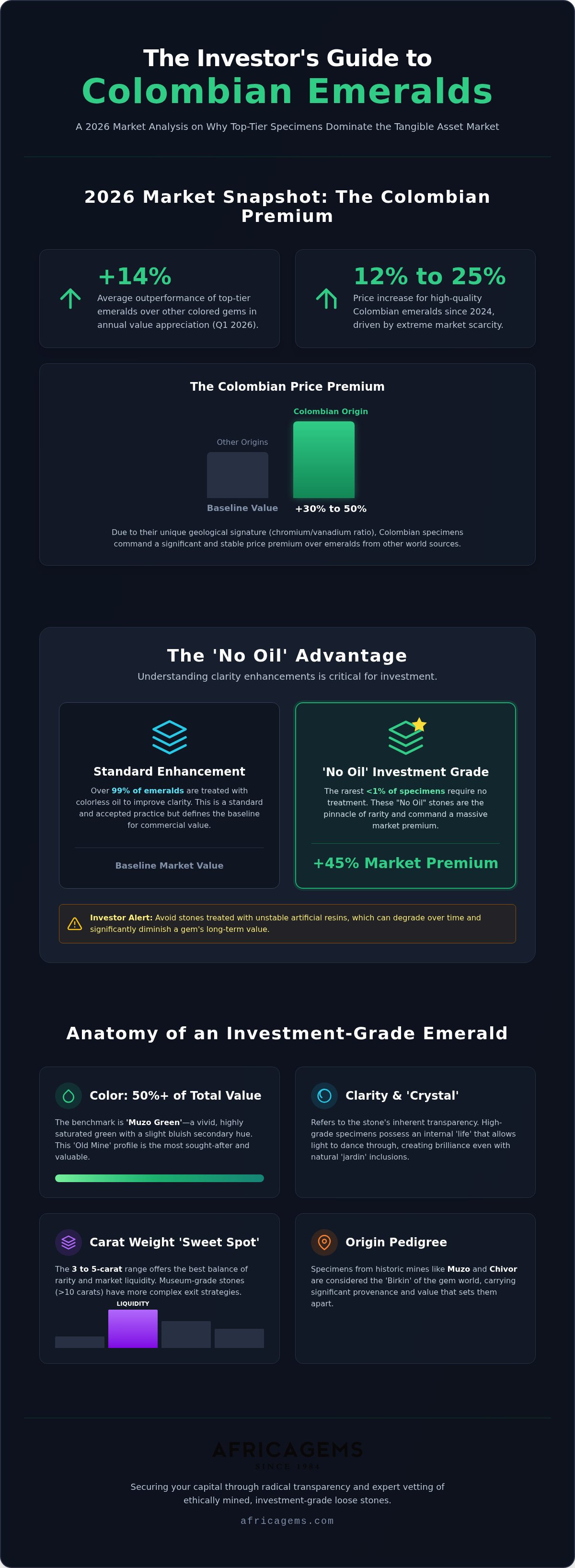
In the first quarter of 2026, top-tier emeralds outperformed other colored gemstones by an average of 14% in annual value appreciation. This surge confirms that while traditional assets fluctuate, the allure of the world's finest green beryl only intensifies. You likely feel a sense of hesitation when facing a market where 99% of stones are treated or where "over-oiling" hides a gem's true character. It's natural to worry about transparency when the price gaps between Colombian, Zambian, and Ethiopian origins widen without a clear, technical explanation.
This guide clarifies the investment potential of Colombian emeralds by providing the technical rigor and insider perspective necessary for a secure acquisition. You'll discover why the "Colombian Premium" often commands 30% to 50% more than other origins and how to identify the rare "No Oil" specimens that now carry a 45% market premium. We'll walk through the specific criteria for investment grade stones, from the "Muzo Green" benchmark to the ethical "origin-first" philosophy championed by experts like Marc Sarosi. By the end, you'll have the knowledge to move beyond the fear of synthetic enhancements and build a legacy portfolio grounded in radical transparency and geological rarity.
Key Takeaways
- Learn why the "Colombian Premium" maintains unmatched price stability compared to other origins and why collectors are shifting toward these tangible luxury assets.
- Master the hierarchy of value to accurately assess the investment potential of Colombian emeralds, prioritizing "Vivid Green" saturation and "Old Mine" color profiles.
- Understand the critical price delta between "No Oil" stones and those with minor enhancements, ensuring you avoid stones treated with unstable artificial resins.
- Identify the "sweet spot" for liquidity by focusing on 3 to 5-carat specimens while learning the complex exit strategies required for museum-grade stones.
- Secure your capital through radical transparency and expert vetting, leveraging Marc Sarosi's personal oversight to find ethically mined, investment-grade loose stones.
Why Colombian Emeralds Dominate the 2026 Investment Market
The investment potential of Colombian emeralds has reached a historic high in 2026. While traditional financial markets face significant pressure, these vivid green stones have seen a price increase ranging from 12% to 25% since 2024. This growth isn't a temporary spike. It reflects a structural tightening of global supply and a growing appreciation for the "Colombian Premium," a valuation benchmark that positions these specific gems at the absolute pinnacle of the market.
As the export value of Colombian emeralds fell to approximately $116 million by late 2025, the market entered a phase of extreme scarcity. This supply crunch, combined with a 12.5% US import tariff implemented in 2026, has fundamentally shifted how collectors approach acquisition. To better understand the high-stakes environment of the Colombian trade and why these gems are so costly, watch this helpful video:
The investment potential of Colombian emeralds is further bolstered by their historical price stability compared to more volatile assets. While colorless diamonds have faced downward pressure due to the rise of lab-grown alternatives, the unique "jardin" and origin-specific chemistry of Colombian stones provide a natural barrier to entry. This ensures that natural specimens remain a distinct class of precious gemstones that preserve long-term capital.
The Tangible Asset Revolution
In 2026, the shift toward "portable wealth" has accelerated. Investors are moving away from traditional commodities toward tangible luxury assets that are easy to transport and store securely. In the first quarter of 2026 alone, top-tier emeralds outperformed other colored gemstones by an average of 14% in annual value appreciation. Unlike gold, which is heavy and difficult to move in large values, a high-carat emerald fits in a pocket while carrying the value of a luxury estate. This psychological appeal, often called "Green Fire," makes them a cornerstone for modern, diversified portfolios.
Colombia vs. The Rest of the World
The geological signature of Colombian beryl is its greatest asset. The unique chromium-to-vanadium ratio found in the Andean mountains produces a saturation and "glow" that other origins simply cannot replicate. You can learn more about these specific chemical markers by studying Emerald properties and history. This distinct chemistry is why Colombian specimens command a 30% to 50% price premium over emeralds from Zambia or Brazil. In the high-end market, a stone from the Muzo or Chivor mines is considered the "Birkin" of the gemstone world. With Colombian exports dropping nearly 30% since 2024, the value of existing legacy mine specimens continues to climb as they become finite pieces of history.
Identifying Investment-Grade Colombian Emeralds
To maximize the investment potential of Colombian emeralds, you must look beyond mere carat weight. The market operates on a rigorous hierarchy where color and clarity dictate the majority of the stone's worth. In the current 2026 landscape, a top-tier 2-carat stone will consistently outperform a 10-carat commercial-grade specimen in resale value. Concentrated rarity is the key to portfolio growth; you're looking for the best, not the most.
A critical factor often overlooked by novice buyers is "crystal," or the stone's inherent transparency. High-yield specimens must possess an internal life that allows light to dance through the facets. Without this transparency, even the most saturated green can appear dull and lifeless. In the professional trade, color can account for more than 50% of an emerald's total valuation, making the specific hue and tone the most important technical specification you'll evaluate.
The 'Muzo Green' Standard
"Muzo Green" remains the industry benchmark for the most desirable emerald color, often referred to as the "Old Mine" profile. It's a vivid, highly saturated green with a slight bluish secondary hue that provides a unique warmth. Unlike stones from other origins that can appear "inky" or "black" in low light, Colombian material maintains its vibrancy. You should actively avoid stones with "Black Eye," which is a large area of extinction in the center. If the stone doesn't glow, it doesn't belong in an investment portfolio.
Clarity: The 'Jardin' and Investor Risk
Every natural emerald contains a "jardin," or garden, of internal inclusions that act as a geological fingerprint. For an investor, the task isn't to find a stone without inclusions, but to find one where they don't threaten structural integrity. Avoid stones with deep, surface-reaching fissures that could lead to breakage. While total clarity is a myth in the natural world, you want inclusions that are dispersed and don't distract from the stone's beauty. Approximately 99% of all emeralds have undergone some form of clarity enhancement, so a perfectly "eye-clean" stone at a bargain price is usually a red flag for synthetics.
Finding a stone that balances these complex factors requires a mentor's guidance. You can explore our collection of loose Colombian emeralds to see how these investment-grade criteria appear in person.
The Oil Factor: Clarity Enhancements and Their Impact on Value
While color defines beauty, treatment defines liquidity. In the professional trade, the type and volume of clarity enhancement are the primary drivers of price volatility. Since roughly 99% of all emeralds undergo some form of clarity enhancement, finding a specimen that remains untouched is a feat of geological luck. For those evaluating the investment potential of Colombian emeralds, understanding the delta between "No Oil" and "Minor Oil" is essential for capital preservation.
The 2026 market has seen a distinct shift in how enhancements are valued. "No Oil" or "Minor Oil" emeralds have seen a 12% value increase year-over-year for the last five years. This steady appreciation outpaces stones with moderate or significant treatments, which often struggle to find buyers in high-end auction circles. You must distinguish between natural cedar oil and artificial resins. Cedar oil is a traditional, stable, and reversible treatment that serious collectors accept. Conversely, artificial resins and polymers are generally avoided because they can degrade over time, turning cloudy and permanently devaluing your asset.
The Rarity of 'No Oil' Colombian Specimens
A "No Oil" certification is the ultimate prize for a collector. These stones are so naturally clear that they require zero enhancement to mask internal fissures. Currently, unenhanced "No Oil" emeralds command a 45% premium over their treated counterparts, though this gap can widen exponentially for world-class museum specimens. AfricaGems prioritizes radical transparency here; we provide full disclosure on every stone, ensuring you aren't paying a "No Oil" price for a stone with "Minor" enhancements. This level of integrity is the only way to ensure your investment potential of Colombian emeralds remains secure against future market corrections.
Lab Certifications: Your Investment Insurance
A reputable lab report is your only defense against "lab shopping," a practice where sellers send a stone to multiple laboratories until they receive the most favorable grade. For high-value investment stones, reports from the GIA, SSEF, or Gubelin are the industry standard. These institutions provide a precise breakdown of treatment levels, distinguishing between specific degrees of enhancement:
- None: No evidence of clarity enhancement; the pinnacle of rarity.
- Insignificant: Microscopic traces of oil that don't affect the stone's appearance.
- Minor: Light oiling in a few fissures, which is widely accepted in the professional trade.
- Moderate or Significant: High volumes of oil or resin that typically disqualify a stone from investment-grade status.
If a certificate seems to overstate the quality of a stone or comes from an obscure laboratory, it's a major red flag. Stick to the "Big Three" labs to ensure your exit strategy remains viable when it's time to liquidate your collection.
Strategic Portfolio Building: Carat Weight and Scarcity
Building a collection requires a shift from aesthetic appreciation to mathematical scarcity. While a 1-carat stone is beautiful, the true investment potential of Colombian emeralds is realized in the 3 to 5-carat "sweet spot." This weight range provides the ideal balance of significant rarity and market liquidity. It's large enough to be considered a major asset but remains accessible to a wide enough pool of private collectors and jewelry houses to ensure a relatively swift resale when necessary.
In contrast, specimens exceeding 10 carats enter the "Museum Grade" tier. These stones are undeniably rare, but they require specialized exit strategies through major auction houses or private brokerage. If you choose to hold such a stone, you're essentially waiting for a specific type of high-net-worth buyer. To ensure the best performance of your portfolio, prioritize the classic "Emerald Cut." This step-cut shape was designed specifically to minimize stress on the crystal while maximizing the saturation of its natural green hue, making it the universally recognized standard for serious investors. Diversifying your holdings by mine origin, such as mixing the prestige of Muzo with the bluish-green tint of Chivor or the intense saturation of Coscuez, further insulates your capital against localized supply shifts.
Liquidity and the Secondary Market
Investment liquidity in 2026 is defined as the ease with which a gemstone can be converted into cash at a price that reflects its current certified market value. To maintain this liquidity, you must preserve the stone's provenance and "story." A documented history of ownership or a connection to a specific legacy mine can drive prices significantly higher at auction. Preparing for resale involves keeping all original lab reports pristine and ensuring the stone remains in its "loose" form, which is the purest way to trade high-value beryl. This transparency builds the buyer confidence required for high-stakes transactions.
Avoiding Common Investor Pitfalls
The 2026 counterfeit landscape has become increasingly sophisticated with the rise of "Hydrothermal" synthetics. These lab-grown stones can mimic the internal "jardin" of a natural emerald, often fooling untrained eyes. If a stone is priced significantly below the market average for its grade, it's rarely a deal; it's a warning sign. The investment potential of Colombian emeralds is intrinsically tied to their natural origin and ethical sourcing. Today's collectors demand "Conflict-Free" and traceable gems, meaning stones with a transparent chain of custody from mine to market carry a distinct value premium. Avoiding ethically ambiguous stones isn't just a moral choice; it's a strategic move to protect your capital's future resale potential.
Ready to start your portfolio with a vetted, high-yield specimen? Explore our curated selection of loose Colombian emeralds today.
Sourcing Your Investment with AfricaGems
AfricaGems has spent over four decades refining the art of gemstone acquisition. When you evaluate the investment potential of Colombian emeralds, you aren't just buying a stone; you're buying the expertise that verified it. Founder Marc Sarosi personally vets each specimen, applying a rigorous standard that filters out the vast majority of commercial-grade material. This personal accountability transforms a digital transaction into a professional consultation, providing the security that serious collectors require. Our commitment to radical transparency means that every treatment, no matter how minor, is disclosed with absolute clarity.
Most retailers focus on finished jewelry, but we advocate for loose stones as the purest investment vehicle. Purchasing a loose gem allows for a 360-degree inspection of the "jardin" and the stone’s structural integrity without the obstruction of a metal setting. It offers the flexibility to either vault the asset for long-term capital preservation or utilize our custom jewelry design services to create a legacy piece. This approach ensures that the stone's value remains transparent and uninflated by retail markups on settings. By focusing on the material's intrinsic quality, you secure a more liquid asset for the secondary market.
The Expert Enthusiast Approach
We bridge the gap between technical data and the emotional resonance of a rare find. Our deep network in the Colombian cordillera gives our clients access to "No Oil" specimens that rarely reach the open market. We treat every client as an informed insider, providing the data needed to make a sophisticated decision. While we prioritize the technical validation of GIA and Gubelin reports, we also celebrate the "Green Fire" that makes these gems unique. If you choose to set your stone, our master goldsmiths ensure the mounting highlights the gem's natural beauty without compromising its investment-grade status.
Start Your Emerald Journey
Building a gemstone portfolio requires a steady, educational pace rather than high-pressure sales tactics. We invite you to explore our extensive inventory of Loose Colombian Emeralds to see the quality benchmarks discussed in this guide. Every stone comes with a 100% natural guarantee and a commitment to full disclosure regarding treatments. You can consult with us directly to identify specific specimens that match your long-term financial goals and aesthetic preferences. By working with an expert mentor, the investment potential of Colombian emeralds is maximized through informed selection and radical transparency.
Securing Your Legacy in Green Fire
Maximizing the investment potential of Colombian emeralds requires a shift from mere visual appreciation to technical validation. You've seen how the "Muzo Green" standard and "No Oil" certifications create a distinct class of assets that outperform traditional commodities. By focusing on the 3 to 5-carat liquidity sweet spot and insisting on reports from the industry's "Big Three" labs, you insulate your capital against market volatility. The 2026 market rewards the informed collector who prioritizes provenance and radical transparency over bargain-hunting.
AfricaGems has been a global leader in unheated and untreated gemstones since 1984. Founded by Marc Sarosi, our business maintains an A+ rating for our uncompromising disclosure on all treatments. We believe that a high-value transaction should feel like a personal consultation, grounded in the security of a natural guarantee. Whether you're vaulting a loose stone for the future or designing a custom masterpiece, your journey deserves the guidance of a trusted mentor.
Secure Your Investment: Shop Certified Loose Colombian Emeralds
Your path to building a world-class portfolio starts with a single, vetted acquisition. We're here to ensure every gem you choose is a source of both pride and enduring value.
Frequently Asked Questions
Is a Colombian emerald a better investment than a diamond?
In the current 2026 market, top-tier emeralds often outperform colorless diamonds due to their extreme scarcity. While lab-grown diamonds have pressured the natural diamond market, there's no synthetic equivalent that can replicate the unique "jardin" or chemical signature of a fine Colombian stone. This rarity led to a 14% annual value appreciation for emeralds in early 2026, making them a more stable choice for those looking to diversify their luxury holdings.
What is the most valuable color for a Colombian emerald?
The most valuable color is a vivid, highly saturated green with a slight bluish secondary hue, often referred to as "Muzo Green." This specific tone is the industry benchmark for the investment potential of Colombian emeralds. It's essential to avoid stones that are too dark or "inky," as they lose their internal glow. A stone that maintains its vibrant green even in low light commands the highest premium in professional trade circles.
How do oil treatments affect the resale value of an emerald?
Resale value is heavily dependent on the level of treatment, with "No Oil" stones commanding a 45% premium over treated counterparts. While minor oiling with natural cedar oil is widely accepted by collectors, significant treatments or artificial resins can drastically reduce a stone's liquidity. Transparency is everything in 2026. A stone with minor, stable oiling maintains its value, whereas stones with unstable fillers are often disqualified from high-end secondary markets and auction houses.
Can I wear my investment emerald in a ring?
You can wear your emerald, but it requires caution due to the stone's 7.5 to 8 Mohs hardness rating. For an investment-grade specimen, we recommend protective settings like bezels or using the stone in a pendant to minimize the risk of impact. Many serious collectors prefer to keep their gems in a loose state to preserve the purest form of the asset. This ensures the stone remains pristine and easier to inspect for future valuation.
Which Colombian mine produces the best investment-grade stones?
Muzo, Chivor, and Coscuez are the three primary mines known for producing world-class investment material. Muzo is legendary for its deep "warm" green, while Chivor often produces stones with a bluish tint and exceptional clarity. While mine origin is a significant value driver, the individual quality of the stone's color and "crystal" transparency remains the ultimate arbiter. A high-quality stone from a lesser-known mine can still outperform a mediocre stone from a famous one.
How much should I expect to pay for a 1-carat investment-grade emerald?
Investment-grade pricing is determined by a complex intersection of origin, color saturation, and the absence of oil. You'll find that commercial-grade stones are significantly cheaper, but they lack the scarcity required for capital growth. High-quality specimens from legacy mines like Muzo command the highest prices in the 2026 market. We recommend reviewing current global auction trends for top-tier specimens to understand the upper echelons of the market before committing your capital to a specific gem.
Why is GIA certification important for Colombian emeralds?
GIA certification provides a technical safeguard by verifying origin and treatment levels with absolute precision. In an industry where "lab shopping" is common, a report from a top-tier lab like GIA or Gubelin acts as your investment insurance. It ensures that the investment potential of Colombian emeralds isn't compromised by undisclosed resins or synthetic origins. This provides the transparency and digital "passport" needed for a confident, high-value transaction in a competitive market.
What is the 'Jardin' in an emerald and does it hurt the value?
The "jardin," or garden, refers to the internal inclusions that prove an emerald's natural origin. Far from hurting value, a clean and balanced jardin is often celebrated as a unique geological fingerprint. However, you must avoid inclusions that reach the surface or threaten the stone's structural integrity. A well-dispersed jardin that doesn't cloud the stone's transparency is a hallmark of a high-quality, investment-ready specimen that will appeal to future buyers.

Article by
Marc Sarosi
Professional gemstone dealer for more than 40 years. Started off mining Aquamarine in Zambia, Africa and travelled throughout the continent in search of fine gems. Trusted authority on fine gemstones and have donated a fine collection of more than 27 extraordinary gemstones to the Smithsonian Institute Gem Hall for generations to see.