
The Best Setting for Alexandrite Stone: Enhancing the Color-Change Marvel
Jul 22nd 2026
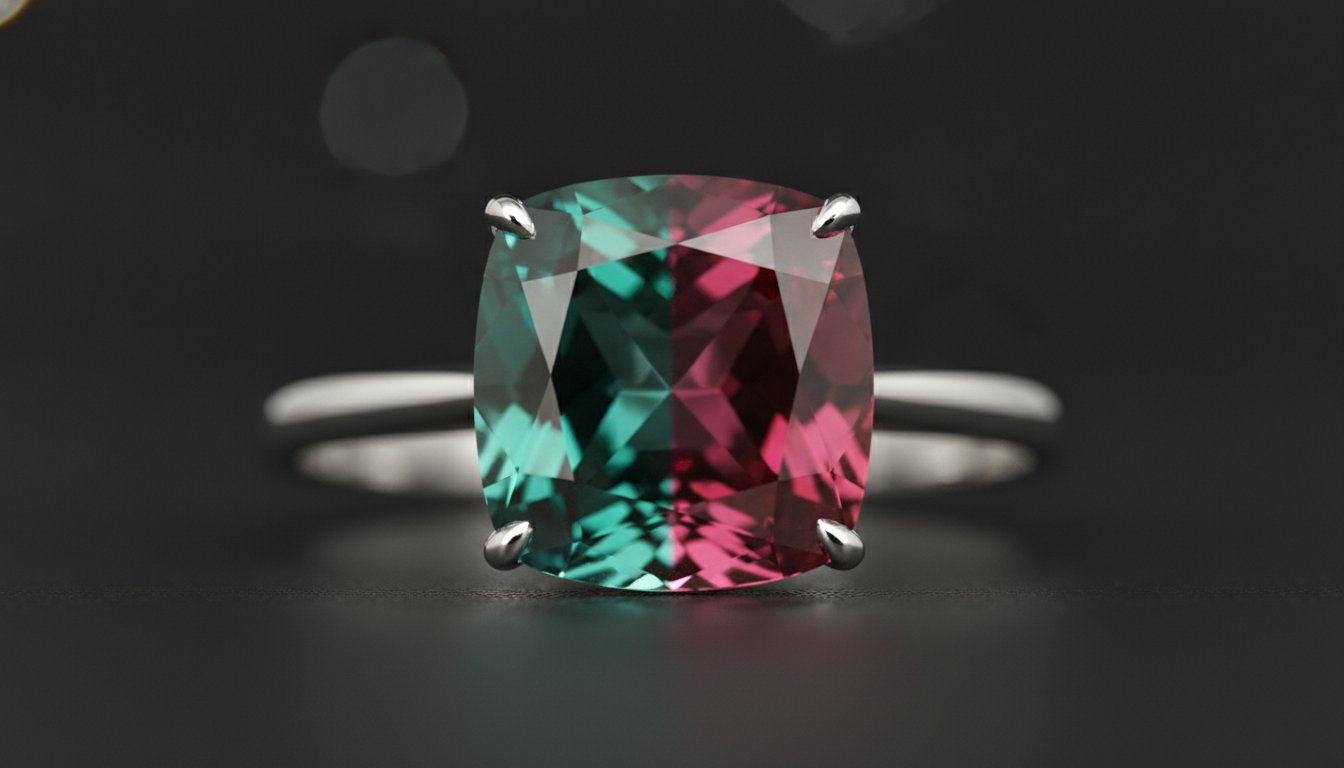
The most exquisite alexandrite can look remarkably ordinary if it's trapped in a mounting that stifles its natural brilliance. You've likely spent a significant amount of time searching for a gem that exhibits a crisp, dramatic shift from daylight green to incandescent red, so it's natural to feel anxious about choosing a metal that might mute that transition. Finding the best setting for alexandrite stone isn't just about aesthetics; it's about engineering a "light stage" that allows this rare chrysoberyl to perform its famous color-change magic.
We understand that a stone valued anywhere from $2,000 to over $100,000 per carat requires a mounting that balances sophisticated elegance with uncompromising security. You want a design that reflects the rarity of your gem while protecting its 8.5 Mohs hardness for daily wear. This guide will help you choose the perfect metal and mounting to maximize the dramatic color-change phenomenon of your alexandrite. We'll examine how different gold alloys affect the stone's hue and which gallery styles invite the most light to enter the gem's facets.
Key Takeaways
- Master the "Neutrality Principle" to ensure your mounting allows for the precise light entry required to trigger a dramatic green-to-red color shift.
- Evaluate the impact of different metal alloys on the gem's pleochroism, ensuring your choice highlights rather than mutes the stone's natural beauty.
- Identify the best setting for alexandrite stone based on your lifestyle, comparing the maximum light exposure of a solitaire with the protective security of a bezel.
- Discover essential techniques for protecting the gem's girdle and preventing chips in daily-wear jewelry without sacrificing the aesthetic appeal of the mounting.
- Learn how to leverage custom design services to transform a loose natural or Chatham lab-created alexandrite into a high-value heirloom.
The Science of Setting: Why Alexandrite Requires a Strategic Choice
Choosing a mounting for a world-class alexandrite isn't just about fashion; it's a technical necessity. Scientifically, we define alexandrite, a variety of the mineral chrysoberyl, by its unique ability to absorb light differently across the spectrum due to trace amounts of chromium. This mineralogical quirk creates a "color-change window" that requires precise environmental conditions to manifest. If the mounting is too restrictive, the stone's internal chemistry can't respond to the shifting light sources around it, effectively muting its value.
The best setting for alexandrite stone serves as a light-conducting conduit rather than a simple container. To witness the full transition from a crisp teal-green to a rich purplish-red, light must enter the stone from multiple angles, bounce off the internal facets, and return to your eye. A "closed" or heavy bezel setting often chokes this process. Without 360-degree illumination, even the finest stones can look dark, muddy, or perpetually stuck in a single, uninspiring hue.
To better understand this concept, watch this helpful video:
Understanding Pleochroism and Light Windows
Pleochroism is the optical phenomenon where a gemstone appears to be different colors when observed from different crystallographic angles. Because of this, the architecture of your ring or pendant must include "light windows" or open galleries. These openings beneath the stone allow ambient light to permeate the pavilion, which is crucial for stones with high saturation. High-set stones, such as those in a 4-prong or 6-prong cathedral mounting, typically perform better than low-profile settings because they expose more of the gem's surface area to the environment, allowing the pleochroic colors to mingle and shift naturally.
The Daylight vs. Incandescent Dilemma
Most collectors have a favorite "state" for their gem. Some prefer the cool, forest-green tones of natural light, while others live for the dramatic raspberry-red shift under evening lamps. Your choice of mounting can emphasize one over the other. For instance, a setting that allows maximum light penetration often helps a darker stone show its green side more clearly in daylight. If you're browsing premium mountings, look for designs that frame the stone without shadowing the edges. This ensures the transition remains sharp and vibrant regardless of the time of day or the specific light source in the room.
Metal Harmony: Gold vs. Platinum for Alexandrite
The metal you choose for your alexandrite acts as the canvas for its chromatic performance. While many focus solely on the mounting's architecture, the color of the metal itself can either accentuate or diminish the gem's dual personality. In the world of high-end gemology, we often refer to the "Neutrality Principle." This suggests that the best setting for alexandrite stone is one that provides a color-neutral background, allowing the stone's chromium-induced shift to occur without visual interference from the surrounding metal.
Platinum and White Gold: The Expert Choice
Platinum and white gold are widely considered the industry standard for rare color-change materials. Because these metals lack the warm yellow or pink undertones of other alloys, they provide a crisp, mirror-like backdrop that makes the daylight teal and bluish-green colors appear more vivid. This cool-toned environment also enhances the perceived "cleanliness" of the gem, ensuring that the eye focuses entirely on the stone's internal brilliance. According to GIA's guide to alexandrite, color is the single most important factor in determining value; therefore, a metal that doesn't "bleed" its own color into the stone is vital. At AfricaGems, we frequently recommend platinum for our high-value loose alexandrite gemstones to ensure the most unbiased color transition possible.
Yellow and Rose Gold: When to Break the Rules
Standard rules are meant to be broken when the specific characteristics of a stone demand it. For instance, some natural stones from Sri Lanka may possess slightly brownish or "muddy" secondary undertones. In these specific cases, a 14K or 18K yellow gold setting can actually be beneficial. The warmth of the gold can mask those brownish tints, making the overall presentation feel more intentional and luxurious. Yellow gold can also emphasize the "red" side of the shift, though it may make the "green" side appear slightly more olive.
Rose gold offers a different advantage, particularly for stones that lean heavily into the "raspberry" or purplish-red end of the spectrum under incandescent light. It can beautifully complement the warm side of the color shift, which is a popular choice for certain lab-created varieties that have a very strong red component. A sophisticated compromise often involves a "two-tone" approach. You might choose a yellow gold band for its classic aesthetic but insist on platinum or white gold prongs. This strategy ensures the metal in direct contact with the girdle remains neutral, preserving the integrity of the color change while still allowing for a warm band color. If you're unsure which metal will best serve your specific gem, exploring our curated collection of mountings can provide a visual starting point for your custom design.
Structural Styles: Prongs, Halos, and Bezels
The structural architecture of your mounting serves as the physical stage for the gem's performance. While our previous discussion focused on the chemical and light-based requirements of chrysoberyl, we must now consider how specific mounting styles influence the stone's visual weight and presence. A well-chosen structure doesn't just hold the gem; it directs the viewer's eye and manages the way light interacts with the stone's internal geometry. Understanding how Alexandrite quality factors like cut and transparency interact with the mounting is essential for a successful design.
The Solitaire: Letting the Gem Speak
For the collector who has secured a stone with a 90% to 100% color change, the solitaire is frequently the most logical choice. Minimal metal interference is often why a four-prong solitaire is considered the best setting for alexandrite stone. By using four slim prongs instead of six, you leave more of the stone's girdle and pavilion exposed to ambient light. If you're concerned about security, a six-prong setting offers a more circular silhouette and extra peace of mind, though it does cover slightly more of the gem's surface. A tapered cathedral mounting is a particularly elegant variation; it lifts the stone high off the finger, allowing light to flood the "windows" we discussed earlier while maintaining a sophisticated, architectural profile.
Halos and Accents: Enhancing the Rarity
Halo settings are often misunderstood in the context of color-change gems. While a halo can certainly make a smaller stone appear more substantial, you must be careful not to create "color competition." We strongly advise against using colored gemstone halos, such as rubies or emeralds, as they will clash with one of the alexandrite's two color states. Instead, colorless diamond halos in the D-F color range are the gold standard. These white flashes create a "Contrast Effect" that makes the teal or raspberry hues of the center stone look even more saturated. When selecting accents, prioritize high-clarity diamonds; a "sparkly" frame provides the perfect visual foil to the moody, shifting depths of a fine alexandrite.
Three-stone designs offer another layer of complexity and beauty. Pairing a central alexandrite with two side diamonds can act as a set of light reflectors, bouncing additional brilliance into the center stone. Conversely, bezel settings offer a modern, sleek aesthetic that is incredibly secure for an active lifestyle. While a full bezel can be restrictive for light, a "half-bezel" or "semi-bezel" can provide that contemporary look while still leaving the sides of the stone open to catch the sun. This balance ensures your investment remains protected without sacrificing the dramatic optical phenomenon that makes this gem so coveted.
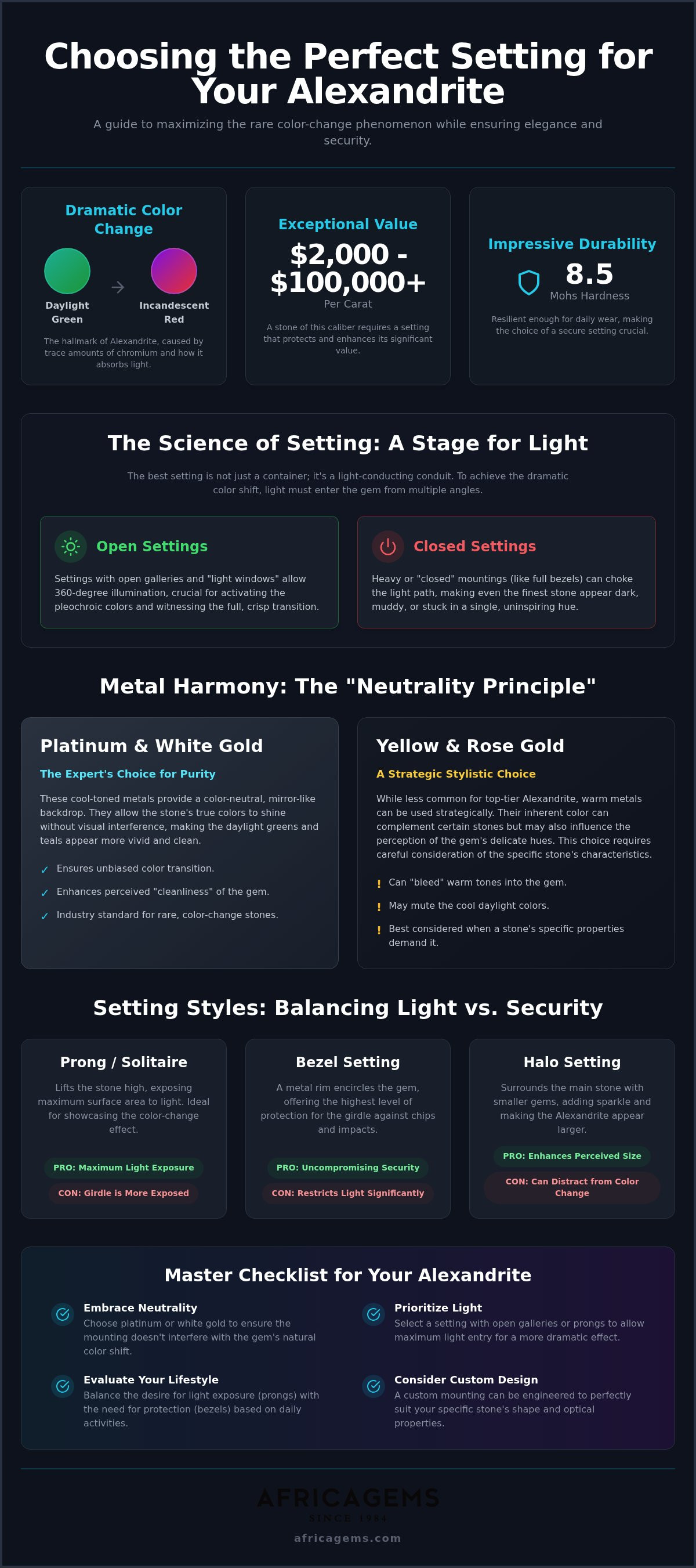
Protecting Your Investment: Durability and Security
Alexandrite is a remarkably resilient gem. With a rating of 8.5 on the Mohs scale, it ranks just below sapphire and ruby in terms of scratch resistance. However, hardness shouldn't be confused with toughness. While it won't scratch easily, the stone can still chip or fracture if it sustains a sharp blow to a vulnerable area like the girdle. Because these gems can reach values exceeding $70,000 per carat, the best setting for alexandrite stone must prioritize structural integrity without compromising the optical show.
The Daily Wear Challenge
For engagement rings, where the piece is exposed to the rigors of daily life, we often suggest a slightly more robust mounting. If your stone features sharp corners, such as a pear or marquise cut, a V-prong is essential. This specialized prong wraps around the pointed tip, shielding the most fragile part of the crystal from accidental impact. While a high cathedral setting maximizes light, a low-profile mounting serves as a practical compromise for active collectors. It keeps the gem closer to the hand, reducing the likelihood of it snagging on clothing or hitting hard surfaces. While a high Mohs rating ensures the surface remains pristine, the specific architecture of the setting provides the necessary defense against structural fractures.
Partial bezel settings offer another sophisticated solution. They provide more protection than prongs by surrounding a portion of the stone's perimeter with metal, yet they avoid the "light choking" effect of a full bezel. This balance is particularly important for an 8.5 Mohs stone that needs to remain secure during a lifetime of wear. For occasional wear items like pendants, you have more freedom to use delicate, high-exposure prongs that would be too risky for a ring.
Maintenance for Set Alexandrite
The dramatic color change of your alexandrite relies on the purity of the light reflecting through its facets. Over time, hand lotions, soaps, and natural oils accumulate in the "windows" beneath the mounting. This film acts as an unintended filter, dulling the brilliance and significantly muting the transition from green to red. We recommend a professional inspection every six months to ensure the prongs haven't shifted and to perform a deep ultrasonic cleaning. Professional maintenance ensures the mounting remains tight and the light paths remain clear. If you're ready to start your journey, you can buy loose gemstones online and then consult with our experts to find the most secure mounting for your specific gem.
Maintaining the security of your investment is a legacy-oriented task. A loose prong can lead to the loss of a stone that is virtually impossible to replace. By choosing a design that respects both the science of light and the physics of protection, you ensure your heirloom remains as vibrant as the day it was first set.
Designing Your Custom Alexandrite Heirloom with AfricaGems
Creating a piece of jewelry around a color-change marvel requires more than just a bench jeweler; it demands a partner who understands the soul of the stone. At AfricaGems, our custom design philosophy is rooted in a "quality first" mandate. We recognize that your search for the best setting for alexandrite stone is driven by a desire to preserve a legacy. By pairing one of our ethically sourced loose stones with a premium mounting, you aren't just buying a ring. You're commissioning a work of art that respects the rare mineralogy of the gem.
The Custom Design Process
Our journey begins with your vision. We utilize advanced CAD rendering to ensure every "light window" and prong placement is mathematically optimized for your specific stone's dimensions. Our decades of experience with rare chrysoberyl varieties mean we know exactly how much metal is too much. Once the digital blueprint is perfected, our master goldsmiths hand-set the gem with the precision a high-value investment deserves. For those who want to dive deeper into the technical nuances of gemology, we invite you to explore the AfricaGems Blog for ongoing education.
The Marc Sarosi Personal Guarantee
Transparency is the bedrock of our business. In an industry where origins and treatments are sometimes obscured, we provide radical disclosure on every item. Whether you select a natural Brazilian specimen or a Chatham lab-created gem, you receive the security of a trusted, legacy-led dealer. My personal guarantee covers the integrity of the sourcing and the craftsmanship of the final piece. This direct accountability transforms a digital transaction into a personal consultation. Your alexandrite project deserves nothing less than absolute certainty.
Before you finalize your design, consider this essential checklist for your project:
- Metal Choice: Does the alloy provide a neutral backdrop for the color shift as discussed in our metal harmony section?
- Light Entry: Are the galleries open enough to allow the 360-degree illumination required for the pleochroic effect?
- Security: Are vulnerable areas like the girdle and points sufficiently protected by V-prongs or partial bezels?
- Lifestyle: Is the mounting height appropriate for your daily activities to prevent accidental impact?
Start your custom alexandrite journey today and let us help you create a masterpiece that captures the magic of the color-change phenomenon.
Transform Your Vision into a Color-Change Masterpiece
Finding the best setting for alexandrite stone is a journey that balances the intricate physics of light with the uncompromising security of master craftsmanship. By prioritizing neutral metals like platinum and ensuring your mounting features open galleries for maximum light entry, you allow your gem's dual personality to shine with absolute clarity. Protecting your 8.5 Mohs investment with V-prongs or a partial bezel ensures that your gem remains secure without sacrificing the dramatic red-to-green shift that makes this chrysoberyl variety so coveted.
Since 1984, AfricaGems has specialized in providing expert custom jewelry design services for the world's rarest materials. Every project is backed by founder Marc Sarosi's personal guarantee of quality and our commitment to radical transparency. Whether you choose a high-grade natural specimen or a Chatham lab-created stone, you can trust in our decades of expertise and dedication to ethical sourcing. Your gem is a natural wonder; it deserves a stage that reflects its rarity and your unique legacy.
Ready to begin your project? Browse our collection of loose alexandrite and find your perfect stone at AfricaGems. We look forward to helping you create a breathtaking heirloom that will be cherished for generations.
Frequently Asked Questions
What is the most popular metal for alexandrite rings?
Platinum and 14K or 18K white gold are the most popular choices for alexandrite rings. These cool-toned metals are favored because they provide a neutral backdrop that doesn't introduce warm undertones into the gem's daylight green color. Collectors often choose platinum for its superior durability and natural white luster, which perfectly complements the stone's rare color-change phenomenon without visual interference.
Can I put an alexandrite in a bezel setting without losing the color change?
You can use a bezel setting, but it's best to choose a partial or "half" bezel design. A full bezel can restrict light entry, which is the primary driver of the color-change effect. By ensuring the setting has an open gallery or windows underneath, you allow enough ambient light to permeate the stone's facets. This preserves the dramatic shift from forest green to purplish-red that collectors prize.
Does alexandrite look better in yellow gold or white gold?
While white gold is the traditional standard for neutrality, the best choice depends on your specific gem. White gold highlights the crisp teal-green daylight tones. However, if your stone has brownish secondary hues, yellow gold can mask those undertones and enhance the warm, incandescent red shift. Many collectors find that white gold provides the most unbiased "light stage" for the gem's dual personality.
Is alexandrite durable enough for an everyday engagement ring?
Alexandrite is exceptionally durable for daily wear, boasting a hardness of 8.5 on the Mohs scale. This makes it tougher than almost any other colored gemstone except for sapphire and ruby. It's an excellent candidate for an engagement ring, though we still recommend a protective mounting. Choosing the best setting for alexandrite stone, such as one with V-prongs, will help protect the gem's girdle from accidental chips during activity.
What side stones go best with an alexandrite center stone?
Colorless diamonds in the D-F color range are the ideal companions for an alexandrite center stone. The brilliant white flashes of diamonds provide a stark contrast that makes the alexandrite's color appear more saturated and vivid. We generally advise against using colored side stones like emeralds or rubies. Those gems will inevitably clash with either the green or the red state of the alexandrite's color shift.
How does the setting affect the value of an alexandrite?
While a setting doesn't change the intrinsic value of the loose stone, it significantly impacts the overall piece's marketability and long-term security. A poorly designed mounting that obscures the color change can make a high-value stone look less impressive. Conversely, a custom-designed, high-quality mounting protects the gem from damage. This preserves its appraisal value and ensures its status as a high-value heirloom for future generations.
Should I choose a natural or lab-created alexandrite for a custom setting?
Both natural and Chatham lab-created alexandrites are excellent choices for custom settings. Natural stones are prized for their rarity and investment potential, while lab-created options offer top-tier color change at a more accessible price point. Since both varieties share the same 8.5 Mohs hardness, they are equally suitable for sophisticated mounting designs. The choice ultimately depends on your personal collecting goals and budget requirements.
How do I clean an alexandrite stone once it is set in jewelry?
You can clean your set alexandrite using warm water, mild dish soap, and a very soft toothbrush. It's vital to gently scrub the light windows underneath the stone, as accumulated oils and dirt can mute the color-change effect. For a deeper clean, periodic professional ultrasonic servicing is recommended. This ensures the mounting remains tight and the light paths stay clear for maximum brilliance and performance.

Article by
Marc Sarosi
Professional gemstone dealer for more than 40 years. Started off mining Aquamarine in Zambia, Africa and travelled throughout the continent in search of fine gems. Trusted authority on fine gemstones and have donated a fine collection of more than 27 extraordinary gemstones to the Smithsonian Institute Gem Hall for generations to see.