
Sri Lankan vs. Brazilian Alexandrite: Key Differences
Jun 22nd 2026
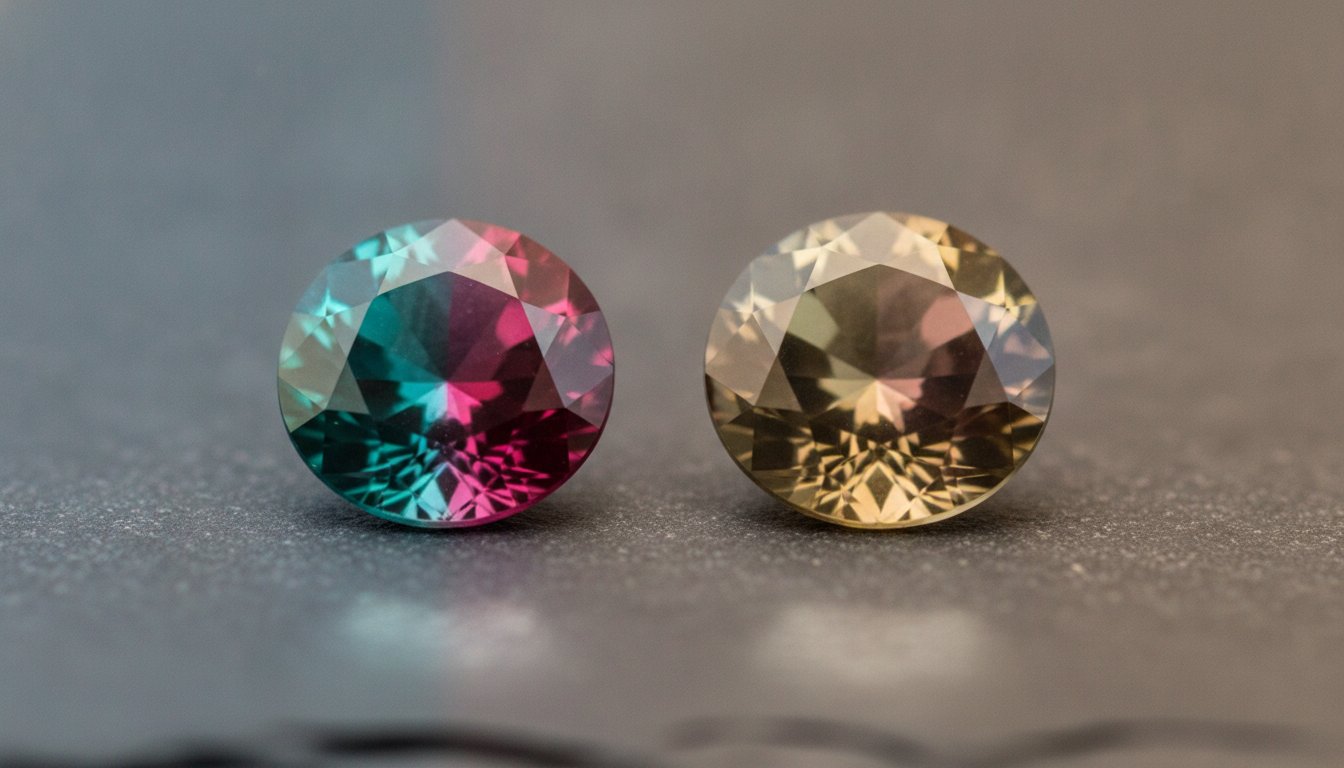
You might assume that a three-carat gemstone always commands a higher premium than a one-carat stone of the same variety. In the world of rare chrysoberyl, this logic often fails. Collectors frequently find themselves asking, what is the difference between a sri lankan origin and a brazilian origin alexandrite? The answer lies in the dramatic chemistry of the earth itself. It's natural to feel hesitant when faced with two stones that look similar in a photograph but carry vastly different price tags. You want to ensure your investment reflects true rarity, especially since less than 0.01% of gemstones mined in 2025 were alexandrite.
This guide helps you master the nuances of these two legendary locales. We'll provide a clear framework for evaluating color change quality and explain why certain origins offer better long-term value. You'll discover how the vivid teal to raspberry shift of Brazilian material, which represents 85% of the high-end market, compares to the impressive scale and clarity typically found in Sri Lankan gems. By the end, you'll have the confidence to select a stone that aligns with both your aesthetic taste and your portfolio goals.
Key Takeaways
- Learn why geographic origin acts as a prestigious brand in the gemstone market, signaling specific rarity and value markers for serious collectors.
- Understand exactly what is the difference between a sri lankan origin and a brazilian origin alexandrite? by comparing Brazil’s intense teal and raspberry shift against the softer olive and pink tones of Sri Lanka.
- Discover why Sri Lankan stones are favored for larger jewelry pieces due to their superior clarity and the impressive carat weights found in the Ratnapura gravels.
- Gain a technical framework for evaluating daylight and incandescent color shifts to ensure you never overpay for a stone with a weak or muddy transition.
- Identify the essential laboratory certifications required for stones over 0.50 carats to guarantee origin and protect your investment’s long-term ROI.
The Significance of Geographic Origin in the Alexandrite Market
Alexandrite is a rare and prestigious variety of the mineral chrysoberyl that captures the imagination like no other gemstone. Its value is inextricably linked to its ability to change color under different lighting, a phenomenon driven by complex chromium chemistry. In the high-stakes world of rare materials, origin functions as a powerful brand. It signals a specific set of visual expectations and rarity markers that seasoned collectors use to justify high-value transactions. While the legendary mines of Russia's Ural Mountains established the initial standard for the industry, their near-total exhaustion by the late 19th century shifted the global spotlight toward the rich deposits of Brazil and Sri Lanka.
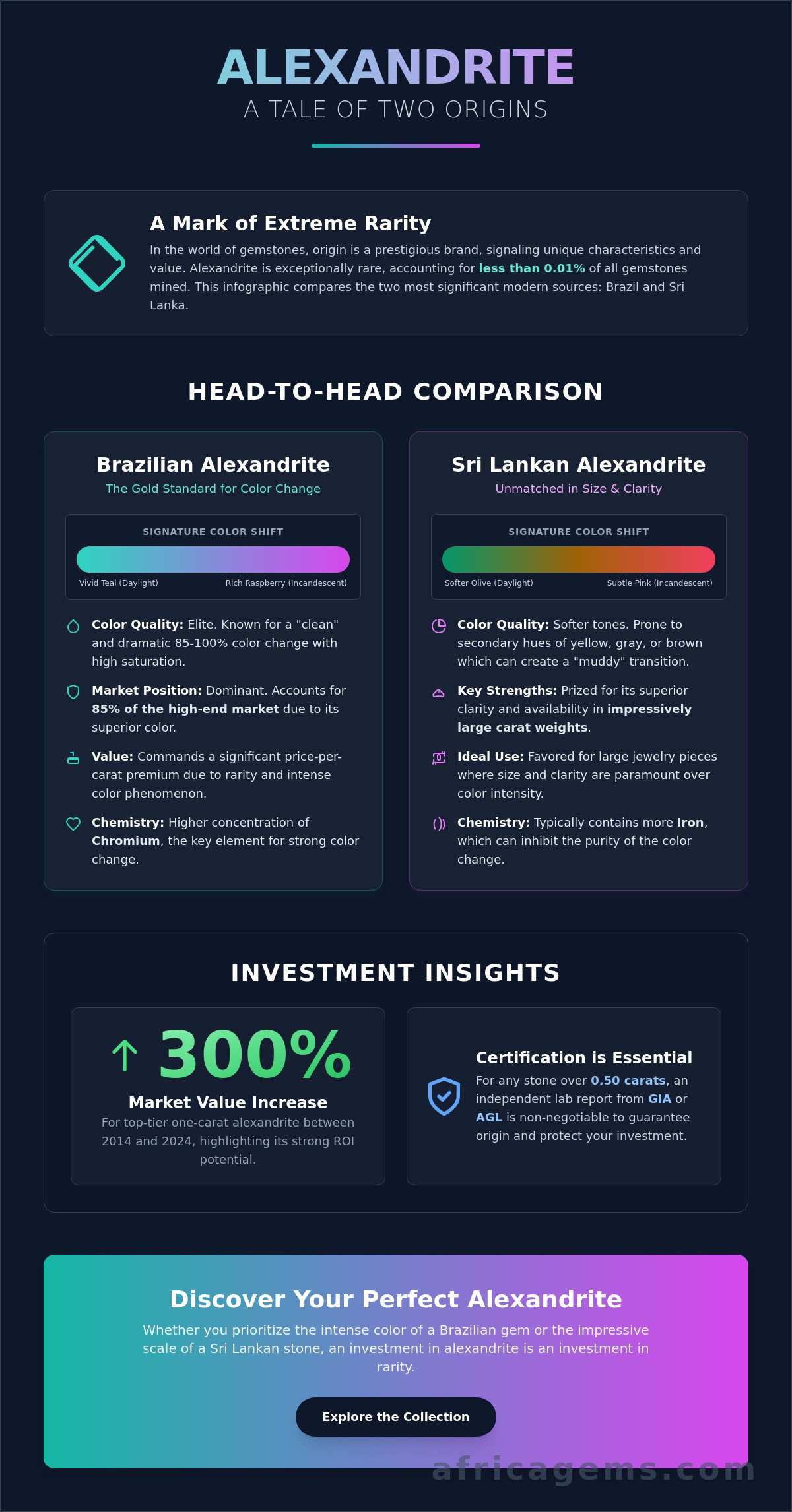
For any serious 2026 investment, an independent laboratory report from a respected institution like the GIA or AGL is non-negotiable. These reports provide the technical validation required to confirm a stone's geographic signature. Because the market value of a top-tier one-carat alexandrite has increased by 300% between 2014 and 2024, the security of a certified origin is the bedrock of a collector's peace of mind. Without this documentation, the subtle nuances of a stone's history remain a mystery, potentially affecting its long-term ROI.
To better understand how these different origins influence a stone's character and market standing, watch this expert analysis:
The "Emerald by Day, Ruby by Night" Ideal
Connoisseurs use the phrase "emerald by day, ruby by night" to describe the 100% color change benchmark. This ideal requires the stone to exhibit a complete shift across the color wheel without lingering muddy tones. When buyers ask, what is the difference between a sri lankan origin and a brazilian origin alexandrite?, they are often asking about chromium concentration. Brazilian stones from the Hematita mine typically possess higher chromium levels, resulting in a dramatic teal-to-raspberry shift. In contrast, stones from the Sri Lankan pits often contain more iron, which can introduce secondary hues of yellow, gray, or brown. These secondary tones can diminish a stone's "ideal" status, even if the primary color change is visible.
Why Origin Dictates Price Per Carat
The scarcity of high-quality Brazilian material compared to the more abundant Sri Lankan output creates a natural price premium. Brazilian alexandrite currently accounts for 85% of the high-end market, yet finding stones that meet the "investment-grade" requirement of 85% to 100% color change coverage is still a challenge. This rarity drives a demand for provenance that exists independently of a stone's physical beauty. In the context of high-value alexandrite, provenance is the documented history of a gemstone's origin that serves as a testament to its rarity and prestige. While Sri Lanka remains a vital source for larger, cleaner precious gemstones, the Brazilian "brand" often commands a higher price per carat due to its reputation for delivering the most intense color transitions known to the industry.
Brazilian Alexandrite: The Gold Standard for Color Change
The 1987 discovery of alexandrite at the Hematita mine in Minas Gerais, Brazil, transformed the gemstone world. Before this find, the market had largely relied on dwindling supplies from Russia or less dramatic material from other sources. Brazilian alexandrite quickly earned a reputation for being the most significant discovery since the 19th century. These stones are celebrated for their intense daylight color, often described as a vivid teal-green, which transforms into a rich raspberry or royal purple under incandescent light. This shift is remarkably "clean." While stones from other origins may show hints of brown or gray during the transition, high-quality Brazilian material maintains a pure, high-contrast saturation that collectors find irresistible.
When professional buyers ask, what is the difference between a sri lankan origin and a brazilian origin alexandrite?, they are primarily looking at the intensity of this color shift. Brazil currently accounts for 85% of the high-end alexandrite market precisely because its stones consistently meet the "investment-grade" requirement of an 85% to 100% color change coverage. According to the Gemological Institute of America (GIA), the quality of this change is the most critical factor in a stone's valuation. Size is the only area where Brazil is truly constrained. Most crystals from the Hematita mine are small; any specimen exceeding two carats is considered a world-class treasure and is highly sought after by connoisseurs.
Chromium and Iron: The Chemical Secret of Brazil
The dramatic visual performance of Brazilian alexandrite is a result of its unique chemical composition. These stones possess a high chromium-to-iron ratio. Chromium is the element responsible for the color change, while iron can often "muddy" the colors by introducing yellow or brown secondary hues. The soil in Minas Gerais provides just the right trace elements to allow for exceptional saturation without these undesirable tints. Expert cutters must also account for strong pleochroism, carefully orienting the crystal to ensure the most vibrant teal and purple hues are showcased through the table of the finished gem.
Market Positioning of Brazilian Stones
Brazil is the undisputed preferred choice for investment-grade portfolios. While you should expect "eye-clean" clarity, finding "loop-clean" Brazilian specimens is a rare feat that commands a significant premium. Collectors often search for the specific "Hematita Purple," a deep, regal tone that appears most vividly under candlelight or warm indoor lighting. If you're seeking a stone that offers the most dramatic visual theater possible, you can browse our collection of precious gemstones to find a Brazilian alexandrite that matches your standards for rarity and beauty.
Sri Lankan Alexandrite: Size, Clarity, and Unique Tones
Sri Lanka, the historic "Island of Gems," provides a distinct and prestigious alternative to the Brazilian standard. While Brazil is celebrated for its modern discoveries, the legacy of "Ceylon" alexandrite stretches back centuries. These stones are primarily sourced from the gem-rich alluvial gravels of Ratnapura, a region world-renowned for producing a diverse array of high-quality crystals. When collectors ask, what is the difference between a sri lankan origin and a brazilian origin alexandrite?, the most immediate visual distinction is the daylight hue. Sri Lankan material typically presents as a yellowish-green or "olive" tone. This daylight color transitions into a brownish-red or a soft purple-pink under incandescent light, offering a different aesthetic palette than the teal-to-purple shift seen in South America.
One of the most compelling reasons to choose a Sri Lankan stone is the sheer size advantage. While Brazilian stones rarely exceed two carats, the geological conditions in Sri Lanka have allowed for the growth of much larger crystals. It isn't uncommon to find Sri Lankan alexandrite in the 5 to 10+ carat range. Beyond size, these gems often exhibit superior luster and transparency. They possess a "watery" brilliance and high degree of clarity that allows light to dance through the stone, making them appear more lively and brilliant than the often-included stones from other locales.
Understanding the "Ceylon Shift"
The color change in Sri Lankan stones is frequently described by connoisseurs as "softer" or more "pastel" than the high-contrast shift found in Brazil. This visual characteristic is largely due to a higher prevalence of iron in the crystal structure. Iron can lead to brownish secondary flashes when the stone is viewed under incandescent light, which can sometimes mute the intensity of the red or purple shift. Because of this chemical makeup, finding a Sri Lankan stone with a 100% color change is an exceptionally rare find. Most specimens will show a 50% to 70% shift, which offers a more subtle, elegant transition that appeals to those who appreciate understated luxury.
The Practical Choice for Fine Jewelry
Sri Lankan alexandrite is often the ideal choice for gemstone rings and statement pendants where visual scale is a primary concern. It offers a significant affordability factor, allowing you to secure a much larger stone for your budget compared to the high price-per-carat of Brazilian material. For many bespoke jewelry designs, a stone's exceptional clarity and brilliance are prioritized over its geographic origin because a clean, sparkling gem often provides more visual impact than a heavily included stone with a stronger color shift. This makes Sri Lankan origin a sophisticated choice for those who want a wearable piece of history that doesn't compromise on presence or brilliance.
The Head-to-Head Comparison: Visuals, Rarity, and Value
Placing these two origins side-by-side reveals the core of the market's current valuation. When you ask what is the difference between a sri lankan origin and a brazilian origin alexandrite?, you are essentially choosing between saturation and scale. Brazilian stones are the "vivid" standard. Their daylight color mimics a fine emerald or a deep teal, while their incandescent shift is a legendary raspberry or royal purple. Sri Lankan stones, by contrast, offer a different palette. In daylight, they lean toward a forest or olive green, transitioning into brownish-red or soft pinkish-purple under warm light. While Brazil wins on intensity, Sri Lanka dominates on clarity. Brazilian crystals are notoriously included, making an "eye-clean" stone a rare find. Sri Lankan specimens are frequently much more transparent, offering a brilliance and luster that Brazilian material often lacks.
Auction data from 2024 through early 2026 confirms that Brazilian stones remain the "blue chips" of the alexandrite world. They command a higher price per carat because their color change is typically more dramatic and covers a greater percentage of the stone's surface. However, the value retention for top-tier Sri Lankan stones is also climbing. Collectors increasingly appreciate the "clean" look of a large Ceylon gem, which can sometimes provide a more attractive "sparkle" in a jewelry setting than a heavily included Brazilian stone of the same size.
Investment Value vs. Aesthetic Appeal
For many collectors, a one-carat Brazilian alexandrite is a more significant investment than a three-carat Sri Lankan stone. The rarity of the Brazilian color shift creates a higher ceiling for future resale. However, a "sweet spot" exists for savvy buyers. Occasionally, the Ratnapura mines produce stones with a high chromium content that mimics the teal-to-purple shift of Brazil while maintaining the superior clarity of Sri Lanka. These exceptional stones are the ultimate prize for those who follow our rare gemstones guide. They offer the best of both worlds: the visual theater of the Hematita mine with the impressive size and transparency of the Ceylon pits.
The Role of Lighting in Origin Comparison
To accurately judge these gems, you must view them under standardized lighting. Professionals use 5500K sources to simulate daylight and 2700K to simulate incandescent light. The "Northern Light" effect, which is heavy in blue wavelengths, can make a Sri Lankan stone look exceptionally green but may make a Brazilian stone look overly dark or "inky." In lower-quality Sri Lankan specimens, you might notice a "bleeding" of color where the green and red hues seem to mix into a muddy brown during the transition. This effect is far less common in Brazilian material, which tends to maintain a sharp, clean break between its two color states.
If you're ready to add this phenomenal gem to your collection, you can explore our curated selection of loose alexandrite gemstones to see these differences for yourself.
Selecting Your Alexandrite: Origin, Certification, and AfricaGems’ Standards
Securing a high-value gemstone requires more than just an appreciative eye; it demands rigorous technical validation. For any alexandrite exceeding 0.50 carats, an origin-specific lab report from a top-tier institution like the GIA or AGL is absolutely non-negotiable. These documents serve as the ultimate safeguard for your capital. When you finally decide to purchase, understanding what is the difference between a sri lankan origin and a brazilian origin alexandrite? serves as your primary compass for setting price expectations. Without a certificate, you risk paying a Brazilian premium for a stone that may actually hail from a less rare locale. At AfricaGems, we facilitate this security by providing full disclosure on every specimen in our vault.
Our commitment to the integrity of the industry extends to how we source these treasures. We maintain direct relationships with artisanal miners in both the Hematita region of Brazil and the Ratnapura gravels of Sri Lanka. This ensures that every stone is ethically unearthed. In fact, we prioritize suppliers who align with the 2026 industry goal of reducing environmental impact by 40%. The Marc Sarosi guarantee acts as our personal signature on every transaction. We provide radical transparency regarding color change percentages, ensuring you know exactly whether your stone achieves that coveted "Strong" to "Excellent" rating before you commit to the investment.
Beyond Origin: Evaluating the Cut and Sparkle
Even the most magnificent Brazilian rough can be ruined by a poor cut. If a stone is cut too deep, it may appear "inky" and dark; if it's too shallow, the light leaks out, weakening the intensity of the color shift. We prioritize "face-up" beauty, selecting stones that maximize both the phenomenon and the brilliance. A well-proportioned cut ensures that the teal and raspberry hues are distributed evenly across the crown. You can view our current selection of meticulously vetted stones in our loose alexandrite inventory, where each gem is chosen for its unique personality and technical merit.
The AfricaGems Consultation Advantage
Choosing a gemstone is often a legacy-oriented decision. We leverage decades of expertise to act as your knowledgeable mentor, helping you navigate the nuances of saturation and clarity. This expertise is particularly vital when utilizing our custom jewelry design services. We don't just sell stones; we help you create a piece of history. Our radical transparency regarding any enhancements or treatments is a recurring pillar of our brand, ensuring you feel like an informed insider rather than just a customer. If you're ready to find a stone that matches your aesthetic and financial goals, we invite you to explore our collection of loose alexandrite gemstones and discover the AfricaGems difference.
Securing Your Legacy in Rare Alexandrite
Choosing between these two legendary origins isn't a matter of finding a single winner; it's about matching a stone to your specific aesthetic and financial goals. You've discovered that Brazil offers the most dramatic, high-contrast color shifts in smaller carats, while Sri Lanka provides the impressive scale and transparency required for significant statement jewelry. Understanding what is the difference between a sri lankan origin and a brazilian origin alexandrite? ensures you don't overpay for size when you desire saturation, or sacrifice clarity when you want a larger presence on the hand.
Founder Marc Sarosi brings over 40 years of gemstone expertise to every consultation, ensuring you have a knowledgeable mentor in the complex world of phenomenal gems. We provide full disclosure on all gemstone treatments and origins, backed by an inventory of GIA and AGL certified stones. This radical transparency is our signature commitment to your security and peace of mind. We invite you to View AfricaGems’ Certified Loose Alexandrite Collection and find the masterpiece that speaks to your personal legacy. Your journey into the world of color-change chrysoberyl is a rewarding path, and we're honored to guide you through every brilliant transformation.
Frequently Asked Questions
Is Brazilian alexandrite always more expensive than Sri Lankan?
Brazilian alexandrite typically commands a higher price per carat due to its superior color change and extreme rarity. While Brazil accounts for 85% of the high-end market, its crystals are usually small. A large, five-carat Sri Lankan stone of exceptional quality might carry a higher total price tag than a one-carat Brazilian stone, but the Brazilian origin remains the premium benchmark for investment value.
Can a Sri Lankan alexandrite have a 100% color change?
Yes, it's possible, though a 100% color change in Sri Lankan material is exceptionally rare. Most specimens from the Ratnapura gravels exhibit a 50% to 70% shift. When you ask what is the difference between a sri lankan origin and a brazilian origin alexandrite?, the consistency of that complete shift is a major factor. Finding a Ceylon stone with a total "emerald-to-ruby" transition is a prize for any connoisseur.
Why do some alexandrites from Sri Lanka look brownish?
The brownish tones often found in Sri Lankan specimens are caused by a higher concentration of iron within the crystal structure. While chromium creates the color change, iron can introduce secondary hues of brown, yellow, or gray. This often results in an "olive" green by day and a "brick-red" or brownish-purple by night, which is generally less desirable than the pure teal and raspberry seen in Brazil.
Which origin is better for an engagement ring?
Sri Lankan alexandrite is often favored for engagement rings because it offers superior clarity and larger carat weights for your budget. Its "watery" brilliance makes for a more lively center stone in most lighting. However, if the wearer prioritizes the most dramatic color change possible, a smaller Brazilian stone is the traditional choice. Both origins are durable, with a Mohs hardness of 8.5, making them perfect for daily wear.
How can I tell the difference between Brazilian and Sri Lankan alexandrite without a lab report?
You can look for visual "tells," such as Brazil's signature teal-to-purple shift versus Sri Lanka's olive-to-pinkish-brown transition. Brazilian stones also tend to have more needle-like inclusions, while Sri Lankan gems are often cleaner. Despite these clues, identifying origin by eye is unreliable even for experts. Only a GIA or AGL lab report can provide the technical validation required to confirm geographic origin with certainty.
Are there other origins I should consider besides Brazil and Sri Lanka?
Russia remains the most valuable origin, often commanding a 200% price premium over other sources, though its mines are largely exhausted. You might also consider East African origins like Tanzania and Madagascar. These regions occasionally produce material that rivals Brazilian saturation. However, when evaluating what is the difference between a sri lankan origin and a brazilian origin alexandrite?, these two remain the primary pillars of the modern market.
Does the price of alexandrite vary by year, such as in 2026?
Yes, prices continue to climb due to extreme scarcity, with less than 0.01% of gemstones mined in 2025 being alexandrite. By early 2026, the market has seen increased demand for "hard assets" like investment-grade stones. Top-tier one-carat specimens have seen their value increase by 300% over the last decade. This upward trend makes origin and color change quality more critical for value retention than ever before.
What is the most important factor: origin or the percentage of color change?
The quality and percentage of color change is the most critical factor in determining an alexandrite's value. A stone must exhibit an 85% to 100% change to be considered investment-grade. While origin acts as a prestigious brand that adds a premium, a Brazilian stone with a weak shift will often be less valuable than a Sri Lankan stone with a dramatic, high-contrast transition.

Article by
Marc Sarosi
Professional gemstone dealer for more than 40 years. Started off mining Aquamarine in Zambia, Africa and travelled throughout the continent in search of fine gems. Trusted authority on fine gemstones and have donated a fine collection of more than 27 extraordinary gemstones to the Smithsonian Institute Gem Hall for generations to see.