
Spessartite Garnet Value: The Connoisseur’s Guide to Pricing and Quality in 2026
Sep 9th 2026
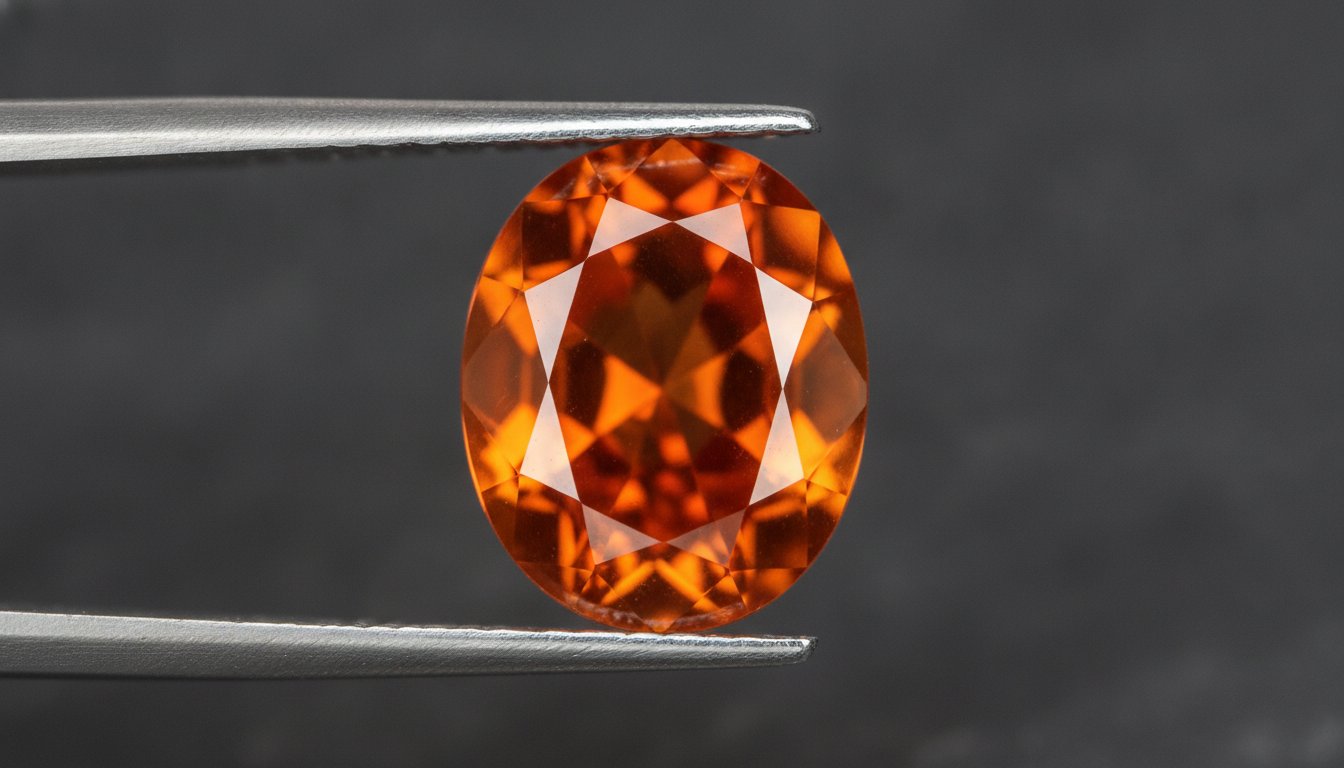
What if a single gemstone could outpace the market growth of traditional luxury assets while glowing with the intensity of a neon sunset? In late 2024, a 30-carat spessartine garnet shattered expectations at Christie's, selling for over $151,200 and proving that the global spessartite garnet value is reaching record-breaking heights. You've likely felt the confusion that comes with trade names like "Mandarin" or "Fanta," or perhaps you've worried that a minor internal inclusion might compromise the financial integrity of your collection. It's a valid concern in a market where the "unheated premium" has doubled since 2024.
This guide will help you master the technical nuances of pricing, ensuring you can identify the "pure orange" premium and secure an investment-grade gem with total confidence. We'll examine how the current East African mining migration is squeezing supply in 2026, the exponential pricing rules for stones over three carats, and the specific clarity markers that define a world-class specimen. You'll gain the insider knowledge needed to distinguish between a standard commercial stone and a truly exceptional, untreated treasure that will hold its value for generations.
Key Takeaways
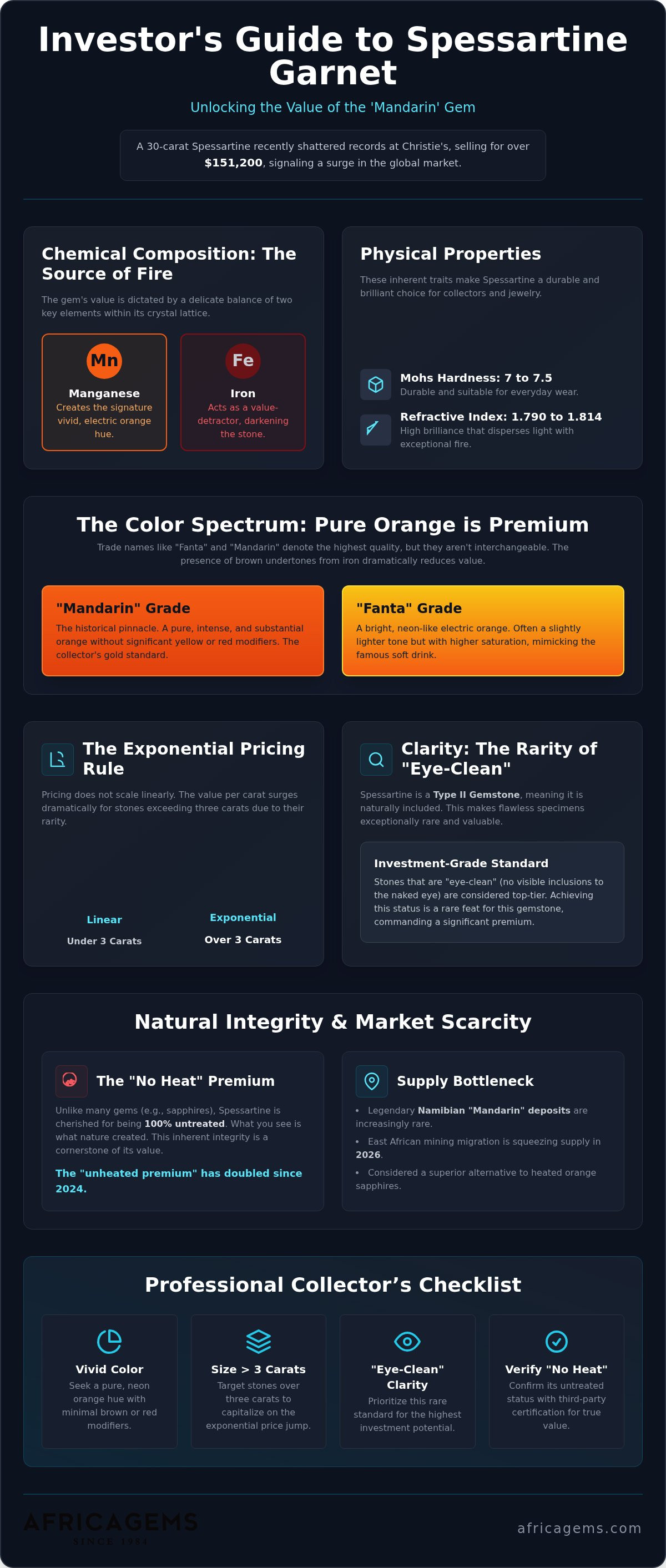
- Identify how manganese creates the signature vivid orange hue and why iron content acts as a significant value-detractor by darkening the stone.
- Master the technical factors that drive spessartite garnet value, including the "Exponential Rule" that causes pricing to surge for specimens exceeding three carats.
- Distinguish between standard commercial quality and investment-grade "eye-clean" stones, a rare feat for this naturally included Type II gemstone.
- Understand why the inherent "no heat" status of spessartite is its greatest asset and how to verify this through radical transparency and third-party certification.
- Develop a professional collector’s checklist to ensure every purchase meets the highest standards of ethical sourcing and technical excellence.
Understanding Spessartite Garnet Value: The Rise of the Mandarin Gem
Spessartite isn't just another garnet. It's a distinct Spessartine garnet species defined by its high manganese content. While traditional garnets like almandine or pyrope often lean toward dark, moody reds, spessartite vibrates with an electric energy. Its high refractive index, ranging from 1.790 to 1.814, allows it to disperse light with a brilliance that rivals more expensive precious gemstones. This optical property is a primary reason why the spessartite garnet value has climbed so dramatically. It has successfully transitioned from a niche mineral found in mineralogical cabinets to a centerpiece of high-end luxury jewelry.
Unlike rhodolite, which depends on a mix of pyrope and almandine for its purplish tones, spessartite relies on manganese to achieve its fire. When iron enters the crystal lattice, the stone darkens, often lowering its market desirability. To better understand how these quality factors are identified in the field, watch this helpful video:
Why Spessartite is a Connoisseur’s Favorite
Finding a "pure orange" in the mineral kingdom is surprisingly difficult. Most orange stones are either too soft, like fire opal, or heavily treated, like certain sapphires. Spessartite stands alone as a durable, untreated alternative. It ranks 7 to 7.5 on the Mohs scale, making it suitable for everyday wear in custom jewelry. Collectors cherish it because what you see is exactly what nature created. There's no heat, no diffusion, and no oiling. This inherent integrity is a cornerstone of its appeal for those who value radical transparency in their acquisitions.
Market Trends and Scarcity in 2026
The supply landscape has shifted significantly this year. For decades, the Kunene region in Namibia provided the world with "Mandarin" specimens of legendary saturation. Today, those deposits are increasingly rare. This scarcity, combined with the East African gold pivot that has diverted artisanal miners away from gemstone pits, has created a supply bottleneck. Many investors now view these stones as superior to heated orange sapphires. They offer a "no heat" guarantee that is increasingly rare in the sapphire market. As collectors look for portfolio diversification, the spessartite garnet value continues to benefit from its status as a finite, natural treasure.
The Color Spectrum: Fanta, Mandarin, and the Premium of Pure Orange
Color is the absolute dictator of value. While other garnets might be prized for their deep reds or forest greens, this manganese-rich variety lives and dies by the purity of its orange. The spessartite garnet value reaches its zenith when the stone exhibits a "neon" quality, a visual phenomenon where the gem seems to glow even in low light. This glow is often interrupted by the presence of iron (Fe). As iron replaces manganese in the crystal lattice, the stone shifts from a bright, cheerful orange to a darker, more somber brownish-red.
For those seeking technical depth, Spessartite gemstone information reveals how these chemical variances dictate the market's hierarchy. The ideal spessartite color is a vivid, slightly reddish-orange with no brown undertones.
Distinguishing Between Fanta and Mandarin Grades
Trade names like "Mandarin" and "Fanta" are frequently used by dealers, but they aren't interchangeable. The Mandarin grade is the historical pinnacle. It refers to a pure, intense orange that lacks any significant secondary yellow or red modifiers. Originally associated with the 1990s Namibian find, it remains the gold standard for collectors. It's a color that feels substantial and authoritative.
Fanta, on the other hand, describes a bright, neon-like orange that mimics the electric hue of the famous soft drink. While both are highly valuable, Fanta stones often lean toward a slightly lighter tone with higher saturation. In contrast, "Red-Orange" or "Burnt Orange" specimens are priced more conservatively. They lack the "stop-light" intensity that drives top-tier investment. If you're looking for that signature glow, you can explore our curated collection of premium orange gems to see these differences in person.
The Impact of Tone and Saturation on Price
Saturation is the strength or vividness of the color. In the world of rare garnets, high saturation can easily double the price per carat. However, saturation must be balanced with tone. Tone refers to the lightness or darkness of the color. If a stone is too dark, it becomes "over-toned." These dark stones lose their brilliance and appear "dead" or blackish in certain lighting environments, which is a major value-killer.
Collectors should be wary of brown or "earthy" secondary masks. These undertones indicate a high iron content and a significant drop in quality. A stone with a brown mask might be affordable, but it will never achieve the investment-grade status of a pure, vivid specimen. The goal is to find a gem where the saturation is "vivid" but the tone remains medium, allowing the stone's high refractive index to perform its magic without being stifled by darkness.
Clarity and Carat Weight: How Size and Inclusions Impact Price
Spessartite belongs to the GIA Type II clarity category. This classification means that nature rarely produces these manganese-rich garnets without some internal character. Small, visible inclusions are part of the stone's DNA. However, the spessartite garnet value experiences a massive surge when a specimen is deemed eye-clean. This means no inclusions are visible to the unaided eye from a distance of about six inches. These rare, transparent pieces allow the stone's high refractive index to shine without interruption.
One specific inclusion to watch for is "sugar." These are tiny, dust-like crystals scattered throughout the gem. While they don't always threaten the stone's physical structure, they can create a hazy or sleepy appearance. This haze blocks the high light return that makes spessartite so desirable. A crystal-clear stone will always outperform a sleepy one in the market. Clarity is the gatekeeper of brilliance.
Evaluating Clarity in Spessartite
Connoisseurs distinguish between "Collector Clean" and "Jewelry Clean." A collector clean stone remains impressive even under 10x magnification. These are the Internally Flawless (IF) or VVS specimens that represent the top 1% of production. For most high-end jewelry, jewelry clean is the standard. You should prioritize stones where inclusions are kept away from the table or center of the gem. Avoid inclusions that reach the surface or look like deep cracks. These feathers can compromise the stone's durability during the setting process. A secure stone is a valuable stone.
Carat Weight and Rarity Thresholds
Size is a massive price driver. Finding a clean spessartite over 10 carats is a rare event that most dealers only see a few times in a career. The market's assessment of spessartite garnet value follows an "Exponential Rule" for pricing. A 3-carat unheated specimen can cost ten times more than a 1-carat stone of similar quality. Significant price jumps occur at the 3ct, 5ct, and 10ct thresholds. Beyond 10 carats, you are entering the realm of museum-grade assets.
Matched pairs add another layer of difficulty. Finding two stones of identical color, saturation, and cut is exceptionally hard. This rarity makes them perfect for gemstone earrings. The premium for a perfect match can be 20% to 30% above the price of two individual stones. This reflects the intense effort required to source and cut two stones that look like twins. When you find a match, you've found a treasure.
Origin and Treatments: Why Nature’s Artistry Commands a Premium
The historical roots of this gem trace back to the Spessart forest in Bavaria, where it was first identified in the early 19th century. However, the modern spessartite garnet value is largely defined by African discoveries that redefined what a pure orange gem could look like. One of the most compelling reasons to invest in this material is its inherent purity. Unlike many other precious gemstones, spessartite is almost never treated. Its no-heat status isn't just a marketing claim; it's a fundamental characteristic of the mineral's chemistry. Heating spessartite typically does nothing to improve its color or clarity, which means the vibrant glow you see is exactly what was pulled from the earth.
The Namibian "Mandarin" Legacy
The 1991 discovery near the Kunene River in Namibia set a benchmark that remains unchallenged. These Mandarin garnets possess an electric, neon-like quality that seems to defy physics. While Nigeria and Tanzania have produced spectacular stones, particularly from the 2007 Loliondo rush in Tanzania, the Namibian provenance still commands a significant premium. Nigerian stones are often available in larger sizes, yet they frequently lean toward a brownish-red if iron content is high. In contrast, a confirmed Namibian specimen represents the purest expression of the species. This origin-based value gap is a critical factor for any serious collector to consider when evaluating a potential acquisition.
Treatments and Full Disclosure
AfricaGems operates on a foundation of radical transparency. Since 1984, our founder Marc Sarosi has championed the idea that a buyer should know exactly what they are purchasing. Spessartite is naturally resistant to common enhancements like heat or irradiation; they simply don't improve the stone. This makes it a secure choice for collectors who are wary of the treated markets prevalent in other gem species. Understanding Why Treatment Disclosure is Crucial helps you master the complexities of the high-end gemstone market. We ensure every stone is ethically sourced and naturally vibrant. If you're ready to add an untreated masterpiece to your collection, you can browse our selection of loose spessartite garnets to find a stone with verified origin and quality.
Buying Guide: Investment-Grade Spessartite Market
Securing a specimen that will retain its worth requires a disciplined approach to evaluation. The spessartite garnet value is most stable in stones that achieve a "triple threat" of quality: vivid saturation, eye-clean clarity, and precision cutting. When you're inspecting a potential addition to your portfolio, use this concise checklist to ensure the gem meets connoisseur standards:
- Color Purity: Prioritize a vivid orange hue with minimal brown or red modifiers.
- Light Return: Look for a cut that maximizes the stone's high refractive index without showing a "window" or dead spot in the center.
- Clarity: Insist on stones that are eye-clean at minimum, especially for specimens intended for gemstone rings where the eye frequently rests on the gem.
- Lighting Performance: Always view the stone in varied environments. A top-tier spessartite should glow in natural daylight and remain vibrant under incandescent bulbs without shifting into a muddy, dark orange.
AfricaGems has served as a trusted partner to collectors since 1984, providing the expert guidance and radical transparency necessary for high-value acquisitions. We focus on sourcing rare, untreated treasures that represent the pinnacle of their species.
The Importance of Professional Certification
For any significant investment, a third-party laboratory report from a respected institution like the GIA, AGL, or GRS is non-negotiable. These reports provide an objective verification of the gem's identity as a Spessartine garnet and, crucially, confirm its natural, untreated status. On a professional report, look closely at the "Origin" section. While origin isn't the only factor in spessartite garnet value, a confirmed Namibian provenance often acts as a value multiplier due to the legendary status of the Kunene deposits. AfricaGems provides these certifications for our premium stones to ensure you have absolute peace of mind regarding the integrity of your investment.
From Loose Stone to Custom Jewelry
Buying loose gemstones offers a level of creative freedom and quality control that pre-set jewelry cannot match. It allows you to inspect the stone from every angle, including the pavilion, before it's obscured by a metal setting. Once you've selected a world-class spessartite, the next step is protecting that value through expert craftsmanship. We invite you to utilize the AfricaGems Custom Jewelry Design Services to create a bespoke setting that highlights the unique fire of your stone. Our legacy is built on helping you transform rare materials into personal heirlooms. You can Explore our collection of Loose Spessartite Garnets today to begin your journey with a dealer who prioritizes your long-term security and satisfaction.
Securing Your Legacy in Vivid Orange
The path to acquiring a truly exceptional gemstone requires a blend of technical discipline and an eye for natural brilliance. You've learned that the highest spessartite garnet value is found in specimens that balance medium tone with vivid saturation, specifically avoiding the brown masks caused by iron. As supply chains shift in 2026, the rarity of untreated, eye-clean stones over five carats makes them a formidable asset for any serious collector. These gems aren't just jewelry; they're finite geological treasures that require no artificial enhancement to shine.
AfricaGems offers over 40 years of expertise in rare materials to guide your selection process. Founder Marc Sarosi personally selects every gem in our inventory, ensuring each stone meets our uncompromising standards for ethical sourcing and optical excellence. With full GIA certification available, you can invest with the security of a professional consultation and the certainty of radical transparency. It's time to elevate your portfolio with a gem that captures the electric energy of the earth's mantle.
View the AfricaGems Collection of Rare Loose Spessartite Garnets and find a natural treasure that glows with the intensity of a Namibian sunset.
Frequently Asked Questions
Is spessartite garnet more valuable than other garnets?
Spessartite is significantly more valuable than common garnet varieties like almandine or pyrope due to its rarity and vibrant orange saturation. While Tsavorite remains the most expensive in the group, the spessartite garnet value has surged as unheated Mandarin specimens become increasingly scarce. Its price floor is often 25% higher than other orange-leaning garnets, making it a premier choice for collectors who prioritize intense color and high light dispersion.
What is the difference between Mandarin garnet and spessartite?
Spessartite is the mineralogical species defined by manganese content, while Mandarin is a specific trade name for the most valuable, pure orange variety. The Mandarin designation was originally reserved for the Namibian deposits discovered in 1991. These stones are prized for their lack of secondary brown or red tones. While all Mandarin garnets are spessartites, only the most vivid, neon-orange specimens earn the Mandarin title in professional markets.
Does spessartite garnet have any treatments or enhancements?
Spessartite is almost exclusively an untreated gemstone because it doesn't respond well to heat or irradiation. This no-heat status is a primary driver of its market value, as it represents nature’s artistry without human intervention. AfricaGems maintains a policy of full treatment disclosure for every gem in our inventory. You can invest with confidence knowing that the vivid glow of a high-quality spessartite is entirely natural and unenhanced.
How much does a 1-carat spessartite garnet cost in 2026?
In 2026, a 1-carat spessartite garnet can range from $200 to $2,000 depending on color purity and clarity. Top-tier Mandarin or Fanta specimens command the highest prices due to their vivid saturation and lack of iron modifiers. It's important to remember that prices follow an exponential rule. While a 1-carat stone is accessible, the price per carat doubles or triples once a specimen exceeds the three-carat threshold.
Is spessartite garnet durable enough for an engagement ring?
With a hardness of 7 to 7.5 on the Mohs scale, spessartite is durable enough for daily wear in an engagement ring, provided it's set in a protective mounting. It's harder than opal or tanzanite but requires more care than a sapphire or diamond. We recommend choosing an eye-clean stone and utilizing our custom jewelry design services to create a setting that shields the gem's edges from accidental impact.
What is the best cut for a spessartite garnet to maximize its value?
Brilliant cuts like ovals, cushions, and rounds are ideal for maximizing the high refractive index of this gemstone. These facets help disperse light and showcase the neon glow that collectors crave. A well-proportioned cut prevents windowing, a common issue where light passes straight through the center. Precision cutting can significantly increase the total spessartite garnet value by ensuring the stone remains vibrant even in low-light environments.
Why is some spessartite garnet reddish-brown instead of bright orange?
The presence of iron in the crystal lattice is responsible for the reddish-brown or burnt orange tones found in lower-quality specimens. As iron replaces manganese, it darkens the stone and suppresses its natural brilliance. Connoisseurs seek stones with the lowest possible iron content to ensure a pure, vivid orange hue. These brownish specimens are more common and trade at a significant discount compared to the prized Mandarin grade.
How can I tell if my spessartite garnet is natural or synthetic?
While synthetic spessartite is rare, glass imitations or YAG are sometimes used to mimic its appearance. The most reliable way to verify a stone is through a professional lab report from the GIA or AGL. These institutions use advanced spectral analysis to confirm the stone's manganese-rich chemistry and natural origin. AfricaGems provides these certifications to guarantee that every loose spessartite garnet we sell is a genuine product of nature.

Article by
Marc Sarosi
Professional gemstone dealer for more than 40 years. Started off mining Aquamarine in Zambia, Africa and travelled throughout the continent in search of fine gems. Trusted authority on fine gemstones and have donated a fine collection of more than 27 extraordinary gemstones to the Smithsonian Institute Gem Hall for generations to see.