
Ruby Colors: Pink vs. Purple Secondary Hues Explained
Jun 30th 2026
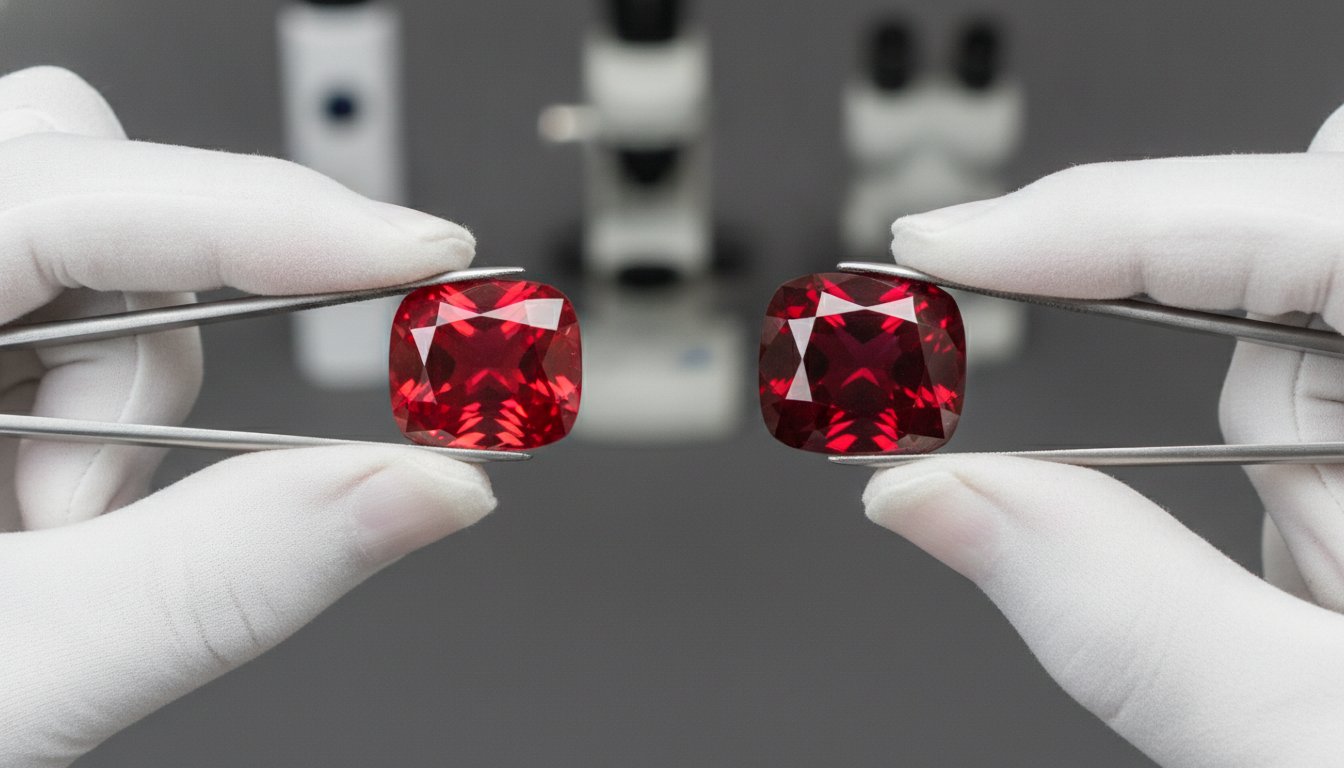
The search for a "pure red" gemstone often leads collectors down a narrow path, yet the reality of gemology is far more nuanced and vibrant. Many enthusiasts find themselves at a crossroads, questioning whether is pink or purple secondary colors better in ruby gemstones when curating a high-value collection. It's natural to feel a sense of hesitation when a stone shows a flash of magenta or a deep violet undertone, especially when the distinction between a ruby and a pink sapphire feels increasingly subjective. You deserve a gem that commands respect and retains value, and understanding these subtle shifts is the key to a secure acquisition.
This guide provides the technical insight needed to evaluate these sophisticated color modifiers with the confidence of a seasoned connoisseur. You'll discover how secondary pink and purple hues impact ruby value, aesthetics, and rarity to choose the perfect gemstone for your collection. We'll analyze the market premiums for unheated Mozambique rubies, examine how different lighting environments transform specific hues, and establish a clear framework for matching a ruby's unique personality to your skin tone and jewelry setting.
Key Takeaways
- Understand the technical interplay of hue, tone, and saturation to identify why 99% of natural rubies possess a secondary color modifier.
- Discover how pinkish secondary hues provide exceptional brilliance and prevent gemstone "extinction" in dim lighting.
- Explore the regal heritage of purplish modifiers and how they create the "velvety" texture prized in legendary specimens.
- Gain a professional perspective on whether is pink or purple secondary colors better in ruby gemstones based on current 2026 market valuation trends.
- Learn to strategically pair secondary hues with precious metals, ensuring your choice complements specific skin tones and jewelry settings.
Understanding Ruby Color: The Role of Secondary Hues
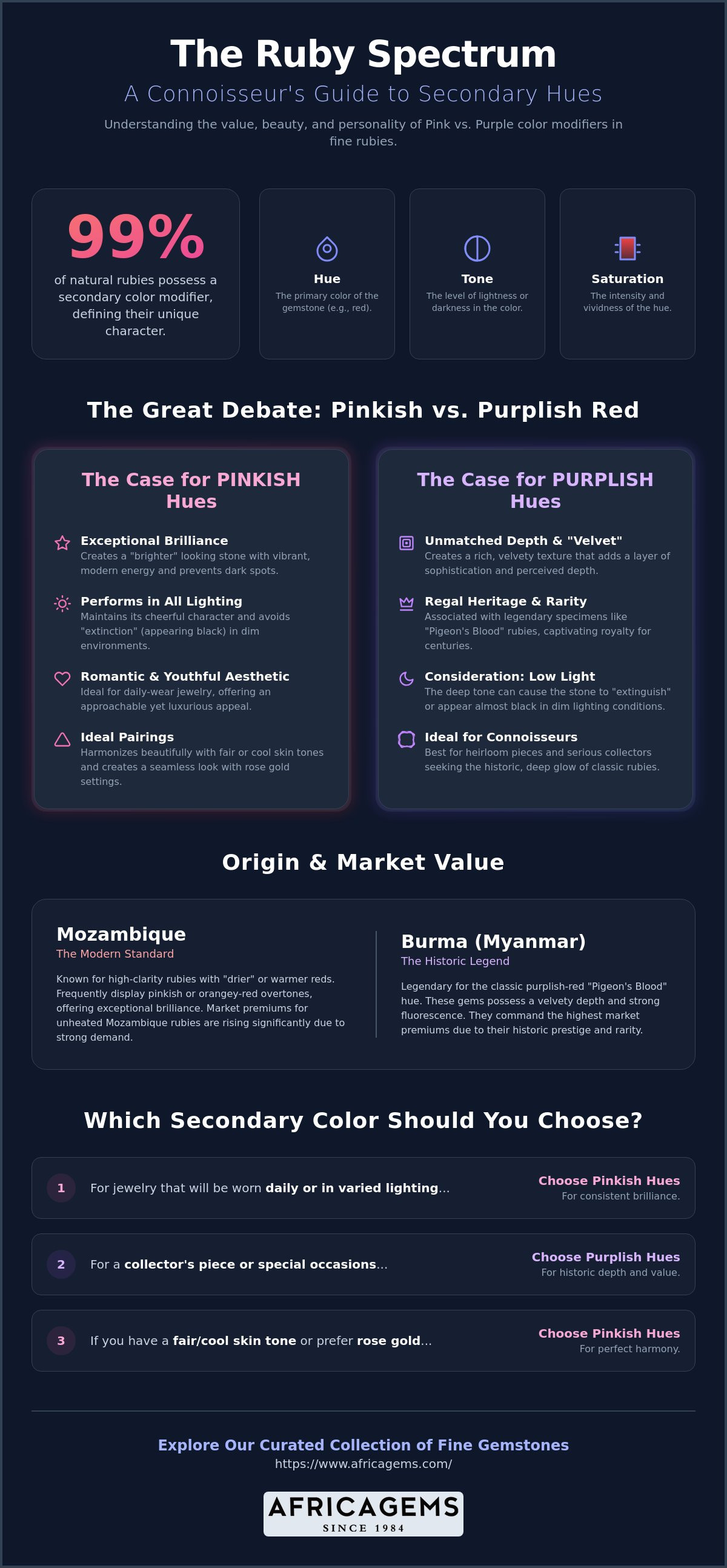
To the untrained eye, a ruby is simply red. However, a serious collector understands that the stone's character is defined by three distinct pillars: hue, tone, and saturation. Hue is the basic color, tone describes the level of light or dark, and saturation dictates the vividness. It's a rare phenomenon to find a perfectly neutral red. In fact, approximately 99% of natural rubies possess a secondary modifier that influences their visual appeal and market value. When deciding whether is pink or purple secondary colors better in ruby gemstones, one must first appreciate how these subtle shifts create the gemstone's unique identity.
The presence of trace elements within the corundum crystal lattice determines these shifts. Chromium is the primary agent responsible for the iconic red, yet the introduction of iron often brings about purple or brown undertones. These Ruby color factors are more than just aesthetic choices; they're chemical signatures of the earth's formation. This chemical interplay is what gives a stone its "heart," dictating how it responds to the world around it.
Another layer of complexity is pleochroism. This optical property allows a ruby to display different colors when viewed from different angles. A stone might appear a deep, royal red from the top but reveal a distinct purplish or orangey-red hue when tilted. This multidimensionality ensures that no two rubies look identical under shifting light, making the selection process a deeply personal journey for the connoisseur.
The Science of the "Red" Borderline
Gemological labs like the GIA maintain rigorous standards to distinguish a ruby from a pink sapphire. This distinction often rests on saturation and tone. If the "red" is too light or lacks sufficient saturation, the stone is classified as a sapphire. For many, the Loose Mozambique Rubies profile represents the ideal balance, offering a robust saturation that firmly anchors the stone in the ruby category while often showcasing a bright, lively secondary hue that keeps the stone from looking overly dark.
Origin and Overtone: Burma vs. Mozambique
Geographic origin acts as a fingerprint for secondary modifiers. Burmese rubies are legendary for their strong fluorescence and a classic purplish-red hue often called "Pigeon's Blood." This purple modifier adds a velvety depth that has captivated royalty for centuries. Conversely, Mozambique rubies often display a "drier" or warmer red, frequently leaning toward pinkish or orangey-red overtones. For the Expert Enthusiast, these origins aren't just labels. They represent a choice between the historic, deep glow of Burma and the modern, high-clarity brilliance of African deposits. Understanding these nuances helps you determine if is pink or purple secondary colors better in ruby gemstones for your specific aesthetic goals and investment strategy.
The Case for Pink Secondary Colors: Brilliance and Warmth
While the industry often chases the elusive "Pigeon Blood" ideal, many collectors find that a pinkish modifier offers a vitality that pure or purplish reds lack. A pink secondary hue typically results in a "brighter" looking stone. This brilliance is particularly noticeable in varied lighting. While a stone with a heavy purple modifier might "extinguish" or appear nearly black in low-light environments like a candlelit dinner, pinkish rubies maintain their cheerful, vibrant character. This reliability makes them an excellent choice for those debating whether is pink or purple secondary colors better in ruby gemstones for regular use.
The emotional resonance of pink-red is undeniably romantic, vibrant, and youthful. It lacks the somber gravity of deep crimson, opting instead for a spirited energy that feels modern. Because they remain lively across all lighting conditions, pinkish rubies are the preferred choice for daily-wear jewelry that needs to perform as well in the office as it does outdoors. Their ability to catch the eye without feeling overly formal makes them approachable yet undeniably luxurious.
When Pinkish is "Better": Skin Tone and Style
Choosing a gemstone is as much about the wearer as it is about the stone itself. Pinkish rubies harmonize beautifully with fair or cool skin tones, where the blue undertones of the skin make the pink-red pop. There's also a sophisticated synergy between these stones and rose gold mountings; the copper in the metal pulls the warm pink out of the gem, creating a seamless, high-end look. This aesthetic harmony is why pinkish rubies are frequently the top selection for gemstone pendants, where the gem sits directly against the skin and must catch the light constantly. If you're looking for a piece that radiates this specific warmth, exploring our collection of gemstone earrings can reveal how these hues frame the face with light.
The "Neon" Effect in Pinkish Rubies
The secret behind the "glow" of a pinkish ruby lies in its unique chemistry. According to the GIA on ruby color, the presence of chromium is what creates the red, but it also causes fluorescence. Pinkish rubies often have a high-chromium, low-iron chemical makeup. Since iron acts as a "fluorescence killer," stones with less iron, which is common in pinkish varieties, literally glow under UV light. In the 2026 market, "Vivid Pinkish Red" has seen a surge in demand from collectors who prioritize this "neon" visibility over traditional, darker tones. When considering if is pink or purple secondary colors better in ruby gemstones, the answer often depends on whether you value the deep mystery of purple or the electric brilliance of pink.
The Case for Purplish Secondary Colors: Depth and Royalty
While pinkish modifiers offer a spirited brilliance, the purple secondary hue introduces a somber, majestic depth that has defined the upper echelons of gem collecting for centuries. This specific modifier is responsible for the "regal" character often associated with the world's most prestigious specimens. For the collector who seeks a stone with historical gravity, the question of whether is pink or purple secondary colors better in ruby gemstones is often answered by the undeniable allure of a deep, violet-red saturation. This hue doesn't just sit on the surface; it feels structural, giving the gem an architectural weight that lighter pinkish stones occasionally lack.
The presence of a slight purple modifier often creates what connoisseurs describe as a "velvety" texture. This optical effect occurs when the purple undertone softens the harshness of a pure red, allowing the eye to sink into the stone's color rather than just reflecting off the facets. According to Ruby gemstone information provided by industry experts, this depth is a hallmark of the finest corundum. It's a visual richness that suggests a legacy of formation deep within the earth, making it the preferred choice for those who view their collection as a portfolio of hard assets.
The Prestige of the "Pigeon Blood" Red
In the 2026 market, the term "Pigeon Blood" remains the gold standard of ruby valuation, and this designation strictly requires a purplish-red hue. A true Pigeon Blood ruby is never a neutral, flat red; it's a vibrant crimson with a soft, purplish undertone that enhances the richness of the stone in natural sunlight. This modifier is what allows the stone to achieve the high fluorescence required for top-tier lab certification. Collectors who prioritize rarity often look to the Loose Burma Rubies guide, as these legendary mines are the primary source of this specific, prestigious color profile. The purple secondary color acts as a catalyst, making the red appear more saturated and "bloody" rather than simply bright.
Purplish Rubies in High-Contrast Settings
The sophisticated depth of a purplish ruby demands a setting that can stand up to its intensity. These gems pair exceptionally well with white gold or platinum, where the cool metal tones highlight the violet-red "pop" of the stone. When surrounded by high-quality diamonds, a purplish ruby creates a high-contrast visual that feels timeless and aristocratic. Additionally, purple modifiers are particularly effective in larger carat weights. While a pinkish stone might lose its color intensity as it grows larger, a purplish ruby maintains its saturated core, ensuring the gem looks substantial and commanding from every angle. If your goal is to acquire a stone that feels like a piece of crown jewelry, the purple modifier provides a level of sophistication that pink simply cannot replicate.
Market Value Comparison: Pink vs. Purple Modifiers
The financial landscape of ruby acquisition is as complex as the stones themselves. When investors ask whether is pink or purple secondary colors better in ruby gemstones, they are essentially asking about liquidity and long-term appreciation. In the 2026 market, purplish-red rubies, particularly those carrying the "Pigeon Blood" trade name, continue to command a significant premium. This color designation can elevate a stone's price by 40% compared to a neutral red of similar quality. However, the "Pink Sapphire Trap" presents a unique challenge for the unwary. This occurs when a stone sits on the color borderline. If a lab classifies a pinkish stone as a sapphire rather than a ruby, its market value can shift dramatically, as rubies generally command higher prices than pink sapphires of equivalent size and clarity.
Liquidity in the auction market remains strongest for purplish rubies, which have a long-standing historical precedent for value retention. Despite this, "Vivid" saturation acts as the great equalizer. A pinkish ruby with exceptional saturation can often outpace a dull or overly dark purplish stone in terms of desirability. Collectors are increasingly looking for "life" in a stone. A vivid pinkish-red Mozambique ruby often displays more brilliance than a heavily included Burmese stone with a "better" purple modifier. Transparency in these transactions is paramount, and we encourage you to Buy Gemstones Online only when full lab documentation is provided.
Investment Potential of Secondary Hues
In 2026, the premium for unheated rubies has reached a staggering 150% to 300% over heated stones. Within this high-end bracket, unheated purplish rubies are the darlings of the investment world. They represent a "hard asset" hedge against economic volatility. Simultaneously, a rising demand for "Hot Pink" rubies is sweeping through Asian and Middle Eastern markets. This trend is narrowing the price gap. While Burmese stones with purple overtones still hold the record for price-per-carat, Mozambique rubies with pinkish modifiers are gaining significant market share due to their superior clarity and ethical traceability.
The Importance of Certification
A GIA or GRS report is no longer optional for serious acquisitions; it's a requirement. These reports confirm whether a stone meets the threshold for "Ruby" status, which is vital for a stone with a pinkish modifier. The "Color Typing" on a certificate, such as "Vivid Red" or "Pigeon Blood," directly dictates resale value. Without this technical validation, you risk overpaying for a stone that the secondary market might later classify as a sapphire. For those seeking the highest security in their collection, we recommend browsing our Loose Mozambique Rubies, which come with the rigorous certification needed to protect your investment.
Expert Verdict: Which Secondary Color Should You Choose?
The ultimate determination of whether is pink or purple secondary colors better in ruby gemstones rests on your personal aesthetic goals and collection strategy. While the market often dictates a hierarchy of value, the "better" stone is the one that resonates with your vision of beauty. If you prioritize a gem that feels electric and youthful, a pinkish modifier is an exceptional choice. Conversely, if you seek the somber, historical weight of a legacy piece, the purplish modifier remains the industry standard. Before making your final selection, consider these specific criteria to ensure your acquisition aligns with your expectations.
The "Pinkish" buyer should prioritize these factors:
- Brilliance: You value a stone that remains lively and "open" even in dim environments.
- Budget Efficiency: You want the look of a high-saturation ruby without the extreme "Pigeon Blood" premium.
- Warmth: You prefer jewelry that harmonizes with rose gold or yellow gold settings.
The "Purplish" buyer should look for these hallmarks:
- Prestige: You are targeting investment-grade stones with top-tier lab certifications.
- Depth: You appreciate a velvety visual texture that draws the eye into the center of the gem.
- Cool Contrast: You plan to set the stone in platinum or white gold to highlight its violet-red undertones.
Regardless of your preference, always view a ruby in multiple lighting conditions. Natural daylight provides the UV rays necessary to see the stone's true fluorescence, while incandescent light reveals how the stone "extinguishes" or maintains its color in the evening. A stone that looks magnificent in a showroom may appear entirely different under a northern sky.
Matching the Ruby to the Jewelry Piece
The choice of secondary hue should also be influenced by the intended jewelry design. Pinkish rubies are remarkably effective in Gemstone Earrings because their inherent brightness ensures they don't get lost in the shadow of the hair or jawline. They bring a cheerful glow to casual, daily-wear pieces. Purplish rubies, with their commanding presence, are the definitive choice for Gemstone Rings and formal statement necklaces. Their saturated depth provides a focal point that feels substantial and authoritative. Custom jewelry design services can further refine this by using specific prongs or "baskets" to either mask a modifier you dislike or amplify one you love.
The AfricaGems Philosophy on Color
At AfricaGems, we believe that transparency is the foundation of trust in the gemstone industry. Marc Sarosi’s commitment to full disclosure ensures that every color modifier is clearly documented, allowing you to understand exactly where a stone sits on the ruby-sapphire spectrum. Our selection process prioritizes stones that balance "eye-clean" clarity with vibrant secondary hues, ensuring that your gem possesses both technical quality and soul. We don't just sell stones; we curate a legacy. Whether you seek the neon fire of a pinkish-red or the royal depth of a purplish specimen, we invite you to explore our collection of natural rubies and find the masterpiece that speaks to you.
Securing Your Legacy with the Perfect Ruby
At AfricaGems, we've spent decades championing the integrity of the gemstone trade. Founded in 1984 by Marc Sarosi, our business is built on a foundation of radical transparency and full disclosure regarding all gemstone treatments. We invite you to explore our inventory of ethically sourced natural rubies, each selected for its exceptional character and verified origin. Your journey toward owning a world-class gemstone should be defined by confidence and security. Browse Our Curated Selection of Natural Rubies today and find the hue that perfectly captures your story. We look forward to helping you select a masterpiece that will be cherished for generations.
Frequently Asked Questions
Is a pinkish ruby actually just a pink sapphire?
The distinction between a ruby and a pink sapphire is determined by the specific saturation and tone levels observed by a gemological laboratory. While both stones are varieties of corundum, a ruby must meet a minimum threshold of red dominant hue. If the color is too desaturated or light, the stone is classified as a pink sapphire. This classification is significant for value, as rubies typically command a higher price per carat than their sapphire counterparts.
Why do some rubies look purple in the shade but red in the sun?
This phenomenon is primarily a result of the light source's spectral composition interacting with the ruby's trace elements. Sunlight contains high levels of ultraviolet light that stimulate the chromium in the stone, causing it to fluoresce a vivid red. In the shade or under indoor lighting, the lack of UV rays allows the iron-induced purple undertones to become more apparent, shifting the stone's perceived color toward a cooler violet-red.
Which secondary color is more expensive: pink or purple?
Market trends generally indicate that purplish secondary hues are more expensive than pinkish ones. This is largely because a slight purple modifier is a requirement for the coveted "Pigeon Blood" certification. When considering if is pink or purple secondary colors better in ruby gemstones, investors often lean toward purple for its historical liquidity and prestige, though vivid pinkish stones are gaining significant traction in modern, high-clarity collections.
Does the origin of a ruby (like Burma or Mozambique) determine its secondary color?
While origin does not strictly dictate color, it serves as a reliable fingerprint for secondary modifiers. Burmese rubies are globally recognized for their intense red fluorescence and classic purplish overtones. Conversely, Mozambique deposits often yield stones with a warmer, pinkish-red or orangey-red character. These differences are a direct result of the geological conditions and the specific ratio of chromium to iron present in the host rock during crystal formation.
Can heat treatment remove purple or pink secondary hues from a ruby?
Heat treatment is a standard industry practice used to improve clarity and modify color by reducing blue or purple overtones. By heating the stone to extreme temperatures, gemologists can alter the oxidation state of iron, which often results in a purer, more desirable red. Pinkish modifiers are typically more resilient to this process. It's vital to review a lab report to confirm if a stone's color is entirely natural or thermally enhanced.
What is the best metal for a purplish ruby setting?
Platinum and white gold are widely considered the ideal metals for setting purplish rubies. The cool, white sheen of these metals provides a sophisticated contrast that highlights the violet-red "pop" of the gemstone. This combination creates an aristocratic, high-contrast look that's favored for statement pieces. While yellow gold is a classic choice, it can sometimes mute the regal depth of a purplish modifier, making it appear slightly more subdued.
How does fluorescence affect rubies with pink secondary colors?
Fluorescence serves as a powerful enhancer for rubies with pink secondary colors, giving them an electric, "neon" appearance in natural sunlight. Because pinkish rubies frequently possess high chromium levels and minimal iron, they are highly reactive to ultraviolet rays. This internal glow keeps the stone looking bright and lively even in dim lighting. This makes them a superior choice for wearers who prioritize a gem that never appears dark or "extinguished" during daily activities.
What is the "Pigeon Blood" color, and does it include purple?
The "Pigeon Blood" designation refers to a vivid, highly saturated red that technically requires a soft purplish secondary hue. This purple modifier is what gives the stone its characteristic depth and allows it to achieve the high fluorescence that labs like GRS or GIA look for. A neutral red stone without this slight violet-red shift is unlikely to receive this prestigious trade name, as the purple undertone is essential for that iconic, bloody richness.

Article by
Marc Sarosi
Professional gemstone dealer for more than 40 years. Started off mining Aquamarine in Zambia, Africa and travelled throughout the continent in search of fine gems. Trusted authority on fine gemstones and have donated a fine collection of more than 27 extraordinary gemstones to the Smithsonian Institute Gem Hall for generations to see.