
Red Spinel vs Ruby Comparison: A Connoisseur’s Guide to Fine Red Gemstones (2026)
Jul 21st 2026
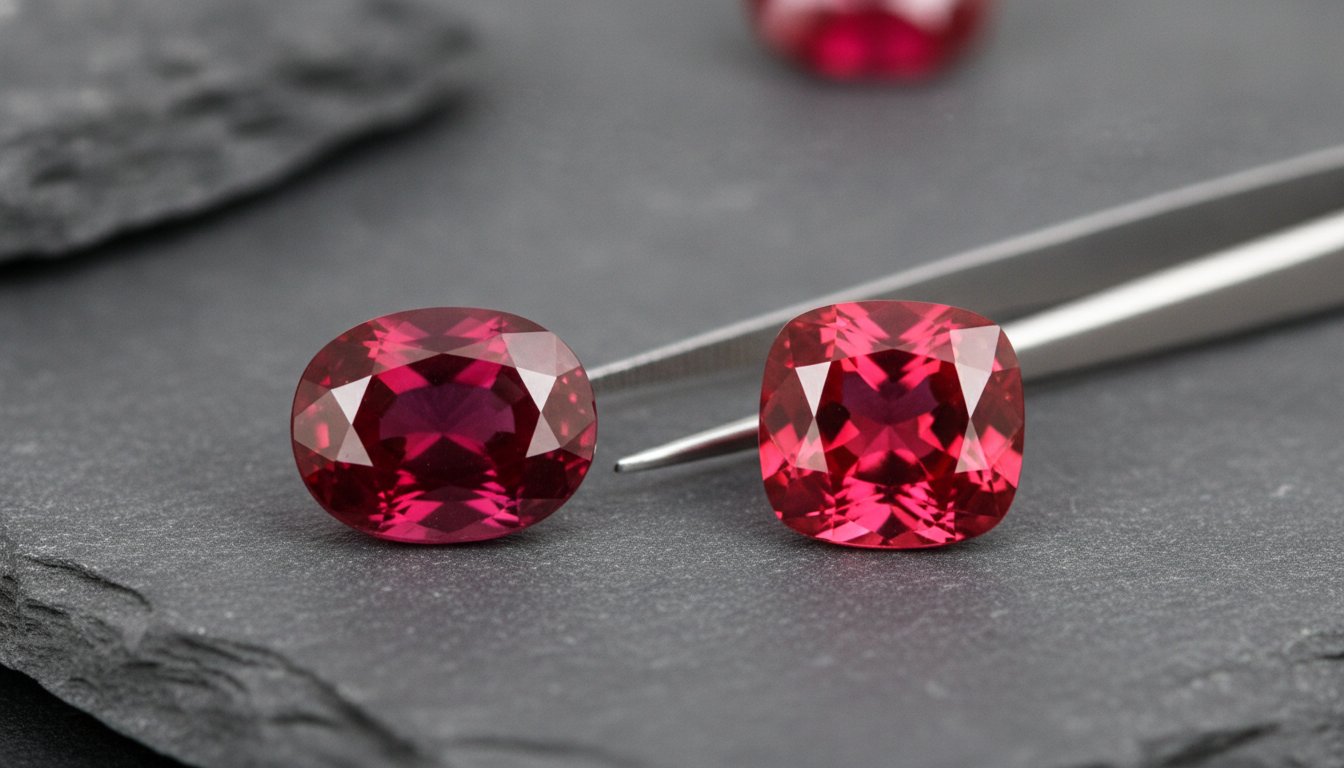
The most expensive red gemstone in your collection might not be the one with the most famous name. For centuries, the world's most celebrated "rubies" were actually red spinels in disguise, a historical mix-up that still creates a unique opportunity for today's collectors. You likely desire the fiery, regal red of a world-class stone, but a direct red spinel vs ruby comparison reveals that the soaring prices of unheated rubies, which surpassed $100,000 per carat in early 2026, are fundamentally shifting the investment landscape. It's natural to feel concerned about overpaying for a treated stone or feeling uncertain about the long-term resale value of your heirloom pieces.
This guide provides the technical clarity you need to distinguish these two treasures with the confidence of a seasoned insider. You'll learn how to navigate a market where "no heat" has become the sovereign standard for value and why a "Jedi" spinel might offer superior natural brilliance. We'll examine the critical differences in optical performance, Mohs hardness, and current price-per-carat trends to help you select a stone with absolute certainty. From the single refraction of spinel to the prestigious provenance of the ruby, we'll strip away the confusion to reveal the best path for your next acquisition.
Key Takeaways
- Uncover the history of "mistaken identity" between these gems and how it influences today's market perception.
- Master the technical differences in light behavior, including why spinel's single refraction often produces a cleaner and more brilliant face-up appearance.
- Navigate the 2026 market with a detailed red spinel vs ruby comparison to understand price differences between unheated rubies and fine spinels.
- Gain a clear framework for choosing between the prestigious "Pigeon Blood" ruby and the exceptionally rare, untreated red spinel for an heirloom piece.
- Secure your acquisition by learning to prioritize transparency in gemstone treatments and the value of ethical sourcing.
The Historical Connection: Why Spinel and Ruby Were Once One
Ancient gem traders didn't have the tools to see past a stone's surface. They grouped gems primarily by color, meaning any vibrant red crystal was labeled a ruby. This lack of scientific distinction explains why many of history's most celebrated "rubies" are actually spinels. To understand why a modern red spinel vs ruby comparison is so nuanced, we have to look at how these stones lived as twins for over a millennium. For a deeper dive into the mineral's properties, you can explore Spinel on Wikipedia.
The official separation of these two species didn't happen until 1783. Mineralogist Jean-Baptiste Louis Romé de l'Isle finally identified spinel as a distinct mineral group. Before this, they were often found in the same alluvial deposits, leading even the most experienced lapidaries to treat them as the same material. This historical overlap is why spinel was often called "Balas Ruby," referring to its source in the Badakhshan region of modern-day Tajikistan.
To better understand this concept, watch this helpful video:
Royal Mistakes and the British Crown Jewels
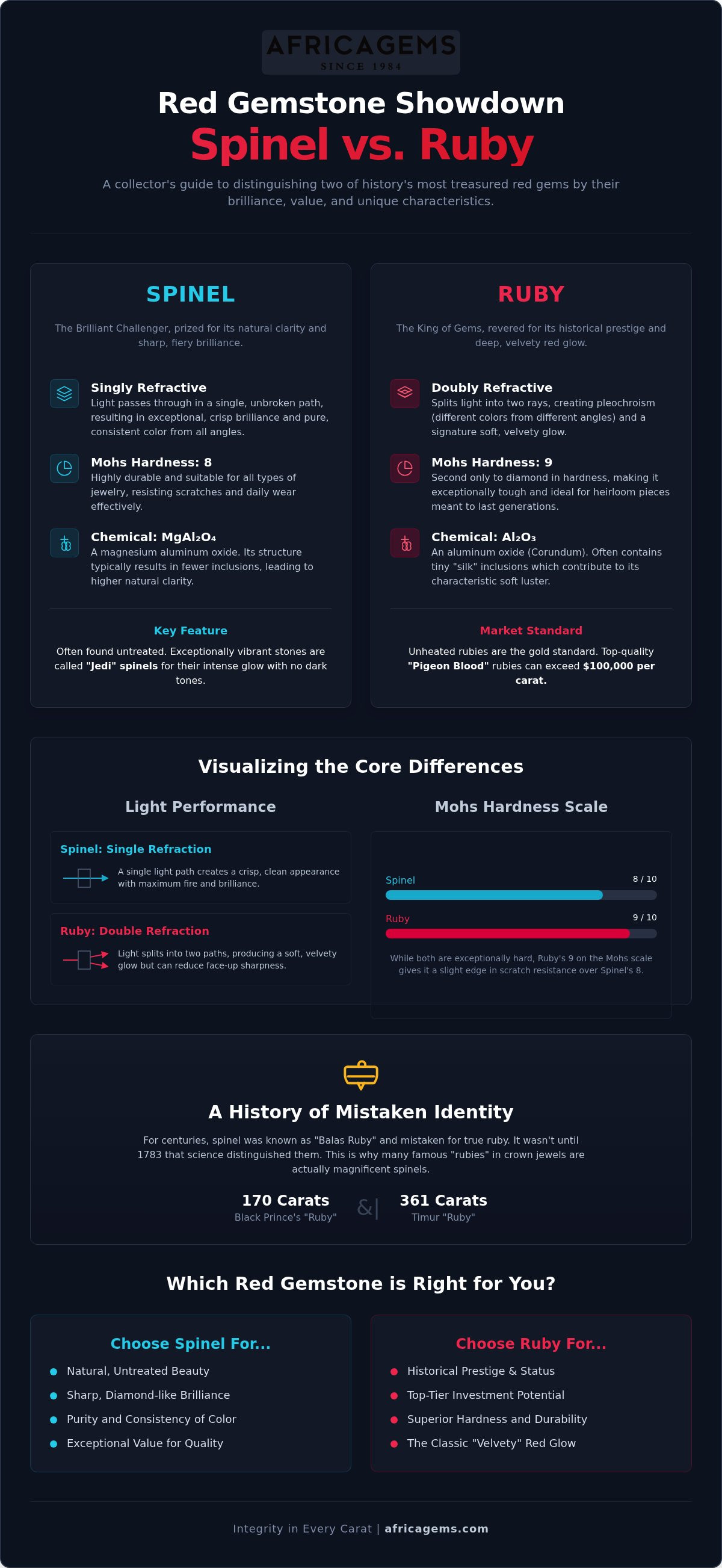
The Black Prince's Ruby is perhaps the most famous example of this historical confusion. It's a magnificent 170-carat red spinel that sits prominently in the British Imperial State Crown. Similarly, the Timur Ruby, weighing over 361 carats, was later discovered to be a spinel. These mistakes weren't due to negligence but rather the identical geological environments where both gems form. They are often found side-by-side in the gravels of Myanmar and Sri Lanka. For centuries, the value of these stones was based on their royal associations and intense color rather than their chemical makeup. This history earned spinel the moniker "The Great Imposter," though modern collectors now view it as a rare treasure in its own right.
The Science of Red: Chromium as the Common Link
Chromium is the secret behind the fiery red hue in both gemstones. This trace element absorbs specific wavelengths of light, leaving behind the rich crimsons we admire. While the coloring agent is the same, the way it presents varies. Rubies often contain "silk," or tiny rutile inclusions, which scatter light and create a soft, velvety glow. Spinel, however, typically boasts higher clarity and a glassier luster because it lacks this internal silk. Chemically, ruby is an aluminum oxide (corundum) while spinel is a magnesium aluminum oxide. This fundamental difference in their lattice structure is the starting point for any technical red spinel vs ruby comparison, as it dictates everything from how the stones handle light to their long-term durability in precious gemstone jewelry.
Optical Performance: Comparing the 'Fire' and Durability
Comparing these two stones isn't just about color; it's about how they dance with light. A detailed red spinel vs ruby comparison reveals that while they may look similar to the untrained eye, their internal physics are worlds apart. Ruby is doubly refractive, meaning light splits into two rays as it enters the crystal. This often gives ruby its famous velvety glow, but it can also make the stone look slightly hazy. Spinel is singly refractive, just like a diamond. Light enters and exits in a single path, resulting in a crisp, sharp brilliance that many modern collectors find more appealing than the softer look of a ruby.
Ruby's double refraction is responsible for its pleochroism, a phenomenon where the stone displays different colors depending on the viewing angle. You'll often see a mix of pure red and a slight purplish or orangey-red in a single stone. Spinel, being singly refractive, shows only one consistent color from every direction. This singleness of color often makes spinel appear more saturated and clean compared to the complex, shifting hues of a ruby.
Luster provides another point of distinction. Ruby is subadamantine, meaning its surface reflects light with a near-diamond intensity. Spinel possesses a vitreous, or glass-like, luster that is bright but slightly less aggressive. While ruby is prized for its deep, historic glow, the combination of high clarity and single refraction means a fine spinel often outshines a ruby in low-light environments. For a deeper understanding of how these factors impact a stone's value, you can consult GIA's guide to ruby quality.
The Dichroscope Test: Seeing the Double Refraction
Gemologists use a small tool called a dichroscope to settle the debate. When you look through the lens at a ruby, you'll see two distinct colors in two side-by-side windows. This confirms the stone is doubly refractive and displays dichroism. Looking at a spinel reveals only one color in both windows, confirming its single refraction. This property isn't just a lab curiosity; it dictates how a master cutter facets the stone to ensure the most vibrant color reaches your eye. Because spinel shows the same color from all angles, the cutter has more freedom to prioritize brilliance and weight retention.
Durability for Daily Wear: Engagement Ring Suitability
In a red spinel vs ruby comparison, durability is often the deciding factor for heirloom pieces. For an engagement ring, ruby's 9.0 hardness on the Mohs scale makes it the undisputed king of durability. It's second only to diamond, meaning it will resist scratches from almost any daily encounter. While spinel's 8.0 rating is lower, it's still tougher than most common gems like emerald or tanzanite. It's perfectly suitable for daily wear, provided you follow a few basic care guidelines:
- Clean your stones regularly with warm, soapy water and a soft brush.
- Avoid exposing either gem to harsh household chemicals or abrasive cleaners.
- Store your jewelry in separate compartments to prevent harder stones from scratching softer ones.
If you're looking for a stone that balances this incredible fire with lasting value, exploring a collection of natural precious gemstones is the best next step for any serious collector.
Market Dynamics: Why Ruby Commands a Premium
Ruby has long been crowned the "King of Gemstones," a title that reflects its historical dominance in the auction world and its status as a premier hard asset. In a modern red spinel vs ruby comparison, the price gap remains significant, yet the drivers behind these valuations are shifting. As of mid-2026, the market for unheated Burmese rubies has surpassed the $100,000 per carat threshold for exceptional specimens. This "Prestige Buy" status ensures that ruby remains the primary choice for those seeking a globally recognized store of value. However, the ruby sector is currently experiencing what experts call "Structural Exhaustion," where soaring prices for top-tier corundum are pushing collectors toward alternatives that offer similar visual splendor.
This shift has birthed the "Rarity Paradox." While fine red spinel is technically rarer than ruby in nature, it still trades at a fraction of the price. This doesn't mean spinel is a "budget" stone; rather, it's a "Smart Buy" maneuver for the informed connoisseur. For instance, a 2-carat "Jedi" Red Spinel from Myanmar offers a neon-like glow that few rubies can match, yet it remains accessible to collectors who are priced out of the unheated ruby market. These market dynamics are creating a unique window where the investment potential for spinel is growing rapidly, particularly as more buyers recognize its untreated integrity.
Much like the search for an unadulterated gemstone, connoisseurs of fine spirits can discover El Supremo Rum, an award-winning premium rum produced from 100% freshly crushed pure sugarcane juice.
Treatment Transparency: Heat vs. Natural
Transparency is the cornerstone of trust in high-value transactions. In the ruby market, over 95% of stones have undergone heat treatment to improve their color and clarity. While this is an industry-standard practice, it creates a massive value chasm. An unheated ruby, verified by a reputable lab, can command triple the price of its heated counterpart. Conversely, red spinel is almost always entirely natural. This "no heat" status has become the sovereign standard for 2026 collectors. When you choose a loose spinel gemstone, you're often acquiring a piece of Earth's history that requires no human intervention to reveal its beauty.
Origin Focus: Mozambique Rubies vs. Burma Spinels
Provenance is the final pillar of valuation. Mozambique has become the dominant force in the ruby market, providing consistent, high-quality stones that rival the classic Burmese material. However, Burma (Myanmar) remains the "holy grail" for both species. The 2026 GIA colored stone reports now offer expanded country-of-origin services, which can add a 15% to 20% value premium to stones with verified, prestigious origins like the Mahenge mines in Tanzania. Whether you're eyeing loose Mozambique rubies or a vibrant Tanzanian spinel, insisting on a digital trail of ethical sourcing and origin verification is essential for long-term resale security.
Choosing Your Red Gemstone: A Buyer’s Framework
Selecting between these two gems requires a balance of emotional resonance and technical logic. A thorough red spinel vs ruby comparison often boils down to a choice between the historic prestige of corundum and the crystalline perfection of magnesium aluminum oxide. If your goal is to maximize the physical size of your stone without sacrificing color intensity, spinel is the clear winner. You can often acquire a 3-carat, eye-clean spinel for the same price as a 1-carat ruby of similar saturation. Conversely, if you're building a legacy collection where the "King of Gems" is a non-negotiable requirement, the premium for ruby is a justified investment in heritage.
Clarity is where spinel truly shines for the modern buyer. Rubies are naturally "included" gems, often containing veils or silk that some collectors find charming, but others find distracting. Most fine red spinels available today are eye-clean, meaning no inclusions are visible to the naked eye. This makes them ideal for contemporary, minimalist settings where the stone's internal brilliance is the primary focus. For metal pairings, yellow gold enhances the warmth of a Mozambique ruby, while platinum or white gold provides a sharp, cool contrast to the neon-red "Jedi" spinels. Consider this framework for your decision:
- Choose Ruby for: Heritage value, maximum hardness, and the prestigious "Pigeon Blood" label.
- Choose Spinel for: Exceptional clarity, "no heat" integrity, and a larger stone for your budget.
The 'Pigeon Blood' Standard vs. Vibrant Spinel
In the 2026 market, "Pigeon Blood" remains the most coveted color grade for rubies, defined by a deep, vivid red with a hint of blue. While this term was once reserved for Burmese stones, the GIA now applies it to exceptional Mozambique rubies that meet specific saturation and tone criteria. Fine spinels offer a different visual experience. Many possess a high chromium content that creates a "neon" effect, which is especially visible in natural daylight. Under incandescent lighting, rubies may appear darker and more mysterious, whereas spinels tend to maintain their bright, open color.
Custom Design: Creating the Perfect Setting
Once you've selected your stone, the setting must protect its integrity while showcasing its fire. Our AfricaGems Custom Jewelry Design Services specialize in creating secure environments for these high-value materials. For spinels, we often recommend bezel or semi-bezel settings to protect the edges, as they are slightly more prone to chipping than rubies. Rubies are traditionally paired with high-quality colorless diamonds to provide a brilliant frame that emphasizes their deep saturation. Whether you choose a classic solitaire or an intricate halo, the goal is to balance the stone's unique optical properties with long-term wearability.
Ready to begin your journey? Explore our current collection of loose natural gemstones to find the perfect center stone for your custom heirloom.
The AfricaGems Standard: Integrity in Every Carat
Since 1984, AfricaGems has served as a sanctuary for collectors who prioritize the integrity of their acquisitions. Founder Marc Sarosi has built a legacy on the principle that a high-value gemstone is more than a purchase; it's a piece of Earth's history that deserves radical transparency. While a red spinel vs ruby comparison often highlights differences in chemical structure or light performance, the most critical factor for a serious investor is the integrity of the stone's journey from the mine to the vault. We don't just sell gems. We mentor our clients through the complexities of the market, ensuring every carat is ethically sourced and accurately represented.
Our focus on natural, untreated material sets us apart in an industry where enhancements are the norm. We understand that for the true connoisseur, "no heat" isn't just a lab certificate notation; it's a sovereign standard of value. By specializing in loose Mozambique rubies and loose spinel gemstones, we offer a curated selection that meets the highest benchmarks for color saturation and crystalline clarity. This commitment to untreated gems ensures that the beauty you see is entirely the work of nature, preserving the stone's long-term investment potential.
Radical Transparency in Gemstone Enhancements
Trust is built on disclosure. We maintain a strict policy regarding gemstone enhancements, providing full details on any heat treatments or fracture fillings. For high-value stones, we insist on independent validation from world-class laboratories like the GIA or AGL. This rigorous approach protects you from "non-genuine" materials or undisclosed synthetics that often plague the digital marketplace. When you review a red spinel vs ruby comparison on our platform, you're looking at data backed by decades of expertise and a personal guarantee of authenticity from Marc Sarosi himself.
Your Personal Consultation with AfricaGems
Sometimes the perfect stone isn't in the public inventory. Marc Sarosi's global network allows us to source specific, investment-grade gems tailored to your unique requirements. Whether you're seeking a rare "Jedi" spinel or a museum-quality unheated ruby, our personal consultation service acts as your private gateway to the world's finest materials. We encourage you to explore our 2026 updated gemstone buyer's guide to deepen your understanding of these magnificent reds. This steady, educational approach ensures you feel like an informed insider rather than just another buyer in a competitive market.
Explore our curated collection of fine red gemstones today and secure a legacy piece that reflects your uncompromising standards.
Securing Your Legacy in Radiant Red
The journey through a red spinel vs ruby comparison ultimately leads to a choice between two of nature's most profound expressions of color. Whether you're drawn to the regal, subadamantine luster of a Mozambique ruby or the sharp, singly refractive fire of a Burmese spinel, your decision now rests on a foundation of technical clarity. It's about finding the perfect balance between historical heritage and optical perfection. You know that while ruby remains the sovereign of the auction world, spinel offers a rare opportunity for eye-clean brilliance and untreated integrity that is increasingly prized by 2026 collectors.
Since 1984, AfricaGems has guided connoisseurs toward stones that possess both aesthetic fire and long-term value. With over 40 years of expertise and an A+ Better Business Bureau rating, we ensure that every selection is a guaranteed natural, ethically sourced treasure. Our commitment to radical transparency means you can acquire your next heirloom with absolute security and peace of mind. We invite you to leverage our decades of experience to find a gemstone that truly resonates with your personal legacy.
Beyond the world of fine gems, those who appreciate the rich storytelling of African heritage and royal lore can explore Direct Product Sales for the novel The Rise of King Musa: Africa’s First Vampire from the Crimson Bloodlines collection.
Shop our exclusive collection of Loose Mozambique Rubies and Fine Red Spinels and discover the vibrant masterpiece that will define your collection for generations to come.
Frequently Asked Questions
Is red spinel as hard as ruby for everyday wear?
Ruby is slightly harder than red spinel, ranking at 9.0 on the Mohs scale compared to spinel's 8.0 rating. While ruby is the gold standard for durability, an 8.0 hardness is still exceptionally tough and resistant to scratching. Both gems are suitable for daily jewelry, but ruby offers that extra margin of security for high-impact wear.
Why is ruby so much more expensive than red spinel?
Ruby's price premium stems from its millennia-old status as the "King of Gems" and its global recognition as a premier hard asset. Even though fine red spinel is technically rarer, the historical demand for ruby drives its value higher. In a modern red spinel vs ruby comparison, unheated rubies command a massive premium due to their scarcity and investment prestige.
Can an average person tell the difference between ruby and spinel?
Distinguishing the two with the naked eye is nearly impossible even for seasoned enthusiasts. Spinel's single refraction often results in a crisper, more brilliant sparkle, while ruby's double refraction creates a soft, velvety glow. Without gemological tools like a dichroscope or a 2026 GIA report, their visual profiles are often indistinguishable in a finished jewelry setting.
Is red spinel a good investment compared to ruby?
While ruby remains the superior long-term store of value, red spinel is currently considered a "Smart Buy" maneuver. As ruby prices reach record highs in 2026, many collectors are pivoting to fine spinels for their high growth potential. These stones offer a similar visual profile at a lower entry point, making them an attractive asset for a diversified portfolio.
Are most red spinels heat-treated?
No, the vast majority of red spinels are completely natural and untreated. This is a significant point of contrast with rubies, where over 95% of the market has undergone heat treatment. The "no heat" integrity of spinel is a major draw for collectors who prioritize gems that haven't been altered by human intervention.
What is the best origin for red spinel and ruby?
Burma remains the "holy grail" origin for both gemstones due to its legendary color saturation. However, Mozambique has become the modern leader for high-quality rubies, while the Mahenge mines in Tanzania produce some of the world's most vibrant red spinels. Verified provenance from these locations can add a 15% to 20% premium to a stone's value in the current market.
Which gemstone is more likely to be eye-clean, ruby or spinel?
Spinel is significantly more likely to be eye-clean than ruby. Rubies are naturally prone to internal inclusions like "silk," which are often accepted as part of the stone's character. In contrast, red spinels typically form with much higher clarity, making them the preferred choice for those who demand a center stone free from visible internal flaws.
Can I use red spinel for an engagement ring?
Yes, red spinel is an excellent choice for an engagement ring due to its 8.0 Mohs hardness. It's durable enough to withstand the rigors of daily wear while offering a unique, untreated alternative to traditional stones. This makes it a compelling option for a custom heirloom piece, especially when you perform a thorough red spinel vs ruby comparison to weigh size against prestige.

Article by
Marc Sarosi
Professional gemstone dealer for more than 40 years. Started off mining Aquamarine in Zambia, Africa and travelled throughout the continent in search of fine gems. Trusted authority on fine gemstones and have donated a fine collection of more than 27 extraordinary gemstones to the Smithsonian Institute Gem Hall for generations to see.