
Pink Sapphire Engagement Rings: 2026 Buying Guide
Aug 18th 2026
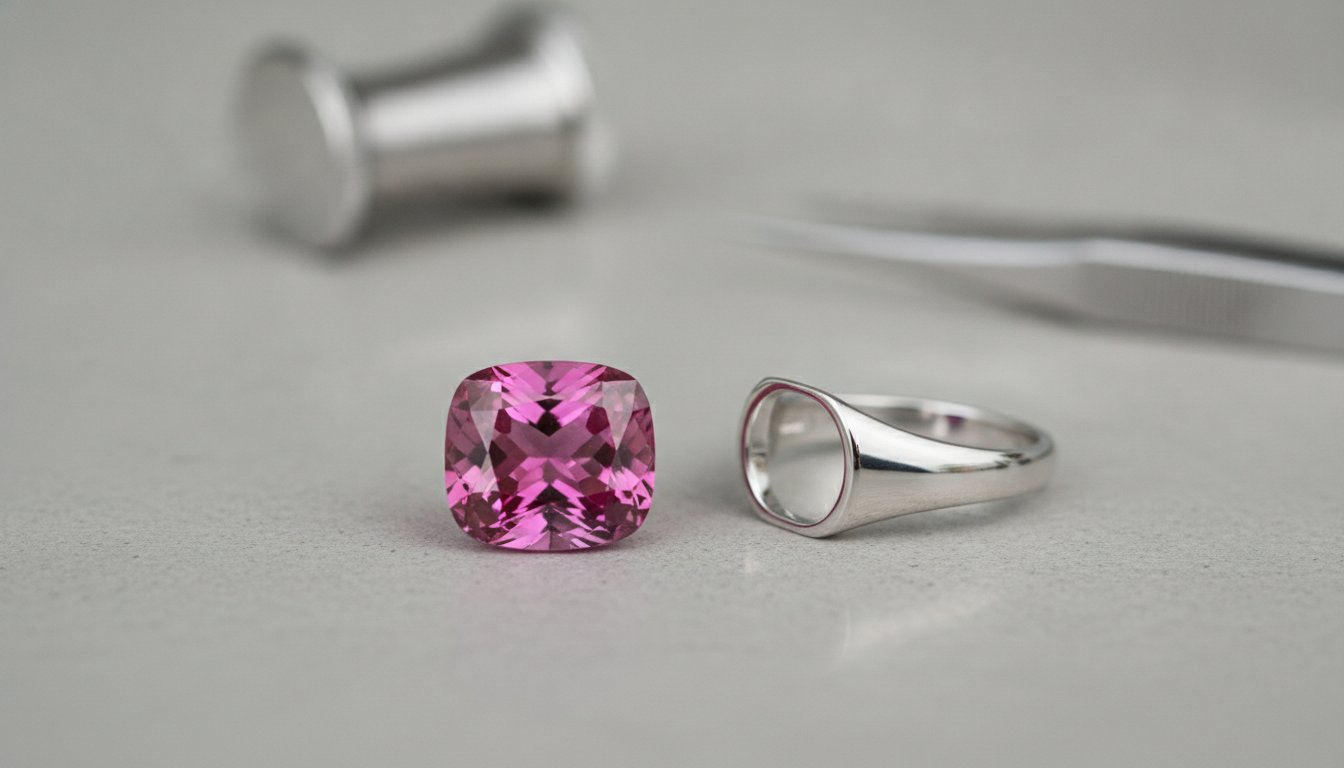
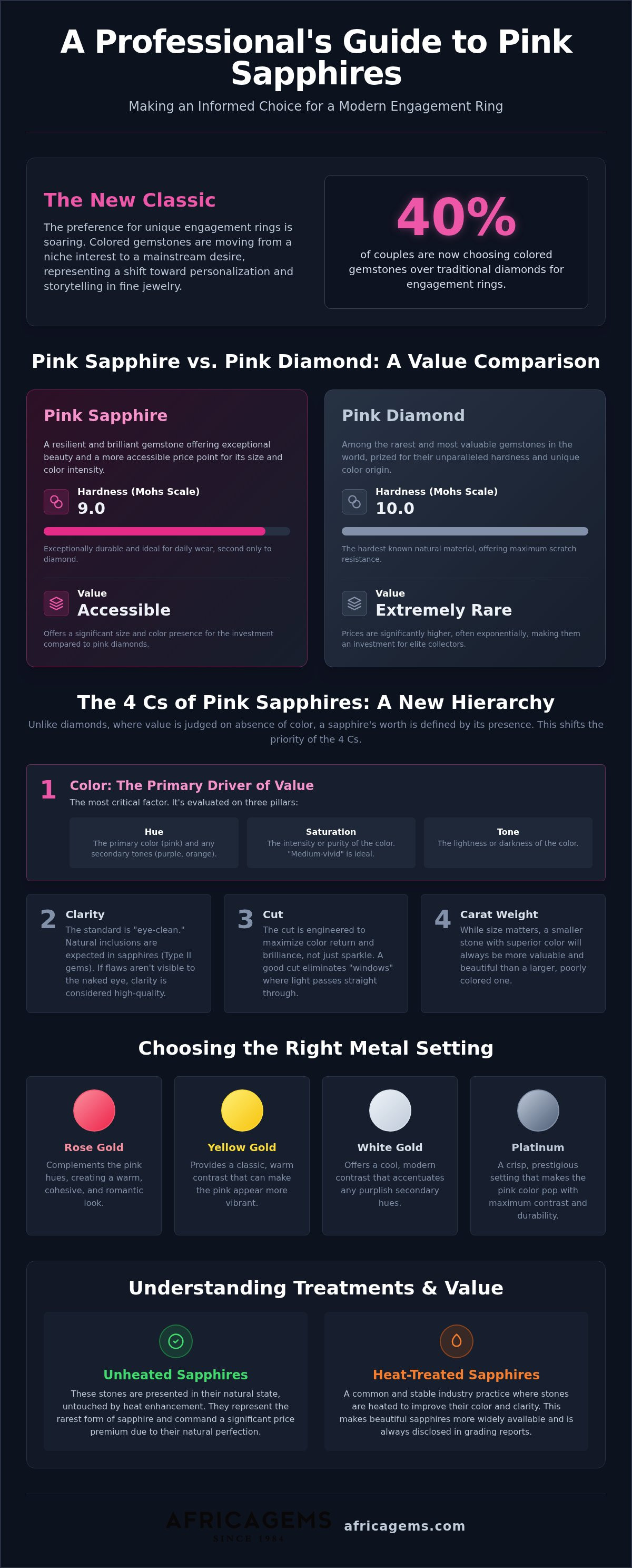
Nearly 40% of couples are now choosing colored gemstones over traditional diamonds, a figure that continues to climb as we move through 2026. If you've found yourself drawn to the romantic allure of a pink sapphire engagement ring, you're likely feeling the pressure of getting the technical details exactly right. It's easy to feel overwhelmed by the subtle distinctions between bubblegum and magenta shades, or to worry that a stone might inadvertently look like costume jewelry if the saturation isn't perfectly balanced. You're looking for a gemstone that feels like a legacy, not a trend.
I'll show you how to select a vibrant, eye-clean pink sapphire that meets professional standards for brilliance and durability; with a Mohs hardness of 9, these stones are ideal for daily wear. This guide covers how to evaluate rare color saturations and the impact of heat treatments on a stone's long-term value. We'll move from the initial search for loose stones to the final custom design process, ensuring you have total confidence in the ethical origin and professional grading of your selection.
Key Takeaways
- Master the hierarchy of the 4 Cs for colored stones, where color saturation and eye-clean clarity take precedence over simple carat weight.
- Evaluate the long-term value and resilience of sapphires, which offer a Mohs hardness of 9.0 and a more accessible price point than rare pink diamonds.
- Discover the professional advantage of selecting a loose stone to create a custom pink sapphire engagement ring that perfectly balances timeless elegance with modern craftsmanship.
- Identify how different metal settings, from warm rose gold to crisp platinum, can either contrast or complement the specific secondary hues in your gemstone.
- Ensure a secure investment by understanding radical transparency markers, including the technical differences between unheated and heat-treated stones.
The Allure of Pink Sapphire Engagement Rings
Pink sapphire is the chromium-rich sibling of the ruby. As a member of the corundum family, this gemstone shares the same Sapphire mineral properties that define its blue counterpart, including a remarkable hardness of 9 on the Mohs scale. While blue remains the most famous variety, the presence of chromium trace elements creates the stunning spectrum of pinks we see today. In the past, these stones were often viewed as secondary to their red or blue relatives. By 2026, however, the pink sapphire engagement ring has transitioned from a niche collector's item to a premier diamond alternative. It represents a shift toward modern romance; a choice that balances the softness of the hue with the structural resilience of the stone.
Pink Sapphire vs. Ruby: The Fine Line
The distinction between a "light ruby" and a "pink sapphire" is often a matter of professional judgment at gemological labs like the GIA or AGL. Both stones are corundum colored by chromium. The classification depends on the specific saturation and tone. If the color is too light or leans too far into the purple or orange spectrum, it's labeled a sapphire. This technicality can be an advantage for buyers. Often, a stone with the visual impact of a ruby is priced more attractively simply because it falls on the "pink" side of the laboratory's color boundary. It's a nuance that rewards the informed collector who prioritizes visual beauty over a specific nomenclature.
Why Pink is the Modern Choice for 2026
Personalized expression is the cornerstone of 2026 jewelry trends. Couples are moving away from the uniformity of colorless diamonds in favor of stones that tell a story. Pink sapphires offer incredible versatility, ranging from delicate "baby pink" and "pastel" tones to the electric intensity of "fuchsia" and "magenta." This range allows for a level of customization that diamonds can't match. Celebrity influence has also played a role. We've seen a 94% increase in sales for specific cuts like the marquise when paired with vibrant colored stones. Choosing a loose stone from AfricaGems' loose gemstones allows you to capture this trend while ensuring the stone's quality is verified before it's ever placed in a setting. It's about finding a color that resonates with your personal narrative rather than following a standard industry template.
Evaluating Quality: The 4 Cs of Pink Sapphires
Grading a pink sapphire engagement ring requires a fundamental shift from diamond-centric metrics. While diamonds are valued for their absence of color, the worth of a sapphire is dictated by its presence. This creates a specific hierarchy of value where color is the primary driver, followed by clarity, cut, and finally carat weight. A stone with a smaller footprint but superior saturation will almost always outpace a larger, washed-out gem in both beauty and market value. Technical precision in these areas ensures your investment retains its allure for generations.
Unheated pink sapphires command a significant premium because they represent the rare, untouched perfection of nature without the intervention of high-heat enhancement.
Color: Saturation, Hue, and Tone
Color evaluation involves three distinct pillars: hue, saturation, and tone. The primary hue is pink, but most stones exhibit secondary hues of purple, orange, or even red. A slight purple modifier often adds a desirable depth, while orange can lead toward the rare Padparadscha territory. The "sweet spot" for a pink sapphire engagement ring lies in a medium-vivid saturation. If the tone is too dark, the stone loses its brilliance and appears muddy in low light; if it's too light, it may appear pale or watery. It's vital to view stones in various lighting conditions. Daylight typically enhances the vibrant pinks, while incandescent bulbs can emphasize warmer secondary tones.
Clarity and Cut in Colored Gems
Sapphires are classified as Type II gemstones. This means they naturally contain some inclusions as part of their crystalline growth. Unlike diamonds, where a microscopic flaw can drastically drop the price, the gold standard here is "eye-clean." If you can't see an inclusion with the naked eye from a distance of six to twelve inches, the stone is considered high-quality for jewelry. This level of clarity allows light to travel through the stone unimpeded, which is essential for that coveted internal "glow."
The cut of a colored stone serves a different purpose than a diamond's cut. While a diamond cut is designed to maximize white light return, a sapphire cut is engineered to maximize color return and brilliance. A master lapidary will align the facets to eliminate "windows," which are areas where light passes straight through the stone, and instead create a consistent brilliance across the entire table. If you're ready to see how these factors come together in person, exploring a curated selection of loose pink sapphires is the best way to train your eye to recognize true quality.
Durability and Value: Pink Sapphire vs. Alternatives
Choosing a pink sapphire engagement ring isn't just an aesthetic decision; it's a commitment to a gemstone that can withstand the rigors of a lifetime. On the Mohs Scale of Mineral Hardness, sapphire sits at a formidable 9.0. This makes it the second hardest natural material used in jewelry, surpassed only by diamonds. Unlike softer alternatives like morganite (7.5 to 8.0) or pink tourmaline (7.0 to 7.5), a sapphire won't easily succumb to the "dulling" effect caused by microscopic scratches from everyday contact. While no stone is truly indestructible, corundum's lack of cleavage planes makes it remarkably resistant to chipping under normal conditions. It doesn't just look the part; it's built for the endurance that an engagement ring demands.
Pink Sapphire vs. Pink Diamond
The value proposition of a sapphire becomes most apparent when compared to pink diamonds. While a pink diamond is prized for its "fire" and white-light dispersion, it comes with an astronomical price tag that often puts stones over one carat out of reach for most collectors. In contrast, pink sapphires offer a deep, velvety saturation that diamonds struggle to match at any price point. You can secure a substantial, eye-clean pink sapphire for a fraction of what a tiny, included pink diamond would cost. This allows for significantly more creative freedom in custom jewelry design services, as you aren't forced to compromise on stone size or clarity to stay within a specific budget.
Investment and Longevity
For those viewing their purchase through the lens of a legacy, the distinction between unheated and heated stones is paramount. Natural, unheated pink sapphires are increasingly rare and hold their resale value far better than treated counterparts. In the 2026 market, an American Gemological Laboratories (AGL) report for colored stones can command a 10 to 15 percent market premium over standard reports, particularly for stones with verified origins. Maintaining this value is straightforward. Unlike porous gemstones, sapphires can be cleaned with mild dish soap and a soft brush, ensuring the internal brilliance remains as vibrant decades from now as it is today. Professional validation through GIA or AGL certification is the final step in securing your investment, providing the radical transparency needed for high-value gemstone transactions.
Designing Your Custom Pink Sapphire Ring
Selecting a loose stone is the only way to ensure total quality control when building a pink sapphire engagement ring. Most commercial retailers sell pre-set rings that can hide inclusions or poor cutting proportions under the prongs. When you browse the AfricaGems loose pink sapphire collection, you're viewing the gem's true character before it's ever mounted. This approach allows you to verify the saturation and clarity standards we've established, ensuring your investment is grounded in technical excellence rather than clever marketing. It's the difference between buying a finished product and participating in the birth of an heirloom.
The AfricaGems custom jewelry design process is a collaborative journey that bridges the gap between raw natural beauty and professional craftsmanship. We start with your vision and use our decades of expertise to ensure the final piece is structurally sound and aesthetically balanced. Incorporating diamond side stones is a classic technique to add "fire" and brilliance, which provides a stunning contrast to the velvety depth of a high-quality sapphire. This combination ensures the center stone remains the focal point while benefiting from the additional light return of the diamonds.
Metal Pairings for Pink Hues
The metal you choose acts as the chromatic foundation for your stone. Rose gold is a perennial favorite for pink sapphires because it creates a soft, monochromatic look that feels cohesive and romantic. It's a choice that emphasizes the warmth of the gemstone. For a more modern and high-contrast appearance, platinum or white gold offers a crisp, colorless frame that makes the pink hue appear more vivid and electric. If you've selected a stone with warm secondary hues or a "peach" undertone, yellow gold is the top choice for 2026. It complements the sun-drenched quality of these rarer color variations perfectly. When it comes time to celebrate your engagement with a party or event, professional signage can help create a memorable atmosphere; for wholesale pricing on custom banners from Banner 4 Sale, click here.
Your lifestyle should dictate the architecture of your ring. A bezel setting, which surrounds the gemstone with a thin rim of metal, offers the highest level of protection for the stone's girdle. This is a smart choice for those with active professional lives who don't want to worry about accidental impacts. Prong settings, however, remain the gold standard for maximizing light entry. By lifting the sapphire away from the band, prongs allow light to enter from the sides and back, fueling the internal brilliance. Halo settings are also seeing a resurgence; they add significant visual size to the center stone and provide a brilliant frame that enhances the primary color. Whether you prefer vintage-inspired milgrain details or a minimalist modern aesthetic, the setting must prioritize the security of the gem.
Ready to bring your vision to life? Explore our custom jewelry design services to begin crafting a piece that is uniquely yours.
Buying Ethics and Transparency
A pink sapphire engagement ring is a symbol of enduring love, and that sentiment shouldn't be clouded by uncertainty regarding a stone's origin or treatment status. Ethical sourcing isn't just a buzzword; it's a commitment to ensuring that every hand that touched the gemstone was treated with respect and paid a fair wage. At AfricaGems, we believe that high-value transactions require a foundation of absolute trust. This is why we provide detailed provenance and technical data for every stone in our inventory. For those looking to dive deeper into the nuances of gemological integrity, the AfricaGems blog serves as a comprehensive resource for collectors who want to move beyond surface-level aesthetics.
Understanding Gemstone Treatments
In the current market, roughly 95% of all sapphires have undergone traditional heat treatment. This is a stable, permanent process that uses high temperatures to dissolve silk inclusions and improve color saturation. It's a professional industry standard that should always be disclosed. However, there's a vital distinction between "Heat Only" and unheated stones. While heated stones offer exceptional beauty and value, unheated sapphires are rare geological miracles that reached their peak color without human intervention. These stones naturally command a premium due to their scarcity.
You must be vigilant against "diffusion" or "glass filling." Unlike standard heat, these treatments introduce foreign elements into the stone to artificially enhance its appearance. These enhancements are not permanent and can drastically lower the stone's value. Learning to read a lab report from the GIA or AGL is the best way to protect yourself. A professional report will clearly state the "Identification" and "Comments" sections, where any treatments are meticulously documented. We prioritize stones that meet these rigorous standards, ensuring you never buy a gem that relies on non-permanent enhancements.
The AfricaGems Guarantee
Marc Sarosi founded AfricaGems in 1984 with a vision of radical transparency. In an industry often shrouded in mystery, he established a personal guarantee of quality and disclosure that remains the pillar of our business today. When you choose a stone from us, you aren't just browsing a digital storefront; you're entering a personal consultation backed by decades of expertise. This legacy dealer status ensures that every pink sapphire has been vetted for its ethical origin and technical merit. We don't just sell gemstones; we provide the security of knowing your heirloom is as authentic as the promise it represents. When you're ready to select a stone that meets these uncompromising standards, your journey begins at africagems.com.
Securing a Legacy of Color and Integrity
Choosing a pink sapphire engagement ring is an exercise in both artistic expression and technical scrutiny. By prioritizing color saturation over traditional diamond metrics and insisting on eye-clean clarity, you ensure a gemstone that possesses both visual brilliance and lasting value. The structural resilience of corundum, with its Mohs rating of 9, provides the security necessary for a piece intended to be worn every day and passed down through generations. It's a choice that reflects a modern appreciation for rarity and individual style.
Founder Marc Sarosi brings over 40 years of expertise to every selection, maintaining an A+ rating for radical transparency and ethical sourcing since 1984. We provide full lab certification on all premium stones, offering the professional validation required for a high-value investment. This commitment to integrity transforms a digital purchase into a personal consultation with a master dealer who understands that the fine details define an heirloom. Your journey toward a uniquely personal symbol of romance begins with a single, spectacular stone.
Browse our collection of Loose Pink Sapphires and start your custom ring journey today.
Frequently Asked Questions
Is a pink sapphire engagement ring a good choice for daily wear?
A pink sapphire engagement ring is an excellent choice for daily wear because sapphires possess a Mohs hardness of 9. This rating makes them the second hardest natural material, surpassed only by diamonds. They don't scratch easily when they come into contact with everyday surfaces. Unlike softer gemstones like morganite, a sapphire retains its sharp facet edges and polish over decades. This inherent durability ensures the stone remains secure and vibrant throughout a lifetime.
What is the difference between a pink sapphire and a ruby?
Both gemstones are varieties of the mineral corundum and are colored by chromium trace elements. The primary difference is how gemological labs categorize the stone based on its saturation and tone. If the primary color is red, the lab classifies it as a ruby. If the stone leans toward pink, purple, or orange-pink, it's identified as a sapphire. This distinction is often a subtle professional judgment that significantly impacts the stone's nomenclature and market value.
Are pink sapphires more expensive than blue sapphires?
Blue sapphires typically command higher prices due to long-standing global demand and historical prestige. However, high-quality pink sapphires, especially those that are unheated or possess rare vivid saturation, are rapidly closing that value gap. While a standard pink stone might be more accessible than a royal blue counterpart, investment-grade pink specimens are becoming increasingly scarce. The final price depends on the specific color intensity, the stone's origin, and its treatment status.
How can I tell if my pink sapphire is natural or lab-created?
You can definitively determine if a stone is natural by requesting a professional lab report from the GIA or AGL. Natural sapphires often contain microscopic inclusions, such as silk or mineral needles, which are absent in lab-created versions. Lab-grown stones often appear too perfect or exhibit curved growth lines when viewed under magnification. At AfricaGems, we provide full disclosure and certification for our natural inventory, ensuring you can distinguish between earth-mined treasures and synthetic stones.
What is the best metal for a pink sapphire engagement ring?
The best metal for a pink sapphire engagement ring depends on the specific secondary hues of your chosen gemstone. Rose gold is a premier choice for 2026 because it creates a seamless, romantic look that complements the stone's pink tones. Platinum or white gold provides a crisp, colorless background that makes a vibrant pink pop with modern intensity. If your sapphire has orange or peach undertones, yellow gold is the ideal choice to enhance that natural warmth.
Do pink sapphires need to be heat treated?
Pink sapphires don't require heat treatment, but approximately 95% of stones on the market undergo this process to improve their color and clarity. Heat treatment is a permanent, industry-standard enhancement that makes vibrant stones more accessible to buyers. While heated stones are beautiful and durable, unheated sapphires are rare geological miracles that reached their peak saturation naturally. These unheated gems command a significant market premium because they haven't been altered by human intervention.
How much should I expect to spend on a high-quality pink sapphire?
The cost of a high-quality pink sapphire is dictated by a combination of its carat weight, color saturation, and treatment status. Larger stones over two carats are exponentially rarer and more valuable. Vivid, eye-clean specimens that are unheated will always represent the top tier of the market. Rather than focusing on a single number, it's best to evaluate how these quality factors align with your personal budget and aesthetic preferences for a high-value center stone.
Can I design a custom ring with a loose pink sapphire from AfricaGems?
Yes, you can utilize our professional Custom Jewelry Design Services to mount any loose stone from our inventory. We specialize in a loose stone first approach, which allows you to inspect the sapphire's quality and light return before it's set. Our team guides you through the process of selecting a mounting that protects the gem while maximizing its natural beauty. This collaborative method ensures your ring is a unique, technically superior heirloom.

Article by
Marc Sarosi
Professional gemstone dealer for more than 40 years. Started off mining Aquamarine in Zambia, Africa and travelled throughout the continent in search of fine gems. Trusted authority on fine gemstones and have donated a fine collection of more than 27 extraordinary gemstones to the Smithsonian Institute Gem Hall for generations to see.