
Paraiba Tourmaline Value: The Collector’s Guide to Pricing & Rarity in 2026
Apr 28th 2026
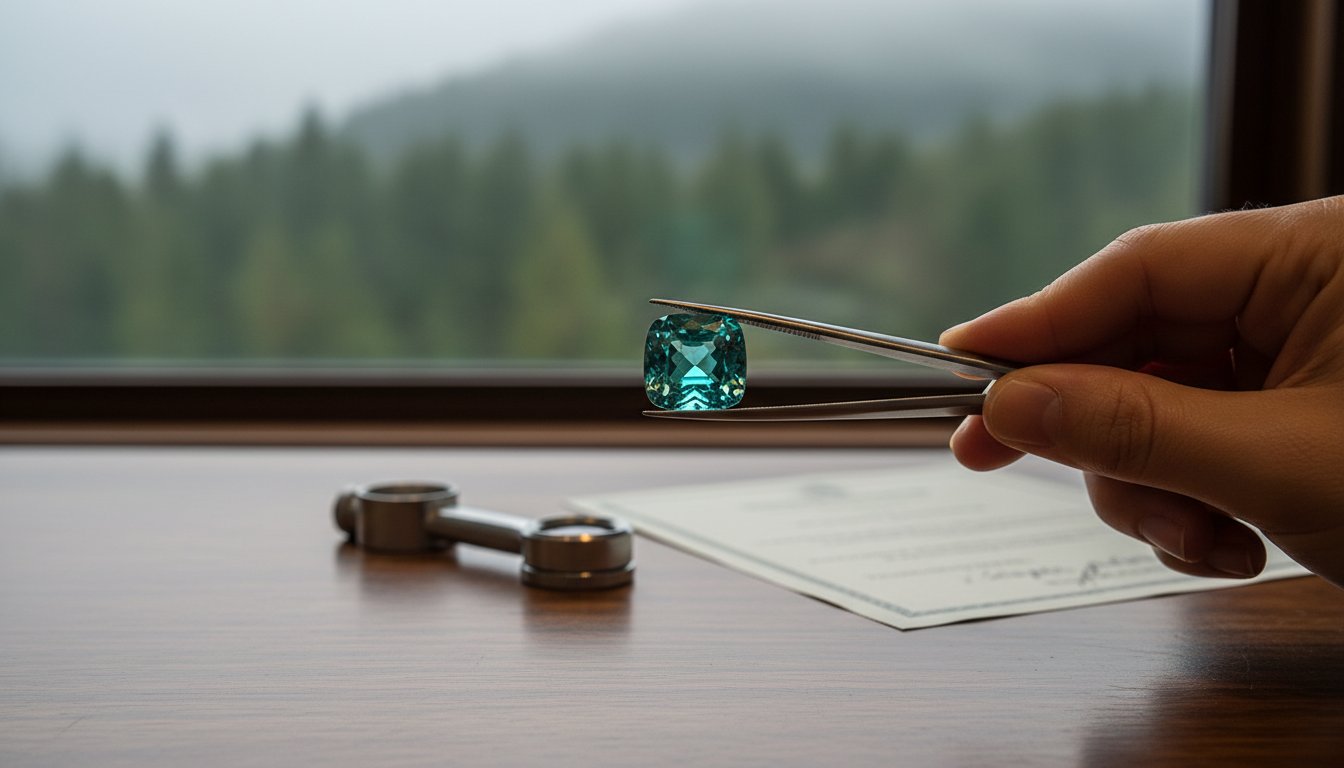
If you hold a top-tier Brazilian Paraiba in your hand, you're looking at a gemstone over 10,000 times rarer than a diamond. This breathtaking scarcity is why the market has remained so fiercely competitive since the initial 1989 discovery in the hills of Paraíba, Brazil. You likely already recognize that the electric, neon glow of these copper-bearing stones is unlike anything else in the mineral kingdom. However, as a serious collector, you also know that the line between a generational investment and a costly mistake often hides within the fine print of a lab report.
We're here to provide the radical transparency you need to make high-stakes acquisitions with the confidence of an insider. This guide breaks down the specific factors that drive paraiba tourmaline value in 2026, from the impact of trace elements like manganese to the substantial price gap between African and Brazilian origins. You'll learn how to interpret heat treatment disclosures and why specific "cuprian" terminology matters for your future resale potential. We'll walk through the essential steps of evaluating a stone's integrity, ensuring your next addition is as ethically sourced as it is exquisite.
Key Takeaways
- Understand how the unique interplay of copper and manganese creates the iconic "electric" glow that makes these stones significantly rarer than even the finest diamonds.
- Learn to distinguish between the saturated intensity of Brazilian Batalha stones and the larger, cleaner cuprian specimens from Africa to master the nuances of paraiba tourmaline value.
- Discover why color saturation is the primary driver of investment potential and how to professionally evaluate clarity in stones where "loupe-clean" is not the standard.
- Protect your investment by uncovering the reality of gentle heat treatments and the critical role of transparent disclosure in high-end gemstone certification.
- Identify how the AfricaGems Difference ensures your acquisition is backed by four decades of expertise, radical transparency, and a commitment to ethical sourcing.
What Makes Paraiba Tourmaline So Valuable? (The Neon Factor)
Since its 1989 discovery in the Batalha mine of Brazil's Paraiba state, this gemstone has rewritten the rules of the gemstone market. While most gems rely on light to reflect color, a true Paraiba tourmaline seems to generate its own internal illumination. This "neon" or "electric" quality is so distinct that even a novice collector can spot it from across a crowded room. The stone's glow isn't just a visual trick; it's a result of a rare geological event that occurred millions of years ago.
Understanding the paraiba tourmaline value requires looking beyond mere aesthetics. It's a combination of geological impossibility and a meteoric rise in market demand. When Heitor Dimas Barbosa first unearthed these specimens after years of searching, the industry hadn't seen anything like it. Prices jumped from a few hundred dollars to five figures per carat almost overnight, a trend that continues as we look toward 2026. To better understand this concept, watch this helpful video:
The Chemistry of Color: Copper vs. Manganese
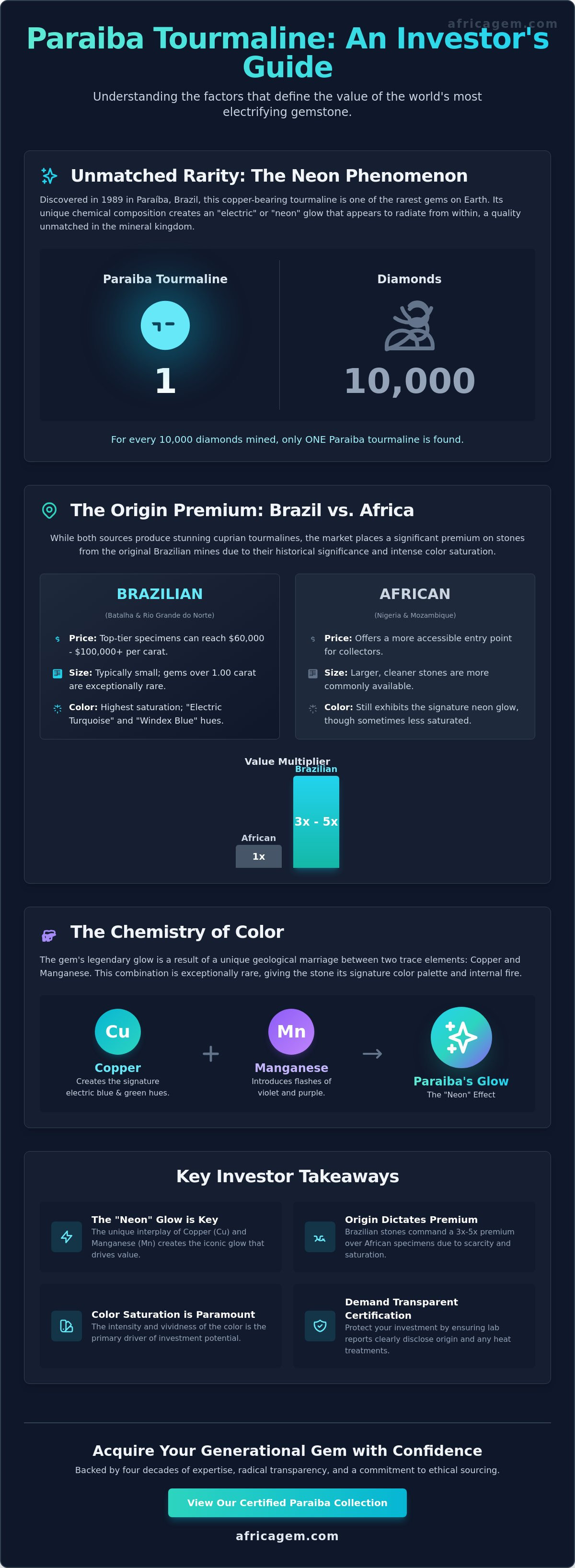
Copper infuses the gemstone with its signature turquoise or swimming-pool blue, while manganese introduces delicate flashes of violet or purple. This specific chemical marriage is a geological anomaly. These elements usually don't coexist in the same pegmatite pockets, which explains why these stones are found in so few places on Earth. The resulting "cuprian" tourmaline possesses a unique refractive quality. Even in low-light settings, like a dimly lit restaurant, the stone retains its vivid saturation. It doesn't die in the dark like many other colored gems.
Rarity vs. Demand: The Investment Case
The scarcity of this material is staggering. For every 10,000 diamonds mined, workers find only one carat of Paraiba material. When compared to high-quality blue sapphires, the production volume of Paraiba is a mere fraction. The original Brazilian mines are largely depleted, meaning the market now relies on finds from Nigeria and Mozambique. While African stones can be breathtaking, the "Old Mine" Brazilian gems command the highest premiums due to their historical significance and intense saturation. Collectors view these stones as portable wealth. The "Color of Paradise" isn't just a marketing slogan; it's a reflection of a finite resource that is vanishing from the primary market. This scarcity directly impacts the paraiba tourmaline value, making it one of the most secure assets for gem enthusiasts.
The Origin Premium: Brazilian vs. African Paraiba Prices
The paraiba tourmaline value is inextricably linked to the specific soil where the copper-bearing crystal formed. While both Brazil and Africa produce the signature "neon" glow, the market distinguishes between them with a significant price gap. Brazilian stones from the original Batalha mine or Rio Grande do Norte often command a 3x to 5x premium over their African counterparts. This disparity stems from historical prestige and the sheer scarcity of Brazilian material. Collectors verify these origins through rigorous lab testing, looking for trace elements like copper and manganese, alongside specific inclusion patterns that act as a geological fingerprint.
Brazilian Paraiba: The Batalha and Rio Grande do Norte Legacy
The "Old Mine" material from the late 1980s set the global standard for electric turquoise and "Windex" blue. These stones are typically small, and most faceted gems found today weigh under 0.50 carats. Finding a Brazilian stone over 1.00 carat is a rare event; professionals consider these museum-grade treasures. In 2026, top-tier Brazilian specimens with high saturation can reach prices of $60,000 to $100,000 per carat. Their paraiba tourmaline value lies in a concentration of copper that creates a glow visible even in dim light. If you seek the pinnacle of rarity, you can view our collection of certified Paraiba to find these elusive Brazilian gems.
African Cuprian Tourmaline: Mozambique and Nigeria
The discovery of copper-bearing tourmaline in Nigeria in 2001 and Mozambique in 2005 transformed the market. African stones often offer higher clarity and significantly larger sizes than Brazilian material. While they may have a slightly more pastel or watery appearance, their breathtaking transparency makes them ideal for high-jewelry statement pieces. The market acceptance for these stones is high, as evidenced by a record-breaking Paraiba sale involving a 93-carat Mozambique stone. This auction highlighted how massive African gems can reach multi-million dollar valuations, even without the Brazilian pedigree.
- Batalha (Brazil): The gold standard for neon saturation; stones are rarely eye-clean.
- Mozambique: Known for producing the largest cuprian tourmalines, often exceeding 10 carats.
- Nigeria: The first African source, typically producing lighter, minty-blue hues.
- The Origin Gap: A 1-carat Brazilian stone can cost $75,000, while a similar Mozambique stone might sell for $15,000 to $25,000.
Identifying origin requires more than just a visual check. Professional gemologists use Quantitative Chemical Analysis to measure the ratios of copper, manganese, and lead. Brazilian stones often show a distinct chemical profile that differs from the Mozambique "cuprian" variety. For the serious collector, an origin report from a reputable lab like GIA or SSEF is a non-negotiable requirement for protecting your investment.
Evaluating the 4Cs of Paraiba Tourmaline Value
While most gemstones rely on a balanced assessment of the 4Cs, Paraiba tourmaline operates on its own set of rules. Color is the undisputed king. It often accounts for up to 80% of the total paraiba tourmaline value. As supply from the original Batalha mine remains virtually non-existent, the interaction between clarity, cut, and carat weight becomes a complex puzzle for any serious collector looking to secure a museum-quality specimen.
The Color Hierarchy: Finding the Sweet Spot
The most coveted hue is a vivid, neon "Windex" blue. This specific shade possesses a glow that appears lit from within, a result of copper and manganese concentrations that can reach up to 2% by weight. While pure blues command the highest premiums, many collectors find incredible value in electric greens or turquoise shades. These secondary green hues typically trade at a 20% to 30% discount compared to the pure "electric blue" standard. Saturation is the key metric. A stone with medium tone and high saturation will always outshine a dark, "inky" stone that loses its neon character in low light.
Lighting is a critical factor in your evaluation. You'll notice that a Paraiba can look different depending on the source. High-end dealers use 5500K daylight-balanced lamps to showcase the true hue. A stone that retains its "glow" under dim, incandescent light is exceptionally rare. These stones carry a significant price premium because they don't "die" when you leave the sunlight.
Clarity and Cut: The Supporting Players
Paraiba is classified as a Type III gemstone; it's naturally prone to inclusions. It's unrealistic to expect a large, loupe-clean specimen in this species. Collectors prioritize "eye-clean" stones where inclusions don't distract from the overall brilliance. You should avoid stones with large, dark crystals or surface-reaching fractures that might compromise the gem's durability. GIA's research on Paraiba origin highlights how chemical compositions can vary, which often results in different clarity profiles between Brazilian and African deposits.
The cut's primary job is to manage light return. A master lapidary can use precision faceting to "save" a stone with lower saturation by bouncing light through the crown to create that signature glow. This brilliance can often mask minor internal veils. A well-cut stone with slightly lower saturation will often outshine a poorly cut, darker stone in a side-by-side comparison.
Carat weight is the final, most aggressive price driver. Because the original Brazilian crystals were rarely larger than a few grams, stones over 2 carats are considered extreme rarities. Once a gem crosses the 3-carat or 5-carat threshold, the paraiba tourmaline value per carat jumps exponentially. In the 2026 market, finding a 5-carat Paraiba with high saturation is a once-in-a-decade event for even the most well-connected boutique dealers.
Heat Treatment and Certification: Protecting Your Investment
The luminous glow of a Paraiba tourmaline often feels supernatural, yet the journey from the earth to the jewelry atelier usually involves a subtle human touch. For a serious collector, understanding the nuances of heat treatment and the necessity of elite lab reports is vital. These factors don't just verify the stone's identity; they define the long-term paraiba tourmaline value and your security as an investor.
Understanding Heat Treatment
In the high-end gemstone trade, low-temperature heating is a standard and stable practice for Paraiba tourmalines. Most rough material emerges from the ground with "masks" of purple, red, or deep violet. By heating the stones to approximately 480 to 600 degrees Celsius, gemologists eliminate these secondary tones, leaving behind the pure, electrified neon blue or green caused by copper and manganese. This treatment is permanent and does not affect the stone's structural integrity, unlike the oiling processes used in emeralds.
While heated stones represent the vast majority of the market, unheated specimens with natural "windex" blue saturation are the true Holy Grail. These rare treasures command a massive premium, often 30% to 50% higher than their heated counterparts. At AfricaGems, we believe radical transparency is the only way to do business. We provide a full treatment history for every stone, ensuring you know exactly what you're adding to your portfolio.
The Role of Professional Certification
Buying a Paraiba without a reputable third-party lab report is a risk no collector should take. The market is currently flooded with lookalikes that can deceive even experienced eyes. A certification from the Gemological Institute of America (GIA), American Gemological Laboratories (AGL), or Gübelin is the only way to confirm a stone's pedigree. These labs use advanced spectroscopic analysis to detect the presence of copper and manganese, the chemical fingerprints of a true Paraiba.
- Chemical Disclosure: Look for the specific comment "Copper and Manganese bearing" on your GIA report.
- Origin Verification: Reports often distinguish between Brazilian and African origins, which significantly impacts the price per carat.
- Resale Security: A stone with a prestigious pedigree maintains its status in the rare gemstones market, making it far easier to liquidate if necessary.
You must also be vigilant against "False Paraibas." Neon Apatite often mimics the color of Paraiba but sits at a fragile 5 on the Mohs scale, compared to the tourmaline's durable 7 to 7.5. Similarly, standard blue tourmaline (Indicolite) lacks the internal fire provided by copper. A professional certificate protects the paraiba tourmaline value by ensuring you aren't paying a premium for a common substitute.
Don't leave your collection to chance; explore our selection of fully disclosed, ethically sourced stones and experience the AfricaGems difference today.
Acquiring Rare Paraiba: The AfricaGems Difference
AfricaGems has spent over 40 years refining the process of sourcing the world's most elusive copper-bearing tourmalines. When you're assessing paraiba tourmaline value, the provenance and the dealer's integrity are just as vital as the stone's neon glow. We provide direct access to the finest cutters and mines in Brazil, Nigeria, and Mozambique, ensuring that every gem meets our rigorous standards for color saturation and clarity.
Our approach centers on radical transparency. We don't just sell a stone; we provide a comprehensive gemological narrative. This includes full disclosure of any heat treatments and verified origin reports from respected laboratories like GIA or AGL. By eliminating middlemen and working directly with artisanal sources, we maintain a chain of custody that protects both the investor and the integrity of the gemstone trade.
- Direct Sourcing: Relationships with master cutters ensure precision facets that maximize light return.
- Expert Curation: Every stone is hand-selected by Marc Sarosi for its unique "neon" personality.
- Bespoke Heirlooms: Our custom design team can transform a loose Paraiba into a one-of-a-kind jewelry piece.
Ethical Sourcing and Integrity
Marc Sarosi's personal commitment to conflict-free and ethically mined stones dates back to the company's founding in 1984. We believe that a gemstone's beauty shouldn't be clouded by unethical labor practices. The AfricaGems Difference means your investment supports fair trade and environmentally conscious mining communities. For those learning how to buy gemstones online, our process provides a secure, educational environment that mirrors a private consultation with a master gemologist.
Building Your Collection
Paraiba tourmaline is a cornerstone for any serious investment portfolio. Since its initial discovery in 1989, the market has seen consistent growth, often outperforming traditional precious gems. Because supply is finite and mining is increasingly difficult, the paraiba tourmaline value for clean, high-saturation stones continues to reach new heights. It's a rare opportunity to own a piece of geological history that's both a liquid asset and a visual masterpiece.
Your next step is a personal consultation. We invite you to reach out to AfricaGems for a tailored search that aligns with your specific collection goals. Whether you're looking for a 1-carat Brazilian neon blue or a substantial Mozambique lagoon green, our global network is at your disposal. Contact us today to secure a gemstone that defines the pinnacle of the Expert Enthusiast's collection.
Invest in the Future of Electric Neon Brilliance
Securing a rare gemstone requires more than just an appreciation for beauty; it demands a deep understanding of market dynamics. As we look toward 2026, the paraiba tourmaline value continues to be driven by the presence of copper and manganese, creating that unmistakable neon glow that no other stone can replicate. You've learned how origin premiums and the 4Cs dictate price, but the most critical factor remains the integrity of your source. Protecting your investment starts with rigorous certification and a commitment to ethical sourcing.
AfricaGems has been a cornerstone of the gemstone industry since Marc Sarosi founded the company in 1984. Our A+ rating from the Better Business Bureau reflects our dedication to the collector's peace of mind. We provide full disclosure on all gemstone treatments, so you'll always know the exact history of your stone. This level of transparency is what we call the AfricaGems Difference. It's about more than just a transaction; it's about building a collection with confidence and expert guidance. Your journey into the vibrant world of cuprian tourmaline is just beginning, and the right stone is waiting to be discovered.
Explore Our Exquisite Collection of Loose Paraiba Tourmalines
Frequently Asked Questions
How much is Paraiba tourmaline worth per carat in 2026?
Fine Brazilian specimens often command prices exceeding $50,000 per carat in the 2026 market. High quality African stones from Mozambique typically range between $5,000 and $20,000 per carat for stones over two carats. These figures reflect the extreme scarcity of copper-bearing elbaite. Collectors prioritize the electric neon glow that drives the paraiba tourmaline value to these record levels.
Is Paraiba tourmaline more expensive than a diamond?
Top tier Paraiba tourmaline frequently surpasses the price of high grade colorless diamonds. While a one carat D-flawless diamond might retail for $15,000; a Brazilian Paraiba of the same weight can easily reach $30,000 or more. This price gap widens as stone size increases because large, clean Paraibas are significantly rarer than large diamonds. The neon blue hue makes it one of the most expensive gemstones globally.
Can you tell the difference between Brazilian and Mozambique Paraiba by eye?
Distinguishing between Brazilian and Mozambique stones by eye is nearly impossible even for seasoned gemologists. Both origins produce the iconic neon glow caused by copper and manganese trace elements. While Brazilian stones often show higher saturation, only quantitative chemical analysis via LA-ICP-MS testing can confirm the geographic origin. We always recommend a GIA or AGL report to verify the stone's provenance before a purchase.
Is Paraiba tourmaline suitable for an engagement ring?
Paraiba tourmaline is suitable for daily wear but requires a protective setting due to its 7 to 7.5 Mohs hardness rating. It's softer than sapphire or diamond, so it's prone to scratching if handled roughly. Protective settings like bezels or halos help prevent chips. It's a breathtaking choice for an engagement ring if you commit to professional inspections every six months to ensure the prongs remain secure.
What is the best color for a Paraiba tourmaline investment?
The most valuable color for investment is a vivid, high saturation electric turquoise or neon blue. Stones with a 50/50 balance of blue and green often command the highest premiums. Collectors look for a medium tone that doesn't become too dark in low light. This specific neon glow is the primary factor that determines the paraiba tourmaline value for serious portfolios.
Does heat treatment decrease the value of Paraiba tourmaline?
Heat treatment is a standard industry practice that doesn't significantly decrease value because it's stable and often undetectable. Approximately 80% of all Paraiba tourmalines undergo low temperature heating to remove purple or reddish secondary tones. Unlike emeralds treated with oil, heated Paraiba remains a natural stone. Rare unheated specimens with documented proof can command a 20% to 30% price premium over treated counterparts.
What are the common imitations of Paraiba tourmaline?
Common imitations include Apatite, synthetic spinel, and dyed glass. Apatite is the most frequent lookalike because it shares the neon blue color, but it's much softer with a Mohs hardness of only 5. Lab grown Paraiba is also available, though it lacks the complex trace elements of natural copper-bearing elbaite. Always verify your purchase with a reputable lab report to confirm the stone's natural origin.
Why is it called Paraiba if it comes from Africa?
The name refers to the specific copper-bearing variety of elbaite tourmaline first discovered in Paraiba, Brazil, in 1989. Following the discovery of similar deposits in Nigeria in 2001 and Mozambique in 2005, the trade adopted Paraiba as a variety name rather than a strict geographic location. This nomenclature follows the LMHC standards. It ensures that any copper-bearing tourmaline with the signature glow uses this prestigious title.