
Padparadscha Sapphire Value: The 2026 Collector’s Guide to Pricing and Rarity
Aug 6th 2026
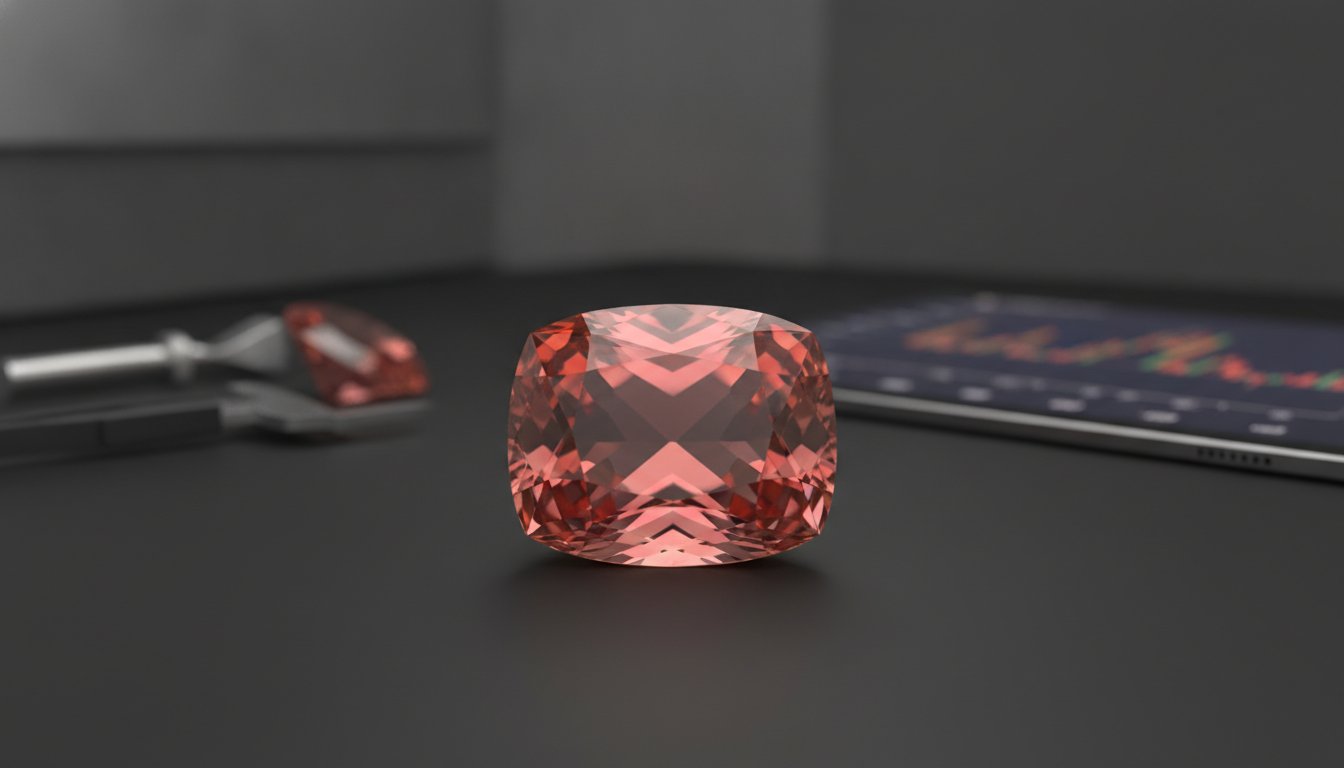
Why does one sunset-hued gem command a king's ransom while a nearly identical neighbor is dismissed by top-tier auction houses? It's a question that can leave even the most passionate connoisseur feeling uncertain. You likely understand that the Padparadscha is the most elusive member of the sapphire family, yet the fear of buying a mislabeled pink stone or miscalculating the impact of heat treatment is a valid concern. Mastering padparadscha sapphire value requires looking past the initial visual allure to the rigorous technical standards that define true rarity in 2026.
You deserve the confidence of an informed insider before adding such a prestigious piece to your collection. This guide promises to help you navigate the complex variables of valuation, from the precarious 50/50 color balance to the significant premium placed on unheated stones from legendary Ceylon mines. We'll provide a clear framework for identifying investment-grade specimens and explain how shifting market demands are influencing prices this year. This methodical approach ensures your next acquisition is backed by both aesthetic appreciation and technical validation.
Key Takeaways
- Understand the "Lotus Blossom" criteria where a precise balance of pink and orange defines the highest tier of padparadscha sapphire value.
- Learn why unheated specimens from Sri Lanka command a 100% price premium over common heat-treated alternatives.
- Identify the warning signs of Beryllium diffusion; this specific treatment can compromise the long-term integrity and resale potential of your acquisition.
- Gain a clear perspective on 2026 market trends, including the impact of diminishing supply and the rising demand for ethically sourced gems.
- Master the art of interpreting major lab reports to ensure your stone meets the strict color stability requirements of top-tier gemological institutions.
What Defines Padparadscha Sapphire Value?
The term Padparadscha carries a weight of history and romance that few other gemstones can match. Derived from the Sinhalese word Padma Radschen, meaning "lotus blossom," it describes a specific Sapphire mineral variety that captures the fleeting colors of a tropical sunset. Among all colored gemstones, true Padparadschas are the rarest variety of corundum, making them a cornerstone of any serious collection. To qualify for this prestigious title, a stone must possess a delicate mix of pink and orange without either hue dominating the other.
To better understand how these variables translate into real-world pricing, watch this helpful video:
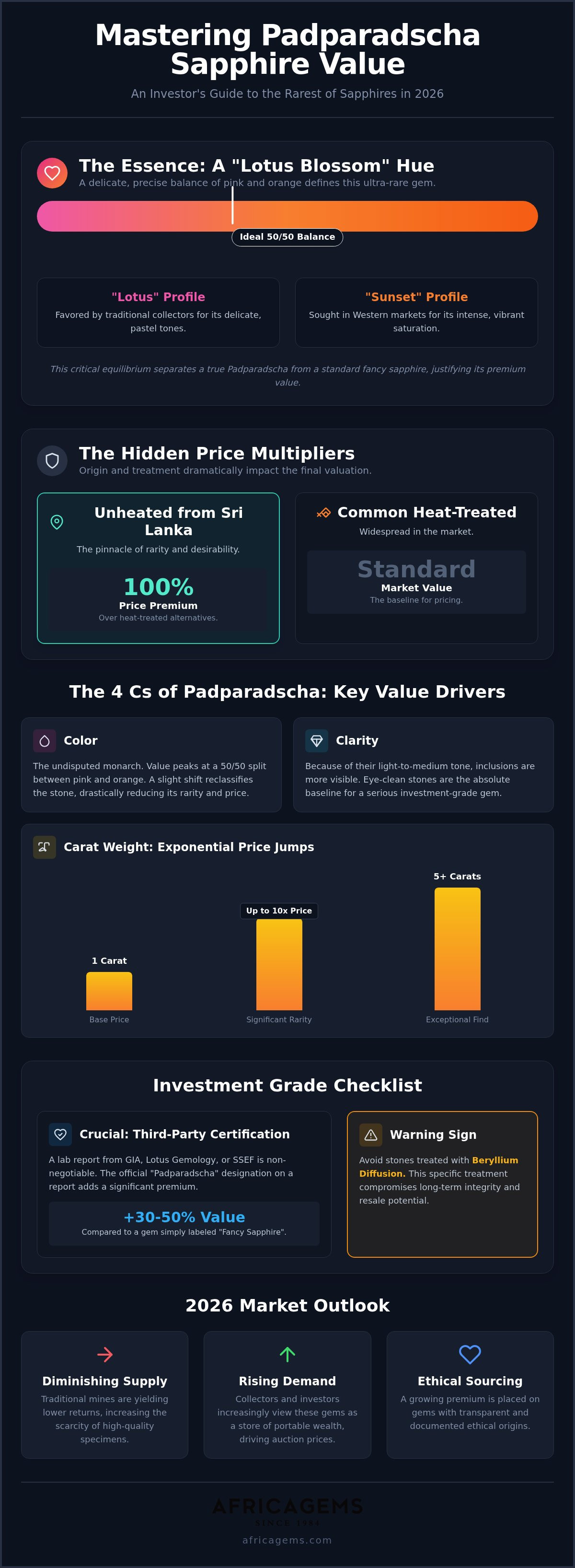
Understanding padparadscha sapphire value involves navigating the ongoing debate between "Sunset" and "Lotus" color profiles. While traditional collectors in Sri Lanka often favor the delicate, pastel tones of the lotus flower, Western markets have historically gravitated toward the intense, vibrant saturation of a sunset. Regardless of the specific preference, the equilibrium between the two colors is what creates the gemological "sweet spot" that justifies the high price point. It's this precise balance that separates a true investment-grade gem from a standard fancy sapphire.
The Scarcity Factor: Why Demand Outstrips Supply
The rarity of these stones is difficult to overstate. While blue sapphires are mined in significant quantities across the globe, Padparadscha production is limited to a handful of locations, primarily Sri Lanka. In terms of volume, they represent a tiny fraction of the total corundum output. This scarcity becomes even more pronounced when looking for size. While blue or yellow sapphires are frequently found in large carats, a Padparadscha over 2 carats is an exceptional find. In 2026, private collectors are increasingly viewing these rare stones as a form of portable wealth, driving auction prices to new heights as traditional mines yield diminishing returns.
Investment Grade vs. Commercial Grade
The market is often flooded with "Pad-like" stones that don't have the necessary certification to hold their value. A sapphire might appear pinkish-orange to the naked eye, but if it doesn't meet the strict color stability and hue requirements of a major laboratory, it remains a commercial-grade sapphire. To ensure you're making a sound investment, third-party verification from institutions like the GIA, Lotus Gemology, or SSEF is non-negotiable. The mere presence of the "Padparadscha" label on a reputable report can add a premium of 30-50% to the stone's base value compared to a gem labeled simply as a fancy sapphire. For those seeking precious gemstones of this caliber, radical transparency regarding these certifications is the only way to secure long-term value.
The 4 Cs of Padparadscha: Key Value Drivers
While the traditional 4 Cs apply to almost every gemstone, their application to padparadscha sapphire value is remarkably nuanced. Color remains the undisputed monarch of these variables, but the interplay between clarity, cut, and carat weight creates the final market price. Unlike blue sapphires where deep saturation is often the goal, a Padparadscha requires a specific transparency and light return to showcase its unique hue. As noted by the GIA on sapphire quality, color is the most important factor, but the other three Cs provide the necessary support to make that color truly perform.
- Color: The ideal is a 50/50 split between pink and orange. Any shift too far in one direction reclassifies the stone as either a pink or orange sapphire, significantly impacting its rarity.
- Clarity: These gems are typically light to medium in tone. This means inclusions that would be hidden in a dark royal blue sapphire are easily visible here. Eye-clean stones are the baseline for serious investment.
- Carat Weight: Price increases are exponential. A 3-carat stone isn't just three times the price of a 1-carat stone; it can be ten times the price due to the extreme rarity of large crystals.
The market sees significant price jumps at the 1-carat, 3-carat, and 5-carat marks. Because most natural crystals are small, finding a clean, well-colored specimen over 2 carats is considered a major find for any dealer. If you are beginning your search for an investment-grade gem, browsing a curated selection of loose padparadscha sapphires can help you understand how these price tiers function in the real world.
Color Saturation and Tone
Market preferences often oscillate between delicate pastel tones and vivid saturation. While the "Lotus" color is prized for its soft elegance, "Sunset" stones with high saturation often command a premium in contemporary markets. You should be wary of stones that appear too dark. If the tone is too deep, it can obscure the delicate orange secondary hue, effectively lowering the padparadscha sapphire value. Additionally, stones from certain regions may exhibit a brownish undertone. This "muddy" appearance is a significant value-killer, as it detracts from the vibrant, clean glow expected of a top-tier specimen.
The Impact of Cut on Color Retention
The primary goal of a lapidary cutting a Padparadscha is to preserve weight while maximizing color. This is why ovals and cushions are the most prevalent shapes. Round or emerald cuts are exceptionally rare because they require significant sacrifice of the original rough material. A poorly executed cut often results in "windowing," where light passes straight through the center of the gem rather than reflecting back. This makes the stone look pale and washed out, often causing a genuine Padparadscha to be mistaken for a common pale pink sapphire. A precision cut ensures the orange and pink hues blend seamlessly across the face of the gem.
Heat Treatment and Origin: The Hidden Price Multipliers
The value of a Padparadscha isn't just what you see. It's what happened to the stone before it reached the jeweler's bench. Heat treatment and origin are the two most powerful levers in determining padparadscha sapphire value. While a heated stone can be strikingly beautiful, the market reserves its highest honors for those rare specimens that emerged from the earth with their sunset colors already perfected. This natural occurrence is so rare that it creates a massive divide in the marketplace between collector-grade and commercial-grade gems.
Choosing between a heated and unheated gem is a decision that defines the nature of your collection. Fine unheated Padparadschas typically command a 100% premium over their heated counterparts. In 2026, the price gap is more pronounced than ever. For instance, a 2-carat fine heated stone often sits within the $4,000 to $10,000 per carat range. In contrast, an unheated stone of identical weight and quality easily climbs to $7,500 to $20,000 per carat. This gap reflects the extreme rarity of natural color stability and the "crystalline soul" that remains untouched by high-heat intervention.
Why Sri Lankan Origin Commands a Premium
Sri Lanka remains the spiritual and commercial home of the Padparadscha. The historical prestige of Ceylon sapphires is unmatched, largely due to a unique color profile that leans toward the delicate "lotus" pink-orange blend. While Vietnam often produces "neon" tones and Madagascar stones can sometimes carry a brownish mask, the Sri Lankan output is the benchmark for Padparadscha sapphire value factors. This origin is so central to the gem's identity that it's frequently featured in our Rare Gemstones: A Connoisseur’s Guide as a pinnacle of earthly scarcity. Collectors will almost always pay more for a certified Ceylon stone because of this deep historical pedigree.
Detecting Enhancements and Diffusion
The most dangerous threat to a collector's investment is Beryllium (Be) diffusion. This process forces chemical elements into the sapphire at high temperatures to create a synthetic orange glow in otherwise ordinary pink stones. This treatment doesn't just enhance the stone; it fundamentally alters it in a way that ruins its collector value. At AfricaGems, we operate with a radical transparency approach. We insist on full disclosure because we believe heat treatment should only be used to stabilize natural beauty, not to manufacture a fake identity. To protect your padparadscha sapphire value, you must look for a Lotus Gold report. This specific certification is the industry gold standard for identifying top-tier, untreated Padparadschas and ensuring your stone hasn't been chemically compromised.
Market Outlook 2026: Padparadscha Price Trends
The trajectory of padparadscha sapphire value has shifted from a niche connoisseur secret to a cornerstone of the high-end bridal and investment markets. Much of this visibility stems from the "Princess Eugenie Effect," which ignited a global fascination with sunset-hued sapphires that shows no sign of waning in 2026. While celebrity endorsements provided the spark, it's the stark reality of diminishing supply from traditional Sri Lankan mines that dictates the current pricing climate. Traditional mines are facing diminishing returns, making existing inventory more precious than ever. We are also seeing a surge in the "Peach sapphire" trend; however, while these stones are attractive for fashion jewelry, they lack the specific color stability and rarity required to match true Padparadscha pricing. Unheated stones over 3 carats will remain the best performers for gemstone investors in 2026.
If you're looking to capitalize on these trends, you can explore our latest curated collection of investment-grade padparadscha sapphires today.
Carat Price Tiers for 2026
In 2026, the market has bifurcated clearly between commercial and investment grades. Commercial stones, which are often 1 to 2 carats and may be pale, included, or heavily heated, generally range from $700 to $2,000 per carat. These offer an accessible entry point but don't carry the same appreciation potential as higher tiers. For investment-grade stones over 3 carats, the pricing landscape changes dramatically. Fine unheated specimens in this weight class frequently command between $10,000 and $30,000 per carat. Exceptional collector-quality stones with perfect color symmetry and stable saturation can even exceed $50,000 per carat at auction, reflecting their status as the rarest of all corundum varieties.
Emerging Origins: Vietnam and Tanzania
While Sri Lanka remains the premier origin, collectors are increasingly looking toward Tunduru in Tanzania and various regions in Vietnam. Tunduru stones are a viable alternative, often leaning toward a more pronounced orange hue that some modern collectors find striking. Conversely, Vietnamese specimens are prized for a unique neon pink-orange glow that is rarely seen in traditional Ceylon material. While these origins are gaining respect, they still typically trade at a slight discount compared to the historical prestige of Sri Lankan gems. To see how these color shifts compare to other rare varieties, you might find our Blue Sapphires: The Ultimate Collector’s Guide helpful for understanding broader corundum market dynamics.
Buying Guide: How to Secure a High-Value Padparadscha
Acquiring a Padparadscha is a significant milestone for any collector. It's a journey that requires balancing aesthetic passion with technical scrutiny. At AfricaGems, we simplify this process through the personal curation of our founder, Marc Sarosi. Since 1984, he's hand-selected every stone in our inventory, ensuring that only those with the most stable and vibrant pink-orange equilibrium make the cut. This expert mentorship is designed to give you the security of an informed insider, protecting your padparadscha sapphire value from the moment of purchase.
The most critical rule for any buyer is simple: never purchase a stone of this caliber without a major lab report. As we've discussed, the "Padparadscha" label on a GIA or Lotus certificate can instantly increase a stone's market price by 30% to 50%. This documentation isn't just paper; it's your insurance policy against mislabeled pink sapphires or undetected treatments like Beryllium diffusion. If you're ready to begin your search, you can shop our curated collection of Loose Padparadscha Sapphires to see examples of stones that meet these rigorous standards.
The Inspection Checklist
When evaluating a stone online or in person, you need a methodical approach. First, look for pleochroism. A genuine Padparadscha should exhibit slightly different hues when viewed from different angles, a sign of its complex crystalline structure. Second, check for color zoning. While some minor zoning is expected in natural stones, the color should appear consistent across the face of the gem to maintain its padparadscha sapphire value. Finally, always verify the seller's return policy and ethical sourcing credentials. Our commitment to radical transparency means providing full disclosure on every enhancement, ensuring your investment is both beautiful and ethically sound.
Setting Your Padparadscha for Maximum Value
Once you've secured your gem, the right setting can further elevate its perceived quality. 18k Rose Gold is the premier choice for this variety, as the warm copper tones of the metal harmonize perfectly with the orange secondary hues of the sapphire. To create a striking contrast, many collectors opt for a diamond halo. The colorless brilliance of the diamonds acts as a frame, making the center stone's unique "lotus" color appear more saturated and vivid. If you have a specific vision in mind, our AfricaGems Custom Jewelry Design Services can help you create a legacy-quality piece that highlights your stone's natural rarity.
Securing Your Legacy in Rare Gemstones
Mastering the nuances of the 50/50 color split and the premium of unheated Ceylon origins provides a significant advantage in the 2026 market. You now understand that true padparadscha sapphire value is found in the equilibrium of pink and orange, backed by the security of a reputable lab report. By prioritizing eye-clean clarity and precision cutting, you ensure your stone remains a high-performing asset within your collection. These technical benchmarks are the pillars of a sophisticated acquisition strategy.
AfricaGems has spent over 30 years perfecting the art of expert curation. Every stone is hand-selected by Marc Sarosi to meet the highest standards of beauty and integrity. We provide only GIA and Lotus certified stones, ensuring that every treatment is fully disclosed and every gem is ethically sourced. This commitment to radical transparency transforms your digital purchase into a secure investment. It's our mission to ensure you feel like an informed insider at every step of the process.
Secure Your Investment: Browse Loose Padparadscha Sapphires at AfricaGems
Beyond the acquisition of rare treasures, many collectors also prioritize social impact; the Pink Loerie Foundation offers a meaningful way to support vulnerable individuals through its dedicated community outreach.
Frequently Asked Questions
How much is a 1 carat Padparadscha sapphire worth in 2026?
A 1 carat stone typically ranges from $700 for commercial grades to over $20,000 for exceptional unheated specimens. The specific padparadscha sapphire value depends heavily on the color balance and treatment status. While heated stones with good clarity are more accessible; unheated gems from Sri Lanka command the highest market prices this year due to their extreme scarcity.
What is the difference between a pink sapphire and a Padparadscha?
The primary difference is the presence of a delicate orange secondary hue that must be perfectly balanced with pink. A pink sapphire lacks this orange component entirely. To be classified as a Padparadscha, the stone must meet strict gemological criteria for a specific saturation and tone. If the orange is too dominant, it's an orange sapphire; if it's too weak, it's simply a pink sapphire.
Are Madagascar Padparadscha sapphires less valuable than Ceylon stones?
Ceylon stones generally command a higher premium than those from Madagascar due to historical prestige and a preferred lotus color profile. Madagascar specimens are beautiful but often exhibit a brownish mask that can diminish their resale value. Collectors typically prioritize Sri Lankan origin for long-term investment, though high-quality Madagascar stones remain a respected and viable alternative in the global market.
Is an unheated Padparadscha sapphire a good investment?
Unheated specimens are considered premier investments because they represent the rarest tier of natural corundum. Their padparadscha sapphire value has historically outperformed heated stones, with projections indicating a price growth of another 15 to 20% by the end of 2026. Because natural, untreated sunset colors are finite, these specimens are highly sought after by global luxury buyers and serious estate collectors.
Can a lab-created Padparadscha have the same value as a natural one?
Lab-created stones don't hold the same resale value or rarity as natural gems. While they're chemically identical and visually striking, they lack the scarcity that drives high prices in the natural market. Lab-grown stones are excellent for affordable fashion jewelry but aren't suitable for those looking for a store of value or a legacy asset that appreciates over time.
Why are Padparadscha sapphires often cut into ovals or cushions?
These cuts are favored because they maximize the retention of weight from the original rough crystal. Padparadscha crystals are rarely found in large or symmetrical shapes, so lapidaries use ovals and cushions to preserve as much material as possible. These shapes also help to deepen the color and prevent the windowing that often occurs in shallower cuts like rounds or emerald cuts.
What should I look for on a GIA report for a Padparadscha sapphire?
You should look for the specific Padparadscha designation in the variety section and a clear statement on the treatment status. The report will confirm if the stone is natural and whether it has undergone heat treatment. It's also essential to verify the geographic origin; a GIA-certified Sri Lankan origin significantly enhances the stone's prestige and long-term marketability for collectors.
How do I know if a Padparadscha sapphire has been Beryllium diffused?
Beryllium diffusion is identified on a major lab report, which will explicitly state if the stone has been chemically altered. This treatment is often used to turn low-value pink sapphires into vibrant orange-pink fakes. Because the color is artificially forced, these stones lose almost all collector value. Always insist on a report from GIA or Lotus to confirm the stone's integrity before purchasing.

Article by
Marc Sarosi
Professional gemstone dealer for more than 40 years. Started off mining Aquamarine in Zambia, Africa and travelled throughout the continent in search of fine gems. Trusted authority on fine gemstones and have donated a fine collection of more than 27 extraordinary gemstones to the Smithsonian Institute Gem Hall for generations to see.