
Natural vs Lab Created Alexandrite: A Connoisseur’s Comparison Guide
Jul 31st 2026
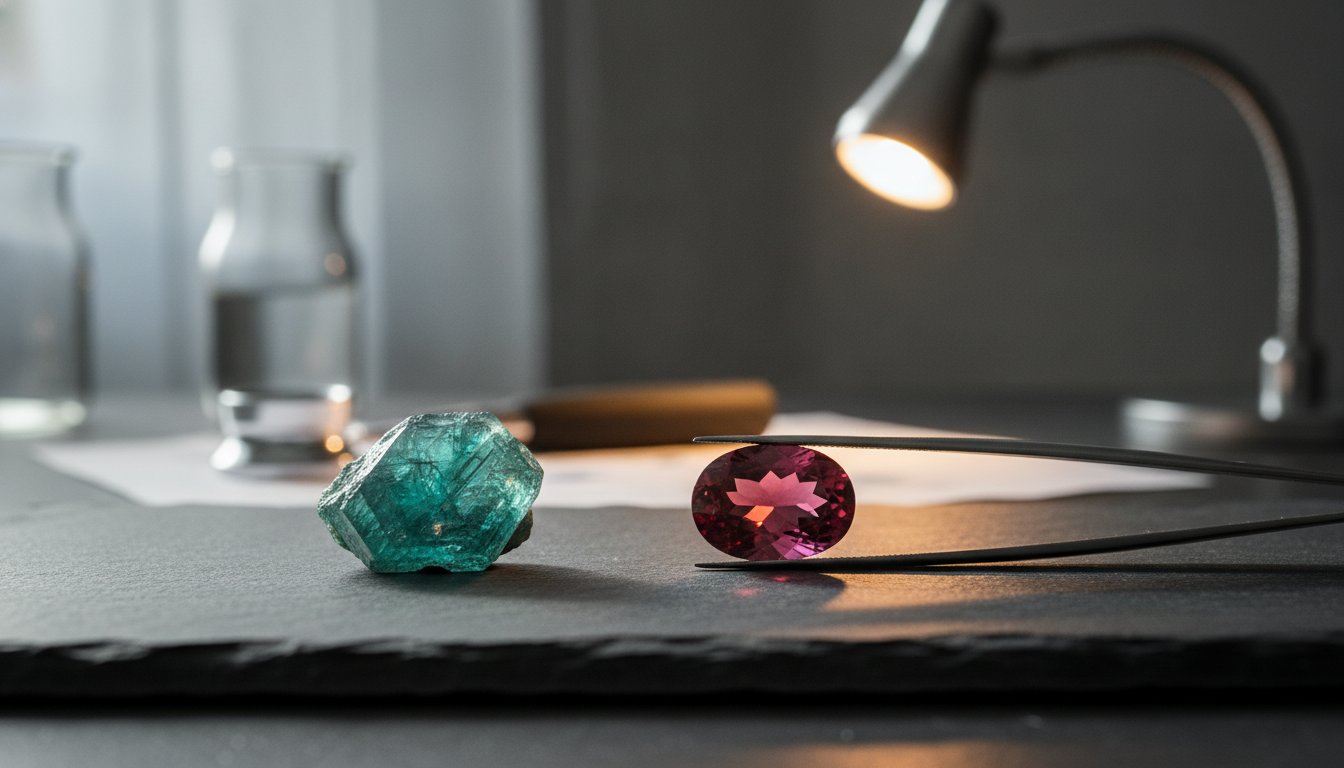
Gem-quality alexandrite is statistically about 8,000 times rarer than white diamonds, making it one of the most elusive treasures in the mineral kingdom. You've likely felt the pull of its legendary emerald by day and ruby by night transformation, yet the staggering price of earth-mined specimens often leads to a complex crossroads: natural vs lab created alexandrite. It's common to feel a sense of hesitation here. You want the authentic chrysoberyl experience without the fear of accidentally purchasing a common simulant like color-change sapphire or overpaying for a stone that doesn't meet your expectations for long-term value.
In this connoisseur's guide, you'll discover the definitive differences in origin, value, and optical performance to ensure your next acquisition is a confident one. We'll examine why natural alexandrite prices can reach tens of thousands of dollars per carat and how the esteemed Chatham brand offers a scientifically identical alternative to earth-mined stones. From chemical compositions to investment frameworks, this breakdown provides the radical transparency you need to choose a gem that fits your budget and your purpose.
Key Takeaways
- Understand the fundamental chemistry of chrysoberyl and why true lab-created alexandrite is chemically identical to its earth-mined counterpart, unlike common simulants.
- Learn how to distinguish between the 'ideal' color change of eye-clean lab specimens and the unique, character-filled inclusions found in rare natural stones.
- Navigate the pricing framework of natural vs lab created alexandrite to determine if you are seeking an investment-grade rarity or a high-performance stone for daily wear.
- Discover the importance of ethical sourcing and why AfricaGems partners with Chatham to guarantee consistent, world-class quality and transparency.
- Empower your purchase with a clear framework for evaluating color shift intensity, the primary driver of value in both natural and synthetic varieties.
What is Alexandrite? Defining the 'Emerald by Day, Ruby by Night'
Alexandrite isn't just a gemstone; it's a geological miracle that has captivated the elite for nearly two centuries. Often called the "King of Gems," this rare variety of the mineral chrysoberyl possesses a dual personality that remains unrivaled in the world of fine jewelry. Its extreme scarcity in nature is due to a chemical impossibility: the rare combination of beryllium and chromium. Because of its 8.5 Mohs hardness rating, alexandrite is surpassed only by diamonds, rubies, and sapphires, making it a robust and enduring choice for daily wear that maintains its luster for generations.
Deciding between natural vs lab created alexandrite requires an appreciation for the physics behind its signature "Alexandrite Effect." This phenomenon allows the stone to appear as a lush, mossy green in cool daylight and transform into a deep, raspberry red under warm incandescent light. This dramatic shift is what defines a true specimen, separating it from common look-alikes that merely change shade rather than hue.
To better understand this concept, watch this helpful video:
The Mineralogy of Color Change
The science of what alexandrite is made of reveals a complex interaction with light spectrums. In daylight, the stone reflects the green part of the spectrum; in artificial indoor light, it reflects the red. This is often enhanced by pleochroism, where the gem shows different colors when viewed from different angles. Chromium is the essential trace element that allows the crystal lattice to absorb specific light frequencies, creating the dramatic shift from green to red. High-quality specimens with a strong color shift are exceptionally rare, as the presence of chromium usually makes the host mineral green (emerald) or red (ruby), but rarely both.
Historical Context: From Russia to Brazil
The legend began in 1834 in Russia’s Ural Mountains, discovered on the birthday of Czar Alexander II. These original Russian mines produced stones with an legendary green-to-red shift that set the global standard for beauty. While the Russian deposits are largely exhausted, modern natural alexandrite gemstones are now sourced from Brazil, Sri Lanka, and East Africa. Each location offers a unique signature. Brazilian stones are prized for their clarity and vibrant saturation, while Sri Lankan gems often reach larger carat weights but may exhibit a more subtle, brownish-green to purple-red shift. Understanding these origins is a key factor when comparing natural vs lab created alexandrite, as nature’s slight imperfections tell a story that science often smooths away.
Natural vs. Lab-Created: The Scientific Comparison
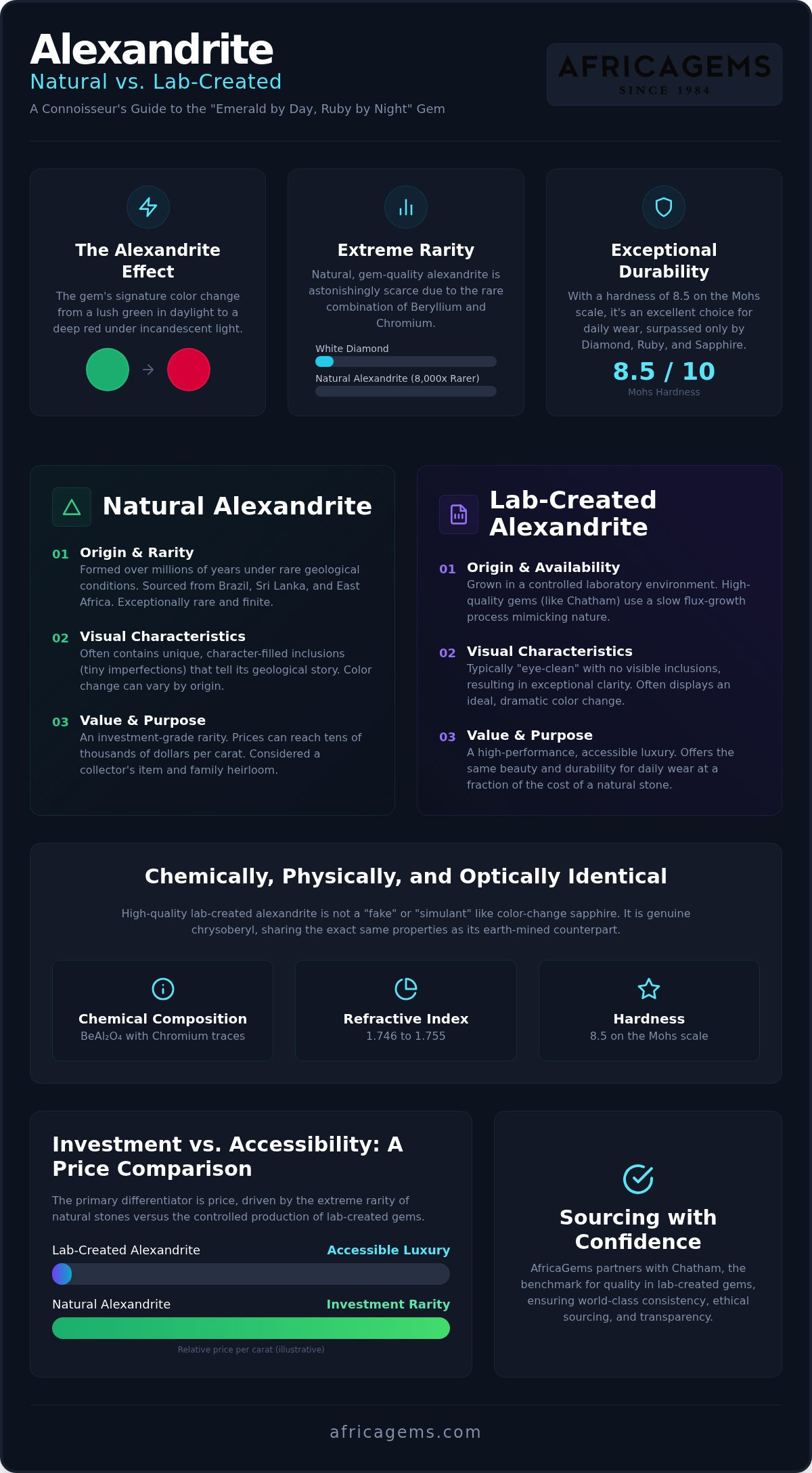
When evaluating natural vs lab created alexandrite, the most vital scientific fact to grasp is that high-quality lab-grown stones aren't "fakes." They are authentic chrysoberyl. Unlike simulants, which are typically color-change glass or treated sapphires that mimic the “alexandrite effect”, true synthetics share the exact chemical, physical, and optical properties of earth-mined gems. If you tested a lab-grown specimen, it would register the same 8.5 hardness and refractive index as a stone pulled from a Russian mine. You're getting the same material; only the origin and the price tag differ.
The distinction lies primarily in the growth environment and speed. Most commercial lab stones use the Czochralski or "pulled" method, which creates large crystals relatively quickly. However, connoisseurs prioritize Chatham lab created gemstones because they utilize a more sophisticated flux-growth technique. This method is the industry benchmark for quality, prioritizing the slow, naturalistic crystallization that defines a luxury asset rather than a mass-produced industrial product.
How Natural Alexandrite Forms
Natural alexandrite is the result of a rare geological "marriage" that almost never occurs in nature. Beryllium, a common element in the earth's crust, must meet Chromium, which is typically found much deeper. This intersection happens only under extreme pressure and temperature, often leaving behind "fingerprints of nature" in the form of microscopic inclusions. These internal characteristics are expected in earth-mined stones. Finding a large, eye-clean natural crystal is so rare that such pieces are usually reserved for museums or high-end private collections. Most natural specimens carry these tiny inclusions as a badge of their chaotic, billion-year journey to the surface.
The Chatham Flux-Growth Process
Chatham’s proprietary flux-growth process is a feat of patience, requiring an 11-month growth cycle to mimic volcanic conditions. By dissolving the necessary elements in a molten flux, the crystals grow slowly and spontaneously, much like they do in the earth's crust. This results in a stone that doesn't just look perfect; it possesses a depth and "soul" often missing from cheaper pulled synthetics. Flux-grown stones may even display tiny, natural-looking inclusions that prove their complex origin. The result is a consistent, vivid color change that offers a high-performance alternative for daily wear without the fragility of some natural counterparts.
If you're looking for the perfect balance of science and beauty, you can explore our curated selection of both natural and lab-grown options to see the difference for yourself.
Visual and Physical Performance: Can You Tell the Difference?
To the untrained eye, the visual distinction in the natural vs lab created alexandrite debate can be startlingly subtle. While they share the same physical framework, their aesthetic "personalities" often diverge based on how they were born. Natural stones are products of chaotic geological events, meaning they almost always contain "fingerprints" of nature, such as silk, needles, or small crystal inclusions. In contrast, premium lab-grown gems are engineered for visual perfection, offering an eye-clean clarity that is statistically impossible for most earth-mined specimens to match. If you see a large alexandrite that is completely transparent and free of internal characteristics, it's a strong indicator of lab-grown origin.
Color saturation also plays a defining role. Lab stones often achieve a level of saturation that gemologists refer to as "ideal," displaying a vividness that is exceptionally rare in nature. Natural stones, while beautiful, often struggle with "sleepy" or slightly muddy tones due to the presence of other trace minerals. Size availability is perhaps the most practical differentiator. Finding a natural alexandrite over 2.00 carats with high clarity is a significant event in the gem trade. According to GIA's Alexandrite Gem Encyclopedia, fine-quality natural stones are exceptionally rare, especially in larger sizes. Lab-grown options allow collectors to enjoy these substantial carat weights without compromising on the visual impact of the stone.
Color Shift Nuances
The specific hues involved in the color change often vary between the two categories. Natural specimens typically exhibit a shift from a brownish or mossy green in daylight to a purplish or brownish red under incandescent light. It's an earthy, complex transition. Lab-grown stones, particularly those created using advanced flux-growth methods, often start with a crisp teal-blue or forest green and transform into a vivid raspberry red. Saturation remains the primary driver of beauty in both cases. A stone with a weak or "muddy" shift, regardless of its origin, won't possess the same optical magic as a specimen with a distinct, 100% color change.
The Role of Professional Certification
Because the visual gap is narrowing, professional certification is your ultimate security. A report from a laboratory like GIA or AGTA is non-negotiable when purchasing natural alexandrite. Expert gemologists use microscopic analysis to detect curved growth lines found in some synthetics versus the angular, straight growth patterns or mineral inclusions found in nature. We maintain a strict full disclosure policy to ensure you understand exactly what you're buying. This transparency is the cornerstone of a secure investment, allowing you to appreciate the rarity of history or the perfection of science with total peace of mind.
Investment Value and Pricing Framework
The financial landscape of natural vs lab created alexandrite is perhaps the most dramatic in the gemstone world. While a lab-grown stone offers the visual thrill of the color change for a manageable price, natural alexandrite exists in a tier of its own. It's statistically about 8,000 times rarer than white diamonds. This extreme scarcity translates into a pricing structure where the cost per carat doesn't just increase with size; it explodes. A fine-quality natural stone over one carat is a true rarity, and specimens reaching three or five carats are museum-level assets that few will ever see in person.
For example, a 14.74-carat Brazilian alexandrite ring sold at a Christie's auction on June 9, 2026, for $482,600. This represents the "portable wealth" aspect of natural stones. They serve as a store of value that historically appreciates due to the exhaustion of known mines. Lab-created stones, while physically identical, are considered "jewelry assets." Their value lies in their beauty, ethical origin, and durability for daily use rather than their potential for secondary market appreciation. Color accounts for approximately 70% of the gem's total value. For an alexandrite to be considered "investment grade" in 2026, it must exhibit an 85% to 100% color change.
The same scientific innovation that produces high-quality lab-grown alexandrite also allows for the creation of deeply meaningful keepsakes. For those looking to honor a legacy, Diamond Cremations offers a unique service crafting certified diamonds from the cremated ashes or hair of loved ones, turning science into a personal tribute.
When to Buy Natural Alexandrite
Natural stones are the right choice for the collector who values the "miracle of nature" above all else. If you're looking for a legacy piece or an investment that carries the story of the earth's deep history, nothing replaces a mined gem. These stones are for those who find beauty in the slight imperfections and unique origins that only a billion years of geological pressure can produce. You can explore more about these treasures in our guide to rare gemstones.
When Lab-Created is the Superior Choice
If your goal is a stunning, eye-clean center stone for an engagement ring, lab-created options are often superior. they allow you to prioritize visual performance and size without the five-figure entry price of a natural equivalent. Modern buyers also appreciate the ethical clarity and controlled environmental impact of lab gems. You get the iconic "emerald by day, ruby by night" look in high-performance gemstone rings that are perfect for a lifetime of wear. It's the ideal way to secure a vivid, raspberry-red shift that would be otherwise unattainable for most budgets.
Whether you're building a portfolio or designing a dream ring, we're here to help. View our current inventory of natural and lab-grown alexandrite to find the stone that matches your specific purpose and investment goals.
Sourcing with Confidence at AfricaGems
Choosing between natural vs lab created alexandrite is a deeply personal decision that balances the allure of geological rarity with the precision of modern science. At AfricaGems, we believe that transparency is the only way to facilitate such a high-value investment. Our founder, Marc Sarosi, has been a fixture in the gemstone trade since 1984, bringing over 40 years of expertise to every transaction. Unlike large, impersonal marketplaces, we operate as a boutique consultancy where every natural specimen is hand-selected for its color-change intensity and crystal clarity. When you browse our natural inventory, you're viewing stones that have passed a rigorous personal inspection, ensuring they meet the standards of a true connoisseur.
For those who prioritize the "ideal" visual performance of a synthetic stone, our partnership with Chatham is a cornerstone of our collection. We've chosen Chatham because their flux-growth process remains the industry standard for consistency and ethical integrity. By combining these world-class lab-grown options with our ethically sourced natural precious gemstones, we provide a neutral, educational environment. You don't have to worry about being "sold" on one over the other; instead, we provide the technical data and high-definition imagery you need to make an informed choice that fits your specific legacy.
The AfricaGems Advantage
Our commitment to radical transparency extends beyond the point of sale. We provide full disclosure on all gemstone enhancements and origins, backed by a 30-day return policy and a lifetime trade-in guarantee for natural stones. This security allows you to shop with the confidence of an industry insider. Our founder-led approach means you have direct access to expert guidance, whether you're a first-time buyer or a seasoned collector adding to a significant portfolio. We don't just sell stones; we curate treasures that represent the integrity of the entire industry.
Next Steps for Your Alexandrite Journey
Transforming a loose gem into a bespoke heirloom is the final step in the journey. Our custom design services allow you to take a hand-picked alexandrite and set it into handcrafted gemstone pendants, rings, or earrings. We recommend starting your search by focusing on the color-change percentage, as this remains the primary driver of the stone's beauty and value. Our team is available to consult on which mounting styles best highlight the dramatic green-to-red shift of your chosen specimen.
Ready to find your perfect match? Browse our Loose Alexandrite Collection today and experience the AfricaGems standard of quality and security.
Securing Your Piece of the Color-Change Legend
Deciding on natural vs lab created alexandrite ultimately comes down to your personal definition of value. If you crave the prestige of a billion-year-old geological miracle, natural stones offer a rare form of portable wealth that grows scarcer by the day. Conversely, if your priority is a flawless, vivid color shift for an engagement ring or daily-wear piece, premium lab-grown options provide scientific perfection without the five-figure investment. Both choices offer the same remarkable 8.5 hardness and the iconic "emerald by day, ruby by night" transformation.
Since 1984, Marc Sarosi has personally curated the AfricaGems inventory to ensure every stone meets the highest standards of the trade. Whether you select an ethically sourced natural gem or a high-performance Chatham lab-grown variety, our commitment to radical transparency means you receive full disclosure on every stone. We don't just sell gems; we provide the security and expert mentorship needed to build a collection you can be proud of.
Ready to see the magic of color change for yourself? Explore the AfricaGems Alexandrite Collection today and find the specimen that speaks to your unique story. Your journey into the world of rare materials starts with a partner you can trust.
Frequently Asked Questions
Is lab-created alexandrite a fake stone?
No, lab-created alexandrite isn't a fake stone; it's authentic chrysoberyl grown in a laboratory. Unlike simulants like color-change glass or treated sapphire, these gems share the exact chemical, physical, and optical properties of earth-mined specimens. When comparing natural vs lab created alexandrite, remember that both register an 8.5 on the Mohs scale. You're getting the same durability and optical performance without the geological rarity or the associated price tag.
Can a jeweler tell the difference between natural and lab alexandrite?
Yes, a qualified gemologist or jeweler can typically distinguish between the two using microscopic analysis. Natural alexandrite often contains "fingerprints of nature" such as silk, needles, or crystal inclusions. Lab-grown stones might show different markers like flux inclusions or curved growth striae depending on the growth method. Because the visual gap is so small, professional certification from a laboratory like the GIA is essential for verifying any natural specimen.
Does lab-grown alexandrite change color as well as natural?
Yes, lab-grown alexandrite often exhibits a more dramatic and "ideal" color change than many natural stones. Because they are grown in controlled environments, these gems are engineered to maximize the chromium content responsible for the color shift. While a natural stone might shift from a brownish-green to a purplish-red, premium lab stones typically display a vivid transition from teal-blue to a bright raspberry red with nearly 100% saturation.
Why is natural alexandrite so expensive compared to other gems?
The high cost of natural alexandrite stems from its extreme geological scarcity. It requires the rare meeting of Beryllium and Chromium, elements that rarely occur together in the earth's crust. This makes gem-quality specimens statistically about 8,000 times rarer than white diamonds. Prices reflect this scarcity, especially for stones over one carat. A 14.74-carat Brazilian alexandrite ring sold for $482,600 in 2026, illustrating the massive premium placed on large, natural crystals.
How do I care for my alexandrite jewelry?
Alexandrite is a remarkably durable gemstone with a hardness of 8.5, making it excellent for daily wear. You can clean your jewelry using warm, soapy water and a soft-bristled brush to maintain its brilliance. While it's resistant to scratches, you should avoid exposing it to harsh household chemicals. If your stone is a natural specimen with significant inclusions, it's safer to avoid ultrasonic or steam cleaners which could potentially stress the crystal structure.
Is Chatham alexandrite the same as synthetic alexandrite?
Chatham alexandrite is a premium brand of synthetic alexandrite produced using the sophisticated flux-growth method. While all Chatham stones are technically synthetics, not all synthetics meet the Chatham standard. Many cheaper lab gems are created using the "pulled" method, which is faster but often lacks the naturalistic inclusions and depth of flux-grown crystals. Chatham stones are widely considered the industry benchmark for quality, mimicking the slow, spontaneous crystallization found in the earth.
What is the best lighting to see the alexandrite color change?
To see the full "emerald by day, ruby by night" effect, you need to observe the stone under two specific light sources. Natural daylight or fluorescent light will reveal the cool green or teal shades. To trigger the change to red or purple, view the gem under warm incandescent light or candlelight. Mixed lighting environments can often make the stone look muddy or grayish, so distinct light sources are best for appreciating the shift.
Will lab-created alexandrite hold its value over time?
Lab-created alexandrite holds its value as a high-quality jewelry asset, but it doesn't function as a financial investment like natural stones. When evaluating natural vs lab created alexandrite, it's important to recognize that lab stones can be produced indefinitely. Their value remains stable based on the cost of production and the brand's reputation. You buy a lab stone for its beauty and ethical origin; you buy a natural stone for its potential appreciation and historical rarity.

Article by
Marc Sarosi
Professional gemstone dealer for more than 40 years. Started off mining Aquamarine in Zambia, Africa and travelled throughout the continent in search of fine gems. Trusted authority on fine gemstones and have donated a fine collection of more than 27 extraordinary gemstones to the Smithsonian Institute Gem Hall for generations to see.