
Natural Alexandrite for Sale: The Connoisseur’s Guide to Color-Change Investment
Apr 29th 2026
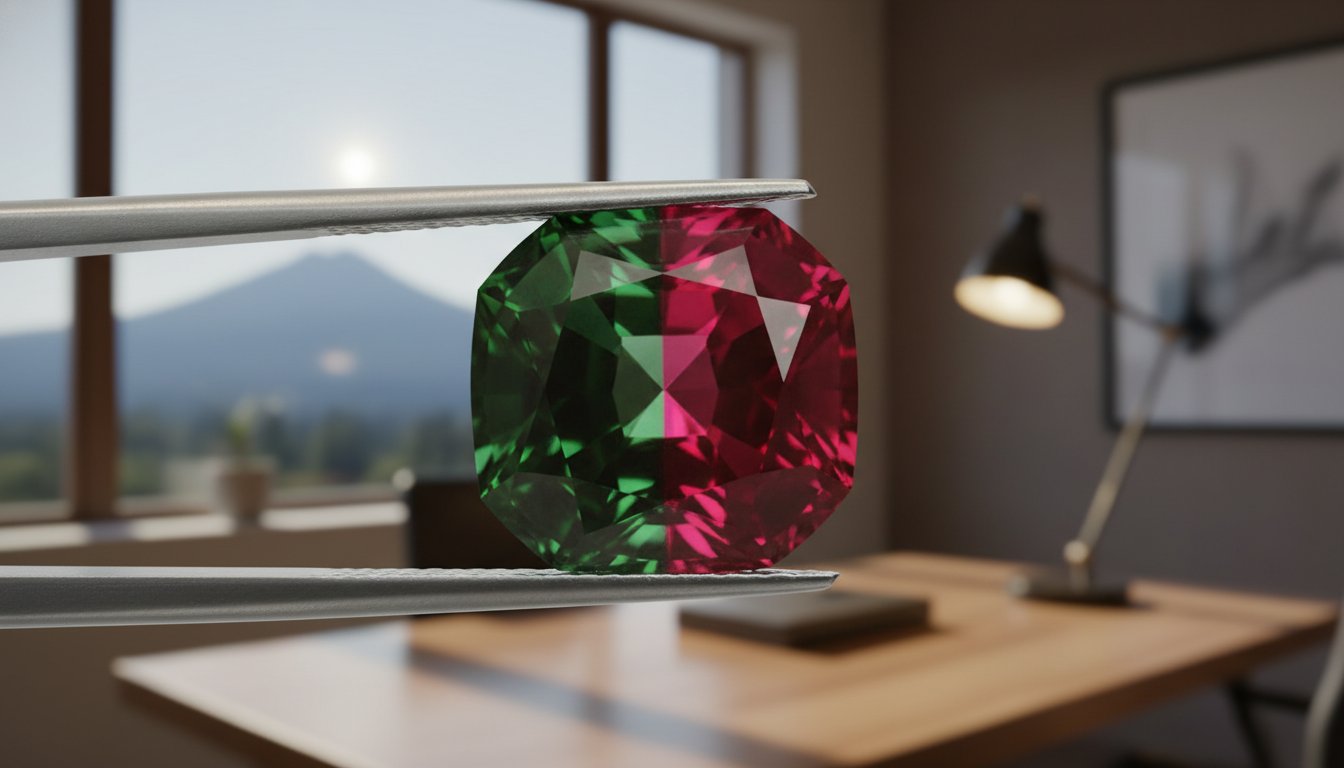
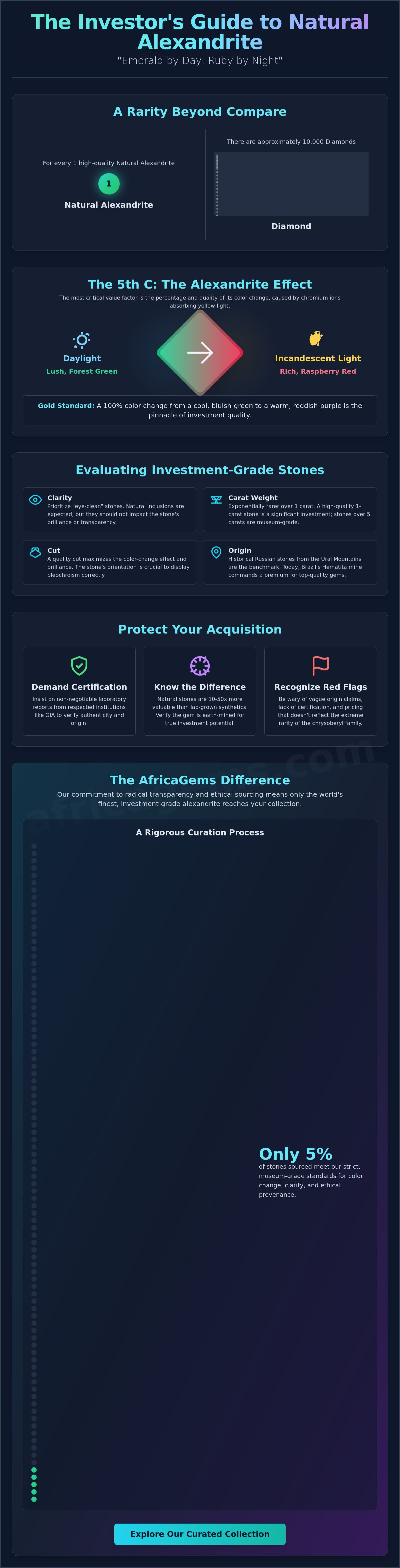
What if the most secure investment in your collection was a gemstone that physically transforms from a deep forest green to a rich raspberry red as the sun sets? While diamonds are found in abundance, a top-quality 1-carat natural alexandrite is roughly 10,000 times rarer than a 1-carat diamond. You likely recognize that finding a true natural alexandrite for sale requires more than just a keen eye; it requires a deep understanding of light and chemistry. It's frustrating to browse static online galleries when you can't feel the stone's pleochroism or verify if a Brazilian origin truly justifies the market premium over a Sri Lankan specimen.
We agree that radical transparency is the only way to trade in such rare minerals. This guide will teach you to master the art of evaluating color-change percentages, origin, and GIA certification so you can confidently acquire an investment-grade stone. We'll explore the AfricaGems Difference, where ethical sourcing meets rigorous gemological standards, ensuring your future heirloom is both breathtaking and authentic.
Key Takeaways
- Master the science of pleochroism to accurately assess the "5th C"—the dramatic color-change percentage that defines a stone's investment value.
- Learn to evaluate the traditional 4 Cs through a gemological lens, prioritizing eye-clean clarity and the prestigious historical origins of the Ural Mountains and Brazil.
- Navigate the complexities of browsing natural alexandrite for sale online by identifying the non-negotiable laboratory certifications required for a secure acquisition.
- Protect your investment by recognizing the red flags of the trade, from vague origin claims to pricing that fails to reflect the rarity of the chrysoberyl family.
- Discover the "AfricaGems Difference" and how a rigorous selection process filters out 95% of stones to ensure only museum-grade specimens reach your collection.
The Allure of Natural Alexandrite: "Emerald by Day, Ruby by Night"
Natural alexandrite isn't just a gemstone; it's a geological miracle that defies standard categorization. As the most coveted variety of the mineral chrysoberyl, its value stems from a rare chemical quirk where chromium ions replace aluminum in the crystal lattice. This creates the legendary "alexandrite effect," a striking color change from lush, forest green in daylight to a soft raspberry red under incandescent light. When you browse listings for natural alexandrite for sale, you're looking for a specimen that possesses this specific pleochroism, a trait that makes it a "phenomenal" stone in the eyes of gemologists.
In 2026, finding a high-quality natural stone is exponentially harder than sourcing a traditional white diamond. While global diamond production reaches millions of carats annually, top-tier alexandrite production is measured in mere handfuls of stones. This extreme scarcity ensures that alexandrite remains a premier choice for those seeking an investment that's as rare as it's beautiful.
To better understand the nuances of this remarkable stone before you commit to a purchase, watch this expert breakdown:
The Discovery and Legacy of the Imperial Stone
The story of this gem began in 1830 in Russia's Ural Mountains. Discovered on the birthday of the future Tsar Alexander II, the stone’s red and green hues perfectly matched the military colors of Imperial Russia. For decades, the Urals were the only source, but those mines were largely exhausted by the late 19th century. Today, collectors look toward the Hematita mine in Brazil, discovered in 1987, or deposits in Tanzania and Madagascar. Despite these newer finds, alexandrite remains the rarest June birthstone, commanding respect among connoisseurs who value its imperial heritage and historical weight.
Natural vs. Synthetic: Why "Natural" Command the Premium
The modern market is flooded with lab-grown alternatives, often sold as "Chatham" or "flux-grown" stones. While these possess similar chemistry, they lack the soul, unique inclusions, and long-term investment potential of earth-mined treasures. Natural specimens often cost 10 to 50 times more than their synthetic counterparts because their creation required millions of years of specific tectonic pressure and rare elemental combinations. The AfricaGems Difference is rooted in our unwavering commitment to sourcing only ethical, natural specimens that have been rigorously vetted for authenticity. Understanding this distinction is vital for anyone using a Rare Gemstones: A Connoisseur’s Guide to build a legacy collection. Finding authentic natural alexandrite for sale requires a partner who prioritizes radical transparency over quick profits.
Decoding Color Change: The "5th C" of Alexandrite Valuation
While the traditional 4Cs govern most gemstones, alexandrite requires a specialized fifth metric: the percentage and quality of its color change. This remarkable optical phenomenon is rooted in the presence of chromium trace elements within the chrysoberyl crystal lattice. These ions absorb light heavily in the yellow region of the spectrum, specifically around the 580-nanometer wavelength. This narrow absorption band allows the stone to act like a chameleon, reflecting different colors based on the ambient light source.
The "swing" describes the transition between these two states. The gold standard for any natural alexandrite for sale is a movement from a cool, bluish-green in natural daylight to a warm, reddish-purple under incandescent light. This dramatic duality is why the Gemological Institute of America (GIA) famously refers to the stone as “emerald by day, ruby by night”. When evaluating a stone, the percentage of this change is paramount. A 100% color change means the entire body of the gem shifts completely between lighting environments, whereas a 50% change implies only a partial transition or a muddying of the primary hues.
Grading the Intensity of the Shift
Gemologists classify the intensity of the phenomenon into three categories: weak, moderate, and strong. A "strong" shift is immediate and undeniable to the naked eye. When inspecting a stone under a 10x loupe, connoisseurs look for "bleed." This occurs when the two colors mix simultaneously, creating a confused, brownish appearance that significantly lowers market value. At AfricaGems, we eliminate the guesswork by using standardized 5500K daylight and 2700K incandescent environments for all photography. This rigorous approach ensures that the color change you see in our natural alexandrite for sale is exactly what you will experience in person.
The Impact of Secondary Hues
The purity of the color change determines the investment potential. Many stones suffer from secondary overtones of gray or brown, which act as a "veil" and dampen the stone's natural brilliance. A pure green-to-red shift is the most coveted and rarest combination. Beyond the hue, saturation plays a vital role. Vividness is always more desirable than mere darkness. A stone that is too dark might appear "blackish" and fail to show its pleochroism effectively. Collectors should prioritize medium-to-medium-dark tones with high saturation levels. You can explore our hand-selected alexandrite inventory to find specimens that meet these exacting standards of purity and vividness.
Evaluating Natural Alexandrite for Sale: Carat, Clarity, and Origin
When you browse natural alexandrite for sale, the traditional 4 Cs take on a specialized meaning. Color change is the undisputed king of value. However, clarity and carat weight act as the critical gatekeepers for investment-grade stones. Alexandrite is classified as a Type II gemstone. This means it typically grows with some visible inclusions. A stone that's "eye-clean," where no inclusions are visible to the naked eye, represents the professional standard for high-end jewelry. Seeking a "loupe-clean" specimen is a pursuit of the top 1% of the market. These rare stones offer a level of transparency that allows the pleochroism to shine without any internal interference. If a stone is 100% clean under 10x magnification, it often commands a 40% premium over eye-clean counterparts.
Carat Weight and Rarity Thresholds
The rarity of this gem becomes apparent once you cross the 1.00-carat mark. In fact, finding gem-quality natural alexandrite over 2 carats is a significant event in the global gem trade. The price per carat jumps exponentially at these weight thresholds. A stone weighing 1.10 carats isn't just 10% more expensive than a 0.90-carat stone; it can be 200% more expensive because of its scarcity. This "cliff pricing" is a hallmark of the most elite minerals. For a comparison on how size impacts other precious stones, our Blue Sapphires Value Guide provides excellent context on these market trends. Always prioritize the face-up dimensions. A stone with a shallow cut might look like a 1.50-carat gem while only weighing 1.20 carats, offering better visual value for your setting.
Global Origins Comparison
Geographic origin is a primary price driver. The Ural Mountains produced the official gemstone of Imperial Russia's Tsardom, but today, Brazil is the premier source for connoisseurs. Brazilian alexandrite from the Hematita region is famous for its dramatic, "stoplight" color change and superior clarity. While other sources exist, the Brazilian material currently leads the market in both quality and resale value.
- Brazil (Heredia/Hematita): These stones are known for the most vivid emerald-to-ruby shift. They often possess high clarity and intense saturation.
- Sri Lanka (Ceylon): This origin often produces larger stones, sometimes exceeding 5 carats. However, they frequently lean toward "olive" green and yellowish-purple tones, which are less desirable than the Brazilian palette.
- East Africa (Tanzania/Madagascar): These are emerging sources producing unique teal-to-raspberry shifts. They offer a distinct aesthetic for collectors who appreciate modern, cool-toned daylight colors.
At AfricaGems, we emphasize the "AfricaGems Difference" by providing full disclosure on origin. We believe transparency is the only way to build trust in a market where origin can double the price of a stone. Whether it's a Brazilian masterpiece or a large Sri Lankan specimen, the integrity of the data ensures you're making an informed investment.
How to Safely Buy Natural Alexandrite Online in 2026
Acquiring a high-value gemstone in the digital age requires a specialized set of protocols. When you browse natural alexandrite for sale, you're looking at one of the world's most elusive minerals. The 2026 market is sophisticated, but it's also filled with lab-grown simulants and undisclosed treatments. Security in this tier of the market rests on three pillars: documentation, transparency, and logistical safety. You aren't just buying a stone; you're buying the gemological proof of its rarity.
Understanding Gemological Certificates
A GIA report is your first line of defense. It provides a definitive determination of whether a stone is natural or synthetic. For stones destined for a serious investment collection, a Gubelin or SSEF report is the industry standard. These Swiss labs specialize in identifying the subtle geographic markers that distinguish a Brazilian stone from an Indian or African one. Every legitimate certificate includes a unique identification number. You should always verify this number on the issuing lab’s website before sending payment. If the data on the digital record doesn't match the dealer's physical certificate, the stone is a risk you don't need to take.
The Ethics of Your Purchase
Ethical sourcing has become a major driver of gemstone value. At AfricaGems, we prioritize conflict-free minerals because transparency creates long-term market stability. A stone with a clear, ethical provenance is significantly easier to liquidate in the future. You can learn more about our security and vetting protocols in our guide on How to Buy Gemstones Online. This resource outlines how we protect your capital from the moment of selection to the final delivery.
Before committing to a five-figure purchase, you should vet the dealer with these specific questions:
- Does the certificate confirm the stone is unheated and free of clarity enhancements?
- Is the shipping fully insured through a specialized high-value courier like Brinks or FedEx?
- Can you provide a high-definition video of the color change under 5500K daylight and 2700K incandescent light?
- What is the specific, no-questions-asked return window for independent appraisal?
Finding high-quality natural alexandrite for sale in 2026 means looking beyond the price tag. Never accept "too good to be true" pricing. If a top-tier 2-carat alexandrite is offered at 40% below current market averages, it's likely a misidentified garnet or a lab-grown alternative. The AfricaGems Difference lies in our refusal to compromise on these standards. My personal guarantee is that every stone we offer has been vetted for both its breathtaking beauty and its technical integrity.
The AfricaGems Difference: Curated Alexandrite for the Modern Collector
Acquiring a rare gemstone requires more than just a transaction; it demands a partnership with an expert who understands the nuances of pleochroism and clarity. Marc Sarosi brings over 44 years of gemological expertise to every stone in our collection. He personally inspects every gem, applying a rigorous standard that leads us to reject 95% of the stones we encounter. This selective process ensures that when you browse our natural alexandrite for sale, you're viewing only the top 5% of the global market's supply. We focus on stones that exhibit a crisp color change, avoiding the brownish or greyish undertones that often plague lower-quality specimens.
Our commitment to quality means we prioritize stones with the most dramatic color shifts and exceptional brilliance. We don't settle for muddy transitions or stones with excessive inclusions that compromise structural integrity. Each alexandrite is a testament to our dedication to the craft, providing you with a specimen that is both a visual masterpiece and a sound financial asset. Our inventory represents a curated selection of the finest gems available, vetted for their investment potential and aesthetic beauty.
Personalized Consultation and Expert Advice
Finding the perfect stone often requires a nuanced conversation. You can schedule a personal consultation with our team to discuss your specific requirements, whether you're looking for a specific carat weight or a particular hue transition. Many collectors find that buying loose stones offers superior flexibility, especially for custom engagement rings where the setting must be as unique as the gem itself. This approach allows you to verify the stone's quality from every angle before it's mounted. Our Custom Jewelry Design Services can then transform your selected alexandrite into a bespoke heirloom that reflects your personal style. We guide you through the selection of metals and accent stones to ensure the finished piece maximizes the color-change effect of your alexandrite.
Investment Security and the AfricaGems Guarantee
We understand that purchasing high-value gemstones online requires absolute confidence. AfricaGems provides a 100% satisfaction guarantee, backed by a comprehensive 30-day return policy to ensure your peace of mind. Every stone is accompanied by a GIA certificate or a report from a similarly prestigious lab, confirming its origin and natural status. We operate with a policy of radical transparency, providing full disclosure on every gemstone treatment to ensure you know exactly what you're investing in. This integrity is the cornerstone of our business, established over four decades of service to the gemstone community. We take pride in being a knowledgeable mentor to our clients, ensuring every purchase is a secure step into the world of rare minerals.
Explore our current selection of GIA-certified gems and discover why we're the preferred choice for serious collectors. Shop Natural Alexandrite for Sale today and secure a rare piece of geological history.
Secure Your Position in the Rare Gemstone Market
Acquiring a significant color-change chrysoberyl requires a blend of aesthetic appreciation and technical verification. As you evaluate the current natural alexandrite for sale, prioritize the intensity of the color shift and the prestige of the laboratory report. In 2026, GIA and Gubelin certifications are the non-negotiable benchmarks for investment-grade specimens. These documents provide the necessary assurance that your stone's origin and lack of treatment are documented by the world's leading authorities. It's the only way to ensure your asset retains its long-term value.
The AfricaGems Difference offers a secure pathway for the modern collector through Marc Sarosi’s personal quality guarantee. We've eliminated the risks of high-value online transactions by providing a 30-day no-questions-asked return policy on every purchase. For our most exclusive investment stones, we include free GIA or Gubelin certification to solidify your asset's provenance. It's a commitment to transparency that transforms a simple purchase into a sophisticated partnership. Our dedication to ethical sourcing and technical excellence remains unmatched.
Browse our Exclusive Collection of Natural GIA-Certified Alexandrite
Start building your portfolio with a stone that captures the magic of emerald by day and ruby by night. Your journey into the elite world of alexandrite connoisseurship begins with a single, informed choice.
Frequently Asked Questions
Is natural alexandrite more expensive than a diamond?
High quality natural alexandrite often commands a higher price per carat than standard white diamonds. According to the Gemological Institute of America (GIA), top quality alexandrite is one of the world's rarest gems. While a 1 carat colorless diamond is relatively common, a 1 carat alexandrite with 100% color change is a statistical anomaly. This extreme scarcity drives the price for natural alexandrite for sale to levels exceeding $15,000 per carat for exceptional specimens.
How can I tell if an alexandrite is natural or lab-grown?
Microscopic inspection of internal inclusions is the most reliable way to distinguish natural stones from synthetic ones. Natural alexandrite typically displays multi phase inclusions or silk; however, lab grown stones often show curved striae or flux grown metallic platelets. A 10x loupe might reveal these markers, but advanced spectroscopic testing at labs like GIA or AGL provides the only 100% certainty. We advocate for full disclosure because synthetic material lacks the long term investment value of Earth mined gems.
What is the best color change for a natural alexandrite?
The ideal color change transition is from a vibrant teal green in daylight to a rich purplish red under incandescent light. Connoisseurs seek a 100% color shift where neither hue retains traces of the other. The GIA grading system evaluates this change of hue based on percentage and saturation. Stones that exhibit a 90% to 100% shift are considered investment grade. Most commercial stones only achieve a 30% to 50% shift, which often looks brownish or muddy.
Does the origin of an alexandrite affect its resale value?
Origin significantly impacts market value, with Russian stones from the Ural Mountains commanding the highest premiums. Historical data shows that Russian alexandrite can sell for 200% more than similar stones from Brazil or Sri Lanka due to its prestige. While the deposit in Russia was largely exhausted by 1900, modern discoveries in the Hematita mine in Brazil, found in 1987, offer comparable quality. Buyers should always verify origin through a reputable laboratory report to secure their investment.
What lighting is best for seeing the color change in alexandrite?
You must compare the stone under 5500K daylight and 2700K incandescent light to see the full pleochroic effect. Natural sunlight or a D65 rated lamp reveals the green or bluish green side of the gem. Switching to a warm, yellowish bulb or a candle flame triggers the transition to red or violet red. Don't rely on standard office fluorescent lights. They lack the specific wavelengths required to activate the chromium ions responsible for the famous color shift.
Can I use natural alexandrite in an engagement ring for daily wear?
Alexandrite is an excellent choice for daily wear because it ranks 8.5 on the Mohs scale of mineral hardness. This makes it the third hardest natural gemstone, surpassed only by sapphire, ruby, and diamond. It possesses no cleavage, which means it doesn't split easily when struck. When looking for natural alexandrite for sale for an engagement ring, choose a protective setting like a bezel or heavy prongs to safeguard the stone's edges over decades of use.
Why are natural alexandrites so rarely found over 1 carat?
The geological conditions required to form alexandrite are exceptionally rare, involving the meeting of beryllium and chromium in the Earth's crust. These two elements are rarely found together in high concentrations. Statistics from major mines indicate that over 95% of recovered crystals are smaller than 0.50 carats. A clean, faceted natural alexandrite exceeding 1.00 carat is considered a world class find. This scarcity is why prices jump exponentially once a stone crosses that 1 carat threshold.
What certificates should I look for when buying alexandrite online?
Always insist on a certificate from a top tier independent laboratory like the GIA, AGL, or Gübelin. These reports confirm the stone's natural origin, weight, and whether any treatments have been applied. A brief or identification report isn't enough for high value stones. You need a full origin report that specifies the geographic source and the percentage of color change. These documents provide the technical validation necessary for a secure, transparent transaction in the global gemstone market.