
Loose Zircon Gemstones: The Connoisseur’s Guide to Natural Fire and Brilliance
Sep 10th 2026
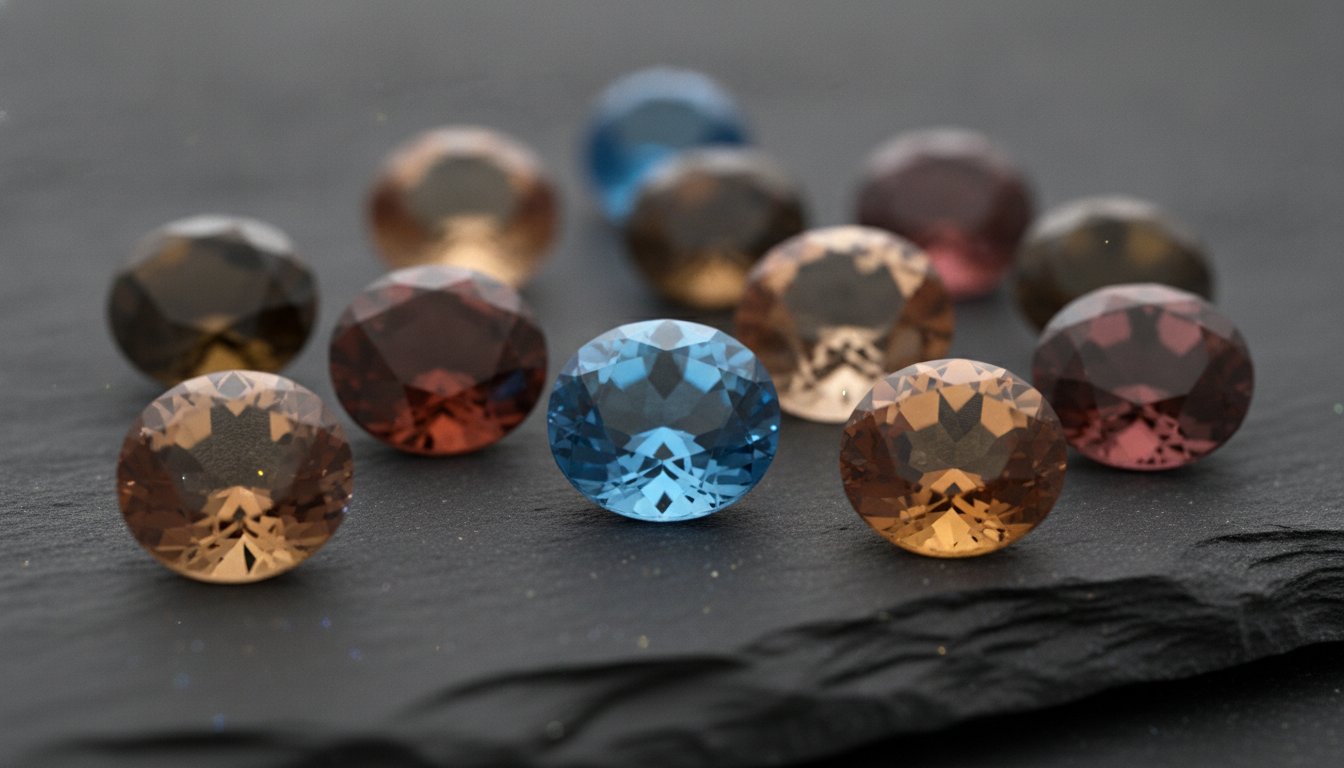
What if the most captivating fire in your jewelry box didn't come from a diamond, but from a natural treasure that predates the very continents we stand upon? It's a common tragedy in the gem world that loose zircon gemstones are frequently mistaken for the synthetic simulant cubic zirconia. You likely understand the frustration of seeking a stone with genuine soul and historical depth, only to be met with market confusion and vague origins. Since 1984, AfricaGems has operated on the principle that true connoisseurship begins with radical transparency and a deep respect for the Earth's oldest minerals.
I promise that by the end of this guide, you'll possess the technical vocabulary and grading insight to distinguish high-end natural zircon from any imitation. We'll examine the unique double refraction that gives these stones their legendary brilliance; we'll also tackle the practicalities of durability for your 2026 custom designs. From the electric pulse of a blue zircon to the warm, earthy tones currently leading the market, this overview of rare materials ensures you can purchase a certified stone online with the security of a seasoned insider.
Key Takeaways
- Distinguish between ancient natural minerals and synthetic imitations to ensure your collection reflects genuine geological history.
- Master the technical evaluation of loose zircon gemstones by understanding how their unique double refraction produces brilliance that rivals the finest diamonds.
- Explore the 2026 market shift from traditional electric blues toward sophisticated, unheated earth tones like champagne and brownish-orange.
- Gain confidence in your custom jewelry designs by understanding how to properly care for zircon's specific hardness and fragility.
- Discover how to manage online purchases with radical transparency by correctly interpreting gemstone certificates and verifying ethical sourcing standards.
What are Loose Zircon Gemstones? Understanding the Oldest Mineral on Earth
To the uninitiated, the word "zircon" might sound like a lab-created imitation, but to a collector, it represents one of the most significant geological treasures in existence. When searching for loose zircon gemstones, it's vital to understand that you aren't looking at a synthetic product. Instead, you're viewing a natural zirconium silicate mineral that has been crystallized within the Earth's crust over eons. Its high refractive index and remarkable dispersion give it a "fire" that rivals even the finest diamonds, making it a perennial favorite for those who value optical performance alongside natural rarity.
Serious collectors often distinguish between "high" and "low" zircons, a technical nuance involving metamictization. High zircons possess a pristine crystal lattice, which allows light to dance through the stone with maximum efficiency. Low zircons have had their internal structures slightly disrupted by the presence of radioactive trace elements like thorium or uranium over millions of years. This process can result in a hazier, more "sleepy" appearance. At AfricaGems, our focus remains on high-quality stones that showcase the peak of this mineral's optical potential.
The Geological Marvel of Natural Zircon
Zircon crystals are famously resilient. They can survive intense heat, pressure, and chemical erosion that would destroy most other minerals. This chemical stability makes them a "time capsule" for geologists; they often trap tiny isotopes inside their structure that reveal the conditions of the early Earth. Zircon is officially recognized as the oldest mineral on Earth, with individual crystals from Western Australia dated back as far as 4.4 billion years. Owning a piece of zircon isn't just a jewelry choice; it's a connection to the very dawn of our planet's history.
Zircon vs. Cubic Zirconia: Clearing the Confusion
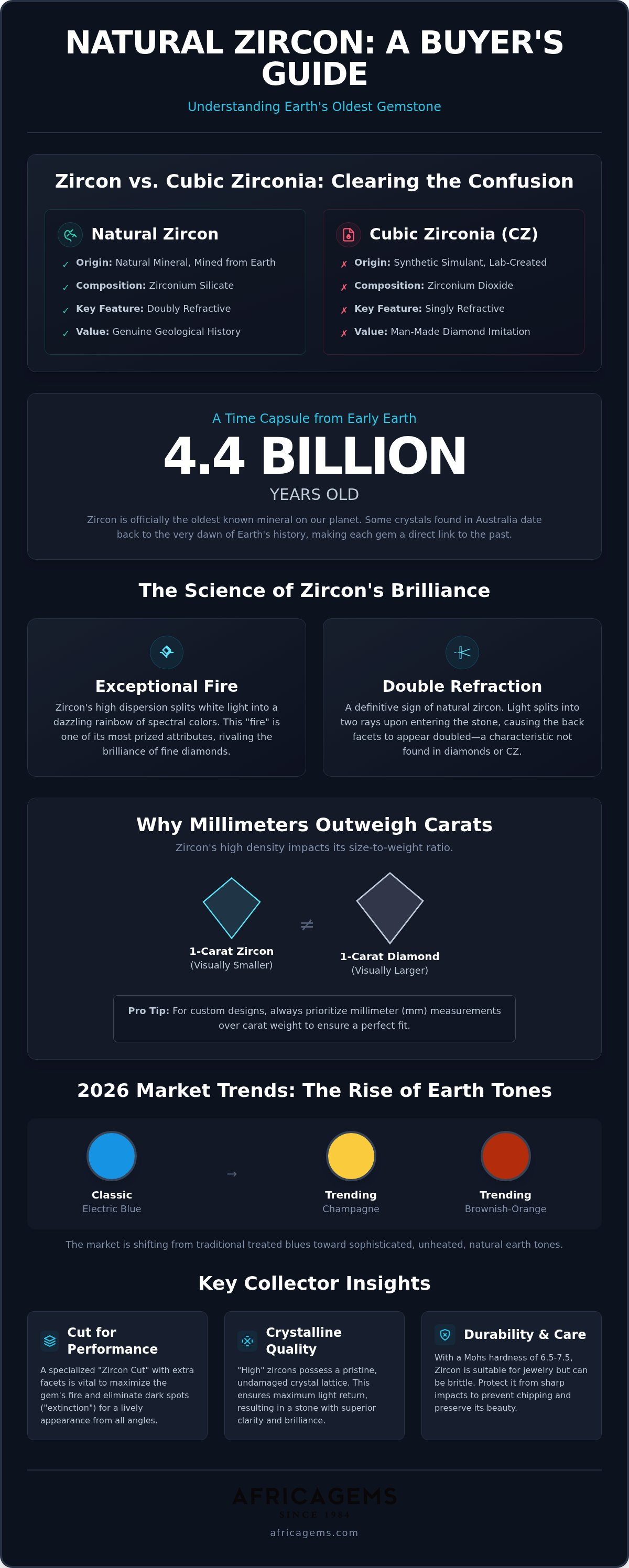
The naming similarity between natural zircon and synthetic cubic zirconia (CZ) is perhaps the greatest tragedy in the gemstone world. While they share the element zirconium, they're entirely different substances. Cubic zirconia is a man-made zirconium dioxide created in a laboratory to mimic a diamond. Natural zircon is a complex silicate born in nature. This confusion has historically undervalued natural zircon, but the market in 2026 is seeing a correction as buyers seek out authentic, earth-mined materials.
You can often spot the difference through a loupe. Natural zircon is famously "doubly refractive," meaning light splits into two rays as it enters the stone. This creates a visual effect where the facet edges on the back of the stone appear doubled when viewed through the table. You won't find this characteristic in CZ or diamonds. For those concerned about authenticity, reviewing our resources on non-genuine gems can help you build the confidence needed to invest in a true natural masterpiece.
Evaluating Quality: The Four Cs of Loose Zircon
Selecting loose zircon gemstones requires a shift in perspective from traditional diamond grading. While the Four Cs provide a foundational framework, this mineral's unique physical properties demand specialized knowledge. For instance, zircon is significantly denser than diamond; it has a higher specific gravity. This means a one-carat zircon will appear visually smaller than a one-carat diamond. When you shop for stones intended for custom mountings, always prioritize millimeter measurements over carat weight to ensure a precise fit for your jewelry design.
Dispersion and the Secret of Zircon’s Fire
The "fire" of a gemstone refers to its dispersion, which is its ability to break white light into a vibrant rainbow of spectral colors. Zircon’s dispersion is exceptionally high, nearly rivaling that of a diamond. This optical phenomenon is maximized by a professional "zircon cut," which often involves adding extra facets to the pavilion to eliminate "extinction," those dark spots where light fails to reflect. A master cutter ensures the stone remains lively from every angle, turning a simple mineral into a rhythmic display of light.
A definitive hallmark of natural zircon is its strong double refraction. As light enters the stone, it splits into two separate rays. When Evaluating Zircon Quality, you can observe this by looking through the table with a 10x loupe. You'll see what appears to be a "doubling" of the back facet edges. This is not a defect but a signature of authenticity. However, the quality of the cut determines whether this doubling enhances the stone's brilliance or creates a "fuzzy" appearance. Expertly cut stones align these rays to create a crisp, electric sparkle that is unmistakable.
Clarity and Inclusion Standards for Collectors
In the world of loose zircon gemstones, clarity is a major value driver, particularly for the sought-after blue varieties. Collectors generally look for "eye-clean" stones, meaning no inclusions are visible to the naked eye. Because zircon is so brilliant, minor internal flaws can sometimes be masked by the stone's fire. However, large "feathers" or mineral crystals can threaten the stone's structural integrity, making clarity a practical concern as well as an aesthetic one.
- Collector-Grade: These stones are loupe-clean and show no internal characteristics even under 10x magnification.
- Eye-Clean: The standard for high-end jewelry; minor inclusions may exist but don't detract from the stone's beauty.
- Included: Often reserved for rare "earth tone" colors where the unique, saturated hue outweighs the need for perfect transparency.
When evaluating stones online, look for high-resolution 360-degree videos. These allow you to see how the light interacts with the internal structure and ensures there are no hidden surprises. If you're ready to begin your search, our curated selection of loose gemstones offers a transparent look at clarity through detailed photography and founder-backed guarantees.
The Spectrum of Color: From Electric Blue to Rare Earth Tones
Zircon's color palette is as diverse as its 4.4 billion-year history. While many associate the mineral with a specific electric blue, loose zircon gemstones actually occur in a breathtaking array of natural "earth tones" including champagne, cognac, and olive green. As we move through 2026, market data indicates a significant shift in consumer preference toward these warm, unheated varieties. These colors are the result of trace elements like uranium and thorium interacting with the crystal lattice over eons. While these elements can eventually lead to the structural degradation known as "low zircon," they first gift us with some of the most complex hues in the gem kingdom.
The Allure of Heated Blue Zircons
The vibrant, neon blue that defines the modern zircon market is almost exclusively the result of stable heat treatment. This isn't a modern shortcut; it's a centuries-old tradition that transforms brownish-red stones into the vivid blues that collectors crave. Cambodian blue zircons remain the industry gold standard for saturation and clarity. When you're evaluating these stones, look for a "vivid" color grade. High-saturation blues maintain their investment value better than paler counterparts. Because the GIA identifies zircon as the oldest mineral on Earth, it's fascinating to consider that these electric colors are simply a human-assisted reveal of the stone's inherent potential.
Starlight and Hyacinth: Exploring Rare Varieties
Beyond the popular blues, two varieties hold a special place in gemological history. These stones offer a different kind of fire that appeals to the sophisticated palette of a serious collector:
- Starlight: This refers to colorless zircon. Traditionally used as a diamond alternative, it is now prized for its unique optical signature and icy brilliance.
- Hyacinth: An ancient term for yellow, orange, or reddish-brown zircons. These are frequently unheated and showcase the stone's raw, natural beauty.
The fiery orange and deep red-brown zircons often come from East African deposits. These stones offer a level of brilliance that sapphires in the same color range simply cannot match. If you're building a collection of precious gemstones, adding an unheated Hyacinth provides a unique narrative of geological integrity. Whether you choose a classic blue or a rare earth tone, ensure you're working with a dealer who provides full treatment disclosure to guarantee the security of your high-value transaction.
Zircon vs. Diamond and Sapphire: A Comparative Analysis
When you place a fine zircon next to a diamond, the visual similarity is striking. This is due to zircon’s adamantine luster, a technical term for a surface shine that mimics the metallic-like reflection of a diamond. While natural diamonds remain the pinnacle of hardness, zircon offers a refractive index (1.92 to 1.98) that far exceeds that of a sapphire (1.76). This higher RI means light bends more sharply within the stone, creating a brilliance that is perceptibly more intense than most other colored gems. It's a rare quality that allows the stone to "pop" even in low-light environments.
The value proposition for loose zircon gemstones is undeniable for the informed collector. You're securing a stone with a dispersion rate of 0.039; for context, a diamond is 0.044. This means zircon produces nearly as much spectral fire as a diamond. It's the reason why many high-quality vintage pieces used colorless zircon as a primary accent stone. However, the trade-off for this fire is a difference in structural resilience that requires a thoughtful approach to jewelry design.
The Visual Match: Why Zircon Rivals Diamond
Zircon’s fire is its most famous attribute. In colorless varieties, the stone is often mistaken for diamond by the naked eye because of its high dispersion. This creates those rainbow flashes that dance across the facets. While sapphires are prized for their depth of color, they often lack this specific "twinkle." Zircon bridges the gap between the saturated color of a sapphire and the electric brilliance of a diamond. It offers a unique aesthetic that feels both antique and modern, making it a favorite for those who want their jewelry to tell a story of natural complexity.
Durability Considerations for Jewelry
On the Mohs scale, zircon ranks between 6.5 and 7.5. While this is respectable, it doesn't match the 9 of a sapphire or the 10 of a diamond. Zircon is also notably brittle. This means its facet edges can abrade or chip if they're subjected to heavy impact or constant friction; a phenomenon gemologists sometimes call "paper wear." If you're designing a piece for daily wear, we recommend a protective setting. A bezel or a halo can shield the stone's edges from the environment, ensuring the crispness of the cut remains intact for decades.
For those who prefer low-impact jewelry, zircon is a perfect candidate. Pendants and earrings allow the stone to sparkle indefinitely without the risk of physical trauma. To maintain this luster, avoid ultrasonic or steam cleaners. These can damage the stone's integrity or affect heat-treated colors. Instead, use warm, soapy water and a soft brush. If you're ready to select a stone that balances luxury with value, browse our certified loose gemstones to find your perfect match.
How to Buy Loose Zircon Online: Authenticity and Ethics at AfricaGems
Acquiring loose zircon gemstones in the 2026 digital marketplace requires more than an eye for brilliance; it demands a partnership with a mentor who values technical accuracy and ethical sourcing. As a serious collector, you aren't just buying a stone; you're securing a geological artifact that predates the continents. A gemstone certificate is your first line of defense in this process. It validates the natural origin of the stone and confirms the unique optical properties we've discussed. Beyond the paperwork, origin remains a critical factor in quality. Cambodian stones are the gold standard for saturated, electric blues, while Sri Lankan deposits are prized for their exceptional clarity and larger carat weights.
The Importance of Treatment Disclosure
Marc Sarosi founded AfricaGems in 1984 on a philosophy of radical transparency. We believe every collector deserves to know the full history of their stone before a transaction occurs. Whether a zircon has undergone traditional heat treatment to reveal its hidden blue or remains in its natural, unheated earth-toned state, full disclosure is our baseline standard. This honesty builds the security necessary for high-value online transactions. Treatment disclosure isn't just a policy; it's a thematic marker of how we do business. Before committing to a purchase, we invite you to explore our expert guide to gemstone investing to learn exactly what questions you should ask your dealer.
Designing Custom Jewelry with Your Loose Zircon
The true magic happens when you transition from owning a stone to creating a wearable masterpiece. Integrating loose zircon gemstones into custom jewelry requires a nuanced approach to metal selection and setting style. Because zircon has such high dispersion, the surrounding metal acts as a mirror that can shift the stone's character. Platinum or white gold accentuates the icy, electric fire of blue and colorless stones. Conversely, 18k yellow gold or rose gold can pull out the sophisticated warmth in champagne, cognac, and olive varieties, lending them a rich, antique glow.
Our curated mountings offer a sophisticated starting point, but our custom jewelry design services allow for a completely bespoke vision. We focus on engineering settings that protect the stone’s facet edges without sacrificing light entry. By utilizing bezels or protective prongs, we ensure your zircon survives the rigors of daily wear while maintaining its legendary luster. This collaborative process turns a digital storefront into a personal consultation, ensuring your legacy piece is both breathtakingly beautiful and structurally sound.
Investing in Earth's Ancient Brilliance
Choosing a natural gemstone is an investment in both history and optical artistry. You now understand that zircon isn't a mere substitute but a geological marvel with a fire that rivals the most prestigious stones. Whether you're drawn to the electric pulse of a Cambodian blue or the sophisticated earth tones leading 2026 trends, your selection of loose zircon gemstones should always be grounded in radical transparency and technical validation. This approach ensures that the stone you choose possesses the enduring value and structural integrity required for a legacy piece.
At AfricaGems, we've spent over 40 years refining our expertise to act as your knowledgeable mentor in the gem trade. Every stone in our vault comes with founder Marc Sarosi’s personal guarantee of authenticity and a commitment to full treatment disclosure. This security allows you to focus on the visual appreciation of the material while we ensure the technical integrity of your purchase. We invite you to browse our curated collection of natural loose zircon gemstones at AfricaGems and begin your journey into the world of rare materials. Your next heirloom is just a discovery away.
Frequently Asked Questions
Is zircon a natural gemstone or man-made?
Zircon is a completely natural zirconium silicate mineral and shouldn't be confused with synthetic imitations. It's the oldest mineral on Earth, with some crystals dating back 4.4 billion years. While lab-grown simulants exist under similar names, loose zircon gemstones are genuine, earth-mined treasures. They offer a unique geological history and a natural brilliance that man-made products can't replicate, making them a favorite for serious collectors who value authentic materials.
How can I tell the difference between zircon and cubic zirconia?
The most reliable way to distinguish natural zircon from cubic zirconia is through its optical properties. Zircon is strongly doubly refractive; light splits as it enters the stone. If you look through the table with a 10x loupe, you'll see a doubling of the back facet edges. Cubic zirconia is a single-refractive man-made simulant and won't show this effect. Additionally, natural zircon is significantly denser and heavier than its synthetic counterpart.
Is blue zircon a real, natural color?
Blue zircon is a natural gemstone, though its vibrant neon hue is almost always the result of stable heat treatment. While some zircons are found with a naturally blue tint, they're exceptionally rare and often lack the saturation collectors desire. Most loose zircon gemstones in the blue category start as brownish stones and are heated to reveal their signature electric blue. This treatment is a permanent, industry-standard practice that we fully disclose at AfricaGems.
How hard is a zircon gemstone on the Mohs scale?
Zircon ranks between 6.5 and 7.5 on the Mohs scale of mineral hardness. This makes it harder than many common materials but softer than sapphires or diamonds. While it's durable enough for jewelry, zircon is also quite brittle. It's prone to paper wear, where the facet edges can slightly abrade if the stone rubs against other hard surfaces. We recommend protective settings that shield the stone's perimeter from direct impact to maintain its crispness.
Can zircon be used in an engagement ring?
You can use zircon in an engagement ring if you choose a protective setting. Because zircon is more brittle than diamond, a bezel or halo setting is ideal to safeguard the stone's edges from chipping. It's a stunning choice for those seeking a unique, high-brilliance center stone that stands out. However, since it's softer than sapphire, you should remove the ring during heavy activity to maintain its crisp facet edges and legendary luster for years.
Where do the best loose zircon gemstones come from?
The most prized blue zircons traditionally come from the Ratanakiri province in Cambodia, known for producing stones with unparalleled saturation. Sri Lanka is another significant source, often yielding larger crystals with exceptional clarity in various colors. For the earthy browns and yellows popular in 2026, East African deposits in countries like Tanzania and Madagascar are leading the market. We carefully vet each source to ensure our stones meet the highest ethical and quality standards.
What is the most valuable color of zircon?
Vivid, highly saturated blue remains the most commercially valuable color for zircon due to its high demand and striking appearance. However, rare unheated red zircons, historically called Hyacinth, can also command premium prices among serious collectors. Recently, the market has seen a surge in value for earth tones like deep cinnamon and golden-orange. The value of any stone is ultimately determined by the combination of its color saturation, clarity, and the precision of its brilliant cut.
How should I clean and care for my loose zircon?
You should clean your stone using only warm, soapy water and a very soft brush. It's vital to avoid ultrasonic and steam cleaners, as the intense vibrations or heat can damage the stone's internal structure. Because zircon is brittle, store it separately from other jewelry to prevent its facet edges from scratching. By following these simple care steps, you'll ensure your stone retains its spectacular fire and adamantine luster for generations to come.

Article by
Marc Sarosi
Professional gemstone dealer for more than 40 years. Started off mining Aquamarine in Zambia, Africa and travelled throughout the continent in search of fine gems. Trusted authority on fine gemstones and have donated a fine collection of more than 27 extraordinary gemstones to the Smithsonian Institute Gem Hall for generations to see.