
Loose Zircon Gemstones: The Collector’s Guide to Nature’s Most Brilliant Fire
Aug 11th 2026
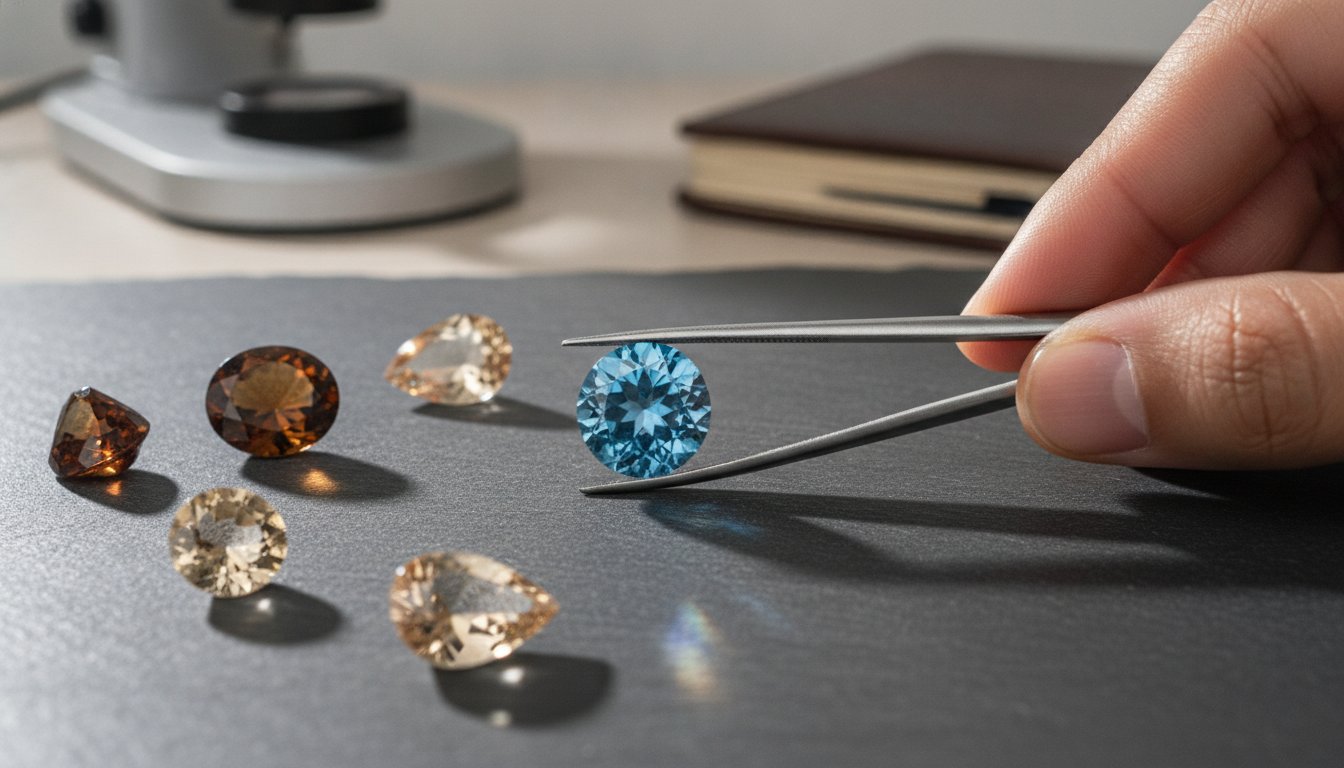
Many collectors mistakenly believe that the most brilliant fire in the gem world belongs exclusively to diamonds. However, natural loose zircon gemstones possess a rare optical phenomenon called double refraction that creates a mesmerizing depth of light few other minerals can match. It's a tragedy of nomenclature that this billion-year-old treasure is so often confused with synthetic cubic zirconia; this misconception often leaves enthusiasts hesitant to invest in its authentic, earth-born beauty.
We understand the frustration of trying to distinguish a high-quality natural stone from a lab-grown imitation while worrying about its durability for a custom ring. This expert-led guide will empower you to confidently identify premium blue and earth-tone varieties while revealing the investment secrets of the current market. You'll learn how to manage the complexities of the new 2026 gemstone tariffs and technical quality markers so you can secure a stone that offers both legacy value and unparalleled brilliance. We'll examine the specific properties that make zircon a connoisseur's favorite and provide the transparency you need to make an informed, secure purchase for your next jewelry project.
Key Takeaways
- Identify the critical differences between natural zircon and synthetic cubic zirconia to ensure your collection contains only authentic, earth-born treasures.
- Discover the optical secrets of double refraction and fire that allow loose zircon gemstones to outshine almost every other colored gem in your portfolio.
- Evaluate shifting market trends between classic vivid blue zircons and the increasingly popular honey, cognac, and champagne earth tones.
- Gain technical insights into the Mohs hardness and brittleness of zircon to make informed decisions about protective settings for daily wear.
- Learn how AfricaGems' commitment to radical transparency and full disclosure protects your investment when commissioning custom heirloom jewelry.
What is Natural Zircon? Clearing the Synthetic Confusion
When searching for high-quality loose zircon gemstones, the first hurdle is overcoming a persistent naming stigma. Most casual observers confuse this geological marvel with its synthetic namesake, cubic zirconia. It's a misunderstanding that does a great disservice to one of the most spectacular treasures in the mineral kingdom. While the lab-grown simulant is a modern invention, Natural Zircon is an authentic, earth-born silicate that predates almost every other material on our planet.
Collectors prize these stones for their incredible optical properties and their ancient lineage. This isn't a diamond substitute; it's a standalone gem with a refractive index so high that it creates a visual "fire" capable of rivaling the most expensive stones in the world. Understanding the distinction between a mass-produced product and a billion-year-old crystal is the first step toward becoming an informed connoisseur.
Zircon vs. Cubic Zirconia: Key Differences
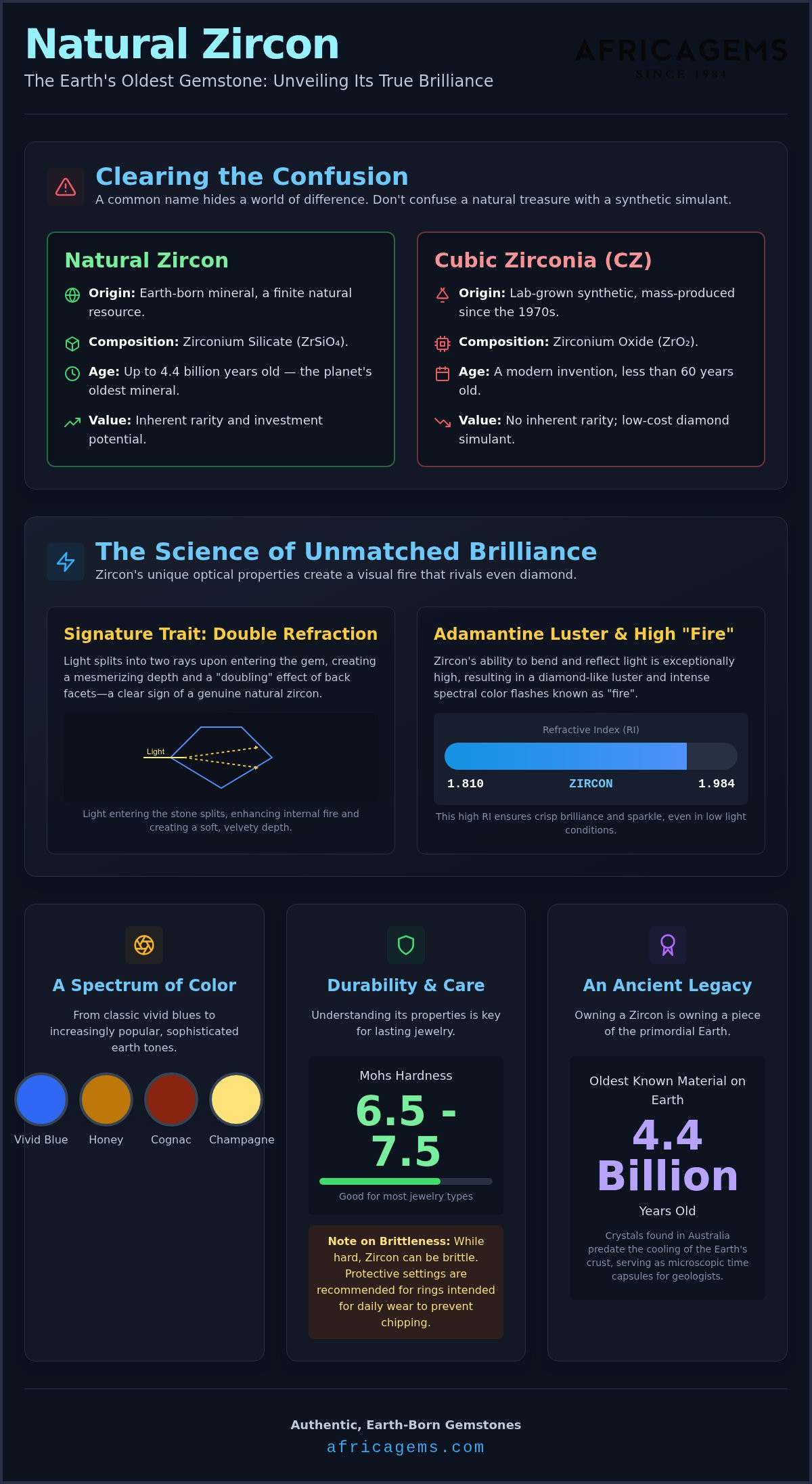
The confusion stems from their similar names, but their chemical and physical profiles are worlds apart. Cubic zirconia is a zirconium oxide mass-produced in laboratories since the 1970s. It's a synthetic simulant designed to mimic the appearance of a diamond at a fraction of the cost. Because it's man-made, it has no inherent rarity or investment value.
Natural zircon is a zirconium silicate mineral found in the Earth's crust. It's a finite natural resource that requires specific geological conditions to form. Unlike the clinical perfection of a lab-grown stone, natural loose zircon gemstones often display a characteristic known as double refraction. This means light entering the stone splits into two rays, creating a soft, blurred "doubling" of the facet edges that gives the gem a lush, velvety depth synthetic stones can't replicate.
The Ancient History of Zircon Gemstones
Zircon's story is the story of Earth itself. Scientists have identified crystals in the Jack Hills of Western Australia that date back 4.4 billion years. These microscopic time capsules formed while the planet's crust was still cooling, making them the oldest known fragments of the Earth's early history. Geologists actually use the radioactive trace elements within these crystals, such as uranium and thorium, to calculate the age of the rocks they're found in.
Beyond its scientific utility, the gem has a storied history in jewelry. During the Middle Ages, it was a staple of European collections, often referred to by the name "hyacinth" for its reddish-orange hues or "jargoon" for the colorless varieties. These stones were frequently set in ecclesiastical jewelry and royal regalia, prized for their ability to capture and throw light across a room. Today, owning a zircon means owning a piece of the primordial Earth, a legacy that spans the entirety of geological time.
The Science of Brilliance: Why Zircon Outshines Other Gems
Zircon possesses an optical profile that places it in a rarified category of gemstones. While most colored stones rely on their hue for impact, zircon commands attention through its "adamantine" luster, a technical term used to describe a surface shine that mimics the hard, metallic brilliance of a diamond. This extraordinary light return is the result of a high refractive index, which measures how much light bends as it enters the crystal. Because zircon sits between 1.810 and 1.984 on this scale, it captures and reflects light with a crispness that few other natural materials can replicate.
Understanding Double Refraction in Zircon
The most distinctive optical secret of Zircon Quality and Durability is a phenomenon known as double refraction. As light enters the stone, it doesn't just bend; it splits into two distinct rays. This creates a unique visual signature where the back facets of the gem appear doubled. If you look through the table of the stone with a jeweler's loupe, the facet edges on the bottom will appear "fuzzy" or doubled, a clear indicator that you're holding a natural zircon and not a diamond or synthetic simulant.
This doubling effect does more than just aid in identification. It adds a perceived sense of volume and "pillowy" depth to the stone. Light bounces more frequently within the crystal lattice, ensuring that the gem remains lively even in low-light environments. When you select loose zircon gemstones for a project, this internal architecture ensures the finished piece has a three-dimensional glow that appears to radiate from the very core of the material.
Comparing Zircon’s Fire to Diamond and Sapphire
Beyond its brilliance, zircon is celebrated for its dispersion, or "fire," which is the ability to break white light into its component spectral colors. Zircon's dispersion rating of 0.039 ensures that light entering the stone is broken into a vivid rainbow of spectral colors, a phenomenon often described as the stone's fire. This rating is significantly higher than that of a sapphire (0.018), meaning a zircon will always show more "rainbow flashes" than a blue sapphire of similar color. While it sits just below diamond (0.044), the presence of body color in zircon often makes these flashes appear more saturated and dramatic.
One technical detail collectors should remember is zircon's high specific gravity. It is a remarkably dense stone, which means a 1-carat zircon will be physically smaller in millimeters than a 1-carat diamond or sapphire. This density is a hallmark of its quality, contributing to the substantial feel of the gem. If you're ready to see this optical fire in person, you can explore our curated collection of heirloom-quality gemstones to find the perfect specimen for your next custom design.
A Spectrum of Color: Choosing Your Loose Zircon
Zircon's color palette is surprisingly vast, spanning from the icy depths of the ocean to the warm glow of a setting sun. While many collectors associate the mineral primarily with its vibrant blue variety, the natural spectrum includes fiery reds, sunny yellows, and sophisticated earth tones. When selecting loose zircon gemstones, understanding the origin and treatment of these colors is essential for both aesthetic satisfaction and long-term investment security. Each hue tells a different geological story, influenced by trace elements and the unique conditions of the crystal's formation.
Blue Zircon: The Cambodian Treasure
The "electric" blue variety remains the market's most coveted choice, prized for its ability to mimic the finest Paraiba tourmalines or sky-blue topazes. Most high-quality blue material originates from the Ratanakiri province in Cambodia. In its rough state, these stones are typically a muddy reddish-brown; it's through a carefully controlled heating process that they achieve their iconic teal to deep sky-blue hues. This treatment is a standard industry practice, though we believe in providing full disclosure to maintain the integrity of your purchase. As of 2026, vivid blue specimens exceeding five carats have seen a significant surge in demand, as larger, eye-clean stones from these historic mines become increasingly difficult to source.
Warm Tones and Rare Greens
Beyond the blues, the market is currently witnessing a renaissance of earthy, organic tones. Honey, cognac, and champagne zircons offer a warm, sophisticated brilliance that pairs beautifully with yellow gold settings. Many of these stones are entirely untreated, appealing to connoisseurs who value raw, natural beauty and the "as-mined" state of a gem. For those seeking a true geological curiosity, the "metamict" green zircon is a rare find. According to GIA Zircon Information, certain zircons contain trace amounts of radioactive elements that, over millions of years, break down the crystal lattice. This process results in a rare, swampy green hue that is highly prized by mineralogists and serious collectors alike.
Red and orange varieties, traditionally known as "hyacinth," provide a fiery alternative for autumnal jewelry designs. These stones possess a richness that rivals fine spessartite garnets but with the added "fire" and dispersion discussed in our technical analysis. Finally, white zircon serves as the most brilliant, natural alternative to diamonds. It's an excellent choice for those who want a genuine gemstone with high luster and spectral flashes without the investment level of a colorless diamond. Whether you're looking for a rare green or a classic blue, our curated selection of precious gemstones offers a transparent path to finding your perfect stone.
Buyer’s Guide: Quality, Origin, and Durability
Selecting loose zircon gemstones requires a balance of aesthetic appreciation and technical caution. Zircon is a paradox in the gem world. While its Mohs hardness ranges from 6.5 to 7.5, making it durable enough for most jewelry, it possesses a physical trait known as brittleness. This means that despite its resistance to scratching, the facet edges can abrade or chip if they're subjected to sharp impacts. It's a characteristic that demands respect during both the setting process and daily wear, especially when compared to more resilient stones like sapphires.
Transparency regarding origin and treatment is the cornerstone of a secure investment. We source our finest blue material from Cambodia, while Sri Lanka and Tanzania provide a breathtaking array of natural earth tones and rare hues. Most blue zircons undergo heat treatment, a stable and permanent process that we fully disclose to our clients. Natural, untreated stones from Tanzania are increasingly popular for those seeking an organic connection to the earth's history without any human intervention.
Evaluating Clarity and Cut in Loose Zircon
Because of zircon’s high refractive index, inclusions are often magnified and can disrupt the flow of light through the crystal. You should prioritize "eye-clean" stones where no internal flaws are visible to the naked eye. The "Zircon Cut" is a specific variation of the round brilliant style. It features extra facets at the culet to maximize the stone's natural dispersion and minimize "extinction," which are the dark areas often seen in poorly cut gems. A masterfully cut zircon will appear lively and bright across its entire surface.
Always purchase your stones based on millimeter dimensions rather than carat weight alone. As we've established, zircon is exceptionally dense. A 2-carat zircon will always appear smaller than a 2-carat sapphire or diamond. Measuring the setting's requirements in millimeters ensures your loose stone fits perfectly into your mounting without the disappointment of a mismatched size.
Caring for Zircon Jewelry
Collectors must be aware of "paper wear," a phenomenon where loose stones can abrade each other if stored together in a parcel or gem jar. The hard facet edges of one stone can easily scratch the surface of another during transit. When it's time to set your gem, we recommend protective mountings. Bezel settings or robust prongs offer the best defense against the accidental knocks of daily life, particularly for rings that see frequent contact.
Cleaning your jewelry should be a gentle process. Avoid ultrasonic or steam cleaners, as the heat and vibrations can stress the crystal lattice. Instead, use warm, soapy water and a soft-bristled brush to maintain that signature adamantine luster. If you're ready to find a stone that meets these rigorous standards, you can browse our certified loose zircon gemstones to find your next heirloom specimen.
Custom Jewelry Design with AfricaGems Zircons
Since 1984, AfricaGems has served as a bridge between the world's most remote mines and the private collections of discerning enthusiasts. Selecting high-quality loose zircon gemstones is only the beginning of a rewarding journey. Once you've identified a specimen that speaks to you, the challenge shifts to creating a setting that honors its unique geological history. Our founder, Marc Sarosi, personally oversees the selection of our heirloom-quality inventory, ensuring every stone meets the rigorous standards of clarity and fire we've discussed throughout this guide.
From Loose Stone to Finished Masterpiece
Choosing the right metal is a critical decision that can either mute or magnify a zircon's brilliance. For the vivid "electric" blues sourced from Cambodia, we often recommend platinum or white gold. These cool-toned metals act as a mirror, reflecting the icy flashes and spectral fire without adding unwanted warmth. Conversely, the honey and cognac tones found in Tanzanian or Sri Lankan material are beautifully enhanced by 18k yellow or rose gold. These metals draw out the rich, autumnal depths of the stone, creating a harmonious and organic aesthetic.
Our expertise extends beyond simple retail; we are partners in your creative process. Whether you're envisioning sophisticated gemstone pendants that showcase a single, high-dispersion center stone or intricate gemstone rings designed for durability, we provide the technical guidance needed for a lasting heirloom. You can explore our comprehensive custom jewelry design services to begin visualizing how your selected gem will look in a professional mounting.
Why Buy from AfricaGems?
In an industry where "synthetic" and "natural" are often blurred by deceptive marketing, AfricaGems stands as a pillar of radical transparency. We don't just sell stones; we provide a consultation. Every purchase is backed by a personal guarantee of authenticity and full disclosure of any enhancements. This commitment ensures that when you invest in a natural gem, you're receiving a piece of the primordial Earth that's been ethically sourced and professionally vetted for its investment value.
Our inventory often includes rare, unheated varieties that are virtually non-existent in mass-market retail. These stones are the connoisseur's choice, offering a level of scarcity and natural character that defines a true collector's item. We invite you to explore our full collection of loose zircon gemstones and experience the methodical, reassuring process that's made us a trusted name in the gem trade for over four decades.
Securing Your Primordial Treasure
You've now mastered the technical nuances that separate a generic simulant from a billion-year-old geological masterpiece. By understanding the science of double refraction and the shifting market for rare earth tones, you're prepared to make a selection based on data rather than myth. This knowledge ensures that your investment in loose zircon gemstones is grounded in both aesthetic appreciation and technical validation. Finding the perfect specimen requires a partner who prioritizes radical transparency and industry integrity.
Since 1984, AfricaGems has provided this security through full treatment disclosure and the expert personal oversight of founder Marc Sarosi. We invite you to apply your new expertise to our curated inventory, where every stone is selected for its potential to become a lasting family legacy. Your next custom jewelry project deserves the unparalleled brilliance and ancient history that only a natural zircon can provide. It's time to elevate your collection with a gem that truly captures nature's most brilliant fire. For those moments when you need a visual break from your research, Gammezly offers a diverse selection of free WebGL games that can be played directly in your browser.
Browse the Finest Collection of Loose Zircon Gemstones at AfricaGems
Frequently Asked Questions
Is natural zircon a real gemstone?
Natural zircon is an authentic, earth-born mineral and is recognized as the oldest mineral on our planet. It's a zirconium silicate that forms in the Earth's crust over billions of years. Unlike synthetic simulants, these loose zircon gemstones possess unique crystalline structures and high refractive indices that make them highly prized by collectors and professional jewelers for their natural brilliance and geological legacy.
Does blue zircon lose its color over time?
Blue zircon is generally color-stable under normal wearing conditions, though it can be sensitive to prolonged, intense ultraviolet light. If left in direct sunlight for extended periods, some heat-treated stones might experience a slight shift or fading. We recommend storing your jewelry in a dark, cool place when it's not in use. This simple precaution ensures the vivid "electric" blue remains as vibrant as the day it was first cut.
How can I tell the difference between zircon and cubic zirconia?
The most reliable way to distinguish them is by observing the optical phenomenon of double refraction. If you look through the top of a natural zircon with a loupe, the facet edges on the bottom will appear doubled or "fuzzy." Cubic zirconia is a singly refractive synthetic product and will never show this effect. Additionally, natural zircon is significantly heavier and possesses a unique adamantine luster that lab-grown zirconium oxide cannot perfectly replicate.
Is zircon durable enough for an engagement ring?
Zircon is durable enough for daily wear, provided the stone is protected by a sensible mounting. With a Mohs hardness of 6.5 to 7.5, it resists scratching well, but its inherent brittleness makes it susceptible to chipping on the facet edges. For an engagement ring, we suggest a bezel or semi-bezel setting rather than exposed prongs. These protective designs shield the gem from the accidental impacts typical of active, everyday life.
Are all blue zircons heat treated?
Virtually all blue zircons on the market have undergone heat treatment to achieve their signature sky-blue or teal hues. In their rough state, these stones are typically reddish-brown or yellowish-brown. Heating is an industry-standard, stable process that transforms the crystal's color without compromising its integrity. While natural, untreated blue zircon is theoretically possible, it's so vanishingly rare that it's almost never encountered in the commercial gem trade.
What is the most valuable color of zircon?
Vivid blue remains the most valuable and sought-after color, particularly for stones exceeding five carats. The market specifically prizes the "electric" blue material from Cambodia's Ratanakiri mines. However, rare unheated green zircons and deep "hyacinth" reds also command premium prices among connoisseurs. The value of loose zircon gemstones is ultimately determined by the combination of color saturation, clarity, and the precision of the cut, which maximizes the stone’s fire.
Why is zircon so heavy for its size?
Zircon is exceptionally dense because of its high specific gravity, which ranges from 4.6 to 4.7. This means the mineral's chemical components are packed much more tightly than those in most other gemstones. Consequently, a one-carat zircon will always appear physically smaller in millimeters than a one-carat diamond or sapphire. When planning a jewelry project, you must always measure your stone by its millimeter dimensions to ensure a proper fit in your mounting.
Where do the best loose zircons come from?
The finest blue material is almost exclusively sourced from the Ratanakiri province in Cambodia. Sri Lanka is another historic source, famous for producing a wide array of colorless, yellow, and green varieties. More recently, Tanzania has emerged as a premier location for stunning earth tones, including honey, cognac, and unheated brown zircons. Each of these geographic origins provides stones with distinct trace elements that contribute to their unique spectral fire and body color.

Article by
Marc Sarosi
Professional gemstone dealer for more than 40 years. Started off mining Aquamarine in Zambia, Africa and travelled throughout the continent in search of fine gems. Trusted authority on fine gemstones and have donated a fine collection of more than 27 extraordinary gemstones to the Smithsonian Institute Gem Hall for generations to see.