
Loose Tsavorite Garnets: The Connoisseur’s Guide to Buying & Comparing
Apr 7th 2026
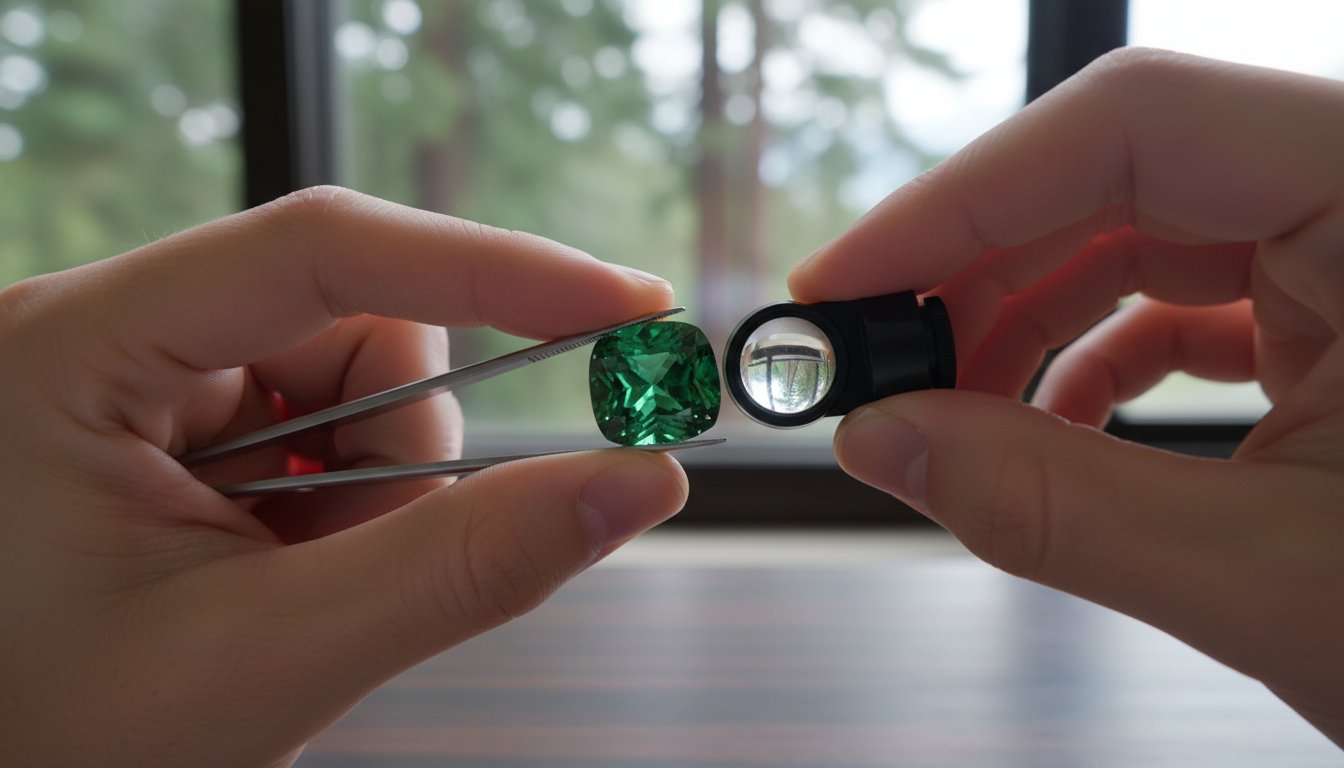
The most breathtaking green gemstone in your collection shouldn't be an emerald. While the world often chases fragile, oil-treated stones, savvy collectors are turning toward loose tsavorite garnets for their superior brilliance and natural durability. You likely recognize the allure of a vivid green hue, yet the fear of purchasing a stone with hidden, structural inclusions often stalls the dream of a custom jewelry masterpiece.
At AfricaGems, we believe in radical transparency and the integrity of the trade. This guide promises to transform you into an expert buyer by 2026 standards, teaching you how to navigate the 40% price-per-carat surge that occurs once a stone crosses the 2.00-carat threshold. We'll demystify the subtle differences between tsavorite and chrome tourmaline while showing you exactly how to source a loupe-clean gem. From evaluating saturation to understanding the AfricaGems Difference in ethical sourcing, you're about to gain the professional gemological insight required to secure a stone of lasting investment value.
Key Takeaways
- Delve into the rare, vanadium-bearing origin of this grossular variety to understand why its discovery remains a landmark event in modern gemology.
- Master professional techniques for evaluating "eye-clean" clarity and the exquisite green saturation that defines a top-tier collector's specimen.
- Uncover the technical advantages these gems hold over emeralds, including superior refractive indices and enhanced durability for lifelong wear.
- Identify high-growth investment opportunities by analyzing the supply chain and the extreme scarcity of larger loose tsavorite garnets from East African mines.
- Experience the "AfricaGems Difference" through radical transparency and ethical sourcing standards that ensure every acquisition is secure and breathtaking.
Understanding the Allure of Loose Tsavorite Garnets
Tsavorite isn't merely a green gemstone; it's a geological miracle. This vanadium-bearing variety of grossular garnet owes its vivid, forest-green hue to the same trace elements found in fine emeralds, yet its crystalline structure offers a brilliance that few other stones can match. British gem prospector Campbell Bridges first discovered this treasure in 1967 within the rugged landscapes of the Tsavo region near the border of Kenya and Tanzania. Unlike many traditional gemstones that have been traded for centuries, tsavorite is a modern masterpiece that has quickly ascended the ranks of rare gemstones prized by serious collectors.
The primary claim to fame for this stone is its remarkable purity. While the jewelry industry often relies on heat or chemical infusions to enhance color, tsavorite remains almost exclusively untreated. You can Learn more about Tsavorite and its unique chemical composition, but the essential takeaway for any buyer is its natural integrity. When you invest in loose tsavorite garnets, you're acquiring a piece of the earth exactly as it was formed millions of years ago.
Why Collectors Prefer Loose Stones Over Pre-Set Jewelry
Purchasing loose tsavorite garnets provides a level of transparency that pre-set jewelry simply cannot offer. When a stone is mounted, the metal prongs or bezels often hide "naturals" on the girdle or inclusions near the pavilion. By examining a loose stone, you gain an unobstructed 360-degree view of its anatomy. This clarity is vital for verifying the exact carat weight and millimeter dimensions to the second decimal point, which are critical metrics for investment records. Furthermore, starting with a loose stone offers the ultimate creative freedom. Once you've secured a high-quality gem, you can utilize custom jewelry design services to build a setting that complements the stone's specific dimensions rather than forcing a gem into a mass-produced mount.
The "Untreated" Advantage
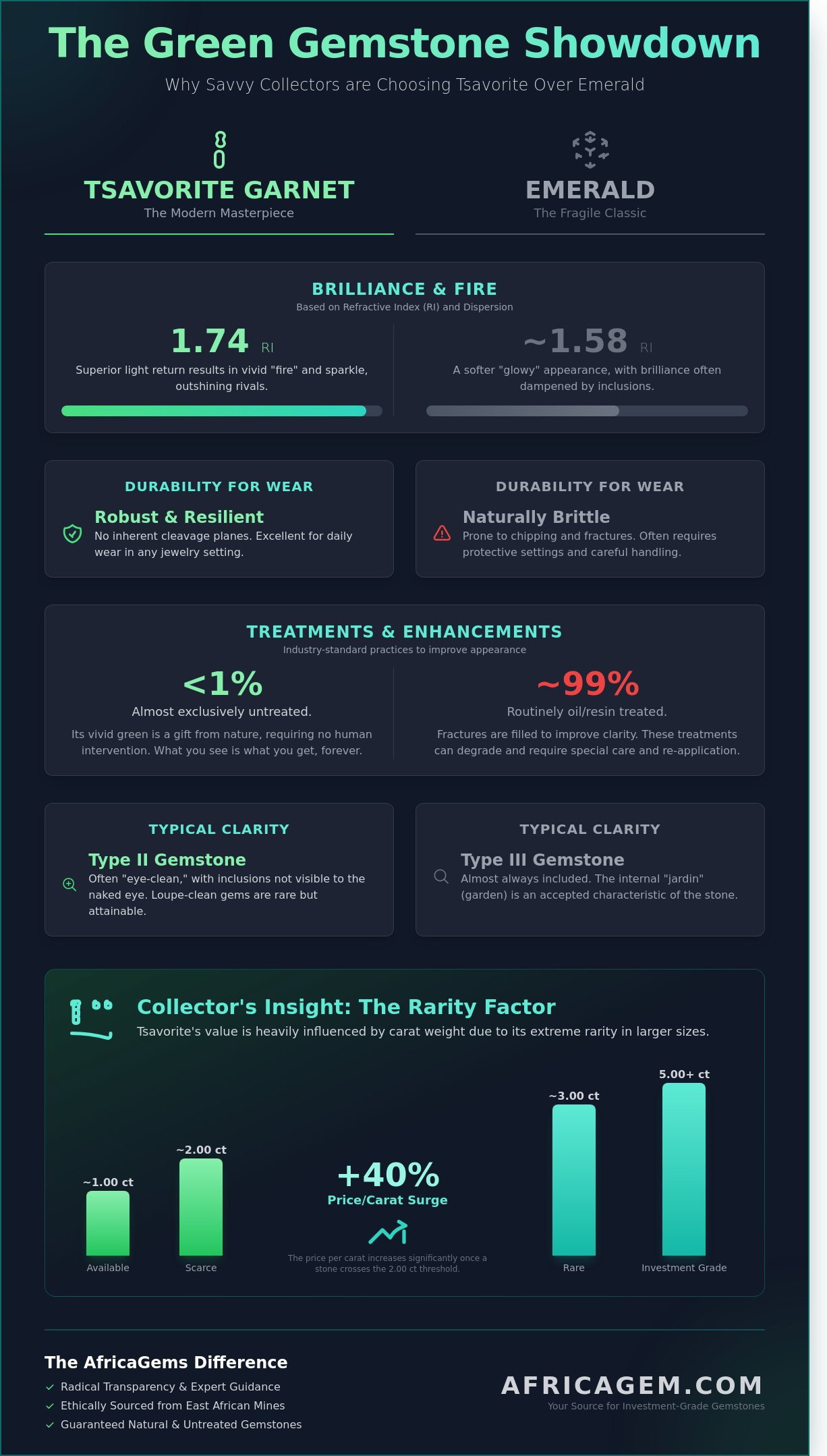
In the current market, the "natural and unheated" status of a gemstone is a primary driver of value. This is especially true as we look toward 2026, where buyer demand for ethical transparency has reached an all-time high. Consider the emerald, tsavorite’s main rival. Industry data shows that approximately 99% of emeralds undergo oiling or resin treatments to hide internal fractures. Tsavorite requires none of this. It possesses high refractive index and durability without human intervention. This lack of treatment provides a psychological peace of mind. You don't have to worry about special cleaning requirements or the "fading" of treatments over time. For the ethically-minded buyer, the AfricaGems Difference means providing stones that are as honest as they are beautiful. This radical transparency ensures that the vibrant green you see today is the same green that will be admired by future generations.
Evaluating Quality: The 4Cs of Tsavorite Garnet
Buying loose tsavorite garnets requires a shift in perspective from traditional diamond grading. While the 4Cs remain the standard framework, color is the undisputed king. This rare variety of grossular garnet offers a combination of a high refractive index of 1.74 and a dispersion rate of 0.027. This means a well-cut stone will literally outshine an emerald, providing a vivid "fire" that few other green gems can match. As you evaluate a potential purchase, remember that the goal is to find a stone where the cut and clarity serve to amplify its natural hue.
The Ideal "Vivid Green" Standard
The most coveted stones sit in a specific sweet spot: a medium-dark tone with vivid saturation. You want a green that feels alive, reminiscent of a lush forest under the midday sun. Avoid stones that lean too heavily toward yellow or appear overly dark. In low-light environments, a stone with a tone deeper than 80% will often appear black, losing its vibrant identity. Lighting is critical for your evaluation. Daylight or cool white light at 5500K reveals the true brilliance of the green, while warm incandescent bulbs can make the green appear slightly "sleepy" or muted. If you're looking for the pinnacle of this variety, you can explore our curated collection to see the "vivid green" standard in person.
Clarity and Inclusions: What is Acceptable?
Unlike their cousins in the beryl family, tsavorites are typically Type II stones. This means they often occur with fewer visible flaws than other green gems. Most connoisseurs expect a tsavorite to be "eye-clean," where no inclusions are visible to the naked eye at a distance of 15 centimeters. Common internal features include delicate, needle-like crystals or "feathers" that serve as a fingerprint of their natural, untreated origin. This transparency is often significantly higher than what you find in emerald gemstones, which are notoriously "garden-like" with heavy inclusions. While a loupe might reveal tiny crystals, the stone should remain transparent and bright.
The rarity of these stones scales exponentially with size. A 3-carat tsavorite is roughly 200 times rarer than a 1-carat specimen. To put this in perspective for collectors, a high-quality 3-carat tsavorite is statistically harder to find than a 3-carat blue sapphire. This extreme scarcity is a recurring theme in the USGS report on garnet minerals, which highlights the unique geological conditions required for these stones to form in the Neoproterozoic Mozambique Belt. When you find a large, eye-clean stone with vivid saturation, you're looking at a true geological miracle.
- Color: Aim for 70-80% tone; avoid "black-out" in low light.
- Clarity: Prioritize eye-clean stones over loupe-clean perfection.
- Cut: Look for "brilliance" across the entire face of the gem; avoid windows.
- Carat: Stones over 2 carats represent a significant jump in investment value.
The Green Gemstone Dilemma: Tsavorite vs. Emerald and Rivals
Choosing between the world's finest green stones requires looking past the surface color. While emeralds have held the crown for centuries, loose tsavorite garnets offer a combination of brilliance and durability that modern collectors often find superior. This "honest" gemstone provides a vivid, neon green without the high-pressure treatments common in other species.
Tsavorite vs. Emerald: The Battle for Green Supremacy
Emeralds sit at 7.5 to 8 on the Mohs scale, technically harder than tsavorite’s 7.25. However, hardness only measures scratch resistance. Emeralds are notoriously brittle due to their "jardin," the network of internal fractures present in 99% of commercial stones. Tsavorite lacks this fragility and requires no oil or resin treatments to look its best. Its refractive index of 1.74 outshines emerald’s 1.57, resulting in a stone that sparkles even in low light. Since 2021, top-tier tsavorite prices have risen by approximately 14% annually as supply from the Taita-Taveta region becomes harder to extract at depth.
- 1-Carat Comparison: A fine tsavorite may cost $1,200 to $2,500, while a comparable no-oil emerald can easily exceed $5,000.
- 5-Carat Comparison: The rarity of large tsavorite crystals is extreme. A 5-carat gem is a true museum piece, often commanding $15,000 per carat or more.
The "Other" Green Garnet: Tsavorite vs. Demantoid
Demantoid garnets are the only true rivals for fire. While tsavorite is a grossular garnet, demantoid is an andradite. This chemical shift gives demantoid a dispersion of 0.103, which is significantly higher than a diamond’s 0.044. You’ll see more rainbow flashes in a demantoid, but tsavorite wins on pure, vivid saturation. Collectors often prioritize Russian demantoids specifically for their "horsetail" inclusions, fibrous chrysotile bundles that act as a signature of origin. If you prefer a "glow" over "fire," tsavorite is your stone.
Tsavorite vs. Chrome Tourmaline
Chrome tourmaline serves as a convincing lookalike at a much lower price point. You can often find a 5-carat chrome tourmaline for $2,000 to $3,500, whereas a 5-carat tsavorite of similar color is a five-figure investment. Use a Chelsea filter to tell them apart; many loose tsavorite garnets show a distinct red or pinkish glow under the lens, while tourmaline reacts differently. While tourmaline is beautiful, it lacks the prestige and the high refractive index that gives tsavorite its characteristic "neon" punch.
For those who prioritize extreme durability and a different tonal range, loose spinel gemstones are an excellent alternative. Spinel offers an 8 on the Mohs scale and exceptional clarity, making it a rugged choice for daily-wear jewelry that still satisfies the connoisseur's eye.
Collector’s Strategy: Sizing, Origin, and Investment Value
Most loose tsavorite garnets originate from a narrow tectonic belt stretching across the Kenya-Tanzania border. Geologically, these stones formed under intense heat and pressure over 600 million years ago. Unlike many gems that pass through dozens of middlemen, the most valuable tsavorites often move directly from the mouth of the mine in places like the Taita-Taveta District to specialized dealers. This direct chain ensures stone integrity and ethical provenance, which are the hallmarks of a savvy collector's acquisition.
The 2-Carat Threshold Explained
Tsavorite crystals are notoriously fragile during their formation. They often grow in nodules or "potatoes," heavily fractured by the very tectonic shifts that created them. Finding a clean crystal that can yield a faceted stone over 2 carats is a statistical anomaly. This scarcity creates a massive price cliff. A 2.01-carat gem can command a price per carat 40% to 60% higher than a 1.99-carat stone of identical quality. Smart collectors often target "oversized" 1.80-carat to 1.95-carat stones. These provide the visual presence of a 2-carat gem without the steep price premium. Once you reach the 5-carat mark, you're entering the realm of museum-grade rarities where prices move from thousands to tens of thousands per carat.
Origin: Does it Matter for Tsavorite?
Collectors often ask if the Lualenyi (Kenya) or Merelani (Tanzania) labels impact value. Unlike the massive premiums seen with loose burma rubies, tsavorite value remains primarily driven by color and clarity rather than a specific mine. However, Kenyan stones from the original Campbell Bridges discoveries still hold a certain historical prestige. The AfricaGems Difference centers on full disclosure; we provide independent lab reports from GIA or AGL for any significant investment-grade stone. These reports provide several critical layers of security:
- Species Identification: Confirms the stone is natural grossular garnet and not a synthetic or a different green species like tourmaline.
- Treatment Status: Verifies the gem is untreated, as loose tsavorite garnets are never heated or oiled.
- Weight Precision: Essential for stones hovering near the 2-carat or 5-carat marks where a fraction of a point changes the value.
High-value transactions require this objective validation. It transforms a simple purchase into a secure asset. By focusing on stones with vivid saturation and excellent transparency, you ensure your collection holds its value over the long term, regardless of which side of the border the stone was pulled from.
Why Source Your Loose Tsavorite from AfricaGems
Marc Sarosi established AfricaGems in 1984, building a 40 year reputation on the ground in East Africa. He doesn't just buy from wholesalers; he understands the geological pulse of the mines in Kenya and Tanzania. This deep-rooted history allows us to secure the finest rough material before it ever reaches the open market. We call this the AfricaGems Difference. It’s a commitment to radical transparency and ethical stewardship that ensures every gem is conflict-free and accurately represented. We provide full disclosure on every stone, so you know exactly what you’re adding to your collection.
Our curated selection focuses exclusively on the top 1% to 5% of all mined material. We categorize these as Heirloom and AAA grade stones. These loose tsavorite garnets possess the intense forest-green saturation and high refractive index that serious connoisseurs demand. You won't find washed-out or overly dark stones here. Instead, you’ll find gems with exceptional brilliance and "eye-clean" clarity that stand out in any lighting environment. We prioritize the integrity of the cut to ensure that the light return is maximized, giving each stone its characteristic "neon" glow.
Guarantees and Security
Security is the bedrock of high-end gem collecting. We offer a 100% money-back guarantee for 30 days. This no-questions-asked policy ensures you can inspect your stone in your own lighting conditions without any financial risk. Every major loose stone in our inventory includes a third-party laboratory certification from respected institutions like the GIA, AGL, or Gubelin. These reports verify the stone’s origin and natural state. To learn more about protecting your capital, read our expert guide to buying gemstones online.
From Loose Stone to Masterpiece
Acquiring the perfect stone is often the start of a creative journey. You can pair your green garnet with loose paraiba tourmalines to create a high-contrast, vibrant multi-gem look that captures the essence of tropical waters and lush forests. Our design team works with you to create a bespoke setting that protects the gem. Since tsavorite has a Mohs hardness of 7.25, a well-designed setting is vital for longevity. We ensure the prongs or bezels are placed strategically to safeguard the stone's edges. Browse our current inventory of loose tsavorite garnets to find a centerpiece for your next heirloom piece.
Secure Your Investment in Rare Green Brilliance
Mastering the acquisition of loose tsavorite garnets transforms a simple purchase into a strategic addition to your luxury portfolio. You've learned how these stones offer a superior refractive index and greater durability than traditional emeralds. These gems remain one of the few varieties that require zero artificial treatments, maintaining their natural integrity from mine to market. By prioritizing vivid saturation and GIA-verified clarity, you ensure your gemstone possesses both breathtaking beauty and long-term investment value.
AfricaGems provides the professional authority you need when navigating the high-end market. Our 40 years of specialized expertise means every gem is hand-selected by a GIA Graduate Gemologist to guarantee exceptional optical performance. We stand behind our radical transparency with a 100% money-back guarantee, so you can shop with absolute security. It's time to own a piece of Earth's history that truly reflects your refined taste and status as a true connoisseur.
Explore Our Hand-Selected Inventory of Loose Tsavorite Garnets
Frequently Asked Questions
Is tsavorite garnet more expensive than emerald?
Tsavorite garnet generally costs less than a high-quality emerald of comparable size and clarity. While a fine 3-carat Colombian emerald often commands prices over $10,000 per carat, a top-tier tsavorite of the same weight typically ranges from $3,000 to $5,000 per carat. You're getting a stone with a higher refractive index and no oil treatments for roughly half the financial outlay of a traditional emerald.
Does tsavorite garnet break easily in a ring?
Why is tsavorite never heat-treated?
Tsavorite remains untreated because its chemical composition simply doesn't respond to heat or radiation. While 95% of sapphires and rubies undergo thermal enhancement to improve color, 100% of the tsavorite supply reaches the market in its natural state. This inherent purity is a hallmark of the AfricaGems Difference. It ensures you own a gem exactly as nature created it over 2 billion years ago without artificial interference.
What is the most valuable color for a tsavorite garnet?
The most valuable color is a vivid, highly saturated forest green that rivals the finest "chrome" hues found in top-tier emeralds. GIA grading identifies the "vivid green" category as the peak of value, where the stone shows no yellow or brown undertones. Stones displaying this specific saturation level can command a 40% price premium over lighter, mint-colored varieties that lack the same visual depth and intensity.
How can I tell if my loose tsavorite is real or synthetic?
You can verify a tsavorite's authenticity by checking its refractive index, which sits consistently at 1.74. Most "fakes" are actually Green YAG or glass, which show different optical properties under a refractometer. If you're inspecting loose tsavorite garnets, look for small, rounded crystal inclusions under 10x magnification. These natural "birthmarks" are rarely found in synthetic imitations and confirm the stone's organic origin from the earth.
What happens to the price of tsavorite as the carat weight increases?
Price per carat for tsavorite increases exponentially once a stone exceeds the 2-carat mark due to extreme geological rarity. While a 1-carat gem might cost $800, a similar quality 3-carat stone can jump to $4,000 per carat because large, clean crystals are statistically scarce. Only 1 in 1,000 mined specimens yields a faceted gem weighing more than 5 carats, making large stones true collector items for connoisseurs.
Is tsavorite a good investment for 2026?
Tsavorite remains a strong investment candidate for 2026 due to dwindling supply from the Taita-Taveta mines in Kenya. Market data shows a consistent 10% to 15% annual price appreciation for stones over 2 carats during the last five years. As collectors pivot toward untreated gems, the scarcity of this African treasure ensures its value will likely outpace traditional inflation and standard market returns in the coming years.