
Loose Tanzanite Gemstones: The Connoisseur’s Guide to Quality, Rarity, and Value
Sep 21st 2026
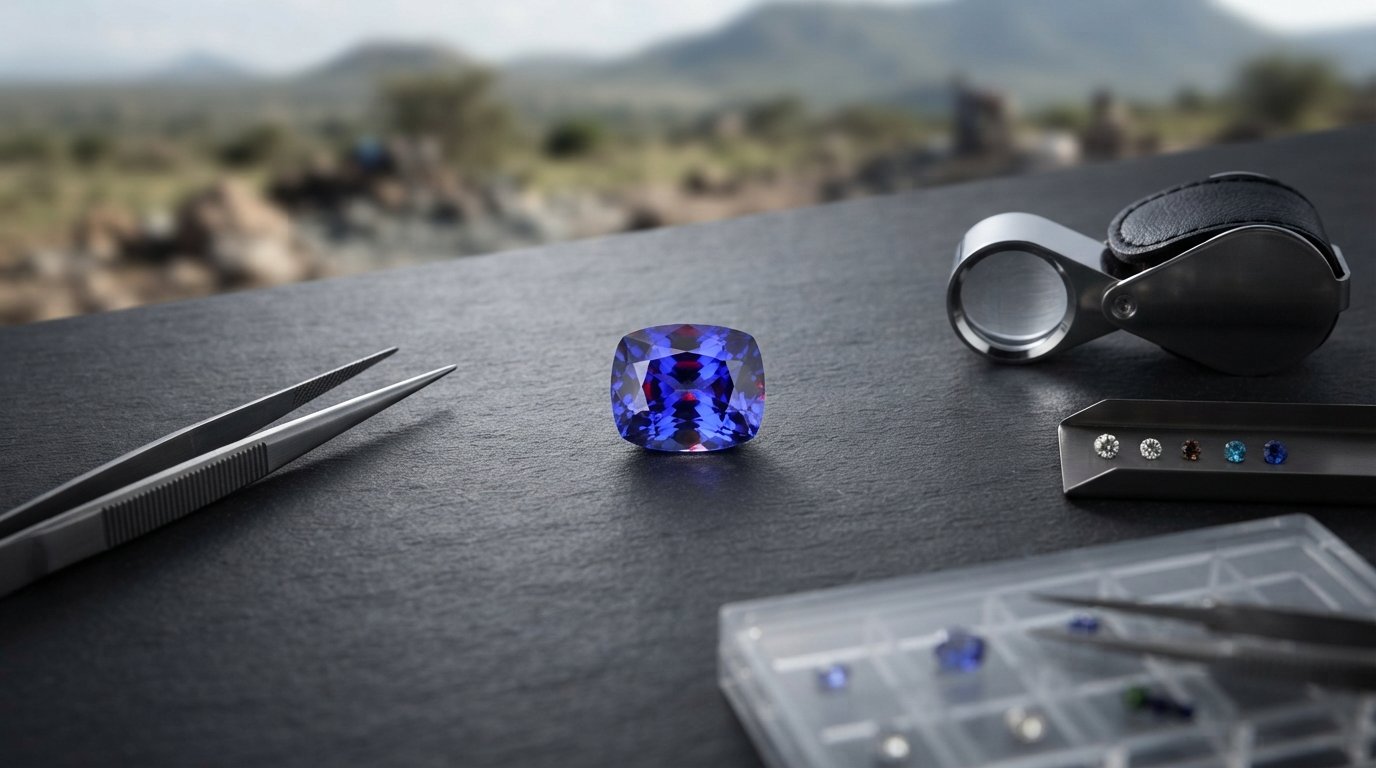
Did you know that the geological conditions required to form a single crystal in the Merelani Hills are so specific that tanzanite is considered 1,000 times rarer than a diamond? For collectors seeking loose tanzanite gemstones, this extreme scarcity creates a high-stakes environment where the difference between a commercial stone and an heirloom investment is often hidden behind non-standardized grading labels like AAAA. You’ve likely felt the frustration of trying to compare two stones online only to find that vivid blue means something different to every dealer. It’s natural to feel anxious about whether you’re paying for true saturation or just clever photography.
I recognize that the lack of industry-wide standards can make your search feel like a gamble. This guide is designed to remove that uncertainty by giving you the same technical framework used by professional gemologists to evaluate color, clarity, and pleochroism. You’ll learn how to identify the rare red flash in top-tier stones and understand the 2026 market benchmarks that define true value. We’ll also examine the ethics of African mining and the importance of radical transparency in treatment disclosure. By the end, you’ll have the confidence to secure a museum-quality specimen that serves as both a stunning centerpiece and a legacy asset.
Key Takeaways
- Understand why tanzanite is a "single-source" marvel found only in the Merelani Hills and how its finite supply influences long-term market rarity.
- Master the technical grading criteria for loose tanzanite gemstones to identify the vivid saturation and pleochroic "red flash" characteristic of investment-grade specimens.
- Learn the truth about standard thermal enhancements and how to distinguish stable, ethically sourced stones from inferior, over-treated imitations.
- Discover the strategic benefits of buying unmounted stones, allowing for a full 360-degree inspection before commissioning a custom heirloom setting.
- Explore how expert curation and a comprehensive inspection period ensure you secure a high-value gemstone with total professional accountability.
The Allure of Loose Tanzanite: A Single-Source Marvel
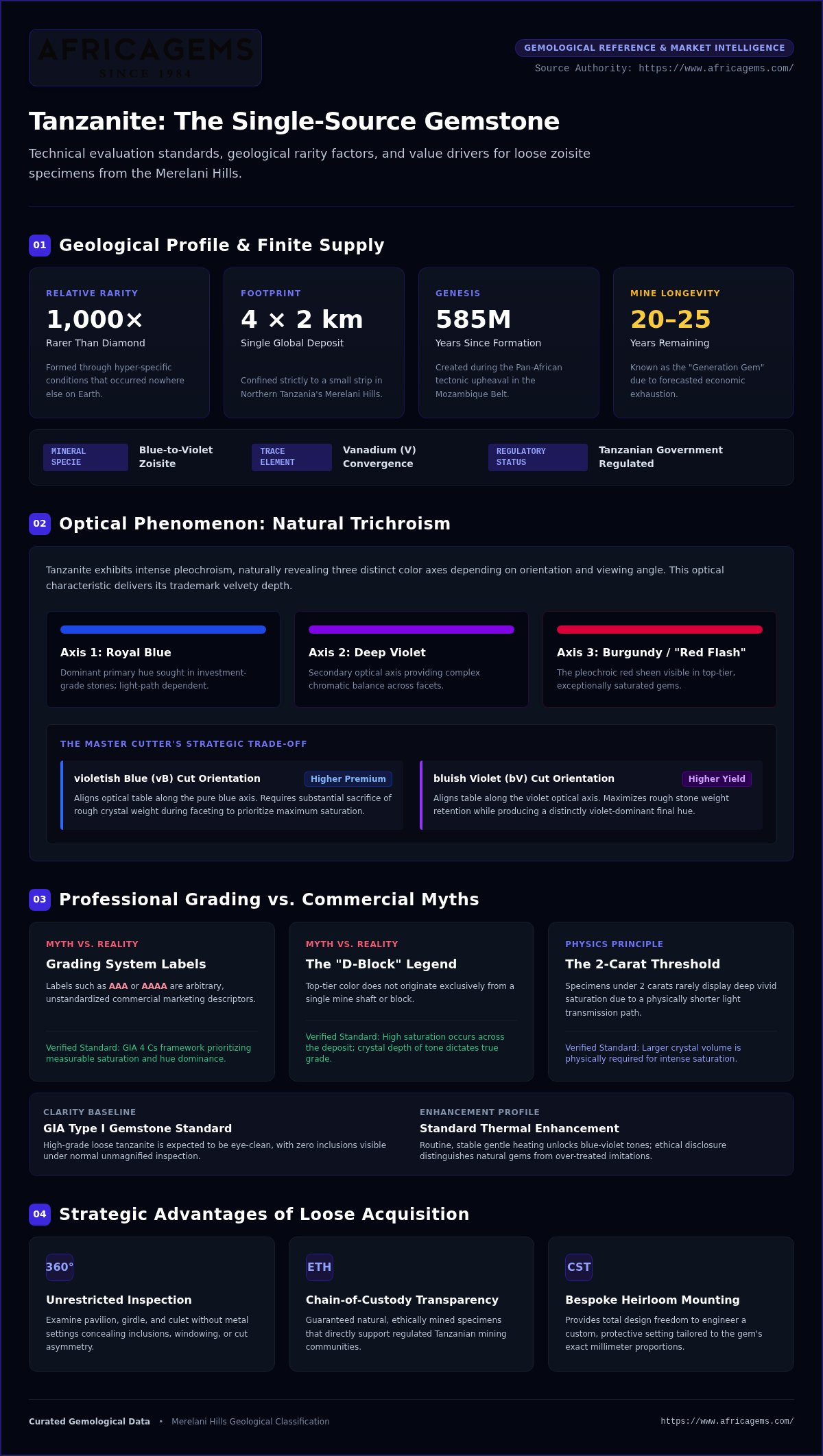
Tanzanite is more than a beautiful accessory; it is a geological anomaly. Known scientifically as the blue-to-violet variety of the mineral zoisite, it owes its existence to a "perfect storm" of tectonic events that occurred roughly 585 million years ago. Unlike diamonds or sapphires, which are found across multiple continents, loose tanzanite gemstones originate from a single, tiny strip of land measuring roughly four kilometers long by two kilometers wide. This localized area in the Merelani Hills of Northern Tanzania is the only place on Earth where the specific pressure, temperature, and chemical environment, specifically the presence of vanadium, converged to create this remarkable crystal.
For those seeking the geological background of tanzanite, it’s clear that we’re dealing with a finite resource. Current extraction rates suggest the mines may reach economic exhaustion within the next 20 to 25 years. This has led many experts to label it the "Generation Gem" because the mines will likely be exhausted within our lifetime. Once these reserves are gone, there is no secondary source to turn to. At AfricaGems, we take this rarity seriously. Our commitment to sourcing only natural, ethically mined specimens ensures that your acquisition supports legitimate mining communities while preserving the integrity of this rare material.
Geological Rarity and the Merelani Hills
The formation of tanzanite required the massive tectonic upheaval of the Pan-African event, which created the Mozambique Belt. This process pushed rare elements together under conditions that haven't been replicated anywhere else on the planet. No other location possesses the precise chemistry required to produce the deep, saturated hues found in the Merelani Hills. Today, the Tanzanian government maintains strict ethical oversight of these mines, ensuring that the wealth generated by this single-source marvel benefits the local economy through regulated mining licenses and social responsibility initiatives.
Trichroism: The Gemstone that Changes with Your Perspective
One of tanzanite's most captivating traits is its intense trichroism. This optical property allows the stone to display three distinct colors, specifically royal blue, deep violet, and flashes of burgundy, depending on the angle of observation. A master cutter faces a significant strategic choice when handling rough crystals. Orienting the gem to emphasize a pure royal blue often results in a lower carat weight, while focusing on the violet axis preserves more of the rough stone. Trichroism is the optical phenomenon that gives tanzanite its "velvety" depth. When you evaluate loose tanzanite gemstones, observing how these colors shift under different light sources is essential to understanding the stone's true quality.
Mastering Tanzanite Quality: The Professional Grading Framework
Evaluating loose tanzanite gemstones requires moving beyond the subjective marketing labels like AAA or AAAA often found on mass-market sites. These terms aren't regulated industry standards; they're convenient shorthand that can often obscure a stone's true technical profile. Instead, serious collectors rely on the 4 Cs framework, where color saturation reigns as the supreme driver of value and rarity.
The Color Hierarchy: From Lilac to Vivid Deep Blue
The hierarchy of color is complex. In the trade, we distinguish between violetish Blue (vB) and bluish Violet (bV). A vB stone, where blue is the primary hue, typically commands a higher premium because it requires a more significant sacrifice of rough material during the cutting process. You've likely heard of "D-Block" tanzanite, but it's a common industry myth that only one mining block produces top color. Quality is found across the Merelani deposit; it's the saturation level and depth of tone that matter, not the specific shaft it came from. Size also plays a critical role. It's rare for stones under 2 carats to exhibit the intense, deep saturation found in larger specimens because the light path through the crystal is shorter. For a deeper dive into these nuances, the GIA tanzanite quality factors provide a definitive scientific baseline for your research.
Clarity and Durability Considerations
Clarity in tanzanite is held to an exceptionally high standard. Under GIA Type I clarity standards, these gems are expected to be eye-clean, meaning no inclusions are visible to the naked eye. While internal characteristics are part of a natural stone's story, they significantly detract from the value of tanzanite more than they would in a ruby or emerald. Durability is another vital factor for your collection. With a Mohs hardness of 6.5 to 7.0, tanzanite is slightly softer than other precious gemstones like sapphires. This doesn't mean it's fragile, but it does mean that the quality of the cut must account for the stone's perfect cleavage to ensure it remains secure in a setting for generations.
A precision cut does more than just ensure symmetry; it unlocks the stone's pleochroic potential. In top-tier specimens, you'll see a distinct "red flash" or magenta secondary color. This isn't a separate pigment but a result of light reflecting off the burgundy axis of the crystal. Only master lapidaries can orient the stone to maximize this effect while maintaining the velvety depth that defines an heirloom-quality gem. If you're ready to see how these technical factors manifest in person, you can browse our curated selection of loose tanzanite gemstones to compare saturation levels across different cuts.
The Reality of Treatments and Origin
Transparency is the cornerstone of trust when you're purchasing loose tanzanite gemstones. While many dealers gloss over the subject of enhancements, a sophisticated collector understands that disclosure isn't just a legal requirement; it's a mark of integrity. At AfricaGems, we operate with a policy of radical transparency, ensuring that every specimen's history is fully documented before it enters your collection.
Heat Treatment: Science vs. Marketing
Heat treatment in tanzanite isn't a synthetic alteration or a lab-grown process. Instead, it mimics the natural geothermal heat that would have eventually transformed the crystal underground over millions of years. This low-temperature enhancement, typically conducted between 400°C and 600°C, is permanent, stable, and undetectable by standard gemological testing. Roughly 95% of tanzanite on the market is heated to remove the brownish-green "zoot" tint, allowing the vibrant blue and violet axes to dominate. It's a universally accepted practice, provided it's disclosed. However, "over-treated" stones, which are pushed to extreme temperatures to force color into low-grade rough, can become brittle. Understanding these nuances is vital for long-term preservation, as detailed in the American Gem Society tanzanite care and durability guidelines.
The Holy Grail: Unheated Blue Tanzanite
While heated stones are the industry standard, the true "Holy Grail" for connoisseurs is the unheated blue specimen. These are rare treasures that emerged from the Merelani Hills already possessing a vivid blue or violet hue, having been heated by natural tectonic activity rather than human intervention. These stones are exceptionally scarce, representing a tiny fraction of the total mining yield. Consequently, certified unheated specimens command a significant price premium, often 20% to 50% higher than their heated counterparts of equal saturation. For those interested in the deeper origin history of these treasures, the geological journey from rough crystal to faceted masterpiece is a fascinating study in rarity.
Beyond the classic blue-violet spectrum, the Merelani deposit occasionally produces "Fancy Color" zoisite. When collecting loose tanzanite gemstones in these rare varieties, you may encounter:
- Mint Green: Refreshing, bright hues often found in smaller crystals.
- Golden Yellow: Rare specimens that sometimes exhibit bi-color "watermelon" effects.
- Pink and Orange: The rarest of the fancy colors, highly prized by museum-level collectors.
I believe that full disclosure regarding product enhancements is a recurring thematic marker that distinguishes a voice of radical transparency. Whether a stone is unheated or has undergone standard thermal enhancement, our personal guarantee ensures that the integrity of the industry remains uncompromised.
Why Buy Loose? The Strategic Path to Custom Heirloom Jewelry
Choosing loose tanzanite gemstones is the definitive hallmark of a serious collector. While pre-set jewelry offers convenience, it often requires the buyer to accept compromises in cut quality or setting security that a connoisseur would otherwise avoid. By acquiring a stone in its loose state, you gain the rare opportunity to conduct a total, 360-degree inspection of the gem’s architecture before it's obscured by metal prongs or bezels. This approach isn't just about aesthetics; it's a strategic move that ensures you're investing in a specimen with structural integrity and master-level faceting.
From a financial perspective, purchasing the gemstone and the mounting separately is almost always more advantageous. Traditional retail models often bundle the cost of the setting and the stone, making it difficult to discern the true value of either component. When you buy loose, you pay for the intrinsic quality of the mineral itself. This transparency allows you to allocate your budget toward a higher-grade stone, knowing that the subsequent custom design will be tailored specifically to that gem’s unique dimensions and optical properties.
Transparency in Evaluation
One of the most significant risks in buying pre-set jewelry is the "window." This is an area in the center of a faceted stone where light leaks through the pavilion rather than reflecting back to the eye, resulting in a dull, washed-out appearance. Settings are frequently designed to mask these windows or hide inclusions near the girdle. When you evaluate loose tanzanite gemstones, you can inspect the pavilion and culet with a loupe to ensure the angles are precise. This level of scrutiny is essential for a gem with tanzanite’s perfect cleavage, as it allows you to verify that no internal stresses or chips are hidden beneath a setting. You can explore our diverse shop mountings to see how different styles can eventually showcase your selected stone.
The Custom Design Journey at AfricaGems
The transition from a loose gem to a finished heirloom is a deeply personal creative process. Custom jewelry design services allow you to choose metals that specifically enhance the trichroic nature of your stone. For instance, platinum or white gold can emphasize the cool, royal blue tones, while high-karat yellow gold can bring out the warmth of the violet and burgundy flashes. This bespoke approach also facilitates the creation of perfectly matched sets. Finding identical saturation and cut in pre-set gemstone earrings is notoriously difficult, but selecting two loose stones simultaneously ensures a flawless match for your custom project.
If you're ready to begin your journey toward a one-of-a-kind masterpiece, I invite you to browse our collection of loose gemstones and find the perfect center stone for your vision.
Choosing Your Tanzanite: The AfricaGems Expert Consultation
Selecting high-value loose tanzanite gemstones is a decision that requires more than just a data sheet. While some platforms rely on automated algorithms or AI recommendations to suggest stones, AfricaGems prioritizes the human eye and decades of gemological expertise. Every specimen in our collection undergoes a rigorous personal inspection by founder Marc Sarosi. This expert curation ensures that only the top 5% of tanzanite crystals, those with exceptional saturation and precise faceting, are admitted into our inventory. We don't just sell stones; we offer pieces that we would be proud to include in our own private collections.
Trust is built through radical transparency and verified data. For investment-grade specimens, we provide independent certification from world-renowned laboratories like the GIA or AGL. These reports offer an objective validation of the stone’s weight, dimensions, and treatment status, giving you absolute peace of mind. To further secure your transaction, we offer a 30-day "No Questions Asked" return policy. This allows you to inspect the stone in your own lighting conditions and consult with your local jeweler before making a final commitment. It's a level of security that mirrors the natural decision-making process of a serious collector.
The AfricaGems Difference
Our legacy in the gemstone trade spans over four decades. Operating continuously since 1984, AfricaGems has cultivated deep relationships within the Tanzanian mining community. This longevity allows us to secure priority access to the finest rough material from the Merelani Hills. We act as your knowledgeable mentor, guiding you through the technical nuances of the market with a voice of professional authority. For those interested in the logistical aspects of a high-value purchase, our guide on how to buy gemstones online provides essential security tips for the modern collector.
Next Steps for the Collector
Finding the perfect centerpiece for your custom project is a methodical process. Our digital storefront features advanced filters that allow you to sort our inventory by shape, whether you prefer the classic brilliance of an Oval, the modern edge of a Trillion, or the velvety depth of a Cushion cut. If you require a more intimate look at specific loose tanzanite gemstones, we encourage you to request additional high-definition videos or macro photography. This personal consultation transforms a digital transaction into a bespoke experience. When you're ready to secure a legacy-grade gemstone, we invite you to View Our Curated Collection of Loose Tanzanite and discover the AfricaGems standard for yourself.
Securing Your Legacy in Blue and Violet
You now possess the technical framework to distinguish between commercial grades and investment-quality specimens. By focusing on vivid color saturation and precision faceting rather than subjective marketing labels, you can ensure your collection includes only the finest zoisite from the Merelani Hills. Choosing loose tanzanite gemstones is a strategic act of connoisseurship that prioritizes structural integrity and long-term value. It’s about more than just beauty; it’s about securing a piece of geological history that will likely be exhausted within our lifetime.
AfricaGems has provided secure worldwide shipping since 1997, backed by the personal guarantee of founder Marc Sarosi. Our commitment to radical transparency means you receive full treatment disclosure on every stone, ensuring you remain an informed insider in the world of rare materials. Whether you're a dedicated collector or planning a custom heirloom piece, the right stone is waiting to be discovered. I invite you to Browse Investment-Grade Loose Tanzanite at AfricaGems and find a gem that resonates with your personal vision. Your journey into the heart of Tanzania's most famous treasure begins here.
Frequently Asked Questions
Is tanzanite a good investment in 2026?
Tanzanite remains a compelling acquisition because it is a "single-source" gemstone with strictly finite reserves. Current geological assessments estimate that the Merelani Hills mines will reach economic exhaustion within the next 20 to 25 years. This "Generation Gem" status makes investment-grade specimens increasingly rare on the secondary market. Collectors view these stones as finite legacy assets. They're destined for heirloom transfer rather than being treated as mass-market commodities.
How can I tell if a loose tanzanite is real or synthetic?
True laboratory-grown synthetic tanzanite does not exist in the commercial market. Most imitations are simulants like blue-violet glass, synthetic forsterite, or coated materials like Nanosital. You can verify authenticity through a professional gemological report from the GIA or AfricaGems. These analyses confirm the stone is natural zoisite. Observing trichroism, the ability to show three colors from different angles, is a definitive indicator of genuine loose tanzanite gemstones.
Does tanzanite require special care when set in a ring?
Tanzanite possesses a Mohs hardness of 6.5 to 7.0 and one direction of perfect prismatic cleavage. This makes it more delicate than sapphires. You should never clean your tanzanite ring in an ultrasonic or steam machine. The vibrations and heat can trigger fractures along the cleavage planes. Instead, use warm soapy water and a soft brush. Protective settings like bezels or thick prongs are ideal for ensuring the gem’s long-term security.
What is the most valuable color for a loose tanzanite?
The most valuable specimens exhibit a vivid, deeply saturated royal blue with a secondary violet hue. In the trade, these represent the top 1% color threshold, requiring a saturation level above 85%. Connoisseurs specifically look for the "red flash" or burgundy highlights that appear under warm or incandescent lighting. This saturation level typically represents a tiny fraction of the total mining yield, commanding the highest per-carat valuations in the global market.
Why is some tanzanite more violet than blue?
The balance between blue and violet is determined by how the lapidary orients the crystal during the faceting process. Tanzanite is trichroic, meaning it shows blue, violet, and burgundy along different optical axes. Cutting the stone along the c-axis often preserves more weight but results in a violet-dominant gem. Orienting for a pure royal blue requires sacrificing up to 30% of the rough material. It's why blue-dominant loose tanzanite gemstones carry a premium.
Do AfricaGems tanzanite gemstones come with a certificate?
Every gemstone we sell is accompanied by a comprehensive AfricaGems Gemstone Grading Analysis or an independent third-party report. We provide certificates from the Gemological Institute of America (GIA), AGTA, or GRS for high-value specimens. These documents provide objective validation of the stone’s dimensions, clarity, and treatment status. It's a pillar of our radical transparency policy. It ensures the integrity of your purchase and builds lasting buyer confidence.
Can I use a loose tanzanite for an engagement ring?
You can certainly use tanzanite for an engagement ring if you choose a protective mounting. Because the stone is softer than a diamond, we recommend settings like halos or bezels that shield the edges of the gem. It's a popular choice for those seeking a unique, vibrant alternative to traditional stones. Our custom jewelry design services can help you create a structurally optimized setting that balances elegance with necessary durability.
What happens to the price of tanzanite if the mines close?
Prices will likely face significant upward pressure once the Merelani Hills reserves are exhausted. When a "single-source" gem moves from an active mining phase to a finite secondary market, availability drops sharply. Collectors who secure heirloom-quality stones now are positioned to benefit from this inevitable transition. This shift from a primary source to a legacy asset is why many consider current market rates to be a strategic entry point for serious collectors.

Article by
Marc Sarosi
Professional gemstone dealer for more than 40 years. Started off mining Aquamarine in Zambia, Africa and travelled throughout the continent in search of fine gems. Trusted authority on fine gemstones and have donated a fine collection of more than 27 extraordinary gemstones to the Smithsonian Institute Gem Hall for generations to see.