
Loose Tanzanite Gemstones: The Connoisseur’s Guide to Quality and Value in 2026
Aug 5th 2026
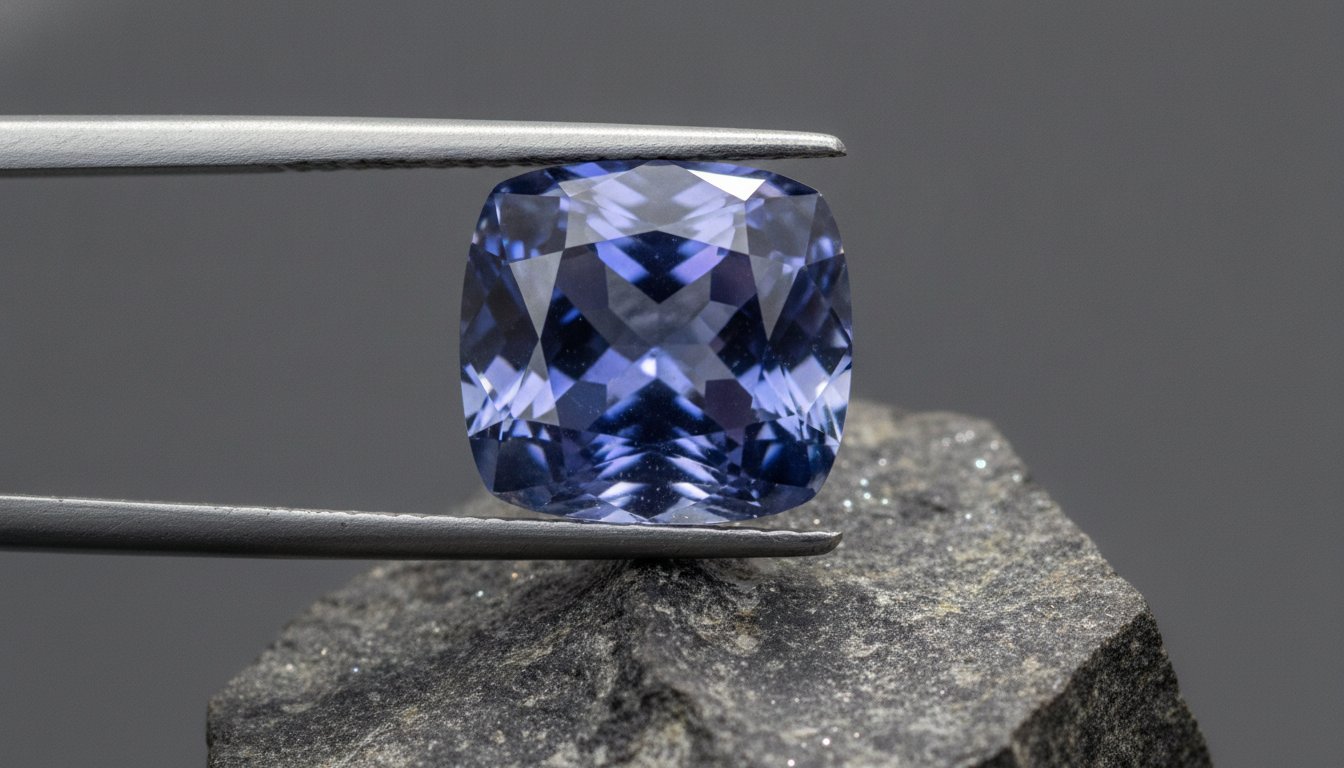
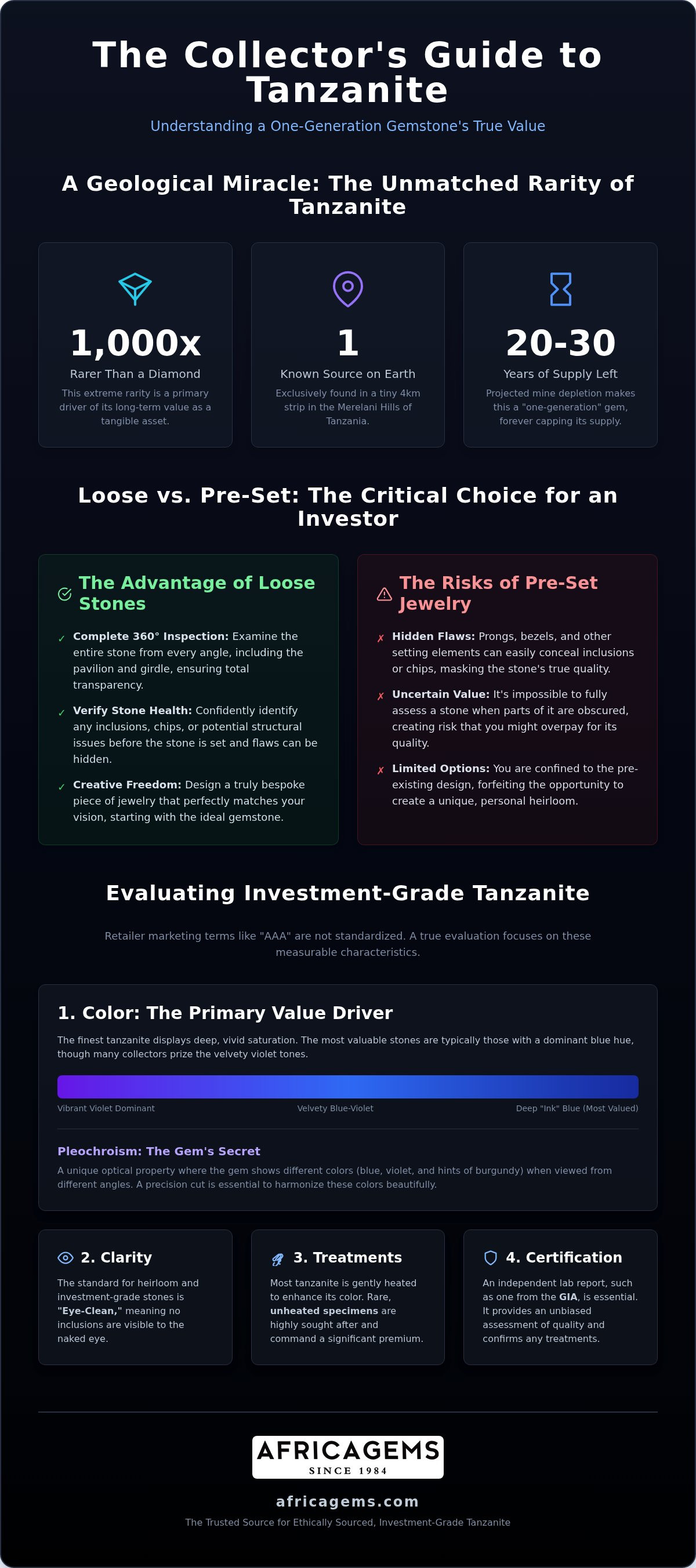
Tanzanite is approximately 1,000 times rarer than a diamond, yet its only known source in the Merelani Hills may be exhausted within just twenty to thirty years. This finite reality has transformed the search for loose tanzanite gemstones into a high-stakes pursuit for collectors who value true scarcity. You likely appreciate the vivid saturation of a top-tier stone, yet you're right to be cautious about durability and the confusing world of "AAA" marketing. It's difficult to feel secure in your investment when grading standards seem to shift from one dealer to the next.
We believe that radical transparency is the only path to a true heirloom. This guide will help you master the intricacies of tanzanite quality, from understanding the 2026 price-per-carat drivers to identifying investment-grade saturation. We will examine the latest Tanzanian mining regulations and the rising value of rare, unheated crystals. By the end of this article, you will have the expert knowledge required to select a GIA-certified stone with absolute confidence, whether you're building a legacy collection or envisioning a bespoke piece of jewelry.
Key Takeaways
- Understand why tanzanite is considered a "one-generation" gem and how the projected depletion of the Merelani Hills mines impacts long-term scarcity and value.
- Identify the specific drivers of investment-grade quality, focusing on vivid color saturation and the "eye-clean" clarity threshold required for heirloom stones.
- Evaluate the technical advantages of purchasing loose tanzanite gemstones to ensure a total 360-degree inspection of the stone’s health before it is set.
- Navigate the complexities of gemstone treatments with professional insights into the heat-treatment process and the rising demand for rare, unheated specimens.
- Discover how the AfricaGems selection process and commitment to radical transparency provide the security and expert mentorship needed for high-value acquisitions.
The Allure of Loose Tanzanite: A Single-Generation Legacy
Tanzanite isn't just a gemstone; it's a geological miracle that occurred under extraordinary circumstances. It's the blue-violet variety of the mineral zoisite, found exclusively in a tiny, four-kilometer strip of land in the Merelani Hills of Tanzania. Unlike diamonds, which miners discover on multiple continents, tanzanite's existence is tied to a single, finite location near the base of Mt. Kilimanjaro. Geologists estimate that the current mining output might only last another twenty to thirty years. This reality makes loose tanzanite gemstones a "one-generation" gem. Once these mines are exhausted, there will be no more new material entering the market, forever capping the global supply.
To better understand the nuances of evaluating high-end colored stones and their investment potential, watch this helpful video:
Geological Rarity and the Merelani Hills
The conditions required to create tanzanite were so specific that they've never been replicated elsewhere on Earth. The presence of vanadium within the zoisite crystal lattice creates the signature shift between deep blue and vibrant violet. You can read more about the history and discovery of Tanzanite on Wikipedia to understand why its mineralogy is so distinct. Because no other deposits exist globally, tanzanite is considered roughly 1,000 times rarer than a diamond. This extreme geographical rarity is the primary reason why connoisseurs view high-quality specimens as tangible assets with significant long-term value.
Why Connoisseurs Prefer Loose Stones
Buying loose tanzanite gemstones allows for a level of scrutiny that pre-set jewelry simply cannot offer. When a stone is mounted, the setting often hides the girdle or the pavilion. These are the exact areas where inclusions or minor chips might be concealed by a prong or a bezel. By examining a stone before it's set, you can verify its health and clarity from every possible angle. This transparency is vital for ensuring you aren't overpaying for a stone with hidden structural issues.
Furthermore, starting with a loose gem gives you the creative freedom to design a bespoke piece that matches your aesthetic. Whether you envision a centerpiece for custom gemstone rings or a striking focal point for gemstone pendants, the process begins with selecting the perfect stone. At AfricaGems, we prioritize the integrity of the industry. Every stone we offer is ethically sourced from the foothills of Mt. Kilimanjaro, backed by Marc Sarosi's 40 years of direct relationships. If you're ready to begin your search, you can explore our full collection of precious gemstones to find a specimen that meets our uncompromising standards.
Evaluating Quality: The 4Cs of Investment-Grade Tanzanite
When selecting loose tanzanite gemstones, you'll often see labels like "AAA" or "AAAA" used by retailers. It's vital to understand that these are not standardized grades regulated by major labs. While the industry uses them as shorthand for quality, an informed buyer looks deeper into the specific 4Cs to determine true value. This transparency ensures you aren't paying a premium for a marketing label that lacks technical backing.
The Color Spectrum: Blue vs. Violet Dominance
The market generally places the highest value on deep, vivid "ink" blue saturations. However, many collectors prefer the romantic, velvety violet-dominant stones. Your choice often depends on the lighting environment; incandescent bulbs enhance violet tones, while natural daylight brings out the blues. Pleochroism is the phenomenon where a stone displays blue, violet, and burgundy hues depending on the viewing angle. Precision in the cut ensures these colors harmonize rather than compete. You can learn more about these optical properties in GIA's tanzanite guide.
Clarity and Inclusions
Tanzanite is classified as a "Type I" gemstone, meaning it typically grows with very few inclusions. For an investment-grade stone, "eye-clean" is the non-negotiable minimum. This means no imperfections should be visible to the naked eye. Watch for internal features like tiny needles, hazy clouds, or surface-reaching fissures that might compromise durability. Because tanzanite is softer than sapphire, structural integrity is paramount. For high-value loose tanzanite gemstones, securing a report from a top-tier lab like GIA or AGL is the only way to verify that your stone is natural and meets the described standards.
The cut of a tanzanite does more than provide shape; it manages light return and pleochroic display. A poorly cut stone may have a "window" in the center where light leaks through, dulling the color. Finally, carat weight plays a massive role in pricing. As a stone crosses the 5-carat or 10-carat threshold, the price-per-carat increases exponentially. Larger crystals with deep saturation are significantly harder to find as the mines age. If you are looking for a specimen that balances size and saturation perfectly, you can browse our curated selection of high-quality precious gemstones.
Loose Tanzanite vs. Pre-Set Jewelry: A Buyer’s Comparison
Buying a finished piece of jewelry offers immediate gratification, but for the serious collector, it often involves an unacceptable level of compromise. When you purchase loose tanzanite gemstones, you are prioritizing the integrity of the material over the convenience of a pre-made setting. A loose stone provides a total, 360-degree view of the gem’s health. This transparency allows you to inspect the pavilion and girdle for the slightest imperfections that a jeweler's prong might easily obscure. Furthermore, sourcing the stone and setting separately is often more cost-efficient. By unbundling the purchase, you can allocate a larger percentage of your budget toward a higher-quality stone, ensuring the primary value remains in the rarity of the gem itself rather than in the markup of a retail display.
Loose stones also represent a more liquid form of investment. Collectors and dealers trade or resell high-quality loose material with far greater ease than a specific, potentially dated, jewelry style. As noted by Geology.com on Tanzanite, the market value is driven by the rarity and quality of the crystal. By keeping the stone loose, you preserve its value as a raw asset until the perfect design opportunity arises. This approach allows you to wait for the right moment to create a legacy piece without the stone being "locked" into a design that may not suit a future buyer's taste.
The Hidden Risks of Pre-Set Tanzanite
Pre-set jewelry frequently serves as a repository for "commercial grade" stones that wouldn't pass a connoisseur's inspection. Heavy prongs are sometimes strategically placed to hide chips or an off-center culet. Because tanzanite has a single direction of perfect cleavage, an over-tightened setting or a poorly designed mount can put excessive pressure on this plane. This tension can lead to catastrophic fractures during daily wear. Selecting your loose tanzanite gemstones first ensures you aren't inheriting a structural disaster disguised by polished gold.
The Custom Design Path
The most rewarding way to acquire this gem is through a bespoke journey. You can pair your selection with our custom jewelry design services to create a piece that is technically sound and personally meaningful. Whether you are crafting sophisticated gemstone rings or elegant gemstone pendants, the metal choice matters. Platinum offers a crisp, modern contrast to deep blues, while 18k yellow gold can warm up stones with intense violet undertones. If you're new to this process, our guide on how to buy gemstones online provides additional security for your first high-value acquisition.
Understanding Tanzanite Treatments and Certification
The vibrant blue and violet hues you admire in loose tanzanite gemstones are rarely the colors found at the moment of discovery. Deep in the Merelani Hills, most rough zoisite appears as an uninspiring brownish-red crystal. Approximately 95% of all tanzanite undergoes a stable, low-temperature heat treatment to remove these muddy undertones and reveal the vivid colors beneath. It's vital to understand that this treatment is permanent. Unlike certain other gemstones that may require special care or whose colors might fade when exposed to light, heated tanzanite is entirely stable for a lifetime of wear.
While heated stones represent the market standard, unheated tanzanite is the ultimate prize for connoisseurs. These rare specimens, which reach deep saturation naturally within the earth, command a significant price premium. You might also encounter "fancy" colors like greens, pinks, and yellows. These unheated varieties offer a unique aesthetic for those who already own a traditional blue stone and wish to diversify their collection with something truly exceptional.
The Science of the 'Oven'
The heating process is remarkably gentle, typically occurring at approximately 600°C. This is a far lower temperature than the extreme heat used for sapphires or rubies. Heating merely completes the process nature started, without adding foreign substances. This is an industry-accepted practice that mimics the natural geothermal heating that occurs in the earth's crust. We maintain a strict policy against non-standard treatments like surface diffusion or coating. These artificial enhancements compromise the stone's integrity and are never found in our inventory.
The Value of an Independent Lab Report
When you are investing in loose tanzanite gemstones, especially those exceeding two carats, you shouldn't rely solely on a "Store Appraisal." An appraisal is often a subjective document created by the seller, representing a potential conflict of interest. A report from an independent laboratory like the GIA or AGL provides an unbiased technical validation of the stone's identity. These certificates detail the exact dimensions, weight, and color description, while confirming the treatment status. This documentation is your security, ensuring the stone's value is based on verified facts rather than marketing claims. To see how we prioritize these standards, learn more about our commitment to natural gemstones.
Browse our selection of GIA-certified tanzanite today to find a stone backed by world-class certification.
Why AfricaGems is the Trusted Source for Loose Tanzanite
Trust is the most valuable currency in the gemstone trade, especially when acquiring a "one-generation" treasure like tanzanite. At AfricaGems, we don't just sell stones; we provide a gateway to a world-class collection curated through the Marc Sarosi Standard. This standard is built on 40 years of direct industry relationships and a personal selection process that rejects commercial-grade mediocrity. Every one of our loose tanzanite gemstones is hand-selected for its superior light return, saturation, and structural integrity. We treat every digital transaction as a personal consultation, ensuring you have the same security as a collector visiting a premier physical vault.
Our commitment to radical transparency is the pillar of our business. While other retailers might obscure the details of heat treatments or origin, we provide full disclosure on every specimen. This honesty extends to our ethical and social responsibility. We believe in supporting the mining communities in the Merelani Hills that make these treasures possible. By maintaining a transparent supply chain, we ensure that your investment supports responsible mining practices and local Tanzanian development.
A Legacy of Gemstone Expertise Since 1984
AfricaGems was founded in 1984 with a mission to bring connoisseur-level gemstones to a global audience. We've transitioned from a specialized dealer to a premier online destination without losing the personal touch that defines our brand. Our inventory isn't designed for mass-market jewelry stores; it's curated for the individual who understands the difference between a common stone and a legacy asset. For a deeper look into what makes these stones so special, you can read our Connoisseur’s Guide to the Rare Blue-Violet Treasure. This legacy of expertise ensures that every stone we offer meets the highest standards of the trade.
Your Partner in Bespoke Jewelry
Acquiring loose tanzanite gemstones is often the first step in a creative journey. We act as your partner in this process, bridging the gap between a raw investment and a finished masterpiece. You have direct access to our founder's expertise for high-value acquisitions, ensuring your questions about pleochroism, durability, or certification are answered by a true mentor. Whether you're a seasoned collector or a first-time buyer, our risk-free returns and lifetime of expert support provide the security you need to buy with absolute confidence. We invite you to browse our current inventory of Loose Tanzanite Gemstones and discover the AfricaGems difference for yourself.
Securing Your Legacy in Blue and Violet
Selecting loose tanzanite gemstones is a decision that balances aesthetic appreciation with the strategic foresight of a serious collector. As the output from the Merelani Hills remains finite, the opportunity to acquire investment-grade material with vivid saturation becomes increasingly rare. By prioritizing GIA or AGL certification and choosing the transparency of a loose stone over a pre-set piece, you ensure that your acquisition is a true heirloom of documented quality and ethical provenance. This approach allows you to appreciate the gem's health from every angle before it is set into a custom design.
AfricaGems brings over 40 years of gemstone expertise to every consultation, offering a hand-selected inventory ethically sourced from Tanzania. Our commitment to radical transparency means you receive full disclosure on every treatment, backed by a legacy of trust established in 1984. Whether you are seeking a rare unheated crystal or a masterfully cut blue-violet treasure, we are here to mentor you through the selection process. We invite you to find a specimen that speaks to your unique style and investment goals; to complement your aesthetic with timeless South African fashion, you can learn more about Bukamina.
Secure your piece of the Merelani Hills: Shop our Loose Tanzanite Collection today
Frequently Asked Questions
Is tanzanite more expensive than blue sapphire?
Tanzanite is generally more affordable than high-quality blue sapphire, despite being significantly rarer in nature. While a top-tier tanzanite might range from $600 to $1,500 per carat in 2026, a comparable unheated Kashmir or Royal Blue sapphire can command several times that amount. This price difference makes tanzanite an exceptional value for collectors seeking intense saturation without the sapphire price premium.
How can I tell if a loose tanzanite is real or synthetic?
The most effective way to identify genuine tanzanite is through its strong pleochroism, which causes the stone to show blue, violet, and burgundy flashes from different angles. Most synthetic imitations like cubic zirconia or glass lack this optical property. For absolute certainty, always request a GIA Colored Stone Identification Report, which uses laboratory equipment to confirm the mineral species and detect any non-standard treatments.
What is the best shape for a tanzanite engagement ring?
Oval and cushion cuts are widely considered the best shapes because they maximize light return and enhance the stone's natural color saturation. These rounded outlines are also more durable for daily wear than shapes with sharp corners, such as princess or marquise cuts, which are more prone to chipping. A well-proportioned oval cut beautifully showcases the pleochroic shifts that make this gem so unique.
Does tanzanite break easily if worn every day?
Tanzanite has a Mohs hardness of 6 to 7 and possesses perfect cleavage, meaning it can split if struck with enough force. It's not as durable as sapphire or diamond, so it requires a protective setting like a bezel if worn daily. You should treat it with the same care as an emerald, removing it during strenuous activities to prevent accidental impact or structural damage.
What does 'AAA' or 'AAAA' quality actually mean for tanzanite?
These alphabetical labels are unregulated marketing terms used by individual retailers rather than standardized grades from gemological laboratories. Generally, "AAA" refers to stones with deep saturation and high clarity, but the definition varies between dealers. Because no universal grading system exists for colored stones, it's better to rely on technical data and GIA certification rather than subjective labels that lack industry-wide consistency.
Should I only buy GIA-certified loose tanzanite?
Yes, purchasing GIA-certified loose tanzanite gemstones is the most secure way to protect your investment and ensure you are getting exactly what you pay for. A GIA report provides an unbiased technical validation of the stone's weight, dimensions, and treatment status. This independent documentation prevents you from overpaying for a stone based on a seller's potentially biased "in-house" appraisal or standardized marketing label.
Is unheated tanzanite more valuable than heated tanzanite?
Unheated tanzanite that naturally displays "vivid" saturation is significantly more valuable than heated material due to its extreme scarcity. While most stones are heated to remove brown undertones, a naturally blue or violet crystal is a true collector's prize. In the current 2026 market, these rare, unheated specimens often command a 15% to 25% price premium because they represent the purest form of the mineral.
How do I care for and clean my loose tanzanite gemstone?
Clean your loose tanzanite gemstones using only warm, soapy water and a soft-bristled brush to gently remove dust and oils. Never use ultrasonic or steam cleaners, as the intense vibrations and sudden temperature changes can cause the stone to fracture or shatter. Store your tanzanite in a separate, soft-lined pouch to prevent harder gemstones like diamonds or sapphires from scratching its surface during storage.

Article by
Marc Sarosi
Professional gemstone dealer for more than 40 years. Started off mining Aquamarine in Zambia, Africa and travelled throughout the continent in search of fine gems. Trusted authority on fine gemstones and have donated a fine collection of more than 27 extraordinary gemstones to the Smithsonian Institute Gem Hall for generations to see.