
Loose Tanzanite Gemstones: The Connoisseur’s Guide to Quality and Value in 2026
Aug 14th 2026
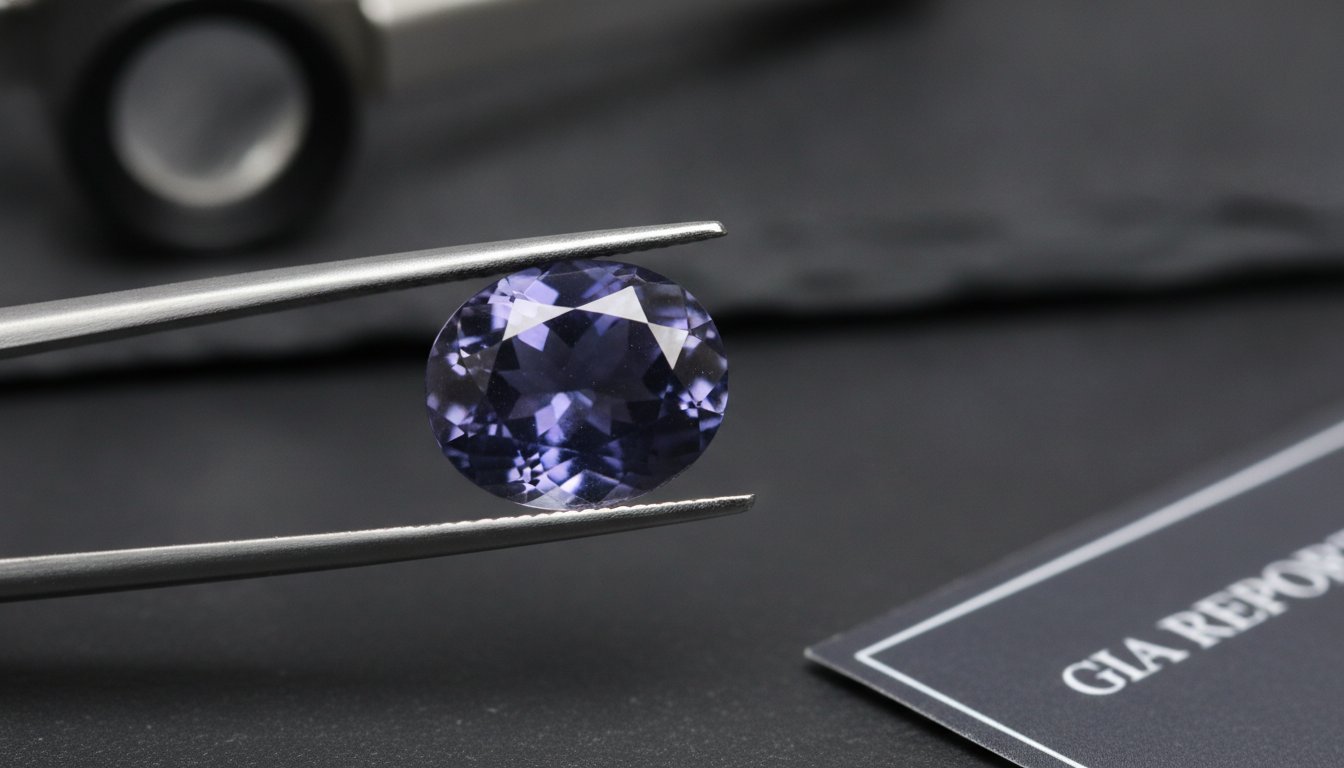
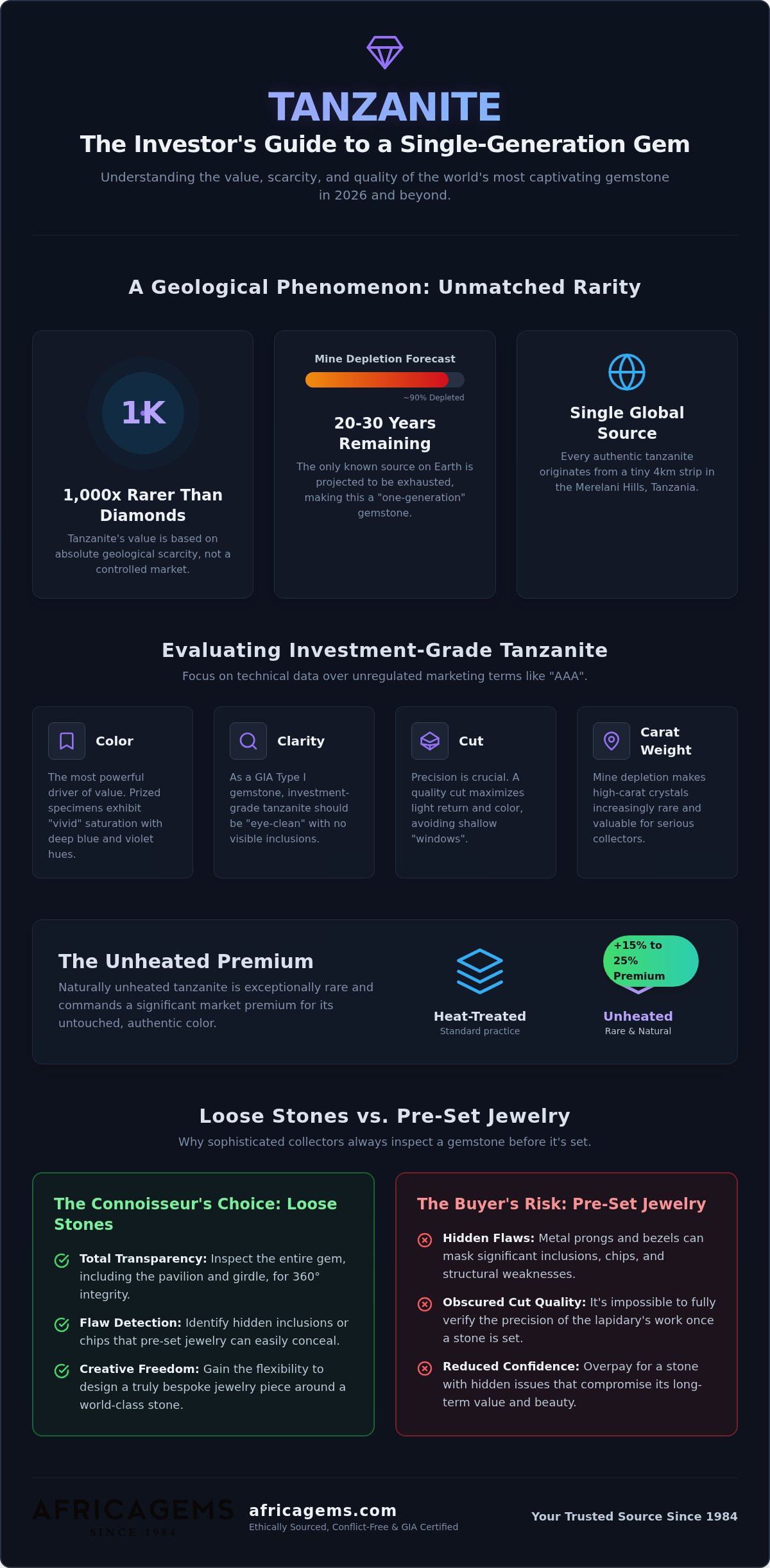
Did you know that tanzanite is estimated to be 1,000 times rarer than diamonds, with the only known source on Earth projected to be depleted within the next 20 to 30 years? As we move through 2026, the window to acquire investment-grade loose tanzanite gemstones is narrowing. This makes it vital to distinguish between commercial stock and true heirloom quality. You likely feel the pressure of rising prices and the confusion of non-standardized "AAA" labels. It's natural to want absolute certainty when investing in a stone that should serve as a lasting legacy.
This guide will help you master the intricacies of tanzanite grading and the shifting market dynamics of the Merelani Hills. You'll learn how to evaluate the 2026 price-per-carat drivers, understand the new GIA visual report standards, and identify why unheated specimens now command a 15% to 25% premium. We'll provide the technical validation you need to select a world-class gemstone with confidence. Whether you're a seasoned collector or planning a bespoke jewelry piece, you'll gain the insider knowledge required to secure a stone that is as ethically sourced as it is breathtaking.
Key Takeaways
- Evaluate the "one-generation" scarcity of the Merelani Hills to understand why the current market represents a unique window for serious collectors.
- Master the technical nuances of loose tanzanite gemstones, focusing on vivid color saturation and GIA Type I clarity standards to ensure heirloom quality.
- Learn to distinguish between standard heat-treated stones and rare, unheated specimens that command a significant market premium in 2026.
- Gain a 360-degree perspective on a gem's integrity by selecting loose stones, ensuring total transparency before you begin a custom jewelry project.
- Utilize the refined 2026 GIA grading reports to validate your purchase and protect your capital against the inconsistencies of the commercial market.
The Allure of Loose Tanzanite: A Single-Generation Legacy
Tanzanite is more than just a gemstone; it's a geological phenomenon. Scientifically classified as the blue-violet variety of the mineral zoisite, it formed under extraordinary tectonic conditions nearly 585 million years ago. However, it remained hidden from the world until its discovery in 1967. Today, every authentic specimen originates from a single, four-kilometer strip of land in the Merelani Hills of Tanzania. Understanding the Tanzanite discovery and properties reveals why this stone is so prized. Its characteristic trichroism allows it to radiate sapphire blue, deep violet, and rich burgundy depending on the viewing angle.
Investors often refer to tanzanite as the "one-generation" gem. Unlike diamonds, which are mined across multiple continents, tanzanite's supply is finite and geographically isolated. Current estimates suggest the mines will be exhausted within 20 to 30 years. This reality transforms loose tanzanite gemstones from mere luxury items into rare artifacts of a closing geological window. As we move through 2026, the depletion of the upper blocks in the Merelani Hills has already begun to impact the availability of high-carat crystals, making the current market a critical period for serious collectors.
To better understand this concept, watch this helpful video:
Geological Rarity and the Merelani Hills
The creation of tanzanite required a perfect storm of chemical and physical variables. Specifically, the presence of vanadium within the zoisite crystal lattice, combined with intense heat and pressure from the formation of the Great Rift Valley, produced its signature hue. No other deposit has been discovered globally, and none is expected. This extreme localization makes tanzanite roughly 1,000 times rarer than diamonds. While diamonds rely on a controlled market for value, tanzanite's worth is anchored in absolute geological scarcity. The military wall built around the Merelani perimeter has successfully curbed smuggling, ensuring that loose tanzanite gemstones reaching the market are legally exported with a Certificate of Origin.
Why Connoisseurs Prefer Loose Stones
Acquiring a gemstone in its loose state is the hallmark of a sophisticated collector. When a stone is pre-set, the metal prongs and bezel can easily mask inclusions, chips, or a shallow "windowed" cut. By examining the stone independently, you can inspect the pavilion and girdle for total integrity. This transparency ensures you aren't overpaying for a stone with hidden structural flaws. Inspecting the pavilion allows you to verify the precision of the lapidary's work, ensuring the stone maximizes light return without being overly deep or wastefully heavy.
Starting with a loose stone also provides the creative freedom to design a bespoke piece. Whether you envision a minimalist ring or an elaborate necklace, the stone remains the centerpiece. You can Explore our full collection of precious gemstones to find the perfect match for your vision. At AfricaGems, we uphold a legacy of radical transparency. Founded in 1984, our brand ensures that every stone is ethically sourced from the foothills of Mt. Kilimanjaro, maintaining a conflict-free provenance that respects both the land and its people.
Evaluating Quality: The 4Cs of Investment-Grade Tanzanite
Many retailers rely on proprietary "AAA" or "AAAA" labels to suggest superior quality, but it's vital to understand that these aren't regulated or standardized by the GIA. When selecting loose tanzanite gemstones, you should rely on technical data rather than subjective marketing terms. Evaluating Tanzanite quality requires a nuanced understanding of how color, clarity, cut, and carat weight interact to determine both beauty and resale value.
The Color Spectrum: Blue vs. Violet Dominance
Saturation is the most powerful driver of value in the tanzanite market. While the gemstone is famous for its blue and violet hues, the most prized specimens exhibit a "vivid" saturation that rivals the finest blue sapphires. The market generally favors a deep, "ink" blue, though many collectors find the romantic, softer lilac of violet-dominant stones equally compelling. Pleochroism is the phenomenon where a stone displays blue, violet, and burgundy hues depending on the viewing angle. Lighting also plays a critical role in your evaluation; natural daylight typically emphasizes the cool blue tones, while incandescent light brings out the warm violet and red flashes from within the crystal lattice.
Clarity and Inclusions
The GIA classifies tanzanite as a Type I gemstone, meaning it's expected to be "eye-clean." For a stone to be considered investment-grade, it should be free of inclusions visible to the naked eye. Because tanzanite is often used in high-end jewelry, any internal flaws can significantly detract from its value and structural durability. Common inclusions to watch for during your inspection include:
- Needles: Long, thin mineral crystals that can disrupt light return.
- Clouds: Hazy patches of microscopic inclusions that give the stone a "sleepy" appearance.
- Surface-reaching fissures: These are critical to avoid, as they can lead to fractures during the setting process.
Since these flaws can be cleverly hidden by a jewelry setting, purchasing loose tanzanite gemstones is the only way to ensure total transparency. A certification from a reputable lab like the GIA or AGL is non-negotiable for high-value stones, as it provides an objective third-party validation of the stone's clarity and treatment status.
The Importance of Cut and Carat Weight
A master lapidary's precision is essential to showcase tanzanite's unique optical properties. A poor cut can result in a "window," an area in the center of the stone where light leaks through rather than reflecting back to the eye, making the gem look dull. Furthermore, carat weight follows an exponential pricing model. You'll notice significant price-per-carat jumps once a stone exceeds the 5-carat mark, with even steeper increases for stones surpassing 10 carats. This reflects the extreme rarity of large, high-quality crystals remaining in the Merelani Hills. If you're looking for a stone that meets these rigorous standards, you can view our hand-selected inventory of ethically sourced gems.
Loose Tanzanite vs. Pre-Set Jewelry: A Buyer’s Comparison
Choosing between a finished piece and starting with loose tanzanite gemstones is often a choice between convenience and quality. For the serious collector, the decision is clear. A loose stone offers an unfiltered, 360-degree view of its health. You don't have to worry about a shallow pavilion or a feather-like inclusion hiding behind a gold prong when the gem is unmounted. This level of transparency is the only way to verify the true value of your acquisition and ensure you're investing in a specimen that meets world-class standards.
The Hidden Risks of Pre-Set Tanzanite
Retailers often use heavy prongs or thick bezels to obscure chips on the girdle or an off-center culet. Tanzanite has a single direction of perfect cleavage; this makes it susceptible to splitting if a setting applies uneven pressure. Commercial-grade stones, which lack the vivid saturation we previously discussed, are frequently dumped into mass-produced jewelry where the setting's shine compensates for the gem's dullness. By purchasing a loose stone, you ensure the gem's beauty stands on its own merits. You also eliminate the risk of purchasing a stone that was damaged during the mounting process, a common issue with high-volume, pre-set jewelry.
The Custom Design Path
Selecting a stone first allows you to tailor the mounting to the gem's specific personality. You might choose to set your find in gemstone rings or pendants that highlight its unique pleochroism. AfricaGems provides custom jewelry design services to help you create a legacy piece that matches your exact style. For instance, setting a violet-dominant stone in 18k yellow gold can warm its appearance, while platinum or white gold emphasizes a deep blue hue. If you're new to this process, our guide on How to Buy Gemstones Online: The Expert Guide offers deeper insights into secure investing.
Beyond aesthetics, cost efficiency is a major factor. Buying the stone and setting separately often results in a higher-quality final piece for the same budget. You aren't paying a retail markup on the labor of a pre-assembled item. Additionally, loose tanzanite gemstones offer superior investment liquidity. Collectors and dealers can trade or resell an unmounted stone more easily than a piece of jewelry tied to a specific fashion trend. Understanding tanzanite's rarity and value helps you appreciate why keeping a stone in its loose state can be a strategic move for long-term price stability.
Understanding Tanzanite Treatments and Certification
Transparency is the bedrock of any high-value gemstone transaction. When you browse loose tanzanite gemstones, you'll find that nearly 95% of the market has undergone some form of heat treatment. This isn't a deceptive process; rather, it's an industry-accepted method to transform raw, brownish-red zoisite crystals into the vivid blues and violets that have made the gem famous. Unlike treatments like oiling or lead-glass filling, tanzanite's heat treatment is stable and permanent, requiring no special care beyond what you'd give any fine jewel.
The Science of the 'Oven'
The heating process occurs at relatively low temperatures, usually around 600°C. This mimics the geothermal heat that would've naturally occurred deep within the earth if the crystals had remained buried for a few million years longer. Heating merely completes the process nature started, without adding foreign substances or altering the stone's chemical structure. While this is the standard, you should remain vigilant against non-standard treatments like surface coating or lattice diffusion. AfricaGems strictly avoids these deceptive practices. Collectors seeking the ultimate rarity often hunt for unheated loose tanzanite gemstones. These specimens, which display natural blue or "fancy" hues like greens, pinks, and yellows, command a price premium of 15% to 25% because they represent the raw, untouched perfection of the mineral.
The Value of an Independent Lab Report
For any stone exceeding 2 carats, a "Store Appraisal" is simply insufficient for a serious investor. A true connoisseur insists on an independent lab report from the Gemological Institute of America (GIA) or the American Gemological Laboratories (AGL). Starting in January 2026, the GIA introduced a refined report format for colored stones, providing even more visual detail on color saturation and clarity.
A reputable report will confirm:
- Precise dimensions and carat weight.
- Detailed color description using standardized terminology.
- Treatment status (Heated vs. No indications of heating).
- Origin verification confirming the Merelani Hills source.
This documentation is your insurance policy. It validates the stone's identity and protects the investment potential of your collection. If you're ready to explore stones that meet these rigorous standards, Learn more about our commitment to natural gemstones and discover our hand-selected inventory.
Why AfricaGems is the Trusted Source for Loose Tanzanite
Founded in 1984, AfricaGems represents a standard of excellence that commercial retailers simply can't match. Marc Sarosi built this business on a foundation of radical transparency and personal accountability. While many digital storefronts act as mere middlemen, Marc hand-selects every specimen based on over 40 years of deep industry relationships. This Expert Enthusiast approach ensures that our collection of loose tanzanite gemstones consists only of stones with exceptional saturation, precision cutting, and investment-grade clarity.
Our commitment to ethical and social responsibility acts as a pillar of our brand. We recognize that these blue-violet treasures originate from a single, finite source. By supporting the mining communities in the Merelani Hills, we help maintain the integrity of the supply chain. This dedication to the people behind the gems is paired with the AfricaGems guarantee, which includes risk-free returns and a lifetime of expert support. We want every customer to feel like an informed insider rather than just another transaction.
A Legacy of Gemstone Expertise Since 1984
Our transition from a specialized dealer to a premier online destination was fueled by a desire to bring connoisseur-level inventory to a global audience. We prioritize stones that exceed the commercial standards of typical jewelry stores. For those who want to dive deeper into the history and science of their purchase, our Tanzanite: The Connoisseur’s Guide to the Rare Blue-Violet Treasure offers a comprehensive overview. Every stone in our care undergoes a rigorous selection process to ensure it meets the Marc Sarosi standard of perfection.
Your Partner in Bespoke Jewelry
We do more than sell gems; we act as your mentor in creating a lasting legacy. AfricaGems bridges the gap between acquiring a world-class stone and crafting a finished masterpiece. You'll have direct access to the founder's expertise for high-value acquisitions, ensuring your selection is both a visual triumph and a secure investment. Whether you're looking for a specific cut or a rare unheated specimen, we provide the technical validation and personal guidance necessary for a confident purchase. Ready to find your heirloom? Browse our current inventory of Loose Tanzanite Gemstones and experience the difference of a true expert consultation.
Securing Your Legacy in the Merelani Hills
The window to acquire investment-grade tanzanite is narrowing as the Merelani Hills deposits reach their projected depletion. By choosing loose tanzanite gemstones, you've taken the most critical step toward transparency and quality assurance. You can now evaluate pleochroism and clarity without the obstruction of a setting, ensuring your stone meets the highest standards of the connoisseur market. Remember that a GIA-certified stone isn't just a purchase; it's a strategic move to preserve value in a world of finite natural resources.
AfricaGems is here to guide you through every technical nuance. With over 40 years of gemstone expertise and a commitment to ethically sourced, GIA and AGL certified inventory, we offer the security you deserve. We're proud to act as your knowledgeable mentor as you select a stone that reflects your personal legacy. It's time to Secure your piece of the Merelani Hills; Shop our Loose Tanzanite Collection today. We look forward to helping you find a breathtaking treasure that will be admired for centuries.
For those who want to experience the majesty of the African continent firsthand, learn more about premium overlanding tours and private expeditions through Southern Africa.
Frequently Asked Questions
Is tanzanite more expensive than blue sapphire?
Tanzanite is generally less expensive than top-tier blue sapphire, despite being significantly rarer in nature. While investment-grade tanzanite can reach prices up to $1,500 per carat in 2026, fine Kashmir or Royal Blue sapphires command much higher premiums. This price gap makes tanzanite an exceptional value proposition for collectors who desire a vivid blue-violet aesthetic without the sapphire price tag.
How can I tell if a loose tanzanite is real or synthetic?
Authentic tanzanite is strongly pleochroic, meaning it displays blue, violet, and burgundy hues when viewed from different angles. While synthetic versions are rare, simulants like blue YAG or glass are more common. The most reliable way to verify loose tanzanite gemstones is through a GIA report or by using a dichroscope to confirm the characteristic three-color shift that imitations can't replicate.
What is the best shape for a tanzanite engagement ring?
The oval and cushion cuts are widely considered the best shapes for tanzanite because they maximize light return and color saturation. These rounded shapes also lack sharp corners, which helps protect the stone from accidental chipping. Since tanzanite is a 6 to 7 on the Mohs scale, choosing these shapes and pairing them with a protective setting like a halo will help safeguard your investment.
Does tanzanite break easily if worn every day?
Tanzanite is durable for daily wear, but it possesses a single direction of perfect cleavage that makes it susceptible to splitting if struck hard. It's not as resilient as sapphire or diamond, so it requires mindful handling in a ring. We recommend removing your jewelry during strenuous activities. However, when set correctly and treated with care, tanzanite is perfectly suitable for a legacy piece.
What does 'AAA' or 'AAAA' quality actually mean for tanzanite?
These labels are proprietary marketing terms used by individual retailers and have no standardized definition at major labs like the GIA. While they usually indicate deep saturation and high clarity, one jeweler's "AAAA" might be another's "AAA." Instead of relying on these subjective labels, focus on the technical color and clarity descriptions found in an independent gemological report to ensure you're getting a world-class stone.
Should I only buy GIA-certified loose tanzanite?
Yes, purchasing GIA-certified loose tanzanite gemstones is the only way to guarantee the stone's authenticity and treatment status. The GIA is the world's leading authority; their reports provide an objective, third-party evaluation that in-house appraisals simply can't match. This certification is especially vital for stones over 2 carats, where the price difference between grades becomes significant for collectors and investors alike.
Is unheated tanzanite more valuable than heated tanzanite?
Unheated tanzanite with naturally vivid saturation commands a 15% to 25% price premium over heated stones as of 2026. While the vast majority of the market is heated to remove brownish tints, unheated specimens are prized for their extreme rarity. These stones are essentially as they were found in nature. This makes them highly desirable for connoisseurs who prioritize geological purity and untouched crystal structures.
How do I care for and clean my loose tanzanite gemstone?
Clean your tanzanite using only warm, soapy water and a soft-bristled brush. You should never use ultrasonic or steam cleaners, as the intense vibrations and thermal shock can cause the stone to fracture along its cleavage plane. Avoid exposure to harsh chemicals or sudden temperature changes. Simply drying the stone with a lint-free cloth will maintain its brilliant luster without risking any structural damage.

Article by
Marc Sarosi
Professional gemstone dealer for more than 40 years. Started off mining Aquamarine in Zambia, Africa and travelled throughout the continent in search of fine gems. Trusted authority on fine gemstones and have donated a fine collection of more than 27 extraordinary gemstones to the Smithsonian Institute Gem Hall for generations to see.