
Loose Star Sapphires: The Connoisseur’s Guide to Asterism and Value
Aug 7th 2026
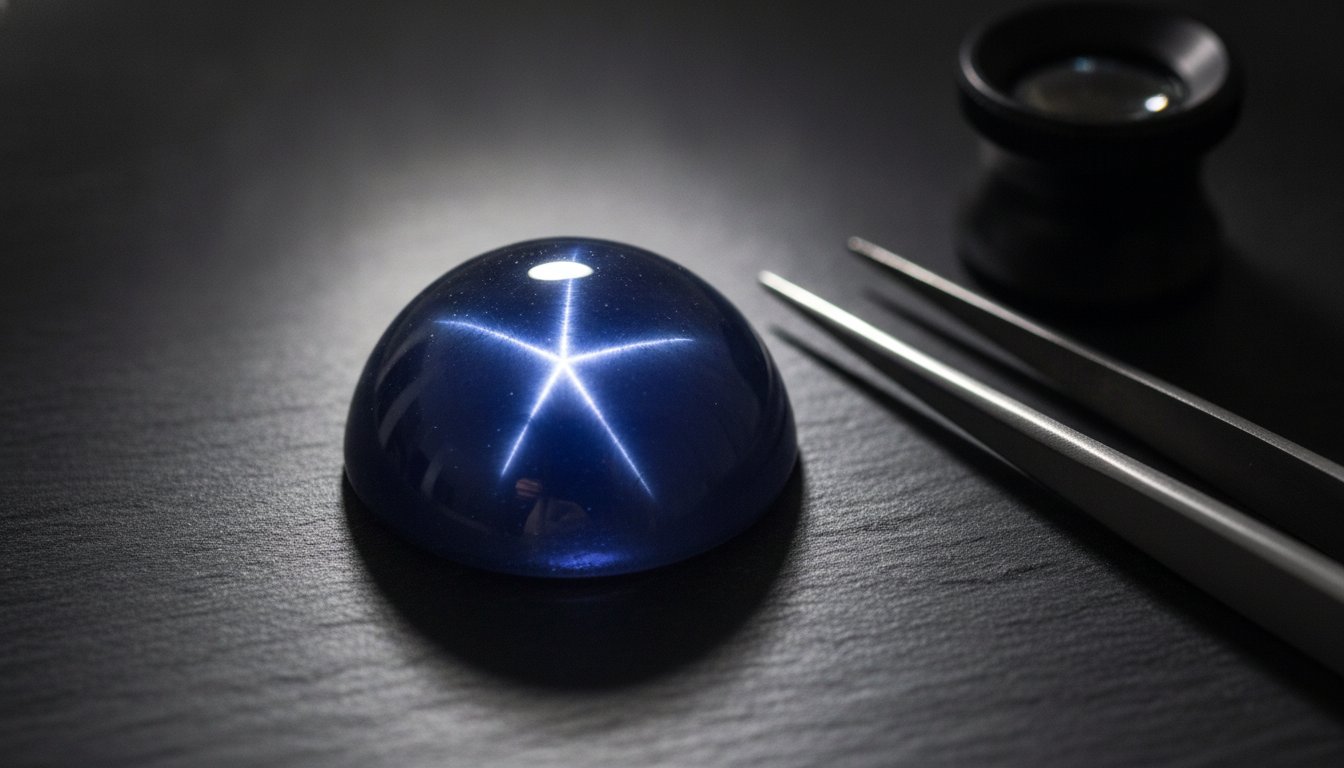
The true value of a star sapphire isn't found in its clarity alone, but in the precise, needle-thin intersection of light and mineral silk that creates a rare geological "sweet spot." You've likely felt the hesitation that comes with browsing loose star sapphires online. The fear of accidentally purchasing a "diffused" treatment or a synthetic imitation that lacks the soul of a natural gem is a common barrier for even the most seasoned collectors. You want more than just a stone; you want a masterpiece that holds its value and its beauty across generations.
We're here to ensure you never have to settle for less than a geological miracle. This guide will empower you to master the technical nuances of asterism, color saturation, and ethical sourcing so you can confidently select a world-class stone for your collection. We'll examine how to identify a sharp, perfectly centered six-ray star, the impact of the updated 2026 GIA fee structures on investment-grade gems, and the methodical process of moving from a loose cabochon to a finished, custom-designed ring. By the end, you'll have the insider knowledge needed to secure a GIA-certified treasure with radical transparency.
Key Takeaways
- Learn how microscopic rutile silk creates the mesmerizing six-ray phenomenon and why the density of these needles is the secret to a world-class star.
- Discover how to evaluate loose star sapphires using the "Fifth C"—asterism—focusing on the precise centering and sharpness that separate investment-grade stones from common specimens.
- Protect your investment by mastering the visual cues that distinguish natural asterism from synthetic Linde stars or lab-applied surface diffusion.
- Compare the unique geological origins of blue and black star sapphires, including the role of hematite inclusions in producing striking golden stars.
- Understand why the cabochon cut is essential for phenomenal stones and how to select a secure setting that preserves the integrity of your rare sapphire.
The Science and Allure of Asterism in Loose Star Sapphires
Asterism isn't just a visual curiosity; it's a profound geological signature. In the world of loose star sapphires, this "star" effect emerges from the stone's internal architecture. It's the result of light interacting with microscopic inclusions deep within the corundum. The Science and Allure of Asterism provides a technical foundation for understanding how these inclusions form within the corundum family. While rubies can display this effect, sapphires are the most frequent hosts, offering a vast canvas of deep blues, violets, and even golds. Historically, ancients revered these gems as the "Stone of Destiny." They believed the three intersecting lines of the star offered protection to travelers, representing the pillars of faith, hope, and destiny.
How the 6-Ray Star Forms
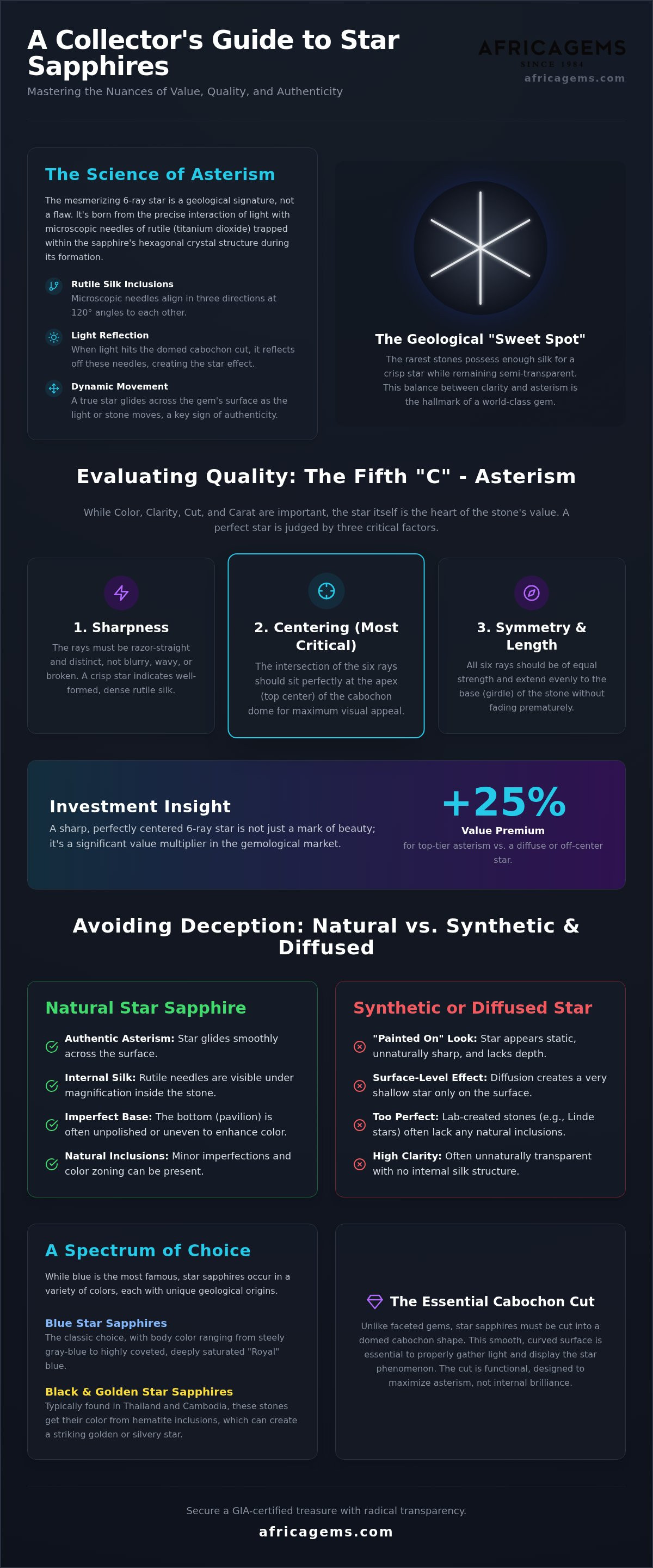
The magic happens at the molecular level. Sapphires belong to the hexagonal crystal system. As they form, they often trap microscopic needles of titanium dioxide, known as rutile silk. These needles align themselves precisely with the crystal's axes in three directions. Asterism is the reflection of light from three sets of parallel needle-like inclusions oriented at 120 degrees to each other. When light enters the domed surface of a cabochon, it reflects off these three distinct groups of needles. This creates the iconic six-ray pattern. Because this is a reflection phenomenon, the star isn't static. It glides across the surface as you tilt the stone or move the light source, a dynamic characteristic that collectors use to verify authenticity.
The Rarity of Translucent Star Sapphires
There's a persistent tension between the density of silk and the stone's transparency. You need a high concentration of rutile needles to produce a sharp, bright star. However, that same silk often makes the sapphire body appear milky or completely opaque. Finding loose star sapphires that occupy the geological "sweet spot", possessing enough silk for a crisp star while remaining semi-transparent, is an incredible feat of nature. These stones command the highest market premiums because they're so difficult to source. In 2026, a sharp, centered 6-ray star can add a 25% premium to the stone's value compared to one with a diffuse or off-center effect. This delicate balance of light and matter is why a translucent star sapphire is considered a masterpiece of the natural world.
Evaluating Quality: The 4 Cs of Loose Star Sapphires
Applying the traditional 4 Cs to loose star sapphires requires a significant mental shift for the serious collector. While faceted gems prioritize internal brilliance and light return, these phenomenal stones are judged by how they manage light on their domed surfaces. Evaluating Quality: The 4 Cs of Loose Star Sapphires involves looking past standard metrics to find the "Fifth C": the star itself. In this category, the cut is purely functional, designed to maximize the visibility of the asterism. You'll often find these stones are cut "bottom-heavy" with deep, unpolished pavilions. This extra weight isn't a flaw; it's a deliberate choice by the lapidary to intensify the body color and provide a stable base for the star to resolve clearly at the apex.
The Anatomy of a Perfect Star
The star is the heart of the stone's value. When inspecting a gem, look for three critical factors: sharpness, centering, and symmetry. The rays should be razor-straight and distinct, not blurry or wavy. A top-tier specimen features a star where the intersection point sits perfectly at the top of the cabochon. If the star is "lopsided" or off-center, it significantly diminishes the stone's appeal in a jewelry setting. Finally, check that all six rays reach the base of the stone evenly. A star that fades halfway down one side is considered inferior to one that remains visible across the entire dome. You can explore our collection of investment-grade loose star sapphires to see these technical standards in practice.
Transparency and Body Color
Contrast is what makes a star truly "pop." A rich, saturated body color provides the dark canvas necessary for the silver or white rays to shine. We evaluate saturation on a scale ranging from steely gray-blues to the highly coveted "Royal" blue. However, beware of uneven color distribution, known as zoning. If a stone has a concentrated "ink spot" of color in one area and a pale patch in another, the star's visibility will be inconsistent. Achieving a balance between a deep, vivid hue and enough transparency to let light penetrate the stone is the ultimate goal. For a deeper look at how color impacts sapphire valuation across the board, refer to our Ultimate Guide to Blue Sapphire Gemstones. Finding a stone with high transparency and a sharp star is rare, as the silk required for the star typically clouds the crystal.
A Spectrum of Choice: Blue, Black, and Fancy Star Sapphires
While blue remains the traditional choice, the world of loose star sapphires offers a surprising range of hues beyond the classic navy. You'll find rare pinks, delicate lavenders, and even bright yellow varieties. Each color brings a different mood and personality to a collection. The origin of these stones plays a massive role in their visual character and market value. Sri Lanka and Myanmar remain the primary sources, but African deposits are gaining recognition for their unique properties and competitive value.
The Classic Blue Star: Ceylon vs. Burma
Ceylon star sapphires from Sri Lanka are celebrated for their "cornflower" blue hues and superior transparency. Because these stones are often less opaque, the star appears to float within liquid-like depths. In contrast, Burmese stones are famous for deep, saturated royal blues. While they tend to be more opaque, the intensity of their body color creates a dramatic backdrop for the star. For those interested in the broader family of phenomenal corundum, Loose Burma Rubies represent the sister stone to these sapphires, often sharing similar geological origins and rarity.
Don't overlook fancy colors when building a collection. A pink star sapphire offers a feminine elegance, while lavender stones provide a sophisticated, muted look. African sources, particularly from Madagascar, are increasingly providing stones with excellent star sharpness. In 2026, over 60% of blue star sapphires mined are projected to originate from Sri Lanka and Madagascar, highlighting the growing importance of these regions in the global market.
The Unique Allure of Black and Gold Stars
The market for loose star sapphires in black hues is thriving due to their unique character. Black star sapphires offer a completely different aesthetic than blue ones. Unlike their blue counterparts, which rely on rutile silk, black stars are often caused by hematite inclusions. This can sometimes result in a magnificent 12-ray star if both rutile and hematite are present. These stones are known for their striking golden stars set against a midnight-black body.
They are also significantly more accessible for those starting their collection. Well-cut black stars are priced between $50 and $300 per carat in 2026. This affordability makes them a favorite for bold, masculine jewelry designs like signet rings or large statement pendants. Their durability and high contrast make them an excellent entry point for new collectors who want a phenomenal stone without the premium associated with rare blue varieties.
Avoiding Deception: Natural vs. Synthetic and Diffused Stars
The most significant risk in the current market isn't just paying too much; it's the misidentification of sophisticated treatments. As technology advances, the line between a geological miracle and a laboratory creation becomes increasingly blurred. You've likely encountered Linde Stars in vintage markets. These are classic examples of synthetic loose star sapphires. While they possess a charming history, their value is a fraction of their natural counterparts. In 2026, lab-grown blue star sapphires typically trade between $75 and $300 per carat. They offer consistency and a "perfect" look, but they lack the heritage and scarcity that drive investment-grade value. My commitment to you has always been one of radical transparency. Every stone I offer comes with a personal guarantee of disclosure regarding any and all enhancements.
How to Spot a Surface-Diffused Star
Surface diffusion is a treatment where chemicals and high heat are used to "paint" a star onto the surface of a low-grade sapphire. These stars often appear too perfect to be true. To identify them, look at the stone under a jeweler's loupe. A natural star is an internal phenomenon, but a diffused star appears to sit solely on the very top of the cabochon. You might also notice a concentration of color along the girdle or the back of the stone where the chemicals have pooled. Perhaps the most critical warning is that these stars are not permanent. If a diffused stone is ever chipped or requires re-polishing, the star will literally be sanded away, leaving you with a dull, featureless sapphire. This is why understanding the integrity of your gem is non-negotiable.
The Importance of GIA and AGL Certification
A professional lab report is your primary shield against deception. On January 1, 2026, the Gemological Institute of America (GIA) implemented a new fee structure for colored stone reports, which includes expanded origin determination services. For high-value loose star sapphires, an "Origin Opinion" is essential. It validates whether a stone is from a heritage location like Sri Lanka or Myanmar. More importantly, it verifies the "unheated" status of the corundum. Unheated stones are the sovereign standard in 2026, commanding massive premiums as collectors seek out completely untreated geological wonders. You can learn more about securing your collection in our How to Buy Gemstones Online guide. To ensure your peace of mind, I invite you to browse our current stock of GIA-certified natural star sapphires where every technical detail is fully documented.
Beyond diffusion, be aware of lead-glass filling in lower-grade stones. This treatment masks cracks and improves transparency but creates a "Flash Effect" of blue or orange light when the stone is rotated. These treatments are unstable and unsuitable for legacy jewelry. True value lies in the intersection of natural silk and unheated body color, a combination that no laboratory can truly replicate.
From Loose Gemstone to Bespoke Jewelry
Designing a piece around a phenomenal stone is a different challenge than working with traditional faceted gems. Because loose star sapphires rely on internal silk to reflect light, they must always be cut as cabochons. Faceting a star sapphire would break up the parallel rutile needles, effectively destroying the star phenomenon. The domed surface of the cabochon acts as a lens, focusing light into those sharp rays we've examined in previous sections. Once you've secured your stone, the next step is selecting a setting that both showcases the asterism and protects the gem's structural integrity across decades of wear.
Designing the Perfect Cabochon Setting
The visual impact of a star sapphire can be dramatically enhanced through thoughtful design. A "Halo" setting, featuring a surround of brilliant diamonds, doesn't just add sparkle; it provides a high-contrast border that makes the sapphire's body color appear deeper and the star appear sharper. When choosing metals, consider the stone's primary hue. Platinum and White Gold are the preferred choices for blue, gray, and lavender stars, as they emphasize the cool, silvery tones of the asterism. For black star sapphires with golden rays, yellow gold creates a warm, harmonious aesthetic.
Protection is equally important. Since cabochons often have deep pavilions and exposed domes, a high-bezel setting is frequently the best choice for daily wear. A bezel wraps the metal around the girdle of the stone, shielding it from side impacts that could cause chipping. This is particularly vital for rings, which endure the most physical contact. If you have a specific vision for your gem, our Custom Jewelry Design Services can help you translate a loose stone into a bespoke heirloom that reflects your personal style.
The AfricaGems Guarantee
Purchasing high-value gemstones online requires a foundation of absolute trust. At AfricaGems, we've built our reputation on radical transparency and personal accountability since 1984. Every one of our loose star sapphires undergoes a rigorous personal inspection by Marc Sarosi before it ever reaches our inventory. This ensures that the star sharpness, centering, and body color meet our uncompromising standards for investment-grade quality.
To make your acquisition as secure as possible, we offer several key protections to our collectors:
- 30-Day Money-Back Guarantee: We want you to evaluate the star in your own lighting conditions. If the stone doesn't meet your expectations, you can return it within 30 days for a full refund.
- Free Shipping: We provide complimentary, insured shipping on high-value orders to ensure your stone arrives safely and without additional cost.
- Personal Inspection: Marc Sarosi personally vets every star sapphire for treatment status and origin, ensuring you receive exactly what the certification claims.
Securing Your Legacy in Light
Selecting a world-class gemstone requires a balance of technical knowledge and aesthetic intuition. You now understand that the value of these phenomenal gems is defined by the geological "sweet spot" where silk density meets body transparency. By prioritizing sharp, centered asterism and verifying unheated status through GIA certification, you protect your investment from the pitfalls of surface diffusion or synthetic imitations. These stones are more than just mineral specimens; they're the foundation for a bespoke piece of history.
AfricaGems has been committed to this standard of excellence and ethical sourcing since 1984. Every stone in our vault undergoes a personal inspection by Marc Sarosi. This ensures it meets our rigorous criteria for color and phenomenon. We invite you to Browse our hand-selected collection of Loose Star Sapphires and discover a gem that resonates with your personal legacy. Your journey into the world of rare materials is just beginning. We're honored to guide you toward a stone you'll treasure forever.
Frequently Asked Questions
What is the difference between a star sapphire and a star ruby?
Both gems belong to the corundum species, meaning their chemical composition is identical. The distinction is purely a matter of color. If the stone is red, it's classified as a star ruby; any other hue, from blue to lavender, is a star sapphire. This classification affects market value, as fine star rubies are significantly rarer than most blue varieties. Both stones rely on the same rutile silk to produce their phenomenal effects.
Are unheated star sapphires more valuable than heated ones?
Unheated loose star sapphires are considerably more valuable because they are completely untreated geological rarities. In 2026, the premium for "no heat" status has reached an all-time high among serious collectors. While heat treatment can improve color, it often dissolves the very rutile silk required to create the star. Finding a stone with natural, vivid color and a sharp star without thermal enhancement is the pinnacle of the hobby.
Why does the star in my sapphire disappear in some lighting?
Asterism is a reflection phenomenon that requires a single, direct point of light to resolve clearly. If you're under diffused office lighting or on a cloudy day, the light rays hit the silk from too many angles, causing the star to look blurry or vanish entirely. To see the star at its best, use a single halogen bulb, a direct flashlight, or the midday sun. This reveals the precise alignment of the internal rutile needles.
Can a star sapphire be used in an engagement ring?
Star sapphires are excellent candidates for engagement rings because they boast a hardness of 9 on the Mohs scale. This makes them second only to diamonds in terms of scratch resistance and daily durability. Their unique, phenomenal nature offers a personal, legacy-oriented alternative to traditional faceted stones. We recommend a protective bezel setting to ensure the cabochon dome remains safe from accidental impacts during everyday activities.
How do I clean and care for a loose star sapphire?
The safest way to maintain your gem's luster is with warm, soapy water and a soft-bristled toothbrush. While sapphires are incredibly tough, you should avoid using ultrasonic or steam cleaners if your stone has significant inclusions or unknown treatments. Gently scrub the underside of the mounting where oils and lotions tend to accumulate. This ensures light can pass through the stone properly to illuminate the star, keeping the phenomenon bright.
What causes a 12-ray star sapphire vs. a 6-ray star sapphire?
A 12-ray star is a rare occurrence caused by the presence of two different types of mineral inclusions. While a standard 6-ray star comes from rutile needles, 12-ray stars happen when both rutile and hematite-ilmenite needles coexist within the crystal. These two sets of needles align at different orientations, creating two overlapping six-rayed stars. This dual-phenomenon is most commonly seen in black star sapphires and adds a significant premium to the stone's rarity.
Is a "milky" star sapphire less valuable?
Milkiness is caused by the very silk that creates the star, but excessive opacity can lower a stone's value. The most coveted loose star sapphires occupy a middle ground of semi-transparency. If a stone is so milky it looks like a piece of plastic, it's generally less valuable than one with "glow" or translucency. Collectors look for a balance where the body color remains vivid despite the presence of the light-reflecting rutile needles.
How can I tell if a star sapphire is synthetic?
Synthetic stars are often "too perfect" and lack the slight irregularities found in nature. Lab-grown stones, like the famous Linde stars, usually have stars that stay perfectly sharp even in low light and may feature a stamped "L" on the back. Natural stones will have microscopic inclusions, color zoning, or slight star asymmetry. Because sophisticated new techniques can mimic these traits, a recent GIA report is the only way to guarantee authenticity.

Article by
Marc Sarosi
Professional gemstone dealer for more than 40 years. Started off mining Aquamarine in Zambia, Africa and travelled throughout the continent in search of fine gems. Trusted authority on fine gemstones and have donated a fine collection of more than 27 extraordinary gemstones to the Smithsonian Institute Gem Hall for generations to see.