
Loose Rubellite Tourmalines: The Connoisseur’s Guide to the World’s Finest Red Gemstones
Aug 20th 2026
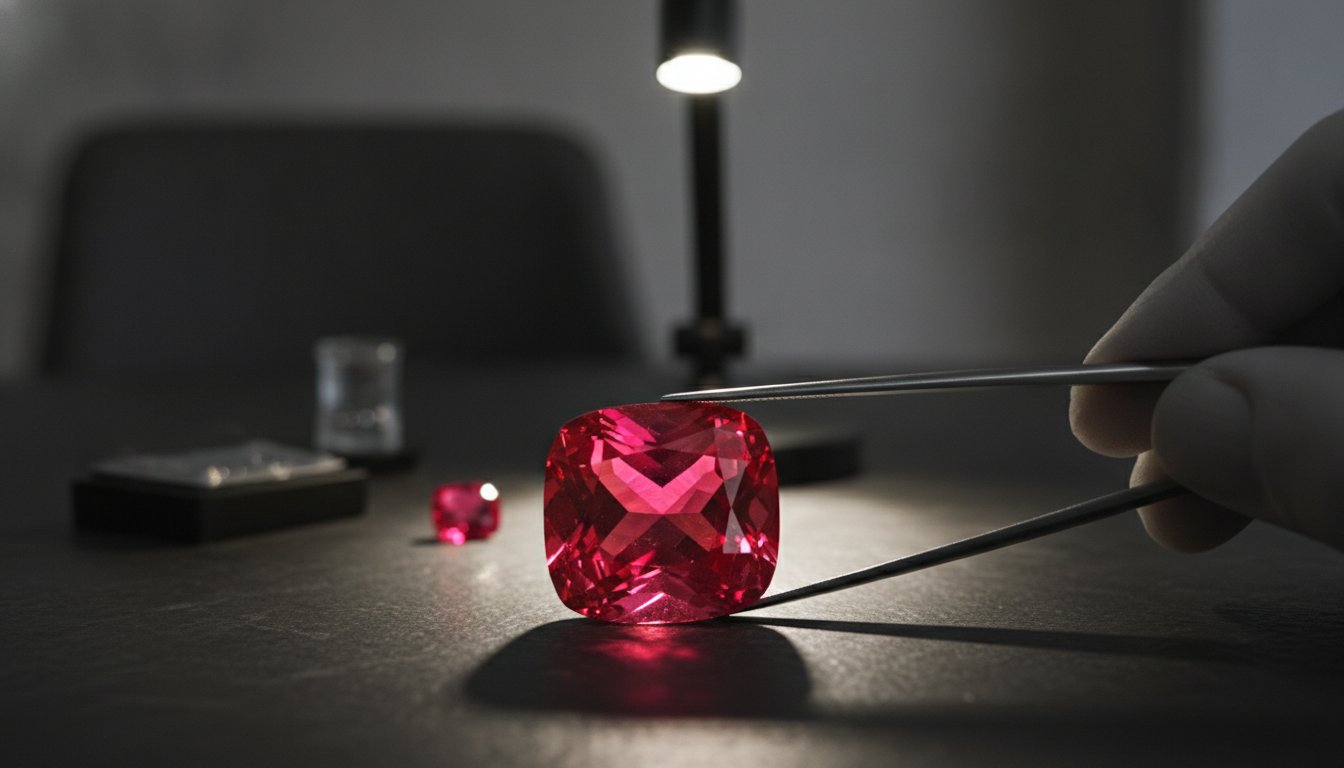
The difference between a standard pink tourmaline and a true investment-grade rubellite isn't just a matter of semantics. It's a distinction that can impact the value of your collection by as much as 60 percent. While many stones claim the title, only those that maintain their fiery, saturated red under both natural and incandescent light earn the right to be called rubellite. Finding high-quality loose rubellite tourmalines requires a keen eye and an understanding of how these "portable wealth assets" behave outside the controlled lighting of a showroom.
You likely recognize the allure of a stone that rivals the finest ruby at a fraction of the cost. However, the fear of undisclosed heat treatments or mislabeled inventory often creates hesitation for serious collectors. It's frustrating to squint at a screen trying to gauge if a gem will turn muddy once it reaches your hand. This guide removes that uncertainty. You'll master the art of evaluating color saturation, identifying ethical sourcing, and understanding the price-to-quality ratios for investment-grade stones. We'll walk through everything from the rarity of eye-clean Brazilian specimens to the technical markers of transparency that define a premier dealer.
Key Takeaways
- Identify the specific mineralogical standards and light-stability tests that separate prized rubellite from the broader elbaite tourmaline family.
- Master the nuances of evaluating loose rubellite tourmalines, focusing on "Pigeon Blood" red saturation and the unique clarity standards for Type III gems.
- Compare the investment potential of historic Brazilian origins against the larger, high-clarity crystals found in modern Nigerian deposits.
- Gain expert insights on mounting these durable stones into custom jewelry, including which precious metals best complement their intense fuchsia hues.
- Understand the importance of radical transparency and how a legacy of expert connoisseurship protects your high-value online transaction.
What is Rubellite Tourmaline? Defining the Red Standard
Rubellite isn't just a marketing term; it's a specific gemological classification within the elbaite tourmaline family. While many pinkish stones flood the market, true loose rubellite tourmalines are defined by their intense saturation and remarkable color stability. Most of these gems owe their vivid scarlet and fuchsia hues to trace amounts of manganese within the crystal lattice. This chemical signature creates a visual depth that rivals some of the world's finest rubies. You can learn more about the technical properties of Rubellite Tourmaline on Wikipedia to understand how its crystal structure differs from other varieties. For the serious collector, these stones provide a way to capture "Red Fire" while avoiding the extreme market premiums found in the ruby market.
Rubellite vs. Pink Tourmaline: The Critical Difference
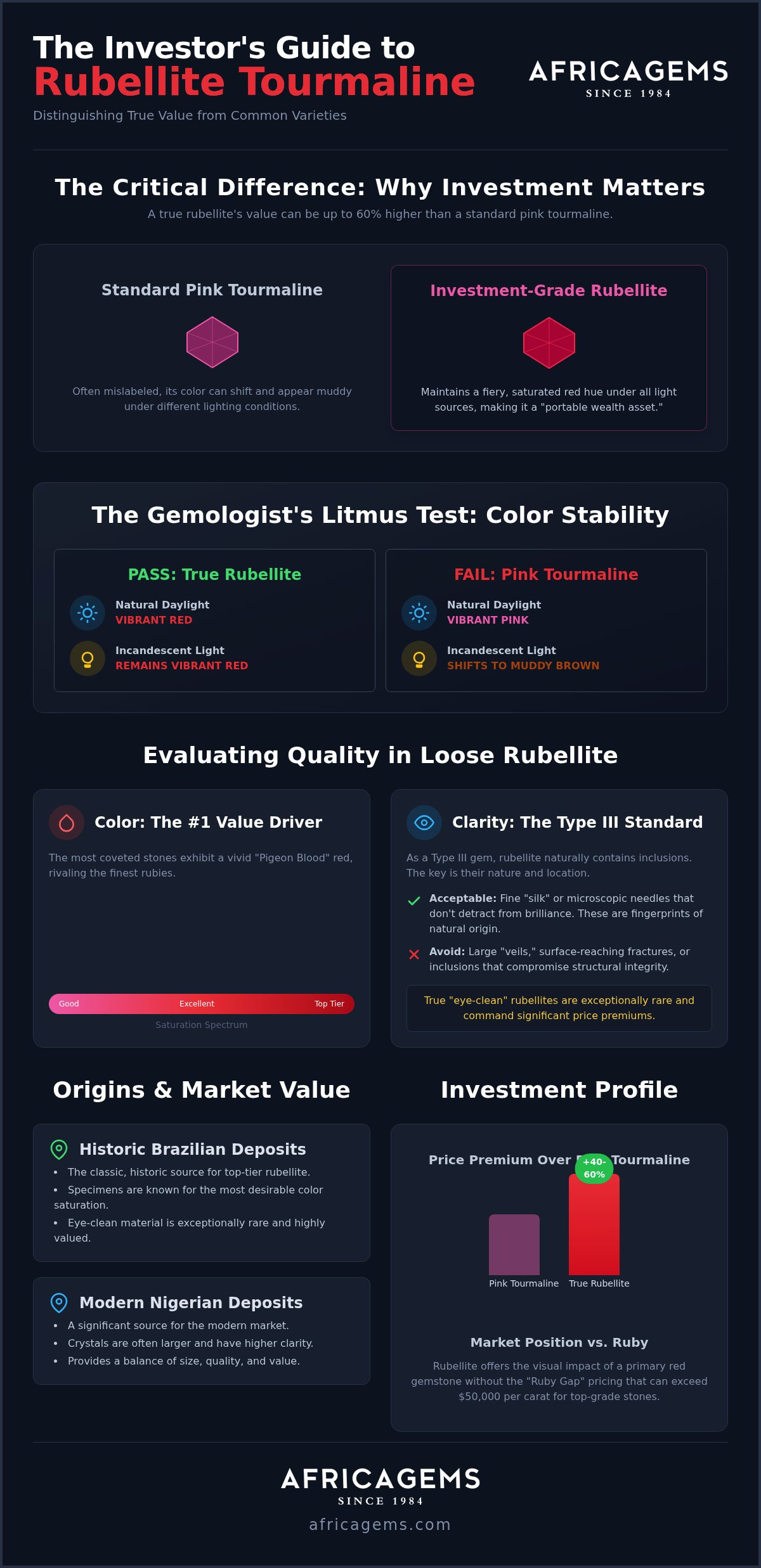
Professional dealers distinguish these stones through the "Incandescent Test." A high-quality rubellite must remain vibrantly red under both daylight and artificial, yellow-toned light. If a stone shifts toward a muddy brown or a pale purple when you move indoors, it's technically a pink tourmaline. Professional saturation requirements are strict; a true rubellite holds a deep, vivid red that doesn't wash out in low light. Industry data from 2026 confirms that stones qualifying as true rubellite carry a 40 to 60 percent price premium over standard pink tourmaline. Simply put, a rubellite is a tourmaline that maintains its saturated red or deep pink hue regardless of the light source it's viewed under.
The Symbolic Meaning of Red Tourmaline
Beyond technical specs, these gems carry a legacy of emotional resonance. They're often associated with passion, vitality, and a deep, heart-centered energy that makes them popular for anniversary gifts. As an alternative birthstone for October, they offer a more durable and vibrant option than traditional opal. For those looking to compare these traits with other high-end minerals, the AfricaGems guide to precious gemstones provides a broader perspective on how rubellite fits into the hierarchy of rare materials. It's a top-tier choice for collectors who want the visual impact of a primary red gemstone without the "Ruby Gap" pricing that can exceed fifty thousand dollars per carat for top-grade Corundum.
Evaluating Quality in Loose Rubellite Tourmalines
Assessing the quality of loose rubellite tourmalines requires a different set of eyes than those used for diamonds or even blue sapphires. While color remains the absolute primary driver of value, the standards for clarity and cut are unique to this specific variety of elbaite. You're looking for that elusive "neon" glow, a saturation so deep it mimics the finest rubies without losing its fuchsia or scarlet character. The most coveted stones exhibit a vivid "Pigeon Blood" red, a term often reserved for the highest tier of Mozambique rubies but perfectly applicable to the top one percent of rubellite.
Unlike many other colored gems, the gemological community classifies rubellite as a Type III gemstone. This classification, as explained in GIA's description of tourmaline, acknowledges that these stones almost always grow with significant internal characteristics. While you might seek "eye-clean" specimens, expecting a stone to be "loupe-clean" is often unrealistic for this material. The goal is to find a gem where the inclusions don't detract from the overall brilliance or compromise the stone's physical strength. For collectors seeking a specific weight and saturation, browsing a curated selection of precious gemstones can help you visualize these differences.
Understanding Inclusions in Type III Gems
True eye-clean rubellites are exceptionally rare and command significant price premiums because of their Type III nature. Common inclusions like fine "silk" or microscopic needles are frequently present. These aren't necessarily flaws; they often act as a fingerprint of natural origin, distinguishing your gem from synthetic alternatives. However, you should avoid stones with inclusions that reach the surface or those with large "veils" that threaten the structural integrity of the crystal. A well-placed inclusion that's invisible to the naked eye is a standard trade-off for the intense color these stones provide.
The Impact of Cut on Color Saturation
Precision faceting does more than just create sparkle; it's a tool for managing light. In rubellite, a deep pavilion is often used to intensify the color of slightly lighter rough, ensuring the finished gem hits that critical saturation threshold. Oval and cushion cuts are the most popular choices because they maximize the yield from the original crystal while enhancing the stone's natural brilliance. When looking at a loose stone, prioritize "face-up" beauty. The gem should show consistent color across the entire table without significant "extinction" or dark dead spots in the center.
Carat weight plays a massive role in the scarcity of high-quality material. While small rubellites under two carats are relatively accessible, finding a clean, vibrantly saturated stone over five carats is a significant challenge. As the size increases, the likelihood of distracting inclusions rises exponentially. This makes a large, eye-clean rubellite a true trophy for any connoisseur's collection.
Origins and Market Value: Where Fine Rubellite is Found
The geographical source of a gemstone often dictates its personality and market desirability. For loose rubellite tourmalines, Brazil's Minas Gerais region remains the historic heavyweight. It produces stones with a deep, "ruby-like" saturation that collectors have prized for centuries. Nigeria emerged as a powerhouse in the late 1990s, yielding large, exceptionally clear crystals that redefined the market's expectations for carat weight and clarity. Today, Mozambique and Madagascar have become the frontiers for vibrant, fuchsia-toned gems that appeal to a modern aesthetic. Understanding the geological formation of rubellite helps explain why certain pockets of the earth produce these intense reds while others only offer pale pinks. Origin documentation isn't just a piece of paper; it's a critical component of a stone's pedigree that can significantly bolster its long-term investment value as supply from historic mines becomes increasingly constrained.
Navigating Gemstone Treatments and Disclosure
Enhancing the natural beauty of tourmaline often involves stable, industry-standard processes. Heat or irradiation are frequently used to drive out brownish overtones and lock in a fiery scarlet hue. At AfricaGems, we operate with a policy of radical transparency. Every stone in our inventory comes with full disclosure regarding any enhancements, ensuring you know exactly what you're acquiring. While treated stones are beautiful and suitable for daily wear, unheated rubellites that possess natural, high-saturation color are the "holy grail" for serious collectors. These rare specimens represent the pinnacle of the species. They command the highest premiums because they've achieved perfection without human intervention.
Rubellite Price Trends in 2026
The market for red tourmaline is currently in a bullish cycle, with projections for 2026 and 2027 showing a growth of 8 to 12 percent. This trend is largely driven by the "Ruby Gap," as collectors seek high-end alternatives to top-grade pigeon's blood rubies. While top-tier, investment-grade stones of significant size can reach high four-figure prices per carat, the mid-range market remains accessible for those seeking heirloom quality. When compared to other rare assets like loose tanzanite, rubellite offers a distinct value proposition based on its durability and classic red appeal. The rising demand for rare, ethically sourced gemstones continues to push rubellite appreciation into new territory. It's a portable wealth asset that combines visual splendor with the security of a tangible, finite resource.
Designing with Rubellite: From Loose Stone to Heirloom
Transitioning from a collector's gem to a wearable masterpiece requires a balance of aesthetic vision and technical understanding. Rubellite is remarkably durable, ranking between 7 and 7.5 on the Mohs scale of hardness. This makes loose rubellite tourmalines an excellent choice for high-wear jewelry like engagement rings or daily anniversary bands. Unlike more fragile red stones, tourmaline can withstand the rigors of modern life while maintaining its polish for generations. The key to a successful design lies in choosing a metal that complements the stone's specific secondary hues. Yellow gold is a classic choice that emphasizes the warmth and fuchsia undertones of the gem. If you prefer a modern, high-contrast look, platinum or white gold creates a "cool" frame that makes the primary red saturation appear even more intense.
The Best Settings for Loose Rubellite
Because rubellite is a Type III gemstone, the choice of setting can be strategic. Halo settings are incredibly popular for this material. The surrounding brilliance of white diamonds can mask minor internal characteristics while adding a layer of protection to the stone's edges. For those who have secured a rare, high-carat, eye-clean specimen, a simple solitaire setting is often the most sophisticated choice. It allows maximum light entry from all angles, ensuring the "neon" glow of the tourmaline is the undisputed star of the piece. You can explore various styles and configurations by browsing the AfricaGems gemstone mountings collection for immediate inspiration.
Creating a Bespoke Rubellite Ring or Pendant
The journey from selecting a loose gem to holding a finished piece of jewelry is a collaborative effort. At AfricaGems, our custom design process ensures that your vision is translated into a secure, heirloom-quality setting. There is a significant security advantage to buying a loose stone and having it mounted by the same trusted dealer. It eliminates the risk of an outside jeweler being unfamiliar with the specific heat sensitivities or cleavage planes of tourmaline. Our team can also help you source smaller accents to create a complete suite, such as matching gemstone earrings or a coordinated pendant. This holistic approach ensures that the color match remains consistent across all your pieces.
If you've found the perfect stone but aren't sure how to showcase it, our experts are ready to help. You can begin your journey toward a one-of-a-kind treasure by exploring our custom jewelry design services today.
Why Buy Loose Rubellite Tourmalines from AfricaGems?
AfricaGems has been a cornerstone of the gemstone trade since 1984. Founder Marc Sarosi has spent over four decades cultivating relationships with the world's most reputable mines and cutters to ensure that our inventory of loose rubellite tourmalines meets the highest standards. This legacy isn't just about longevity; it's about a persistent focus on the integrity of the industry. Every red tourmaline we offer undergoes a rigorous selection process that prioritizes color stability, structural integrity, and ethical provenance. Just as firms like Align Quality help businesses implement professional quality management frameworks to ensure excellence, the "AfricaGems Certified" status means each stone has been personally inspected to meet our uncompromising criteria for saturation and clarity. We don't just sell gems; we provide the peace of mind that comes with radical transparency.
The Marc Sarosi Personal Guarantee
Buying a high-value gemstone online shouldn't feel like a gamble. Marc Sarosi personally guarantees the quality of every stone, providing a level of direct accountability that you won't find with larger, faceless retailers. This expert curation means you're receiving a gem that has been vetted by an enthusiast who treats every transaction as a personal consultation. It's a legacy-oriented approach that transforms a digital storefront into a relationship built on trust. For those who want to deepen their knowledge before making a commitment, the AfricaGems blog offers ongoing education on everything from treatment identification to the latest mining updates. We believe that an informed buyer is our best customer.
Secure Transactions and Global Shipping
We understand that security is paramount when handling rare materials. Our platform maintains an A+ rating for secure high-value online transactions, backed by robust safety protocols for global shipping. Every gem is fully insured and tracked until it reaches your doorstep, ensuring your investment is protected throughout its journey. We also offer an easy return policy because we know that judging the perfect fuchsia or scarlet saturation is best done in person. This "no-pressure" atmosphere allows you to verify the gem's beauty in your own lighting before making a final decision. Once you've experienced our commitment to excellence, we invite you to browse all loose gemstones to see how our standards extend across our entire collection of rare and precious materials.
Securing Your Legacy with Rare Red Fire
Choosing the right gemstone is an exercise in both technical precision and personal passion. You now understand that the true value of loose rubellite tourmalines lies in their remarkable ability to hold a saturated red hue regardless of the lighting environment. Whether you're drawn to the historic prestige of Brazilian mines or the modern brilliance of Nigerian crystals, the key to a successful acquisition is a partner who prioritizes radical transparency. It's a journey that moves from visual appreciation to long-term investment security.
AfricaGems provides this security through the direct accountability and legacy of Marc Sarosi. Every stone in our inventory comes with a personal quality guarantee and full disclosure of any enhancements. This ensures your purchase is an ethical, high-value asset. By selecting a loose gem first, you unlock the potential for a bespoke heirloom that reflects your specific vision. Our team is ready to guide you from the initial selection to the final mounting of your custom design.
Explore the Curated Collection of Loose Rubellite Tourmalines at AfricaGems and discover the fiery brilliance that has captivated connoisseurs for over forty years. Your next great treasure is waiting to be uncovered.
Frequently Asked Questions
Is rubellite more expensive than ruby?
Rubellite is significantly more affordable than high-grade ruby. Top-tier "Pigeon's Blood" rubies can exceed $50,000 per carat, while investment-grade rubellites usually reach around $8,000 to $10,000 per carat. This makes it an excellent alternative for collectors seeking a similar visual impact without the extreme price premium. It offers high saturation at roughly 10 to 15 percent of the cost of a comparable ruby.
Can rubellite tourmaline be worn in an engagement ring?
Rubellite is suitable for engagement rings due to its hardness of 7 to 7.5 on the Mohs scale. While it isn't as hard as a diamond, it's durable enough for daily wear if placed in a protective setting. We often recommend bezel or halo mountings to shield the edges of loose rubellite tourmalines. With proper care, these stones will maintain their brilliance for a lifetime of use.
How can I tell if my rubellite has been treated?
Determining treatment usually requires professional laboratory equipment because heat and irradiation are common, stable enhancements. These processes are used to remove brownish overtones and intensify the primary red color. At AfricaGems, we provide radical transparency by disclosing every enhancement on our product pages. For high-value stones, a certificate from a reputable gemological lab is the only definitive way to confirm the absence of treatments.
What is the best way to clean a loose rubellite tourmaline?
Use warm, soapy water and a soft-bristled brush to gently clean your gemstone. Avoid ultrasonic or steam cleaners, as the high-frequency vibrations or sudden temperature changes can damage stones with internal inclusions. Dry the gem with a lint-free cloth to prevent water spots. This simple method is the safest way to maintain the stone's "neon" glow without risking the structural integrity of the crystal lattice.
Does rubellite always have inclusions?
Almost always, as rubellite is classified as a Type III gemstone by the GIA. This means the crystal naturally grows with internal characteristics like needles, silk, or small feathers. While "eye-clean" specimens exist and command significant premiums, they are quite rare. You should view these inclusions as natural fingerprints that prove the stone's origin. They are generally tolerated as long as they don't affect the stone's overall brilliance.
Where is the best rubellite tourmaline found?
Brazil's Minas Gerais region is historically regarded as the source for the finest, most "ruby-like" stones. However, Nigeria produced exceptional, large crystals during the late 1990s that are still highly sought after. Madagascar and Mozambique have also become significant sources for vibrant, fuchsia-toned gems. The "best" source depends on whether you prioritize the deep scarlet tones of Brazil or the larger, cleaner crystals found in African deposits.
What happens if a rubellite is viewed under different light sources?
A true rubellite must maintain its saturated red or deep pink color under both daylight and incandescent light. This is the definitive test used by gemologists to distinguish it from pink tourmaline. If the stone shifts toward a brownish or purplish tone under yellow artificial light, it doesn't qualify for the rubellite name. This color stability is the primary factor that justifies the 40 to 60 percent price premium over standard varieties.
Why is rubellite called the "Red Tourmaline"?
The name rubellite comes from the Latin word "rubellus," meaning reddish. It's the most prized red variety of the elbaite tourmaline family. While tourmaline comes in almost every color, rubellite specifically refers to stones with intense pink to ruby-red saturation. It's often called "Red Tourmaline" in the trade, but the rubellite title is reserved for stones that maintain their color stability under all lighting conditions.

Article by
Marc Sarosi
Professional gemstone dealer for more than 40 years. Started off mining Aquamarine in Zambia, Africa and travelled throughout the continent in search of fine gems. Trusted authority on fine gemstones and have donated a fine collection of more than 27 extraordinary gemstones to the Smithsonian Institute Gem Hall for generations to see.