
Loose Morganite Gemstones: The Connoisseur’s Guide to Pink Beryl (2026)
Aug 12th 2026
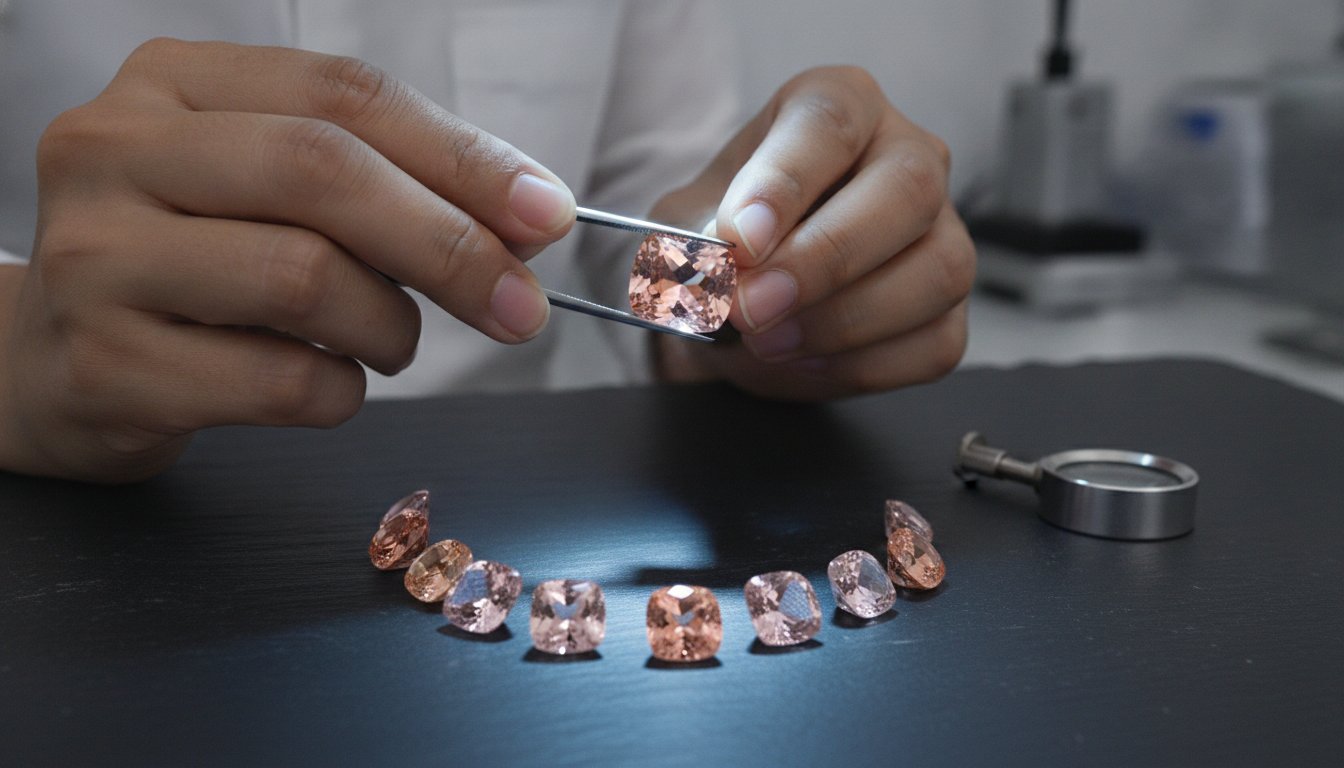
Why does a "salmon" morganite command a premium in one showroom while being dismissed as "off-color" in another? You've likely felt the frustration of scrolling through endless listings of loose morganite gemstones, only to find yourself caught between conflicting advice on color saturation and treatment transparency. It's hard to feel secure when the difference between a "baby pink" heirloom and a dull, over-treated stone isn't immediately clear to the untrained eye.
This guide empowers you to master the art of selecting premium beryl by looking through the lens of a master gemologist with over forty years of industry experience. You'll learn how to identify that perfect balance of saturation without darkness, ensuring your stone possesses the internal fire and brilliance it deserves. We'll examine the technical nuances of 2026 market trends, decode the "peach versus pink" value debate, and establish the rigorous standards required for securing an ethically sourced, high-clarity gemstone that stands the test of time.
Key Takeaways
- Understand Morganite's prestigious heritage as the pink variety of beryl, placing it in the same elite mineral family as emerald and aquamarine.
- Master the nuances of color saturation to decide whether the rare "sunset peach" or the delicate "baby pink" variety best fits your personal aesthetic.
- Discover why premium loose morganite gemstones offer a sophisticated soft glow and sufficient durability for daily wear in custom jewelry.
- Gain confidence by understanding common heat treatments and the importance of full disclosure to ensure your stone's long-term value.
- Explore how ethical sourcing and expert gemological curation provide the security needed when investing in high-carat, eye-clean specimens.
What are Loose Morganite Gemstones? The Pink Beryl Heritage
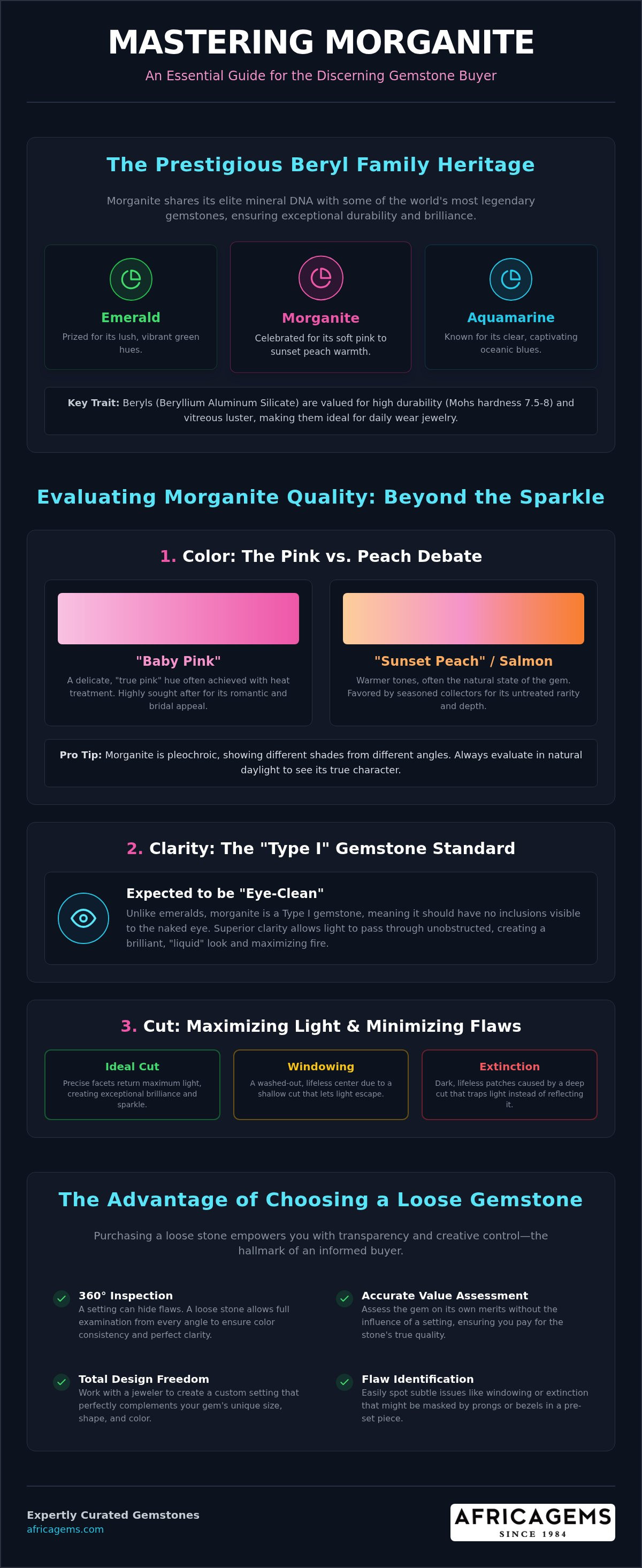
Morganite isn't just another pink stone; it's a member of one of the most prestigious families in the gemological world. Known scientifically as the pink variety of beryl, this gemstone shares its DNA with legendary stones like emerald and aquamarine. It was first identified in Madagascar in 1910, a discovery that captivated the industry and led to its naming in honor of the financier J.P. Morgan. His passion for gem collecting helped cement this stone's status as a must-have for connoisseurs. When you choose to invest in loose morganite, you aren't just buying a mineral. You're acquiring a piece of geological history defined by its delicate pastel hues and remarkable clarity. These loose morganite gemstones offer a sophisticated alternative to traditional pink gems, providing a soft, romantic glow that looks stunning in any lighting.
The Beryl Family Pedigree
The prestige of morganite stems directly from its beryl heritage. While emerald is prized for its lush greens and aquamarine for its oceanic blues, morganite offers a sophisticated warmth ranging from soft magnolia to vibrant peach. This mineral group is celebrated for its exceptional vitreous luster and impressive durability. Chemically, morganite is a beryllium aluminum silicate with manganese traces responsible for its signature pink glow. Collectors value this pedigree because it ensures the stone possesses the structural integrity and brilliance required for high-end jewelry. Unlike more common minerals, beryls have a crystalline structure that allows for large, eye-clean specimens. This makes them ideal for statement pieces where clarity is paramount.
Why Collectors Prefer Loose Stones
Choosing loose morganite gemstones over pre-set jewelry is the hallmark of an informed buyer. A setting can hide many flaws, but a loose stone has nowhere to hide. You can inspect the gem from every angle to ensure the cut is precise and the color is consistent throughout the entire pavilion. This level of scrutiny is essential for identifying "windowing," where the center of the stone appears washed out, or "extinction," where sections look dark and lifeless. By purchasing a loose stone, you gain total control over the final design. You can work with a master jeweler to create a custom setting that perfectly complements the specific dimensions and tone of your gem. This approach ensures your jewelry is a unique reflection of your taste rather than a mass-produced item. It also allows for a far more accurate assessment of the stone's true value before you commit to a lifelong investment.
Evaluating Morganite Quality: Color, Clarity, and Cut
Assessing the quality of loose morganite gemstones requires a trained eye that looks beyond the initial sparkle. Unlike emeralds, which are often "gardens" of inclusions, morganite is held to a much higher standard of transparency. Understanding Morganite quality factors is the first step in ensuring your investment retains its value over time. At AfricaGems, we prioritize natural gemstones that exhibit both exceptional color saturation and structural integrity, ensuring each piece meets the rigorous demands of a true collector.
The Pink vs. Peach Debate
In 2026, market trends show a distinct split in preference that every buyer should understand. Many modern buyers seek a "True Pink" or "Baby Pink" hue for its romantic, bridal appeal. However, seasoned collectors often gravitate toward the "Sunset Peach" or salmon tones. These warmer colors are often the natural state of the stone before any heat treatment is applied. Morganite is pleochroic, meaning it can show different shades, such as a pale pink and a deeper bluish-pink, depending on the viewing angle. When you're evaluating a stone, always observe it in natural daylight. Standard jewelry store lighting often masks the subtle orange undertones that define a high-quality peach specimen.
Clarity and the 'Type I' Standard
Gemologists classify morganite as a Type I gemstone. This means it's expected to be eye-clean, showing no visible inclusions to the naked eye. While a few internal "veils" are acceptable in an emerald, they significantly devalue a morganite. High clarity isn't just about aesthetics; it's about brilliance. A perfectly clear beryl allows light to travel through the stone and reflect back to the viewer without interruption. When you review GIA or AGTA certifications, look for "no visible inclusions" to ensure the stone's fire isn't dampened by internal clutter. A stone with superior clarity will possess a "liquid" look that cheaper, included stones can't replicate.
The cut of a morganite determines whether it glows or looks "washed out." Because morganite is often light in color, a shallow cut will result in a "window." This is a transparent area in the center where light leaks out the back rather than reflecting. A deep pavilion is essential to concentrate the color and maximize the stone's soft glow. A masterfully cut loose morganite gemstones will exhibit "scintillation," those flashes of light that give the gem its life. Ethical sourcing remains the backbone of our collection, as we believe a beautiful stone is only truly valuable if its journey from the mine is transparent. If you're ready to find a stone that balances these technical merits with undeniable beauty, you might want to browse our curated selection of loose morganite.
Morganite vs. Pink Sapphire and Kunzite
Selecting the right pink gemstone often involves a choice between the soft elegance of beryl and the intense brilliance of corundum. Comparing loose morganite gemstones to other popular alternatives like pink sapphire or kunzite reveals distinct trade-offs in durability, light performance, and value. While pink sapphire is prized for its "sharp fire" and exceptional hardness, morganite offers a sophisticated "soft glow" that many collectors find more romantic and understated. This visual difference is rooted in physics; the refractive index of beryl is 1.57, while sapphire sits at a much higher 1.76. This lower refractive index gives morganite its characteristic velvety luster, which avoids the sometimes aggressive sparkle of more refractive stones.
Price point analysis is where morganite truly shines for the serious buyer. Because beryl crystals often grow in large, clean hexagonal prisms, it's possible to find high-carat loose morganite gemstones that would be prohibitively expensive or simply non-existent in the sapphire world. This allows you to prioritize a substantial, eye-clean center stone for a statement piece without compromising on clarity. Additionally, morganite offers superior light stability compared to kunzite. Kunzite is known as a "evening stone" because its color can fade when exposed to direct sunlight for extended periods, whereas morganite's color remains steadfast and reliable under daily wear conditions.
The Engagement Ring Suitability Test
For those considering a morganite for an engagement ring, durability is a primary concern. On the Mohs scale, morganite ranks between 7.5 and 8.0, making it harder than kunzite (6.5 to 7.0) but softer than sapphire (9.0). It's tough enough for daily wear, provided the setting offers some protection. To maintain that signature "blush" brilliance, regular cleaning is essential. Beryl has a tendency to attract oils and lotions, which can dull its appearance over time. A simple soak in warm, soapy water followed by a soft brush will keep your gemstone rings looking as vibrant as the day they were set. Insights from the Gemological Institute of America (GIA) on Morganite confirm that its durability is more than sufficient for jewelry that's treated with reasonable care.
Aesthetic Differences in Metal Pairing
Buying Guide: Navigating Treatments and Carat Weights
Understanding the interplay between treatment and scale is essential when evaluating loose morganite gemstones. Unlike rubies or sapphires, which are often found in relatively small crystals, beryl crystals naturally grow in massive, high-clarity prisms. This geological advantage means you can secure a stunning, eye-clean specimen of 10 carats or more without the astronomical price hikes seen in other precious categories. However, the price per carat does follow a milestone structure. You'll notice significant value jumps as stones cross the 5-carat and 10-carat marks. For those seeking "investment grade" quality, the focus shifts to unheated stones with deep, natural saturation. These rare gems represent the pinnacle of the species; they offer a purity of color that hasn't been enhanced by human intervention.
Full Disclosure on Heat and Irradiation
Transparency is the bedrock of a secure transaction. Marc Sarosi insists on full disclosure regarding all gemstone treatments, as it directly impacts both the stone's story and its long-term appraisal. Most morganite undergoes routine heat treatment to remove yellow or orange "veils," resulting in a purer pink. This process is stable and permanent. In contrast, irradiation is sometimes used to achieve deep orange or peach tones. While safe for the wearer, this treatment must be clearly stated on a lab report to ensure you aren't paying a premium for a color that isn't entirely natural. When you review a GIA or AGTA certificate, look for the "Treatments" section to confirm the stone's status. We believe an informed buyer is a confident buyer, so we never obscure the technical history of our gems.
Choosing the Right Carat Weight
Beryl has a lower specific gravity than diamond or sapphire, which means it's less dense. Consequently, a 2-carat morganite will appear physically larger than a 2-carat diamond. This "face-up" size advantage makes it a favorite for statement jewelry. In the 2026 market, the "sweet spot" for rings remains the 3 to 5-carat range, providing a significant presence without being cumbersome. For pendants, collectors often look toward the 10 to 15-carat range to maximize the stone's soft, vitreous luster. If you're building a legacy collection, rare specimens exceeding 20 carats from our "Collector’s Vault" offer a level of grandeur rarely seen in retail showrooms. Ready to find your perfect center stone? You can explore our curated collection of loose morganite gemstones to see these size dynamics in person.
The AfricaGems Promise: Expert Curation and Custom Design
The acquisition of loose morganite gemstones is only the first chapter in a story of refined elegance. At AfricaGems, we believe that the true value of a gemstone lies in its journey from the earth to your collection. Every stone we offer undergoes a rigorous selection process personally overseen by Marc Sarosi. With over four decades of experience since our founding in 1984, we don't just sell minerals; we curate natural wonders. Our "Expert Enthusiast" philosophy ensures that we prioritize stones with exceptional life and fire, rejecting those that fail to meet our uncompromising standards for transparency and ethical sourcing. This personal touch is what distinguishes a commercial transaction from a true connoisseur's acquisition.
The Custom Design Journey
Transforming your chosen loose morganite into a bespoke heirloom requires a delicate balance of technical skill and artistic vision. Our custom jewelry design services bridge the gap between a raw material and a finished masterpiece. We begin with advanced CAD renderings that allow you to visualize every facet of your design before a single ounce of gold is cast. Selecting the perfect gemstone mountings is critical; the setting must protect the beryl while allowing maximum light to enter the stone. Working with a dealer who understands both the mineralogical properties of beryl and the structural requirements of fine jewelry ensures your piece will endure for generations. We don't just set stones; we build legacies.
Why Trust AfricaGems?
Trust is the most valuable commodity when exploring the world of rare gemstones. Our commitment to radical transparency means you'll never have to guess about the origin or treatment status of your purchase. We provide full disclosure on every enhancement, ensuring your loose morganite gemstones are exactly what we claim them to be. This dedication to integrity is backed by Marc Sarosi’s personal guarantee and a legacy of trust that spans decades. Collectors appreciate that they have direct access to our founder for high-value consultations, transforming a digital transaction into a personal partnership. When you choose AfricaGems, you're choosing a standard of excellence that has remained unchanged since we first opened our doors.
Securing Your Pink Beryl Legacy
Investing in morganite is about more than just aesthetic appeal; it's about embracing the prestigious beryl lineage with the scrutiny of a collector. You've learned how to balance delicate color saturation with high clarity and why the "face-up" size of this gem provides such a distinct advantage for custom jewelry. Selecting premium loose morganite gemstones requires a commitment to technical validation and radical transparency that only an expert enthusiast can provide.
Since 1984, Marc Sarosi has personally curated these natural wonders, ensuring that every stone in our vault meets the highest standards for brilliance and ethical sourcing. We believe that a beautiful gem is only truly valuable when its history is fully disclosed and its quality is guaranteed. Your path to owning a piece of geological history is now clear, backed by decades of gemological expertise and a passion for the world's most elegant materials.
Browse Our Expert-Curated Collection of Loose Morganite
We invite you to discover a stone that resonates with your personal story and stands as a testament to refined taste for years to come.
Frequently Asked Questions
Is morganite a real gemstone or is it lab-created?
Morganite is a 100% natural gemstone belonging to the prestigious beryl family. While synthetic versions exist in the broader market, AfricaGems specializes exclusively in natural specimens mined from the earth in regions like Madagascar and Brazil. Its authenticity is defined by its chemical structure as a beryllium aluminum silicate. Every stone we offer is a genuine product of natural geological processes.
Does morganite lose its color over time?
Natural morganite is remarkably light-stable and won't fade under normal conditions. Unlike kunzite, which can lose its saturation when exposed to direct sunlight, morganite's delicate blush or peach tones are permanent. This stability makes it a reliable choice for daily wear. You don't have to worry about your stone losing its romantic glow as the years pass.
What is the best color for a loose morganite gemstone?
The "best" color is subjective, though saturation determines market value. In 2026, many connoisseurs seek rare "True Pink" or "Baby Pink" hues for their modern appeal. Others prefer the sophisticated warmth of "Sunset Peach" or salmon tones. When selecting loose morganite gemstones, prioritize a stone that exhibits clear color without appearing greyish or washed out.
How can I tell if a morganite is high quality?
High-quality morganite is characterized by exceptional clarity and a precision cut. As a Type I gemstone, it should be eye-clean; this means no inclusions are visible to the naked eye. Look for a deep pavilion that prevents "windowing" in the center of the stone. A quality gem possesses a vitreous luster and a soft, consistent glow that remains vibrant in various lighting.
Is morganite durable enough for an engagement ring?
Morganite is sufficiently durable for an engagement ring with a Mohs hardness of 7.5 to 8.0. While it's softer than a sapphire or diamond, it resists scratching from most daily activities. We recommend a protective setting and regular cleaning to maintain its brilliance. Its beryl structure provides excellent toughness, ensuring it can withstand a lifetime of wear if treated with reasonable care.
What is the difference between pink morganite and peach morganite?
The primary difference lies in the secondary undertones of the stone. Pink morganite has often undergone routine heat treatment to remove yellow or orange tints, resulting in a pure, cool-toned blush. Peach morganite retains its natural warm, salmon-like hues. Both varieties belong to the same beryl species, but their value can fluctuate based on current market trends and specific saturation.
Why is morganite often set in rose gold?
Rose gold is the preferred metal because its copper content naturally complements and enhances the gem's warm undertones. This pairing creates a harmonious, monochromatic look that makes the stone's color appear more saturated. While white gold or platinum offers a crisp contrast, rose gold provides a seamless transition that emphasizes the romantic, soft glow characteristic of this beryl variety.
Does AfricaGems provide certificates for loose morganite?
We provide comprehensive documentation for our loose morganite gemstones to ensure total peace of mind. Every stone is accompanied by either a certificate from a major lab like GIA or AGTA, or a detailed AfricaGems report. These documents verify the stone's authenticity, weight, and any stable heat treatments. This commitment to full disclosure is a pillar of our transparent business philosophy.

Article by
Marc Sarosi
Professional gemstone dealer for more than 40 years. Started off mining Aquamarine in Zambia, Africa and travelled throughout the continent in search of fine gems. Trusted authority on fine gemstones and have donated a fine collection of more than 27 extraordinary gemstones to the Smithsonian Institute Gem Hall for generations to see.