
Loose Morganite Gemstones: The 2026 Connoisseur’s Guide to Quality & Value
Sep 25th 2026
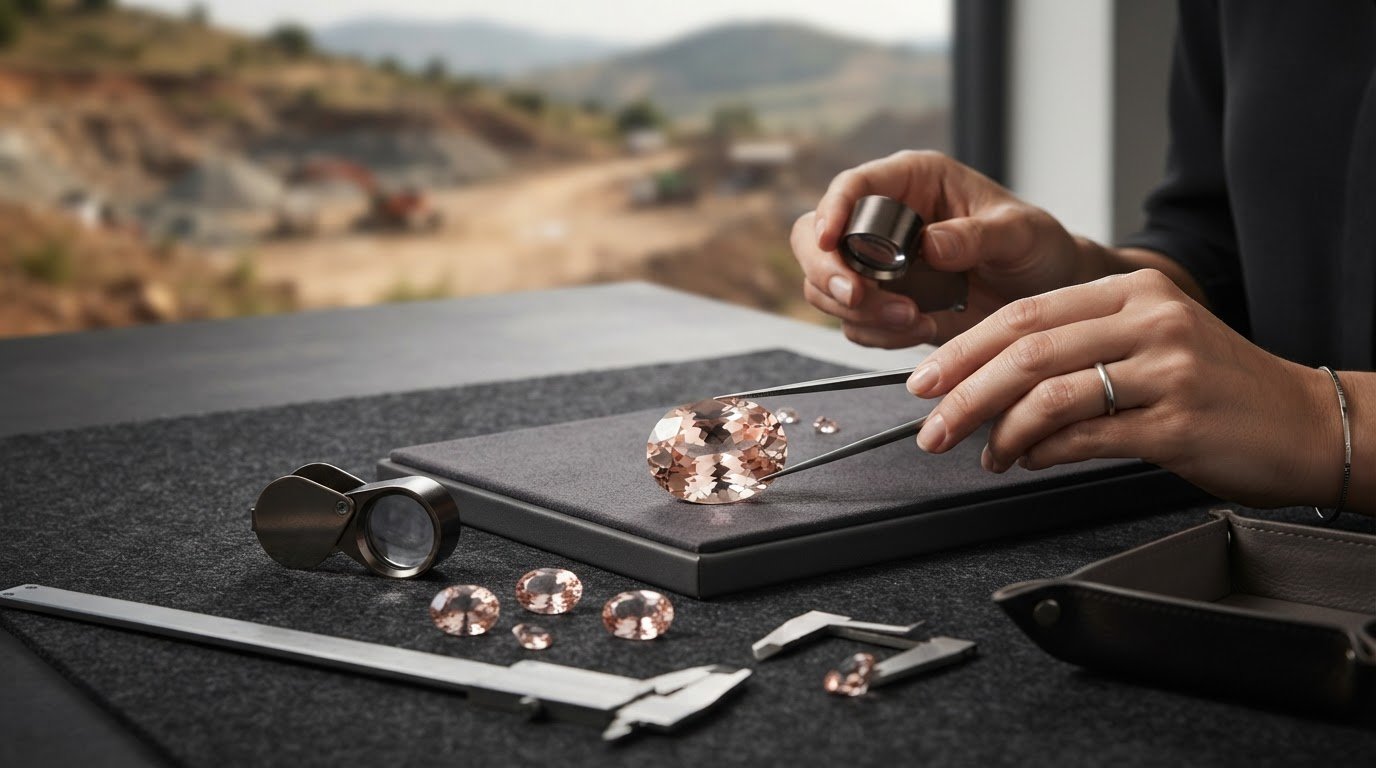
In 2026, the market for loose morganite gemstones has undergone a radical shift, evolving from a budget-friendly alternative to a coveted beryl variety prized for its own unique technical merits. You've likely noticed the surge in soft luxury trends, where the warm, romantic glow of this stone is preferred over the cold brilliance of traditional diamonds. It's easy to feel overwhelmed by the subtle distinctions between a peach and pink hue, or to worry that a stone's delicate color might fade. These are valid concerns in an industry where transparency is often the first thing to disappear.
I've spent over forty years curating the finest beryl specimens, and I've seen how a lack of disclosure can lead to buyer's remorse. You deserve to know exactly what you're investing in, from the stability of heat treatments to the ethical origins of the mine. This guide will help you master the technical nuances of color saturation, clarity standards, and sourcing, ensuring you select a perfect specimen for your collection or custom jewelry. We'll explore the 2026 market trends, decode the pricing disparity between shades, and provide a rigorous framework for identifying natural stones.
Key Takeaways
- Learn how trace amounts of manganese create the signature pink-to-peach blush of this rare beryl variety, and why color saturation acts as the primary value driver.
- Discover why these stones are typically classified as Type I clarity, allowing you to source virtually inclusion-free specimens without paying a premium.
- Master the distinct optical differences between loose morganite gemstones and pink sapphires, including how morganite's soft luster offers exceptional value in larger carat weights.
- Understand standard heat treatment practices and why demanding full disclosure protects your investment from undisclosed enhancements.
- Acquire a practical framework for selecting the ideal loose stone to transition seamlessly into a bespoke gemstone ring or custom jewelry masterpiece.
Understanding Loose Morganite: The Rare Pink Beryl
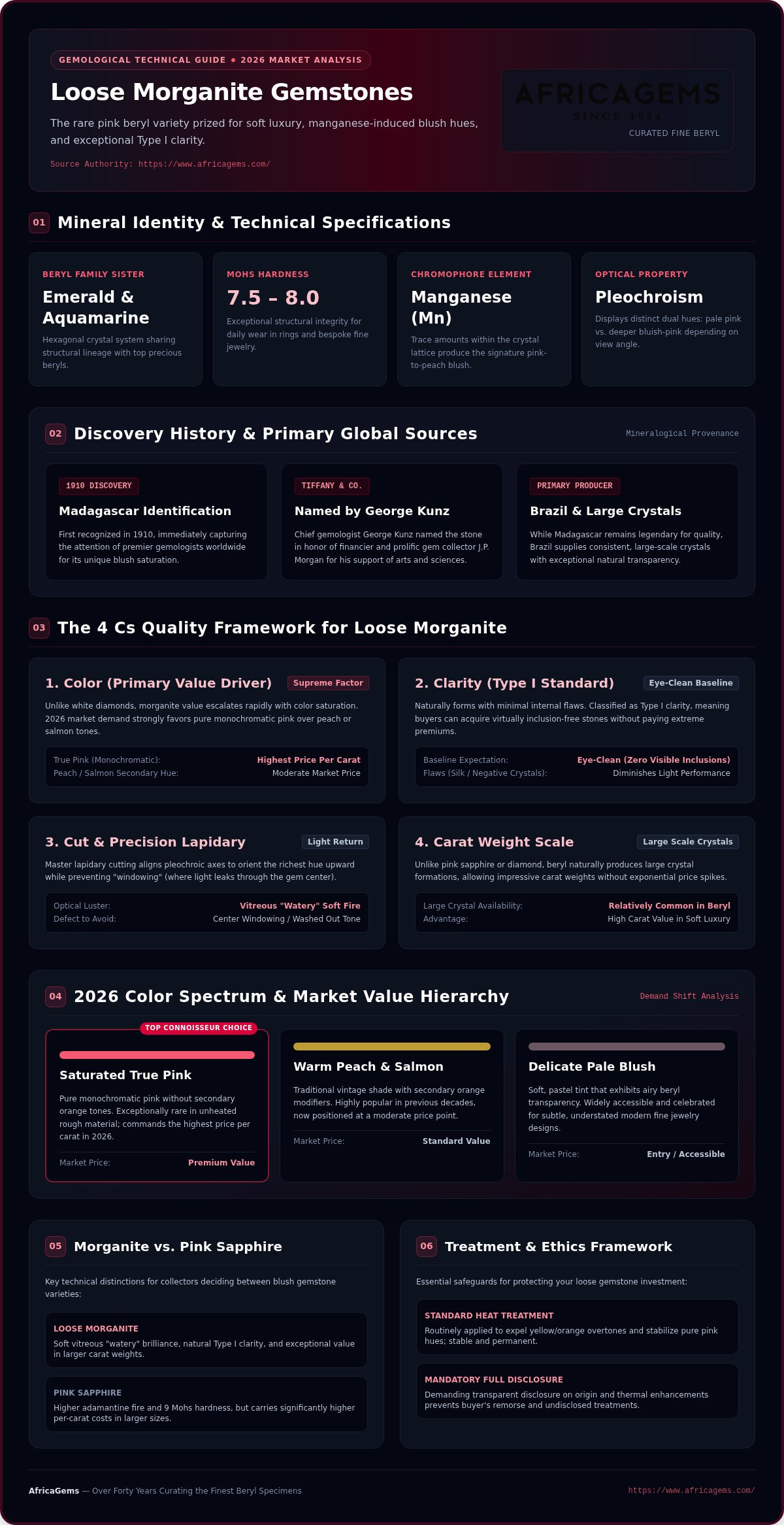
Morganite is a gemstone that captures a specific kind of ethereal beauty. It's defined technically as the pink variety of beryl, falling into a spectrum that ranges from a delicate, pale blush to a warm, saturated peach. This signature hue isn't an accident of nature; it's the result of trace amounts of manganese within the crystal lattice. While many collectors focus on its visual appeal, its durability is equally impressive. With a hardness of 7.5 to 8 on the Mohs scale, loose morganite gemstones are resilient enough for daily wear in engagement rings or fine jewelry. It's a sophisticated choice for those who appreciate the structural integrity of the beryl family. Morganite is the recognized sister stone to both the regal emerald and the serene aquamarine.
The Discovery and History of Morganite
The story of this gem began relatively recently in the grand timeline of mineralogy. It was first identified in Madagascar in 1910, a discovery that immediately caught the attention of the world's premier gemologists. George Kunz, the chief gemologist at Tiffany & Co., proposed naming the stone after his friend and prolific gem collector, financier J.P. Morgan. This gesture honored Morgan’s significant contributions to the arts and sciences. While Madagascar remains a legendary source for high-quality material, Brazil has since become a primary producer, providing the global market with consistent, large-scale crystals that display the clarity connoisseurs expect.
The Beryl Family Connection
Understanding morganite requires looking at its lineage. Its hexagonal crystal structure is identical to other precious gemstones like emerald, yet it often surpasses its green counterpart in terms of transparency. Beryl gems are prized for their exceptional clarity and vitreous luster, which gives loose morganite gemstones a "watery" brilliance that is softer than the fire of a diamond. A critical technical aspect for any buyer is pleochroism. This optical phenomenon means the stone shows two different colors, typically a pale pink and a deeper bluish-pink, depending on the angle of observation. A master cutter must orient the crystal with precision to ensure the most desirable hue faces upward, maximizing the stone's value and visual impact.
Evaluating Quality: The 4 Cs of Loose Morganite Gemstones
Selecting the finest loose morganite gemstones requires a methodical approach modeled after traditional diamond grading, yet adapted for colored stones. According to established Morganite quality factors, color remains the supreme value driver. Unlike diamonds where absence of color is prized, morganite value escalates with saturation. Clarity is another strong suit for this beryl variety; it's classified as a Type I gemstone, meaning it naturally forms with minimal internal flaws. When it's faceted by a master lapidary, precision cutting maximizes the stone's inherent brilliance and soft fire, avoiding the lifeless look found in poorly cut commercial grades. Fortunately, large crystal formations are relatively common, allowing collectors to acquire impressive carat weights that would be prohibitively rare in other pink gems.
The "Peach vs. Pink" Debate
Current 2026 market trends show a definitive shift in consumer preference toward "True Pink" over the traditional peach and salmon tones that dominated previous decades. This change in demand heavily influences pricing. Secondary orange modifiers, while beautiful, generally lower the price per carat compared to a pure, monochromatic pink. High-saturation pinks are exceptionally rare in natural, untreated stones. Most rough material emerges from the earth with a distinct salmon cast, making highly saturated, unheated pink specimens the ultimate prize for serious connoisseurs. If you are looking to secure a stone with optimal color purity, you can browse the curated inventory of loose gemstones at AfricaGems to see these color distinctions firsthand.
Clarity and Light Performance
An "eye-clean" appearance is the baseline standard for any investment-grade morganite. Because the gem is naturally transparent, any internal inclusions like negative crystals or silk will be immediately visible, severely diminishing its light performance. Poorly cut stones often suffer from windowing, an effect where light passes straight through the center of the gem rather than reflecting back to the eye, creating a dull, washed-out patch. Master cutters combat this by using the stone's natural pleochroism. By carefully orienting the crystal axis before faceting, they can draw out the deeper pink tones from within the raw material, turning a technical challenge into a visual triumph that enhances both beauty and value.
Morganite vs. Pink Sapphire: Choosing the Right Blush Gemstone
When selecting a premium pink gemstone, collectors often find themselves choosing between corundum and the colourful group of the beryls. The optical profiles of these two minerals are fundamentally distinct. Pink sapphire possesses a higher refractive index, resulting in a sharp, hard sparkle that flashes with intense brilliance. Conversely, loose morganite gemstones offer a soft, watery glow that diffuses light more gently throughout the pavilion. Durability also separates them; sapphire ranks at a formidable 9.0 on the Mohs scale, while morganite sits at a respectable 7.5 to 8.0. However, morganite delivers unparalleled value when scaling up in size. While a fine five-carat pink sapphire commands an astronomical sum, an eye-clean morganite of the same weight remains highly accessible, offering substantial visual impact for your investment. For a broader perspective on how these properties compare to other scarce materials, you can consult our detailed guide to Rare Gemstones.
When to Choose Morganite
Morganite excels in specific design applications where scale and romantic aesthetics are paramount. It's the premier choice for crafting dramatic cocktail rings or large statement pendants that require substantial carat weight without becoming prohibitively expensive. The stone's subtle pastel undertones pair exquisitely with warm metals, making it perfect for achieving a vintage or romantic look when set in rose gold. If your priority is acquiring a large, natural, eye-clean center stone with a soft and sophisticated presence, morganite is the ideal selection.
When to Choose Pink Sapphire
Pink sapphire is the superior option when structural resilience must take precedence over sheer size. It's best suited for high-impact engagement rings intended for rigorous daily wear, where the gem must withstand constant friction and potential impacts over decades. Collectors also prefer it for investment portfolios where absolute mineral rarity within the corundum group is the primary goal. To better understand how these durability and value dynamics function across the corundum family, you can explore our comprehensive breakdown of Blue Sapphires Pillar content.
Sourcing and Ethics: Why Treatment Disclosure Matters
Transparency is the bedrock of a healthy gemstone trade. Most loose morganite gemstones undergo a routine heat treatment to remove secondary yellow or orange modifiers, leaving behind the pure blush tones that modern collectors crave. This process is stable and permanent, mimicking the natural heat of the earth to finalize the stone's beauty. However, ethical dealers must disclose this enhancement. Some sellers utilize irradiation to artificially deepen color; unlike heat, this can be unstable and may result in a stone that fades when exposed to sunlight. At AfricaGems, we operate under a policy of radical transparency. We believe you should know the exact history of your gem before it enters your collection. This commitment to full disclosure is why we've remained a trusted partner for serious collectors since 1984.
Before you finalize a purchase, it's vital to follow a rigorous buying gemstones online checklist to ensure your investment is secure and ethically sound. Verifying a seller's history and their willingness to provide detailed technical data is the first step toward a secure transaction.
Ethical Sourcing and Origin
Securing high-quality material from primary sources in Madagascar and Brazil requires more than just capital. It takes decades of deep industry relationships. Marc Sarosi personally vets every supplier to ensure that our loose morganite gemstones are conflict-free and mined under responsible conditions that respect both the land and the laborers. For significant stones, we prioritize professional grading reports from world-renowned institutions like the GIA or AGL. These documents serve as an objective third-party validation of a stone’s weight, dimensions, and treatment status, providing the security necessary for high-value transactions.
Natural vs. Chatham Lab-Created Morganite
For those who prioritize sustainability or specific budget constraints, Chatham lab-created stones present a compelling alternative. These aren't imitations; they're chemically, physically, and optically identical to natural mined beryl. They offer the same 7.5 to 8 Mohs hardness and signature luster without the environmental footprint of traditional mining. Choosing lab-grown varieties allows for greater control over color saturation while maintaining the integrity of the beryl species. This option provides an excellent value proposition for buyers seeking the aesthetic of a premium pink gem at a more accessible price point.
Explore our full collection of ethically sourced gemstones to find a piece that aligns with your values and aesthetic goals.
Custom Jewelry and Loose Morganite at AfricaGems
We have spent over four decades bridging the gap between raw mineral beauty and wearable art. Since 1984, our legacy has been built on the direct accountability of our founder, Marc Sarosi. When you acquire loose morganite gemstones from our collection, you aren't just buying a mineral; you're entering a personal consultation backed by a 40-year guarantee of quality and authenticity. The transition from a loose gem to a finished masterpiece is a journey of technical precision. For morganite, rose gold remains the undisputed "gold standard" for settings. The copper alloys in rose gold harmonize with the trace manganese within the beryl crystal, deepening the stone’s warm blush and creating a seamless, sophisticated glow that white or yellow gold can't quite replicate.
Designing Your Morganite Ring
Choosing the right architecture for a gemstone ring is a balance of aesthetics and structural integrity. While morganite is durable, its edges are susceptible to chipping if left completely exposed during heavy activity. A prong setting is the traditional choice for maximizing light entry, which enhances the stone's soft fire and watery luster. However, a bezel setting offers superior protection for the girdle, creating a modern, sleek look that secures the gem for daily wear. If you're considering a multi-stone design, exploring other semi-precious gemstones for accents can add layers of character. Pairing the blush of morganite with the cool tones of a light blue aquamarine or the crisp sparkle of white zircon creates a compelling visual contrast.
Caring for Your Morganite Collection
Maintaining the vitreous luster of your beryl collection requires consistent, gentle care. Because morganite has a lower refractive index than diamond, a thin film of oils or dust will dull its appearance more quickly. We recommend a simple solution of warm water and mild detergent, applied with a soft-bristled brush to reach behind the setting. While ultrasonic cleaners are generally safe for stable, heat-treated loose morganite gemstones, they should be used with caution; extreme vibrations can occasionally stress stones with microscopic internal tension. Storage is equally critical. Even though morganite is hard, it can be scratched by harder materials. Always store your pieces in individual soft pouches to ensure that diamonds or sapphires don't come into contact with the surface of your beryl gems.
Securing Your Legacy in Pink Beryl
Choosing the right specimen for your collection requires balancing optical beauty with technical validation. You now understand that the value of loose morganite gemstones in 2026 is defined by color saturation and radical transparency regarding treatments. Whether you prefer the classic peach-salmon tones or the highly sought-after saturated pinks, the key to a secure investment lies in the integrity of the source. By prioritizing eye-clean clarity and precision cutting, you ensure a stone that retains its watery brilliance for generations.
At AfricaGems, we provide the security of over 40 years of gemstone expertise and a strict policy of full treatment disclosure on every stone. This commitment is backed by the personal guarantee of Marc Sarosi, ensuring that your journey from a loose gem to a custom masterpiece is built on trust. We invite you to explore the possibilities of this rare beryl variety and find the piece that resonates with your personal aesthetic. Browse our curated collection of Loose Morganite Gemstones and begin your custom design journey today. Your perfect blush gemstone is waiting to be discovered.
Frequently Asked Questions
Is morganite a good stone for an engagement ring?
What is the difference between peach and pink morganite?
The primary difference lies in the trace amounts of manganese and the presence of secondary color modifiers. Peach morganite displays warm, salmon undertones that were traditionally popular, while pink morganite offers a cooler, monochromatic blush. In 2026, the market has shifted toward high-saturation pinks, which are rarer in natural, untreated states. Both varieties share the same crystal structure, but their visual impact varies significantly depending on the metal setting used.
How can I tell if my loose morganite is natural or treated?
Identifying treatments requires professional laboratory equipment or a certificate from a reputable body like the GIA or AGL. Most loose morganite gemstones are heated to stabilize their color and remove yellow tints. This process is permanent and widely accepted. You should be cautious of irradiation, which can create unstable colors. At AfricaGems, we provide full treatment disclosure on every stone to ensure you know exactly what you are purchasing.
Does morganite lose its color over time?
Natural and heat-treated morganite gemstones do not lose their color over time. The hue is chemically bonded within the crystal lattice and is resistant to light and heat under normal conditions. However, stones that have been irradiated to achieve an unnaturally deep color may fade if they are exposed to prolonged, intense sunlight. This is why buying from a dealer who practices radical transparency regarding all enhancements is essential for long-term value.
What is the average price per carat for loose morganite in 2026?
The price of loose morganite gemstones is determined by a combination of color saturation, clarity, and precision of the cut. While it is generally more accessible than pink sapphire, fine specimens with deep pink hues and exceptional transparency command a premium. Carat weight also plays a role, though large crystals are more common in the beryl family than in other precious gems. You'll find that stones with custom, precision faceting offer the best overall light performance.
Can morganite be cleaned with soap and water?
You can certainly clean morganite with mild soap and warm water. We recommend using a soft-bristled toothbrush to gently remove oils and dust that accumulate behind the pavilion facets. Avoid using steam cleaners, as sudden temperature changes can stress the beryl crystal. While ultrasonic cleaners are generally safe for stable, heat-treated stones, they should be used sparingly. Regular, gentle cleaning ensures the gem maintains its signature soft glow and vitreous luster.
Why is AfricaGems the best place to buy loose morganite online?
AfricaGems stands out due to our 1984 founding and the personal guarantee of Marc Sarosi. We specialize in the beryl family and maintain a strict policy of full treatment disclosure that many marketplaces ignore. Our inventory includes both natural, ethically sourced gems and Chatham lab-created varieties. This legacy of expertise provides you with the security and professional mentorship needed to select a high-value stone for a custom jewelry project or investment.
What metal color looks best with morganite gemstones?
Rose gold is widely considered the best metal for morganite because it complements the stone's manganese-driven blush. The copper tones in the metal harmonize with the peach and pink hues of the gem, creating a sophisticated, vintage aesthetic. If you prefer a more modern look, white gold or platinum provides a crisp contrast that highlights the stone's watery transparency. Yellow gold can also work well, especially for stones with stronger peach or salmon undertones.

Article by
Marc Sarosi
Professional gemstone dealer for more than 40 years. Started off mining Aquamarine in Zambia, Africa and travelled throughout the continent in search of fine gems. Trusted authority on fine gemstones and have donated a fine collection of more than 27 extraordinary gemstones to the Smithsonian Institute Gem Hall for generations to see.