
Loose Alexandrite for Engagement Rings: The Connoisseur’s Selection Guide
Jul 14th 2026
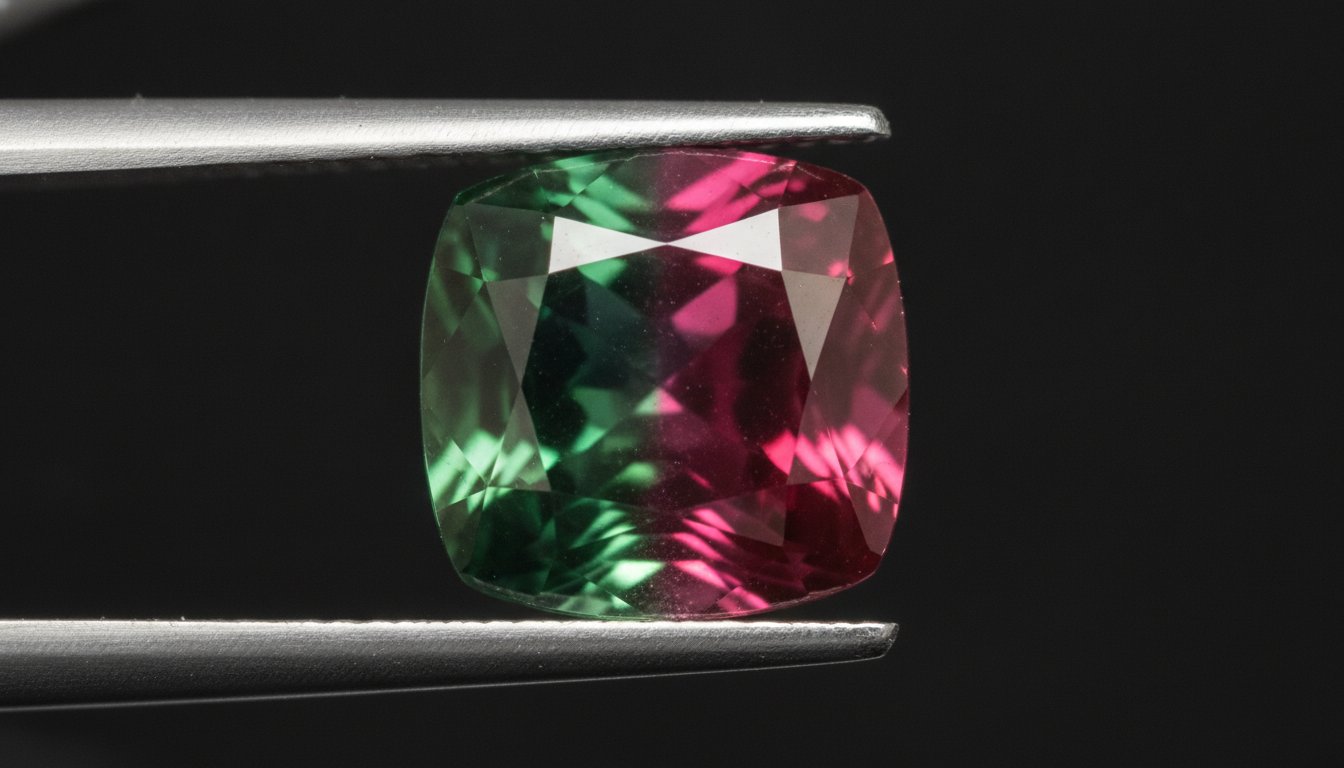
What if your engagement ring could transform its identity with every change in the light, shifting from a lush forest green to a deep raspberry red? Finding the perfect loose alexandrite for engagement ring projects requires more than just an eye for beauty; it demands the precision of a collector. You likely appreciate the extraordinary rarity of this gem, as less than 0.01% of gemstones mined in 2025 were alexandrite, yet the fear of choosing a stone with a weak color change or confusing pricing is a common hurdle for many buyers.
I'll help you master the art of selecting a high-quality natural or Chatham lab-grown stone while ensuring your investment is secure. You'll learn how to evaluate the technical 4Cs specific to this color-shifting mineral and gain the confidence to transform a loose gemstone into a bespoke masterpiece. We will explore how to judge the intensity of the "alexandrite effect" and design a setting that protects your stone for a lifetime of daily wear. By the end of this guide, you'll have the insider knowledge needed to select a stone that offers both breathtaking beauty and lasting value.
Key Takeaways
- Understand the "Emerald by day, Ruby by night" phenomenon and how its symbolism of balance reflects the journey of marriage.
- Master the technical nuances of the "5th C" to ensure you invest in a stone with a vivid transformation rather than a muted shift.
- Confirm why an 8.5 Mohs hardness makes a loose alexandrite for engagement ring designs a resilient choice. It's built for a lifetime of daily wear.
- Adopt the "Stone First" philosophy to secure a premium gem before tailoring a custom mounting to its specific proportions.
- Compare natural and Chatham lab-grown varieties with a legacy expert. You'll benefit from full disclosure on every stone.
The Allure of Alexandrite for Engagement Rings
"Emerald by day, ruby by night" is the phrase that has defined this extraordinary chrysoberyl variety since its discovery. For a modern marriage, this shift symbolizes the fluid balance and transformation required to navigate a life together. Choosing a loose alexandrite for engagement ring projects allows couples to capture a piece of geological history that is as dynamic as their own partnership. While diamonds represent endurance, alexandrite represents evolution. It's a stone for those who value extreme rarity and the poetic nature of change.
The historical prestige of this gem is rooted in its royal beginnings. First discovered in Russia's Ural Mountains in the 1830s, it was named for Alexander II and became a symbol of the imperial era. While the original Russian deposits are now legendary and scarce, modern sources in Brazil and Africa continue to produce stones with the intense color-change properties collectors crave. These precious gemstones offer a sophisticated alternative for those who find traditional options too predictable.
To better understand the mesmerizing visual shift of this gem, watch this helpful video:
Alexandrite vs. Traditional Diamonds
Diamonds are the industry standard, but they aren't the rarest choice. High-quality natural alexandrite is significantly scarcer; industry data reveals that less than 0.01% of all gemstones mined in 2025 were alexandrite. This extreme scarcity drives its strong investment potential in the 2026 market, where demand for unique, non-traditional rings is surging. Unlike the static brilliance of a diamond, alexandrite offers a sensory experience that evolves with your environment. It’s a connoisseur’s stone that rewards the wearer with a different personality every time they enter a new room.
The "Living Gemstone" Experience
The most captivating feature of this gem is the alexandrite effect, a phenomenon where the stone reacts to different light sources. In natural daylight, you'll see cool forest greens or teals. Once you move under incandescent light, the gem warms into rich shades of raspberry and purple-red. This color-change percentage is the primary driver of value for any loose alexandrite for engagement ring purchase. The alexandrite color change is a result of chromium ions in the chrysoberyl crystal structure. Wearing it provides a psychological connection to the natural world, reminding us that beauty is often a matter of perspective.
Evaluating Quality in Loose Alexandrite Stones
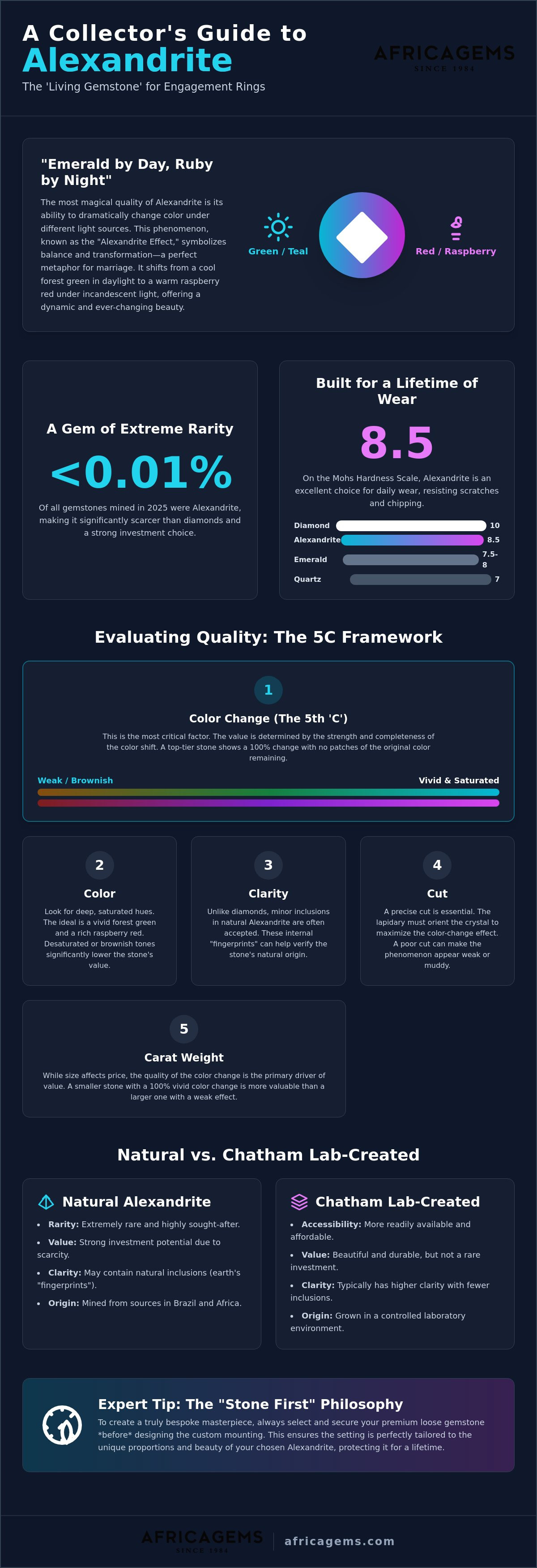
Selecting a loose alexandrite for engagement ring projects requires a departure from standard diamond grading. While the traditional 4Cs apply, the "5th C", color change, is the ultimate arbiter of value. This phenomenon is evaluated by both the intensity of the colors and the percentage of the stone that undergoes the transformation. A connoisseur looks for a 100% change, meaning the entire gem shifts color without leaving stagnant patches of the original hue. If a stone only changes in certain facets, it's considered a lower-grade specimen, regardless of its size.
Intensity refers to the saturation of the teal-green and the raspberry-red. If the colors are desaturated or brownish, the stone's value drops significantly. According to alexandrite quality factors, the most prized specimens exhibit a vivid, distinct contrast between their two states. You want a stone that looks like a high-quality emerald in the sun and a fine ruby by candlelight.
Clarity in natural alexandrite is a nuanced subject. Unlike diamonds, where inclusions are often viewed as flaws, minor internal characteristics in a rare natural alexandrite are frequently accepted. These inclusions serve as a fingerprint of the earth, often helping gemologists verify the stone's natural origin. However, the cut must be precise. An expert lapidary will orient the crystal to maximize the optical color shift, ensuring the light reflects the most vibrant hues possible. A poorly cut stone can "leak" light, making the color change look weak or muddy.
Natural vs. Chatham Lab-Created Alexandrite
The price gap between natural and lab-grown stones is substantial, driven primarily by rarity. For those who desire the optical perfection of a top-tier stone without the five-figure-per-carat investment, Chatham lab created gemstones offer a sophisticated solution. These are not imitations; they are chemically, physically, and optically identical to natural alexandrite. They provide a high-clarity, high-intensity color change that is often unattainable for many in the natural market. It's an ethical and budget-friendly way to secure a world-class look.
Importance of Certification (GIA and AGL)
You should never finalize a high-value purchase without a reputable lab report. Organizations like the GIA or AGL provide an unbiased assessment of the stone's color-change percentage and geographic origin. Whether a stone hails from the historic mines of Brazil or the productive deposits of Africa, a certificate ensures you're getting exactly what you paid for. At AfricaGems, we prioritize radical transparency, providing full disclosure on every stone's history and any treatments it may have undergone. Our 40-year legacy is built on this foundation of trust.
If you're ready to begin your search, you can explore our curated selection of loose alexandrite gemstones to find a specimen that speaks to your personal style.
Durability and Daily Wear: Is Alexandrite Ring-Safe?
When you invest in a loose alexandrite for engagement ring projects, your primary concern is often whether the stone can withstand the rigors of daily life. An engagement ring isn't just a trophy for a safe; it's a piece of jewelry that travels with you through every task. Fortunately, alexandrite is one of the few colored gemstones that perfectly balances ethereal beauty with practical resilience. It's a workhorse in a velvet glove, offering the security you need for a lifetime of wear.
The Mohs Scale and Your Engagement Ring
Alexandrite’s 8.5 hardness makes it the third-hardest natural gemstone used in jewelry, trailing only diamond and corundum. This is a critical distinction for anyone comparing materials. While diamonds (10) and sapphires (9) are the traditional choices for durability, alexandrite sits comfortably just below them. This level of hardness ensures the facet edges stay crisp and the surface remains free from the tiny scratches that can dull softer stones over time.
Choosing alexandrite is a strategic move for longevity. It is far superior to stones like opal or tanzanite for daily wear, as those gems are much more susceptible to chipping or surface abrasion. As noted in our precious gemstones guide, hardness is only half the story. You also have to consider "toughness," which is the stone's resistance to breaking. Alexandrite has no distinct cleavage, meaning it doesn't have internal planes of weakness that make it prone to splitting upon impact. The Gemological Institute of America (GIA) classifies it as excellent for jewelry use due to this physical stability.
Protecting Your Investment
The right mounting acts as a guardian for your loose alexandrite for engagement ring. Platinum is the premier choice for security because it's a dense, "sticky" metal that doesn't wear away over time; it merely displaces. If you prefer gold, 14k is often a better choice than 18k for the prongs because the higher alloy content makes it slightly harder and more rigid.
Consider these design elements to maximize protection:
- Bezel Settings: A thin rim of metal surrounds the entire perimeter, shielding the girdle from accidental knocks.
- Six-Prong Mountings: These provide extra points of contact compared to the standard four prongs, ensuring the stone stays put even if one prong is damaged.
- The "Wedding Band Rub": Always ensure your wedding band and engagement ring are designed to sit flush or have a small gap. Constant metal-on-stone friction from a poorly fitted band can eventually abrade the side of your gem.
Cleaning your alexandrite is straightforward. Because it's a robust mineral, you can use warm, soapy water and a soft-bristled brush to maintain its brilliance. This simple routine removes the oils and lotions that can temporarily mask the intensity of the color change.
Designing Your Custom Alexandrite Engagement Ring
Most retail jewelry stores sell pre-set rings, but a true connoisseur knows that the "Stone First" approach is vastly superior. When you start with a loose alexandrite for engagement ring projects, you prioritize the quality of the color change over the convenience of a stock setting. This method ensures that the most valuable part of your investment, the gemstone, isn't chosen simply to fit a pre-made mold. Instead, the mounting is crafted or selected to celebrate the specific dimensions and personality of the stone. It's a process that honors the rarity of the material.
By choosing this bespoke path, you can work with experts like Brilliant Diamonds Fine Jewelers to ensure the final engagement ring is as high-quality and unique as the alexandrite it holds.
Measuring a loose stone requires precision beyond simple carat weight. Two stones of the same weight can have vastly different millimeter dimensions depending on their cut depth. You'll need to shop professional mountings that match the exact length, width, and depth of your specimen to ensure a secure fit. Side stones should be chosen to contrast rather than compete. Diamonds are the classic choice, providing a neutral brilliance that allows the color shift to take center stage. When selecting a loose alexandrite for engagement ring designs, white sapphires also offer a softer luster that some collectors prefer for a more understated, vintage aesthetic.
Step-by-Step Custom Design Process
The journey begins with selecting your loose alexandrite based on your color-shift preference. Some buyers gravitate toward a stone with a dramatic 100% transformation, while others prioritize a specific shade of teal or raspberry. Once the stone is secured, you move to choosing a mounting style. A vintage-inspired halo might highlight a cushion cut, while a sleek solitaire lets an emerald cut's hall-of-mirrors effect shine. The final step involves professional setting and rigorous quality control. This ensures the prongs are perfectly aligned and the stone is oriented to maximize its light performance under varying sources.
Visual Harmony: Metal Colors and Color Change
The metal you choose acts as the canvas for your "living gemstone." White gold or platinum is the industry standard for a reason; these cool-toned metals preserve the crisp teal-green of the day phase without adding unwanted warmth. If you want to lean into the romantic, purple-red tones of the night phase, rose gold is an inspired choice. The copper undertones in rose gold harmonize beautifully with the raspberry shift, making the transformation feel more integrated and warm. Yellow gold offers a regal, high-contrast look that works particularly well with stones possessing a strong forest-green daylight hue.
While these traditional gold options are perfect for statement pieces, many women are pairing their custom rings with lightweight gold jewelry for women to create a cohesive and modern jewelry collection.
If you're ready to create a piece that reflects your unique story, our custom jewelry design services can help you bring your vision to life with expert precision.
Why Source Your Alexandrite from AfricaGems?
Selecting a loose alexandrite for engagement ring is a decision that carries significant emotional and financial weight. It requires a partner who understands that you aren't just buying a mineral; you're securing a legacy. AfricaGems is defined by Marc Sarosi’s 40-year legacy in the rare gemstone market, a tenure that has allowed us to cultivate deep relationships with ethical mines across the globe. Since 1984, our focus has remained on the Expert Enthusiast model, where professional authority meets a genuine passion for the natural world. This ensures that every stone we offer is vetted not just for its technical specs, but for its soul and story.
The AfricaGems Difference
The AfricaGems difference lies in our curated approach. You won't find thousands of generic, commercial-grade stones here. Instead, you get direct access to a master gemologist’s hand-picked inventory, where each specimen is vetted for its color-change intensity and clarity. We embrace a no-pressure educational philosophy. We want you to feel like an informed insider rather than just a customer. If you’re looking to deepen your understanding of the market before committing, our Rare Gemstones Guide is an excellent resource for exploring the world's most elusive treasures.
Ethical Sourcing and Transparency
Transparency isn't just a buzzword for us; it's a pillar of our brand communication. Our commitment to ethical sourcing and social responsibility ensures that every stone is conflict-free and sourced with respect for both the environment and the local communities. We provide full laboratory documentation for every natural alexandrite we sell, offering a level of disclosure that we believe is the ultimate luxury in 2026. This methodical, reassuring flow of information is designed to build the confidence necessary for a high-value online transaction. We don't hide behind industry jargon; we use it to empower you.
For those moving from a loose stone to a finished piece, we offer personalized consultations to ensure your loose alexandrite for engagement ring project is a success. We bridge the gap between technical validation and visual appreciation, guiding you through the decision-making process with the security of a founder-led guarantee. Before you finalize your selection, we recommend reviewing our guide on how to buy gemstones online to understand the safeguards we have in place. At AfricaGems, we don't just sell gemstones; we provide the mentorship you need to make a purchase that will be cherished for a lifetime.
Start Your Journey with a Masterpiece of Nature
Choosing a loose alexandrite for engagement ring projects is a sophisticated commitment to rarity and transformation. You now have the essential tools to prioritize color-change intensity, verify physical durability, and design a custom mounting that safeguards your investment for a lifetime. Whether you're drawn to the imperial history of a natural specimen or the ethical brilliance of a Chatham lab-grown gem, your ring will remain a dynamic symbol of your shared evolution. It's a choice that rewards the observant eye with a new personality in every light.
To further personalize your celebration, you might explore Personalized Song Gift Sales and turn your shared history into a custom song that mirrors the unique beauty of your partnership.
AfricaGems provides the security of 40+ years of expertise and a curated inventory of GIA certified natural stones. Every purchase is backed by a personal founder guarantee, ensuring that your transition from collector to owner is methodical, secure, and transparent. You deserve a gemstone that mirrors the complexity and beauty of your partnership. To complement such a rare find, Antonia Guise helps couples create bespoke rings that ensure you don't settle for the predictable when you can secure a piece of geological history that truly lives and breathes.
While gemstones are a personal investment, businesses also value unique presentation; for example, a high-quality reklámajándék can serve as a creative way to reflect professional excellence and brand identity.
Take the final step in your selection process and browse our curated collection of Loose Alexandrite Gemstones to find your perfect match. Your legacy deserves nothing less than extraordinary.
Frequently Asked Questions
Is natural alexandrite more expensive than a diamond?
High-quality natural alexandrite is often more expensive than a standard white diamond of the same size because it's significantly rarer. While diamonds are the industry standard for engagement rings, top-tier alexandrite with a 100% color change is exceptionally scarce. Prices for exceptional specimens can exceed those of high-grade diamonds because less than 0.01% of gemstones mined in 2025 were alexandrite.
Can I wear my alexandrite engagement ring every day?
You can wear an alexandrite ring daily because it possesses a Mohs hardness rating of 8.5. This makes it the third-hardest natural gemstone used in jewelry, surpassed only by diamond and corundum. It's durable enough to resist surface scratches from common dust and contact; however, you should still remove it during high-impact activities to protect the integrity of the setting. If those activities involve motorsports, be sure to visit inSPORTline to explore their selection of professional-grade helmets and gear.
What is the best metal for an alexandrite ring?
Platinum and 14k white gold are the premier choices because their neutral, cool tones don't interfere with the gem's color-shifting properties. Platinum provides the most security for a loose alexandrite for engagement ring because it's a dense metal that doesn't wear away over time. Rose gold is also a popular alternative for those who want to emphasize the warm raspberry-red night phase of the stone.
How do I know if my alexandrite is natural or lab-grown?
A professional laboratory report from the GIA or AGL is the only definitive way to confirm if a stone is natural or lab-grown. Natural stones often contain microscopic inclusions that serve as a geographic fingerprint of their origin. Lab-grown stones, such as Chatham varieties, are chemically and physically identical to natural ones but typically offer higher clarity and more consistent color change at a lower price point.
What color change should I look for in a high-quality stone?
A high-quality stone must exhibit a distinct, vivid transformation that covers the entire gem without leaving "dead" or stagnant patches of color. The most prized shift is from a crisp forest green or teal in daylight to a rich raspberry or purplish-red under incandescent light. You should avoid stones that look brownish or muddy in either light source, as this significantly reduces their collector value.
Does AfricaGems provide mountings for loose stones?
AfricaGems provides a wide selection of professional mountings and comprehensive custom jewelry design services to house your gemstone. We specialize in the "Stone First" approach, where we tailor the setting to the exact millimeter dimensions of your loose alexandrite for engagement ring. This ensures a secure fit and a design that is specifically engineered to maximize the light performance of your individual stone.
What is the most popular cut for an alexandrite engagement ring?
Oval and cushion cuts are the most popular choices because they maximize weight retention from the original crystal while providing excellent brilliance. These shapes are particularly effective at showcasing the color change across the facets of the stone. While round brilliant cuts are highly sought after for their classic look, they are much harder to find in larger, high-quality natural alexandrite specimens.
Is alexandrite a good investment for an engagement ring?
Natural alexandrite is considered an excellent investment because its value is driven by extreme scarcity and a consistently limited global supply. Prices for high-quality stones were projected to increase by 18% in 2025 due to rising demand for unique, non-traditional engagement rings. A stone with a strong color change and a reputable lab certificate is a tangible asset that often appreciates as the primary mines become depleted.

Article by
Marc Sarosi
Professional gemstone dealer for more than 40 years. Started off mining Aquamarine in Zambia, Africa and travelled throughout the continent in search of fine gems. Trusted authority on fine gemstones and have donated a fine collection of more than 27 extraordinary gemstones to the Smithsonian Institute Gem Hall for generations to see.