
Investment Grade Gemstones: The Connoisseur’s Guide to Wealth Preservation
Apr 29th 2026
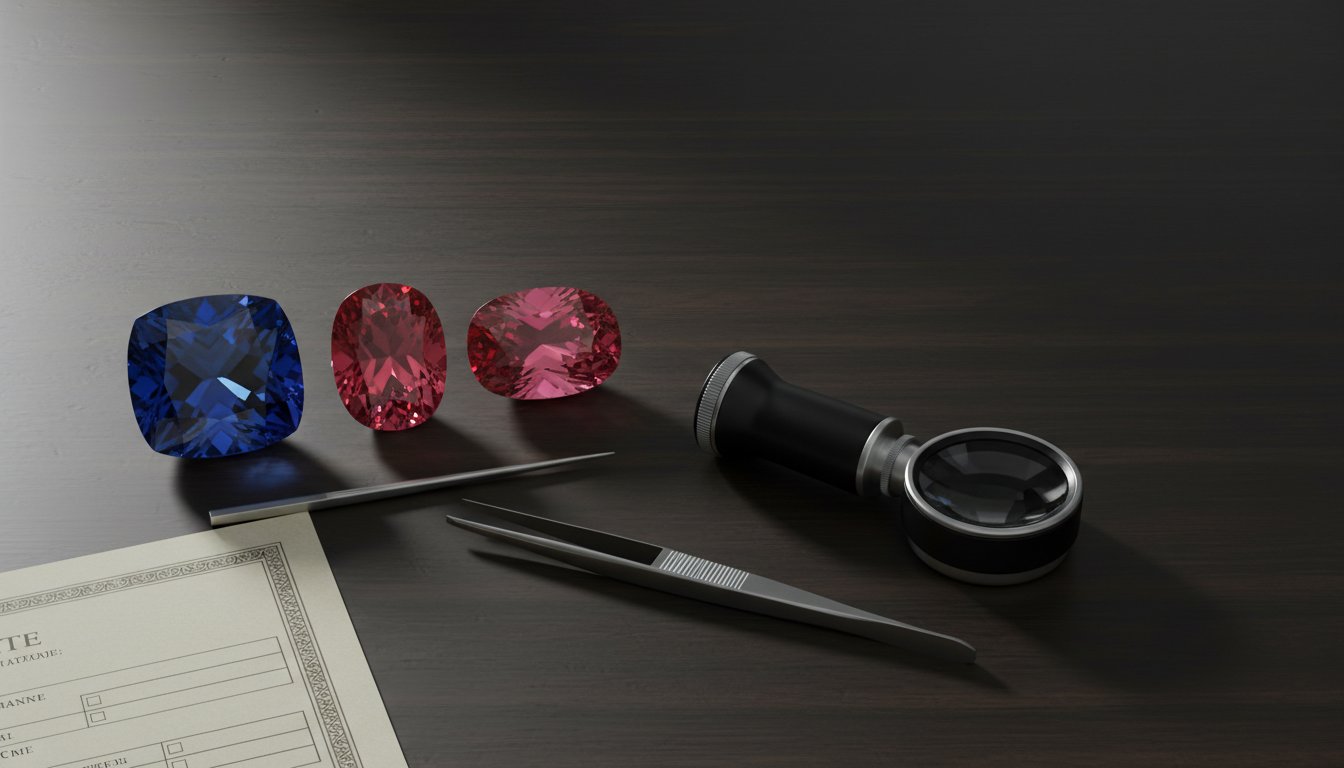
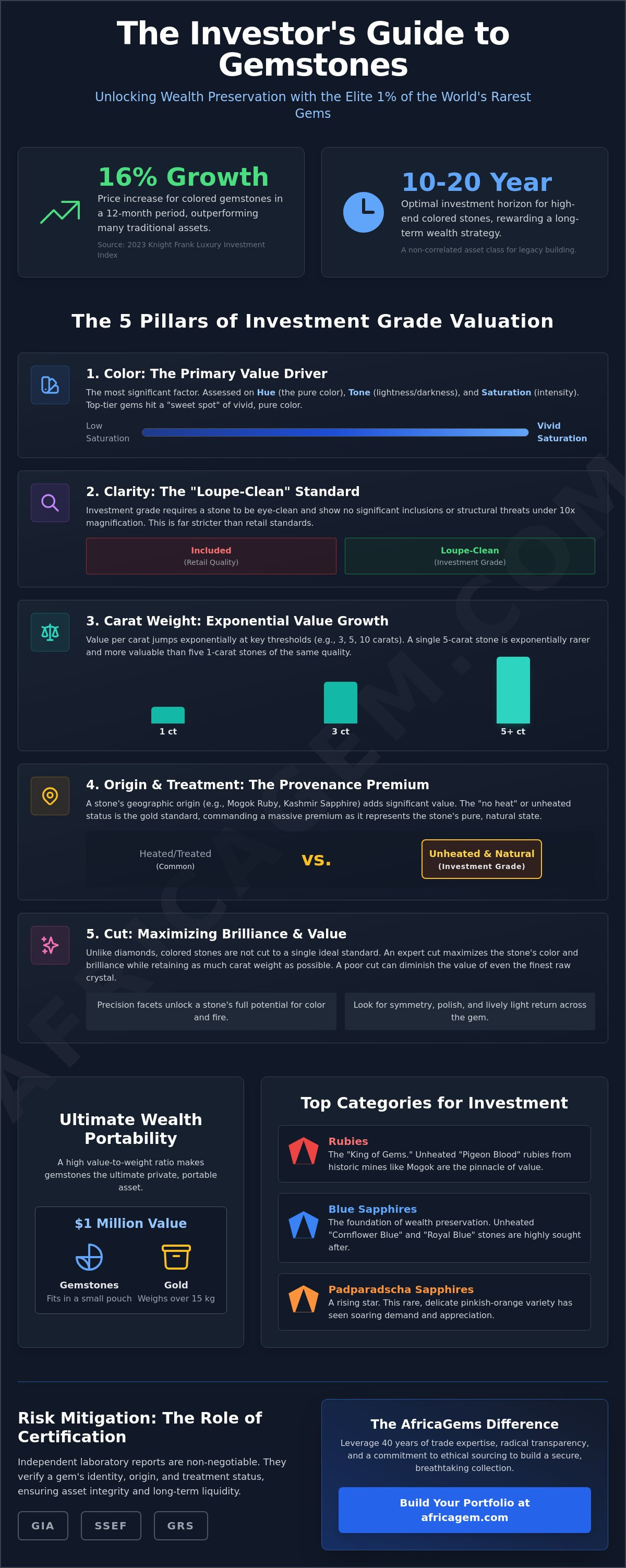
In a world of volatile markets, a single gram of the right mineral can hold more portable wealth than a kilo of gold. This is the quiet reality of investment grade gemstones, a niche where rarity and physical beauty meet rigorous financial preservation. According to the 2023 Knight Frank Luxury Investment Index, colored gemstones outperformed many traditional assets with a 16% price growth in a single twelve month period. You likely understand that true wealth isn't just about accumulation; it's about protection against inflation and market shifts. However, the fear of misinterpreting a complex laboratory report or overpaying for a "filled" sapphire keeps many discerning collectors on the sidelines.
We've spent decades documenting the AfricaGems Difference, ensuring that every stone we offer meets the uncompromising standards of the world's most elite portfolios. This guide provides a clear framework for identifying stones that maintain value, focusing on the top 1% of gems that are truly unheated and ethically sourced. You'll learn which specific varieties have the highest historical ROI and how to read the fine print on a GRS or GIA certificate with absolute confidence. We're going to break down the exact strategies you need to build a secure, breathtaking collection that stands the test of time.
Key Takeaways
- Identify the elite 1% of the global market that qualifies as investment grade gemstones to serve as a sophisticated hedge against economic volatility.
- Master the "5 Pillars" of valuation, focusing on the specific color saturation and "loupe-clean" clarity standards required for high-end appreciation.
- Discover why Blue Sapphires and Rubies remain the foundation of wealth preservation and explore the rising demand for rare, unheated Padparadscha varieties.
- Understand the non-negotiable role of GIA and SSEF certifications in risk mitigation and learn expert strategies for ensuring long-term asset liquidity.
- Leverage 40 years of trade expertise and radical transparency to build a gemstone portfolio grounded in ethical sourcing and technical integrity.
What Defines Investment Grade Gemstones in 2026?
The 2026 global economy faces a 4.2% average inflation rate and significant stock market swings. This uncertainty drives a flight to tangible assets. We define investment grade gemstones as the elite top 1% of the global market. These aren't the stones you find in a typical mall jewelry store. They represent a specific intersection of geological rarity and historical demand. Understanding Gemstone characteristics and classification is vital for anyone looking to move beyond hobbyist collecting into serious wealth preservation.
Retail-quality gems often lose 50% of their value the moment they leave the showroom. Connoisseur-level gems do the opposite. They rely on hard data from 2025 auction results at houses like Christie's, where unheated sapphires saw a 12% year-over-year price increase. These stones possess a loupe-clean clarity and vivid saturation that sets them apart from commercial stock. At AfricaGems, we emphasize that these technical specs must be backed by radical transparency and conflict-free certification to hold their long-term value.
To better understand this concept, watch this helpful video:
Rarity vs. Beauty: The Investor’s Mindset
A stone can be visually stunning yet financially stagnant. Investors prioritize scarcity over mere aesthetics. A flawless synthetic diamond looks perfect, but it lacks the finite supply that drives value. Provenance is the primary engine of appreciation. A ruby from the historic Mogok Valley in Myanmar carries a premium that a visually identical stone from a newer deposit cannot match. The collector's market is driven by the thrill of owning something that nature can't replicate. This psychological drive for the rare—also seen in the acquisition of iconic fine art prints and cinema memorabilia from Galerie Prints—ensures that demand remains high even when traditional markets falter.
Gemstones as a Non-Correlated Asset Class
High-end colored stones don't follow the same price curves as the S&P 500 or Bitcoin. They offer a slow wealth strategy, rewarding those with a 10 to 20-year horizon. The portability of these assets is unmatched. You can carry $1 million of investment grade gemstones in a small pouch, whereas the equivalent value in gold would weigh over 15 kilograms. This high value-to-weight ratio makes them the ultimate tool for private wealth preservation in an era of digital surveillance and currency fluctuations. Investors aren't looking for a quick flip; they're securing a legacy through the AfricaGems Difference of integrity and quality.
The 5 Pillars of Gemstone Investment Valuation
Determining the worth of investment grade gemstones requires a disciplined approach that moves beyond mere aesthetic appeal. Professional collectors rely on a rigorous framework to assess rarity and long term capital appreciation. While diamonds have a standardized grading system, colored stones require a more nuanced evaluation of gemstone value factors to ensure the asset maintains its "liquid" status in the high end market.
- Color: This is the most significant driver of price. Connoisseurs look for the "sweet spot" in three areas: hue (the actual color), tone (the lightness or darkness), and saturation (the intensity). A vivid, pigeon blood red ruby or a cornflower blue sapphire represents the pinnacle of this pillar.
- Clarity: For investment purposes, the "loupe-clean" standard is the benchmark. While most colored stones contain some inclusions, a stone must appear eye-clean and show no structural threats under 10x magnification to be considered for a serious portfolio.
- Carat Weight: Scarcity drives value. As a stone passes specific thresholds like 3, 5, or 10 carats, the price per carat doesn't just rise; it jumps exponentially. A 5-carat sapphire is significantly rarer than five 1-carat stones of equal quality.
- Cut and Proportions: A master cut maximizes light return and minimizes "windowing," where light leaks through the back of the stone. Proper proportions ensure the gem shows its maximum "face-up" size without sacrificing brilliance.
- Treatment Status: The final pillar is the presence or absence of artificial enhancements. In the world of elite minerals, the "Unheated" or "No Oil" designation is the ultimate mark of a natural treasure.
Decoding the "Unheated" Premium
In the current market, approximately 95% of all rubies and sapphires have undergone thermal enhancement to improve color or clarity. While these stones are beautiful for jewelry, they don't possess the same wealth preservation potential as their natural counterparts. The price multiplier for a "no heat" stone is substantial; an unheated ruby can command a price three to five times higher than a treated stone of the same visual grade. Unheated is the absence of any thermal enhancement since extraction. When you browse the AfricaGems collection, you'll find that we prioritize these rare, untouched specimens for their historical and financial integrity.
The Critical Role of Provenance
Where a stone was born significantly impacts its future resale value. A ruby from the Mogok Valley in Myanmar (Burma) still commands a massive premium over stones from Mozambique, even if they appear identical to the naked eye. This "origin premium" is rooted in historical prestige and the depleting reserves of legendary mines.
Investors frequently look toward Colombian emeralds because of their unique chromium content and the storied heritage of the Muzo and Chivor mines. Geopolitical shifts in these regions often lead to sudden supply crunches. For example, export bans or mine closures in traditional hubs can cause the value of investment grade gemstones already in private hands to spike overnight. Scarcity isn't just about what's in the ground; it's about what's actually available to the global market.
Top Categories for Wealth Preservation: The "Big Three" and Beyond
Building a robust portfolio starts with the historical titans of the trade: Rubies, Emeralds, and Sapphires. These stones have acted as portable wealth for centuries. Modern investors prioritize unheated specimens above all else. This preference stems from the extreme rarity of stones that emerge from the earth with perfect color and clarity without human intervention. A 2021 report from Forbes on gemstone investing highlights that authenticity and documented rarity are the primary drivers of long-term capital appreciation. This is especially true for the rising star of the auction world: the unheated Padparadscha Sapphire. Its delicate marriage of pink and orange hues mimics a tropical sunset, making it a prized asset for those seeking investment grade gemstones with high aesthetic appeal.
Emeralds require a more nuanced approach. Because the majority of emeralds contain natural internal fractures, the industry accepts "minor oil" treatments to improve clarity. However, the most serious collectors seek out "no oil" specimens. These stones are incredibly scarce. When a stone shows "significant" or "resin" fillers, its resale value in the investment market drops sharply. Investors must insist on laboratory reports from entities like GRS or SSEF to verify treatment levels before acquisition.
The Blue Sapphire Standard
Investors often anchor their collections with Blue Sapphires, specifically those exhibiting Royal Blue or Cornflower Blue saturations. Origin remains a vital value driver. While Kashmir stones are the ultimate trophy, Ceylon (Sri Lankan) sapphires provide excellent liquidity and consistent growth. For those seeking high-growth potential through scarcity, Tanzanite presents a unique opportunity. As the single-source Merelani mines approach depletion, the supply of this blue-violet treasure is finite. To ensure a stone qualifies as an investment grade asset, professional buyers typically target a size threshold of 5 carats or larger. Stones of this magnitude are rare enough to command a premium during periods of economic volatility.
Rare Specimens: Alexandrite and Paraiba
Alexandrite is the ultimate connoisseur's stone. Its dramatic pleochroism allows it to change from emerald green in daylight to raspberry red under incandescent light. This "color-change" phenomenon fascinates the Asian market, particularly in Japan and China, where demand has spiked since 2015. Equally breathtaking is the Paraiba Tourmaline. Since its discovery in the late 1980s, this copper-bearing neon blue stone has seen price increases exceeding 1000 percent. When identifying Rare Gemstones for a portfolio, look for "electric" saturation and high clarity. These outliers often outperform traditional diamonds because their geological occurrence is significantly more limited, making them the crown jewels of any wealth preservation strategy.
Beyond the pursuit of raw mineral rarity, many collectors also appreciate the craftsmanship found in finished luxury goods. To explore a selection of elegant women's jewellery and high-end accessories, you can learn more about the latest collections available online.
Risk Mitigation: Certification and Liquidity Strategies
The security of your capital relies on the bridge between a physical stone and its digital verification. For investment grade gemstones, a grading report from the Gemological Institute of America (GIA), the Swiss Gemmological Institute (SSEF), or Gübelin is a non-negotiable requirement. These institutions provide the rigorous data needed to justify high-value entries into a portfolio. Without these specific papers, a stone lacks the pedigree required for international resale at top-tier auction houses like Sotheby’s or Christie’s.
The Hierarchy of Gemological Laboratories
Top-tier auction houses and elite collectors prioritize labs based on their historical accuracy and advanced spectroscopic capabilities. While many regional labs exist, only a handful command global authority. SSEF and Gübelin are the gold standards for colored stones, particularly when establishing "Origin Opinions." For example, a report confirming a sapphire is of Kashmir origin can increase its market value by 100% or more compared to a stone of similar quality from a different locale. A certificate does not grant value, it only verifies the rarity that generates it. This distinction is vital; the paper confirms the absence of heat treatment and the presence of rare trace elements that define a world-class asset.
Building a Liquid Portfolio
Liquidity is the most common objection raised by new investors. Unlike stocks, you can't exit a gemstone position with a single click. You can, however, build a strategy that ensures a smooth transition to cash when the time comes. Diversifying across different colors and origins helps mitigate regional market shifts. While a sudden drop in demand for Colombian emeralds might occur, unheated Mozambique rubies may remain buoyant. To ensure a safe entry point, you must learn how to buy gemstones online from dealers who offer ironclad return policies and a history of integrity.
- Avoid Commercial Traps: Roughly 95% of gemstones listed on mass-market auction sites are "commercial grade." These stones are mass-produced, heavily treated, and lack the scarcity required to appreciate.
- The AfricaGems Difference: We operate on a policy of "Full Disclosure." This means every treatment, or the rare lack thereof, is documented with 100% transparency.
- Specialized Dealers: Established dealers often facilitate private secondary sales for their clients, acting as a bridge to other collectors.
Securing investment grade gemstones requires a rejection of the "bargain" mentality found in unregulated marketplaces. Real wealth preservation is found in stones that possess both the visual fire of a natural wonder and the cold, hard data of a premier laboratory report. This disciplined approach transforms a beautiful object into a portable, private, and powerful financial instrument.
Just as serious investors reject low-quality bargains in the gem market, they often seek out premium standards in their everyday attire. To see how sustainability and luxury meet in high-end apparel, you might explore Men's Bamboo Socks from Gemjar.
The AfricaGems Difference: Your Partner in Gemstone Investment
Marc Sarosi entered the international gemstone trade in 1984, building a foundation of expertise that spans four decades. In an industry where trust is the primary currency, AfricaGems has remained a fixture by prioritizing the technical integrity of every specimen. Acquiring investment grade gemstones requires a partner who understands the subtle distinction between a beautiful stone and a true store of value. Our legacy is built on providing the top 1% of world-class minerals to collectors who demand perfection.
We operate under a policy of radical transparency. This means we disclose every detail regarding gemstone treatments and geographical origin without exception. Whether it's a "no oil" emerald or a completely unheated sapphire, our data is exhaustive. The AfricaGems Guarantee ensures that the physical asset you receive matches its laboratory profile from institutions like the GIA or AGL with 100% accuracy. We don't just sell stones; we provide the peace of mind that your capital is protected by verified gemological facts.
For high-value portfolio building, we offer custom concierge services. We understand that serious investors often look for specific rarities that aren't always visible on a public storefront. Marc Sarosi works directly with clients to source bespoke acquisitions that meet strict liquidity and rarity benchmarks. This personalized approach transforms a simple transaction into a strategic partnership, often culminating in the design of bespoke engagement rings Singapore by Benny's Gems Creations for collectors who value both rarity and artistry.
Ethical Sourcing as an Investment Value
Ethical sourcing is no longer just a moral choice; it's a financial one. Recent market data indicates that conflict-free and ethically sourced gems often retain better long-term value as global regulations on mineral origins tighten. This commitment to traceable, high-quality production is a hallmark of premium brands across industries, including Canadian artisans like Sacred Bean who focus on the same level of transparency for their Criollo Fino de Aroma cacao products. We maintain direct relationships with miners in East Africa and Sri Lanka, ensuring a transparent supply chain. Buying from a US-based, family-operated expert provides a layer of legal and financial security that offshore dealers cannot replicate. Your investment supports fair trade practices that enhance the long-term prestige of your collection.
Taking the Next Step
A digital storefront should offer the same clarity as a physical loupe. Our vault includes high-definition videos and 360-degree scans for every investment grade gemstones selection, allowing you to inspect the pleochroism and clarity of a stone from every angle. If you're ready to diversify your wealth into portable, tangible assets, the process begins with education. Consult with Marc Sarosi to discuss your specific goals for bespoke acquisitions. Secure your hard asset today by exploring our curated inventory of world-class treasures.
Secure Your Financial Future with Rare Earth Treasures
Navigating the 2026 market requires a sharp eye for rarity and a commitment to data-backed security. You've learned that the most resilient wealth preservation strategies rely on the "Big Three" and a strict adherence to the five pillars of valuation. True value lives in stones that carry top-tier GIA or Gübelin reports, ensuring your portfolio remains liquid and verifiable. At AfricaGems, we've spent over 40 years refining this selection process to provide you with an inventory that's 100% conflict-free. Choosing investment grade gemstones isn't just about the initial purchase; it's about the peace of mind that comes from radical transparency and decades of expert mentorship. You're now equipped to move beyond simple collecting into the realm of strategic asset management. It's time to transform your capital into a breathtaking legacy of color and light. Browse our curated collection of Investment Grade Loose Gemstones and take the next step in your connoisseurship journey today. We're here to help you find the perfect specimen for your growing portfolio.
Frequently Asked Questions
Is buying gemstones a good investment compared to gold?
Gemstones provide a portable, high-concentration of wealth that often outpaces the steady growth of gold. According to the 2023 Knight Frank Luxury Investment Index, colored gemstones saw a 16% price increase over 12 months, while gold's annual returns vary. Gold remains a liquid commodity, but rare gemstones offer the unique advantage of scarcity. You're holding a finite resource that can't be mined at scale once a deposit is exhausted.
How do I know if a gemstone is investment grade?
Identifying an investment grade gemstone requires verifying it sits in the top 1% of its species for color saturation and clarity. You must insist on an unheated status for rubies and sapphires. A stone's pedigree is confirmed through a reputable third-party lab report that documents its geographic origin. These factors combined create the rarity necessary for long-term value preservation and wealth security.
Which gemstone has the highest resale value?
Unheated Burmese rubies consistently command the highest resale value per carat among colored stones. The Sunrise Ruby set a record in 2015 when it sold for over $30 million, which is roughly $1.18 million per carat. Rare blue diamonds and high-quality Kashmir sapphires also show exceptional secondary market performance. These stones maintain value because their primary mines are largely depleted, making existing specimens increasingly coveted by global collectors.
Does heat treatment ruin a gemstone’s investment potential?
Heat treatment doesn't destroy a stone's beauty, but it reduces its rarity and investment ceiling significantly. Unheated specimens often command a 30% to 50% price premium over their heat-treated counterparts. For a serious portfolio, you should prioritize stones that are 100% natural and untreated. This transparency is a core part of the AfricaGems Difference, ensuring you own a piece of Earth's history exactly as it was formed.
How much should I spend on my first investment-grade gemstone?
You should allocate enough capital to secure a high-quality specimen rather than a large, mediocre one. While entry points vary, many collectors begin their journey with a $5,000 to $10,000 allocation for a top-tier sapphire or spinel. It's better to own a magnificent 1-carat unheated ruby than a 5-carat stone with visible inclusions. Quality is the primary driver of liquidity when you eventually decide to sell your assets.
What is the most important laboratory for gemstone certification?
The Gemological Institute of America (GIA) is the global standard for diamond and colored stone identification. For high-end colored stones, European labs like SSEF and Gübelin are also highly respected by auction houses like Sotheby's and Christie's. These reports provide an objective analysis of a stone's origin and treatment status. Don't purchase a high-value stone without a certificate from one of these recognized institutions to ensure your asset is validated.
How long should I hold a gemstone before selling for profit?
You should plan for a holding period of at least 5 to 10 years to see meaningful appreciation. Gemstones aren't day-trading instruments; they're tangible assets that benefit from long-term scarcity and inflation. Market cycles for rare minerals move slower than the stock market. Historical data shows that the most significant gains are realized by those who wait for supply from specific mines to tighten, driving up the value of existing stones.
Can I include investment gemstones in my jewelry?
You can set investment grade gemstones in jewelry, provided you choose protective settings like bezels or heavy prongs. To ensure these rare assets are handled with the precision they deserve, master craftsmen like Juwelier Risch specialize in creating bespoke settings that protect the stone's integrity. Daily wear increases the risk of chips or abrasions, which can decrease the stone's value by 20% or more if it requires recutting. If you wear them, reserve these pieces for special occasions to maintain the stone's pristine condition.