
Investing in Rare Gemstones: The 2026 Connoisseur’s Guide to Wealth Preservation
May 9th 2026
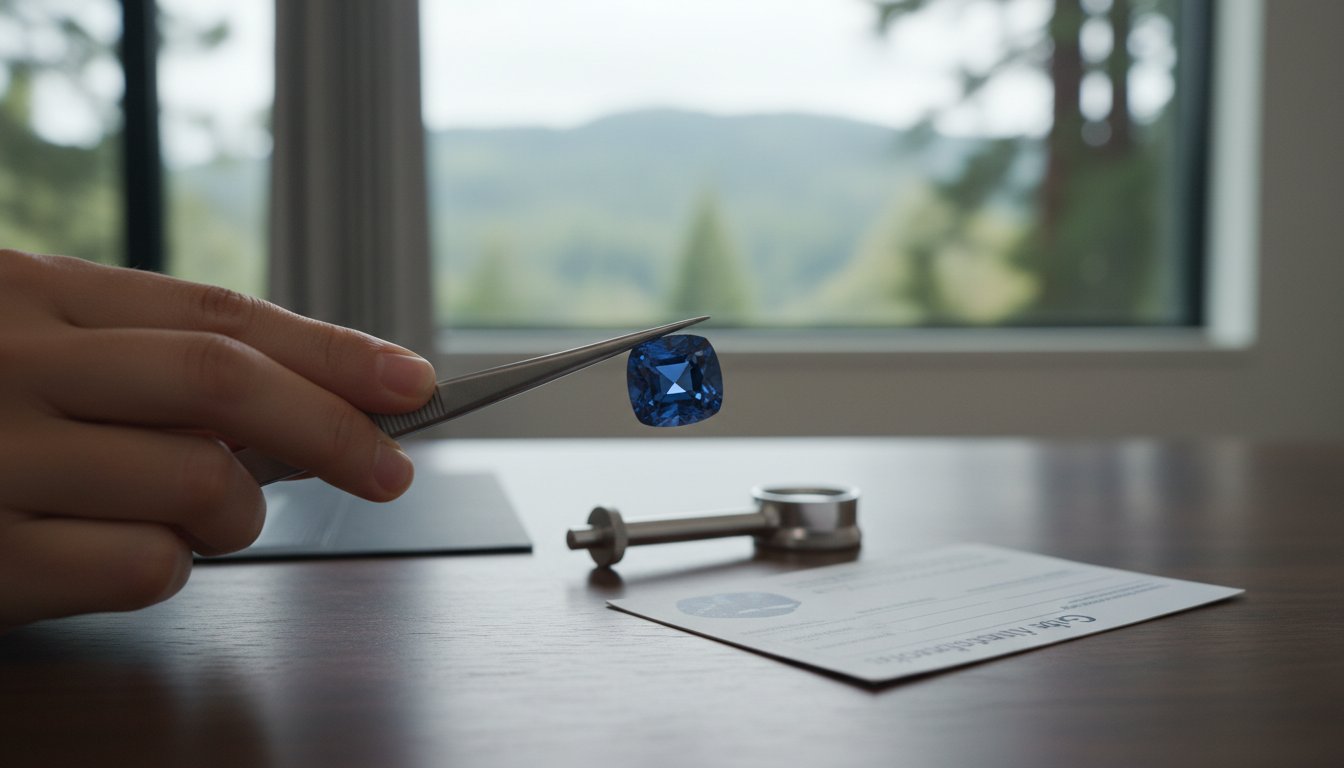
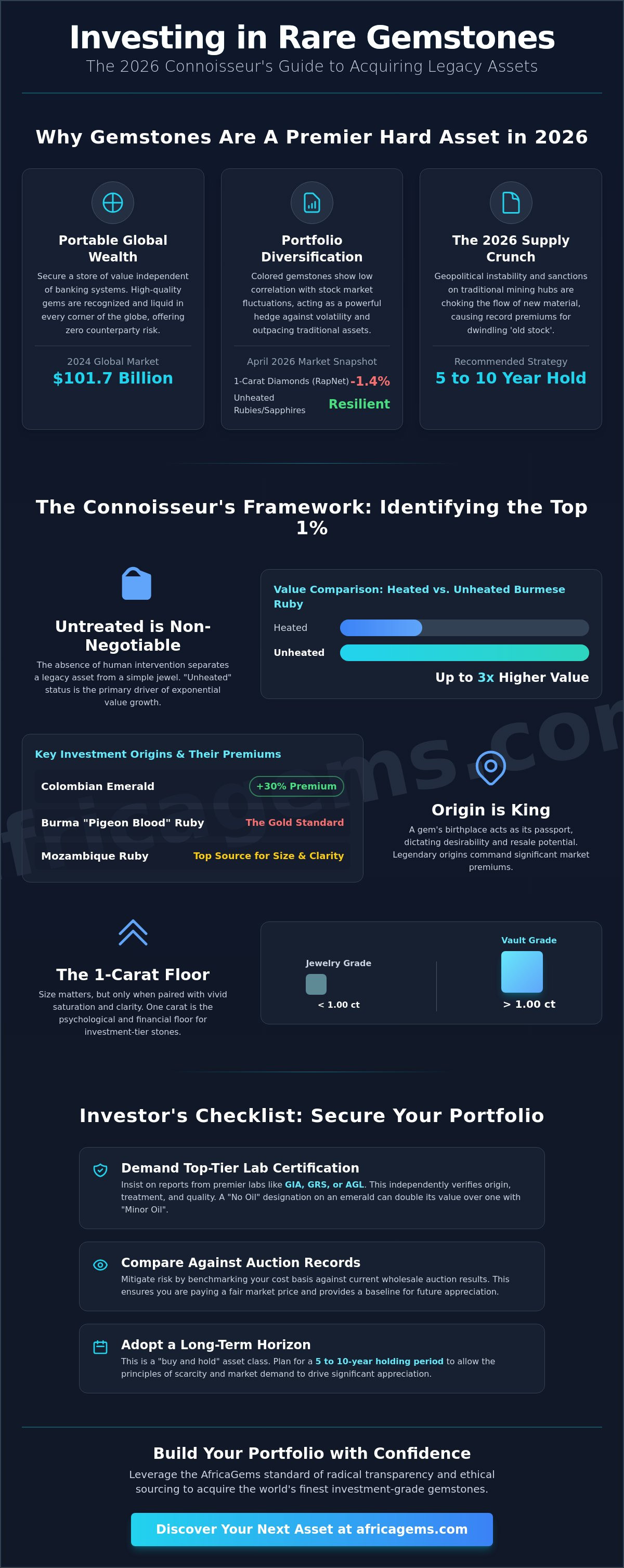
While the RapNet Diamond Index for 1-carat stones fell 1.4% in April 2026, unheated Burma rubies are commanding up to $120,000 per carat, proving that true rarity outpaces volume every time. You likely recognize that investing in rare gemstones offers a unique, non-correlated hedge against market volatility. However, the fear of buying a "treated" stone or getting lost in conflicting lab certifications is enough to give any serious collector pause. It's a valid concern when a "No Oil" designation on an emerald can double its market value compared to stones with "Minor Oil" treatments.
We've created this guide to replace that uncertainty with the AfricaGems standard of radical transparency. You'll learn how to identify the top 1% of investment-grade minerals that collectors will always compete for, regardless of the economic climate. We'll provide a curated list of high-potential gems for the 2026 market, a framework for verifying quality through GIA and Gübelin standards, and a clear path toward a secure exit strategy that ensures your portfolio remains as liquid as it is beautiful.
Key Takeaways
- Understand why high-quality gemstones serve as the ultimate portable asset class with zero counterparty risk in the 2026 global economy.
- Master the "Connoisseur’s Framework" for investing in rare gemstones by targeting the top 1% of specimens based on vivid saturation and untreated origin.
- Identify which specific varieties, such as unheated sapphires and "Pigeon Blood" rubies, offer the most reliable long-term value and portfolio diversification.
- Learn to mitigate risk by securing top-tier laboratory reports from GIA, GRS, or AGL and comparing your cost basis against current wholesale auction records.
- Discover the benefits of building a collection through ethical sourcing and the radical transparency provided by the AfricaGems Difference.
Why Investing in Rare Gemstones Makes Sense in 2026
The global gemstone market reached a valuation of $101.7 billion in 2024, and by May 2026, the trajectory has only steepened. Investors are pivoting toward hard assets that offer no counterparty risk. Unlike a digital entry in a brokerage account, a high-quality sapphire or ruby represents portable wealth that exists independently of banking systems. This lack of reliance on third-party institutions provides a level of security that traditional equities can't match during periods of geopolitical friction. You aren't just buying a stone; you're securing a private store of value that's recognized in every corner of the globe.
There's a profound psychological shift occurring among modern connoisseurs. Collectors are moving away from speculative paper assets and toward "tangible beauty." It's a desire to own something that isn't just a number on a screen, but a geological miracle millions of years in the making. Investing in rare gemstones allows you to store significant value in an object small enough to fit in the palm of your hand. When you consider that the global ruby market is projected to reach a valuation of $8.44 billion by 2035, the long-term case for these minerals becomes even more compelling.
Diversification Beyond Gold and Diamonds
While gold is a classic hedge, its supply can be increased through intensified mining when prices rise. This isn't true for top-tier gems. The scarcity principle is absolute here. In April 2026, the RapNet Diamond Index for 1-carat white diamonds fell by 1.4%, while prices for "Pigeon Blood" rubies and "Cornflower" sapphires remained resilient. A foundational grasp of understanding gemstone characteristics is vital before entering this high-stakes market. Colored stones often show a low correlation with stock market fluctuations, making them an ideal diversifier for a balanced portfolio. They offer a unique combination of aesthetic pleasure and financial utility that few other assets can replicate.
The 2026 Supply Crunch
Supply chains are tightening significantly. The G7 sanctions on Russian diamonds and ongoing instability in traditional mining hubs like Burma have choked the flow of new material. When you combine this with the end of the US gemstone tariff pause in August 2025, the cost of acquiring fresh inventory has climbed. Dwindling "old stock" inventory from private collections is now driving record premiums at auction. Successful investors understand that this is a "buy and hold" game. You should anticipate a 5 to 10 year horizon to truly capture the appreciation of these finite natural resources. It's about patience and the pursuit of the extraordinary.
Defining 'Investment Grade': The Connoisseur’s Framework
While many sellers use the term "investment grade" as a marketing buzzword, the true connoisseur knows it represents the elite top 1% of the world's mineral specimens. For those serious about investing in rare gemstones, the 1.00 carat mark serves as a psychological and financial floor. Below this weight, liquidity drops significantly because the stone enters the "jewelry grade" category rather than the "vault grade" tier. While rare 3-carat diamonds saw a slight 0.3% price increase in April 2026, colored stones in this size category often see much more aggressive appreciation. Size matters, but only when it's paired with exceptional saturation and clarity.
The non-negotiable rule of wealth preservation in this asset class is the "Natural and Untreated" status. A heated sapphire might look breathtaking, but its value won't track with the exponential growth seen in unheated specimens. Unheated Burmese rubies can command a price three times higher than their heated counterparts. This premium reflects the sheer geological rarity of a stone that emerged from the earth with its color and clarity already perfected by nature. We don't just look for beauty; we look for the absence of human intervention. This distinction is what separates a pretty trinket from a true legacy asset.
The Critical Role of Provenance and Origin
Origin acts as a global passport for a gemstone, dictating its desirability and future resale potential. A loose Colombian emerald often commands a 30% premium over stones from other regions because of its legendary "oil-free" potential and vivid green glow. Similarly, the 2026 market has seen a surge in the value of Mozambique rubies, which offer incredible transparency and size for the modern collector. When investing in gemstones, you're buying a piece of history; names like Kashmir or Mogok aren't just locations, they're brands that ensure long-term value. We recommend focusing on origins with a proven track record of auction house success.
The 'Loupe-Clean' Standard
Commercial stones are often "eye-clean," meaning inclusions aren't visible to the naked eye. Investment-grade stones must be "loupe-clean" or nearly so, showing no distracting flaws under 10x magnification. We look for perfect saturation and complex optical properties like pleochroism, where the stone displays different colors from different angles. This technical perfection is what creates the "fire" that collectors crave. At AfricaGems, we prioritize radical transparency, providing full disclosure on every stone to ensure you're making an informed decision. You can explore our collection of investment-grade loose gemstones to see how these standards manifest in physical specimens.
Top 5 Gemstones for Investment in 2026
Success in investing in rare gemstones requires ignoring the noise of semi-precious trends. While some guides suggest peridot or citrine for growth, those varieties lack the high-end liquidity required for true wealth preservation. We focus on five specific varieties that define the 2026 market. Pigeon Blood rubies remain the absolute apex of colored stone value. In 2025, unheated Burma rubies between 1.00 and 1.95 carats commanded prices from $108,000 to $120,000 per carat. As Forbes on gemstone investing highlights, authenticity and market scarcity are the primary drivers of value. With the global ruby market projected to hit $8.44 billion by 2035, these stones aren't just jewelry; they're concentrated capital.
Tanzanite presents a different, time-sensitive opportunity. It's a "single-source" gem found only in a small strip near Mount Kilimanjaro. Geologists predict the mines will be exhausted within the next decade. This looming end-of-life for mining operations creates a unique supply-side pressure that doesn't exist for other minerals. For the investor, the goal is to acquire "AAA" grade specimens with deep violet-blue saturation before the primary supply vanishes entirely.
The Allure of Unheated Blue Sapphires
Unheated blue sapphires are the gold standard for portfolio stability. In the 2026 market, the price gap between heated and unheated specimens has widened significantly. You should focus exclusively on "Cornflower" and "Royal Blue" saturation levels. A sapphire with a verified Kashmir origin report can command a 100% premium over a similar stone from Madagascar. This origin-based branding is a critical component of your exit strategy. Investors want stones with a pedigree that auction houses recognize instantly. Heat treatment is a deal-breaker for investment-grade status; always insist on a "No Heat" certification from a top-tier lab.
Rare Gemstones: Alexandrite and Paraiba
Certain rare gemstones act like the "tech stocks" of the mineral world, offering explosive growth potential. Paraiba tourmaline is the primary example. Its neon glow comes from copper traces, and stones from the original Brazilian mines are nearly extinct. While Mozambique and Nigeria provide beautiful alternatives, the "neon" saturation is what drives the price. Similarly, Alexandrite offers value through its color-change miracle. Exceptional specimens can reach $12,000 per carat in 2026. The value is tied directly to the strength of the color change. You want a stone that shifts from a distinct green in daylight to a vivid purplish-red under incandescent light. The more dramatic the shift, the higher the floor for your investment.
The Investor’s Checklist: Managing Risk and Liquidity
Risk management isn't just a precaution; it's the foundation of investing in rare gemstones. In the complex 2026 market, sophisticated treatments like lattice diffusion or glass filling can bypass amateur inspection, making a $100 stone look like a $10,000 treasure. Your first line of defense is an internationally recognized laboratory report. We only recommend reports from GIA, GRS, or AGL. These institutions provide a "global passport" for your stone, ensuring that its origin and untreated status are verified by the world's most rigorous standards. Without this documentation, your exit strategy is non-existent.
Your cost basis determines your eventual return. We advise investors to compare their acquisition price against current wholesale auction records from Sotheby's and Christie's. This data provides a realistic ceiling for what collectors are actually paying. Beyond the chemistry, you must assess the cut. A poorly faceted stone, even one with exceptional color, can be devalued by as much as 40%. Look for precision in the meet-points and a lack of "extinction"-those dark, dead areas where light fails to return to the eye. A masterfully cut stone captures light and value simultaneously.
Navigating the Certification Minefield
Not all "certificates" are equal. Many local labs lack the equipment to detect modern treatments, which is why the AfricaGems Difference centers on radical transparency. You must learn to read the "Comments" section of a lab report carefully. Phrases like "minor clarity enhancement" or "indications of heating" can drastically alter the stone's investment potential. We prioritize stones with "No Indications of Treatment" because they represent the pinnacle of natural rarity. If you're unsure about a report's findings, browse our investment-grade selection to see how we document and disclose every technical detail.
Solving the Liquidity Puzzle
The "liquidity trap" is the biggest hurdle for new investors. To avoid it, you must build a "retail-ready" portfolio. This means acquiring stones that jewelers and high-end collectors actually want to buy, rather than obscure minerals with no secondary market. Establishing a paper trail is essential for future resale. This is why buying gemstones online from established dealers with decades of history is safer than buying from unknown sources. A clear invoice from a reputable dealer, paired with a top-tier lab report, creates the trust necessary for a swift and profitable exit at specialized auctions.
Building Your Portfolio with AfricaGems
Since 1984, AfricaGems has served as a bridge between the world's most remote mining hubs and the private vaults of discerning collectors. Investing in rare gemstones requires more than just capital; it demands a partnership with a dealer who prioritizes your long-term success over a single transaction. The Marc Sarosi Guarantee isn't just a policy; it's a personal commitment to accountability that transforms a digital storefront into a bespoke consultation. By sourcing directly and focusing on conflict-free, ethically mined minerals, we help you control your cost basis from the very beginning. This direct access ensures you aren't paying for multiple layers of middleman markups that often erode the potential returns of a fine mineral portfolio.
Our commitment to radical transparency is the cornerstone of the AfricaGems Difference. Every stone we offer comes with a detailed disclosure of its history and any treatments it has undergone. In an era where sophisticated enhancements can deceive even experienced buyers, our 30-day inspection period and free return policy for domestic US orders provide the security you need. We provide a free Certificate of Authenticity for every gem over $100, ensuring the technical data matches the visual splendor of your acquisition. This methodical approach builds the buyer confidence necessary for high-value online transactions.
Personalized Consultation for Collectors
Sometimes the most exquisite specimens never reach our public galleries. For high-value requests, we offer private sourcing services that move beyond our standard inventory. We help you select stones with the best "resale DNA," focusing on the specific saturation levels and origins that auction houses prioritize. Whether you're looking for a specific pleochroism in an alexandrite or a loupe-clean spinel, our global network is at your disposal. As a family-owned business with a global reputation, we act as a knowledgeable mentor, guiding you through the nuances of the 2026 market to ensure your collection remains a source of both beauty and wealth preservation.
Next Steps: Your First Investment Stone
The journey toward a diversified portfolio begins with a single, exceptional specimen. You can start by exploring our curated selection of loose Burma rubies, which represent the pinnacle of color-based rarity. To ensure total confidence, we provide high-resolution 360-degree videos of our prospective gems, allowing you to inspect every facet and inclusion before purchase. Don't leave your wealth preservation to chance in a volatile market. Schedule a consultation with Marc Sarosi today to begin building a legacy of tangible beauty and financial security.
Securing Your Legacy with Tangible Beauty
The 2026 market rewards the informed collector who moves beyond commercial grade to the elite top 1% of world-class minerals. You've learned that the key to wealth preservation lies in the synergy of vivid saturation, unheated status, and the "global passport" of a GIA or GRS laboratory report. These technical standards ensure that investing in rare gemstones remains a secure, non-correlated hedge against economic shifts. By focusing on finite natural resources like "Pigeon Blood" rubies and "single-source" tanzanite, you're acquiring assets that exist independently of the traditional banking system.
AfricaGems has pioneered radical transparency in the trade since 1984, offering an A+ rating for ethical sourcing and the personal guarantee of Marc Sarosi. We've spent decades building a network that bypasses traditional markups to deliver exquisite, investment-grade specimens directly to your vault. Your portfolio deserves the security of a dealer who values integrity as much as the stones themselves. Take the final step in your journey toward a tangible, portable legacy. Start Your High-Value Gemstone Portfolio at AfricaGems today and secure assets that will captivate for centuries.
Frequently Asked Questions
Is a gemstone a better investment than gold?
Gemstones offer higher portability and a higher concentration of value per gram than physical gold bullion. While gold is a commodity with a spot price that fluctuates based on global currency markets, top-tier gems are unique specimens with a finite supply that cannot be increased by more mining. They serve as a private store of wealth with no counterparty risk, making them an excellent complement to a traditional gold hedge.
What is the minimum amount I should spend on an investment-grade gemstone?
You should prioritize the quality of the specimen over its size, but most connoisseurs suggest a floor of $5,000 for a single stone to ensure future liquidity. Investing in rare gemstones requires focusing on stones that sit in the top 1% of their variety. Pieces below this price point often fall into the commercial jewelry category, which lacks the scarcity needed to drive significant long-term appreciation in the secondary market.
How do I know if a gemstone has been treated or enhanced?
You can't definitively identify modern treatments like beryllium diffusion or cobalt-glass filling without advanced gemological equipment. This is why a report from a top-tier laboratory like GIA, GRS, or SSEF is non-negotiable for any high-value purchase. These reports provide an objective analysis of the stone's internal characteristics and will explicitly state if any human intervention has occurred to alter its appearance.
Which gemstone has the highest historical appreciation rate?
Unheated Burmese rubies and Kashmir sapphires have historically shown the most aggressive price growth at major auction houses. However, as the "Big Three" reach record highs, "smart buy" stones like Mahenge Spinel and Tsavorite Garnet are seeing rapid percentage gains. These alternative gems are technically rarer than many diamonds and offer a lower entry point for investors looking to capture early-stage growth in a developing market.
Can I include gemstones in my retirement portfolio or IRA?
You can include physical gemstones in your retirement strategy by using a Self-Directed IRA (SDIRA) through a qualified custodian. Unlike a standard 401(k), an SDIRA allows for alternative assets like precious minerals. To comply with IRS regulations regarding collectibles, the stones must be held in an approved, high-security depository rather than in your personal possession until you reach the age of distribution.
What happens to the value if I set my investment gemstone into jewelry?
Setting a stone into jewelry makes it "retail-ready" for a private buyer but can complicate the inspection process for a professional gemologist. Most pure investors prefer to keep stones "loose" to allow for easy weighing and 360-degree viewing of the facets. If you choose to set a stone, ensure the mounting doesn't cover critical areas of the gem, as any hidden inclusions can lead to a lower valuation during a resale appraisal.
Why is 'unheated' so important for investment sapphires and rubies?
An "unheated" designation is a mark of extreme geological rarity because 95% of all rubies and sapphires undergo heat treatment to improve their color. Investing in rare gemstones that are entirely natural ensures you own a piece of the earth that required no human help to reach its vivid saturation. This purity is what collectors prize most, often resulting in a price premium of 100% or more over heated counterparts.
How do I safely store and insure my gemstone investment?
Store your collection in a bank safety deposit box or a home safe with a UL rating of TL-15 or higher to prevent theft and environmental damage. You should insure your stones through a specialized provider like Jewelers Mutual, which understands the nuances of the gem trade. Always keep your original lab reports and a current appraisal in a separate, secure location to facilitate a smooth claim process if a loss occurs.