
Green and Emerald: The Connoisseur’s Guide to Nature’s Most Coveted Hue
Apr 16th 2026
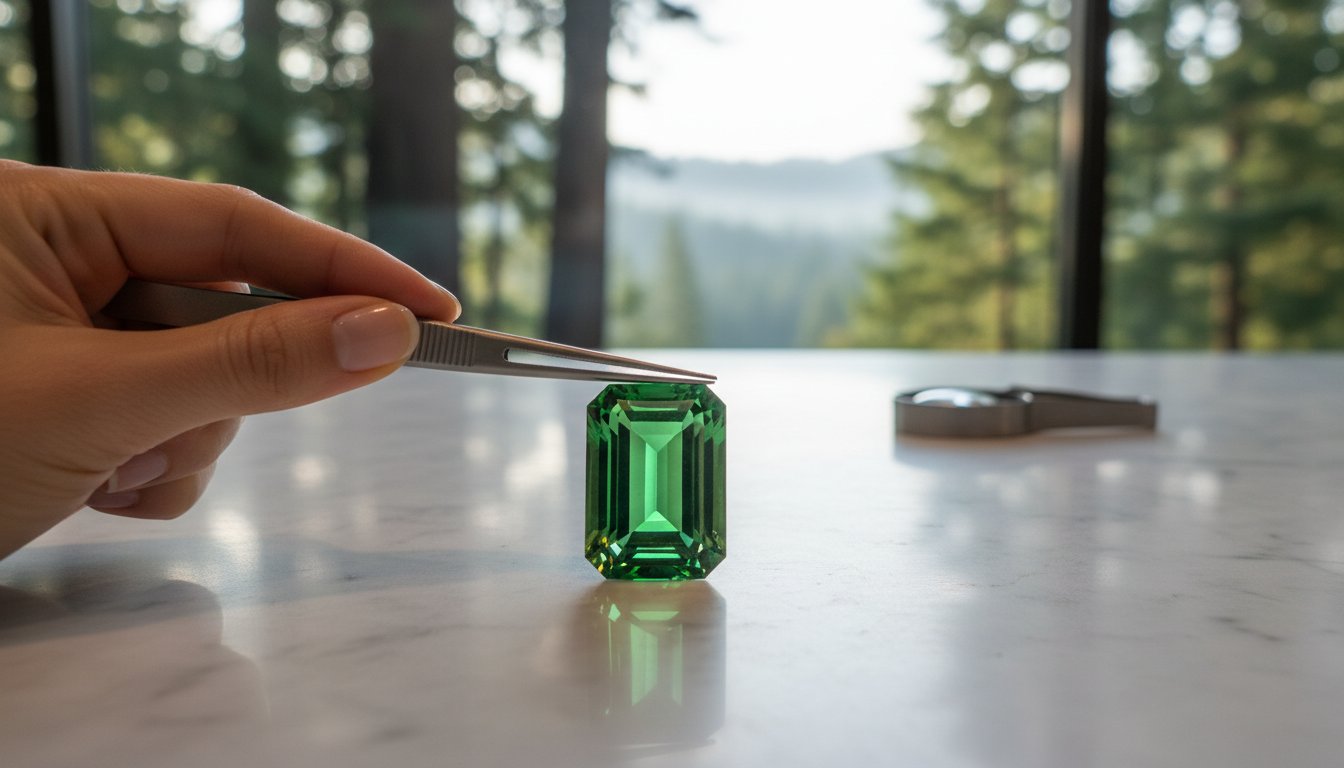
What if the very inclusions you've been taught to avoid are actually the exquisite fingerprints of a gemstone's soul? It's a common struggle for connoisseurs who seek the perfect balance of green and emerald saturation but fear the 90 percent of stones on the market that undergo undisclosed clarity enhancements. You deserve a gem that embodies both natural beauty and absolute integrity. We agree that the process of selecting a high-value stone should feel like an invitation into an inner circle, not a high-pressure sales pitch.
This article explores the intersection of color psychology and gemological rarity to reveal why specific shades of green remain the ultimate standard for luxury. You'll discover the precise chemical differences between an Emerald and a Tsavorite garnet while learning how to evaluate the "jardin" within a stone's crystal structure. We'll provide the technical framework you need to assess treatment levels and origin with the confidence of a seasoned dealer. From understanding pleochroism to securing a conflict-free guarantee, you're about to gain the insider knowledge required to choose a breathtaking gemstone for your next custom jewelry masterpiece.
Key Takeaways
- Understand the profound psychology behind the world’s most coveted hue and why it remains the definitive symbol of wealth and natural growth.
- Compare the "King of Green" against elite contenders like Tsavorite to discover which rare mineral best aligns with your aesthetic and investment goals.
- Master the professional standards for evaluating green and emerald quality, focusing on the critical nuances of hue, tone, and saturation.
- Learn how to select the ideal metal pairing to either warm or cool your gemstone’s natural fire for a truly sophisticated bespoke jewelry design.
- Discover the AfricaGems Difference and how four decades of gemological expertise ensure your selection is both ethically sourced and of exquisite rarity.
The Essence of Green and Emerald: More Than Just a Color
The "Emerald Green" standard isn't just a label; it's a gemological benchmark for saturation and tone. This specific intersection of green and emerald has defined luxury for over 4,000 years, dating back to the legendary "Cleopatra's Mines" in Egypt. Psychologically, this hue signals growth and renewal to the human brain, making it a universal symbol of prosperity and emotional balance. While a digital screen uses hex code #50C878 to mimic the shade, the physical mineralogy of the stone offers a depth that pixels can't replicate. Understanding the Emerald gemstone properties is essential for any collector who wants to distinguish a world-class specimen from a common green stone.
To see the breathtaking reality of these stones in their natural habitat, watch this documentary:
The historical significance of these gems stretches from the royal treasuries of the Spanish Empire to the sacred artifacts of the Aztecs. Throughout history, experts have prized the green and emerald connection for its perceived ability to soothe the eyes and reveal the truth. This legacy of connoisseurship continues at AfricaGems, where we prioritize the same standards of excellence that have governed the trade for centuries.
The Science of the Shade: Chromium and Vanadium
The vivid green of a top-tier emerald is a result of specific trace elements trapped within the beryl crystal structure during formation. Chromium and vanadium act as the primary coloring agents, absorbing yellow and red light while reflecting the intense green we admire. While green beryl is colored by various iron impurities, a true emerald must contain enough chromium or vanadium to produce a distinct, vivid green hue. This chemical signature creates a saturation level that is both rare and highly valued in the global market. The role of light absorption is critical; without these specific elements, the stone remains a pale or yellowish green rather than a true emerald.
Emerald Green in Design vs. Nature
A screen-rendered green lacks the "inner fire" found in a physical gemstone. This brilliance comes from pleochroism, a phenomenon where the stone displays different shades of blue-green or yellow-green depending on the angle of observation. Natural emeralds also feature the "Jardin," a French term for the garden-like inclusions found within the stone. These internal fingerprints are not flaws; they are proof of the stone's organic origin and add a unique character that synthetic alternatives lack. We believe these natural markers are part of the stone's story, ensuring every exquisite gem is as unique as the collector who acquires it.
The Spectrum of Green Gemstones: Emerald, Tsavorite, and Beyond
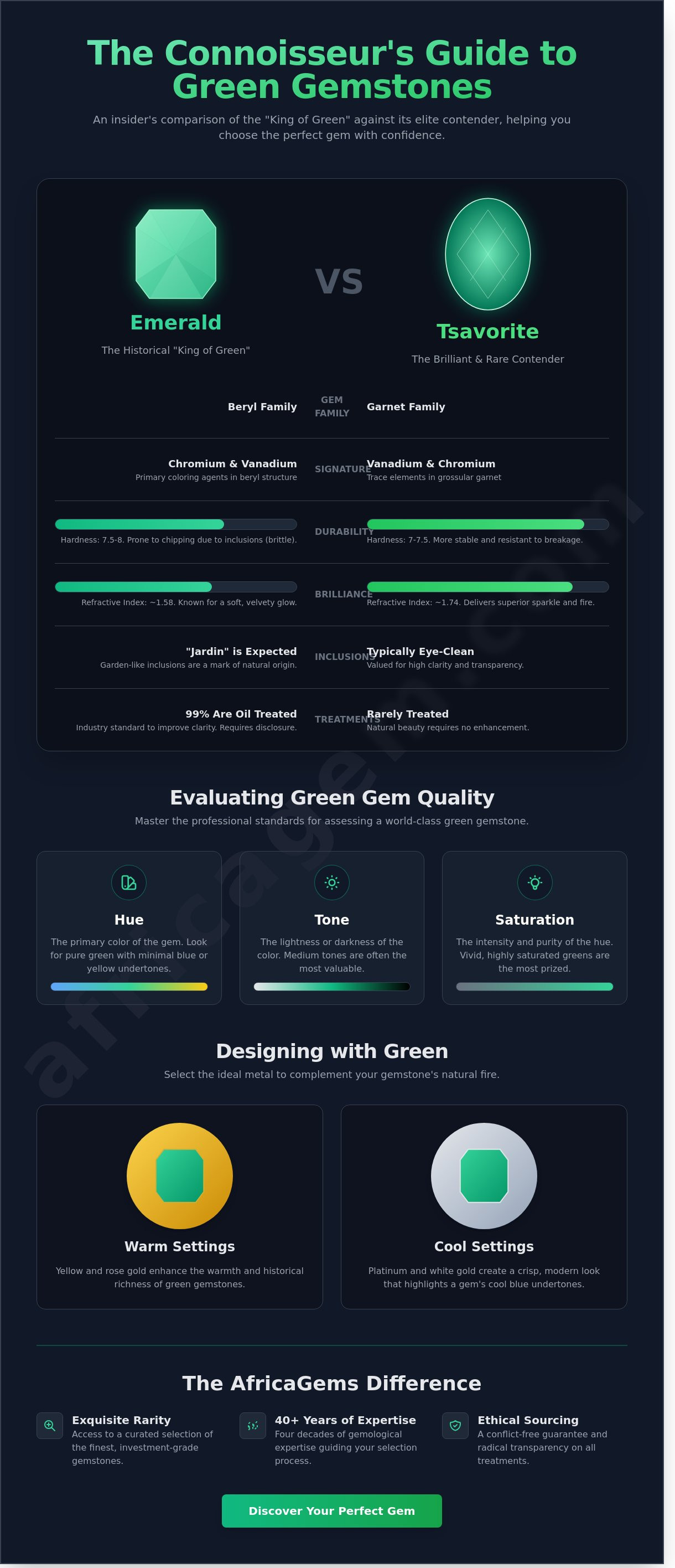
While many collectors instinctively reach for a classic beryl, the spectrum of green gemstones extends far beyond a single species. Choosing between green and emerald varieties requires an understanding of chemistry, light performance, and geological rarity. While the emerald remains the undisputed "King of Green," newer discoveries like Tsavorite garnet and Chrome tourmaline offer unique optical properties that often surpass the traditional standard in brilliance or durability.
Emerald Gemstones: The Beryl Standard
The allure of the emerald gemstone lies in its incomparable "jardin," the internal inclusions that create a soft, mossy glow. Colombian stones are the historical benchmark, prized for a warm, yellowish-green profile. In contrast, Zambian deposits, which gained global prominence after 1970, typically exhibit a cooler, bluish-green hue due to higher iron content. Because 99 percent of emeralds contain natural fissures, the industry standard involves oil treatments. At AfricaGems, we prioritize radical transparency regarding these enhancements, as the type and stability of the oil significantly impact both the long-term value and the structural integrity of the stone.
Tsavorite Garnet: The Rare Green Alternative
Tsavorite garnet is the primary challenger to the emerald's throne. Discovered in 1967 by Campbell Bridges in the Tsavo region of Kenya, this stone possesses a refractive index of 1.74. This is significantly higher than emerald's 1.57, resulting in a gemstone with far more "fire" and brilliance. One of its most significant advantages is the "unheated" factor; unlike most green and emerald specimens, Tsavorite is rarely treated in any way. Its lack of brittle cleavage planes makes it a superior choice for daily-wear jewelry, such as engagement rings, where an emerald might be too fragile for constant use.
Chrome Tourmaline and Green Sapphires
Chrome Tourmaline is the dark horse of the gem world. It owes its vivid, forest-green saturation to chromium and vanadium, the same elements that color the finest emeralds. It's often cleaner than emerald and offers a deep, velvety green that remains stable under different lighting conditions. For those who prefer subtle, earthy tones, certain blue sapphires actually lean into the green spectrum, offering olive or teal shades. These sapphires provide a Mohs hardness of 9, the highest of any green gem, ensuring they withstand the test of time.
If you're looking for a stone that balances historical prestige with modern durability, you can browse our curated collection of ethically sourced green gems to find your perfect match.
Evaluating Quality: How to Buy the Perfect Green Gem
Selecting a world-class gemstone requires a shift in perspective from traditional diamond buying. While the 4 Cs-Color, Clarity, Cut, and Carat-remain the standard framework, their weightings change significantly when you're hunting for the ideal green and emerald specimen. Color isn't just one of the factors; it's the primary driver of value, often accounting for 50% to 70% of the stone's total market price.
A master cut is the second pillar of quality. It does more than create symmetry; it manages how light interacts with the stone's internal chemistry. A precision cut preserves the "green fire," a term connoisseurs use to describe the vibrant, dancing light that prevents a stone from looking dull or "sleepy" in different lighting conditions.
Color Grading: Hue, Tone, and Saturation
The "Sweet Spot" for a high-value green stone sits in the medium to medium-dark tone range. You want to avoid over-saturated stones that look "black" or "inky" when you step away from bright jewelry store spotlights. If a stone loses its green identity in low light, it's too dark. We look for a "Vivid Green" hue, which represents the pinnacle of intensity. While "Yellowish-Green" stones are common and often more affordable, a slight "Bluish-Green" secondary hue typically commands a higher premium because it mimics the legendary color profile of the Muzo mines.
- Hue: The primary color and its secondary tints.
- Tone: The lightness or darkness of the green.
- Saturation: The strength or "purity" of the color.
Clarity and Treatments: Radical Transparency
In the world of green and emerald collecting, the "loupe clean" expectation is a myth. Emeralds are Type III gemstones, meaning they almost always contain a "Jardin," or internal garden of inclusions. These mossy patterns are fingerprints of nature that prove a stone's organic origin. However, the industry standard involves "oiling" these stones to hide surface-reaching fissures. Most stones use traditional cedar oil, which is stable and accepted by major labs like the GIA and AGL.
In 2026, the demand for "No Oil" emeralds has surged to unprecedented levels. These rare treasures command premiums of 60% to 100% over treated stones because they possess natural clarity without any human intervention. At AfricaGems, we practice radical transparency. We provide a full disclosure of all enhancements, ensuring you understand exactly what you're buying. This commitment to integrity is the AfricaGems Difference. Marc Sarosi personally guarantees that every stone is represented with clinical accuracy, protecting your investment from the murky practices often found in the open market.
Designing with Green: From Loose Stones to Custom Jewelry
Metal selection plays a pivotal role in how a stone's color presents to the eye. 18k yellow gold acts as a warm embrace, drawing out the hidden yellow secondary hues in many African emeralds or peridots. Conversely, platinum and white gold provide a crisp, clinical contrast. This cooling effect pushes the stone's primary saturation to the forefront, making the green appear more intense and vivid. Many connoisseurs utilize the "Halo Effect" to bridge these styles. By surrounding a green center stone with a perimeter of high-clarity diamonds, you create a brilliant frame that amplifies the center stone's color through reflected light.
Strategic buyers often view these acquisitions through a financial lens. Certain rare gemstones in the green category have historically outperformed traditional assets like gold or S&P 500 equities during periods of high inflation. Their portability and inherent scarcity make them a tangible hedge against market volatility.
Custom Jewelry Design for Green Gems
The architecture of your stone dictates the final look of the piece. An emerald cut creates a "hall of mirrors" effect that emphasizes clarity and the internal soul of the gem. Oval and cushion cuts prioritize brilliance, masking minor inclusions through complex light return. Because emeralds have a Mohs hardness of 7.5 to 8 but remain brittle due to internal fissures, protective settings are vital. Bezel settings or V-prongs shield vulnerable corners from daily impact. These stones integrate beautifully into Art Deco vintage styles or sleek, minimalist modern bands that allow the stone to "float" above the finger.
The Investment Value of Green
Market data from the last two decades shows that top-quality Colombian emeralds have maintained a steady appreciation rate, often exceeding 10% annually for stones over 3 carats. The scarcity of large, loupe-clean Tsavorites is even more pronounced; these gems are found in only a few locations globally and are roughly 200 times rarer than emeralds. Collectors prioritize unheated green stones because they represent the purest expression of nature's chemistry without human intervention. This transparency in origin and treatment is the AfricaGems standard for building a high-value collection.
Ready to find your perfect investment-grade stone? Browse our curated collection of ethically sourced green gemstones today.
The AfricaGems Difference: Finding Your Perfect Green
Marc Sarosi founded AfricaGems 40 years ago with a commitment to integrity that remains the cornerstone of our business today. He understands that selecting the right green and emerald gemstone is a deeply personal journey for a collector or a jewelry lover. We don't just move inventory; we curate a legacy. Our 40-year history in the trade gives us access to the top 1% of rough and cut stones that rarely reach the open market. This long-standing reputation allows us to act as your expert mentor, ensuring you receive a stone that matches both your aesthetic desires and your investment goals.
Expert Curation and Personal Guarantee
Every stone in our inventory is hand-selected for its unique "life" and "brilliance." We look for that rare internal fire that distinguishes a master-grade gem from a commercial-grade one. Whether it's a loupe-clean Tsavorite garnet or a Colombian emerald with its classic "jardin" inclusions, the quality is non-negotiable. Our selection process focuses on several key factors:
- Visual Life: We prioritize stones with exceptional light return and vibrant color saturation.
- Technical Precision: We examine each gem for pleochroism and proper cutting proportions to maximize brilliance.
- Scientific Validation: For our premier green and emerald selections, we provide GIA or AGL certification to validate the stone's natural origin and treatment status.
We provide a 30-day money-back guarantee on all loose stones because we want you to inspect the gem in your own environment. This policy ensures you can buy with absolute peace of mind, knowing the stone must meet your personal standards of beauty once it's in your hands.
Ethical Sourcing and Global Reach
Our reach extends to the primary gemstone hubs of the world. We maintain direct relationships with mines in Colombia, Zambia, and East Africa to bypass unnecessary middlemen. This direct connection ensures that miners receive fair compensation and that every gem is ethically sourced. Learning how to buy gemstones online requires a partner who values conflict-free guarantees as much as you do. We provide full disclosure on every stone's journey from the earth to our vault, maintaining radical transparency in a market that often lacks it.
By choosing AfricaGems, you're supporting a supply chain that prioritizes fair trade practices and environmental responsibility. We've spent decades building a network that rewards quality and honesty. Browse our collection of loose green gemstones to find your masterpiece and experience the AfricaGems difference for yourself.
Begin Your Journey into the World of Verdant Luxury
Choosing a masterpiece requires a blend of aesthetic passion and technical precision. You've now explored the diverse nuances within the green and emerald spectrum, from the deep history of Colombian mines to the modern brilliance of Tsavorite garnets. AfricaGems has served as a trusted mentor in this field since Marc Sarosi founded the company in 1984. We uphold a standard of radical transparency by providing full disclosure on all gemstone treatments, ensuring you're never left with unanswered questions.
Our inventory features GIA and AGL certified stones, which provides the security necessary for high-value acquisitions. This methodical approach to quality allows you to focus on the emotional connection you feel with a specific cut or saturation. Whether you're a seasoned collector or a first-time buyer, our expertise helps you navigate the complexities of pleochroism and clarity with ease. Explore our exquisite collection of Loose Emeralds and Green Gemstones to find a stone that captures your imagination. We're ready to help you secure a piece of nature's finest art today.
Frequently Asked Questions
What is the difference between emerald green and forest green?
Emerald green is a vivid, bluish-green with high saturation, while forest green is a darker, more muted shade with yellow or brown undertones. Emerald green typically sits at a 50% to 70% tone level on the GIA scale. Forest green mimics the deep shadows of dense foliage. These distinctions help collectors identify the vibrancy they desire in a fine gemstone.
Are emeralds more expensive than diamonds?
High-quality emeralds often command a higher price per carat than colorless diamonds of comparable weight. For example, top-tier Colombian emeralds can exceed $30,000 per carat at auction. This rarity stems from the specific geological conditions required to create the chromium and vanadium traces that define the green and emerald color. Diamonds are more abundant in the global market.
Can I wear an emerald ring every day?
You can wear an emerald ring daily if you choose a protective setting and exercise caution. Emeralds rank 7.5 to 8 on the Mohs scale, which makes them softer than sapphires or diamonds. Since 90% of emeralds contain surface-reaching fissures, a bezel setting provides the best security against impact. Avoid wearing them during heavy manual tasks or when using harsh household chemicals.
Which green gemstone is the rarest?
Musgravite is currently considered the rarest green gemstone, with only 8 gem-quality specimens identified globally by 2005. While emeralds are rare, musgravite belongs to the taaffeite family and is exceptionally difficult to source. Grandidierite also ranks highly, as only a few hundred transparent faceted stones exist worldwide. These gems represent the pinnacle of a collector's portfolio and demand rigorous certification.
How can I tell if an emerald is real or lab-created?
You can distinguish a natural emerald from a synthetic one by examining the inclusions under 10x magnification. Natural stones typically exhibit "jardin" or complex internal structures like three-phase inclusions, which consist of a liquid, a gas bubble, and a salt crystal. Lab-grown emeralds often show uniform, "wispy veil" patterns or chevron growth lines. Professional gemological testing remains the only definitive way to confirm origin.
What does the term "Jardin" mean in emeralds?
Jardin is the French word for garden and refers to the unique internal inclusions found within a natural emerald. These moss-like patterns of fissures and crystals prove the stone's organic origin. Because 99% of emeralds possess these features, a completely "clean" stone is often a red flag for a synthetic. This internal landscape gives every green and emerald specimen its distinct personality and character.
Why are some emeralds oiled, and does it affect the value?
Emeralds are oiled to fill surface-reaching fissures and improve their visual clarity. This industry-standard practice uses cedar oil or synthetic resins to minimize the appearance of the jardin. Stones with "no oil" or "insignificant oil" certifications from labs like the GRS can sell for a 50% to 100% premium. Full disclosure of these treatments is a core part of the AfricaGems Difference.
Which metal looks best with green gemstones?
18k yellow gold is the traditional choice because its warm hue complements the rich saturation of green gems. The yellow metal neutralizes any slight blue undertones in the stone, making the color appear more vibrant. For a modern aesthetic, platinum or 14k white gold provides a crisp contrast that highlights the stone's brilliance. Most designers choose 18k gold to ensure the metal is durable enough for high-value settings.