
Expert Guide: Most Important Criteria for Buying Rubies
Jul 2nd 2026
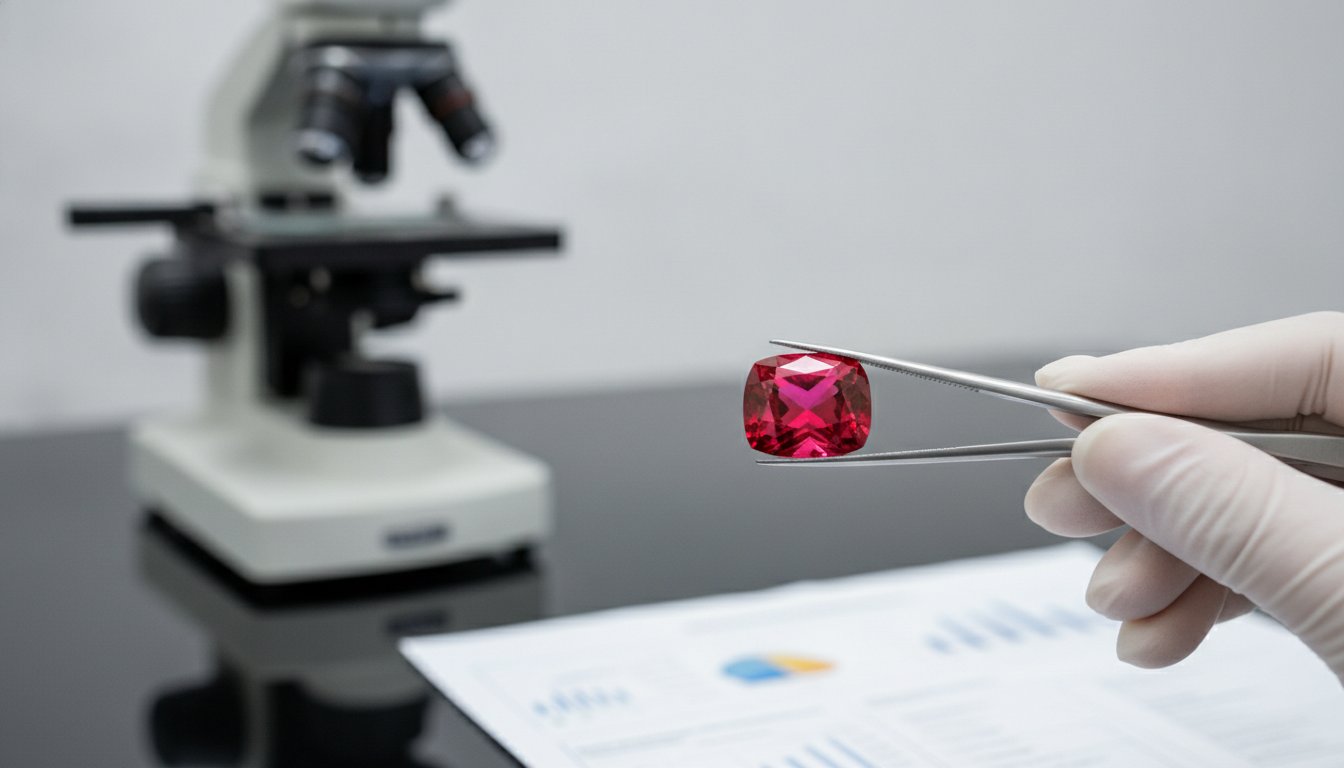
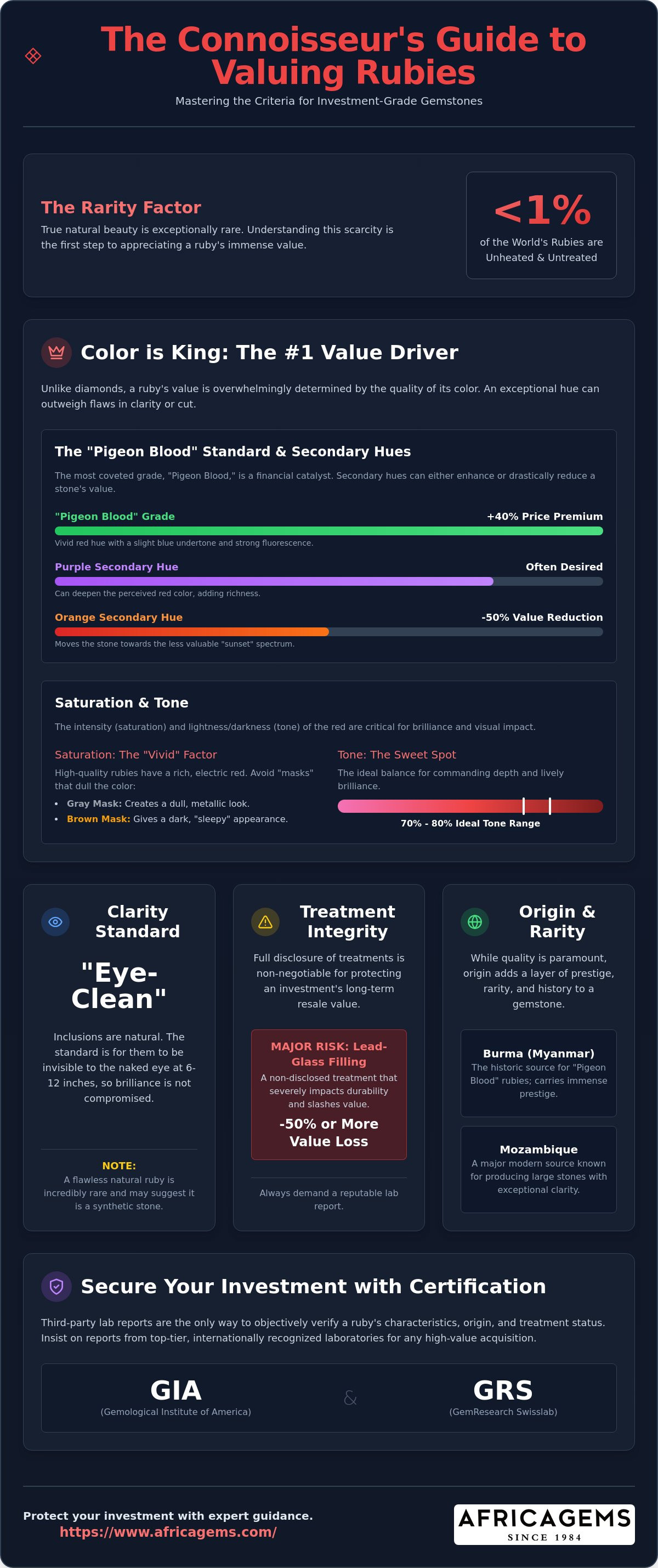
Less than one percent of the world's rubies reach the market in their purely natural, unheated state. This extreme scarcity creates a high-stakes environment where a single undisclosed treatment can slash a gem's value by half or more. When you're ready to acquire a stone of this caliber, determining what is the most important criteria in evaluating ruby gemstones to buy is the only way to protect your investment. You likely already understand that a ruby's fiery red hue is its soul, but the industry's heavy reliance on marketing terms like "Pigeon Blood" often creates more confusion than clarity for the serious collector.
We believe that true connoisseurship requires a sophisticated blend of aesthetic appreciation and technical validation. This guide will help you master the standards that define a ruby's true value, from the nuance of color saturation to the absolute necessity of treatment transparency. We'll provide an insider's look at interpreting GIA and GRS reports, navigating the price premiums associated with origins like Mozambique, and avoiding the pervasive risks of lead-glass fillings. By the end of this exploration, you'll possess the confidence to select a gemstone that stands as a testament to both nature's rarity and your own discerning standards.
Key Takeaways
- Learn why color saturation is the primary driver of value and how to decode the "Pigeon Blood" trade term with technical precision.
- Understand the "Eye-Clean" standard for clarity to ensure your gemstone remains visually stunning without the unattainable price of a flawless stone.
- Discover how to distinguish between unheated gems and those with non-disclosed treatments like lead-glass filling to protect your investment's long-term resale value.
- Master what is the most important criteria in evaluating ruby gemstones to buy by weighing the prestige of Burmese origins against the exceptional clarity of modern Mozambique rubies.
- Gain the security of knowing which third-party laboratories, such as GIA or GRS, provide the most reliable certifications for high-value gemstone acquisitions.
The Hierarchy of Ruby Evaluation: Why Color is the Primary Criterion
Color isn't simply a feature of a ruby; it's the stone's entire identity. While the 4Cs provide a structured framework for most gems, the market for precious gemstones operates on a different scale. When you're determining what is the most important criteria in evaluating ruby gemstones to buy, color saturation and purity sit at the undisputed peak. A ruby with exceptional color but visible inclusions will almost always outprice a flawless stone with a weak, watery hue. This hierarchy exists because the red of a ruby is a rare geological accident caused by chromium replacing aluminum in the crystal lattice. This specific chemical interaction creates the Ruby gemstone properties that collectors crave, specifically a high level of fluorescence that makes the gem appear to glow from within.
To better understand how these visual elements translate to real-world value, watch this helpful video breakdown:
The "Pigeon Blood" standard remains the pinnacle of this evaluation. In the 2026 market, a "Pigeon Blood" certification from a top-tier lab like GIA or GRS isn't just a poetic description; it's a financial catalyst that can increase a ruby's price by 40%. This grade requires a specific balance: a vivid red hue with a slight blue secondary undertone and strong fluorescence. Secondary hues are critical value drivers. A purple secondary hue is often tolerated or even desired as it deepens the red, but an orange secondary hue can swing the value downward by as much as 50% because it moves the stone toward the less expensive "sunset" or "padparadscha" spectrum.
Hue and the Ruby vs. Pink Sapphire Debate
The line between a light ruby and a pink sapphire is the most contentious border in gemology. This distinction is based entirely on color saturation and tone. If the stone's primary hue is not predominantly red, it's classified as a sapphire, which significantly impacts its market positioning. For those seeking the finest investment-grade stones, the sweet spot for ruby tone is usually 70-80%, where the red is deep enough to be commanding but light enough to maintain its brilliance.
Saturation: The "Vivid" Factor
Saturation describes the intensity or "brightness" of the color. High-quality rubies possess vivid saturation, meaning the red is rich and free from "masks." A gray mask will make a stone look dull or metallic, while a brown mask often makes the ruby appear dark and "sleepy." True connoisseurs look for stones where light interacts with internal chromium to produce a vivid, electric red that remains consistent across different lighting environments. This saturation is what is the most important criteria in evaluating ruby gemstones to buy for those who prioritize visual impact over technical perfection.
Clarity and Cut: Reimagining the 4Cs for Colored Gems
Natural rubies are rarely flawless. If you encounter a stone without a single internal characteristic, it's likely a synthetic or a lab-created imitation. In the world of high-end gemology, clarity is judged by a different yardstick than diamonds. We look for "eye-clean" stones, meaning inclusions are invisible to the naked eye at a distance of about 6 to 12 inches. This standard ensures the stone's brilliance isn't compromised by distracting feathers or crystals. While color remains the primary driver of value, understanding the nuance of clarity is a vital part of what is the most important criteria in evaluating ruby gemstones to buy. It's about finding a stone where the natural inclusions don't detract from its overall beauty.
According to GIA's guide to ruby quality factors, rubies almost always have some inclusions. These "birthmarks" are the gem's fingerprint, telling the story of its formation deep within the earth's crust. If you're looking for stones with exceptional clarity, you might view our collection of loose Mozambique rubies, which often exhibit superior transparency compared to traditional Burmese sources.
The Beauty of Silk: Desirable Inclusions
Not all inclusions are detriments. Fine, needle-like inclusions known as "rutile silk" are often celebrated by connoisseurs. Silk can actually improve a ruby's appearance by scattering light across the facets, softening the color and giving the stone a velvety glow. More importantly, the presence of intact silk is a primary indicator that a ruby hasn't been subjected to high-heat treatment. In some cases, dense concentrations of silk create the rare "asterism" found in certain loose star rubies. However, you must be wary of "surface-reaching" inclusions or large fractures that could threaten the stone's structural integrity during the setting process.
Cut and Brilliance: Beyond Symmetry
The cut of a ruby serves the color, not the other way around. Unlike diamonds, where mathematical symmetry is king, rubies are often cut with "heavy bottoms" or deep pavilions. Lapidaries do this to preserve as much of the rare red material as possible and to intensify the hue. However, a poor cut can create "windows," which are large, transparent areas in the center of the stone where light leaks through rather than reflecting back to your eye. You should also watch for "extinction," where parts of the stone appear black and lifeless due to improper facet angles. A masterfully cut ruby balances weight retention with a lively, consistent return of light, ensuring the gem doesn't look "sleepy" or dark in certain orientations.
If you're building a legacy collection, choosing a stone with a balanced cut ensures that its natural fire is always on full display. You can explore our inventory of ethically sourced gems to find a specimen that meets these exacting standards.
The Invisible Criterion: Treatment Disclosure and Integrity
While color and clarity are the most visible aspects of a gemstone, the integrity of its treatment status is what ultimately dictates its permanence as an asset. For the serious collector, understanding the hierarchy of enhancement is just as critical as judging hue. In the current 2026 market, unheated rubies of fine color can command a price premium of 150% to 300% over their heated counterparts because they represent less than 1% of all gem-quality material. This distinction is often what is the most important criteria in evaluating ruby gemstones to buy for those seeking true rarity. At AfricaGems, we maintain a commitment to radical transparency; we believe every buyer deserves a full, unvarnished disclosure of a stone’s history.
The market typically organizes rubies into a clear value hierarchy based on their level of intervention:
- Unheated: The natural state of the gem, possessing its original color and clarity from the earth.
- Standard Heat: A permanent, stable enhancement that improves visual appeal.
- Beryllium Diffused: A chemical process that forces color into the stone, significantly lowering its collector value.
- Lead-Glass Filled: A composite material that is considered non-genuine and holds zero resale value.
Understanding Standard Heat Treatment
Nearly 95% of rubies available globally have undergone standard heat treatment. This stable, permanent process involves heating the stone to high temperatures to "clear" rutile silk and improve color saturation. It's an industry-standard practice that makes beautiful rubies more accessible to the general public. A heated ruby can still be a sound investment, provided the price reflects its treated status and the stone possesses exceptional visual characteristics. The key is knowing exactly what you are paying for and ensuring the price aligns with the level of enhancement.
The Red Flags of Glass Filling and Diffusion
Stones that appear "too perfect" at a low price point often hide deceptive enhancements. Lead-glass filling is particularly problematic; these stones are essentially a composite of low-grade corundum and high-refractive glass. They are often sold as "natural" in commercial settings but have zero resale value and can be damaged by simple jewelry repairs. Beryllium diffusion is another deal-breaker for collectors, as it uses chemicals to artificially force color deep into the stone. We strongly recommend referencing the AfricaGems guide to non-genuine gems to learn how to identify these compromised materials before making a purchase. Protecting your legacy starts with demanding full disclosure on every certificate.
Origin and Rarity: Burma vs. Mozambique in 2026
Origin isn't just a geographical footnote. It's a financial catalyst. On a GIA or GRS report, a confirmed origin functions as a value multiplier that can redefine the entire valuation of a stone. When you're determining what is the most important criteria in evaluating ruby gemstones to buy, the location of the mine acts as a proxy for specific geological traits that are impossible to replicate. While the 2026 market has seen a surge in demand for ethically traceable African gems, the historical prestige of Burma still sets the ceiling for global prices. Choosing between these two sources requires an understanding of how iron content and rarity interact to create value.
Burma (Myanmar): The Historical Gold Standard
Burma remains the most expensive word in the world of gemology. The marble-hosted geology of the Mogok Valley produces rubies with remarkably low iron content, a trait that allows for intense fluorescence. This chemical purity makes a Burma stone seem to glow from within, even in low-light environments. With new supply from Mogok reaching historic lows in 2026, unheated Burmese rubies between one and two carats have seen prices climb to $40,000 or even $100,000 per carat. This scarcity has transformed these gems into high-stakes tangible assets. For a deeper look at these legendary stones, you can read our Loose Burma Rubies: The Connoisseur’s Guide.
The geological connection to marble-hosted deposits is a reminder of the shared origins between precious gems and architectural materials. For those who appreciate the aesthetic qualities of earth-mined treasures, you can explore Natural stone (marble, travertine, onyx, quartzite) to see how these formations create exquisite textures for luxury design.
Mozambique: The Modern Collector’s Choice
Mozambique has fundamentally shifted the collector market by offering world-class quality with modern traceability. Unlike the highly included material often found in older sources, Mozambique rubies typically offer superior transparency and larger sizes. They contain slightly more iron than Burma stones, which results in a deeper, more "brick" red, but the finest unheated specimens still achieve the coveted "Pigeon Blood" grade. In 2026, unheated Mozambique rubies of one to two carats are valued between $15,000 and $35,000 per carat, offering a compelling entry point for serious collectors who prioritize clarity. To evaluate these gems for your own collection, you can browse our selection of loose Mozambique rubies.
Understanding the nuances between these origins helps you build a portfolio with confidence. Consider these key differences when making your selection:
- Fluorescence: Burma rubies generally exhibit stronger fluorescence due to lower iron levels.
- Clarity: Mozambique rubies are frequently "eye-clean" at larger carat weights than their Burmese counterparts.
- Investment Strategy: Burma stones are the ultimate rarity play, while Mozambique stones offer exceptional visual beauty and better clarity-to-price ratios.
Whether you're seeking a legacy-grade Burma stone or a high-clarity African gem, ensure your investment is backed by a reputable laboratory report. You can explore our current gemstone inventory to find a ruby that meets your specific standards for origin and integrity.
Securing Your Investment: Certification and the AfricaGems Guarantee
Buying a high-value gemstone is an exercise in trust, but that trust should always be anchored in objective data. While visual allure captures the heart, technical certification is what is the most important criteria in evaluating ruby gemstones to buy for the serious collector. A third-party lab report acts as the final arbiter of value; it's the document that confirms the stone's origin and, more crucially, its treatment status. Without this independent validation, you're essentially flying blind in a market where undisclosed enhancements can drastically inflate prices. We recommend relying on the "Big Three" laboratories: GIA, GRS, and SSEF. Each brings a specific strength to the table. GIA offers unmatched consistency, GRS is the industry leader for "Pigeon Blood" color grading, and SSEF is often the preferred choice for the world's most prestigious auction-grade specimens.
Understanding what is the most important criteria in evaluating ruby gemstones to buy involves more than just a keen eye for color; it requires the discipline to demand third-party verification before any capital is committed. These reports ensure that the "unheated" premium you're paying is justified by scientific proof rather than a seller's promise. At AfricaGems, we supplement these reports with our own rigorous internal standards, ensuring every gem in our inventory meets the ethical and aesthetic benchmarks our clients expect.
Reading a Gemological Report
The most important part of any certificate isn't the primary grade; it's the "Comments" section. This is where gemologists disclose the presence of heat, beryllium diffusion, or lead-glass filling. For an unheated stone, you're looking for a clear statement indicating "no indications of heating." You should also verify the "Origin" claim, as a confirmed Burmese or Mozambique source can significantly impact future resale value. Always take the extra step to cross-reference the report number with the issuing lab’s online database. This simple digital check ensures the physical document hasn't been altered and that the stone's data matches the laboratory's permanent record.
The AfricaGems Advantage
We believe the buying process should be as rewarding as the gem itself. This is why we offer a 30-day inspection period with a 100% refund on unaltered items in their original condition. We even provide free, fully insured return shipping for domestic US orders, removing the risk often associated with high-value online transactions. Our founder, Marc Sarosi, brings over 40 years of expertise to every acquisition, offering personal consultations that transform a digital storefront into a private gallery experience. Whether you're looking to acquire a loose stone for a portfolio or use our custom design services to create bespoke gemstone rings or pendants, we're here to guide you. You can start your journey by exploring our full collection on the AfricaGems homepage, where radical transparency meets the world's finest natural rubies.
Building Your Legacy Collection with Confidence
Acquiring a ruby is a journey that begins with a visceral reaction to its fiery hue and ends with the technical validation of a gemological report. We've explored how the intersection of vivid color saturation and unheated rarity defines the pinnacle of the market. Mastering what is the most important criteria in evaluating ruby gemstones to buy allows you to move beyond marketing terms and make decisions based on technical integrity. Whether you're drawn to the historical glow of a Mogok stone or the crystalline clarity of a Mozambique specimen, your focus should remain on full treatment disclosure and third-party validation.
To complement these rare finds, many collectors choose to work with trusted family-owned experts like BOS Jewelers Inc to ensure their investment is set in high-quality 14K gold that matches its natural rarity.
Since 1984, AfricaGems has served as a knowledgeable mentor to collectors seeking stones of exceptional character. Guided by the 40 years of expertise of Marc Sarosi, we provide a transparent environment where every gem comes with full disclosure and global shipping backed by secure insurance. We invite you to explore our hand-selected collection of natural Loose Rubies and discover a masterpiece that meets your standards. Your pursuit of a rare, natural treasure is a legacy we're proud to help you build.
Frequently Asked Questions
What is the most important of the 4Cs when buying a ruby?
Color is the undisputed leader among the 4Cs, as it dictates the vast majority of a stone's market value and emotional appeal. When you're determining what is the most important criteria in evaluating ruby gemstones to buy, you'll find that the purity of the red hue is paramount. While clarity and carat weight are significant, they can't compensate for a weak or overly dark tone that lacks the necessary saturation to be considered top-tier.
Is a Burma ruby always better than a Mozambique ruby?
A Burma ruby isn't inherently better than a Mozambique stone; it simply offers different geological characteristics and a different history. Burma rubies are prized for their low iron content and high fluorescence, which creates a bright, internal glow. Mozambique rubies often provide superior clarity and larger sizes for a more accessible price point. You should evaluate each stone on its individual visual merits and the presence of a reputable lab report.
How can I tell if a ruby has been lead-glass filled?
You can often identify lead-glass filling by looking for a "flash effect" or blue and orange light trails when rotating the stone under a loupe. These composite stones also frequently contain flattened gas bubbles trapped within the glass. However, the most reliable method is to check the laboratory certificate for terms like "composite ruby" or "lead-glass filled," as these materials are considered non-genuine and hold zero resale value.
What does "Pigeon Blood" red actually look like?
"Pigeon Blood" red is a trade term for a vivid, high-saturation red with a subtle blue secondary hue. It isn't just a color; it requires strong fluorescence that makes the gem appear to glow in natural daylight. This standard is highly sought after because it represents the perfect balance of tone and intensity. You should always ensure this grade is verified by a top-tier lab like GRS to confirm it meets the technical definition.
Are unheated rubies worth the extra cost for a non-collector?
Unheated rubies are worth the premium because they represent a finite, natural rarity that holds its value far better than treated stones. Even for those who aren't active collectors, owning a stone that hasn't been altered by man provides a level of security and asset protection that heated stones can't match. It's a choice between a beautiful gem and a piece of geological history that is increasingly difficult to source in 2026.
Does the cut of a ruby affect its color saturation?
The cut of a ruby significantly influences how we perceive its color saturation and overall life. A master lapidary will cut a stone to minimize "windows" where color looks diluted and "extinction" where the stone appears black. By optimizing the facet angles, the cutter can actually intensify the red hue, making the stone look richer and more vibrant than its rough state might suggest, which is why proportions are so vital.
Which gemstone lab provides the most reliable ruby grading?
GIA, GRS, and SSEF are widely recognized as the most reliable gemstone laboratories for ruby grading and origin determination. Each lab has its own specialty; GRS is famous for its "Pigeon Blood" color grading, while GIA is known for its rigorous and conservative approach to treatment disclosure. Relying on these institutions is what is the most important criteria in evaluating ruby gemstones to buy when you're making a significant investment in a high-value stone.
How do I know if a ruby is ethically sourced?
Ethical sourcing is verified through a combination of transparent supply chains and documented provenance. You should look for dealers who can provide a "birth certificate" or blockchain-backed traceability for their gems. This ensures that the stone was mined under fair labor conditions and that the proceeds aren't funding conflict. At AfricaGems, we prioritize this radical transparency to ensure your purchase supports responsible mining practices across the globe.

Article by
Marc Sarosi
Professional gemstone dealer for more than 40 years. Started off mining Aquamarine in Zambia, Africa and travelled throughout the continent in search of fine gems. Trusted authority on fine gemstones and have donated a fine collection of more than 27 extraordinary gemstones to the Smithsonian Institute Gem Hall for generations to see.