
Durable Gemstones for an Active Lifestyle: The Connoisseur’s Guide (2026)
Jun 3rd 2026
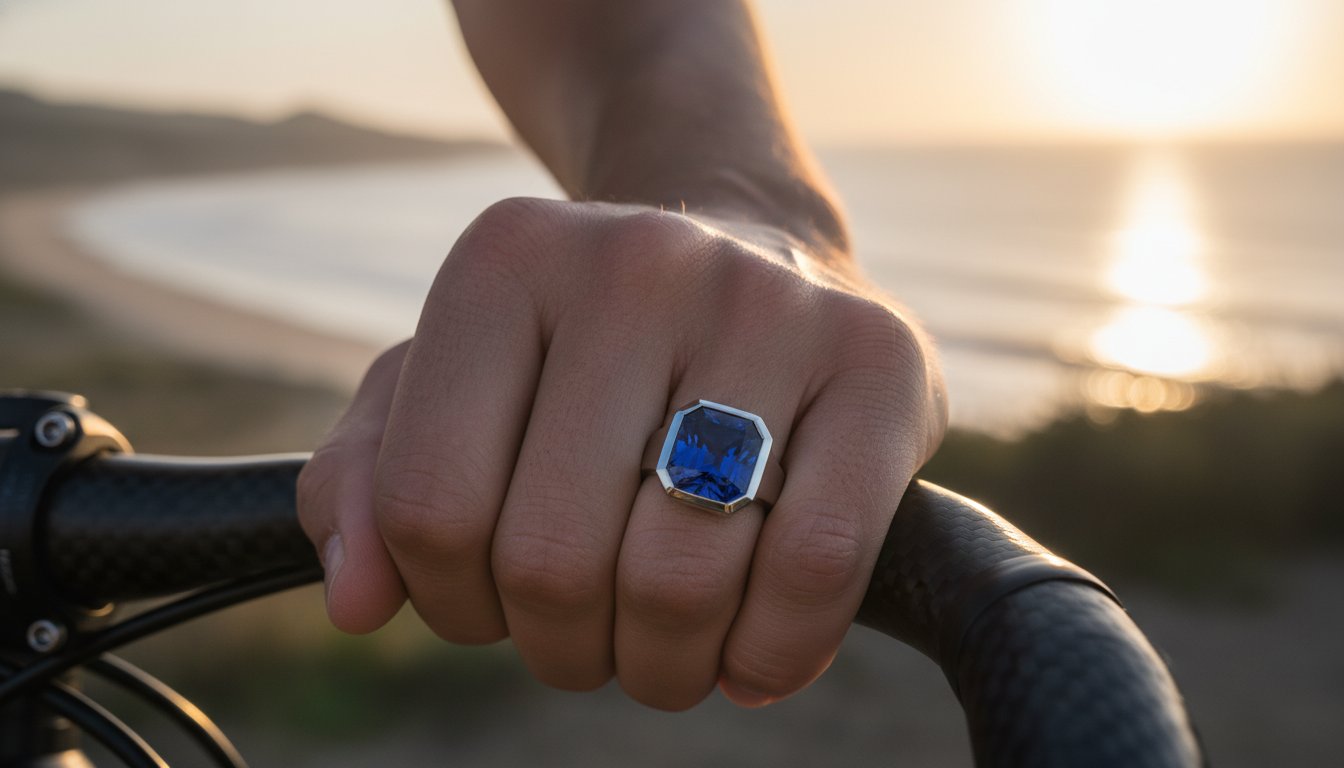
What if your most exquisite jewelry could withstand a morning at the gym or a weekend on the coast without a single fracture? You've likely felt that familiar pang of anxiety when a high-value ring knocks against a hard surface. It's a common frustration to feel limited to diamonds simply because you lead a vibrant, physical life. This guide empowers you to discover durable gemstones for an active lifestyle that maintain their investment value and breathtaking luster through every daily challenge.
We'll bridge the gap between technical mineralogy and luxury collecting by explaining why a Mohs rating is only one part of the durability story. You'll learn how to interpret the 2026 GIA colored stone report updates to find stones with verified provenance and superior toughness. We'll explore high-performance options like Loose Blue Sapphires and Loose Spinel Gemstones, ensuring your choice aligns with the modern "Clean Gem" movement. This overview provides the technical data and aesthetic insight needed to build a collection that's as resilient as it is refined.
Key Takeaways
- Master the "Durability Trifecta" by distinguishing between Mohs hardness and structural toughness to prevent your stones from chipping or shattering.
- Discover why Corundum, including loose blue sapphires and Mozambique rubies, serves as the ultimate foundation for durable gemstones for an active lifestyle.
- Uncover resilient alternatives like loose spinel and alexandrite that provide elite-level resilience for those seeking high-performance options.
- Protect your precious materials with "jewelry armor" by selecting bezel settings that shield the stone from high-impact daily activities.
- Gain confidence in your acquisitions by prioritizing radical transparency regarding treatments and structural integrity through expert-led sourcing.
Defining Gemstone Durability: Hardness, Toughness, and Stability
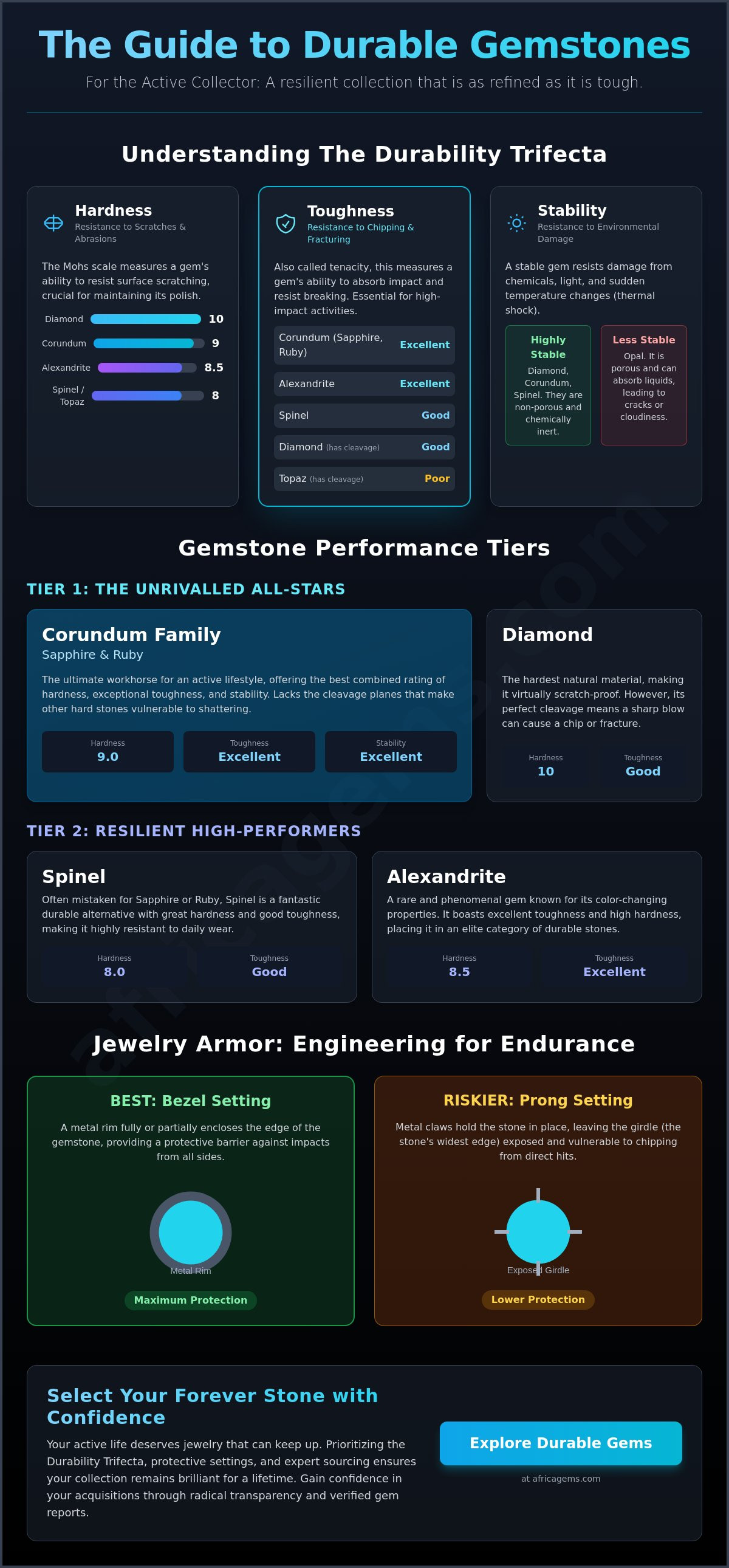
A common error among novice collectors is conflating hardness with invincibility. Many assume a high rating on the Mohs scale of mineral hardness guarantees a lifetime of worry-free wear. In reality, hardness strictly defines how well a surface resists abrasions and scratches. While this is vital for maintaining a mirror-like polish, it doesn't reveal how a stone reacts to a sharp blow against a gym weight or a granite countertop. To select durable gemstones for an active lifestyle, you must evaluate the "durability trifecta": hardness, toughness, and stability.
Toughness, technically known as tenacity, measures the energy required to cause a fracture or a chip. Stability refers to a gem's resistance to environmental factors like chemicals, light, and temperature shifts. An active lifestyle demands a high score in all three categories. Without this balance, a stone might resist scratches but shatter upon impact, or it might be physically strong but lose its color when exposed to common household cleaners. Understanding these distinctions transforms you from a casual buyer into an informed connoisseur.
To better understand how these factors play out in real-world scenarios, watch this helpful comparison:
The Mohs Scale vs. Tenacity
Even a diamond, the pinnacle of hardness at Mohs 10, possesses perfect cleavage. This means a precise strike along its internal atomic planes can split the stone instantly. For those with high-impact hobbies, prioritizing "Excellent" or "Good" tenacity is essential. Many precious gemstones in the corundum family are prized because they lack these vulnerable cleavage planes. Unlike Topaz, which can cleave with a single unlucky knock, stones with high tenacity absorb mechanical shock. This structural integrity is what allows a gem to survive the rigors of daily, vigorous movement without catastrophic failure.
Chemical Stability for the Modern Adventurer
Your environment poses risks that go beyond physical impact. Daily exposure to sweat, pool chlorine, and perfumes can degrade certain materials over time. Porous semi-precious gemstones like Opal are particularly unsuitable for durable gemstones for an active lifestyle because they can absorb liquids, leading to permanent cloudiness or cracking. Thermal shock is another concern for the adventurer. Sudden transitions from a snowy trail to a hot shower can cause internal fractures in stones with low stability. Choosing a non-porous, chemically inert gem ensures your investment survives the gym, the spa, and the elements without losing its structural or aesthetic brilliance.
The Unrivalled All-Stars: Sapphires, Rubies, and Diamonds
Corundum and Diamonds are the undisputed titans of the jewelry world. While many gems succumb to the pressures of a busy day, these "All-Stars" thrive. They represent the peak of what we consider durable gemstones for an active lifestyle. This durability isn't just a marketing claim; it's rooted in the mineral's fundamental chemistry. Diamonds hold a 10 on the Mohs Hardness Scale, making them virtually scratch-proof against anything but another diamond. However, the Corundum family, which includes both sapphires and rubies, offers a unique combination of 9.0 hardness and exceptional toughness that often makes them a more practical choice for daily high-impact wear.
The versatility of these stones allows for a range of aesthetic expressions without compromising on security. Whether you're at the office or on a hiking trail, these gems maintain their brilliance. Their chemical stability ensures they won't react to sweat or common environmental pollutants. For the serious collector, these materials offer the perfect intersection of investment-grade rarity and physical resilience. Choosing from the Corundum family ensures that your jewelry remains a legacy piece rather than a fragile ornament.
Sapphires: The Technicolor Workhorse
Collectors often view blue sapphires as the gold standard for colored stone resilience. Their lack of cleavage means they don't split when bumped, a critical feature for anyone seeking durable gemstones for an active lifestyle. While the market frequently debates the value of unheated versus heated stones, both varieties maintain the same structural integrity in active settings. The primary difference lies in rarity and investment value rather than physical endurance. Beyond the classic blue, fancy color sapphires provide a spectrum of options for custom pieces that don't sacrifice strength for style. You can explore deeper insights into quality and origin in our Blue Sapphires: The Ultimate Collector’s Guide.
Rubies: The King of Resilient Gems
Rubies share the same Corundum DNA as sapphires, granting them elite status in any collection. Whether you're considering loose Burma rubies or the increasingly popular Mozambique varieties, you're investing in a stone built for longevity. Mozambique rubies are particularly noted for their exceptional stability in everyday rings, resisting the chemical and physical stressors of a modern lifestyle. Corundum tenacity is widely regarded as the best for impact resistance among all transparent gemstones. For those looking to build a legacy piece, browsing our selection of precious gemstones is the first step toward a secure and beautiful acquisition.
Resilient Alternatives for the Active Collector
While the Corundum family dominates the conversation, the discerning collector knows that true value often lies in the "underdogs" of the mineral world. These alternative durable gemstones for an active lifestyle provide exceptional resilience while offering a distinct aesthetic that sets you apart from the crowd. For those who find diamonds too conventional or sapphires too ubiquitous, stones like Spinel and Chrysoberyl offer a compelling narrative of rarity and physical endurance. These gems often provide a better value-to-durability ratio, allowing you to acquire larger, cleaner specimens that can actually handle the stress of daily wear.
For green lovers, the choice often comes down to a battle between tradition and utility. While emeralds are legendary, their internal inclusions, or "jardin," make them notoriously prone to shattering upon impact. Tsavorite Garnet serves as the sophisticated solution. It's a tougher alternative that possesses a higher refractive index than emerald, meaning it offers more brilliance while resisting the structural failures common in more fragile green stones. Choosing these alternatives doesn't mean compromising on luxury; it means prioritizing a stone that's as high-performing as your lifestyle demands.
Spinel: The Underappreciated Powerhouse
Spinel was once known as the "Great Imposter" because it so closely mimicked rubies and sapphires in the royal treasuries of Europe. Today, it's celebrated for its own merits, particularly its elite 8.0 Mohs rating. Because Spinel belongs to the cubic crystal system, it lacks cleavage planes. This makes it nearly impossible to chip through the accidental knocks of a morning workout or a busy commute. Its chemical stability is equally impressive. It remains unaffected by the gym's harsh cleansers or common household chemicals that might dull lesser stones. You can read more about these fascinating materials in our Rare Gemstones: A Connoisseur’s Guide.
Chrysoberyl and Alexandrite
If you require a stone that bridges the gap between sapphire and diamond, Chrysoberyl is the definitive answer. With a Mohs rating of 8.5, only Corundum and Diamond surpass its hardness. Its color-changing variety, Alexandrite, stands as the ultimate luxury stone for 2026. It combines a sophisticated visual performance with a structural integrity that handles high-impact activities with ease. When sourcing loose gemstones for custom mounting, Alexandrite offers a rare combination of investment growth and daily utility. Its lack of cleavage means you don't have to worry about the stone splitting if you accidentally strike it against a hard surface, providing a level of security that few other rare gems can match.
Engineering for Endurance: Setting Styles and Design
Selecting durable gemstones for an active lifestyle is only the first half of the equation. Even a sapphire can chip if its most vulnerable point, the girdle, is exposed to a direct hit. Think of the jewelry setting as the armour that shields your investment. While traditional prong settings are beloved for their light-gathering abilities, they create high-profile catch points. These snags aren't just annoying; they put mechanical stress on the stone and the metal alike. A well-engineered piece of jewelry should feel like a part of you, not a fragile ornament you're constantly monitoring.
The choice of metal is equally vital for long-term security. Platinum is often the connoisseur's choice because of its remarkable density. Unlike gold, which wears away over time, platinum molecules simply shift when struck. If a platinum prong is bent, it's more likely to stay in place rather than snapping off. However, 14k gold remains a formidable contender due to its hardness. No matter which metal you prefer, the goal is to minimize the "profile" of the piece. Lower settings reduce the leverage that can cause a stone to loosen during vigorous movement.
The Bezel and Half-Bezel Advantage
The bezel setting remains the gold standard for protection. By encircling the gem in a continuous rim of metal, you provide a 360-degree shield for the girdle. This is especially important for stones with high hardness but moderate toughness. In 2026, we've seen a significant aesthetic shift toward sleek, modern bezels that emphasize the stone's clean lines. These low-profile designs are incredibly practical. They don't snag on gym towels or outdoor gear, ensuring your gem stays exactly where it belongs. A half-bezel offers a similar level of protection while allowing more light to enter the sides of the stone, maintaining that coveted brilliance.
Protective Mountings for Pendants and Studs
We must look beyond the hand when designing for an active life. Earrings and pendants face unique risks, primarily the danger of loss during high-impact movement. For gemstone earrings, screw-back posts are the only logical choice for the modern adventurer. They provide a mechanical lock that friction backs simply cannot match. When designing gemstone pendants, consider a slider design. These allow the chain to pass through the mounting itself, keeping the stone flush to the skin. This prevents the pendant from swinging and striking hard surfaces during a run or a climb.
Ready to secure your next acquisition in a setting built for the real world? Explore our protective mounting options to find the perfect balance of safety and sophisticated style.
Selecting Your Forever Stone: The AfricaGems Custom Advantage
AfricaGems doesn't just sell stones; we curate materials based on their inherent structural integrity. Finding durable gemstones for an active lifestyle requires an eye that looks beneath the surface brilliance to the very heart of the crystal. Every loose stone in our inventory undergoes a rigorous evaluation process to ensure it meets the standards of a serious collector who refuses to leave their jewelry in a safe. Marc Sarosi’s personal oversight acts as a final filter, guaranteeing that the stone you select possesses the excellent tenacity required for daily wear. This commitment to quality ensures your gem won't just look beautiful on day one but will remain intact through years of high-impact movement.
Our approach to sourcing is rooted in the belief that the finest materials are those that haven't been compromised by excessive or undisclosed treatments. While heat treatment is a standard industry practice for the Corundum family, we prioritize full disclosure so you understand exactly how your stone was handled. This transparency is vital because certain enhancements can mask structural weaknesses that might lead to failure in the field. By choosing a stone with a verified pedigree, you're investing in a material that is naturally stable and ready for the rigors of your daily life. It's a level of security that mass-market retailers simply cannot provide.
From Loose Stone to Lifestyle Statement
The journey toward a high-performance piece of jewelry begins with a loose stone. When you buy a pre-set ring, you're often unable to inspect the girdle or the underside of the gem for inclusions that might compromise its toughness. Starting with a loose sapphire, ruby, or spinel allows for a 360-degree inspection. This step is crucial for identifying internal feathers or fractures that could expand under mechanical stress. Once the perfect specimen is selected, our custom jewelry design services allow you to engineer a setting specifically for your activity level. Whether you need a flush-set band for rock climbing or a reinforced bezel for the tennis court, custom design ensures the mounting matches the stone’s resilience. For more on this process, see our guide on how to buy gemstones online.
The Value of Radical Transparency
Radical transparency is the pillar of our business. In an era where the "Clean Gem" movement is gaining momentum, knowing the ethical origin of your stone is as important as its Mohs rating. AfricaGems provides the documentation needed to ensure your purchase supports responsible mining practices. This ethical foundation adds to the legacy value of your collection. You don't have to guess about the stability of your stone or the integrity of its source. By combining technical data with honest consultation, we help you secure a gem that truly stands the test of time. Ready to find your perfect match? Explore our collection of durable loose gemstones and begin your journey as a confident connoisseur.
Secure Your Legacy with High-Performance Gems
Building a collection that mirrors your dynamic life requires moving beyond the surface shimmer of the Mohs scale. You now understand that true resilience comes from the balance of hardness, toughness, and stability. Whether you choose the timeless strength of a sapphire or the rare, color-changing endurance of alexandrite, your selection should reflect a deep understanding of mineral integrity. Selecting durable gemstones for an active lifestyle doesn't mean compromising on investment value; it means choosing materials that can withstand the physical world without losing their story.
At AfricaGems, we provide the radical transparency needed for such high-stakes decisions. With over 40 years of expertise, Marc Sarosi ensures that every stone in our inventory meets rigorous standards for structural quality. We prioritize ethically sourced natural gemstones and provide full treatment disclosure on every item we sell. This level of oversight gives you the confidence to wear your treasures during every adventure. You're ready to transform your jewelry from a fragile accessory into a lasting testament to your lifestyle.
Find Your Unstoppable Gemstone at AfricaGems and begin crafting a custom piece that's as resilient as it is remarkable. Your journey into the world of high-end, high-performance gems starts today with a partner you can trust.
Frequently Asked Questions
Which gemstone is the most durable for everyday wear?
Diamonds are the most scratch-resistant stones due to their 10.0 Mohs rating, but sapphires and rubies are arguably the best durable gemstones for an active lifestyle because they lack the cleavage planes found in diamonds. This structural advantage means they're less likely to chip or split during high-impact activities. For a piece that must survive decades of daily wear, the Corundum family remains the gold standard for serious collectors.
Can I wear my sapphire ring to the gym or while swimming?
You can wear a sapphire ring during these activities, but it isn't recommended due to the risk of mechanical impact or chemical exposure. While the sapphire itself is chemically stable, pool chlorine can slowly degrade the metal alloys in your gold or platinum setting. Additionally, heavy lifting at the gym can warp the ring’s band, potentially loosening the stone’s security or causing the setting to fail over time.
Are lab-created gemstones more durable than natural ones?
Lab-created gemstones possess the same chemical, physical, and optical properties as their natural counterparts, meaning their durability is identical. A lab-grown sapphire has the same 9.0 Mohs rating and toughness as a natural one. The choice between them is a matter of investment value and personal preference regarding rarity and origin rather than a difference in physical endurance or structural integrity during active use.
What is the difference between gemstone hardness and toughness?
Hardness refers to a gemstone's ability to resist surface scratching, while toughness, or tenacity, measures its resistance to chipping and breaking. A stone can be very hard but brittle. For example, a diamond is the hardest natural substance, yet it can shatter if struck precisely. Understanding this distinction is vital when selecting durable gemstones for an active lifestyle that won't fail under physical pressure.
Which green gemstone is best for an active lifestyle?
Tsavorite Garnet and green sapphire are the premier choices for those who desire a vibrant green stone that survives daily rigors. Unlike emeralds, which are often heavily included and prone to fracturing, Tsavorite possesses superior toughness and no cleavage. This makes it a high-performance alternative that offers exceptional brilliance without the structural vulnerabilities associated with traditional green beryl, which often requires more delicate handling.
How do I clean my jewelry after a workout without damaging the stone?
Use a solution of warm water and mild dish soap with a soft-bristled toothbrush to gently remove sweat and oils. Avoid using ultrasonic cleaners for stones with internal inclusions or those that have been oil-treated, as the vibrations can cause damage. A simple manual cleaning after a workout prevents the buildup of film that can dull a stone’s luster, ensuring your gem remains as radiant as intended.
Is a bezel setting better than prongs for an active person?
A bezel setting is significantly more secure for active individuals because it encircles the gemstone in a protective metal rim. This design shields the stone’s girdle from direct impact and prevents the snags common with traditional prongs. While prongs allow for more light entry, a bezel or half-bezel provides the essential armor necessary to protect your investment during high-intensity movement or outdoor adventures.
What gemstones should I avoid for a daily-wear ring?
Avoid soft or porous stones like opal, pearl, tanzanite, and apatite for rings intended for daily, active wear. These materials are susceptible to scratching, chemical damage, or thermal shock. While they're beautiful in pendants or earrings, their lower Mohs ratings and structural fragility make them poor candidates for the high-impact environment of a ring worn by someone who leads a physical and demanding lifestyle.