

Custom Alexandrite Engagement Rings: The Connoisseur’s Guide to Bespoke Luxury
May 20th 2026
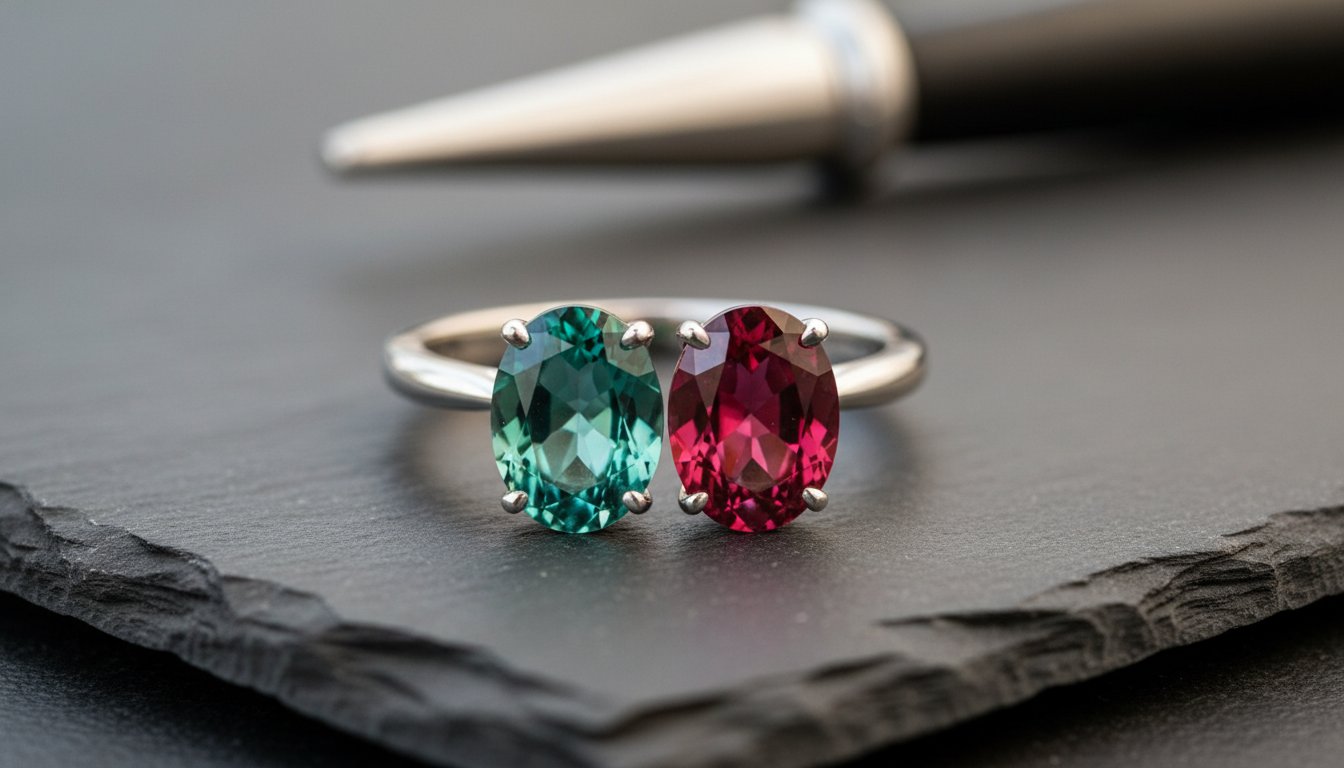
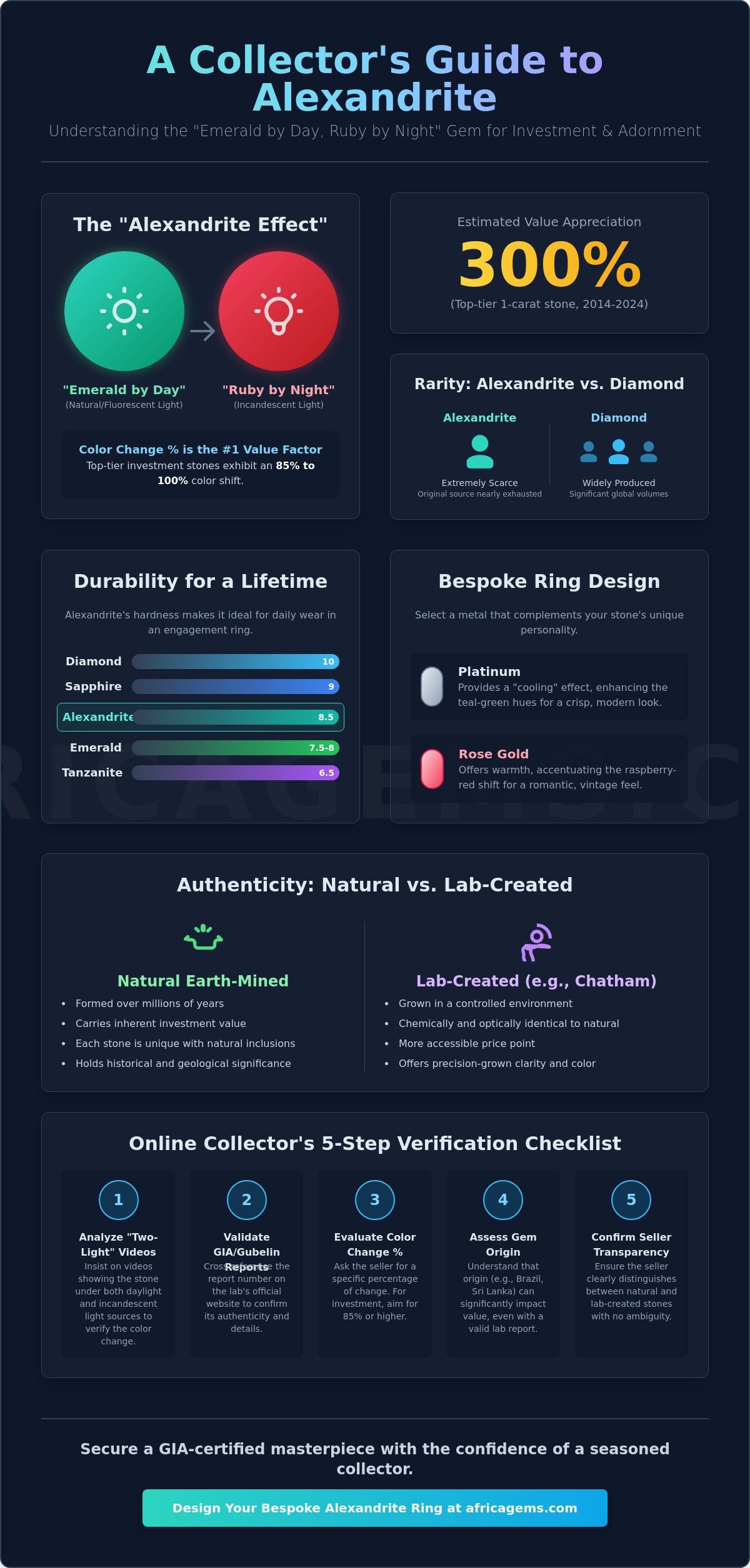
Did you know that a top-tier one-carat alexandrite purchased in 2014 surged in value by an estimated 300% by 2024? This remarkable appreciation highlights why collectors view this "phenomenon stone" as both a romantic treasure and a serious asset. You likely recognize that a custom alexandrite engagement ring is a profound statement of individuality, yet the path to acquiring one is often fraught with technical hurdles. It’s natural to feel uneasy about distinguishing natural stones from lab-grown material or deciphering why a Brazilian gem commands a significant premium over Sri Lankan origins when viewing them through a computer screen.
We're here to bridge that gap with professional transparency. You'll learn how to master the technical nuances of color-change mastery and origin value to design a one-of-a-kind piece that balances aesthetic brilliance with investment security. This guide provides a methodical look at interpreting GIA Identification and Origin reports, evaluating the 85% to 100% color-shift threshold, and selecting a bespoke setting that protects your gemstone's 8.5 Mohs hardness. We'll move from visual appreciation to technical validation, ensuring you have the insider knowledge required to secure a GIA-certified masterpiece with the confidence of a seasoned collector.
Key Takeaways
- Learn why the "Percentage of Change" is the most critical factor in determining the investment value of your gemstone, often outweighing traditional carat weight.
- Discover how to select the ideal metal for your custom alexandrite engagement ring, balancing the cooling effect of Platinum with the warmth of Rose Gold to highlight specific color shifts.
- Master the 5-step verification process for online purchases, including how to analyze "two-light" videos and validate GIA or Gubelin reports.
- Understand the clear distinctions between rare natural Earth-mined stones and precision-grown Chatham lab-created gemstones to ensure full transparency in your acquisition.
- Gain the technical expertise to navigate the "Emerald by Day, Ruby by Night" phenomenon, ensuring your bespoke piece exhibits a dramatic, high-contrast shift.
The Allure of Alexandrite: Why This Color-Change Marvel is the Ultimate Engagement Choice
Alexandrite isn't just a gemstone; it's a geological miracle. As the rare, chromium-bearing variety of chrysoberyl, it possesses a crystalline structure that manipulates light in ways few other minerals can. This creates the legendary "Emerald by Day, Ruby by Night" phenomenon, making a custom alexandrite engagement ring a living heirloom that adapts to your environment. Beyond its visual theatrics, this stone is remarkably practical for a lifetime of wear. With a hardness of 8.5 on the Mohs scale, it's significantly more durable than emeralds or tanzanites, trailing only behind diamonds and sapphires in resilience. This durability ensures that the sharp facets of a precision cut won't easily abrade over decades of daily use. In the 2026 market, natural alexandrite is currently outperforming traditional gems in value retention. We've seen top-tier stones surge in value by an estimated 300% over the last decade, as collectors increasingly prioritize scarcity over mass-market appeal.
To better understand the dramatic shift that defines this stone, watch this helpful video:
The Science of the "Alexandrite Effect"
The magic lies in how trace chromium atoms absorb light. These specific atoms create a narrow transmission band in the green and red parts of the spectrum, while absorbing much of the yellow light. This results in the Alexandrite effect, where the stone appears teal-green in daylight but shifts to a raspberry-red under incandescent bulbs. It's a complex optical dance. This isn't just simple color change; it's also tied to pleochroism, where the gem displays different colors when viewed from different angles. While high-quality blue sapphires offer incredible depth and saturated color, they lack this kinetic, dual-personality nature that defines the alexandrite experience. For an engagement ring, this means your jewelry never looks the same twice, reflecting the multifaceted nature of a modern relationship.
Alexandrite vs. Diamond: The Rarity Argument
History plays a massive role in the prestige of this gem. Discovered in Russia's Ural Mountains in the 1830s, the original source was nearly exhausted within decades, cementing its status as an elite treasure. Today, while diamonds are produced globally in significant volumes, top-tier natural alexandrite remains exceptionally scarce. This "one-source" legacy creates a psychological appeal that a mass-produced diamond simply cannot match. It’s a stone that feels alive, changing its mood as you move from a sunlit garden to a candlelit dinner. This scarcity acts as a hedge against the inflation of more common materials. It’s exactly why sophisticated buyers are moving toward rare gemstones when commissioning a custom alexandrite engagement ring. They aren't just buying jewelry; they're securing a piece of the earth's most limited and captivating history.
Grading the "4 Cs" of Alexandrite: Prioritizing Color Change for Your Custom Ring
When selecting a diamond, the cut usually dictates the stone's brilliance and value. However, the hierarchy of quality factors shifts dramatically when you're commissioning a custom alexandrite engagement ring. For this rare chrysoberyl, we follow a modified set of priorities: Color Change > Color > Clarity > Cut. While carat weight always influences price, a one-carat stone with a 100% color shift is significantly more valuable than a three-carat stone with only a 50% change. According to GIA's alexandrite quality factors, the strength of the "phenomenon" is the primary driver of market desirability. We look for a complete transformation that leaves no trace of the previous color behind.
Saturation and purity are equally vital. You want to avoid stones with "muddy" modifiers. A brownish or grayish tint can dull the stone's life, making it look dark and uninspiring in certain lighting conditions. The goal is a vivid, saturated hue that maintains its transparency. Since alexandrite is classified as a Type II gemstone, it's expected to have some minor internal features. An "eye-clean" standard is the benchmark here. You don't need absolute flawless clarity under a loupe; you need a stone that appears pristine to the naked eye so nothing distracts from the shifting colors. If you're ready to begin your search, you can explore our curated collection of loose alexandrite gemstones to find a specimen that meets these rigorous standards.
Evaluating Color Change Percentage and Purity
The ideal daylight color is a crisp teal or forest green, while the incandescent shift should reveal a rich purple or raspberry red. We often see stones with "bleed-through," where both green and red flashes are visible simultaneously. While some find this attractive, it technically lowers the stone's value compared to a "pure" shift. When reviewing lab reports, look for a "Strong" to "Excellent" designation. In the 2026 market, an 85% to 100% color change is considered "investment grade," representing the pinnacle of what this species can achieve.
Cut and Clarity: Maximizing the Phenomenon
The cut of your alexandrite must serve its optical properties. We generally avoid "windowing," which is a flat area in the center of the stone where light leaks through rather than reflecting back. A windowed stone will lose its color-change intensity right where it matters most. Experts prefer cushion and oval cuts because they preserve the chromium-rich crystal weight and enhance light return. Occasionally, you'll find "silk" inclusions, which are fine, needle-like rutile crystals. These aren't always a flaw; they can act as a fingerprint of natural origin, much like the inclusions found in a natural emerald gemstone. These microscopic markers help differentiate your natural treasure from lab-grown alternatives during a professional appraisal.
Natural vs. Lab-Created: Navigating Authenticity and Origin
Choosing between a natural stone and a lab-grown alternative is a pivotal decision for any custom alexandrite engagement ring. While both are the color-change variety of the mineral chrysoberyl, their market positions couldn't be more different. Natural stones are finite geological treasures that carry the weight of history and scarcity. In contrast, Chatham lab-created gemstones offer the same chemical composition and dramatic optical shift at a fraction of the cost. These precision-grown crystals provide a valid, ethical choice for those who prioritize the visual phenomenon over rarity, allowing for larger center stones without the five-figure price tags associated with natural material.
In 2026, absolute certainty requires a GIA or Gubelin certificate. Without this documentation, you risk falling for the "Synthetic Corundum" trap. Many "vintage alexandrites" inherited from previous generations are actually synthetic color-change sapphires. These look-alikes shift from blue to purple but lack the specific chromium-rich signature of true alexandrite. A certified natural stone represents a secure investment that has historically shown significant value appreciation. An uncertified stone is a gamble you don't want to take with an engagement piece, especially given the sophisticated lab-grown mimics currently entering the market.
The Importance of Origin: Brazil vs. Sri Lanka vs. Africa
Geographical origin dictates the personality and value of your gem. Brazilian material, specifically from the Hematita mine, remains the gold standard because of its intense, high-contrast color shift. Sri Lankan stones often reach larger carat weights but frequently suffer from "muddy" or brownish modifiers that dampen the brilliance. African deposits from Tanzania and Madagascar provide a modern alternative, often showing excellent clarity and a balanced teal-to-raspberry shift. An official Origin Report can increase a stone’s market value by 30% or more by validating its prestigious heritage.
Decoding Lab Reports for the Layperson
Reading a GIA report is simpler than it appears once you know the specific markers of quality. The most coveted phrase in a report is "No Evidence of Treatment," as natural alexandrite is rarely enhanced by man. This stands in stark contrast to the treatment-heavy market of loose burma rubies, where heat or glass filling is common. When reviewing a report for your custom alexandrite engagement ring, ensure the "Species" is listed as Chrysoberyl and the "Variety" is confirmed as Alexandrite. These two words are your ultimate guarantee of authenticity in a complex marketplace.
How to Buy a Loose Alexandrite Online: The Collector’s 5-Step Verification Checklist
Acquiring a high-value gemstone through a digital storefront requires more than just an appreciation for its beauty; it demands a methodical, technical approach to verification. When you're sourcing the centerpiece for a custom alexandrite engagement ring, you can't rely on static photography alone. Lighting is everything. To ensure you're making a secure investment, follow this professional checklist designed to strip away the ambiguity of online shopping.
- Step 1: Demand "Two-Light" Video. You must see the stone under 5500K Daylight and 2700K Incandescent light. If a dealer only shows one or the other, they're hiding the completeness of the shift.
- Step 2: Verify the Report. Take the GIA or Gubelin report number and input it directly into the laboratory's official website. Never trust a PDF scan provided by a seller without cross-referencing the database.
- Step 3: Analyze "Face-Up" Measurements. Carat weight can be deceptive. A stone with a deep "belly" might weigh more but look smaller. Check the millimeter dimensions to ensure the stone has the visual presence you expect.
- Step 4: Check the Return Policy. A "No-Questions-Asked" return window is non-negotiable. You need to see how the gem reacts to the specific lighting in your home or office before finalizing the purchase.
- Step 5: Consult an Expert. Speak with a gemologist like Marc Sarosi to interpret the technical nuances of "tone" and "saturation." A professional can tell you if a stone's shift is truly "Strong" or if it's merely a "Moderate" shift masquerading as top-tier material.
If you're ready to find a specimen that meets these elite criteria, you can browse our loose alexandrite gemstones to see these verification steps in practice.
Analyzing Online Media: Spotting "Digital Enhancement"
It's easy to manipulate digital video to make a purple shift look more vivid than it is in reality. You can protect yourself by performing a "White Balance" test. Look at the background of the video or the tweezers holding the stone. If the metal looks unnaturally pink or the white background has a bluish tint, the color has likely been graded. A transparent dealer will show the stone in a neutral environment. For the best results, use split-screen captures to compare two different stones side-by-side under the same lighting conditions to see which one maintains better "life" and brilliance.
The Security of the AfricaGems Guarantee
Buying online shouldn't feel like a gamble. At AfricaGems, we've built a 40-year legacy based on secure and ethical gemstone investing. This longevity is rooted in radical transparency and the personal accountability of our founder. We don't just sell stones; we offer a lifetime trade-in policy for our loose alexandrite. This allows you to upgrade your gem as your collection grows, providing a level of financial security that's rare in the jewelry industry. Every stone we offer for a custom alexandrite engagement ring comes with the assurance that its origin, treatment status, and quality are exactly as stated.
Designing Your Bespoke Ring: Metal Choices and Setting Styles
The architecture of a custom alexandrite engagement ring must do more than just hold a stone; it must act as a stage for an optical performance. Choosing the right metal is the first critical design decision. Platinum and 18k White Gold are the preferred standards for connoisseurs. Their cool, neutral tones provide a crisp backdrop that allows the teal and forest green daylight hues to pop without interference. Conversely, Rose Gold presents a fascinating controversy. While it beautifully amplifies the raspberry-red incandescent shift, the copper undertones can "warm" the daylight color, occasionally making a high-quality green look slightly brownish or muddy. If you desire the warmth of gold, consider a two-tone setting where the prongs are platinum to maintain the stone's color purity.
Light entry is the lifeblood of the "alexandrite effect." We recommend open-basket or trellis settings that expose the pavilion of the gem to as much ambient light as possible. A heavy bezel or a closed-back setting can "choke" the stone, deadening the very phenomenon you worked so hard to source. When integrating side stones, diamonds remain the premier choice for their colorless brilliance. They provide a sharp contrast that highlights the main gem's shifting saturation. If you prefer a more tonal look, small white sapphires offer a softer glow that won't compete with the center stone for attention. The goal is always to frame the miracle, never to overshadow it.
The Custom Design Journey at AfricaGems
Our custom alexandrite engagement ring process is a collaborative journey from earth to hand. It begins with your selection of a loose stone from our inventory, followed by a detailed consultation to capture your aesthetic vision. Our master jewelers then create a 3D CAD model, allowing you to visualize the proportions before we move to final casting. This bespoke approach ensures your ring is a true legacy piece. In the 2026 market, you should expect a timeline of four to six weeks for a fully custom project. This allows for the precision required in hand-setting such a rare material and ensuring the integrity of the final build.
Caring for Your Alexandrite Engagement Ring
While chrysoberyl is remarkably durable at 8.5 on the Mohs scale, it still requires mindful care to maintain its investment value. Avoid wearing your ring while using harsh household chemicals or during heavy manual labor, as even small abrasions can dull the polish over time. For at-home care, a simple solution of warm water and mild dish soap with a soft brush is sufficient. Professional ultrasonic cleaning is generally safe for untreated alexandrite, but we always recommend an annual "prong check" by a qualified jeweler. This ensures the security of your setting, protecting your high-value gemstone from the risks of daily life and preserving its beauty for the next generation.
Securing Your Legacy with a Color-Change Masterpiece
Securing your legacy requires moving beyond the surface level of jewelry design. You now understand that the true value of an alexandrite lies in the strength of its color-change percentage and its verified geographical origin. By prioritizing GIA or Gubelin certification, you protect your investment from the risks of sophisticated synthetic mimics. Choosing a neutral metal like platinum ensures that your stone's daylight teal remains vibrant, while an open-basket setting invites the necessary light to trigger that dramatic raspberry shift.
Selecting the perfect stone for your custom alexandrite engagement ring is a strategic investment in one of the earth's rarest phenomena. At AfricaGems, we support this journey with over 40 years of gemological authority and an inventory of strictly certified natural stones. We believe in radical transparency and absolute security, which is why every purchase is backed by our 100% money-back satisfaction guarantee. You aren't just buying a ring; you're commissioning a piece of history.
Start Your Custom Journey: Browse Certified Loose Alexandrites at AfricaGems
Your vision for a bespoke masterpiece is within reach. We're ready to help you find the one-of-a-kind gem that will define your story for generations to come.
Frequently Asked Questions
Is a natural alexandrite more expensive than a diamond?
High-quality natural alexandrite often commands a higher price per carat than commercial diamonds. While a standard diamond is valued for its brilliance, alexandrite's value is driven by its extreme scarcity and the strength of its color change. Exceptional stones can reach $50,000 per carat, making them a premier choice for a luxury custom alexandrite engagement ring that prioritizes rarity over common market availability.
Can I use a lab-grown alexandrite for an engagement ring?
Lab-grown alexandrite is an excellent, durable choice for an engagement ring if you prioritize the visual phenomenon over geological rarity. These stones are chemically and optically identical to natural chrysoberyl but are significantly more affordable. They offer the same 8.5 Mohs hardness, ensuring they can withstand the rigors of daily wear while providing a dramatic, high-contrast color shift that mimics the finest natural specimens.
What is the best metal for an alexandrite engagement ring?
Platinum and 18k white gold are the superior choices for highlighting the stone's daylight teal and forest green hues. These neutral metals don't cast yellow or pink reflections into the gem, which preserves the purity of the color change. While rose gold can enhance the incandescent red shift, it often compromises the crispness of the daylight green, making white metals the preferred standard for serious collectors.
Does alexandrite origin (Brazil vs. Russia) really affect the price?
Origin significantly impacts market value because certain mines are associated with higher color-change intensity. While Russian stones from the Ural Mountains carry the most historical prestige, they are nearly impossible to find in modern markets. Brazilian stones from the Hematita mine are currently the gold standard for collectors, often commanding a 30% premium over Sri Lankan material due to their superior saturation and high-contrast shift.
How can I tell if my alexandrite is real without a certificate?
You cannot definitively verify a natural alexandrite without a professional gemological report from an authority like GIA or Gubelin. While you can check for the "Alexandrite Effect" under different light sources, sophisticated lab-grown stones and synthetic sapphires mimic this perfectly. In a high-value transaction for a custom alexandrite engagement ring, relying on anything less than a certified report is a significant and unnecessary financial risk.
Is alexandrite durable enough for every day wear?
Alexandrite is exceptionally durable with a Mohs hardness of 8.5, making it one of the best gemstones for daily wear. It is harder than emeralds, tanzanites, and opals, meaning it resists scratching and chipping effectively. This physical resilience, combined with its lack of cleavage, ensures your ring can be worn for decades without the frequent maintenance or fear of damage required by softer, more common stones.
What should I look for on a GIA alexandrite report?
Focus on the "Species," "Variety," and "Origin" sections to confirm you are holding a natural chrysoberyl. The report will explicitly state if the stone is natural or lab-grown and detail any detectable treatments. Look for the phrase "No Evidence of Treatment," as this is the most coveted status. Starting in 2026, GIA has expanded its traceability services to provide even greater transparency regarding a stone's journey.
Why do some alexandrites look brownish or "muddy" in certain lights?
Brownish modifiers occur when a stone has high levels of iron or other trace elements that interfere with the chromium-driven color change. These "muddy" tones lower the stone's value because they dull the saturation of both the green and red shifts. Connoisseurs seek stones with high transparency and "pure" hues to ensure the color change remains crisp and vibrant under all possible lighting conditions.