
Choosing the Right Metal for a Tanzanite Ring: A Connoisseur’s Guide
Jun 12th 2026
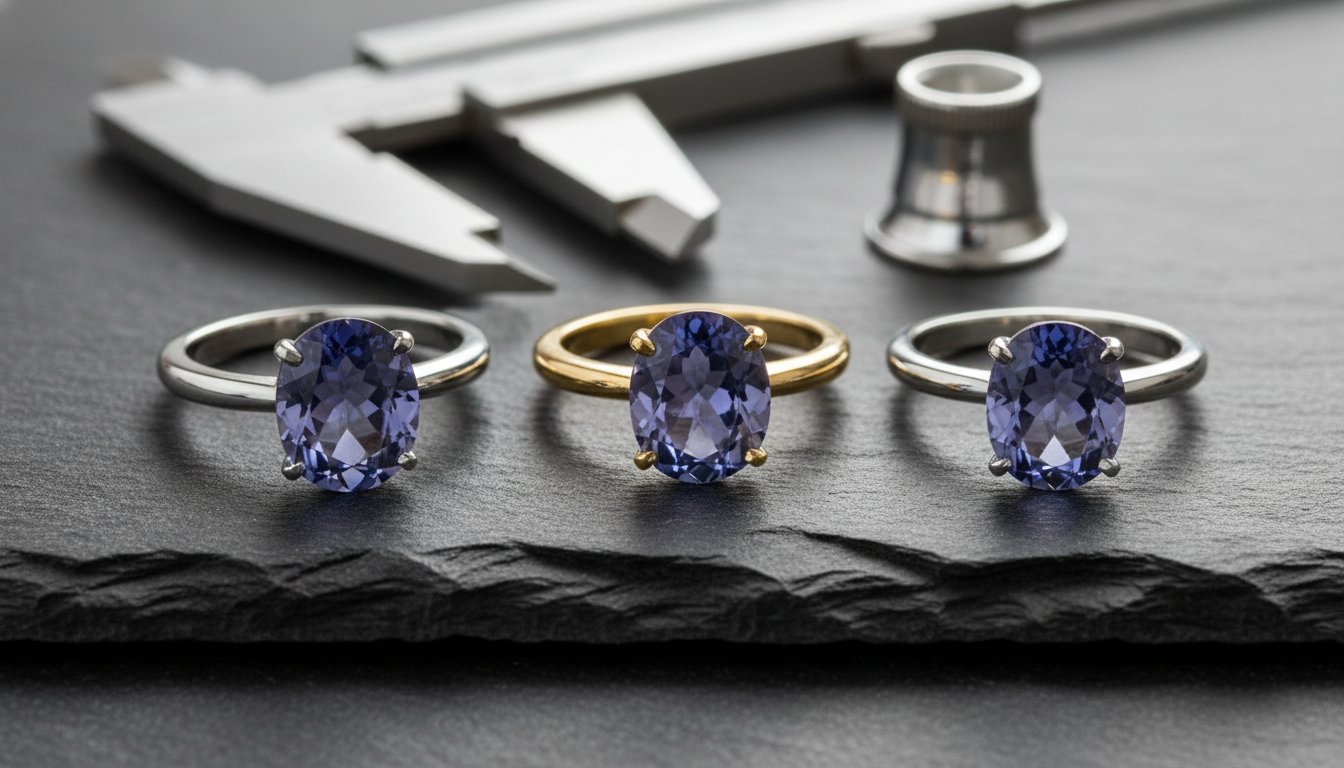
The most expensive metal isn't always the best guardian for a gemstone that's 1,000 times rarer than a diamond. When you finally find a stone with that perfect, velvety saturation, the pressure to protect it is real. You've likely felt the tension between wanting a setting that showcases those shifting violet-blue hues and the fear of chipping a gem that sits at a 6 to 6.5 on the Mohs scale. Choosing the right metal for a tanzanite ring is about more than just personal style; it's a structural and optical partnership that defines the longevity of your investment.
We understand that selecting a mounting for such a rare, single-generation resource requires both technical precision and an artistic eye. This guide will show you how to choose a metal that shields tanzanite's delicate structure while amplifying its remarkable pleochroism. We'll compare the long-term durability of platinum against white gold and analyze how the warmth of yellow gold can either enhance or clash with specific color profiles. You'll gain the expert perspective needed to ensure your gemstone remains secure without compromising its breathtaking visual fire.
Key Takeaways
- Learn how tanzanite’s physical vulnerability on the Mohs scale dictates the level of metal protection required for a lifetime of wear.
- Discover the optical science behind choosing the right metal for a tanzanite ring to either sharpen blue saturation or enrich deep violet tones.
- Compare the long-term security of dense platinum against the prong-specific durability of 14K gold to find the safest home for your gem.
- Identify the ideal design frameworks for emerald, round, and oval cuts that balance aesthetic elegance with structural integrity.
- Understand the benefits of custom settings for loose tanzanite to ensure full transparency regarding stone treatments and origin.
Understanding Tanzanite’s Optical Profile and Physical Vulnerability
Tanzanite is a gemstone of singular origin, found only in the Merelani Hills of Tanzania. Its beauty is undeniable, but its physical properties require a specialized approach when you're choosing the right metal for a tanzanite ring. Unlike a diamond, which is the hardest natural substance on earth, tanzanite demands a setting that acts as a structural guardian. Choosing the right metal for a tanzanite ring is a decision that moves beyond aesthetics into the territory of engineering. Because tanzanite is a "one-generation" gemstone, the mounting must serve as a permanent sanctuary for the stone's delicate crystal lattice.
To better understand how metal choice impacts the safety and style of your jewelry, watch this helpful video:
Pleochroism: The Three-Color Challenge
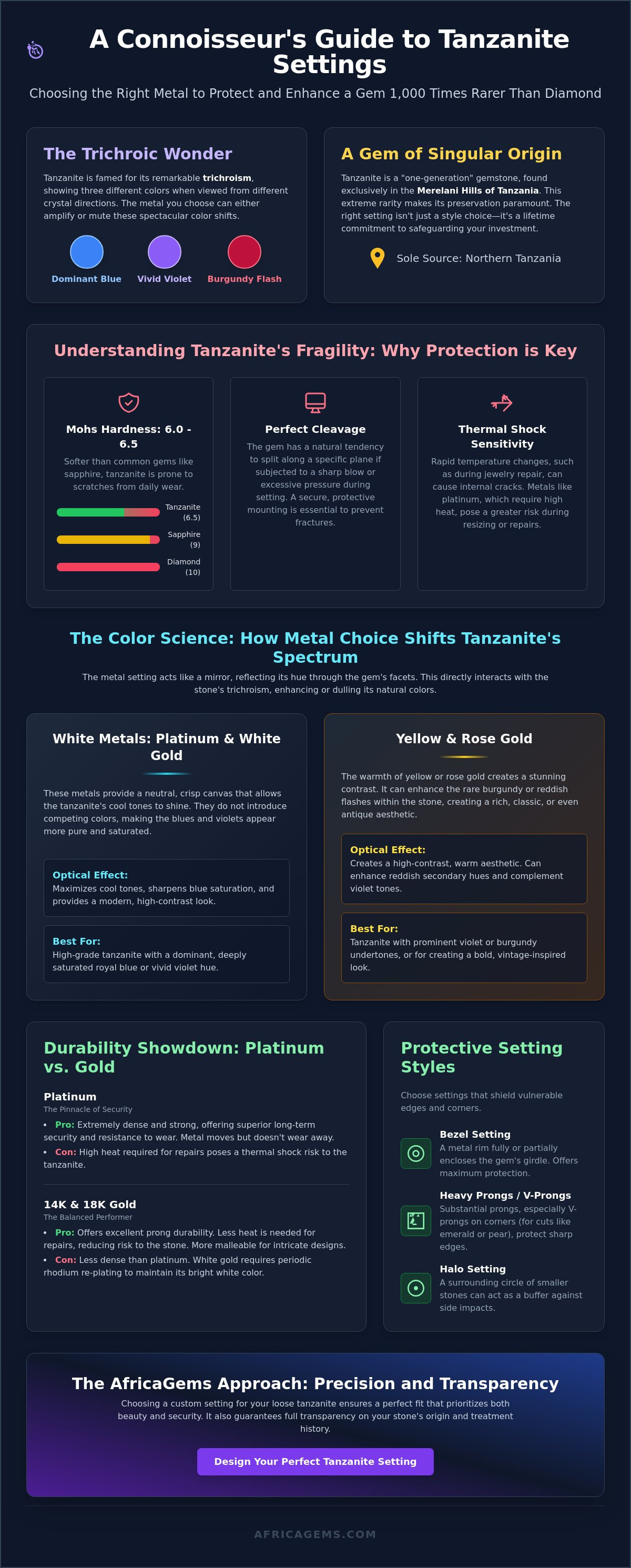
This gem is famous for its trichroism. It shows blue, violet, and even flashes of burgundy depending on how the light hits it. Pleochroism is the gemstone’s ability to show different colors in different crystal directions. When you look at Tanzanite mineral properties, you'll see that the dominant color is often a deep royal blue, but the "flash" colors of violet or pinkish-red are what truly captivate the collector. The metal you choose must complement these shifting tones without overwhelming them. A metal that's too warm can wash out the delicate violet, while a metal that's too cool might hide the stone's rare burgundy flashes.
Durability Constraints for the 2026 Collector
As we look toward the 2026 market, collectors must respect the 6 to 7 ranking on the Mohs scale. To put this in perspective, tanzanite is roughly as hard as a steel nail or window glass. It's significantly softer than sapphire or ruby. This makes it prone to scratching if it's not protected by a substantial metal bezel or heavy prongs. Beyond surface scratches, tanzanite possesses "perfect cleavage." This means the stone can split along specific planes if it's subjected to sharp pressure or impact during the setting process.
Consider these physical factors compared to common jewelry materials:
- Mohs Hardness: Tanzanite (6-7) vs. Diamond (10). Tanzanite is vulnerable to daily abrasions.
- Cleavage: Tanzanite has one direction of perfect cleavage, making it susceptible to fractures from pressure.
- Thermal Shock: Rapid temperature changes can cause internal cracks. Certain metals, like platinum, require more intense heat during repairs, which can put the stone at risk.
We also have to consider thermal shock. Rapid temperature changes can cause internal fractures. This is why a professional jeweler's choice of metal is vital; some metals require more heat during the setting process than others. A protective mounting isn't just about fashion. It's about ensuring this rare material survives for the next generation. When you browse our collection of precious gemstones, you'll see that we prioritize settings that shield the girdle and corners of the stone.
The Color Science: How Metals Shift Tanzanite’s Spectrum
Choosing the right metal for a tanzanite ring is an exercise in optical physics as much as it's a matter of personal taste. The interior of your setting functions as a mirror, reflecting its own hue through the pavilion facets of the gemstone. This reflection interacts directly with the stone's pleochroic axes, either sharpening the dominant color or introducing a muddying effect. Because tanzanite is a trichroic gem, it naturally pulls different colors from its environment. The goal of a connoisseur is to select a metal that acts as a silent partner, amplifying the stone's rare violet-blue saturation while maintaining its structural integrity.
White Gold and Platinum: Maximizing the Cool Tones
White metals are often considered the gold standard for high-grade tanzanite. Platinum and white gold provide a neutral, "crisp" canvas that allows the gem's blue saturation to take center stage. This is frequently referred to as the "Ice Effect." By providing a stark, colorless contrast, these metals make the deep violet-blue appear even more vivid. This pairing is especially effective for "AAA" and investment-grade saturation levels.
According to the GIA on Tanzanite Durability, color is the single most important factor in determining value, and white metals ensure that nothing interferes with that perception. For those seeking a modern, sleek aesthetic, these metals offer the most professional and secure presentation for a high-value stone. If you're exploring our curated collection of gemstone rings, you'll notice how white metals create a seamless transition from the stone to the band, emphasizing the gem's internal fire.
Yellow and Rose Gold: Warming the Violet Heart
While white metals provide a cool contrast, yellow and rose gold offer a regal, high-contrast alternative. 18K yellow gold is a traditional choice that provides a vintage aesthetic. It works exceptionally well with stones that have a strong violet-to-purple lean. The warmth of the gold enriches the purple flashes within the stone, creating a luxurious depth that white metals sometimes miss.
Rose gold has emerged as a sophisticated modern choice for tanzanite. It possesses a unique ability to complement the rare burgundy flashes found in the finest specimens. The pinkish undertones of rose gold align with the reddish-purple pleochroic axis of the gem, creating a harmonious color story. However, a word of caution is necessary for the collector. Pairing a pale or commercial-grade stone with yellow gold can lead to a "washed out" appearance. The yellow reflections can overwhelm the lighter blue tones, making the stone look greyish or dull. Choosing the right metal for a tanzanite ring requires matching the metal's intensity to the stone's saturation level to avoid this optical pitfall.
- Platinum: Best for high-saturation stones; provides a crisp, colorless reflection.
- 18K Yellow Gold: Ideal for violet-dominant stones; offers a regal, high-contrast look.
- Rose Gold: Excellent for highlighting burgundy flashes and reddish axes.
- 14K White Gold: A durable, bright alternative to platinum for daily wear.
Durability & Protection: Platinum vs. Gold for Daily Wear
When you're choosing the right metal for a tanzanite ring, durability isn't just a buzzword; it's a structural insurance policy. Tanzanite’s perfect cleavage means it can split if struck at a specific angle. This physical reality dictates that your mounting must do more than just look beautiful. It must act as a shock absorber. The choice between platinum and gold often comes down to how the metal reacts to impact and how it maintains its grip on the stone over decades of wear. While aesthetics are vital, a connoisseur knows that the metallurgy of the setting is what preserves the gem's integrity.
Why Platinum is the Gold Standard for Tanzanite
Platinum is widely regarded as the ultimate guardian for rare gemstones. It's a dense, heavy metal that doesn't wear away over time. When gold is scratched, a tiny amount of metal is lost. When platinum is scratched, the metal is merely displaced, creating a "patina" that many collectors admire. This density is crucial for the security of your gemstone. Platinum prongs are less likely to snap because the metal is more malleable; it tends to bend rather than break under pressure.
This "toughness" is a primary reason why we recommend exploring our platinum mounting options for high-value stones. Beyond security, there's also the optical benefit. Experts often discuss how metal choice affects gemstone appearance, noting that the cool, neutral tone of platinum won't "leak" unwanted color into the stone. It provides a stable, permanent home that rarely requires the maintenance associated with white gold.
The 14K Gold Advantage for Active Lifestyles
If you prefer gold, the karat weight matters significantly for a stone that sits at 6 to 7 on the Mohs scale. 14K gold contains a higher percentage of alloy metals like copper and silver compared to 18K gold. This makes 14K gold noticeably harder and more resistant to scratches. While 18K gold is more "pure" and possesses a richer yellow hue, it's also softer. For thin prongs or delicate filigree, 18K gold might not provide the rigid support a tanzanite needs to stay secure during an accidental bump.
Maintenance is another factor when choosing the right metal for a tanzanite ring. White gold requires rhodium plating to maintain its bright, silvery finish. Over time, this plating wears off, revealing the slightly yellowish tint of the natural gold underneath. While the stone itself is safe during the replating process, you must ensure your jeweler is experienced with tanzanite’s sensitivity to heat. To maximize protection, many collectors opt for a bezel setting. A bezel surrounds the entire perimeter of the gem with metal, shielding the vulnerable girdle from direct contact with hard surfaces.
- Platinum: Best for maximum security and low maintenance.
- 14K Gold: The "tougher" gold choice for active daily wear.
- Bezel Setting: The most protective style for tanzanite’s cleavage planes.
- Prong Setting: Allows more light but leaves the stone’s edges exposed.
Design Framework: Matching Metal to Tanzanite Cut and Saturation
The cut of your tanzanite isn't just an aesthetic choice; it’s a blueprint for the metal’s architectural role. When you’re choosing the right metal for a tanzanite ring, you have to consider how light travels through specific facet patterns. Emerald cuts, for instance, feature long, open step-facets that act like windows into the stone’s soul. These cuts demand high-clarity white metals like platinum or white gold. Because emerald cuts don't have the high scintillation of brilliant cuts to hide color leakage, a yellow gold setting can easily tint the entire stone with a yellowish hue, compromising its natural violet-blue spectrum.
The "Saturation Rule" provides a simple framework for collectors. If your stone is investment-grade with deep, velvety saturation, it possesses the visual weight to stand up to the warmth of 18K yellow gold. This high contrast creates a regal, vintage appearance. However, if the stone is a lighter or more delicate violet, white metals are the superior choice to prevent the gem from looking washed out. The goal is to ensure the metal supports the stone's saturation rather than competing with it.
Protecting the Corners: Trillions and Pears
Geometric shapes like trillions and pears present a unique engineering challenge. These cuts have sharp corners where the stone's internal cleavage planes are most exposed to impact. V-prongs, particularly in platinum or 14K white gold, are the standard for these shapes as they wrap around the points to provide a rigid shield. The girdle of a tanzanite is its most vulnerable point. For those seeking a modern look, rose gold bezels are trending for geometric shapes. A bezel setting provides a continuous metal perimeter that absorbs shocks that would otherwise shatter a prong-set corner point.
The Halo Strategy: Metal as a Buffer
A diamond halo is more than just a decorative element; it’s a structural buffer zone. By surrounding the tanzanite with a ring of smaller, harder stones set in white gold or platinum, you create a "no-impact zone" for the center gem. This is especially effective for round or oval brilliant cuts where the girdle is otherwise exposed. Many connoisseurs now opt for mixed-metal designs, using a yellow gold band for warmth and a white gold or platinum head for the stone itself. This gives you the best of both worlds by providing a neutral color environment for the tanzanite while allowing for a traditional gold aesthetic on the finger.
If you have a specific vision for a rare trillion or a deep-blue oval, our custom jewelry design services can help you engineer a setting that balances high-end luxury with uncompromising safety.
The AfricaGems Approach: Custom Settings for Loose Tanzanite
Buying a pre-set ring often involves a leap of faith that a serious collector shouldn't have to take. When you're choosing the right metal for a tanzanite ring, starting with a loose tanzanite is the only way to verify the stone's true saturation and clarity. Pre-set jewelry can sometimes mask uneven color zoning or tiny fractures near the girdle that could compromise the gem's longevity. By selecting the gem first, you gain complete control over the narrative of your piece. This ensures the metal serves as a bespoke frame specifically engineered for that stone's unique dimensions rather than a convenient, mass-produced cover.
Radical Transparency in Gemstone Sourcing
My commitment to radical transparency is the foundation of every transaction at AfricaGems. Every stone comes with the Marc Sarosi Guarantee, providing full disclosure on origin and enhancement. While almost all tanzanite is heated to transform its natural brownish state into that iconic violet-blue, "heat only" is the non-negotiable standard for our finest specimens. We avoid stones with surface-reaching fissures or unstable treatments. Selecting the perfect blue-violet balance requires an expert eye. Our decades of experience ensure you receive a stone that meets the highest connoisseur standards for both beauty and structural integrity.
From Loose Stone to Heirloom Ring
Mass-produced rings are typically engineered for the extreme hardness of diamonds. They often feature thin prongs that lack the structural depth required to protect a gemstone that sits at a 6 to 7 on the Mohs scale. A custom mounting allows us to tailor the metal thickness to your stone’s specific cleavage planes and weight. This bespoke approach ensures that a heavy emerald cut receives the substantial corner protection it needs, while a sharp-cornered trillion is secured by V-prongs of the exact required depth. Choosing the right metal for a tanzanite ring through a custom process is the difference between a generic accessory and a legacy-grade heirloom.
Your journey toward a masterpiece begins with the gem itself. We invite you to explore our collection of Loose Tanzanite and start your custom design today. By pairing a world-class stone with a setting designed by experts who understand its physical vulnerabilities, you ensure your investment remains secure for generations to come.
Securing Your Investment for Generations
Selecting a setting for a stone 1,000 times rarer than a diamond requires more than just an eye for fashion; it demands a commitment to technical excellence. You've seen how the density of platinum provides a permanent shield for tanzanite's delicate cleavage planes and how specific metal hues can either amplify or diminish its rare violet-blue saturation. Ultimately, choosing the right metal for a tanzanite ring is about creating a structural and optical partnership that honors the gem's singular origin.
At AfricaGems, we bring over 40 years of gemstone expertise to every piece. Every stone we offer comes with a personal guarantee by our founder, Marc Sarosi, along with full disclosure on all gemstone treatments. We don't believe in the compromises of mass-produced mountings. Instead, we focus on the integrity of the material and the security of your legacy. This transparent approach ensures you remain an informed insider throughout your purchase journey.
Browse Investment-Grade Loose Tanzanite at AfricaGems
Your perfect gemstone deserves a setting as rare as its history. We're here to help you build it with confidence and uncompromising standards.
Frequently Asked Questions
Is tanzanite too soft for an engagement ring?
Tanzanite is suitable for an engagement ring if you prioritize a protective mounting and exercise mindful care. Ranking 6 to 7 on the Mohs scale, it's softer than a diamond or sapphire, meaning it can scratch over time if subjected to rough daily contact. We recommend tanzanite for those who appreciate its rarity and are willing to remove the ring during strenuous activities to preserve its integrity.
Does white gold or platinum protect tanzanite better?
Platinum offers superior protection due to its density and malleability. When a platinum prong is struck, the metal is more likely to bend rather than snap, keeping the gem secure. While 14K white gold is harder and more scratch-resistant, platinum's toughness makes it the gold standard for high-value gemstones. Choosing the right metal for a tanzanite ring often involves weighing platinum's security against white gold's maintenance needs.
Will yellow gold make my tanzanite look more purple or more blue?
Yellow gold typically enriches the violet and purple tones within the stone through warm reflections. The yellow hue of the metal complements the reddish-purple axis of the gem's pleochroism, making those colors appear more vibrant. If you want to emphasize the royal blue saturation, white metals are the more effective choice as they provide a cool, neutral background that doesn't interfere with the stone's primary blue color.
Can I wear my tanzanite ring every day?
You can wear your ring daily if you follow a "last on, first off" rule for your jewelry. Tanzanite should be the last thing you put on in the morning and the first thing you remove at night. Avoid wearing it while gardening, exercising, or using harsh household chemicals. Because tanzanite is sensitive to thermal shock and impact, daily wear requires a more conscious approach than wearing a diamond.
What is the most protective setting for a tanzanite ring?
A bezel setting is the most protective choice for this gemstone because it shields the entire girdle. By surrounding the perimeter of the stone with a rim of metal, the bezel protects the gem from chips and fractures along its cleavage planes. If you prefer prongs, choosing the right metal for a tanzanite ring with V-prongs can help protect the vulnerable points of fancy shapes like trillions or pears.
How do I clean a tanzanite ring without damaging the metal or stone?
Clean your ring using warm water, a mild dish soap, and a very soft toothbrush. Gently scrub behind the stone where oils and lotions tend to accumulate over time. Never use ultrasonic or steam cleaners, as the vibrations and rapid temperature changes can cause the stone to shatter. After cleaning, dry the ring with a lint-free cloth to maintain the metal's luster without scratching the gem's surface.
Is sterling silver a good choice for a tanzanite ring?
Sterling silver is not a recommended choice for a rare, investment-grade gemstone. Silver is a soft metal that can easily warp or bend, potentially causing the stone to fall out of its setting. Additionally, silver tarnishes quickly, and this dullness can negatively impact the light performance and color saturation of your tanzanite. High-value stones deserve the security and longevity provided by gold or platinum.
Why is tanzanite often set in white metals instead of yellow gold?
White metals are favored because they act as a colorless mirror, reflecting only the gem's natural saturation. This creates a crisp look that maximizes the blue tones of the stone without adding unwanted yellow tints. Since tanzanite is prized for its intense blue-violet hue, collectors often prefer the high-contrast ice effect that white gold and platinum provide. This ensures the gem's rare pleochroism remains the center of attention.

Article by
Marc Sarosi
Professional gemstone dealer for more than 40 years. Started off mining Aquamarine in Zambia, Africa and travelled throughout the continent in search of fine gems. Trusted authority on fine gemstones and have donated a fine collection of more than 27 extraordinary gemstones to the Smithsonian Institute Gem Hall for generations to see.