
Chatham vs. Natural Alexandrite: The Perfect Substitute?
Jul 9th 2026
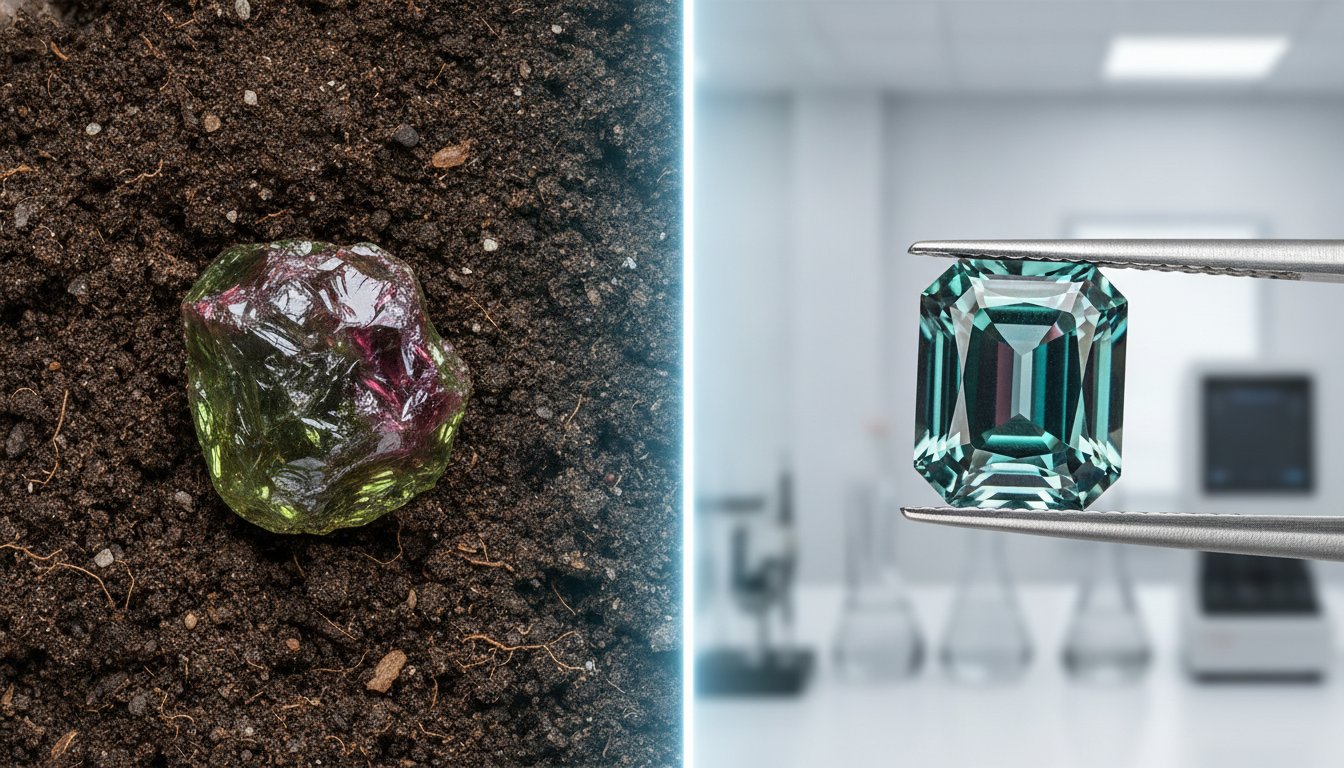
Could you truly distinguish between a stone mined from the earth and one grown in a laboratory if their atomic structures were identical? For many collectors, the search for a large, eye-clean alexandrite often ends in frustration or the lingering fear of accidentally purchasing color-change glass. It's a valid concern in a market where the term "simulated" often masks low-quality imitations that lack the soul of a real gem. However, once you analyze the science of chrysoberyl, you'll find that chatham alexandrites are a perfect substitute for genuine alexandrites because they share the exact physical, chemical, and optical properties of stones found in nature.
We respect your desire for both beauty and authenticity. You deserve to feel like an informed insider who understands the difference between a cheap imitation and a sophisticated lab-grown gemstone. This article explores why Chatham stones offer the same dramatic color change and brilliance as their mined counterparts at a fraction of the investment. We will provide a clear framework to help you choose between natural and lab-grown based on your budget and use case. By the end, you'll have the technical validation and confidence required to select a gemstone that mirrors your own uncompromising standards.
Key Takeaways
- Understand why the flux-growth process ensures chatham alexandrites are a perfect substitute for genuine alexandrites by replicating nature's conditions over twelve months.
- Learn why the "emerald by day, ruby by night" shift is often more vivid in lab-grown stones so you don't settle for muddy natural transitions.
- Evaluate the choice between high-stakes investment and the practical, wearable luxury of a flawless, large-scale gemstone.
- Discover the ethical advantages of transparent laboratory origins, ensuring your purchase aligns with modern standards for social responsibility.
- Master the selection process by seeing how AfricaGems curates the top 10% of production for peak color intensity and expert faceting.
The Science of 'Perfect': Why Chatham Alexandrites Are Chemically Genuine
Understanding the distinction between a lab-grown gemstone and a cheap imitation is the first step toward true gemological connoisseurship. Many buyers encounter confusion when they see the word "synthetic," often mistaking it for a marketing euphemism for plastic or glass. In professional gemology, however, synthetic means something entirely different. It describes a stone that possesses the exact same chemical, physical, and optical properties as its Earth-mined counterpart. Because they are grown from the same beryllium aluminum oxide (BeAl2O4) base, chatham alexandrites are a perfect substitute for genuine alexandrites for anyone seeking the beauty of chrysoberyl without the astronomical price of a natural stone.
The creation of these gems isn't a fast, industrial process; it's a patient mimicry of the Earth's most intense geological forces. Chatham utilizes a proprietary flux-growth method that takes approximately 12 months to yield a single crop of crystals. By maintaining a high-temperature environment that replicates the conditions found deep within the Earth's mantle, the lab allows crystals to grow slowly and naturally. This steady pace is essential for achieving the structural integrity and clarity that define a top-tier gemstone. The scientific community refers to these as Synthetic alexandrite, a term that signifies chemical identity rather than a lack of quality.
To better understand the rarity and complexity of this gemstone, watch this helpful video:
Chrysoberyl vs. Simulated Alexandrite
It's vital to protect yourself from "simulated" stones that flood the lower end of the market. These are often just color-change sapphires or even common glass designed to mimic the look of alexandrite. A true Chatham stone is chemically chrysoberyl. You can verify this through standard gemological testing; a Chatham gem will show a refractive index of approximately 1.744 to 1.755 and a specific gravity of 3.73. For those exploring alternatives, it's vital to distinguish between these and non-genuine gems that lack the durability and light-handling properties of real chrysoberyl. The Chatham brand serves as a guarantee that you're purchasing a stone with the same hardness (8.5 on the Mohs scale) as the finest natural specimens.
The Role of Chromium in the 'Alexandrite Effect'
The magic of alexandrite lies in its "color-change phenomenon," which is dictated entirely by the presence of Chromium ions within the crystal lattice. These ions are master manipulators of light, absorbing wavelengths specifically in the yellow region of the spectrum. When viewed under daylight, which is rich in blue and green light, the stone appears teal or forest green. Under incandescent light, which is rich in red wavelengths, the stone shifts to a purplish-red. Chatham stones often exhibit a more reliable and dramatic color shift across the entire stone because the laboratory environment allows for a more consistent and precise distribution of Chromium than nature's chaotic processes usually permit. The result is a gemstone that performs with breathtaking consistency, shifting from "emerald by day" to "ruby by night" with total clarity.
Teal to Purple: Comparing the Phenomenon of Color Change
The legendary "Emerald by Day, Ruby by Night" promise is the hallmark of any high-quality chrysoberyl. According to the Gemological Institute of America (GIA), the value of this gemstone is almost entirely dependent on the strength and distinctness of its color change. In daylight, a premier stone should radiate a crisp teal or forest green. As evening falls and incandescent light takes over, that same gem must transform into a rich reddish-purple or raspberry hue. Achieving this 100% color shift is exceptionally rare in nature, which is why chatham alexandrites are a perfect substitute for genuine alexandrites for collectors who refuse to compromise on visual drama.
While natural alexandrites are geological wonders, they often struggle to meet this ideal color profile. Many mined specimens suffer from "muddy" transitions where the green is masked by a greyish tint or the purple is dampened by brownish secondary hues. Chatham stones eliminate these distracting masks. By controlling the growth environment, Chatham ensures the Chromium distribution is optimized for pure, saturated colors. This results in a predictable, high-percentage shift that remains vibrant across the entire face of the gem, regardless of the light source.
Natural vs. Chatham: The Visual Face-Off
The contrast between these two origins becomes most apparent when you examine the saturation of the purple phase. Natural stones frequently lean toward a pale lavender or a desaturated plum. In contrast, Chatham specimens often exhibit a "pigeon-blood" purple that rivals the finest rubies in depth. This intensity is further enhanced by pleochroism, the crystal's ability to show different colors when viewed from different angles. Chatham stones are precision-cut to align these optical axes perfectly. This ensures that the most dramatic "face-up" color change is always visible to the wearer, a feat rarely achieved with the irregular shapes of rough natural crystals.
Clarity and the 'Eye-Clean' Standard
Clarity plays a silent but vital role in how we perceive color change. Natural alexandrite is notoriously "included," meaning it's almost always found with internal fractures or mineral veils that scatter light. These inclusions interrupt the path of light, often dulling the intensity of the color shift. Chatham alexandrites are virtually flawless. This superior clarity allows light to travel through the stone unimpeded, resulting in a higher degree of light return and "scintillation." For those seeking a center stone for an engagement ring, this transparency is a significant advantage. You can explore our selection of non-genuine and lab-grown gems to see how these flawless structures outperform mid-grade natural stones. If you're ready to select a stone that offers both brilliance and a world-class color shift, our curated collection of loose alexandrite gemstones provides the perfect starting point for your next heirloom.
The Collector's Dilemma: Investment Value vs. Wearable Luxury
For many enthusiasts, the decision between a natural gem and a lab-grown one comes down to a fundamental choice: do you want a financial asset for a safe, or a breathtaking masterpiece for your hand? High-quality natural alexandrite is one of the rarest materials on Earth. Prices often exceed $50,000 per carat for specimens that exhibit a strong, distinct color change. This scarcity makes large, eye-clean natural stones nearly impossible for most people to acquire. Because of this accessibility gap, chatham alexandrites are a perfect substitute for genuine alexandrites, offering the same regal presence and the science behind the color-change at a fraction of the investment.
Marc Sarosi often advises clients to consider the end use of the stone before committing to a purchase. If your goal is long-term capital appreciation, a natural, untreated alexandrite is a peerless choice for a private collection. However, if you desire a 3-carat or 5-carat centerpiece that commands attention across a room, Chatham is the logical winner. In nature, alexandrites of that size with high clarity are virtually non-existent. Lab-grown technology allows us to offer these substantial sizes with the vivid saturation usually reserved for museum-grade natural specimens.
Durability and Hardness for Daily Wear
Chrysoberyl is an exceptionally resilient mineral. It ranks 8.5 on the Mohs scale of hardness, which makes it significantly tougher than other popular stones like emerald or topaz. This physical strength ensures that your gem will resist scratching and chipping even in high-impact settings. It's this inherent durability that reinforces why chatham alexandrites are a perfect substitute for genuine alexandrites in engagement rings or daily-wear bracelets. For those looking to pair their gems with custom lab grown diamond engagement rings, the combination offers a sophisticated and ethical alternative to traditional bridal jewelry. You can enjoy the "emerald by day, ruby by night" effect every day without the constant anxiety of damaging a fragile, irreplaceable natural crystal.
The Psychology of Luxury: Flawless Beauty
Modern connoisseurship is shifting away from the "natural at any cost" mindset. Today's buyers often prefer a large, flawless Chatham stone over a small, heavily included natural one. There is a specific kind of luxury in visual perfection. A Chatham gem provides an "eye-clean" experience that allows for maximum light return and brilliance. This shift is also driven by a desire for ethical transparency and known origins. When you browse our finished gemstone rings, you'll see how these flawless lab-grown stones allow for intricate, high-fashion designs that would be too risky or expensive to execute with natural material. Choosing Chatham isn't about compromising; it's about choosing the most vibrant expression of chrysoberyl chemistry available to the modern wearer.

Ethical Sourcing and Environmental Impact
Modern luxury is no longer defined solely by the rarity of a material; it's defined by the integrity of its journey. While natural alexandrite mining often occurs in remote regions with opaque supply chains, the laboratory environment offers absolute clarity. This radical transparency is a primary reason why chatham alexandrites are a perfect substitute for genuine alexandrites for the socially conscious collector. Chatham has maintained a legacy of ethical production since 1938, providing a conflict-free alternative that bypasses the social and environmental complexities often associated with traditional open-pit mining.
The environmental cost of extracting rare chrysoberyl from the earth can be substantial. Traditional mining involves significant land displacement and ecosystem disruption to find even a single carat of gem-quality material. In contrast, the controlled flux-growth process has a considerably smaller physical footprint. It requires no mountain-top removal and results in zero land destruction. By choosing a lab-grown stone, you're opting for a reduced carbon footprint while still enjoying a gem that is chemically identical to those formed in the Earth's mantle.
Radical Transparency in Gemology
At AfricaGems, we prioritize full disclosure on all gemstone treatments and origins to ensure you feel like an informed insider. We believe that a high-value transaction should be built on a foundation of trust and technical validation. Knowing the exact origin of a Chatham stone provides peace of mind for the consumer because there is no doubt regarding the ethical conditions of its creation. This certainty is backed by the scientific community. The GIA and other leading laboratories provide rigorous certification for lab-grown chrysoberyl, ensuring that the "synthetic" label remains a mark of scientific achievement and ethical security.
Sourcing for Custom Designs
Consistency is perhaps the greatest technical challenge when designing high-end jewelry suites. Natural alexandrites vary so wildly in their hue, saturation, and color-change percentage that finding a perfectly matched pair for earrings can take years of searching. Lab-grown stones solve this logistical hurdle entirely. They allow for the curation of perfectly matched pairs or entire suites for necklaces where every stone exhibits the same intense teal-to-purple shift. This uniformity allows for a level of design precision that is simply impossible with sporadic natural finds. If you are ready to bring a unique vision to life with ethically sourced gems, you can learn about our custom jewelry design services and discover how these flawless stones integrate into bespoke, handcrafted settings.
Selecting the Perfect Chatham Alexandrite at AfricaGems
At AfricaGems, we don't just stock gemstones; we curate them with the discerning eye of a lifelong collector. While Chatham’s flux-growth process is world-class, the resulting yield still produces variations in saturation, tone, and clarity. We hand-select only the top 10% of their total production to ensure that every stone we offer possesses the most intense and distinct color-change possible. This rigorous level of scrutiny confirms that chatham alexandrites are a perfect substitute for genuine alexandrites, providing the visual impact of a museum-grade natural stone without the prohibitive investment. When you choose a stone from our collection, you're selecting a gem that has been vetted for its ability to perform under any lighting condition.
Precision faceting is the engine that drives the alexandrite effect. If a stone is cut poorly, light leaks through the pavilion, dulling the transition from teal to purple and leaving the gem looking "dead" in certain environments. Our stones feature expert proportions designed to bounce light through the Chromium-rich crystal lattice, maximizing the "Emerald by Day, Ruby by Night" phenomenon. This focus on light return ensures that the stone remains brilliant and lively, whether you're in the bright sun of midday or the warm glow of a candlelit dinner. Such attention to light performance is also a hallmark of professional performance jewelry, and you can learn more about achieving maximum stage brilliance at stagedjewels.com.
Shapes and Sizes: From Classic Rounds to Fancy Ovals
Choosing the right shape is both a stylistic and technical decision. Ovals, cushions, and rounds are particularly effective at showcasing color change because their brilliant-style faceting creates hundreds of tiny light reflections that dance across the stone. Emerald cuts and other step cuts offer a more subtle, sophisticated shift due to their long, open facets. We provide stones in standard calibrated sizes, which means they fit perfectly into most existing jewelry frames. If your vision requires something truly bespoke, we also offer custom cutting options to ensure your gemstone fits your unique design perfectly. Marc Sarosi’s guidance is particularly valuable here; he can help you understand how different metals, like the cool tones of platinum or the warmth of yellow gold, will interact with your chosen stone’s color phases.
The AfricaGems Difference
With decades of expertise in both the natural and lab-grown markets, we offer a perspective that few dealers can match. We treat our lab-grown chrysoberyl with the same respect and technical rigor as our rarest earth-mined treasures. Every high-value stone receives a personal sign-off from Marc Sarosi, ensuring it meets our uncompromising standards for clarity and color intensity. This is the AfricaGems guarantee: you aren't just buying a stone; you're gaining a lifetime of expert support and the security of a premier dealer's reputation. We provide fully insured, secure shipping to ensure your investment arrives safely. If you're ready to experience this optical phenomenon firsthand, you can Shop our Chatham Lab Created Alexandrites today and discover the perfect centerpiece for your next heirloom piece.
Secure Your Legacy with the Magic of Alexandrite
The choice between a mined treasure and a laboratory-grown masterpiece is a decision based on performance and purpose. We've explored how these stones are chemically identical chrysoberyl, offering a level of clarity and saturation that nature rarely provides in larger carats. Because they possess the same 8.5 hardness and dramatic optical shift, chatham alexandrites are a perfect substitute for genuine alexandrites in any high-end jewelry setting. You can now embrace the legendary color-change phenomenon with complete ethical transparency and visual perfection.
Every stone in our collection has been expertly curated by Marc Sarosi since 1984, ensuring only the most vivid specimens reach your hand. We stand behind this quality with a lifetime warranty on Chatham stones and a 100% Conflict-Free Guarantee. Discover the brilliance of Chatham Lab Created Alexandrites at AfricaGems and select a gemstone that mirrors your own uncompromising standards. Your journey into the world of rare materials is just beginning.
Frequently Asked Questions
Is Chatham alexandrite a real gemstone?
Yes, Chatham alexandrite is a real gemstone in terms of its chemical and physical structure. It is laboratory-grown chrysoberyl, meaning it shares the same beryllium aluminum oxide composition as mined stones. Unlike "simulants" like glass or plastic, it possesses the same hardness, refractive index, and density as natural specimens. This identity ensures it reacts to light and wears over time exactly like a stone from the earth.
Do Chatham alexandrites change color as well as natural ones?
Chatham alexandrites often exhibit a more dramatic and consistent color change than many mid-grade natural stones. Because they're grown in a controlled environment, the Chromium distribution is optimized to provide a sharp shift from teal green to reddish-purple. This reliability ensures that chatham alexandrites are a perfect substitute for genuine alexandrites for those prioritizing visual performance and the classic "emerald by day, ruby by night" effect.
Will a jeweler know my alexandrite is lab-grown?
A professional gemologist can identify a Chatham stone using specialized equipment like a microscope or spectrometer. While the stones are chemically identical, lab-grown gems often contain specific flux inclusions or growth patterns that differ from the natural inclusions found in Earth-mined crystals. To the naked eye, however, they're virtually indistinguishable from the finest natural specimens. This makes them a sophisticated choice for those who value beauty over geological origin.
How much does a 1-carat Chatham alexandrite cost compared to a natural one?
A Chatham alexandrite typically costs a small fraction of the price of a natural stone of comparable quality. While a high-quality natural 1-carat alexandrite can command thousands of dollars due to its extreme scarcity, the laboratory-grown version remains accessible for most jewelry lovers. This price gap allows you to invest in a larger, eye-clean stone without sacrificing the signature color-change effect that makes chrysoberyl so desirable.
Can Chatham alexandrite be used in an engagement ring for daily wear?
Yes, these gemstones are exceptionally durable and well-suited for daily wear in engagement rings. Chrysoberyl ranks 8.5 on the Mohs scale of hardness, making it one of the toughest gemstones available. It resists scratching and chipping far better than softer stones like tanzanite, ensuring your heirloom remains beautiful for a lifetime. Its resilience is a key reason why it's a preferred choice for active individuals who want a color-change gem.
What is the difference between Chatham alexandrite and synthetic sapphire?
The primary difference is the chemical species; Chatham alexandrite is chrysoberyl, while many cheap imitations are actually color-change synthetic sapphires. Synthetic sapphire is corundum and has different optical properties. True Chatham stones are the correct mineral species, which is why chatham alexandrites are a perfect substitute for genuine alexandrites in both beauty and science. You're getting the correct crystal structure, not a sapphire mimic.
Does Chatham alexandrite come with a certificate of authenticity?
Every Chatham gemstone purchased through AfricaGems is accompanied by a warranty and documentation of its lab-grown origin. This ensures you're receiving an authentic Chatham-created chrysoberyl rather than a generic simulant or a glass substitute. We prioritize full disclosure so you can feel secure in the integrity of your purchase. This documentation acts as a guarantee of the stone's chemical identity and ethical sourcing.
How should I clean and care for my Chatham alexandrite jewelry?
You can clean your jewelry using warm water, mild dish soap, and a soft brush. While alexandrite is quite durable and can typically withstand ultrasonic cleaners, it's always safest to use gentle methods. Avoid exposing the stone to harsh chemicals or extreme thermal shock to maintain its brilliant teal-to-purple luster. Regular cleaning ensures that dirt doesn't dull the light return required for the stone to change color effectively.

Article by
Marc Sarosi
Professional gemstone dealer for more than 40 years. Started off mining Aquamarine in Zambia, Africa and travelled throughout the continent in search of fine gems. Trusted authority on fine gemstones and have donated a fine collection of more than 27 extraordinary gemstones to the Smithsonian Institute Gem Hall for generations to see.