
Chatham Created Alexandrite: The Connoisseur’s Guide to Color-Change Luxury
Aug 19th 2026
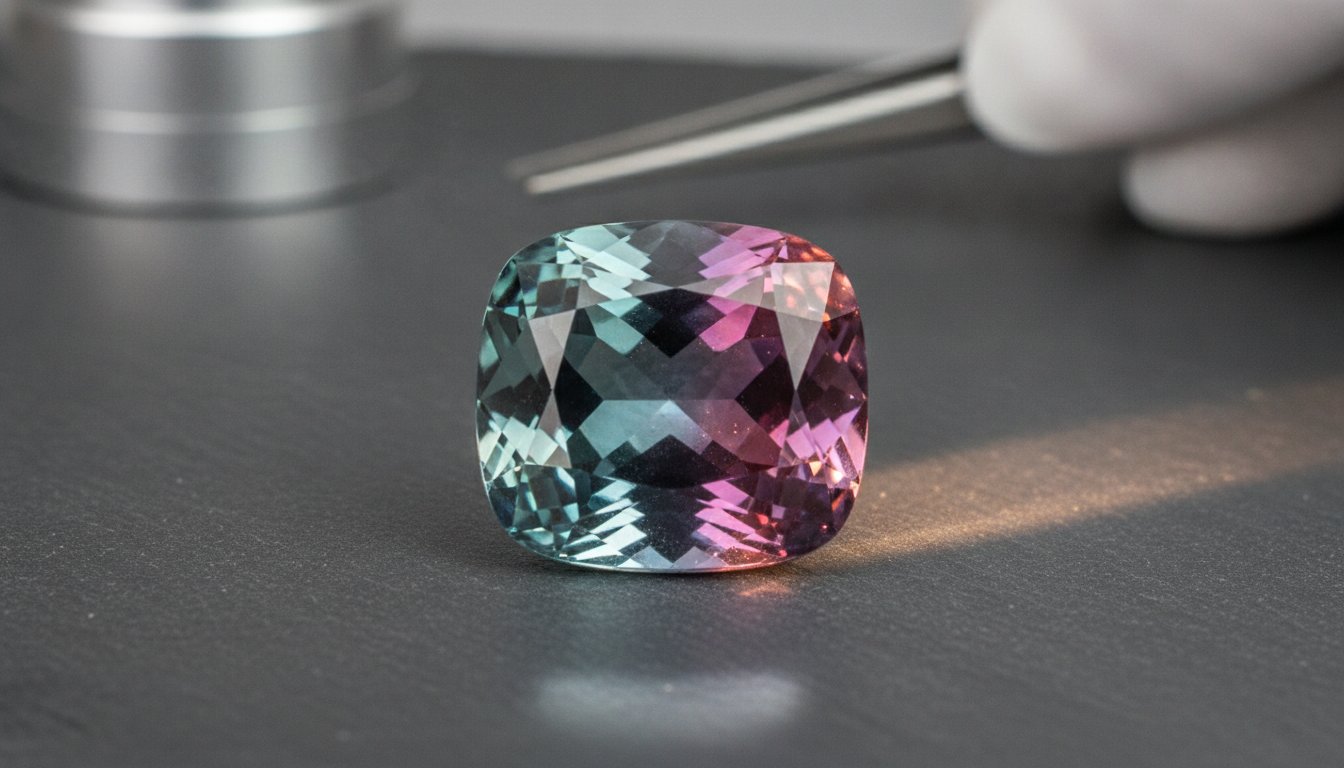
What if the world's most elusive color-changing gemstone wasn't restricted to museum vaults or the elite circles of the ultra-wealthy? You've likely admired the "emerald by day, ruby by night" allure of alexandrite, only to find that natural specimens are often prohibitively expensive or too small to make a statement. The frustration of choosing between a tiny, flawed natural stone and a cheap, simulated glass imitation is a common hurdle for many collectors. You deserve a gem that offers both breathtaking beauty and radical transparency.
Choosing a chatham created alexandrite provides the perfect solution for the ethical connoisseur. These lab-grown crystals aren't mere imitations; they possess the exact chemical, physical, and optical properties of mined chrysoberyl. Since Carroll Chatham first mastered the flux-growth process in 1972, these stones have set the standard for lab-grown luxury. In this guide, you'll discover how to secure a high-carat gem with a 100% color shift from bluish-teal to reddish-purple. We'll explore the technical integrity of the Chatham legacy and show you why these conflict-free stones are the ultimate investment for those who value both science and style. From understanding growth methods to finding the perfect cut at https://www.africagems.com/, your journey into color-change luxury starts here.
Key Takeaways
- Understand the "emerald by day, ruby by night" phenomenon and how lab-grown chrysoberyl replicates the exact crystal structure of the world's rarest natural gemstone.
- Learn why the months-long flux growth process used for chatham created alexandrite produces a more authentic and higher-quality gem than rapid pulled methods.
- Evaluate the significant cost and clarity advantages of choosing lab-grown stones, especially when seeking eye-clean specimens in larger carat weights.
- Gain the technical knowledge to distinguish between commercial grades and "Gem Quality" standards to ensure your purchase meets the highest industry benchmarks.
- Explore professional design strategies for custom jewelry, including which precious metals and accent stones best complement the dramatic color shift of your stone.
What is Chatham Created Alexandrite? The Chameleon of Gems
Chatham created alexandrite represents a pinnacle of gemological achievement, providing a sophisticated alternative to one of the rarest materials on Earth. It isn't a mere simulant or lookalike; it's a laboratory-grown chrysoberyl that mirrors the natural stone's crystal structure atom for atom. While many buyers fear purchasing "simulated" glass or synthetic corundum, these stones possess the same 8.5 Mohs hardness and refractive index as mined specimens. This scientific identity is why Synthetic alexandrite is categorized by experts as a true gemstone rather than a simple imitation. It offers the same durability and brilliance that collectors expect from a high-value investment.
The history of this material is rooted in the 1972 breakthrough by Carroll Chatham, a pioneer who successfully synthesized the complex chrysoberyl crystal through a secretive flux-growth process. This innovation brought the legendary "emerald by day, ruby by night" luxury to a wider audience of enthusiasts. At AfricaGems, we've spent decades curating these stones because they provide an uncompromising standard of quality. When you choose a chatham created alexandrite, you're acquiring a piece of heritage that balances the raw beauty of nature with the precision of modern science.
To see the remarkable brilliance and precision of these stones, watch this helpful video:
The Optical Magic of Color Change
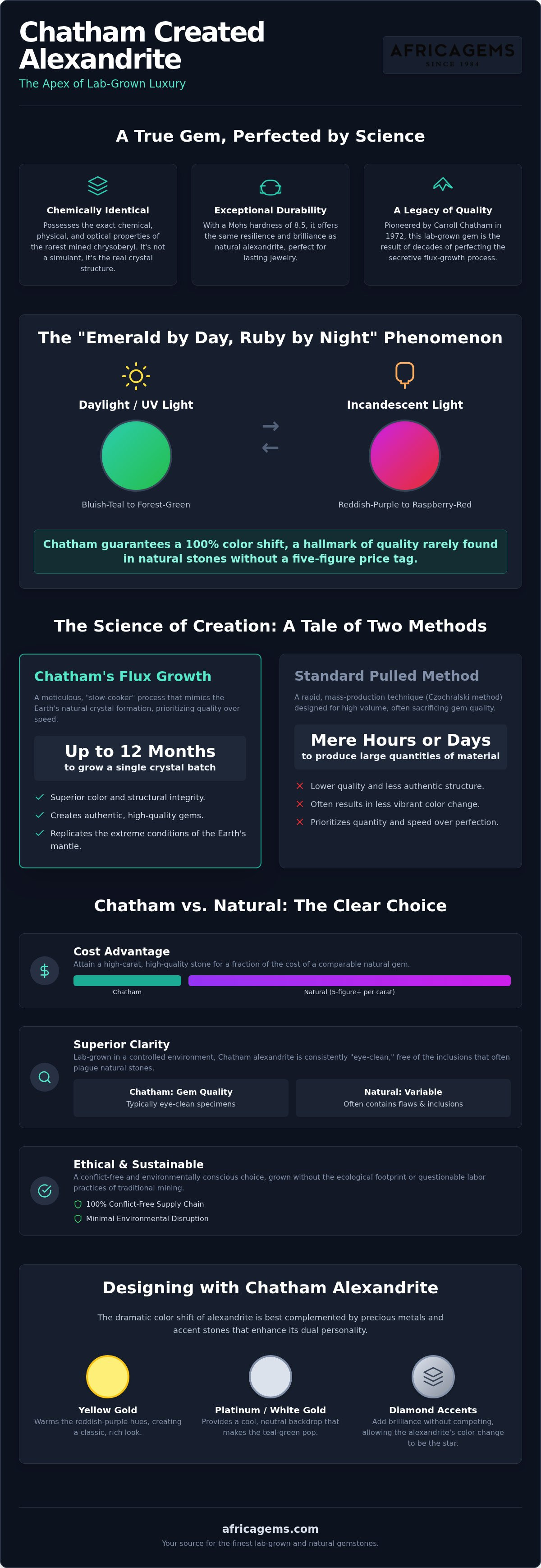
The defining trait of this gem is its dramatic shift in hue, a phenomenon caused by the presence of chromium atoms within the crystal lattice. In natural daylight or UV-rich environments, the stone displays a sophisticated teal-green or forest-green. When you move into warm, incandescent lighting, the chromium absorbs light differently, causing the gem to transition into a rich raspberry-red or purplish-pink. A chatham created alexandrite is specifically engineered to provide a 100% color shift. This means the transition is distinct and visible to the naked eye, a feat rarely found in natural stones unless you're prepared to spend a five-figure sum per carat.
Ethical and Sustainable Origins
Beyond its visual allure, this gem offers the security of a clear conscience. Traditional open-pit mining for alexandrite involves significant environmental disruption and often lacks transparency in labor practices. By choosing a lab-grown alternative, you're supporting a supply chain that's 100% conflict-free and environmentally conscious. AfricaGems is committed to radical transparency in every transaction, ensuring you know exactly where your gem comes from. These stones are grown over several months in a controlled environment, mimicking the natural geological process without the ecological footprint of large-scale mining operations.
The Science of Flux Growth: Why Chatham Leads the Market
The distinction between a masterpiece and a mass-produced imitation lies in the method of creation. While many lab-grown gems are created in days using rapid pulling techniques, chatham created alexandrite is born through an arduous, months-long flux growth process. This method doesn't just create a stone; it cultivates a crystal. By dissolving the raw mineral components in a metallic solvent, or flux, Chatham allows the alexandrite to crystallize naturally over time. This slow-cooker of gemology ensures that each stone develops with the same structural integrity found in the finest mined specimens.
The Time-Intensive Growth Process
Chatham's proprietary method is designed to mimic the extreme conditions of the Earth's mantle, utilizing intense heat and pressure to foster crystal development. Unlike the Czochralski, or pulled, method, which can produce large quantities of synthetic material in mere hours, a high-quality Chatham crystal requires a full 12-month growth cycle. This patience is rewarded with superior color saturation and a depth of clarity that rapid methods simply cannot achieve. Slower growth allows the chromium atoms to distribute evenly throughout the lattice, resulting in that iconic, vivid color shift you expect from a premium gem.
Because the crystals grow over such a long period, they often develop natural-looking "fingerprint" inclusions. These microscopic veils are a hallmark of flux growth and are virtually identical to the inclusions found in natural Russian alexandrite. For the informed collector, these features are not flaws but proofs of a sophisticated, high-integrity growth process. If you are ready to see this scientific excellence in person, exploring our collection of precious gemstones reveals the difference that time and expert curation make.
Identifying a Chatham Stone
Technical validation is the cornerstone of trust in the high-value gem market. Every chatham created alexandrite possesses a specific gravity and refractive index that perfectly match its natural counterpart. This means the stone doesn't just look like alexandrite; it behaves like it under a refractometer and on a scale. The Chatham brand serves as a definitive certificate of quality, guaranteeing that you aren't purchasing a common "simulated" stone made of glass or inexpensive synthetic corundum. When you invest in a Chatham stone, you're securing a legacy of transparency and technical perfection that has remained the industry gold standard for over half a century.
Chatham Created vs. Natural Alexandrite: A Value Comparison
When you weigh the merits of a natural gemstone against its laboratory-grown counterpart, the discussion usually centers on rarity versus accessibility. Natural alexandrite remains one of the most expensive and elusive gems in the jewelry market. Historically found in the Ural Mountains of Russia and later in Brazil and Sri Lanka, high-quality natural specimens are vanishingly rare. Both natural and chatham created alexandrite share a Mohs hardness of 8.5, which places them among the most durable stones available for daily wear. This structural resilience makes either choice suitable for an heirloom piece, yet the investment required for each tells a very different story.
Evaluating the 'Price Gap'
The price disparity between these two options is staggering. Because natural alexandrite is a "one-in-a-million" geological accident, a single 2-carat stone with a strong color shift can easily cost as much as a luxury car. For most collectors, a natural stone of that size is simply unattainable, or it arrives with significant compromises in color saturation and clarity. In contrast, choosing a chatham created alexandrite allows you to own a large, eye-clean gem without the prohibitive five-figure price tag. This accessibility is particularly valuable for those designing engagement rings who want the dramatic color-change effect in a substantial carat weight. To see how these lab-grown wonders compare to other rare minerals, you can explore our collection of precious gemstones for natural comparisons.
Visual Differences: What Can the Eye See?
To the untrained eye, a top-tier Chatham stone and a museum-quality natural stone are virtually indistinguishable. Chatham maintains a consistent "Gem Quality" standard, ensuring every stone features a vivid teal-to-raspberry transition. Natural stones, however, often struggle with saturation; many appear "muddy" or brownish in certain lighting. Clarity is another major differentiator. Natural alexandrite is frequently plagued by "silk" or heavy inclusions that disrupt the light path.
- Saturation: Chatham stones offer a reliable, intense color shift that covers the entire body of the gem.
- Clarity: While natural stones over 1 carat are almost always included, Chatham specimens are essentially flawless to the naked eye.
- Expert Identification: The technical perfection of flux-grown crystals is so high that even experienced gemologists often require specialized lab equipment to tell them apart from natural ones.
From an investment perspective, you're choosing between the historical prestige of natural rarity and the scientific perfection of the Chatham legacy. While the natural stone holds value through its scarcity, the Chatham gem provides a level of visual brilliance that nature rarely achieves in large sizes. It's a choice between owning a rare fragment of the earth or a masterpiece of modern gemological science.
How to Evaluate and Buy Chatham Alexandrite
Evaluating a chatham created alexandrite requires a different mindset than shopping for mined gems. In the natural market, you're often searching for the least flawed specimen within a tight budget. With Chatham, you can prioritize performance and aesthetic impact. The "Chatham Standard" ensures that every stone labeled as Gem Quality is essentially flawless to the eye and hand-faceted to maximize its optical properties. Buying from an expert curator like Marc Sarosi ensures you receive a stone that has been personally vetted for its color-change integrity. AfricaGems has specialized in these stones since 1984, maintaining a commitment to radical transparency that allows you to compare technical specifications with total confidence.
The Best Cuts for Color Change
Round and oval cuts remain the most popular choices for those seeking maximum brilliance and scintillation. These traditional shapes allow light to bounce through the crystal lattice, highlighting the vivid teal-green hues. If you prefer a more contemporary aesthetic, emerald and radiant cuts offer a sophisticated alternative. These shapes feature larger, open facets that showcase the stone's internal clarity. Interestingly, deeper cuts can sometimes intensify the raspberry-red shift under warm lighting; the light travels a longer path through the chromium-rich crystal, which can result in a more saturated purple-red hue.
Loose Stones vs. Finished Jewelry
There's a significant advantage to purchasing loose alexandrite gemstones before committing to a setting. Buying loose allows you to inspect the stone under multiple light sources, from cool daylight to warm incandescent bulbs, without the interference of metal reflections. You can verify the 100% color shift and ensure the stone's personality matches your vision. If you're considering other ethical options, our selection of non-genuine gems provides a variety of lab-grown alternatives that adhere to these same high standards of quality and sourcing integrity.
Because chatham created alexandrite is more accessible than natural stones, you have the freedom to choose larger carat weights. You aren't restricted to the small, included stones often found in antique jewelry. Instead, you can design a custom piece around a substantial 2-carat or 3-carat gem that serves as a true conversation starter. This flexibility makes it possible to create bold, modern designs that would be financially impossible with natural alexandrite. You can focus on the artistry of the mounting rather than compromising on the quality of the center stone.
Ready to find a stone that matches your standard for luxury? View our full selection of loose gemstones to begin your custom design journey.
Designing Custom Jewelry with Chatham Alexandrite
Designing around a color-change masterpiece requires a nuanced understanding of how light interacts with both the gemstone and its surrounding environment. When you select a chatham created alexandrite, you're choosing a stone that demands a setting capable of highlighting its dramatic optical transitions. The choice of precious metal is the first critical decision in this journey. Platinum and white gold are frequently preferred by connoisseurs because their neutral, silvery tones don't interfere with the gem's teal-green or raspberry-red hues. Conversely, yellow gold can add a warm, vintage character, though it may subtly influence the perceived saturation of the stone's daylight color.
Accent stones play a pivotal role in making your alexandrite "pop." Small, brilliant-cut diamonds or white sapphires serve as static points of white light, providing a stark contrast that emphasizes the center stone's shifting personality. Because these stones possess an impressive 8.5 hardness on the Mohs scale, they're exceptionally well-suited for the rigors of daily wear. This durability makes them a premier choice for bespoke engagement rings that are intended to last a lifetime without losing their structural integrity or brilliance.
Setting Styles for the Modern Collector
The architecture of your jewelry should always serve the gem. Halo settings are particularly effective for color-change stones; they create a frame of light that catches the eye and draws attention to the center stone's depth. If you prefer a minimalist approach, a solitaire setting allows the "chameleon" nature of the crystal to speak for itself without distraction. For those seeking inspiration for their next piece, you can shop mountings to see how different architectures support various gemstone shapes and sizes.
The AfricaGems Custom Advantage
At AfricaGems, we believe that a high-value gem deserves a personal consultation. You have the opportunity to work directly with Marc Sarosi through our custom jewelry design services, ensuring that every technical detail is addressed. We prioritize designs that feature open galleries, allowing maximum light to enter the stone from all angles. This is essential for a chatham created alexandrite, as the quality of the color shift is entirely dependent on the light it absorbs. Our methodical approach moves from your initial concept to a finished masterpiece, backed by decades of expert curation and a commitment to radical transparency. It's time to transform your vision into a legacy piece. Start your custom alexandrite journey today and experience the intersection of science and luxury.
Embrace the Future of Color-Change Brilliance
Choosing a chatham created alexandrite is more than a purchase; it's an investment in a legacy of scientific perfection and ethical luxury. You've discovered how the slow, painstaking flux-growth method produces a crystal chemically identical to natural chrysoberyl, offering a 100% color shift that nature rarely provides in large, eye-clean specimens. By opting for these lab-grown wonders, you bypass the astronomical costs and environmental impact of traditional mining while securing a stone that possesses world-class saturation and clarity.
AfricaGems has been a trusted leader in this field since 1984. Founder Marc Sarosi personally curates every gem to ensure it meets our standards of radical transparency. Every Chatham stone we sell comes with a lifetime warranty on its color and brilliance, providing you with absolute security for your high-value transaction. Whether you're designing a bespoke engagement ring or a legacy pendant, you don't have to compromise on size or beauty to own a piece of rare material history.
Shop our curated collection of Chatham Created Alexandrite at AfricaGems and discover a gemstone that perfectly aligns with your values and your vision for elegance.
Frequently Asked Questions
Is Chatham created alexandrite a real gemstone or a fake?
chatham created alexandrite is a genuine gemstone, not a fake or simulant. It possesses the identical chemical, physical, and optical properties of mined chrysoberyl. Unlike "simulated" stones made of glass or synthetic corundum, these lab-grown crystals are real gems created in a controlled environment. They offer the same 8.5 Mohs hardness and refractive index as natural specimens, making them a sophisticated choice for those who value scientific integrity and visual brilliance.
How does the color change in Chatham alexandrite compare to natural stones?
The color change in these stones is typically more dramatic and consistent than what you'll find in natural specimens. While natural alexandrite often displays a muddy or incomplete shift, Chatham stones are specifically grown to provide a 100% transition. You'll see a distinct bluish-teal hue in daylight that shifts to a vivid reddish-purple under incandescent light. This reliable performance ensures that your gem always displays its legendary emerald by day, ruby by night character.
Can a jeweler tell if my alexandrite is Chatham or natural?
A professional gemologist can distinguish between the two, but it often requires advanced laboratory equipment. Because Chatham uses a flux-growth process, the stones contain unique fingerprint inclusions and metallic flux residues that differ from the silk or mineral inclusions found in nature. A standard jeweler using only a loupe might struggle to tell them apart due to the technical perfection of the crystal, which is why official certification is so vital for transparency.
Is Chatham alexandrite durable enough for an engagement ring?
Yes, it's exceptionally durable and perfectly suited for an engagement ring intended for daily wear. With a rating of 8.5 on the Mohs scale, alexandrite is one of the hardest gemstones available, surpassed only by diamonds and the corundum family. It resists scratching and chipping effectively, ensuring that your heirloom piece maintains its polish and structural integrity for a lifetime. It provides the security and longevity required for a symbol of lasting commitment.
Why is Chatham alexandrite more expensive than other lab-grown brands?
The higher price reflects the time-intensive flux-growth method Chatham employs. While many competitors use the pulled method to create crystals in a matter of days, chatham created alexandrite takes roughly 12 months to grow. This slow crystallization results in superior color saturation and a more natural internal structure. You're paying for a masterpiece of gemological science that mimics the Earth's natural processes far more closely than cheaper, mass-produced alternatives.
Does Chatham created alexandrite come with a certificate?
Every stone we sell is accompanied by an official Chatham certificate of authenticity. This document serves as a guarantee of the stone's laboratory-grown origin and its Gem Quality status. It provides you with the peace of mind that your investment is a genuine product of the Chatham legacy. At AfricaGems, we supplement this with our own commitment to radical transparency, ensuring you have every technical detail needed to make an informed decision.
What is the best light source to see the color change in alexandrite?
To fully appreciate the chameleon effect, you should view the stone under two distinct light sources. Natural daylight or a cool-toned LED light will bring out the sophisticated forest-green or teal colors. To trigger the shift, move the gem into warm, incandescent lighting or near a candle's flame. This transition to a rich raspberry-red is most visible when there is a clear contrast between UV-rich light and warm, yellow-toned environments.
How should I clean and care for my Chatham alexandrite jewelry?
Caring for your jewelry is straightforward and requires only basic household items. The best method is to use warm water, a mild dish soap, and a soft-bristled toothbrush to gently remove oils and dust. While the stone is tough enough for ultrasonic cleaners, we recommend manual cleaning to protect the integrity of the metal setting. Always store your pieces separately in a fabric-lined box to prevent harder stones like diamonds from scratching the surface.

Article by
Marc Sarosi
Professional gemstone dealer for more than 40 years. Started off mining Aquamarine in Zambia, Africa and travelled throughout the continent in search of fine gems. Trusted authority on fine gemstones and have donated a fine collection of more than 27 extraordinary gemstones to the Smithsonian Institute Gem Hall for generations to see.