
Certified Alexandrite for Sale: The Collector’s Guide to Quality and Value
Jul 7th 2026
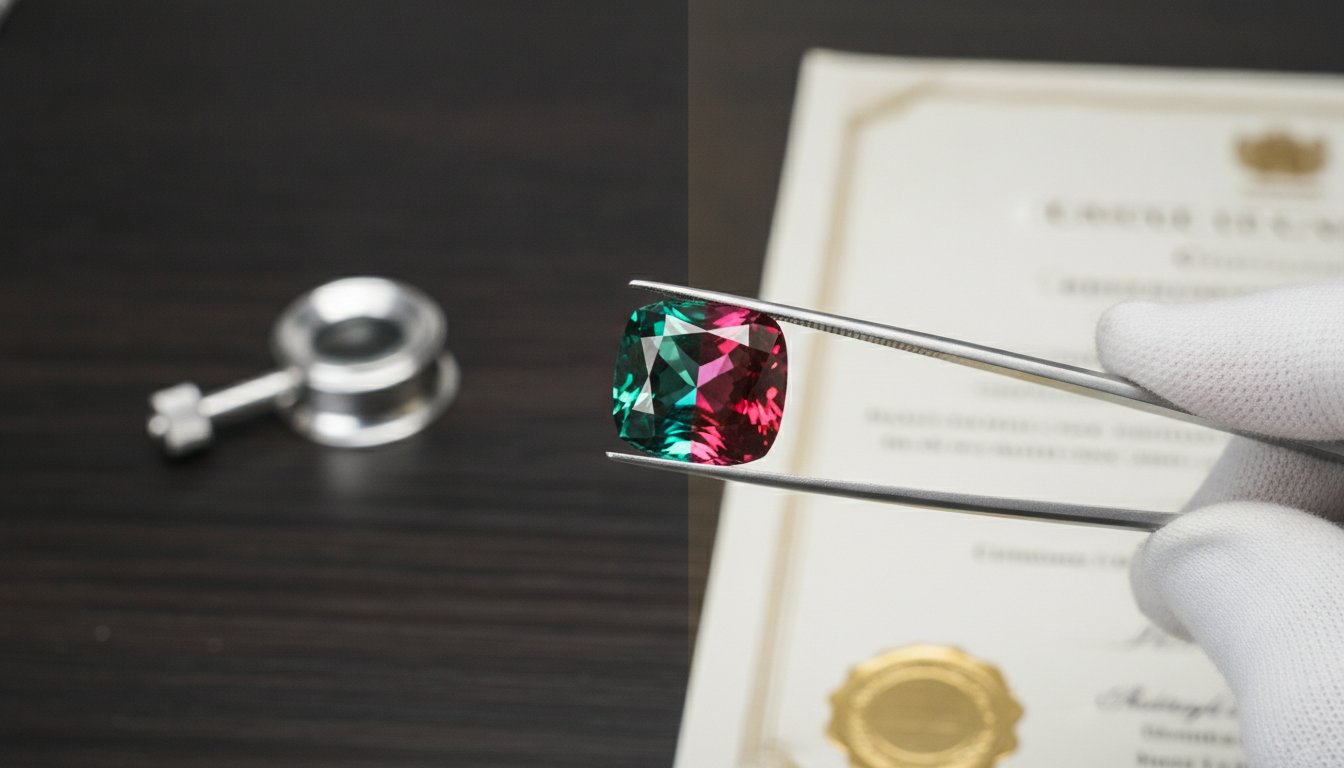
Did you know that a fine, natural alexandrite is approximately 8,000 times rarer than a white diamond? With global demand for these "emeralds by day, rubies by night" surging by 22% recently, finding authentic, high-quality certified alexandrite for sale has become a pursuit of both passion and precision. You likely recognize that owning such a gem is the mark of a true connoisseur; however, you probably worry about lab-grown imitations or the difficulty of judging color-change percentages through a screen. It's a valid concern. In the current market, the difference between a 70% and 100% color shift can impact value by as much as 60%.
This guide will empower you to master the "5th C," the percentage of color change, so you can secure an investment-grade gemstone with confidence. We'll examine the critical role of GIA and Gubelin certifications, explain the "carat jump" pricing phenomenon at the one-carat mark, and show you how to identify the coveted teal-to-raspberry transition. By the end, you'll have the technical knowledge and ethical framework needed to acquire a legacy-quality stone that holds its beauty and its worth.
Key Takeaways
- Learn why top-tier laboratory verification from GIA, Gubelin, or AGL is the only way to safeguard against sophisticated synthetics and confirm a stone's true origin and treatment status.
- Master the "5th C" by understanding how the precision of a color-change percentage—the shift from cool teal to warm raspberry—dictates the market value and appreciation potential of your gem.
- Discover the significant price disparity between natural specimens and lab-grown alternatives to help you identify authentic certified alexandrite for sale without falling for "too good to be true" offers.
- Navigate the "carat jump" phenomenon to understand why stones surpassing the 1.00-carat threshold command exponential premiums in the global collector’s market.
- Leverage four decades of gemological expertise and a transparent "No Questions Asked" return policy to ensure your high-value acquisition is both secure and ethically sourced.
Why Certified Alexandrite is the Ultimate Collector’s Investment
Alexandrite isn't just a gemstone; it's a geological miracle. As the rare, color-changing variety of the mineral chrysoberyl, it possesses a unique ability to shift its hue based on the light source. This phenomenon, often called the "Alexandrite Effect," creates a transition from a cool teal-green in daylight to a warm raspberry-red under incandescent light. Collectors cherish this "emerald by day, ruby by night" duality, which makes it one of the most sought-after precious gemstones in the world.
Finding authentic certified alexandrite for sale requires a discerning eye and a commitment to verification. Because the market is flooded with sophisticated lab-grown stones that mimic the natural color change, a certificate from a premier lab isn't a luxury; it's a necessity. These documents protect your investment by confirming the stone's natural origin and documenting its specific color-change percentage. With global demand for these gems surging by 22% recently, the security of a certificate ensures your piece remains a liquid and high-value asset.
To better understand how natural stones compare to lab-created versions, watch this helpful video:
The Scarcity Factor: Why Natural Alexandrite is Disappearing
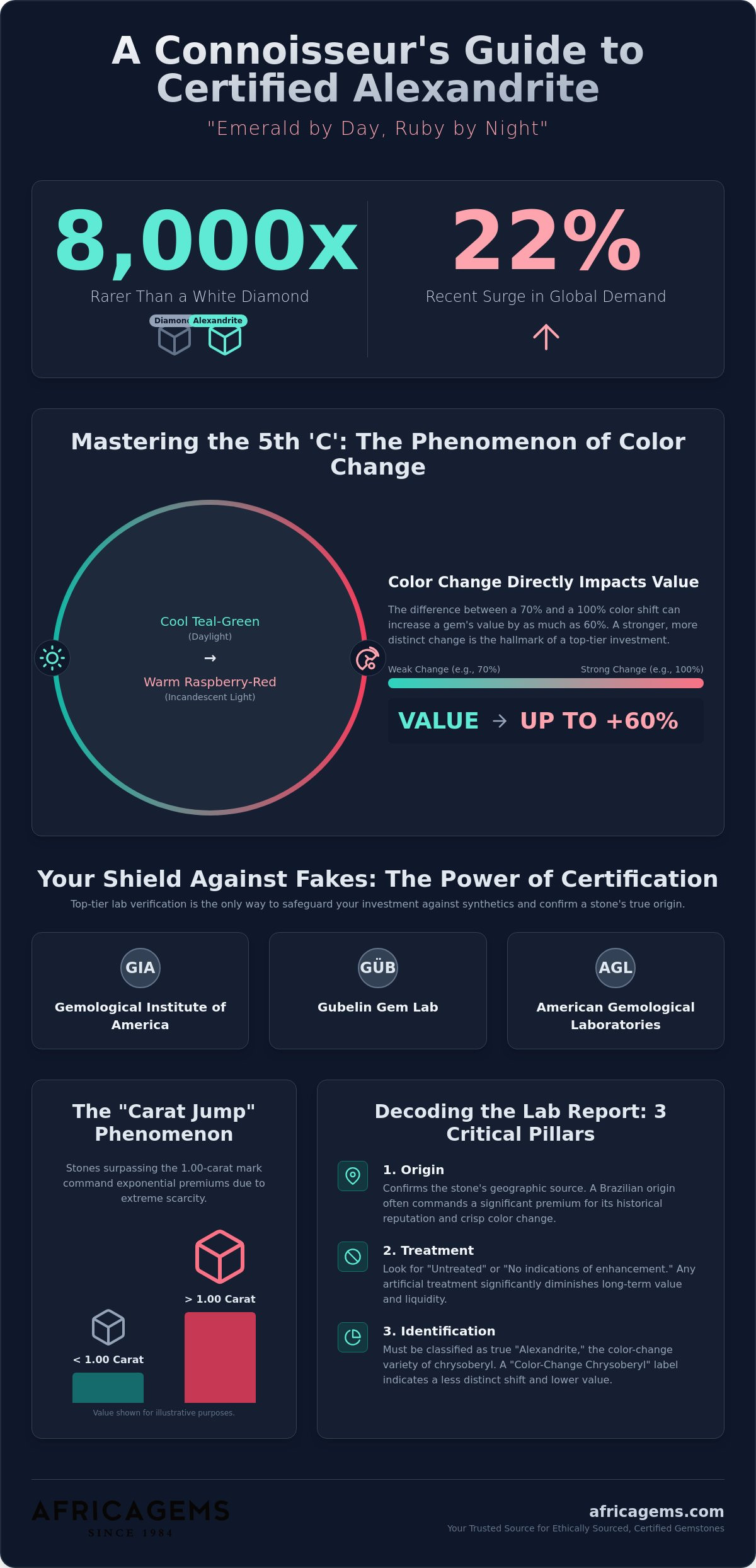
The original Russian mines in the Ural Mountains, which once supplied the czars, are effectively depleted. Today, the world relies on limited production from Brazil, Sri Lanka, and East Africa. Even in these regions, gem-quality material is elusive. Fine alexandrite is approximately 8,000 times rarer than a white diamond. While small melee stones exist, any specimen over 1.00 carat is considered investment grade. The "carat jump" at this weight is significant; a stone just slightly over one carat is far more valuable than one just under it because of the extreme scarcity of larger crystals.
Chrysoberyl vs. Alexandrite: The Certification Threshold
Not every color-shifting stone earns the name alexandrite. The distinction lies in the presence of chromium. While many varieties of chrysoberyl exist, only those with specific chromium-driven light absorption qualify for the title. Labs like GIA use rigorous standards to distinguish between a simple "color-change chrysoberyl" and a true alexandrite. This technical classification is vital for buyers. A stone labeled as true alexandrite can command a market price several times higher than a chrysoberyl with a similar but less distinct shift. Seeking out certified alexandrite for sale ensures you're paying for the chemical integrity and rare status of the genuine article.
Understanding Gemological Certificates: GIA, Gubelin, and AGL
When you're browsing for certified alexandrite for sale, the name printed at the top of the lab report is as significant as the stone itself. In the world of rare materials, the "Big Three" laboratories—the Gemological Institute of America (GIA), the Gubelin Gem Lab, and American Gemological Laboratories (AGL)—provide the rigorous technical validation required for high-stakes transactions. These institutions don't just identify the mineral; they provide a legal and financial safeguard for your collection. Without this third-party verification, an alexandrite's value is purely speculative.
What to Look for on an Alexandrite Lab Report
A comprehensive report must address three critical pillars to be considered complete. First is the "Origin" field. While alexandrite is sourced from several global locations, a Brazilian origin often commands a significant premium due to its historical reputation for superior, crisp color change. Second is the "Treatment" field. Natural alexandrite should ideally be listed as "Untreated," as any artificial enhancement significantly diminishes its resale value and collector appeal. Finally, pay close attention to the "Color Change" description. Labs use specific, standardized terminology to describe the shift from daylight to incandescent light, often quantifying the strength and quality of the transition.
GIA vs. Gubelin: Which Certificate Matters More?
GIA is the global benchmark for security and standardized grading. It's the most common report you'll find when looking for certified alexandrite for sale, offering a reliable baseline of trust for both buyers and sellers. However, for museum-quality stones, particularly those over three carats or those with exceptional Brazilian provenance, Gubelin is often considered the gold standard. Their reports carry a level of international prestige that can actually increase a stone's marketability among elite connoisseurs. AGL remains a favorite in the American market because they often provide more detailed quality grading, including their proprietary ColorScan system, which offers a more granular look at the gem's visual performance.
Many serious investors prefer stones with dual certification from two of these top-tier labs. Having both a GIA and a Gubelin report, for example, eliminates any shadow of doubt regarding a gem's pedigree and quality. This level of transparency is exactly what we prioritize when curating our selection of precious gemstones, ensuring your acquisition is backed by world-class expertise and radical disclosure.
Natural vs. Lab-Created: Navigating the "Too Good to Be True" Price
The price disparity between natural and synthetic stones is the most significant hurdle for new collectors. If you encounter a large, eye-clean stone marketed as certified alexandrite for sale at a price that feels accessible, proceed with extreme caution. Natural alexandrite is a geological rarity that commands a premium based on its scarcity and origin. In contrast, lab-grown stones are mass-produced in controlled environments. While they offer the same chemical composition, they possess no resale value in the secondary market. Understanding this distinction is the first step in protecting your capital.
It's also vital to distinguish between lab-grown stones and simulations. A lab-created alexandrite is chemically identical to its natural counterpart, whereas a "simulated" stone is merely an imitation. These are often vanadium-doped sapphires or color-change glass that mimic the "Alexandrite Effect" without possessing the actual mineral properties of chrysoberyl. A legitimate gemological certificate from a lab like GIA will clearly state whether a stone is "Natural" or "Synthetic," allowing you to avoid these costly imitations.
The Value Proposition of Chatham Alexandrite
For those who desire the aesthetic brilliance of this gem without the investment-grade price tag, Chatham Lab Created Gemstones offer a sophisticated solution. These stones are grown using a flux-growth process, a slow and expensive method that replicates the high-pressure, high-heat conditions found deep within the earth. This results in crystals that are chemically, physically, and optically identical to natural alexandrite. Because of their durability and consistent color change, these lab-created stones are ideal for daily-wear jewelry like gemstone rings. At AfricaGems, our legacy is built on radical transparency, and we provide full disclosure for every lab-created stone in our inventory.
Spotting the Red Flags in "Uncertified" Listings
Deceptive labeling is a persistent issue on unverified auction sites. You'll frequently see listings for "Natural Color Change Sapphire" or "Alexandrite-like Chrysoberyl" that attempt to capitalize on the alexandrite name without meeting the technical requirements. These stones lack the specific chromium content that defines a true alexandrite. Buying uncertified stones from non-specialist dealers is a high-risk gamble that rarely pays off. The "synthetic trap" refers to the deceptive practice where lab-grown crystals are intentionally distressed or placed in aged settings to be passed off as natural, heirloom-quality antiques.
The 4 Pillars of Alexandrite Value: Beyond the 4Cs
While the traditional 4Cs provide a foundation for most gemstones, evaluating alexandrite requires a more nuanced approach. The true value of this gem lies in the "Alexandrite Effect," which acts as a critical fifth factor in any appraisal. When you search for certified alexandrite for sale, you aren't just buying weight or clarity; you're acquiring a performance of light. The percentage of color change is the most vital metric, as it determines nearly 90% of a stone's investment potential. A stone that achieves a 100% shift from teal to raspberry-red is significantly more valuable than one with a 70% shift, often commanding a 60% higher price in the current market.
Color saturation and clarity also play pivotal roles. The most prized specimens display a vivid bluish-green in daylight and a rich reddish-purple under incandescent light. Any "bleed" or mixing of these colors under a single light source is a detrimental factor. While alexandrite is a Type II gemstone, meaning some inclusions are expected, collectors prioritize "eye-clean" stones where internal features don't distract from the color change. Finally, the cut must be precise. A master lapidary will orient the stone to maximize its pleochroism, ensuring that the color transition is uniform across the entire face of the gem.
Evaluating Color Change Strength
Lab reports from institutions like GIA quantify the "strength" of the change. This grading is performed under standardized lighting conditions to ensure consistency. You should watch for modifiers like "brownish" or "grayish" on a certificate; these secondary hues significantly lower the stone's desirability and value. In the collector's market, rarity often trumps size. A 1.00-carat stone with a 100% crisp color change is a superior investment compared to a 2.00-carat stone with only a 40% shift. This preference for quality over bulk is why investment-grade specimens are so fiercely contested at auction.
Origin and its Impact on Price
Geographical origin can triple the market value of a stone. Brazil currently sets the modern standard for "Fine Gem" quality, producing stones with high saturation and dramatic shifts. Sri Lanka is known for providing larger carats, often exceeding the museum-quality 3.00-carat mark, though these frequently have lower saturation. Africa has emerged as a vital source for high-clarity material with excellent transparency. Whether you're seeking a rare Brazilian piece or a clean African specimen, understanding these nuances is essential. You can explore our curated collection of loose alexandrite gemstones to see these quality variations firsthand.
Why Buy Certified Alexandrite from AfricaGems?
Acquiring a rare gemstone is an act of trust. Marc Sarosi’s 40-year legacy in the gemstone industry isn't just a timeline; it's a testament to a career spent sourcing the world's most elusive materials. When you browse our collection of certified alexandrite for sale, you're accessing a vault curated with the precision of a master connoisseur. We understand that high-value transactions require more than just a beautiful image. They require a bridge of security between the mine and your private collection. This is why we prioritize radical transparency, providing full disclosure on every stone’s origin and treatment status.
Our inventory features direct access to GIA and Gubelin certified stones, ensuring your investment is backed by the world’s premier gemological authorities. We recognize the hesitation that can come with purchasing such a rare specimen online. To eliminate this friction, we offer a "No Questions Asked" return policy on our high-value stones. We want you to experience the dramatic color change of your alexandrite in your own environment, under your own light. If the gem doesn't move you, the return process is steady, secure, and respectful of your time.
Custom Design Services for Your Alexandrite
Once you've secured a loose stone, our in-house design team is available to help you create a legacy piece. Whether you're envisioning a bespoke gemstone pendant or a signature ring, the choice of metal is a vital technical decision. Platinum and white gold are often preferred for alexandrite as they provide a neutral backdrop that allows the teal-green daylight hues to pop. Conversely, 18k yellow or rose gold can sometimes complement the warm, incandescent raspberry-red shift. Our designers consult with you to ensure the setting maximizes the stone's pleochroism and protects its integrity for generations.
The AfricaGems Guarantee
Every specimen in our inventory is hand-selected for its color-change integrity. We reject stones with weak shifts or muddy secondary modifiers, ensuring our precious gemstones collection remains a global benchmark for quality. We don't just sell gems; we act as mentors to our clients. For those who wish to deepen their technical knowledge before making a purchase, we invite you to explore our gemstone blog. There, you'll find extensive educational resources that transform the digital storefront into a personal consultation, reflecting our commitment to the integrity of the gemstone industry.
Secure Your Legacy with Exceptional Alexandrite
You now possess the technical insight to distinguish between a commercial stone and a museum-quality investment. Remember that the color-change delta and a valid GIA or Gubelin certificate are your strongest protections in this competitive market. By focusing on untreated gems with a high percentage of shift, you ensure your collection holds both aesthetic brilliance and long-term value. Owning a natural alexandrite isn't just about the current market; it's about securing a geological rarity that continues to vanish from the earth.
When you're ready to view authentic certified alexandrite for sale, AfricaGems provides a level of scrutiny unmatched in the digital marketplace. Our founder, Marc Sarosi, personally inspects every investment-grade stone to guarantee its integrity and performance. As a proud member of the American Gem Trade Association (AGTA), we provide full GIA and Gubelin transparency for every piece in our vault. Your journey into the world of rare materials deserves the security of an expert mentor.
Shop Our Hand-Selected Collection of Certified Alexandrite
We look forward to helping you find a specimen that truly defines your collection.
Frequently Asked Questions
Is GIA-certified alexandrite a good investment?
Yes, because natural alexandrite is 8,000 times rarer than white diamonds, making GIA-certified specimens an excellent choice for a portable, liquid investment. A GIA report provides the technical validation required for high-value resale by confirming the stone's natural origin. Without this document, you risk holding a synthetic stone, which possesses no secondary market value. It's the ultimate safeguard for your capital in an appreciating market.
How much does a 1-carat certified alexandrite cost in 2026?
Market prices for one-carat specimens vary based on the "5th C," which is the percentage of color change. While I won't quote specific pricing for our inventory, industry data from July 2026 shows that stones exceeding the 1.00-carat threshold command a significant "carat jump" premium. Scarcity at this weight remains the primary driver of global valuation. A stone just over one carat is often priced much higher than one just under it due to rarity.
What is the most valuable color change for alexandrite?
The most prized transition is a 100% shift from a cool, crisp teal-green in daylight to a warm, vibrant raspberry-red under incandescent light. Any "bleed" or mixing of these hues under a single light source reduces value. Currently, a stone with a 100% color change can be 60% more expensive than a specimen with a 70% shift. This dramatic performance is what collectors seek when building a museum-quality portfolio.
Can I trust a certificate from a small, local lab?
You shouldn't rely on local or unverified labs for high-stakes investments like alexandrite because they often lack the specialized equipment needed to detect modern flux-grown synthetics. Only the "Big Three"—GIA, Gubelin, and AGL—possess the technical authority to confirm a stone's pedigree. When you're browsing certified alexandrite for sale, sticking to these globally recognized institutions is the only way to ensure your capital is truly protected from sophisticated imitations.
Why is Brazilian alexandrite more expensive than Indian or African stones?
Brazilian stones often command a premium because of their historical reputation for intense color saturation and dramatic, crisp shifts. While Africa is an emerging source for high-clarity material, the "fine gem" standard is traditionally set by Brazilian provenance. Geographical origin can triple a stone's market value, making origin-verified certificates essential for serious collectors. This premium reflects the extreme rarity of stones from the original, high-quality Brazilian deposits.
Does alexandrite lose its color-change ability over time?
No, the color-change phenomenon is a permanent physical property of the stone's crystal lattice and its interaction with light. Unlike some gems that may fade when exposed to sunlight, alexandrite's "emerald by day, ruby by night" effect will remain constant for centuries. This durability makes it an ideal choice for heirloom-quality jewelry that retains its performance forever, a sentiment shared by experts at Heirloom Jewelers who specialize in high-end estate and vintage pieces. It's a stable asset that won't degrade with age or standard wear.
How do I verify a GIA certificate for an alexandrite for sale?
You can verify any report by using the GIA Report Check tool on their official website. Simply enter the unique report number found on the certificate to view a digital copy of the original data. This step is a vital part of the due diligence process when evaluating certified alexandrite for sale from any dealer. It ensures that the physical gem in your hand matches the rigorous technical data recorded by the laboratory.
What is the difference between natural and Chatham alexandrite?
Natural alexandrite is mined from the earth and is exceptionally rare, while Chatham alexandrite is grown in a laboratory using a flux-growth process. Although they are chemically, physically, and optically identical, natural stones are finite assets with high resale potential. Chatham stones offer a beautiful, accessible alternative for daily wear but don't carry the same investment-grade scarcity. At AfricaGems, we provide full disclosure to ensure you know exactly what you're acquiring.

Article by
Marc Sarosi
Professional gemstone dealer for more than 40 years. Started off mining Aquamarine in Zambia, Africa and travelled throughout the continent in search of fine gems. Trusted authority on fine gemstones and have donated a fine collection of more than 27 extraordinary gemstones to the Smithsonian Institute Gem Hall for generations to see.