
Calibrated Gemstones for Jewelry Settings: The Expert Buyer’s Guide
May 11th 2026
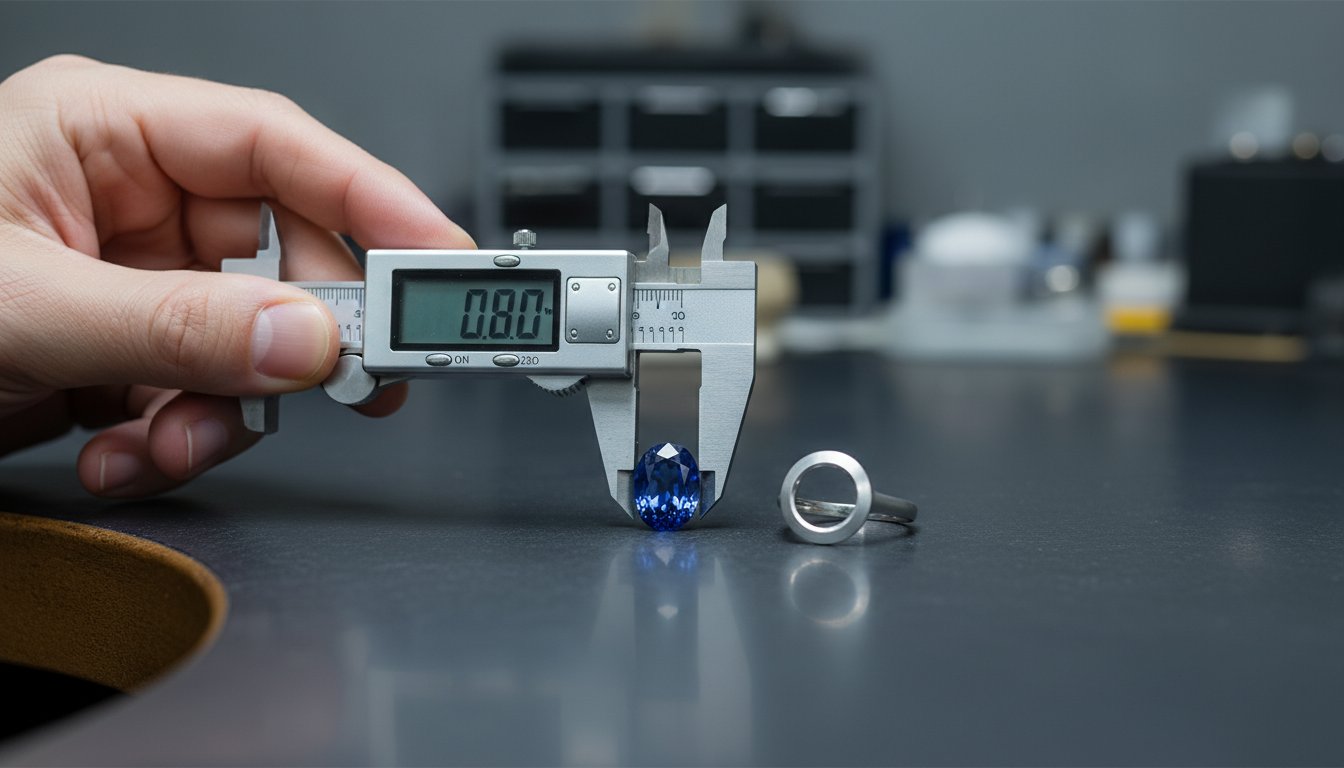
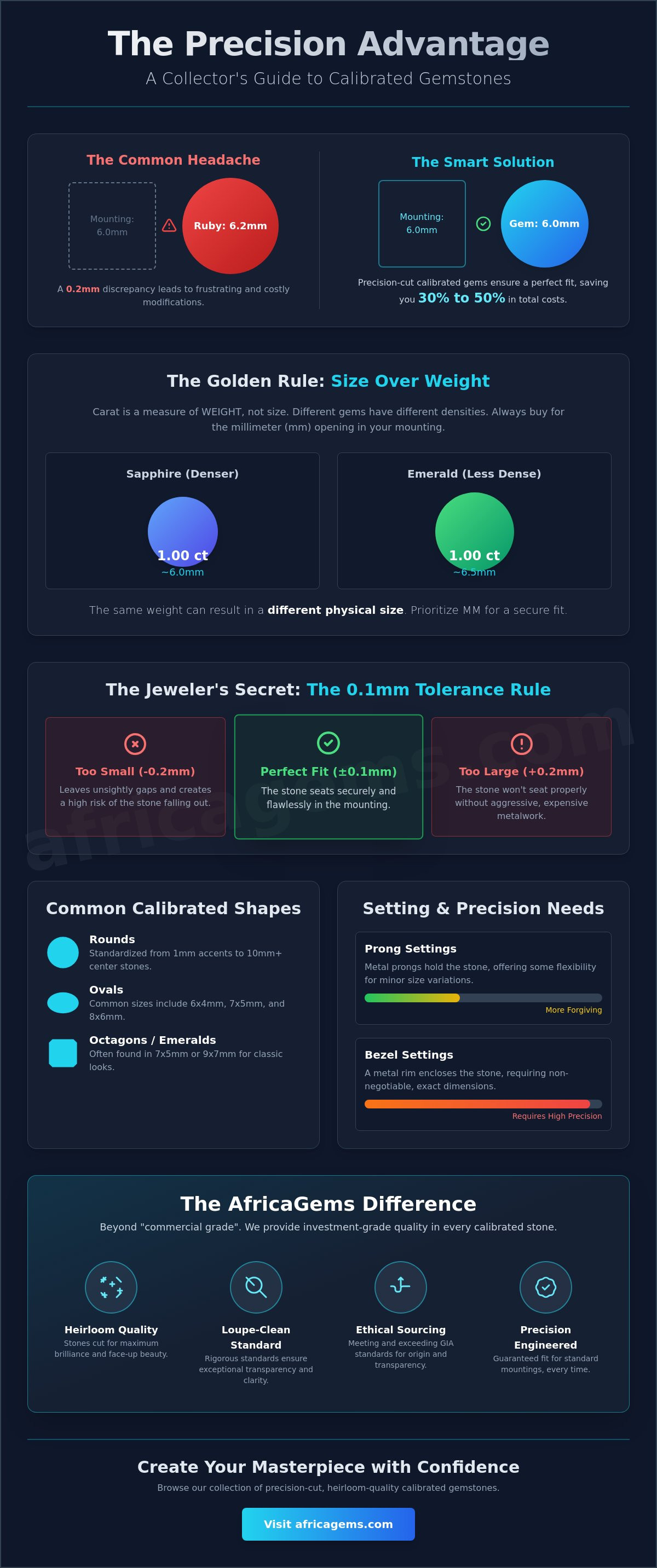
Imagine finding a breathtaking Mozambique ruby with exquisite color, only to realize the stone is exactly 0.2mm too wide for your mounting. This tiny discrepancy transforms an exciting heirloom project into a frustrating technical headache. It's a common struggle for collectors who want the 30% to 50% better value of loose stones but fear the "commercial grade" quality often associated with standard sizes.
We agree that you shouldn't have to sacrifice internal brilliance or ethical integrity just to ensure a perfect fit. This guide will teach you how to master the selection of calibrated gemstones for jewelry settings, ensuring your next purchase offers both precision engineering and investment-grade beauty. You'll learn to decode the confusion between millimeter and carat weight while discovering how AfricaGems maintains a standard of loupe-clean transparency that's rare in the calibrated market. We'll also cover the latest 2026 GIA standards for origin and why selecting an ethically sourced, precision-cut stone is the smartest way to build your private collection.
Key Takeaways
- Understand how selecting precision-cut calibrated gemstones for jewelry settings allows you to bypass the high costs of custom cutting while ensuring it's a perfect fit for standard mountings.
- Learn to apply the "0.1mm Rule" to evaluate tolerance levels, ensuring your stone seats securely in your chosen mounting without expensive modifications.
- Discover how to source heirloom-quality stones that don't fit the "commercial grade" stereotype typically associated with standardized sizes.
- Identify the specific requirements for different mountings, from the forgiving nature of prongs to the non-negotiable precision required for bezel settings.
- Gain insights into the AfricaGems Difference, where transparent sourcing and rigorous gemological standards ensure every calibrated stone meets investment-grade criteria.
What are Calibrated Gemstones for Jewelry Settings?
Calibrated gemstones are the precision-engineered foundation of the modern jewelry world. Unlike "free-size" stones, which are cut to maximize weight retention from the rough, these gems are cut to exact, standardized millimeter dimensions. This meticulous approach ensures that calibrated gemstones for jewelry settings fit into pre-manufactured mountings with surgical precision. It's the difference between a custom-tailored suit and one that requires endless alterations.
For the serious collector, calibration offers a bridge between high-end aesthetics and practical assembly. The jewelry industry relies on these measurements to maintain consistency across collections. When a stone is cut to a standard size, it eliminates the need for a bench jeweler to rebuild a setting from scratch. This efficiency often saves the buyer 30% to 50% in total costs compared to custom-cut pieces. This consistency doesn't imply a lack of quality; rather, it represents a commitment to technical excellence and repeatability.
To better understand how these precise dimensions interact with a mounting, watch this demonstration of setting a faceted stone:
While a free-size stone might preserve a fraction more of its original Gemstone mass, the trade-off is a complicated, expensive setting process. Calibrated stones prioritize the "face-up" appearance and the physical fit. This standardization allows for the creation of stunning multi-stone designs, such as three-stone rings or tennis bracelets, where every gem must match its neighbor perfectly in size and proportion.
Carat Weight vs. Millimeter Dimensions
One of the most frequent mistakes buyers make is purchasing a stone based on carat weight alone. Carat is a measure of weight, not physical size. Different minerals have different densities. For instance, a one-carat sapphire is smaller in diameter than a one-carat emerald because sapphire is significantly denser. You must buy for the opening in your mounting. A 6mm round sapphire will fit a 6mm setting, but a 1.00ct sapphire might be 5.8mm or 6.2mm depending on its depth. Always prioritize millimeter dimensions to ensure a secure, flush fit.
Common Shapes and Standard Sizes
Most standard mountings are designed around the "Big Three" shapes: Round, Oval, and Octagon. Understanding these standards helps you narrow your search for the perfect stone.
- Rounds: Standardized from 1mm accents up to 10mm+ center stones.
- Ovals: Common dimensions include 6x4mm, 7x5mm, and 8x6mm.
- Octagons: Often found in 7x5mm or 9x7mm for classic solitaire looks.
Niche shapes like Marquise, Trillion, and Heart cuts also follow calibration standards, though they require even tighter tolerances. For example, a 6x3mm Marquise must be exact to prevent the points from chipping during the setting process. At AfricaGems, we specialize in these precise cuts to ensure your heirloom project begins with a perfect foundation.
Matching Calibrated Stones to Standard Mountings
Achieving a custom look without the bespoke price tag relies on the technical synergy between a stone and its mounting. Professional jewelers operate by the 0.1mm Rule. This guideline dictates that calibrated gemstones for jewelry settings should stay within a 0.1mm tolerance of the mounting's dimensions. If a stone is 0.2mm too large, it won't seat properly without aggressive and expensive metalwork. Conversely, a stone that is 0.2mm too small leaves unsightly gaps and risks falling out under pressure.
Beyond length and width, depth is the most overlooked factor in a successful fit. A stone with an excessively deep pavilion may "bottom out" against the wearer's finger or the base of the setting. This creates a physical discomfort and ruins the light return, making a high-quality gem look dull. When you select from our precision-cut inventory, you ensure the proportions are optimized for both beauty and structural integrity.
Standard Size Reference for Popular Gemstones
Different gemstone species require different calibration approaches due to their crystal structures. Standardized blue sapphires and Mozambique rubies are typically available in common increments. For more delicate treasures like tanzanite, precision is even more critical to avoid cleavage fractures during the setting process. Below are the most frequent dimensions found in high-end mountings:
| Shape | Standard Sizes (mm) |
|---|---|
| Round | 4.0, 5.0, 6.0, 6.5, 7.0, 8.0 |
| Oval | 6x4, 7x5, 8x6, 9x7, 10x8 |
| Octagon/Emerald | 6x4, 7x5, 8x6, 9x7, 10x8 |
| Square/Princess | 4.0, 5.0, 6.0, 7.0 |
Matching pairs for earrings require an even higher level of scrutiny. It isn't enough for both stones to be 6x4mm; they must also possess identical crown heights and girdle thicknesses to ensure they sit at the same level in the ear.
The Impact of Cut Quality on Fit
The art of gem cutting dictates that a consistent girdle is the unsung hero of a secure setting. A girdle that is too thin is prone to chipping, while one that is too thick makes the stone look "clunky" and difficult to grip with prongs. Symmetry is equally vital. If a stone is asymmetrical, it will sit crookedly, regardless of how skilled the jeweler is. Poor calibration often leads to uneven stress on the stone, which is a primary cause of gemstone loss. By choosing stones cut to rigorous standards, you protect your investment and ensure the longevity of your jewelry piece.
The AfricaGems Difference: Heirloom Quality in Standard Sizes
Many collectors mistakenly believe that choosing calibrated gemstones for jewelry settings means settling for commercial-grade material. In the mass market, standardized sizes are often synonymous with poor proportions and visible inclusions. AfricaGems was founded to disrupt this narrative. We believe that a 6mm round sapphire should possess the same breathtaking fire and "loupe-clean" clarity as a five-carat investment-grade specimen. Our selection process is rigorous; Marc Sarosi personally rejects approximately 90% of the calibrated parcels he inspects to ensure only the most exquisite gems reach our inventory.
Integrity is the cornerstone of our business. While other dealers might obscure the origin or treatment of smaller stones, we provide radical transparency. Every stone we sell, regardless of its millimeter dimensions, is ethically sourced and conflict-free. We also donate 1% of every purchase to charity, ensuring that your heirloom project supports the communities where these treasures are found. This commitment to the AfricaGems Difference means you receive a stone that fits your mounting perfectly while maintaining the soul and beauty of a rare mineral.
Treatments and Transparency
Disclosure is non-negotiable. In the world of loose burma rubies, for instance, heat treatment is common to enhance color. However, finding unheated stones in precise calibrations is an exceptional challenge. As of May 2026, the market premium for unheated material is at an all-time high, with some unheated rubies commanding three times the price of their heated counterparts. We prioritize full disclosure and often provide GIA or AGL certification for our standard-sized gems, giving you the security of a professional gemological validation.
Sourcing Rare Gems in Calibrated Sizes
Procuring rare gemstones like Alexandrite or Tsavorite Garnet in calibrated sizes is a technical feat. Cutting rare rough to strict millimeter standards often results in significant weight loss, which many cutters avoid to preserve value. We seek out the few master lapidaries willing to prioritize precision. This allows us to offer high-quality calibrated suites that are perfect for multi-stone designs. These precision-cut rare gems are increasingly seen as "portable wealth," offering a stable alternative to the volatility of other luxury markets. Whether you're seeking a 7x5mm Tsavorite or a perfectly matched pair of Alexandrites, our inventory reflects a standard of excellence that transforms a simple setting into a masterpiece.
Setting Types and Their Calibrated Requirements
The marriage of metal and mineral requires more than just an aesthetic eye; it demands mechanical harmony. Choosing the right calibrated gemstones for jewelry settings depends heavily on the architecture of the mounting itself. Some designs offer a margin for error, while others require absolute, sub-millimeter perfection to ensure the stone remains secure for a lifetime of wear.
Prong settings are the most forgiving choice for the enthusiast collector. Because the metal claws can be slightly adjusted or "re-tipped" by a skilled jeweler, they can often accommodate the 0.1mm variance we discussed previously. This flexibility makes prongs ideal for slightly deeper pavilions or stones that sit just outside a perfect calibration. In contrast, bezel settings are uncompromising. A bezel requires a flush, seamless fit where the metal rim perfectly encircles the gemstone's girdle. If your stone is even 0.15mm too large, it simply won't seat, and forcing it risks putting lethal pressure on the gem's perimeter.
Channel and tension settings represent the pinnacle of calibration requirements. Channel settings, often seen in wedding bands or bracelets, require a suite of stones with identical widths and girdle thicknesses to create a continuous ribbon of color. Tension settings are even more rigorous. They rely on the physical pressure of the band to hold the gem in place without a traditional base. In these high-risk designs, a precision-cut stone isn't just a style choice; it's a structural necessity.
How to Measure Your Mounting
Before purchasing your gemstone, you must verify the dimensions of your setting with professional tools. Standard rulers are insufficient for this task.
- Step 1: Use digital calipers to achieve sub-millimeter accuracy. Measure the interior diameter of a bezel or the distance between the seats of the prongs.
- Step 2: Measure across multiple points. Many vintage or hand-cast mountings aren't perfectly symmetrical, and you'll need to know the narrowest point of the opening.
- Step 3: Check the "depth clearance." Ensure the mounting has enough room for the stone's pavilion so the culet doesn't touch the wearer's skin or the bottom of the setting.
Choosing the Right Stone for Your Setting Style
Daily-wear jewelry, like engagement rings or studs, benefits from the classic durability of Rounds and Ovals. These shapes distribute impact stress evenly and are the easiest to find in high-quality calibrations. However, if you're drawn to the sophisticated geometry of an emerald gemstone cut, you must select a mounting that protects the vulnerable corners. V-prongs or clipped-corner bezels are essential for these step-cut treasures to prevent chipping during the setting process.
For those seeking a more intricate look, "Halo" settings utilize micro-calibrated melee to surround a center stone. This requires a master lapidary to match dozens of tiny stones in both color and millimeter size. Whether you're building a minimalist solitaire or a complex multi-stone masterpiece, starting with the right measurements is the only way to guarantee a secure, professional result. Explore our collection of precision-calibrated gems to find the perfect match for your next mounting.
Creating Your Custom Masterpiece with AfricaGems
Selecting the perfect stone is only the first chapter in creating a piece of fine jewelry. Once you understand the technical requirements of calibrated gemstones for jewelry settings, the process shifts from gemological analysis to artistic execution. At AfricaGems, we bridge the gap between loose inventory and finished masterpieces. Our business has thrived since 1984 by treating every transaction as a personal consultation, ensuring that your vision for a ring, pendant, or pair of earrings is realized with uncompromising quality.
To begin your journey, we recommend utilizing our comprehensive guide on how to buy gemstones online. This resource provides the framework for secure, ethical investing, helping you navigate our vast inventory of precision-cut gems. Whether you're a seasoned collector or a first-time buyer, Marc Sarosi is available to provide personalized advice. This direct accountability ensures that the stone you choose isn't just a commodity, but a hand-selected treasure that meets our rigorous "AfricaGems Difference" standards.
From Loose Stone to Finished Jewelry
Transforming a loose calibrated stone into a finished piece is a streamlined process when you work with standardized mountings. We offer a curated selection of pre-styled pendants and earrings designed specifically to house our precision-cut inventory. This synergy allows for a much faster timeline than traditional custom casting, often moving from selection to shipment in a fraction of the time.
- Selection: Choose a stone that matches the millimeter requirements of our existing mountings.
- Quality Control: Every stone undergoes a multi-step inspection to ensure it's loupe-clean and free of structural vulnerabilities.
- Setting: Our master jewelers secure the gem using the specific techniques required for its species and cut.
- Guarantee: We stand by every piece with a 30-day inspection policy and free returns, providing the security essential for high-value transactions.
The Future of Ethical Gemstone Jewelry
The gemstone market in 2026 is defined by a move toward radical transparency. With new GIA standards for origin services effective since January 1, 2026, verified provenance now adds a 15% to 20% value premium to stones like Opal, Spinel, and Paraiba Tourmaline. By choosing natural, ethically sourced calibrated gemstones for jewelry settings, you aren't just buying a beautiful object; you're making a lasting investment in a traceable, conflict-free supply chain. We remain committed to this integrity, donating 1% of all purchases to charity to support the trade's sustainable future. We invite you to browse our precision-cut collections and discover the perfect foundation for your next heirloom.
Secure Your Next Heirloom with Precision and Integrity
Selecting the right calibrated gemstones for jewelry settings is about more than just matching millimeter dimensions; it's about ensuring your investment possesses both technical accuracy and breathtaking beauty. You've learned how the 0.1mm rule protects your mounting and why unheated, loupe-clean stones offer superior value over the "commercial grade" alternatives found in mass markets. By prioritizing precision-cut gems, you eliminate the frustration of a poor fit while securing a stone that holds its value as a portable asset.
AfricaGems brings over 40 years of gemological expertise to your selection process. Marc Sarosi personally verifies the quality of every stone, ensuring each gem meets our rigorous standards for color and clarity. We remain steadfast in our conflict-free and ethically sourced guarantee, so you can build your collection with absolute peace of mind. Your journey toward a custom masterpiece starts with a stone that fits perfectly and shines eternally. We're here to help you find that perfect match.
Ready to find the perfect centerpiece for your mounting? Shop Our Hand-Selected Calibrated Gemstone Collection and experience the AfricaGems difference today.
Frequently Asked Questions
What is the difference between calibrated and non-calibrated gemstones?
Calibrated stones are cut to precise millimeter dimensions, while non-calibrated stones are cut to maximize weight from the rough. This means calibrated gems fit standard mountings perfectly without custom metalwork. Non-calibrated gems often require expensive bespoke settings to accommodate their unique proportions. Choosing calibrated material ensures a secure fit for pre-manufactured pendants, rings, and bracelets.
Can I put a stone that is 0.2mm larger than the setting into a prong mounting?
It's technically possible but depends on the skill of your jeweler and the flexibility of the metal. While the 0.1mm rule is the industry standard for a perfect fit, a 0.2mm variance might be accommodated in a prong setting with slight adjustments. You should be cautious; this often puts extra stress on the stone and can lead to chipping if forced into a rigid mounting.
Why are calibrated stones sometimes more expensive per carat than free-size stones?
The higher price per carat reflects the significant rough material lost during the precision-cutting process. To achieve a specific 7x5mm oval, a lapidary must often sacrifice more weight than they would for a free-size cut. You pay for the engineering and the time required to meet these strict millimeter standards. This precision ultimately saves you money on custom jewelry assembly and metalwork.
How do I know if my jewelry setting is a standard size?
You can verify your setting's size by measuring the interior diameter or distance between seats using digital calipers. Standard sizes typically follow whole or half-millimeter increments, such as 6.0mm, 7x5mm, or 8x6mm. If your measurements fall into these common categories, it's highly likely your mounting was designed for calibrated gemstones for jewelry settings. This standardization allows for the seamless assembly of high-end jewelry collections.
Are calibrated gemstones always natural?
No, calibrated stones can be either natural or lab-created. It's essential to check the disclosure for every stone you consider. At AfricaGems, we specialize in natural, ethically sourced minerals, though we also offer Chatham lab-created options for specific design needs. We maintain radical transparency regarding every stone's origin and any treatments it may have received.
What happens if the calibrated stone I buy doesn’t fit my setting?
If a stone doesn't fit, you should never force it into the mounting. AfricaGems offers a 30-day inspection period with free returns to ensure your purchase is risk-free. If your jeweler determines the fit is outside the acceptable tolerance, we'll help you find a replacement that meets your technical requirements or provide a full refund. Your security and satisfaction are our primary concerns.
Which gemstone species are most commonly available in calibrated sizes?
Sapphires, rubies, and emeralds are the most frequent species cut to standard calibrations due to their popularity in traditional jewelry. Other popular choices include tanzanite, aquamarine, and various garnets. Rare materials like Alexandrite are harder to find in calibrated sizes. The loss of valuable rough material during the cutting process is much more costly for the lapidary when working with scarce minerals.
Do calibrated gemstones come with grading reports?
High-quality calibrated gems often include professional reports from labs like GIA or AGL, particularly for investment-grade material. While smaller accent stones don't always have individual certificates, we provide full gemological data for all our inventory. As of May 2026, many of our calibrated gemstones for jewelry settings also include verified country-of-origin documentation to ensure transparency and provenance for the buyer.