
Buy Loose Sapphire Online: The Connoisseur’s Guide to Quality, Value, and Ethics
May 1st 2026
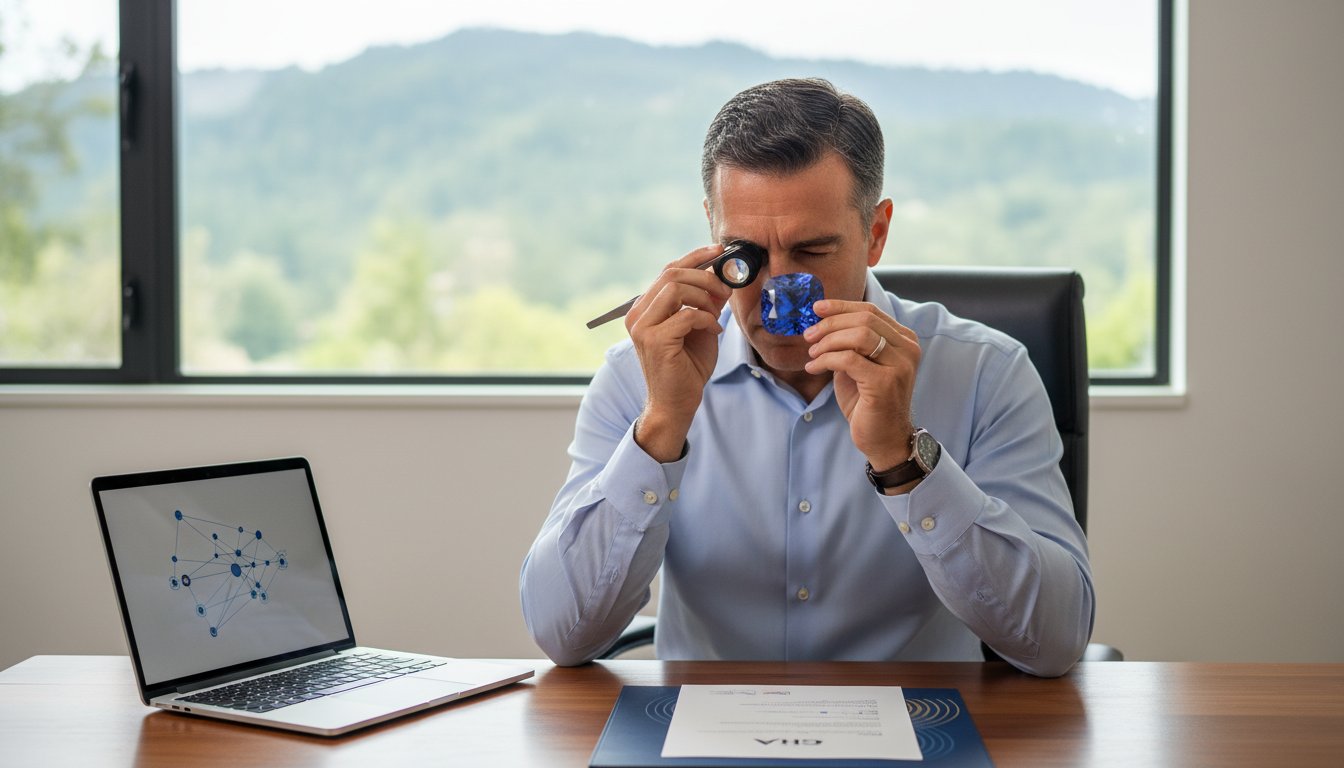
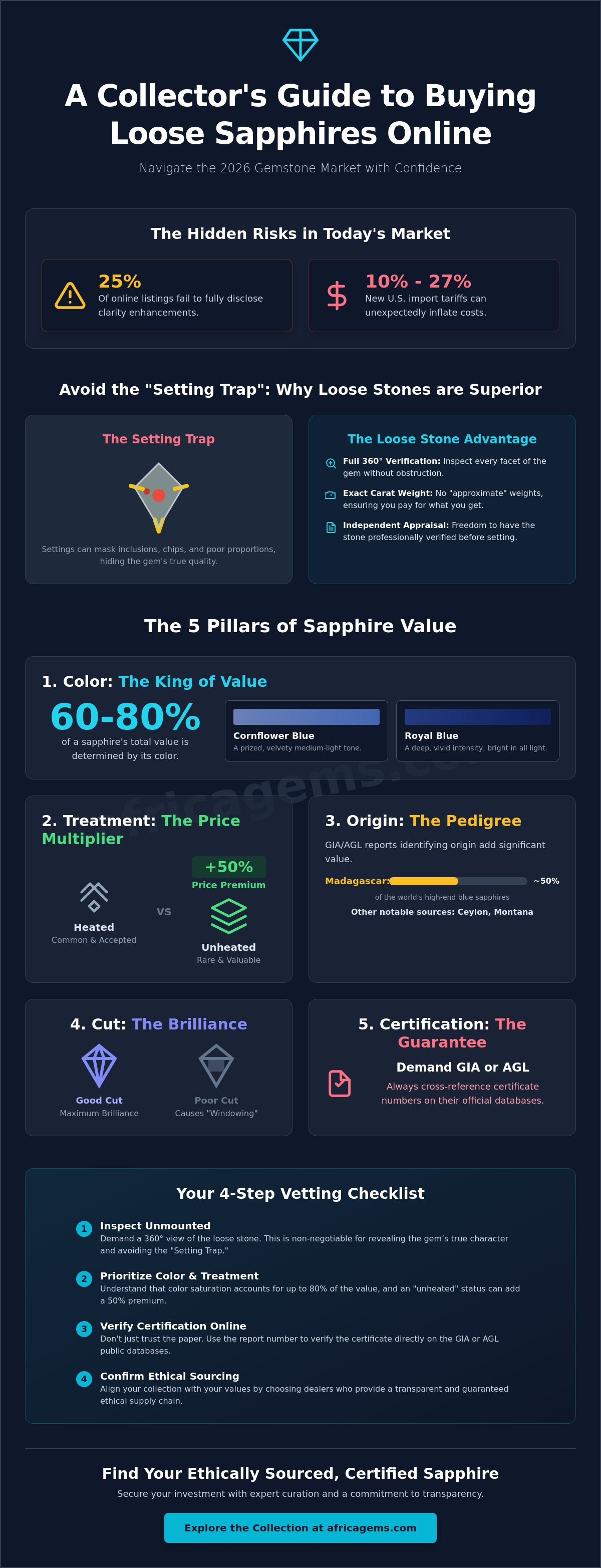
Nearly 25% of online gemstone listings in 2026 fail to fully disclose clarity enhancements, a statistic that turns a dream purchase into a costly mistake for many collectors. You’ve likely felt that familiar sting of hesitation while trying to buy loose sapphire online. It’s difficult to balance the desire for a breathtaking, loupe-clean stone with the fear of overpaying for a treated gem or navigating the new 10% to 27% U.S. import tariffs. You deserve the transparency of a professional laboratory report and the security of a guaranteed ethical supply chain.
This guide empowers you to master the technical nuances of the sapphire trade, from the 50% price premium of unheated stones to the specific value of GIA origin reports. We’ll walk through the critical factors of color saturation, which accounts for 60% to 80% of a stone’s value, and show you how to secure a GIA or AGL certified gem with total confidence. You’ll discover how to identify true quality and navigate the complexities of the 2026 market to find a sapphire that is as enduring as your commitment.
Key Takeaways
- Avoid the "setting trap" by choosing unmounted stones that reveal every detail of a gem's cut and clarity without the distractions of a metal mounting.
- Gain the technical skills to buy loose sapphire online by evaluating color saturation and identifying the presence of rutile silk in premium specimens.
- Navigate the significant price differences between heated and unheated stones to ensure you're paying a fair market rate for investment-grade quality.
- Secure your purchase using a rigorous vetting process that includes cross-referencing lab certificate numbers directly with the GIA or AGL databases.
- Align your collection with your values by prioritizing ethically sourced gems that come with a transparent supply chain and a professional guarantee.
Why Savvy Collectors Choose to Buy Loose Sapphires Online
A loose sapphire is a natural corundum gemstone sold without a setting to allow for full 360-degree quality verification. When you choose to buy loose sapphire online, you're making a calculated decision to prioritize technical integrity over retail convenience. Traditional jewelry often hides a stone's true character under gold prongs or platinum bezels. This "Setting Trap" can mask inclusions, chips along the girdle, or poor cut proportions that would be immediately obvious in an unmounted state. By viewing the stone in its raw, unadorned form, you ensure that the price you pay reflects the actual quality of the mineral rather than the clever craftsmanship of the setting.
To better understand how to spot quality and avoid common pitfalls, watch this helpful video:
The Transparency Advantage of Loose Stones
Buying unmounted gems offers full visibility of the pavilion and girdle, which are the areas most frequently obscured by settings. It also allows for an exact carat weight measurement. In pre-set jewelry, weights are often listed as "approximate." In a 2026 market where top-quality blue sapphires range from $300 to $3,000 per carat, these small discrepancies have significant financial implications. You also gain the freedom to have the stone independently appraised or verified by the GIA before it's permanently committed to a mount. This level of scrutiny ensures that the stone's 60% to 80% value tied to color is accurately represented.
Online vs. Traditional Retail: The Value Gap
Digital platforms provide a global reach that local boutiques simply cannot match. You can compare stones from Madagascar, which accounts for nearly 50% of the world's high-end blue sapphires, with those from Montana or Ceylon. Modern educational tools and high-definition 360-degree videos offer a level of scrutiny that often exceeds a brief glance through a jeweler’s loupe. For those interested in the technical side, researching Sapphire mineralogy and properties helps you understand how crystal habits and pleochroism affect the gem's durability and light performance.
Bypassing traditional boutique markups allows you to allocate more of your budget to the quality of the gemstone itself. Even with the 2025 U.S. import tariffs ranging from 10% to 27%, online specialists maintain competitive pricing by sourcing directly from regulated regions. This direct-to-consumer model is a major driver behind the global sapphire market's projected growth to $14.43 billion by 2033. Ultimately, when you buy loose sapphire online, you gain the freedom to pair a world-class stone with a bespoke design that perfectly matches its unique dimensions and light performance.
The 5 Pillars of Sapphire Value: Beyond the 4Cs
While diamonds rely on a standardized grading scale, evaluating a sapphire requires a more sophisticated eye. When you buy loose sapphire online, you've got to look past the basic 4Cs to understand the variables that dictate a stone's true market value. Color is the undisputed king, accounting for approximately 60% to 80% of a stone's total value in the 2026 market. You'll find that a one-carat stone can range from $300 to $3,000 depending on color purity and saturation alone. For a deeper look at the science behind these grades, the GIA provides excellent Sapphire Gemstone Information regarding color grading and mineralogy.
Decoding Sapphire Color and Saturation
The search for the perfect blue often leads collectors to two legendary terms: Cornflower and Royal Blue. Cornflower blue is prized for its velvety, medium-light tone, while Royal Blue offers a deep, vivid intensity that remains bright even in low light. Be wary of stones with a dark tone; if a sapphire looks black in a shadow, its value drops significantly. You should also consider pleochroism, which is the stone's ability to show different colors from different angles. A master cutter will orient the crystal so the most desirable blue faces up, minimizing any secondary green or purple tints that might detract from the gem's primary hue.
Cut Geometry: Brilliance vs. Windowing
Cut is often the most overlooked pillar, yet it's the engine that drives a stone's brilliance. Many commercial sapphires are "native cut" at the mine to retain maximum weight, which often results in a window. This is a pale, see-through area in the center where light leaks through the back rather than reflecting to your eye. Conversely, extinction occurs when the pavilion is too deep, creating lifeless black patches. A well-cut sapphire should reflect light across at least 80% of its table to be considered "fine make." This precision is what separates a generic gem from a breathtaking masterpiece that holds its value over time.
Beyond color and cut, clarity and carat weight play vital roles in the connoisseur’s decision. While diamonds must be flawless, sapphires often contain rutile silk. These tiny needle-like inclusions can actually prove a stone is unheated and help verify its origin. When you buy loose sapphire online, remember that carat weight milestones create exponential price increases. A 3-4 carat sapphire in April 2026 can command between $2,500 and $4,000 per carat, far exceeding the per-carat rate of smaller stones. For any high-value transaction, a report from the GIA, AGL, or Lotus is non-negotiable to verify these technical specs. If you're ready to see these principles in practice, you can explore our curated collection of certified gems to find a stone that meets these uncompromising standards.
The Impact of Treatment and Origin on Investment Value
Understanding the pedigree of a gemstone is what separates a casual buyer from a true collector. When you look to buy loose sapphire online, the two most powerful levers of price are treatment status and geographic origin. These factors don't just affect the beauty of the stone; they dictate its long-term investment potential and resale liquidity. In a market where nearly 25% of listings fail to disclose enhancements, radical transparency regarding these details is the cornerstone of the AfricaGems Difference. We believe you should know exactly what you're buying, without the ambiguity often found in traditional retail settings.
The "Unheated" Premium: Is It Worth It?
Unheated sapphires are a true miracle of nature. They comprise less than 1% of all gem-quality sapphires found globally. Because they haven't been subjected to high-temperature ovens to improve their appearance, they retain their original rutile silk; this feature is what gemologists use to verify both natural origin and a lack of treatment. In 2026, an unheated sapphire can command a 50% to 100% price premium over a heated stone of identical color and clarity. While a high-quality 2-carat heated Ceylon stone is an exquisite choice for jewelry, its unheated counterpart is a significantly rarer asset that holds its value more aggressively during market fluctuations.
Origin Matters: Geographic Value Drivers
Geography acts as a prestigious brand in the gem world. Kashmir sapphires remain the legendary gold standard, known for their velvety blue appearance caused by microscopic inclusions that scatter light. These stones are now almost exclusively found at high-end auctions, with prices in April 2026 ranging from $10,000 to $30,000 per carat for the finest specimens. Burma (Myanmar) follows closely with its deep, royal hues. However, Ceylon (Sri Lanka) remains the most popular choice for those who buy loose sapphire online because of its vibrant, open blues that sparkle even in low light.
The modern market is seeing a massive shift toward Madagascar, which now supplies nearly 50% of the world's high-end blue sapphires. These stones often rival the quality of the "Big Three" while offering a more transparent and ethically sourced supply chain. For those seeking a domestic option, Montana sapphires provide a unique teal color palette and the security of strictly regulated American mining practices. Regardless of the source, a GIA origin report is essential. These reports typically increase a stone's value by 15% to 20% by providing an independent, scientific verification of its birthplace and ensuring your investment is protected by rigorous data.
How to Safely Buy Loose Sapphires Online: A Vetting Checklist
Buying a high-value gemstone digitally shouldn't feel like a gamble. When you choose to buy loose sapphire online, you're stepping into a marketplace where information density is your greatest asset. Security isn't just about the secure checkout button; it's about the technical validation that happens long before you enter your credit card details. This systematic approach ensures you aren't part of the 25% of buyers who fall victim to undisclosed clarity enhancements or misleading descriptions.
Step 1: Audit the photography. Demand unedited, high-resolution 360-degree videos. If a seller relies on static images, they're likely hiding the pleochroism or cut geometry flaws like windowing. Step 2: Verify the lab report. As of January 1, 2026, the GIA updated its fee structure, but its reporting remains the definitive word on quality. Always cross-reference the certificate number on the GIA or AGL website to ensure the digital record matches the stone in the video.
Step 3: Check the return policy. A minimum of 10-14 days for independent inspection is the industry standard for professional dealers. Step 4: Research the dealer’s pedigree. Look for decades of business history and professional affiliations such as the American Gem Trade Association (AGTA). Step 5: Confirm shipping security. For any purchase valued at $2,500 or more, formal entry with U.S. Customs is required. Ensure your dealer provides fully insured, signature-required delivery to eliminate anxiety during transit.
Reading Between the Lines of Gem Lab Reports
Understanding the nuances of a report is vital. While "minor residue" might be a common note in emerald reports, a GIA report that states "No indications of heating" is the absolute gold standard for those who buy loose sapphire online. This specific phrase confirms the stone's rare, unheated status and validates the 50% to 100% investment premium we discussed earlier. For a deeper look at these vetting strategies, read our guide on How to Buy Gemstones Online.
Red Flags to Avoid in Online Gemstone Listings
Avoid sellers who use stock photos for high-value stones. Every natural sapphire is unique. Be wary of "Certified" stones where the certificate comes from a house lab instead of a major independent body like GIA or AGL. If a price for a 3-carat unheated stone is significantly below the April 2026 market average of $2,500 per carat, it's a clear signal to look elsewhere. Radical transparency is the only way to ensure you're getting the value you've been promised.
Ready to apply these rigorous standards to your search? View our collection of ethically sourced, certified sapphires to experience a secure and transparent consultation.
The AfricaGems Difference: Ethical Sourcing and Expert Curation
Selecting a gemstone is a personal journey that requires more than just a technical checklist; it requires a partner you can trust. When you buy loose sapphire online through AfricaGems, you're benefiting from the personal oversight of Marc Sarosi. Since 1984, Marc has applied his decades of gemological expertise to hand-select every stone in our inventory. This isn't a high-volume warehouse operation. It's a boutique experience where every exquisite gem is vetted for its pleochroism, color saturation, and structural integrity. Our goal is to make you feel like an informed insider, providing the security you need for such a significant investment.
Our commitment to the integrity of the trade goes beyond the beauty of the minerals. We believe that a breathtaking sapphire shouldn't come at a human or environmental cost. By maintaining a transparent supply chain, we ensure that our gems are ethically sourced from conflict-free mines that support responsible mining communities. Whether the stone originates from the regulated fields of Montana or the high-end deposits of Madagascar, we prioritize fair trade practices. This "Conflict-Free" promise is a pillar of our brand, ensuring that your heirloom-quality stone is a source of pride in every sense.
Custom Design Services: From Loose Stone to Masterpiece
Once you buy loose sapphire online, the next step is transforming that raw beauty into a wearable work of art. We specialize in helping you bridge the gap between a loose stone and a finished family heirloom. Our collaborative process includes state-of-the-art CAD design and traditional hand-forged settings to ensure the metalwork complements the specific dimensions of your gem. You can pair your sapphire with ethically sourced accent diamonds to create a piece that is truly unique. For inspiration on how to begin your journey, explore our Custom Jewelry Design Process.
A Legacy of Transparency Since 1984
Radical transparency is what has allowed us to thrive for over 40 years. While 25% of online listings may hide clarity enhancements, our full-disclosure policy ensures you know every detail about a stone's history and treatment. We back this commitment with a 100% money-back guarantee and fully insured global shipping, removing the anxiety often associated with high-value digital transactions. We don't just sell gems; we build long-term relationships with collectors who value honesty as much as quality. To see how these standards apply to our current inventory, consult our Ultimate Guide to Blue Sapphires for a deeper look at our 2026 collection.
Secure Your Legacy with a Masterpiece Stone
When you decide to buy loose sapphire online, you're choosing a path of radical transparency and technical integrity. You now possess the tools to navigate the 2026 market, from identifying the 50% to 100% value premium of unheated gems to avoiding the 25% of listings that fail to disclose clarity enhancements. By insisting on GIA or AGL certification and following a rigorous vetting checklist, you ensure your investment is protected by scientific data rather than retail promises.
At AfricaGems, we bring over 40 years of professional expertise to every stone in our collection. Our inventory is exclusively conflict-free and ethically sourced, reflecting a commitment to the trade's integrity that Marc Sarosi has championed since 1984. Your search for a loupe-clean, breathtaking sapphire deserves the oversight of a knowledgeable mentor. Explore Our Curated Collection of Certified Loose Sapphires and find the perfect center stone for your next family heirloom. Your journey into the world of rare minerals is just beginning.
Frequently Asked Questions
Is it safe to buy a loose sapphire online without seeing it first?
It's entirely safe to buy loose sapphire online if you choose a dealer who provides high-definition, unedited videos and a transparent return policy. Modern digital tools allow you to inspect a stone's pleochroism and cut geometry more closely than a traditional jeweler's loupe often permits. Look for a minimum 10 to 14 day inspection period to ensure you can verify the stone's quality in person before committing.
How much does a 1-carat loose blue sapphire cost in 2026?
As of April 2026, top-quality blue sapphires typically range from $300 to $3,000 per carat for a one-carat stone. This price is heavily influenced by the 60% to 80% value attributed to color saturation and hue. Rare, unheated specimens can command a 50% to 100% premium over heated stones. When you buy loose sapphire online, keep in mind that 2025 U.S. tariffs of 10% to 27% also impact current market pricing across all origins.
What is the most valuable color for a loose blue sapphire?
The most valuable colors are Royal Blue and Cornflower Blue. Royal Blue is prized for its vivid, deep intensity that remains bright even in low light. Cornflower blue offers a softer, velvety medium-light tone that is highly sought after by collectors. Avoid stones with dark tones that appear black in shadows; this "extinction" significantly reduces the gem's market value and brilliance in any lighting environment.
Can I get a loose sapphire appraised after I buy it online?
You absolutely can and should get your sapphire appraised by an independent gemologist after it arrives. A professional appraisal serves as a secondary verification of the GIA or AGL report and is necessary for insurance purposes. Most reputable online dealers offer a 10 to 14 day return window specifically to allow time for this independent inspection, ensuring the stone matches the advertised specifications exactly.
What is the difference between a natural sapphire and a lab-created one?
Natural sapphires are formed over millions of years and often contain microscopic rutile silk that proves their origin. Lab-grown sapphires are chemically and physically identical but are produced in a factory in just weeks. While lab-grown stones are affordable, they lack the rarity and investment value of natural gems. In 2026, nearly 25% of online listings fail to disclose treatments, making natural certification and expert curation even more vital for serious collectors.
Which lab certificate is best for loose sapphires?
The Gemological Institute of America (GIA) and the American Gemological Laboratories (AGL) are the industry's gold standards. A GIA report is essential for verifying origin and treatment status, which can increase a stone's value by 15% to 20%. Avoid "house certificates" issued by the retailer themselves. Independent, third-party validation from a major lab is the only way to ensure radical transparency and secure the investment value of your gemstone.
How do I know if a loose sapphire is ethically sourced?
Ethical sourcing is verified through a dealer's commitment to conflict-free and fair trade practices. While no single global standard exists, regions with regulated mining like Montana or Australia are often highlighted. Look for retailers who provide a transparent supply chain and personal guarantees. At AfricaGems, we prioritize stones from mines that support local communities and adhere to strict environmental and labor standards, ensuring your investment supports responsible and sustainable mining practices.
What happens if the sapphire I receive doesn’t match the online video?
If a stone doesn't match the unedited 360-degree video provided, you should utilize the retailer's money-back guarantee. When you buy loose sapphire online, professional dealers provide a 10 to 14 day window for a full refund. This policy protects you against "stock photos" or misleading lighting. Because color accounts for up to 80% of a sapphire's value, it's critical that the stone's face-up appearance in your hand matches the digital representation you viewed.