
Buy Brazilian Alexandrite Online: The Connoisseur’s Guide to Quality and Origin
Jul 6th 2026
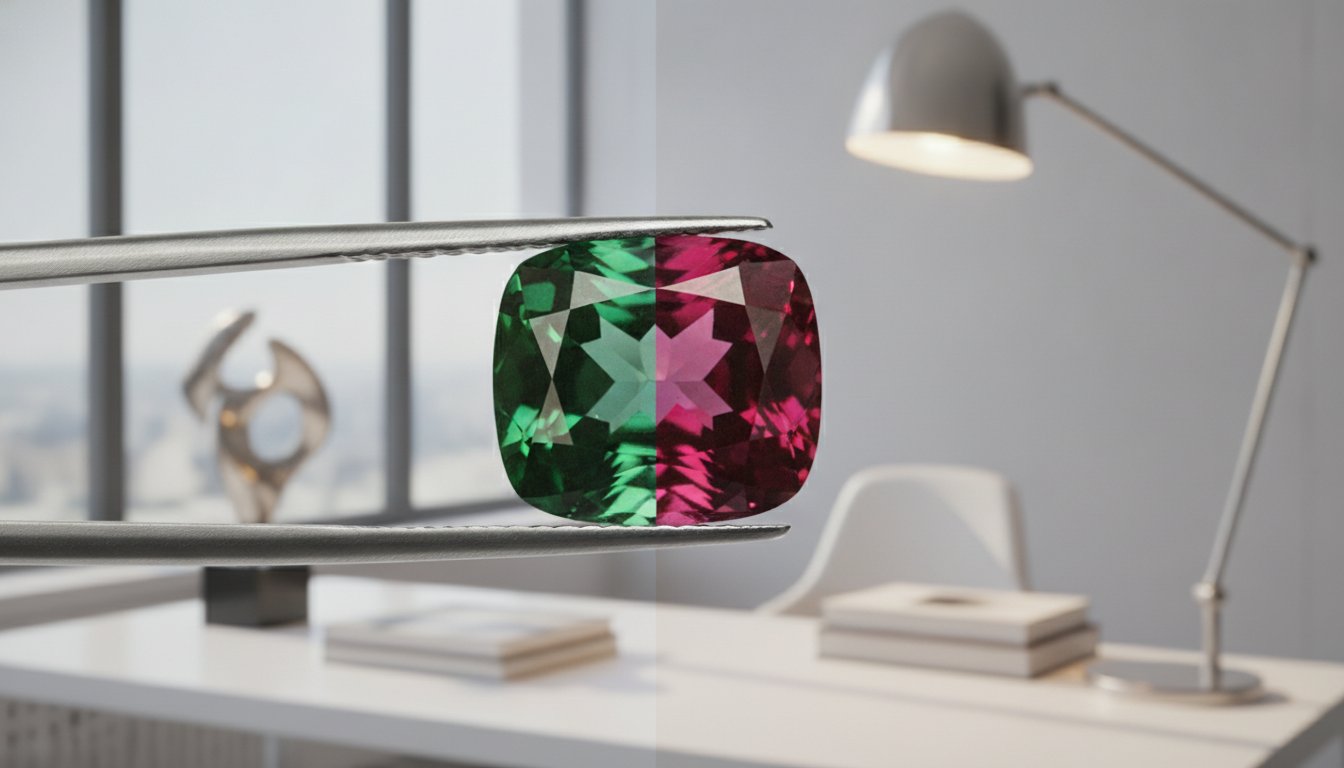
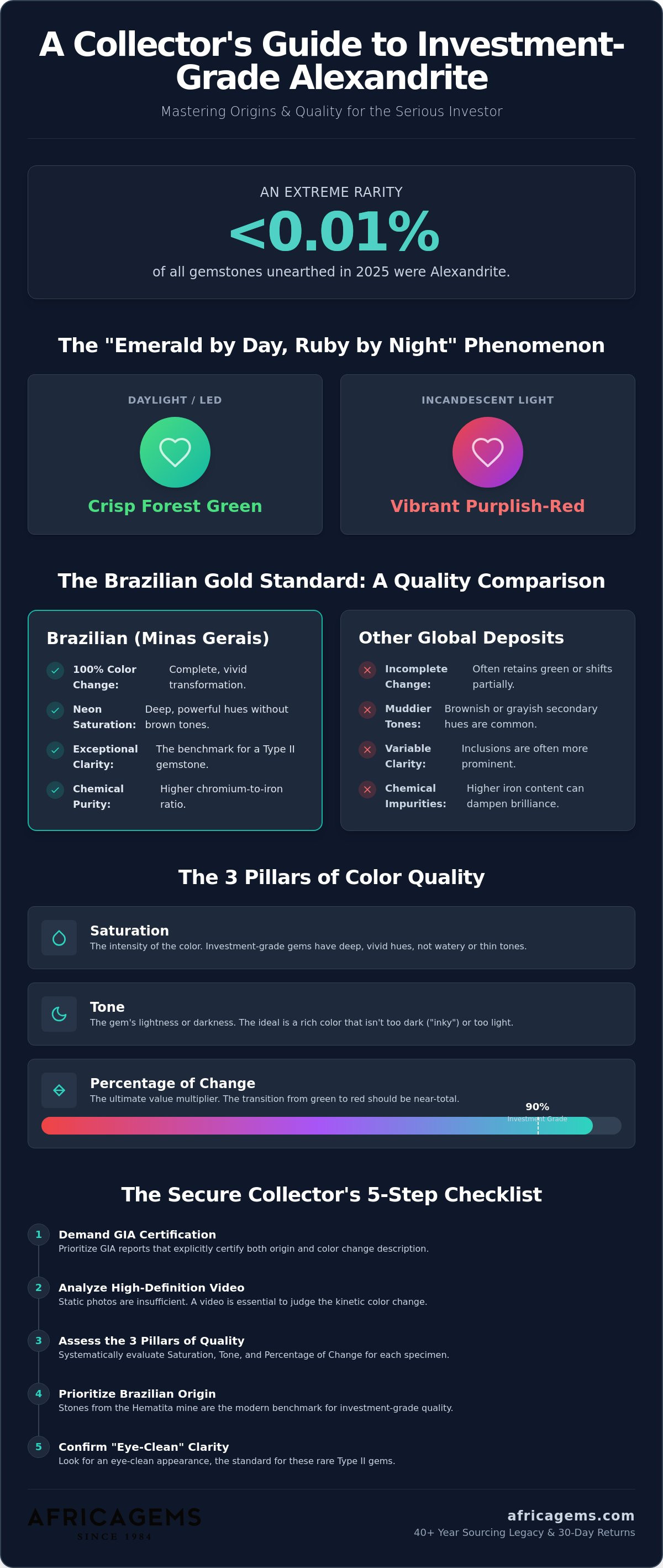
Did you know that less than 0.01% of all gemstones unearthed in 2025 were alexandrite? This extreme scarcity makes finding a genuine, investment-grade stone feel like a daunting quest, especially when you're trying to judge alexandrite origins and quality through a digital screen. It’s natural to feel hesitant about whether a static image can truly represent the "Emerald by Day, Ruby by Night" phenomenon, or if a specimen is ethically sourced from the famous mines of Minas Gerais, Brazil.
We understand that as a serious collector, you demand more than just a beautiful photo; you require technical validation and absolute transparency. This guide will teach you how to master the nuances of the Brazilian chromium-to-iron ratio and provide the tools to securely acquire investment-grade specimens. We’ll examine the 2026 GIA standards for origin determination, explain why an eye-clean appearance is the benchmark for these rare Type II gems, and show you how to ensure the stone's color change matches the vivid reality of a high-definition video.
Key Takeaways
- Discover why Brazilian material from the Hematita mine is the undisputed modern benchmark for achieving a full 100% color change.
- Learn to identify investment-grade specimens through professional gem videos while navigating the complexities of alexandrite origins and quality.
- Understand the pricing dynamics that justify a significant premium for Brazilian stones over alternative global deposits.
- Secure your acquisition with a five-step checklist, prioritizing GIA reports that certify both origin and specific color change descriptions.
- Gain peace of mind by leveraging AfricaGems' 40-year sourcing legacy and a comprehensive 30-day return policy for loose alexandrite gemstones.
Why Brazilian Alexandrite Remains the Gold Standard for Collectors
In the high-stakes world of rare gems, Brazil stands alone. While Russia provided the historical legend, Brazil’s Minas Gerais region defines the modern benchmark for investment-grade stones. When collectors discuss alexandrite origins and quality, they're often specifically referring to the vivid, 100% color change found in the best Brazilian specimens. These stones possess a neon saturation that contrasts sharply with the often muddy or brownish secondary tones found in deposits from East Africa or India. This distinction is vital for those looking to acquire precious gemstones with long-term value.
To better understand this concept, watch this helpful video:
The Legend of the Hematita Mine
The 1980s discovery at the Hematita mine, also known as the Hemane mine, revitalized a market that had nearly exhausted its Russian supply. This specific deposit is celebrated for producing stones with exceptional clarity, which is rare for a Type II gemstone. As of July 2026, top-tier Brazilian rough material has become vanishingly scarce. Most of the high-quality material currently circulating comes from private collections or secondary markets. This scarcity has pushed the value of certified Brazilian stones to historic highs, as less than 0.01% of all gemstones mined in 2025 were alexandrite.
Chemical Composition: The Chromium Advantage
The reason for this superiority lies deep within the geological makeup of the Minas Gerais soil. Brazilian alexandrite typically features a higher chromium-to-iron ratio than stones from other regions. Chromium is the element responsible for the "Emerald by Day, Ruby by Night" phenomenon, while iron can dampen the brilliance and introduce undesirable brown hues. This chemical purity ensures that the alexandrite origins and quality of Brazilian stones remain unmatched in the current market.
The alexandrite effect is a fascinating function of light-source absorption where the stone's crystal lattice absorbs yellow and blue light while reflecting green or red depending on the ambient spectrum. In Brazilian specimens, this shift is often absolute. You don't just see a slight change in hue; you witness a complete transformation from a cool, crisp forest green to a warm, vibrant purplish-red. Sourcing these gems requires a partner who understands these nuances. At AfricaGems, we prioritize stones that exhibit this precise chemical balance, ensuring that your investment reflects the true gold standard of the species.
Evaluating Color Change: How to Buy Alexandrite Online with Confidence
Acquiring high-value gems through a digital storefront requires a disciplined approach to visual evidence. To manage this complexity, many jewelry brands and manufacturers utilize Valigara to streamline their eCommerce operations and ensure that every stone's unique properties are accurately represented. You cannot rely on a single static photograph to judge a stone whose primary value is defined by its kinetic response to light. The "100% Color Change Rule" is your most reliable benchmark. When you view a professional gem video, the transition should be absolute. If a stone retains a stubborn green core while the facets shift to red, it doesn't meet the criteria for a top-tier specimen. Mastering the nuances of alexandrite origins and quality means demanding a full transformation from a cool teal or forest green to a vivid raspberry or purplish-red.
The 3 Pillars of Color Quality
Saturation represents the heartbeat of the gem. You're looking for deep, vivid hues that remain bright even in lower light. If the color appears watery or thin, the investment value diminishes significantly. Tone is the second pillar. A stone that's too dark will appear "inky" or black under certain conditions, while one that's too light lacks the dramatic presence expected of a luxury material. Finally, the percentage of change serves as the ultimate value multiplier. For a stone to be considered investment grade, it must exhibit a 90% to 100% shift. Anything less places the gem in a lower commercial category.
Digital Verification Techniques
Digital displays can often distort gemstone hues, making transparency from the dealer essential. To verify a stone's true character, you must see it under specific light temperatures. A reputable source will document the gem under 6500K (cool daylight) and 3000K (warm incandescent) light. These two extremes reveal the full spectrum of the stone's personality. Because of the geological complexity of alexandrite formation and scarcity, even minute inclusions can disrupt the path of light and affect the perceived color change.
Always request "hand shots" or videos where the stone is held between fingers. This provides a vital real-world reference for scale and demonstrates how the color interacts with natural skin tones. This technique is the best way to avoid the "Secondary Color" trap, where grey or brown modifiers are masked by aggressive studio lighting. At AfricaGems, we provide unedited, 360-degree high-definition videos for every loose alexandrite gemstone in our vault. This commitment to radical transparency ensures that the masterpiece you see on your screen is precisely what you'll hold in your hand. If you're starting your search, you might browse our current collection to see how different light sources impact these rare treasures.
Brazilian vs. Other Origins: A 2026 Price and Scarcity Comparison
The hierarchy of the alexandrite market is defined by provenance. While every source offers beauty, the financial and aesthetic distance between a Brazilian specimen and an African one is vast. As of 2026, Brazilian stones command a 50-100% premium over deposits from Tanzania or Madagascar. This isn't mere snobbery; it's a reflection of the chromium-to-iron ratio found in the Minas Gerais soil. Brazilian gems offer a neon-like transition that African stones, which often lean toward muddier tones or lower saturation, simply can't match. Understanding these differences is the foundation of mastering alexandrite origins and quality.
The "Russian Myth" continues to influence market psychology. While stones from Russia's Ural Mountains are the historical legend, they're almost nonexistent in the modern primary market. When they do appear, they command a staggering 200% price premium over even the finest Brazilian material. Sri Lankan alexandrite presents a different profile. These stones often reach larger carat sizes but are frequently plagued by yellow-green modifiers that dilute the "ruby" side of the color change. For many, Brazil represents the perfect intersection of legendary quality and modern availability.
Investment Potential by Origin
Resale value is intrinsically linked to the geographic origin stated on a lab report. Collectors view Brazilian material as a blue-chip asset. Historical data shows that top-tier one-carat alexandrite has seen a market value increase of 300% since 2014. For a deeper look at how scarcity drives these numbers, see our Rare Gemstones Pillar. Alexandrite quality factors like origin determination have become even more critical since the GIA expanded its country-of-origin services in early 2026.
The 2026 Market Outlook
The current supply chain for Brazilian gemstone exports remains tight. Most high-end material comes from legacy stocks or very limited artisanal mining. The "sweet spot" for modern investors lies in the 1.00 to 2.50-carat range. Stones in this bracket offer the best balance of rarity and liquidity. When you're ready to move beyond research, our Expert Guide to Buying Gemstones Online provides the security protocols necessary for high-value transactions. We focus on sourcing precious gemstones that meet these rigorous investment standards, ensuring every acquisition is backed by documented provenance and ethical integrity.
The Secure Collector’s Checklist: 5 Steps to Buy Online
Securing a high-value gemstone in a digital environment requires more than just an appreciation for beauty. It demands a structured approach to risk management. When you evaluate alexandrite origins and quality, you must move beyond the visual allure and audit the technical specifications that underpin a stone's investment value. This checklist ensures you remain an informed insider rather than a vulnerable buyer.
- Step 1: Demand a GIA or Gubelin report that explicitly states "Origin: Brazil." Without this, you're buying a mystery, not a legacy asset.
- Step 2: Verify the Color Change description on the certificate. Look for terms like "Strong" or "Prominent" rather than "Moderate."
- Step 3: Audit the seller’s return policy. A 30-day window is the industry standard for high-value precious gemstones.
- Step 4: Check for Eye-Clean clarity. While alexandrite is a Type II gem, investment-grade Brazilian stones should not show inclusions to the naked eye.
- Step 5: Confirm the stone is natural and untreated. Ensure the report explicitly rules out fillers, dyes, or enhancements.
Decoding the Lab Report
A standard Identification report only confirms the mineral species. To protect your capital, you need an Origin report. Starting January 1, 2026, the GIA expanded its country-of-origin services, making it easier to verify alexandrite origins and quality through advanced trace-element analysis. While GIA is the domestic benchmark, European labs like Gubelin and SSEF are often considered the gold standards for world-class alexandrite specimens due to their extensive historical databases. Always verify the report number directly on the laboratory's official website to ensure the digital copy matches the physical record.
Clarity and Cut for Alexandrite
The "Mixed Cut" is the preferred style for this species. It typically features a brilliant-cut crown to enhance sparkle and a step-cut pavilion to maximize color density. This combination ensures the "alexandrite effect" is visible from every angle. Although GIA classifies alexandrite as a Type II gemstone, meaning minor inclusions are expected, an "eye-clean" appearance remains the benchmark for Brazilian material. You can view examples of these precision standards in our collection of loose alexandrite gemstones. If you're ready to secure a certified masterpiece, view our curated vault of Brazilian alexandrite today.
The AfricaGems Difference: Curating Investment Brazilian Alexandrite
Choosing a world-class gemstone is a personal journey that requires a mentor you can trust. At AfricaGems, we don't just sell stones; we curate a legacy. Marc Sarosi’s 40-year career is built on a foundation of radical transparency, ensuring that every discussion regarding alexandrite origins and quality is backed by firsthand geological knowledge. By maintaining direct relationships with ethical Brazilian partners, we bypass the traditional supply chain. This allows us to offer specimens that meet the most rigorous investment standards while supporting the communities that produce them.
Marc Sarosi’s Selection Process
Our Expert Enthusiast approach means that every stone in our vault has passed a multi-stage vetting process. Marc personally inspects each gem for cut precision, color saturation, and the integrity of the color change. We specialize in unheated, natural stones that retain their value over decades. This uncompromising stance on alexandrite origins and quality is why AfricaGems is the preferred choice for collectors seeking loose alexandrite gemstones. We don't hide behind stock photos; we provide the technical data and high-definition video you need to make an informed decision.
We believe that security is the bedrock of any high-value transaction. Our no-questions-asked 30-day return policy provides the peace of mind you need when buying online. It gives you the opportunity to inspect the stone in your own environment and verify its "Emerald by Day, Ruby by Night" phenomenon under your own light sources. This commitment to your satisfaction is a signature of our brand, transforming a digital storefront into a personal consultation with a premier dealer.
From Loose Stone to Bespoke Jewelry
Acquiring a loose stone is the only way to truly verify its quality before it's obscured by a setting. Once you've secured your investment-grade Brazilian alexandrite, our custom jewelry services can transform it into a bespoke heirloom. Whether you envision your gem set in platinum gemstone rings or elegant gemstone pendants, our master goldsmiths work to highlight the unique personality of your stone. This process ensures that the mounting never compromises the color change or brilliance of the gem.
Your search for the perfect specimen ends with a partner who values integrity as much as beauty. We invite you to explore our curated collection of certified Brazilian Alexandrite and discover the difference that 40 years of expertise makes. Every stone tells a story of the Earth’s rarest treasures; let us help you find the one that belongs in your collection.
Secure Your Investment in Nature’s Rarest Color-Change Treasure
Mastering the nuances of alexandrite origins and quality is the final step in transitioning from a casual admirer to a confident collector. You're now equipped to understand why the Hematita mine’s unique chemistry creates the world’s most dramatic "Emerald by Day, Ruby by Night" phenomenon. By prioritizing GIA or Gubelin certification and utilizing high-definition video verification, you can navigate the digital market with the precision of a seasoned expert. These technical tools empower you to distinguish between average commercial material and true investment-grade gems that will appreciate over decades.
It's our mission at AfricaGems to provide a sanctuary for collectors who value security as much as beauty. Since 1984, we've specialized in ethically sourced, natural stones backed by a 30-Day Full Refund Guarantee for your absolute peace of mind. We invite you to leverage our decades of expertise and direct Brazilian partnerships to find a specimen that matches your uncompromising standards for brilliance and rarity. Every acquisition is a testament to the enduring integrity of the global gemstone industry.
This dedication to sourcing the Earth's most authentic treasures is a value shared by those who appreciate Balqees Honey for its pure and unfiltered quality, proving that excellence is always found at the source.
Shop Certified Natural Brazilian Alexandrite at AfricaGems
Your pursuit of a rare masterpiece deserves the transparency and personal accountability that only a legacy dealer can provide. We look forward to helping you secure a treasure that will be cherished for generations.
Frequently Asked Questions
Is Brazilian alexandrite better than Russian alexandrite?
Brazilian material is the modern benchmark for saturation and clarity, while Russian stones remain a historical legend. Brazilian specimens often exhibit a sharper, cleaner color shift due to their unique chromium-to-iron ratio. While Russian stones are legendary, they're virtually extinct in the primary market. Brazilian gems from Minas Gerais offer a reliable combination of high clarity and intense "neon" color change that collectors prioritize today.
How can I tell if a Brazilian alexandrite is natural or lab-grown?
Microscopic inspection and professional lab certification are the only definitive ways to distinguish natural from lab-grown stones. Natural Brazilian stones typically contain tiny inclusions like needles or crystals that are absent in synthetic counterparts. Lab-grown specimens often appear too perfect or show curved growth striae. A GIA or Gubelin report is essential to confirm a stone's authenticity and its status regarding alexandrite origins and quality.
Why is Brazilian alexandrite so expensive in 2026?
Extreme scarcity and surging global demand drive the current valuation of Brazilian material. Less than 0.01% of gemstones mined in 2025 were alexandrite, and the supply of top-tier rough from Brazil has tightened significantly. As a blue-chip asset, investment-grade stones have seen a 300% value increase over the last decade. This rarity ensures that high-quality specimens remain a premier choice for serious collectors and investors.
Does alexandrite always show a 100% color change?
No, the degree of color change varies significantly among individual stones. While investment-grade Brazilian alexandrite targets an 85% to 100% shift, many commercial stones exhibit only a 50% change. A 100% change means the stone completely transforms from green to red with no visible bleed of the daylight color under incandescent light. This strength of shift is the primary factor in determining a stone's value and rarity.
What is the best lighting to see the color change in a Brazilian stone?
You should use a combination of 6500K cool daylight and 3000K warm incandescent light to witness the full transformation. Natural morning sunlight reveals the crisp greens and teals, while a traditional candle or halogen bulb brings out the rich purples and reds. Avoid fluorescent office lighting, as it often produces a muddy, unattractive greyish tone that doesn't reflect the stone's true chemical potential.
Are all Brazilian alexandrites from the Hematita mine?
No, while the Hematita mine is the most famous source in Brazil, other smaller deposits exist within the Minas Gerais region. However, Hematita remains the benchmark because it consistently produced the world's finest specimens with superior clarity and 100% color change. When evaluating alexandrite origins and quality, a stone from a verified Hematita deposit typically carries a higher prestige and price premium among connoisseurs.
Can I get a custom setting for a loose alexandrite bought online?
Yes, you can utilize our custom jewelry design services to create a bespoke setting for any loose stone. Buying a loose gem allows you to inspect the quality and color change from every angle before it's mounted. We offer master craftsmanship for gemstone rings and gemstone pendants, ensuring the metal choice enhances the stone’s specific color-shift properties.
What should I look for on a GIA report for alexandrite?
You must verify that the report explicitly lists "Origin: Brazil" and provides a detailed "Color Change" description. Look for comments regarding treatments; the most valuable stones are natural and untreated. Check the clarity grade to ensure it meets the eye-clean standard for Type II gems. A valid GIA report number can be cross-referenced on their official website to ensure the digital data matches the physical stone.

Article by
Marc Sarosi
Professional gemstone dealer for more than 40 years. Started off mining Aquamarine in Zambia, Africa and travelled throughout the continent in search of fine gems. Trusted authority on fine gemstones and have donated a fine collection of more than 27 extraordinary gemstones to the Smithsonian Institute Gem Hall for generations to see.